Oct
Beauty, Skincare, Trends & Opinions, Wellness
Why Your Skin Makes Dark Spots and the Ingredients Proven to Fade Them
If you click on links we provide, we may receive compensation.
About one in ten people worldwide is living with some form of hyperpigmentation, according to a 2026 study of over 50,000 individuals published in the Journal of the German Dermatological Society (https://onlinelibrary.wiley.com/doi/10.1111/ddg.15886), and women make up nearly 67% of those cases. That statistic points to something important: dark spots are not random. They are a predictable biological response to sun, hormones, heat, and even a long-healed pimple – and once you know why they form, the ingredients that fade them start to make a lot more sense. Think of this as the plain-English briefing your dermatologist never had time to give you. The science here is genuinely accessible, and it changes how you choose skincare once you have it.
What Exactly Is a Dark Spot?
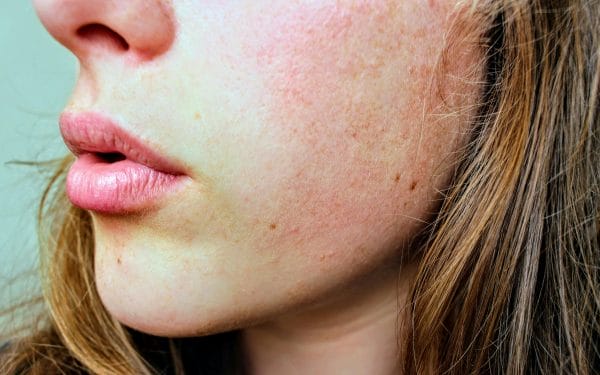
The term “dark spot” covers several conditions that all share the same root mechanism: too much melanin concentrated in one patch of skin. Melanin is the pigment that gives skin its color, and it lives inside specialized cells called melanocytes scattered throughout the deepest layer of the epidermis. Everyone has roughly the same number of melanocytes regardless of skin tone – what differs is how active those cells are and how much pigment they produce. When a melanocyte goes into overdrive in one area, that patch ends up visibly darker than the surrounding skin. Dermatologists call this hyperpigmentation, and it shows up in several distinct forms: solar lentigines, which are the flat brown spots that accumulate after years of sun exposure; melasma, a patchier, often symmetrical discoloration triggered strongly by hormones; and post-inflammatory hyperpigmentation, the mark left behind after a pimple, a rash, or any skin injury heals over.
Why Does Your Skin Make Melanin in the First Place?
Melanin is not the enemy – it is a defense system. When ultraviolet radiation from the sun hits skin cells, the DNA inside those cells is at risk of damage. The skin responds by signaling melanocytes to ramp up melanin production, because melanin is excellent at absorbing and scattering UV rays before they can reach the cell nucleus. Each melanocyte loads its melanin into tiny packets called melanosomes, then transfers those packets up into surrounding skin cells called keratinocytes, which act as a kind of cellular umbrella over the nucleus. This process is fast, efficient, and genuinely protective. The problem begins when the trigger does not stop – when UV exposure is chronic, when inflammation signals keep firing, or when hormones keep pushing the production switch long after there is no immediate threat. Production then outpaces what the skin can shed through its normal cell turnover cycle, and the excess melanin accumulates in a visible spot.
The central enzyme in this whole process is tyrosinase. Tyrosinase converts the amino acid tyrosine into the building blocks of melanin in a multi-step chemical chain. Almost every effective ingredient for dark spots targets tyrosinase in some way – either by blocking it directly, competing with its natural substrate, or reducing the signals that activate it upstream. Knowing that one detail makes the ingredient science far easier to follow. It also explains why single-ingredient approaches often underperform: most interrupt only one step in a process that has many entry points.
What Sets Off Melanin Overproduction?
Sun exposure is the most powerful and most common trigger. UV radiation activates multiple pro-melanin pathways simultaneously, including the release of endothelin-1 and prostaglandins, both of which signal melanocytes to increase their output. This is why existing dark spots almost always darken further in summer and fade slightly in winter – the stimulus is literally seasonal. A 2024 review in ScienceDirect noted that pigmented spots are primarily driven by UV, hormonal activity, and oxidative stress working in tandem, and that each of those factors fuels the others in a reinforcing feedback loop (https://www.sciencedirect.com/science/article/pii/S2950306X25000585). Heat alone can also act as a trigger independent of UV, which is why people in warm climates sometimes see melasma worsen even with consistent sun protection applied correctly.
Inflammation is the second major pathway. When skin is injured – whether by acne, an allergic reaction, a scrape, or even aggressive physical exfoliation – the immune response releases cytokines and other chemical signals that happen to stimulate melanin production as a side effect. The inflammation resolves, but the pigment it triggered stays visible long after, sometimes for months. This pattern is post-inflammatory hyperpigmentation, and it is particularly persistent in deeper skin tones because melanocytes in higher-melanin skin respond more vigorously to inflammatory signals (https://pmc.ncbi.nlm.nih.gov/articles/PMC9709857/). Hormones are a third trigger – estrogen and progesterone sensitize melanocytes to UV stimulation, which is why melasma spikes during pregnancy, during hormonal birth control use, and during the hormonal shifts of perimenopause.
Which Ingredients Interrupt the Dark Spot Cycle?
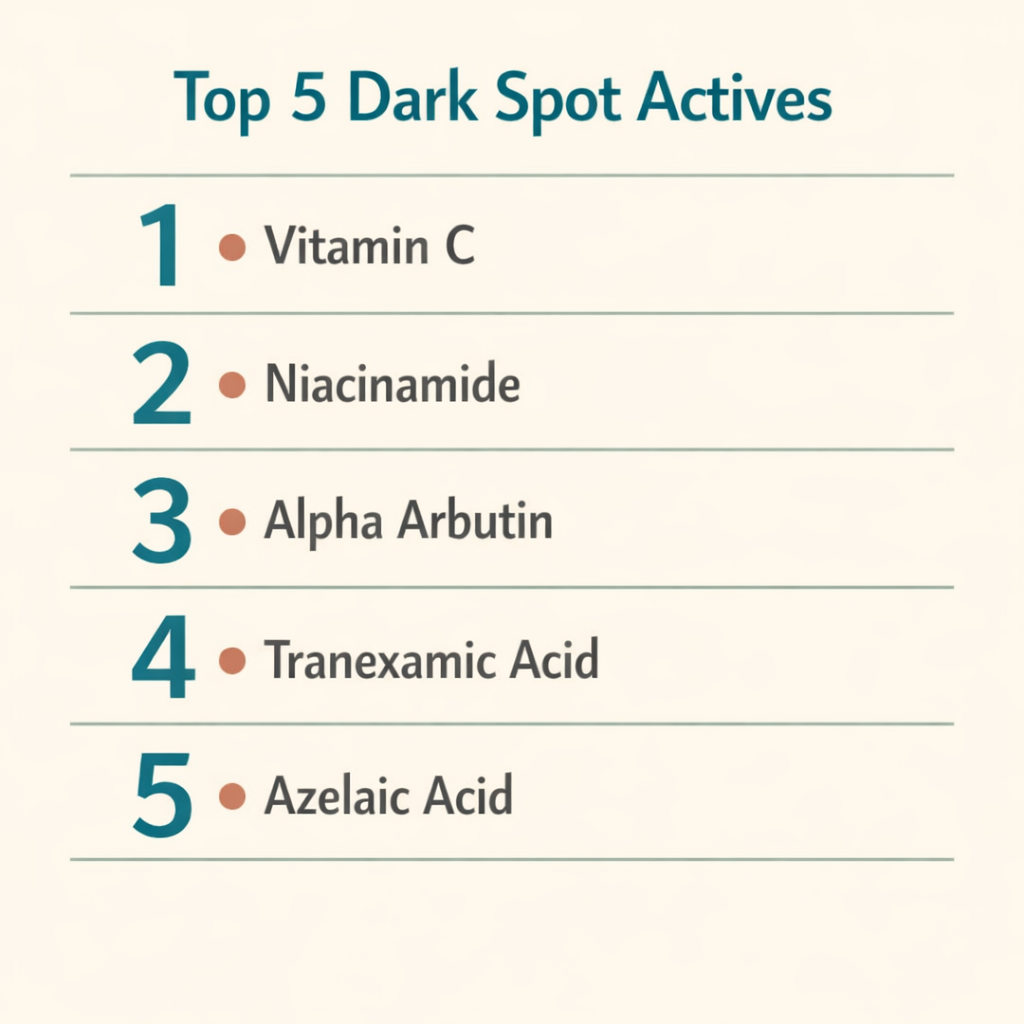
Several ingredients have strong clinical track records, and each works at a different point in the melanin production chain. They are not interchangeable – choosing between them depends on which part of the pathway you want to address, how sensitive your skin is, and whether you want to use a single ingredient or layer several together. The most studied options include vitamin C, niacinamide, kojic acid, alpha arbutin, tranexamic acid, and azelaic acid, and each earns its place in the evidence base for different reasons. Combining two or three of these typically produces faster and more durable results than relying on any single one. The pace of fading depends on which step you interrupt and how consistently you apply the active in question.
Vitamin C – properly called L-ascorbic acid – works at the final step of melanin synthesis, where it converts melanin precursors back into a colorless form before they become visible pigment. It also quenches the free radicals that UV creates, reducing the oxidative stress that feeds melanin production in the first place. Vitamin C is one of the few topical antioxidants with substantial clinical evidence behind it, and at concentrations between 10% and 20%, it visibly brightens uneven tone over several weeks of daily use. Formulation stability matters enormously here: vitamin C degrades quickly when exposed to light and air, which is why opaque packaging and a short shelf life matter far more than they might seem. If your vitamin C serum has turned orange or brown in the bottle, it has oxidized and lost most of its potency.
Niacinamide, a form of vitamin B3, takes a different approach. Rather than blocking melanin production, niacinamide interrupts the transfer of melanosomes from melanocytes to keratinocytes – the step where pigment physically moves into the skin cell and becomes visible. At concentrations of 4% to 5%, it has been shown in multiple studies to reduce melanosome transfer meaningfully, and it does this without irritating the skin, which puts it in a rare category of effective brightening actives that are also genuinely gentle. That tolerance profile makes it especially useful for people with reactive or redness-prone complexions. It also layers cleanly under or over almost every other active in a routine, which makes it easy to incorporate without disrupting an existing regimen.
Kojic acid is derived from fungi and inhibits tyrosinase by chelating the copper ions the enzyme needs to function. Without copper, tyrosinase cannot catalyze the conversion of tyrosine to melanin, and production slows noticeably. It is effective at concentrations around 1% to 2%, but can cause contact dermatitis in some users, particularly at higher concentrations or in formulas that are not well buffered. Research suggests it tends to perform better when combined with another brightening agent such as glycolic acid rather than used alone (https://chemistconfessions.com/blogs/azelaic-tranexamic-kojic-the-chemists-best-hyperpigmentation-ingredients-guide). For skin that reacts to it, alpha arbutin is a gentler alternative that works by a similar mechanism.
Alpha arbutin is a biosynthetic cousin of hydroquinone that inhibits tyrosinase by mimicking tyrosine, the enzyme’s natural substrate, and occupying its active site without triggering the irritation or safety concerns sometimes associated with hydroquinone itself. A laboratory study showed that alpha arbutin at a concentration of 0.5 mM inhibited melanin synthesis more potently than either kojic acid or vitamin C at the same concentration, and treatment reduced melanin content in human skin models to just 40% of the control level (https://www.chemicalbook.com/article/alpha-arbutin-a-review-of-its-application-as-a-skin-lightening-agent.htm). That is a meaningful reduction, and it makes alpha arbutin one of the most efficient single-ingredient options in widespread use today. It is also stable in formulas at concentrations up to about 2%, which makes consistent daily dosing practical.
Tranexamic acid has a different mechanism entirely. It blocks plasmin, an enzyme that triggers keratinocytes to release the prostaglandins and endothelins that signal melanocytes to ramp up output – in other words, it cuts the communication signal before overproduction even starts. It also appears to reduce UV-induced pigmentation by interfering with plasminogen activator in the epidermis. A 2018 study in the Journal of Clinical and Aesthetic Dermatology found that topical tranexamic acid produced significant melasma improvement within 12 weeks, and it is generally very well tolerated across skin types and tones, including sensitive and darker complexions.
Azelaic acid rounds out the group with dual action: it inhibits tyrosinase and has meaningful anti-inflammatory properties, which makes it especially effective against post-inflammatory hyperpigmentation where both the inflammatory signal and the resulting pigment need to be addressed. It is one of the few brightening actives approved for use during pregnancy in most clinical guidelines. Skin that cannot tolerate higher-concentration vitamin C, kojic acid, or aggressive retinoids often handles azelaic acid well. At 10% to 15%, it is available by prescription for rosacea and acne as well, which means its safety record extends far beyond the cosmetic skincare context. This breadth of evidence is part of what makes it a reliable choice for a range of skin types and sensitivities.
What Happens When You Combine Vitamin C and Tranexamic Acid?

These two ingredients address melanin overproduction from opposite ends of the production chain, and the clinical data on combining them is striking. A study measuring melasma severity with a standardized scoring tool found that a topical formula combining tranexamic acid and vitamin C brought the mean MASI score down from 12.76 at baseline to 3.39 after just eight weeks – a reduction of more than 73% in melasma severity in two months of consistent use (https://www.theinkeylist.com/blogs/news/vitamin-c-and-tranexamic-acid-for-dark-spots). Tranexamic acid suppresses the upstream signal that triggers overproduction, while vitamin C addresses the downstream chemistry of melanin itself and adds antioxidant protection against the UV damage that would otherwise keep re-triggering the cycle. Together, they cover more of the pathway than either can alone, which is why the combined result outpaces what either achieves on its own. This pairing is not the only strong combination – niacinamide stacks well with tranexamic acid, and alpha arbutin combined with a retinoid is another strong option – but the vitamin C and tranexamic acid duo is among the most evidence-backed.
Should You Also Use a Retinoid or an AHA?
Retinoids – whether prescription tretinoin or over-the-counter retinol – work differently from tyrosinase inhibitors. They accelerate cell turnover, pushing pigment-loaded cells toward the surface and off the skin faster than they would shed naturally. This does not reduce melanin production, but it does reduce how long existing pigment sits visible in the skin. Retinoids also upregulate collagen and thin the stratum corneum slightly, which can make pigment appear to fade more quickly. They are a strong complement to tyrosinase inhibitors rather than a standalone brightening solution. Alpha hydroxy acids like glycolic acid and lactic acid work on a similar principle – chemical exfoliation to accelerate turnover – and they are gentler for people who cannot tolerate retinoids. Research has noted that AHAs also have a mild moisturizing effect that helps offset the dryness often associated with brightening routines, and that glycolic acid visibly improves skin texture alongside tone (https://www.oneskin.co/blogs/reference-lab/hyperpigmentation-and-menopause-understanding-and-treating-age-spots).
One principle cuts through all of this: none of these ingredients will produce lasting results without daily broad-spectrum SPF. Sunscreen is not an optional add-on to a brightening routine. It is the mechanism that keeps the UV trigger suppressed long enough for everything else to work. Research consistently shows that brightening ingredients produce meaningfully better results when paired with SPF than when used without it (https://www.medicalnewstoday.com/articles/323808). An SPF 30 minimum is the standard recommendation, and mineral formulas with zinc oxide are a strong choice for people prone to melasma, since they block both UVA and UVB without contributing heat to the skin surface.
What Changes for Mature Skin After 50 and How Should Your Approach Shift?

Hormonal shifts during perimenopause and menopause change the calculus for dark spots in several ways. Estrogen plays a role in regulating skin cell turnover, and as levels decline after 50, that turnover slows – which means pigment lingers in the skin longer than it would have in your thirties. A study found that melasma occurs in roughly 30% of women between the ages of 41 and 65, with hormonal sensitivity making melanocytes respond more intensely to sun triggers even as the skin becomes thinner and more fragile (https://www.myalloy.com/blog/why-do-dark-skin-spots-develop-during-perimenopause-menopause). Post-menopausal skin is also more prone to dryness, and some of the stronger brightening actives – higher-percentage vitamin C, kojic acid, or aggressive retinoids – can tip into irritation on a barrier that is already compromised. Solar lentigines – the sharply defined flat brown spots common on hands and cheeks after decades of UV exposure – also tend to become more numerous and slower to fade in this decade, simply because the cell turnover rate is lower.
The practical answer for mature skin is to layer rather than maximize. Niacinamide at 5% makes an excellent foundation because it is effective and essentially non-irritating. Tranexamic acid pairs well with it for the same reason, and the two together address both the transfer of melanin and the upstream signals that trigger its overproduction. Azelaic acid is another strong choice for post-menopausal skin – it reduces pigmentation, calms inflammation, and does not strip the barrier in the way that stronger exfoliating actives can. If you want to incorporate a retinoid, starting with retinol or retinal at a low concentration is a smarter entry point than jumping to prescription tretinoin, and applying it every other night rather than nightly cuts the odds of barrier disruption significantly. Adding a gentle AHA like lactic acid two or three evenings per week helps keep cell turnover moving without the dryness that glycolic acid can sometimes bring. Darker age spots may take six months to a year to show clear fading with a topical routine, and that timeline is worth communicating to yourself upfront rather than abandoning a regimen at week six. Patience and SPF are, at this stage, the two most important ingredients in any brightening protocol.
FAQs
Can I use multiple brightening ingredients at the same time?
Yes, and most dermatologists recommend layering ingredients that target different parts of the melanin pathway rather than picking just one. Niacinamide and tranexamic acid, for example, work well together and are both gentle enough to use daily without stacking irritation risk. Vitamin C is typically applied in the morning under sunscreen, while retinoids and AHAs go on at night to avoid potential sensitivity overlap. The main rule is to introduce new actives one at a time so you can identify any reaction before it becomes a barrier problem.
How long before I see results from brightening ingredients?
Most people notice early improvement in skin tone in four to eight weeks with consistent daily use, but meaningful fading of established dark spots typically takes three to six months. Melasma and deep post-inflammatory pigmentation often take longer still. The timeline depends largely on how deep the pigment sits – surface pigment in the outer epidermis turns over faster than pigment deposited lower in the skin. Sticking with the routine through the full window and not swapping products every few weeks is one of the most common ways people undermine results that were beginning to show.
Is hydroquinone still considered safe?
Hydroquinone is one of the most studied depigmenting agents and remains highly effective for melasma and stubborn dark spots. It does carry a small risk of ochronosis – a blue-black skin discoloration – with prolonged high-dose use, which is why most current guidelines recommend using it in cycles of no longer than three months at a time, under dermatological supervision, rather than as an ongoing maintenance treatment. Newer alternatives like alpha arbutin and tranexamic acid offer better long-term safety profiles for people who want to address spots continuously without cycling on and off.
Do dark spots come back after they fade?
Without ongoing sun protection, yes – the melanocytes that produced the excess pigment are still present and UV exposure will reactivate them. SPF 30 or higher applied every morning, and reapplied during prolonged time outdoors, is what keeps faded spots from returning. Some people also maintain a lower-frequency brightening routine once they have achieved their results – niacinamide or vitamin C a few times a week is often enough to prevent re-darkening without keeping the full regimen going every day.
Can dark spots signal something that needs a doctor’s attention?
Most dark spots are entirely benign, but any spot that changes in size, shape, or color – or that has irregular borders or multiple shades within it – should be evaluated by a dermatologist. The ABCDE rule covers the warning signs: asymmetry, irregular border, multiple colors, diameter larger than a pencil eraser, and evolution over time. Cosmetic hyperpigmentation and more serious changes can look similar to an untrained eye, and a quick professional assessment removes the guesswork entirely.

Dark spots are one of the most common skin concerns across every skin tone and every decade of adult life, and the science of treating them has made real strides over the past decade. The most effective routines combine at least two ingredients working at different points in the melanin pathway, protect the work daily with SPF, and give each ingredient the weeks it needs to show what it can do. If you have been trying to fade dark spots without seeing results, it is worth checking whether daily sunscreen is part of the routine and whether the actives you are using are correctly formulated and stored – because the mechanism works when the conditions are right. Melanin is cleared through natural cell turnover, and that process responds to the right ingredients when given consistent application and time. The biology here is genuinely on your side.
Related Posts