

Nov
Skincare, Trends & Opinions
Encapsulation in Skincare Sounds Impressive but Does It Actually Work
If you click on links we provide, we may receive compensation.
You’ve probably seen the word on a label and felt a small pull of curiosity. Encapsulated retinol. Liposomal vitamin C. Time-release peptides tucked inside tiny spheres. It sounds like something out of a lab, and the price tag usually says the same thing. I’ll admit the idea appeals to me too! Who wouldn’t want an ingredient that waits its turn, stays gentle, and goes to work only where it’s needed? But a good idea and a proven result aren’t the same thing, and skincare marketing has a long habit of blurring the two.
That gap matters more as skin gets older. Mature skin is drier, thinner, and quicker to sting, so the promise of a gentler, slower active sounds made for it. And sometimes it is. Other times the word encapsulated is doing more work in the ad than the capsule is doing on your face. So here’s a plain look at what these delivery systems are, what the research shows they can do, and where the claims run ahead of the evidence.
What does encapsulation mean on a skincare label?
Encapsulation means an ingredient is enclosed in, or bound to, a carrier. The carrier might be a bubble made of fat, a porous bead, a ring-shaped sugar molecule, or a solid particle of wax. Chemists use these systems for practical reasons. Some ingredients fall apart when they meet air, light, or water. Others irritate skin when they land all at once. And some don’t blend well with the rest of a formula, so a carrier keeps them suspended and evenly spread.
The word itself isn’t regulated in the U.S. One brand’s encapsulated retinol may sit inside a carefully engineered particle with published stability data. Another brand’s may be a standard emulsion with a better name. Size is the first useful way to sort them. Microcapsules are measured in micrometers, while nano carriers are usually under about 100 nanometers. For scale, a single strand of hair is roughly 70,000 to 100,000 nanometers wide, so even the larger capsules are far too small to see or feel.
Size changes behavior. Smaller particles have more surface area, spread into the fine furrows of the skin, and can collect in the openings of hair follicles. Larger beads tend to sit on top and release their contents more slowly. Neither is automatically better. What matters is whether the carrier solves a real problem for the ingredient inside it, and whether anyone has tested that in people.
How do liposomes work, and where do they really go?
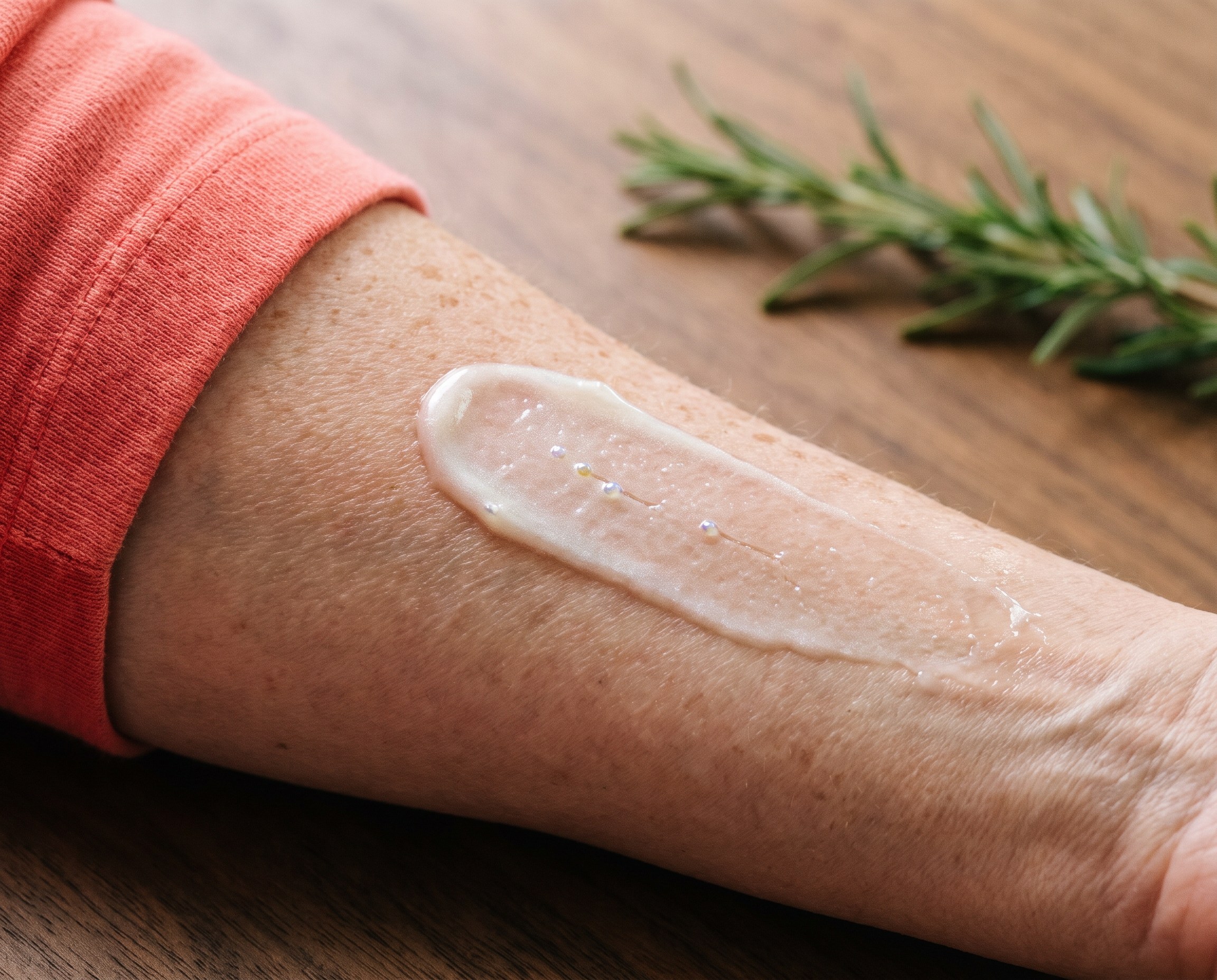
Liposomes are hollow spheres made from phospholipids, the same family of fats that forms the membranes around our own cells. Water-loving ingredients can sit in the watery core. Oil-loving ingredients can sit within the fatty wall. Scientists first described them in the 1960s, and they reached prestige skincare in the mid-1980s. They’ve been the face of encapsulation ever since. The phospholipids themselves also help, because they soften skin and support the lipid layer that holds water in.
The big question has always been how far liposomes travel. A 2016 study in PLOS ONE tested this on fresh human skin from surgery, using high-resolution microscopy that can see individual lipid layers. The researchers applied liposomes of about 100 nanometers, both a standard version and a flexible version, and left them on the skin for several hours. Almost none stayed intact below the surface. Most burst and merged with the outermost lipid layers of the stratum corneum, the dead outer layer of skin. The flexible version pushed more of its contents into that layer, but it seemed to do it by loosening the skin’s own lipids, the way a penetration enhancer would. Source: https://journals.plos.org/plosone/article?id=10.1371/journal.pone.0146514
Advertisement
That finding doesn’t make liposomes useless. It changes the job description. They don’t ferry ingredients intact down to the collagen layer. They deliver to the upper layers, may raise the amount that reaches those layers, and leave behind skin-friendly fats as they break apart. For hydration and barrier support, that’s exactly where you want the action. For anything that needs to reach deeper cells, the ingredient still has to make the rest of the trip on its own.
You’ll also see cousins of the liposome on ingredient lists and in ads. Niosomes swap phospholipids for mild surfactants. Transfersomes and ethosomes are built to bend and squeeze, often with the help of bile-salt-like softeners or alcohol. These designs can move more material into the skin in lab studies. But the push usually comes from loosening the barrier, and loosening the barrier is also how irritation starts. For sensitive or older skin, that trade-off deserves a second look.
What are polymeric capsules and microspheres?
Polymeric carriers are tiny beads made from long-chain molecules. Some use synthetic polymers such as acrylates or silicones. Others use natural ones such as chitosan, alginate, or modified starch. The active ingredient is soaked into the bead’s pores or trapped inside a shell, then released slowly through diffusion, warmth, or the light friction of rubbing it in. The best-known example is prescription tretinoin in microsphere gel, which has been used for acne since the late 1990s.
That prescription example gives us some of the better human data. In a 170-person split-face study published in the Journal of Drugs in Dermatology, people used tretinoin microsphere gel 0.04% on one side of the face and a combination adapalene and benzoyl peroxide gel on the other for three weeks. The microsphere side showed significantly less redness, dryness, stinging, and itching. It’s not a perfect test of encapsulation alone, since the two products contain different drugs. Still, it lines up with years of clinical experience that slow-release retinoids are easier to live with. Source: https://jddonline.com/articles/dermatology/S1545961610P0998X
There’s a regulatory twist here too. In 2023 the European Union restricted intentionally added microplastics, defined as synthetic polymer particles under five millimeters that are insoluble and resist breaking down. Many plastic microcapsules fall into that group. Rinse-off cosmetics face the rule from October 2027, and leave-on cosmetics and encapsulated fragrance from October 2029. Source: https://products.cooley.com/2023/10/03/eu-adopts-restriction-of-intentionally-added-microplastics/ That deadline is already pushing suppliers toward shells made from silica, starch, proteins, and lipids, so expect the capsules behind these claims to change over the next few years.
What are lipid nanoparticles, and how are they different from liposomes?
Solid lipid nanoparticles appeared in the early 1990s. Instead of a hollow bubble, each particle is a tiny solid bead of fat that stays firm at skin temperature, with the active ingredient spread through it. A second generation, nanostructured lipid carriers, mixes solid fats with liquid oils. That messier inner structure leaves more room for the active and makes it less likely to be squeezed out as the fats settle during storage. Both types form a thin film as they dry, which slows water loss from the skin.
The upside is real. Lipid particles can shield fragile ingredients like retinol and coenzyme Q10 from oxygen, and the film they leave behind feels comforting on dry skin. The downside is manufacturing. Particle size can drift over time, the fats can recrystallize, and the active can leak out before the jar is finished. A carrier that performed beautifully in a university lab doesn’t guarantee the product on the shelf behaves the same way after months in a warm bathroom.
Encapsulation also isn’t the only fix for a fussy ingredient. Cyclodextrins are ring-shaped sugar molecules that hold another molecule in their center, which can improve stability and soften odor. Chemists can also modify an ingredient directly, which is why you see retinyl esters and vitamin C derivatives such as ascorbyl glucoside. And a well-built emulsion or a water-free formula can protect sensitive ingredients without any capsule at all. Encapsulation is one tool in the drawer, and a good formulator picks it when it’s the right one.
Does encapsulation keep ingredients stable?

Stability is where encapsulation makes its strongest case. Retinol and pure vitamin C break down when they meet oxygen, light, heat, and water. A shell or a fat matrix slows that exposure, and lab data often show more of the active surviving over time. That matters because a vitamin C serum that has turned orange or a retinol that has quietly degraded won’t do much for you, no matter how good the formula looked on day one. Protecting the ingredient until it reaches your skin is a fair and useful goal.
But packaging does much of the same work. An airless pump or an opaque tube protects an ingredient every time you use it, while a jar invites air and fingers in daily. A well-packaged, unencapsulated retinol can outlast an encapsulated one sitting in a clear jar on a sunny shelf. The carrier itself can also fail. Liposomes can merge, leak, or oxidize, and lipid particles can expel their cargo. So a stability claim should come with numbers, such as how much active remains after a set number of months at a set temperature. If a brand can’t share that, the word stabilized is only a hope.
Does controlled release really mean less irritation?
The logic is simple. If an active trickles out over hours instead of landing all at once, the peak concentration on your skin is lower. For retinoids, benzoyl peroxide, and acids, irritation tends to follow that peak. Lower the spike and you often lower the redness, peeling, and sting. The tretinoin microsphere research supports this, and many people who couldn’t tolerate a standard retinol find an encapsulated version easier to keep using.
Here’s the catch. Slower release can also mean less ingredient delivered overall. If a capsule holds on to part of its payload until you wash your face, you paid for retinol that never reached your skin. In a study, lower irritation and lower strength can look exactly alike. The useful trials measure both, comparing the encapsulated and free versions at the same concentration for tolerance and for results. Claims like 24-hour release usually come from lab diffusion chambers, not from a face that gets cleansed, rubbed, and slept on.
Gentler isn’t a bad outcome, though. A retinoid you can use four nights a week for a year will do more than a stronger one you quit in a month. If encapsulation keeps you consistent, that alone can justify it. Consistency is what produces visible change with retinoids. Just know that comfort and potency are separate claims, and a product should earn each one.
Does encapsulation help ingredients reach deeper skin?
This is the claim that needs the most caution. The stratum corneum is thin, roughly 10 to 20 micrometers on most of the face and body, but it’s a very good barrier. A widely cited paper in Experimental Dermatology described the 500 Dalton rule, which holds that compounds heavier than about 500 Daltons pass through healthy skin poorly. Source: https://pubmed.ncbi.nlm.nih.gov/10839713/ Carrier particles are enormously larger than the molecules they carry. So on intact skin, the particle itself mostly stays at or near the surface, in the furrows, and in follicle openings, which can act as small reservoirs.
And deeper isn’t always better. Sunscreen filters, antioxidants, and moisturizers do their work in the upper layers. Pushing more of an ingredient further in can raise the amount absorbed into the body, which is the opposite of what you want for many cosmetic ingredients. Penetration claims also tend to come from pig skin, mouse skin, or dye experiments. Mouse skin is much thinner than human skin, a point the PLOS ONE researchers made themselves. A result like ten times deeper only means something if you know what it was compared to, on what skin, and over how long.
How should mature skin approach encapsulated products?

Skin after 50 and especially after 60 holds less water, makes less oil, and repairs its barrier more slowly. It also reacts faster to strong actives. That’s why the gentle-delivery side of encapsulation fits older skin well. An encapsulated retinol can make the difference between tolerating a retinoid and giving up on it. Lipid carriers add a thin, comforting film that helps with dryness, which is welcome on skin that feels tight by noon.
But a weaker barrier changes the rules on penetration. The FDA’s guidance on nanomaterials in cosmetics specifically tells manufacturers to consider absorption through impaired skin. Source: https://www.fda.gov/regulatory-information/search-fda-guidance-documents/guidance-industry-safety-nanomaterials-cosmetic-products Flexible vesicles that work by loosening skin lipids are close to the last thing fragile, dry skin needs. My advice is to favor slow-release retinoids and lipid-based carriers. And be wary of products that brag about forcing ingredients deeper.
The basics still apply. Start an encapsulated retinoid two or three nights a week and build slowly. Follow it with a ceramide-rich moisturizer, and wear broad-spectrum sunscreen every morning. Don’t stack several encapsulated actives on the assumption that they’re all gentle, because the doses still add up. If your skin stings for more than a few days, cut back, since irritation in older skin takes longer to settle.
Which marketing claims should make you skeptical?
Some phrases deserve a raised eyebrow. Delivers actives to the dermis is a big claim that few cosmetic carriers can show in human skin. Penetrates ten times deeper means nothing without the comparison. Nano used as a selling word tells you nothing about the ingredient, the dose, or the testing. And clinically proven often refers to the whole formula, with no separate test of whether the capsule made any difference at all.
The label won’t settle it for you either. In the European Union, cosmetic ingredients that meet the legal definition of a nanomaterial must carry the word nano in brackets after their name. Source: https://single-market-economy.ec.europa.eu/sectors/cosmetics/cosmetic-products-specific-topics/nanomaterials_en But that definition covers insoluble or biopersistent materials from 1 to 100 nanometers, and most lipid carriers break down, so they often don’t carry the tag. In the U.S., the FDA has never set a regulatory definition of nanomaterial at all. A product can talk loudly about nano delivery while its ingredient list stays silent.
So ask questions, and expect answers. What exactly is encapsulated, and at what percentage? What is the carrier made of? Was the encapsulated version tested against the free ingredient at the same strength, on people, for both tolerance and results? How much active is left after a year on the shelf? A brand that has done the work will usually be glad to tell you.
When is encapsulation worth paying for?

Encapsulation earns its place with ingredients that are unstable, irritating, or both. Retinol, retinal, benzoyl peroxide, and pure vitamin C are the clearest cases. If you’ve struggled with retinoid irritation, an encapsulated option is worth trying before you give up on the category. Fragrance and certain plant oils are also commonly encapsulated to control scent and slow oxidation, though for sensitive skin the better answer is often to skip fragrance altogether. The common thread is a clear problem that the capsule is there to fix.
It makes much less sense for ingredients that are already stable and gentle. Glycerin, hyaluronic acid, niacinamide, panthenol, and ceramides work well without a capsule, and wrapping them in one mostly adds cost and a good story. I’d rather see that money go into a higher, disclosed concentration and better packaging. Encapsulation should solve a specific problem. You should be able to name that problem before you pay extra for the fix.
FAQs
Is encapsulated retinol weaker than regular retinol?
It can be gentler, and sometimes that comes with somewhat lower delivery. It depends on the carrier, the concentration, and how much of the active is released before you wash it off. A higher-strength encapsulated retinol may perform similarly to a lower-strength free one with less irritation. Look for brands that disclose the percentage and share tolerance and results data.
Do liposomes or nanoparticles get into the bloodstream?
On healthy skin, intact carriers mostly stay at the surface and in the outer layer of the stratum corneum. Human skin research shows liposomes tend to break apart and merge with the skin’s outer lipids rather than travel deep. Damaged or inflamed skin is more permeable, which is why safety testing considers impaired skin. If your skin is broken or very irritated, pause actives until it heals.
Are nanoparticles in skincare safe?
There’s no single answer, because nanoparticles are not one material. A lipid particle that breaks down on the skin is very different from an insoluble mineral particle. The EU assesses nanomaterials case by case, and the FDA asks manufacturers to evaluate each one in its finished product. A well-tested product from a transparent brand is a reasonable choice, while vague nano claims with no supporting data are not.
Is liposomal vitamin C better than a regular vitamin C serum?
It may be more stable and gentler, which helps if pure vitamin C stings your skin. But a well-formulated L-ascorbic acid serum in airless or opaque packaging has the strongest research behind it. Liposomal versions often contain less vitamin C, so compare concentrations. If a standard serum works for you without irritation, there’s little reason to switch.
Can I layer encapsulated products with other actives?
Yes, but treat them as actives, not as freebies. Encapsulation slows release but doesn’t cancel the dose. Using an encapsulated retinol with an exfoliating acid on the same night can still overwhelm mature or sensitive skin. Alternate nights and add one new product at a time.
Encapsulation is real science, and some of it works well. Slow-release retinoids are easier on skin, lipid carriers help fragile ingredients last, and liposomes bring skin-friendly fats to the layers that need them most. What the research doesn’t support is the idea of tiny capsules shuttling ingredients deep into the skin on command. Read the claim, find the problem it says it solves, and ask for the evidence. If the answer is clear and the price is fair, encapsulation can be worth it. If the answer is a buzzword, your money is better spent on a proven ingredient in good packaging.
Related Posts
 Skincare Brands That Actually Understand Skin Over 60
 Where to Buy Natural Anti-Aging Skincare You Can Actually Trust
 Morning Skincare Routine for Dry Mature Skin That Actually Works
 Is Medical Grade Skincare Real or Just Clever Marketing
 Everything I Wish I Had Known About Skincare in My Twenties
 New Dark Spot Products That Actually Deliver Results
 The Salmon DNA Skincare Ingredient Dermatologists Love and Its Vegan Rival
 What the Stars Might Actually Be Telling You About Your Skin
 Tranexamic Acid Started in the Operating Room and Is Now Taking Over Your Skincare Shelf
 What Creatine Actually Does for Women Going Through Menopause
 The Age to Start Anti-Aging Skincare Will Probably Surprise You
 What Rubbing Minerals on Your Skin Actually Does
