

Nov
If you click on links we provide, we may receive compensation.
You’ve probably noticed that your skin doesn’t bounce back the way it used to. A small scrape on your shin hangs around for weeks. A face cream you used for years starts to leave you itchy. Or the opposite happens, and a harsh cleanser that should sting barely registers at all. It’s easy to blame all of it on dryness and leave it there. But I think the more interesting story sits just under the surface, in a part of the body most of us never think about. Your skin has its own immune system, and it gets older right along with you.
That’s not a metaphor. Your skin is packed with cells whose whole job is to watch for trouble, raise the alarm and calm things down once the threat is gone. When they work well, you don’t notice them. When they slow down or get jumpy, you notice the results – slow healing, odd rashes, infections that seem to come out of nowhere. Knowing who these cells are and how they change can explain a lot about mature skin. It can also help you make better choices about what you put on it.
What does it mean that your skin has an immune system?

Most of us picture the immune system as something in the blood, the lymph nodes and maybe the gut. The skin belongs on that list too. It covers close to two square meters on an average adult, and it’s the first thing that meets every germ, chemical and ray of sunlight you run into. Harvard dermatologist Rachael Clark’s research found that healthy adult skin holds roughly 20 billion memory T cells. That’s nearly twice the number circulating in your entire bloodstream (https://immunologyphd.hms.harvard.edu/people/rachael-clark). So your skin isn’t a passive wrapper. It’s one of the busiest immune organs you have.
The defense works in layers. The outer layer of dead cells and lipids, the stratum corneum, keeps most things out on its own. Below it, living skin cells called keratinocytes do more than build the wall. They carry sensors that detect bacteria, viruses and damage, and they release antimicrobial peptides and warning signals when something gets through. Those signals call in the specialists. Some specialists already live in the skin full time, and others travel in from the blood when needed.
Who are the Langerhans cells and what do they do?
Langerhans cells are the lookouts of the epidermis, the top living layer of skin. A German medical student named Paul Langerhans first described them in 1868, and he thought they were nerve cells because of their long, branching arms. Those arms reach between the surrounding skin cells and sample whatever is passing through. When a Langerhans cell picks up something foreign, it packs up a sample and travels to the nearest lymph node. There it shows the sample to T cells, which decide whether a full immune response is needed.
Their job isn’t only to sound alarms. Langerhans cells also help the body tolerate harmless things, like the friendly bacteria that live on your skin or the ingredients in a moisturizer you use every day. That balance matters. Too little response and infections take hold. Too much and you end up with allergies and chronic irritation. Langerhans cells also make their own antimicrobial proteins, including one called human beta-defensin 3, so they help kill germs on the spot as well as reporting them.
What other immune cells live in your skin?
Langerhans cells get most of the attention, but they’re part of a bigger team. In the dermis, the layer below the epidermis, dermal dendritic cells do a similar sampling job. Macrophages act as the cleanup crew, eating debris and bacteria and helping wounds heal. Mast cells hold histamine and other chemicals, and they’re the reason a mosquito bite swells and itches. Neutrophils aren’t usually residents. They rush in from the blood when there’s an infection or a bad sunburn.
Advertisement
Then there are the T cells. A review by Emma Chambers and Milica Vukmanovic-Stejic at University College London notes that about 80 to 90 percent of skin T cells are resident memory T cells (https://discovery.ucl.ac.uk/10086182/3/Chambers_Skin%20Barrier%20Immunity%20and%20Ageing_AAM.pdf). These cells stay put after an infection and remember it for years, so they can react fast if the same germ shows up again. Regulatory T cells act as the brakes and keep reactions from going too far. Even the fat layer under your skin pitches in, making antimicrobial peptides when bacteria break through. Every one of these groups changes in some way with age.
How does immune surveillance change as skin ages?

The clearest change involves the Langerhans cells themselves. A 2019 study in the Journal of Investigative Dermatology compared skin from 20 younger women, average age about 23, with skin from 21 older women, average age about 63 (https://pmc.ncbi.nlm.nih.gov/articles/PMC8142052/). The researchers used breast skin that rarely sees the sun, so the results reflect aging itself and not sun damage. The older skin had significantly fewer Langerhans cells. The epidermis was thinner too, about 32 microns on average compared with about 42 in the younger group.
What surprised me was the reason. The Langerhans cells in older skin weren’t dying off faster, and they weren’t dividing any less. The problem was recruitment. Older skin had fewer of the blood-derived cells that normally move in and become new Langerhans cells. And the keratinocytes in older skin made less of a chemical signal called CXCL14 that calls those recruits in. When the researchers added that signal back to older skin in the lab, more recruits came in. So the lookouts aren’t failing on their own. The neighborhood has stopped sending for replacements.
The Langerhans cells that remain also travel less well. Studies summarized in the UCL review found that Langerhans cells from older people move to lymph nodes less readily, partly because aged skin produces less of a signaling molecule called IL-1 beta that guides them. They also make less of that beta-defensin 3. Dermal dendritic cells hold steady in number, but animal studies suggest they move and stimulate T cells less effectively. Put together, older skin is slower to notice a problem and slower to report it.
Why is older skin more inflamed but less protected?
Here’s the part that seems backward at first. Older skin carries more background inflammation, yet it mounts weaker targeted responses. Scientists call the low, constant inflammation of aging inflammaging. Some of it comes from senescent cells, worn out fibroblasts that stop dividing but keep pumping out inflammatory chemicals. They pile up in older skin and are good at hiding from the immune cells that would normally clear them out. The result is a kind of static on the line.
The UCL group tested this directly. When they injected plain saline into the skin of older volunteers, the skin reacted with more inflammation than younger skin did. The people with the most of this nonspecific reaction had the weakest responses when the researchers challenged their skin with varicella zoster, the chickenpox and shingles virus. Older skin also tends to hold a larger share of regulatory T cells, the brakes. In their work, people with the most regulatory T cells had the weakest response to that same virus. In a small trial, an experimental anti-inflammatory drug that blocks a pathway called p38 MAPK cut the background inflammation and improved the targeted response in older people. That isn’t a skincare treatment, but it shows the noise itself gets in the way.
The review’s authors make a point I find useful. When immune cells are taken out of older skin and tested on their own, many of them work about as well as younger cells. The trouble seems to come from the environment they live in. That’s a hopeful idea, because environments can change in ways that worn out cells can’t. It also explains why delayed-type hypersensitivity tests, the kind where a doctor injects a small amount of a familiar germ and watches for a bump, often show weaker reactions in older adults. The memory is still there. The signal just doesn’t get through as cleanly.
Why do irritants affect older skin differently?
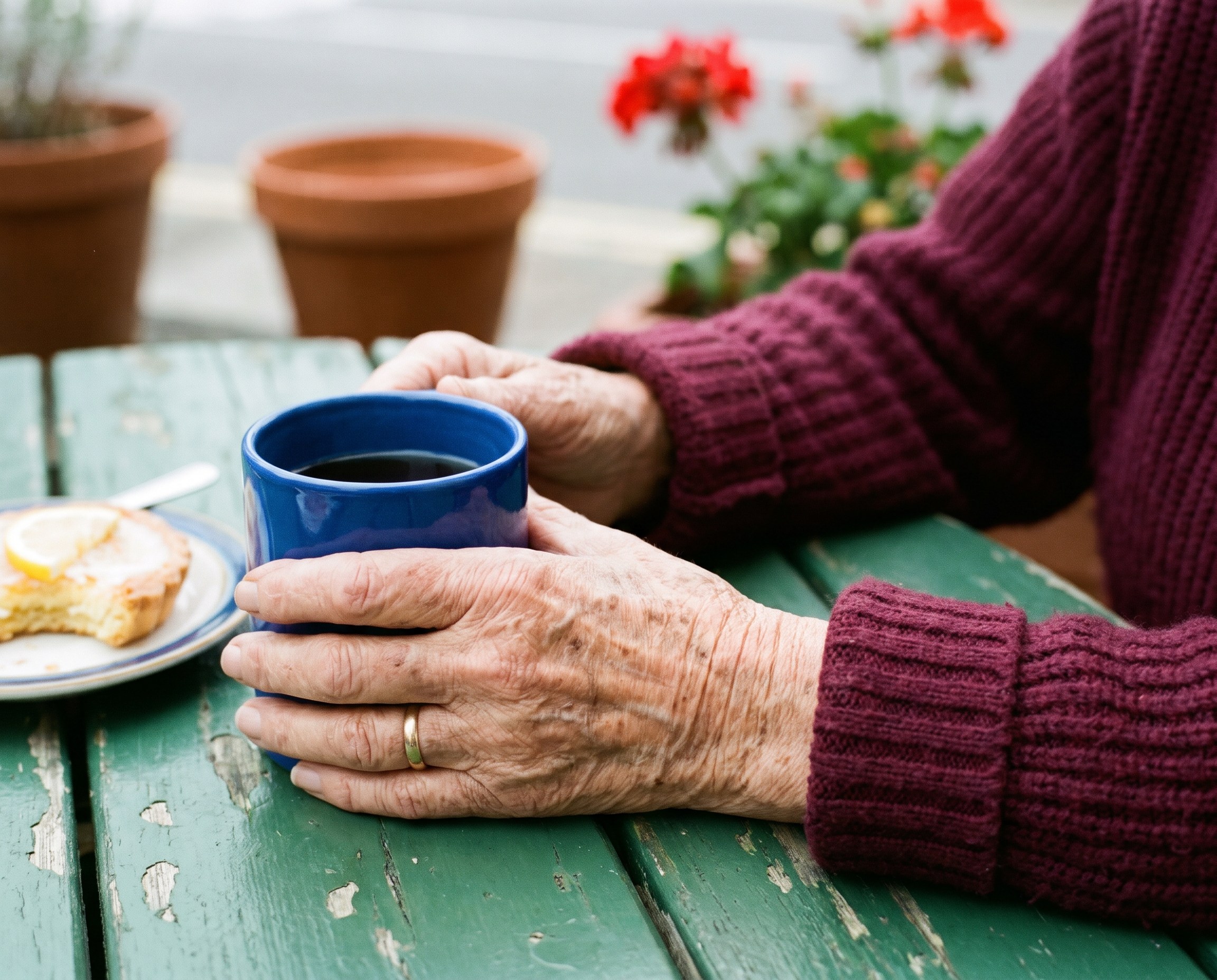
If you’ve wondered why your skin seems both tougher and more fragile than it used to be, this is where it comes together. Older skin often shows less visible redness when it meets an irritant. That can make a harsh product seem fine. But the barrier underneath may be taking more damage than it shows, and it repairs more slowly. A quieter alarm doesn’t mean a smaller problem.
A well known 1995 study in the Journal of Clinical Investigation measured this. Researchers stripped the outer skin layer with tape in people over 80 and in people aged 20 to 30 (https://www.jci.org/articles/view/117919). The older group’s barrier broke down after about 18 strips, compared with about 31 for the younger group. Recovery was the bigger gap. After 24 hours, young skin had recovered about half its barrier function, while older skin had recovered only about 15 percent. That slow repair gives irritants, allergens and microbes more time to get in.
This changes how I think about products for mature skin. A strong acid peel, a gritty scrub or a foaming cleanser with harsh detergents may not sting like it would have at 35. But the cost can show up days later as dryness, itch or a rash that won’t clear. Allergic reactions to fragrance, preservatives and some topical antibiotics still happen in older adults, and they can look milder or take longer to show. So the old rule of thumb, that if it doesn’t burn it’s fine, doesn’t hold up well after 60.
Why do infections show up more often in older skin?
Shingles is the clearest example. The virus that causes chickenpox stays dormant in nerve cells for life, and the T cells that remember it are what keep it in check. As those responses weaken, the virus gets more chances to wake up. According to the CDC, about 1 in 3 people in the United States will develop shingles in their lifetime, and the risk climbs with age, with the highest rates in people over 80 (https://www.cdc.gov/shingles/data-research/index.html). The CDC also notes that 10 to 18 percent of people with shingles go on to develop long-lasting nerve pain, and that risk rises with age too.
Bacterial and fungal infections follow the same pattern. Older adults get more cellulitis, folliculitis and other skin infections, most often from staph and strep bacteria. The UCL review notes that skin colonization by certain gram-negative bacteria is about 25 percent higher in people over 65. Yeast infections in skin folds are more common too. Slower barrier repair means small cuts and cracks stay open longer, and fewer lookouts mean germs that get in may go unnoticed for a while.
There’s good news on the shingles front. The CDC recommends two doses of the recombinant shingles vaccine for adults 50 and older, and for adults 19 and older with weakened immune systems. If you haven’t talked to your doctor about it, it’s worth a conversation. And if you ever see a painful, blistering rash in a band on one side of your body, call your doctor right away. Antiviral medicine works best when it starts within about three days of the rash appearing.
What does a lifetime of sun do to skin immunity?
Sunlight adds its own layer to all of this. Ultraviolet B light pushes Langerhans cells out of the exposed skin and shifts the immune system toward tolerance. It increases regulatory T cells that release IL-10, a chemical that quiets other immune cells. In the short term that may limit damage from a burn. Over decades it lowers the skin’s ability to spot abnormal cells.
That matters because skin cancer is mostly a disease of later life. The UCL review notes that nonmelanoma skin cancers are most often diagnosed after 70, and melanoma rates peak in people 65 and older. Chronic sun exposure also feeds the background inflammation described above, bringing in macrophages and enzymes that break down collagen. So the face and hands you’ve exposed for 60 years carry two kinds of aging at once. Daily sunscreen and covering up help protect the immune cells you still have.
How can you support an aging skin immune system?

I want to be honest here. No cream has been shown to boost your skin’s immune system in any meaningful way, and I’d be skeptical of any product that claims to. What you can do is give the immune cells you have a better place to work. That means protecting the barrier, cutting down on needless irritation and avoiding extra sun damage. Those steps reduce the background noise and keep the gates closed while repairs take their time. They’re not glamorous, but they’re backed by decades of research.
Start with cleansing. A mild, low-foam cleanser and lukewarm water are kinder to older skin than hot water and strong detergents. Follow with a moisturizer while skin is still damp. Research from the same lab behind the 1995 barrier study found that aged skin repaired faster with lipid mixtures that leaned heavily on cholesterol, alongside ceramides and fatty acids. Look for those ingredients, and keep fragrance low if your skin tends to react. When you add active ingredients like retinoids or acids, start slowly and space them out, because your skin will take longer to recover if you overdo it.
Pay attention to small things. Check your shins, feet and hands for cuts and cracks, especially if you have diabetes or circulation problems, and keep them clean and covered. Wear sunscreen every day on exposed skin, and add a hat when you’re out for long. Sleep, protein and staying active support immune health overall, though they won’t undo aging. And see a doctor for any patch of redness that spreads, feels warm or comes with fever, or any rash that doesn’t clear in a couple of weeks. With older skin, it’s better to get things looked at early.
Frequently asked questions
Do Langerhans cells come back after sun exposure?
Yes, at least partly. Ultraviolet light pushes Langerhans cells out of the exposed skin, and they repopulate over the following days and weeks. In older skin, recruitment of new Langerhans cells is slower, so recovery may take longer and may not be complete. That’s one more reason daily sun protection matters more with age.
Why does my skin itch more now than it did when I was younger?
Most of the time it comes down to a weaker, drier barrier that loses water faster and repairs more slowly. That lets irritants in and sets off nerve endings. Background inflammation may add to it. Regular moisturizing often helps. If the itch is severe, keeps you up at night or comes with a rash, see your doctor, since it can also point to other health issues.
Are older adults less likely to react to skincare products?
They may react less visibly, but that’s not the same as being safe. Older skin can show less redness while the barrier underneath takes real damage and heals slowly. Allergies to fragrance and preservatives still develop at any age. It’s smart to patch test new products on a small area for several days before using them on your face.
Can you get shingles more than once?
Yes. Most people only have it once, but the CDC notes that it can come back. The vaccine is recommended even for people who’ve already had shingles. Ask your doctor about timing if you’ve had a recent episode.
Is it still safe to use retinoids on aging skin?
For most people, yes. Retinoids remain one of the best-studied ingredients for aging skin. Because older skin repairs more slowly, start with a low strength a few nights a week and pair it with a good moisturizer. If you have ongoing redness or flaking, back off and talk with a dermatologist.
Your skin has been on guard duty your whole life, and it’s still working. It’s slower to notice threats and slower to clean up after them, and it carries more background noise than it used to. None of that means it’s failing. It means it does better with a little help, a gentler routine and fewer fights it doesn’t need to pick. Treat it like a team that’s been on the job for decades, because that’s exactly what it is!
Related Posts
 The Perimenopause Skin Changes Nobody Warns You About
 Why Your Lymph System Could Be the Real Key to Smoother Skin
 Is It Rosacea or Just Sensitive Skin? Why Your Redness Deserves a Closer Look
 Can Bad Sleep Really Show Up on Your Skin? Here’s What the Research Shows
 Swim, Bike, Run and Bring Your Skin Across the Finish Line
 Why Is Grandma’s Skin So Flaky
 Why Your Skin Makes Dark Spots and the Ingredients Proven to Fade Them
 What Your Bath Bomb Is Really Doing to Your Skin
 What the Stars Might Actually Be Telling You About Your Skin
 Start Your Holiday Skin Wellness Ritual Now and See the Difference by December
 What Your Skin Biome Actually Does and Why It Gets More Important With Age
 The Five Vitamins That Time Forgot and What They Actually Do for Your Skin
