Oct
If you click on links we provide, we may receive compensation.
You wash your face one night and find a cluster of sore red bumps along your jaw. The next morning your cheeks feel tight and flaky, like you spent the day out in the wind. It doesn’t add up. You haven’t had a real breakout in decades, and you’ve never thought of your skin as dry. So you start to wonder if you bought the wrong products, or if something is wrong with you. I want to say this plainly before anything else. Nothing is wrong with you!
What you’re seeing is one of the most common and least discussed parts of perimenopause. Most of us were warned about hot flashes and irregular periods. Very few of us were told that our skin might go through a second puberty and the first stages of aging at the same time. And because nobody mentions it, a lot of women blame themselves, reach for harsher products, and end up making things worse. Here’s what’s going on under the surface, why breakouts and dryness can show up together, and what helps. You’ll also find the signs that are worth a doctor’s visit, because normal doesn’t mean you have to just put up with it.
What Is Perimenopause Doing to Your Skin?
Perimenopause is the transition before menopause, and it lasts longer than most people expect. According to Cleveland Clinic, it usually starts in your mid-40s, though it can begin as early as your mid-30s or as late as your mid-50s. It lasts about four years on average and can stretch to eight (Source: https://my.clevelandclinic.org/health/diseases/21608-perimenopause). During that time estrogen becomes unpredictable. Levels spike and drop from month to month, and sometimes week to week, before trending down for good.
Your skin is full of hormone receptors, so it feels every one of those swings. Estrogen helps skin hold water, supports collagen, and keeps the outer layer stocked with the fats that seal moisture in. Androgens, the hormones often called male hormones even though women make them too, push oil glands to produce more sebum. In perimenopause, estrogen falls faster than androgens do. That shift in balance sits at the root of almost everything in this article. Some days it can feel like your skin is taking orders from two different bosses.
How Can You Have Breakouts and Dry Skin at the Same Time?
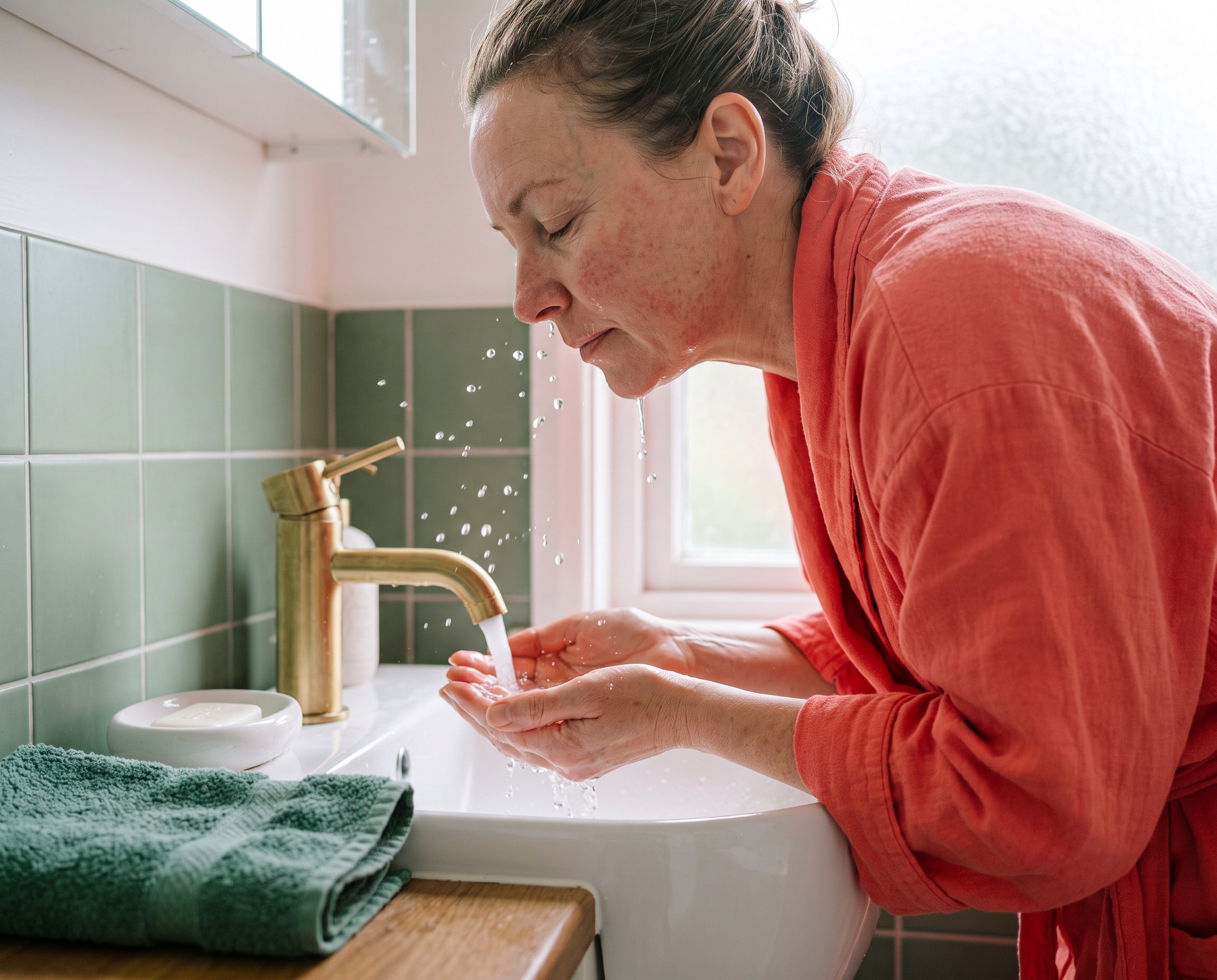
This is the part that confuses nearly everyone. Breakouts and dryness come from two separate processes that happen to share the same face. Acne starts inside individual hair follicles, where oil, dead cells, bacteria and inflammation build up. Dryness is about the surface and how well the outer layer holds water and keeps irritants out. You can have overactive follicles along your jaw and a thirsty, leaky barrier on your cheeks at once. Plenty of women in their 40s have exactly that combination.
Researchers call the hormonal side relative androgen excess. In a 2019 review in the International Journal of Women’s Health, Khunger and Mehrotra explain that estrogen drops sharply while androgens decline more gradually, and that falling levels of sex hormone-binding globulin make the imbalance stronger (Source: https://www.dovepress.com/menopausal-acne-challenges-and-solutions-peer-reviewed-fulltext-article-IJWH). Sex hormone-binding globulin is a protein that ties up hormones in the blood. When there’s less of it, more androgen is free to act on oil glands and follicles. Meanwhile the same drop in estrogen thins out the water-holding molecules and fats your barrier depends on. One hormonal shift creates two very different problems, and they don’t cancel each other out.
There’s a third factor most people miss, and it’s the one you control. When a breakout appears, the instinct is to attack it with the strongest acne products in the cabinet. Those products dry the skin further, the barrier gets more irritated, and irritated skin is more prone to inflammation and more breakouts. Then the dryness sends you toward a heavy cream, which can clog the very follicles you were trying to calm. It’s a loop, and some women stay stuck in it for a year or more. Breaking that loop is most of the work.
Why Do Perimenopausal Breakouts Look Different?
Breakouts in your 40s rarely look like the ones you had at sixteen. The American Academy of Dermatology notes that adult acne is most common in women going through menopause, and that shifting hormone levels in perimenopause can trigger it (Source: https://www.aad.org/public/diseases/acne/really-acne/adult-acne). The classic pattern is tender, inflamed bumps along the jawline, chin and around the mouth. They often sit deep, ache before they surface, and take longer to clear. Some women also notice small, stubborn clogged pores on the forehead and sides of the face, a pattern the 2019 review links to women over 40 and to smokers.
It’s more common than people assume. The same review cites a U.S. survey that found acne in 26.3 percent of women in their 40s and 15.3 percent of women in their 50s and older. That’s roughly one in four women in their 40s. Not all of it is new, either. Most adult acne is acne that never fully cleared after the teen years, while a smaller share starts for the first time in adulthood. If you’re in the never-went-away group, perimenopause may simply turn up the volume, and if you’re in the first-time group, it can feel like a betrayal even though it’s well documented.
Advertisement
Breakouts at this age also leave marks that linger. Inflammation can leave behind dark spots, called post-inflammatory hyperpigmentation, that outlast the breakout by weeks or months. It’s more pronounced in deeper skin tones, but it happens to everyone. Slower cell turnover in your 40s means those spots fade more slowly than they once did. That’s one more reason to treat breakouts gently and steadily instead of picking or scrubbing. The less inflammation you create now, the fewer marks you’ll be looking at later.
Why Does Your Skin Suddenly Feel Tight, Dry and Itchy?

Estrogen does a lot of quiet maintenance work in your skin. It supports hyaluronic acid and the other water-binding molecules in the deeper layers. It also helps keep the stratum corneum, the outermost layer, stocked with the fats that hold moisture in. As estrogen swings and declines, that maintenance slips. Water escapes more easily, and skin that never needed more than a light lotion starts asking for cream. Many women notice it first on their cheeks, around the eyes, and on their shins and forearms.
Itching catches a lot of women by surprise. Dry, weakened skin is more reactive, and some women feel itching or even a crawling sensation with no visible rash at all. A 2025 clinician’s review in EMJ Dermatology links dryness and itch in women not using hormone therapy to lower levels of hyaluronic acid and a weaker outer skin layer (Source: https://emjreviews.com/dermatology/article/managing-menopausal-skin-a-clinicians-review). Long hot showers, fragranced body washes and bar soaps make it worse, and so does dry indoor heat in winter. If the itching is intense, lasts for weeks, or comes with a rash, get it checked. Other conditions can cause itching too, and they’re worth ruling out.
Collagen is the slower story running underneath all of this. The same review cites research showing women lose about 30 percent of their skin collagen in the first five years after menopause, and that the loss tracks more closely with how long estrogen has been low than with age itself. Perimenopause is when that slide begins. You might notice your skin looks a little less springy, or that pillow creases take longer to fade in the morning. None of it happens overnight. But it’s real, and it’s a good reason to protect your barrier and wear sunscreen now instead of later.
What Other Skin Changes Catch Women Off Guard?
Breakouts and dryness get the attention, but they rarely arrive alone. Hot flashes bring sudden flushing, and for women with rosacea, those flushes can set off flare-ups. Skin that never reacted to anything may start stinging from a toner or a scented cream you’ve used for years. Cuts and blemishes can heal more slowly. Some women find a few coarse dark hairs on the chin or upper lip while the hair on their head feels thinner. All of these trace back to the same shifting balance between estrogen and androgens.
Pigment can change as well. Melasma, the patchy brown discoloration that tends to show up on the cheeks, forehead and upper lip, can appear or darken during hormonal shifts, and sun exposure is its biggest trigger. Existing skin conditions also tend to get louder. In a 2025 survey of women at a menopause clinic, cited in the EMJ review, every respondent reported at least one skin symptom and 46 percent said a skin condition they already had got worse. The same survey found that 48 percent hadn’t mentioned their skin symptoms to their clinician. That silence is a big part of why so many women feel blindsided.
How Do You Know If Something Is Really Wrong?
Most of what’s described here is a normal response to changing hormones. But normal doesn’t mean you should shrug off everything. Some combinations point to something else and deserve a medical visit. Sudden, severe acne together with new facial hair, thinning on the scalp, a deepening voice or very irregular periods can signal extra androgen from another source, such as polycystic ovary syndrome or, rarely, a hormone-producing tumor. Painful cysts that scar, a rash that won’t quit, or itching that keeps you up at night are also worth a doctor’s eye.
The AAD’s guidance for menopausal skin is practical here. It suggests seeing a dermatologist if your skin still feels dry after home care, if acne isn’t under control, if a rash lingers or a condition like eczema or rosacea gets worse, or if hair loss first appears, since earlier treatment works better (Source: https://www.aad.org/public/everyday-care/skin-care-secrets/anti-aging/skin-care-during-menopause). I’d add one more. Tell whoever manages your perimenopause care about your skin, even if it feels minor. It’s part of the picture. A doctor who knows about your breakouts, itching and hair changes has more to work with when deciding what might help.
How Do You Treat Breakouts Without Drying Your Skin Out?

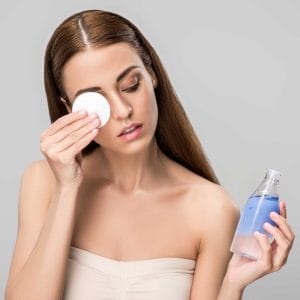
The goal is to calm the follicles without stripping the surface. Start with the cleanser. The AAD recommends a mild cleanser instead of soap for menopausal skin, and suggests a salicylic acid cleanser for acne-prone areas. You don’t have to use the same product everywhere. A gentle cream cleanser on dry cheeks and a salicylic acid wash along the jaw and chin is a reasonable split. Keep the water lukewarm, use your hands instead of a brush, and pat dry.
For treatment, lower and slower usually wins. Khunger and Mehrotra note that benzoyl peroxide can irritate and dry out older skin, and they prefer a low 2.5 percent strength in a cream base. They also point out that retinoids need a gradual start, and that adapalene and retinol tend to irritate less than stronger prescription retinoids. Start a few nights a week, and apply moisturizer first if your skin is touchy. Spot treatments belong on the spots, not smeared across your whole face. Skip scrubs entirely, since they irritate the same skin you’re trying to calm.
When over-the-counter care isn’t enough, there are prescription options. Dermatologists often treat hormonal acne in women with medicines that block the effects of androgens, sometimes paired with prescription creams or gels. Which one fits depends on your health history, blood pressure, other medications and whether you’re still having periods, so it’s a conversation for your doctor. Still, it’s good to know these options exist. Too many women assume adult acne is something they have to live with, and it isn’t.
What Does a Routine for Breakouts and Dryness Look Like?
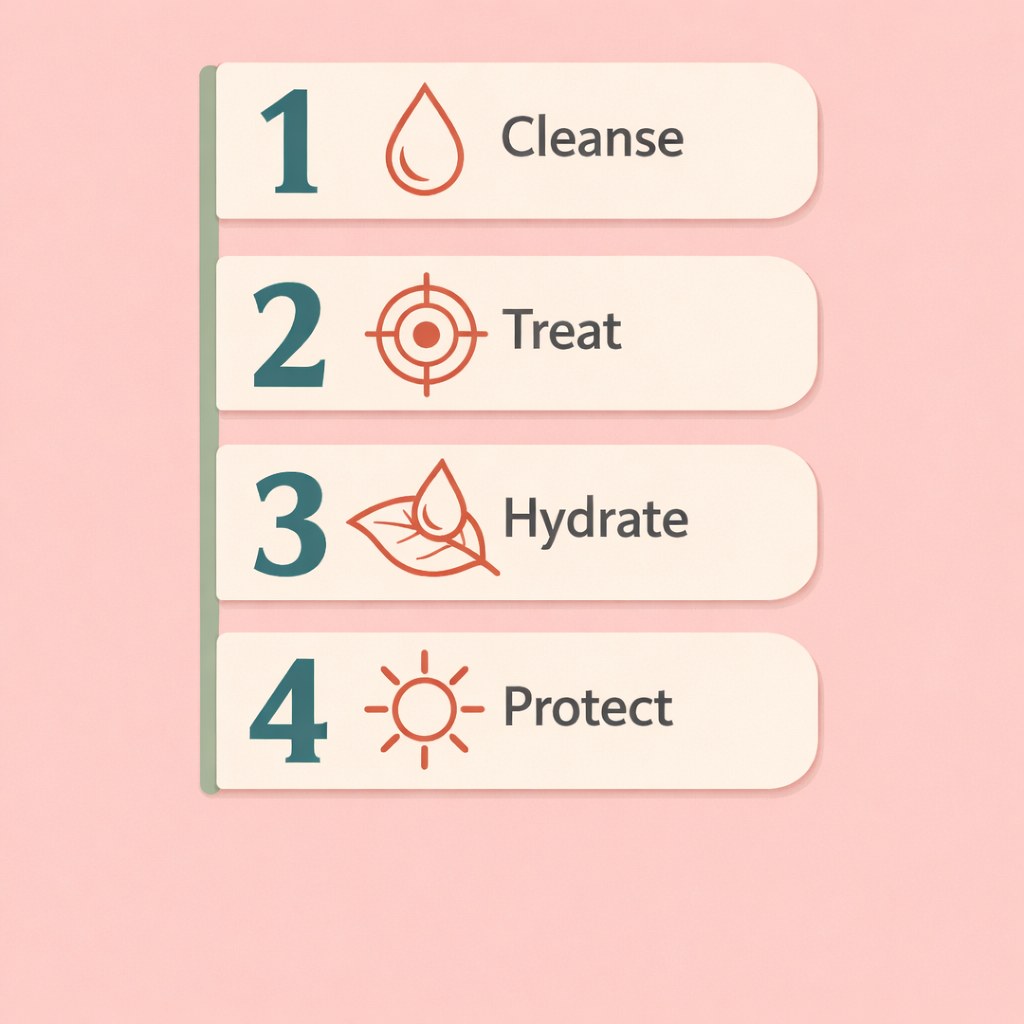
Simple works best, because every extra product is another chance for irritation. In the morning, rinse with water or use a gentle cleanser, then apply a moisturizer labeled non-comedogenic. Look for barrier-friendly ingredients that won’t sit heavy in your pores, like glycerin, hyaluronic acid, ceramides and niacinamide. Niacinamide is especially useful for this stage because it supports the barrier and calms redness, and most skin tolerates it well. Finish with a broad-spectrum sunscreen of SPF 30 or higher, which the AAD recommends every day, winter included.
At night, cleanse, put your treatment product only where you break out, and follow with moisturizer everywhere. On nights you skip the retinoid or acid, let your skin rest with moisturizer alone. If your cheeks are very dry, a slightly richer cream there and a lighter lotion along the jaw is perfectly fine. Change one thing at a time and give it four to six weeks before you judge it. When you change everything at once, there’s no way to tell what’s helping and what’s hurting.
Your body needs the same gentler approach. Take shorter, warm showers instead of long hot ones, and swap scented body wash for a fragrance-free one. Moisturize right after bathing while your skin is still a little damp, which the AAD also suggests. A humidifier in the bedroom can help during heating season. These steps sound small. But they add up, especially if itching on your legs or arms keeps you awake.
Can Hormone Therapy Help Your Skin?
It’s a fair question, and the honest answer is that it might, though skin alone isn’t a reason to start it. Studies cited in the EMJ review found that estrogen replacement improved collagen, skin thickness and hydration in women after menopause. Hormone therapy is prescribed mainly for symptoms like hot flashes, night sweats and poor sleep, and the decision depends on your personal and family health history. If you’re already talking about it with your doctor, mention your skin as part of that conversation. Don’t expect it to clear acne, though, and know that hormone treatments can affect pigment. Topical estrogen cream, for example, has been linked to melasma in reports cited in that same review.
What Happens to Your Skin After Perimenopause Ends?
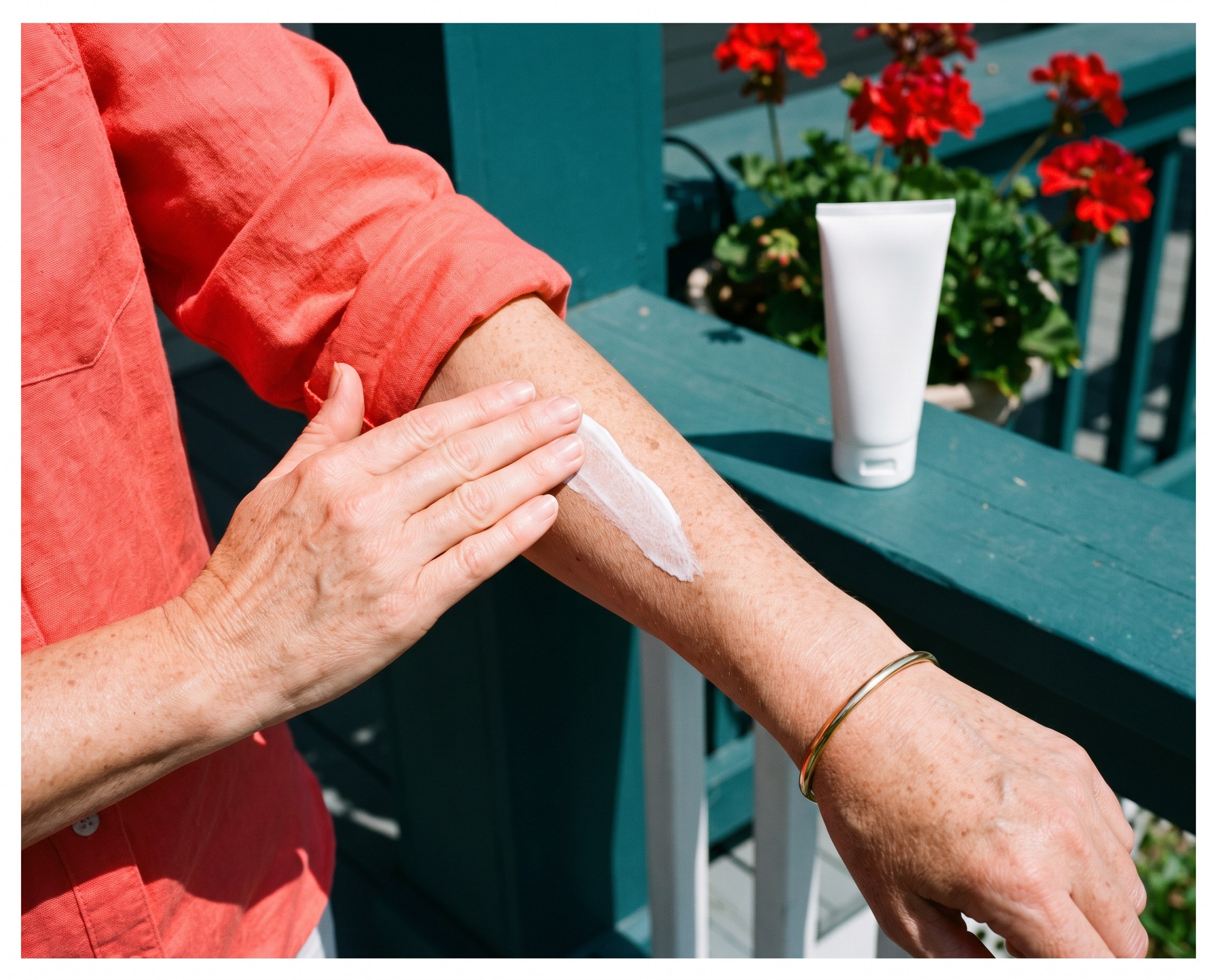
If you’re in your 50s, 60s or beyond, a lot of this may sound familiar, because the story keeps going after periods stop. Once you’re past menopause, the wild hormone swings settle down, and for many women breakouts ease. They don’t always disappear, though. The 2019 review notes that in women over 60, acne shows up mainly on the chest and back rather than the face. What usually continues is the dryness, along with the steady collagen loss that speeds up in those first years after menopause. Skin gets thinner, more fragile and slower to heal.
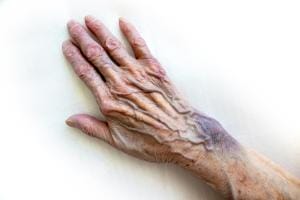
That shifts the priorities. If your 40s were about balancing breakouts against dryness, your 60s are mostly about comfort and protection. Richer creams with ceramides, cholesterol and fatty acids often feel better than they did years ago. Gentle cleansing becomes non-negotiable, and so does daily sunscreen, since UV damage keeps breaking down the collagen you still have. Retinoids can still help at this age, but lower strengths a few nights a week usually work better than an aggressive routine. And have a dermatologist look at anything new, changing or bleeding, because the AAD warns that skin cancer can look like an age spot.
FAQs
Is it normal to get acne for the first time in your 40s?
Yes. The AAD notes that acne can appear for the first time in adulthood and is most common in women going through menopause. Shifting hormones in perimenopause are a common trigger. If new acne comes with facial hair growth, scalp thinning or very irregular periods, see a doctor to rule out other causes.
Should I use acne products or a moisturizer if I have both problems?
Use both, but put each where it’s needed. Treat breakout areas with a gentle acne product and moisturize your whole face with a non-comedogenic formula. Drying your skin out usually makes breakouts worse, not better. If your skin stings, cut back the acne product before you cut the moisturizer.
Will perimenopause acne go away after menopause?
It often eases once hormone levels settle, but not for everyone. Some women keep breaking out into their 50s, and in women over 60 acne tends to move to the chest and back. A dermatologist can help if it persists. Dryness, on the other hand, usually sticks around and needs ongoing care.
Can stress make perimenopausal breakouts worse?
It can. The AAD says stress can raise androgen levels, which stimulate oil glands and hair follicles. Poor sleep from night sweats doesn’t help. Managing stress won’t clear acne on its own, but it removes one push in the wrong direction.
Do I need to replace my whole skincare routine?
Usually not. Start by swapping out anything harsh, like foaming cleansers, scrubs and strong toners, and adding a barrier-friendly moisturizer and daily sunscreen. Then add one targeted treatment for breakouts. Most women do better with fewer products used consistently than with a full overhaul.
Your skin in perimenopause isn’t broken, and it isn’t betraying you. It’s reacting to a real, measurable shift in hormones, and it’s doing two things at once because the hormones are doing two things at once. Once you see it that way, the fix gets simpler. Calm the breakouts gently, feed the barrier, protect it from the sun, and give it time. And if something feels off, say so to your doctor. You deserve skin that feels comfortable at 45, at 55 and well beyond.
Related Posts