Sep
If you click on links we provide, we may receive compensation.
By your 60s, your skin takes more than twice as long to shed dead cells as it did in your 20s. Research shows that cell turnover slows from roughly 28 days in your 20s to 60 days or longer in your sixth decade – meaning dead, flattened skin cells sit on the surface for weeks longer than they used to. That is not just a statistic; it shows up on your face as dullness, patchy texture, and a complexion that looks tired no matter how much moisturizer you apply. The good news is that exfoliation directly addresses this problem. But whether you should be doing more of it as you get older is not a simple yes – it depends entirely on how you exfoliate, how often, and what your skin can actually handle right now.
Why Does Skin Turnover Slow So Dramatically With Age?
In your 20s, your skin cycles through fresh cells on a reliable 28-day schedule. New cells are constantly being produced in the deepest layer of the epidermis, migrating upward, flattening out, and eventually shedding from the surface. That regular rhythm keeps the complexion looking bright and even because dead cells do not linger. By the 40s, research shows that cycle stretches to around 40 to 45 days. By the 60s, it can take 60 days or longer – more than double what it once was. The scientific explanation for this comes down to what happens in the basal layer of the epidermis, where stem cells live. As the decades pass, the number of senescent cells in all layers of the skin increases, and senescent cells are essentially cells that have stopped dividing efficiently. When they accumulate in the basal layer, they interfere with the production of fresh cells, and the entire renewal cycle slows. The consequence you see in the mirror is dullness, rough texture, and a complexion that seems stuck regardless of what you put on it. Exfoliation works by manually accelerating the removal of those surface-dwelling cells – and in doing so, it counters one of the most visible consequences of slower turnover.
Does Slower Turnover Mean You Should Exfoliate More Often?
The intuitive answer would be yes – if your skin takes twice as long to shed dead cells, surely you need to remove them more aggressively. But mature skin is also thinner, drier, and less resilient than it was in earlier decades, which significantly complicates the picture. Younger skin with robust sebum production and an intact barrier can often tolerate daily exfoliation without much protest. Older skin does not have the same built-in cushion. So the more accurate answer is this: you need to exfoliate more thoughtfully, not necessarily more frequently. Most dermatologists recommend that mature skin be exfoliated one to two times per week – a rhythm that clears accumulated dead cells without stripping the natural oils and disrupting the barrier that older skin already struggles to maintain. The goal is to pace your exfoliation to what your skin can recover from, and that recovery window genuinely lengthens with age. More is not better here; right is better.
Which Type of Exfoliant Actually Works Best for Mature Skin?
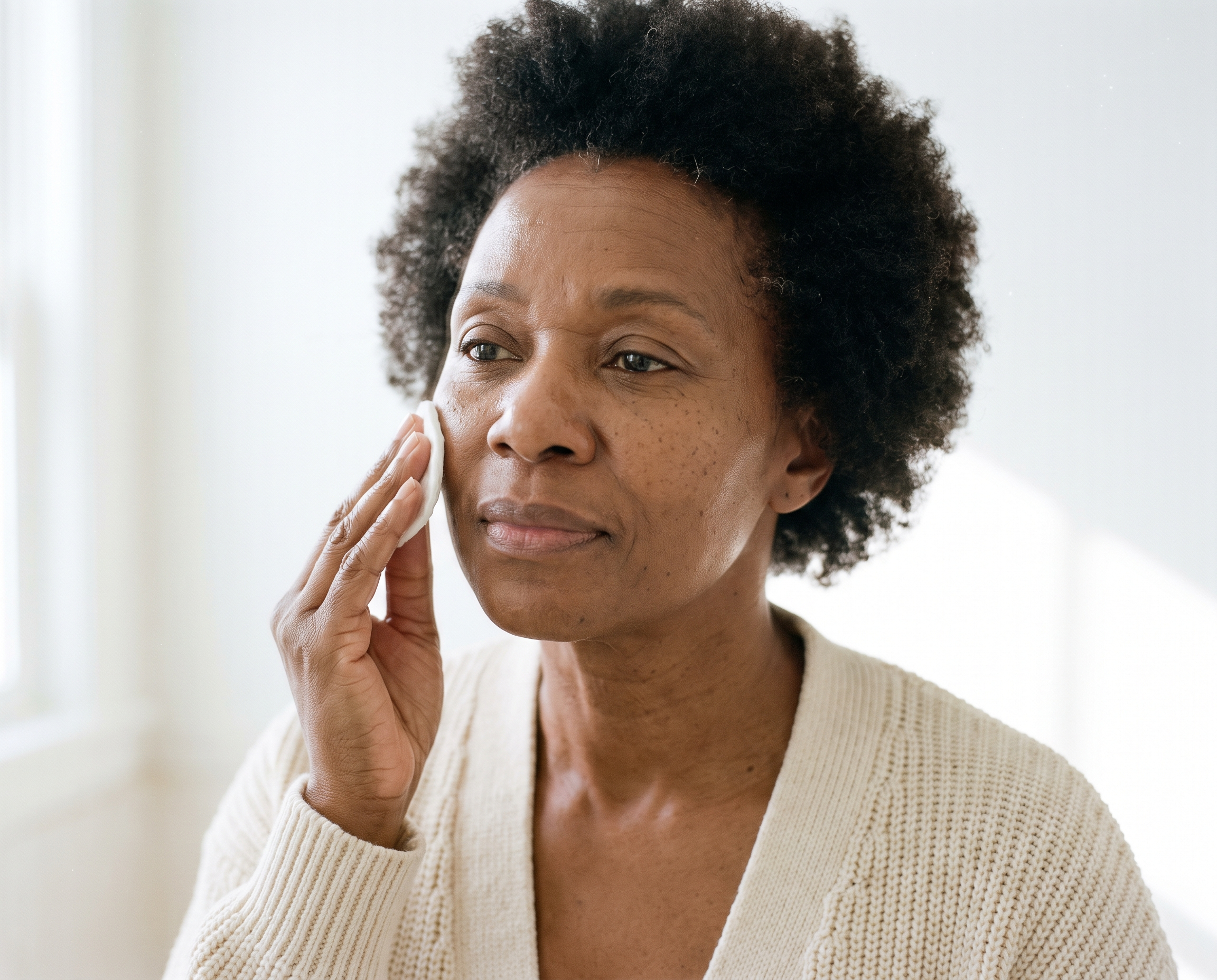
There are two broad categories of exfoliation – physical and chemical – and for older skin, they are not equally suited. Physical exfoliants work mechanically: scrubs, brushes, pumice, and grain-based products use friction to loosen dead cells from the surface. While satisfying in the moment, physical exfoliation can be too aggressive for mature skin. The epidermis thins with age, and the micro-abrasions that coarse scrubs create are a real concern when skin is already slower to heal. Walnut shell powders and rough grain scrubs in particular are worth avoiding; even gentler physical options need to be used sparingly.
Chemical exfoliants take a different approach entirely. They dissolve the bonds that hold dead skin cells to the surface, allowing those cells to shed evenly and naturally rather than being physically scraped away. They tend to be gentler, more precise, and more effective at addressing the specific texture and tone issues that come with aging skin. Most board-certified dermatologists recommend chemical exfoliants over physical scrubs for older adults, and clinical research supports that position. Among chemical exfoliants, alpha hydroxy acids – AHAs – are the main category to know. Glycolic acid is the smallest AHA molecule, which means it penetrates most deeply and delivers the most noticeable improvement in surface texture. A well-documented clinical finding is that a 12 percent glycolic acid formulation reduced rough skin texture by 72 percent in eight weeks. But that same depth of action also makes glycolic acid more likely to cause irritation, especially on skin that is already dry or reactive.
Lactic acid is a gentler alternative that is particularly well suited to mature skin. Its molecular size is larger than glycolic, so it works closer to the surface, and it also functions as a humectant – drawing moisture into the skin even as it exfoliates. For anyone starting chemical exfoliation in their 50s or 60s, lactic acid at 8 to 10 percent is often the better entry point. Mandelic acid is gentler still, with the largest molecular size among common AHAs, and it is an excellent choice for skin that is especially reactive or prone to post-inflammatory darkening. Enzyme exfoliants – derived from papain (papaya) or bromelain (pineapple) – are another option for very sensitive skin. They work by digesting the protein bonds in dead skin cells rather than chemically dissolving them, and they tend to be quite mild, though they do not penetrate as deeply as AHAs.
How Does Menopause Change What Mature Skin Needs From Exfoliation?

Any discussion of exfoliation and aging that skips menopause is missing a significant part of the picture. As estrogen levels decline during perimenopause and menopause, the skin undergoes structural changes that directly affect how it tolerates and responds to exfoliants. Estrogen plays a central role in collagen synthesis, sebum production, and the maintenance of the skin’s moisture barrier. When levels drop, collagen production slows, the skin thins measurably, and natural oil production decreases. Research confirms that postmenopausal women experience epidermal thinning, declining dermal collagen content, diminished skin moisture, and impaired wound healing. Full source: https://www.ncbi.nlm.nih.gov/pmc/articles/PMC12374573/
These changes mean the skin becomes considerably more vulnerable to disruption from exfoliants that it might have handled easily a decade earlier. Over-exfoliating after menopause can strip away the oils the skin is already struggling to produce, trigger inflammatory responses that worsen redness and sensitivity, and leave the barrier in a compromised state that takes much longer to repair. This does not mean exfoliation should stop – it remains one of the most useful tools for the texture and radiance concerns that menopause brings. But frequency should be conservative. Once a week is often the right starting point. Lactic acid is particularly well matched to post-menopausal skin because it exfoliates and hydrates simultaneously. Pairing any chemical exfoliant with a rich, barrier-supporting moisturizer immediately after application – ideally one containing ceramides, squalane, or shea butter – helps the skin recover and hold on to the benefits.
What Does Over-Exfoliation Actually Look Like on Older Skin?
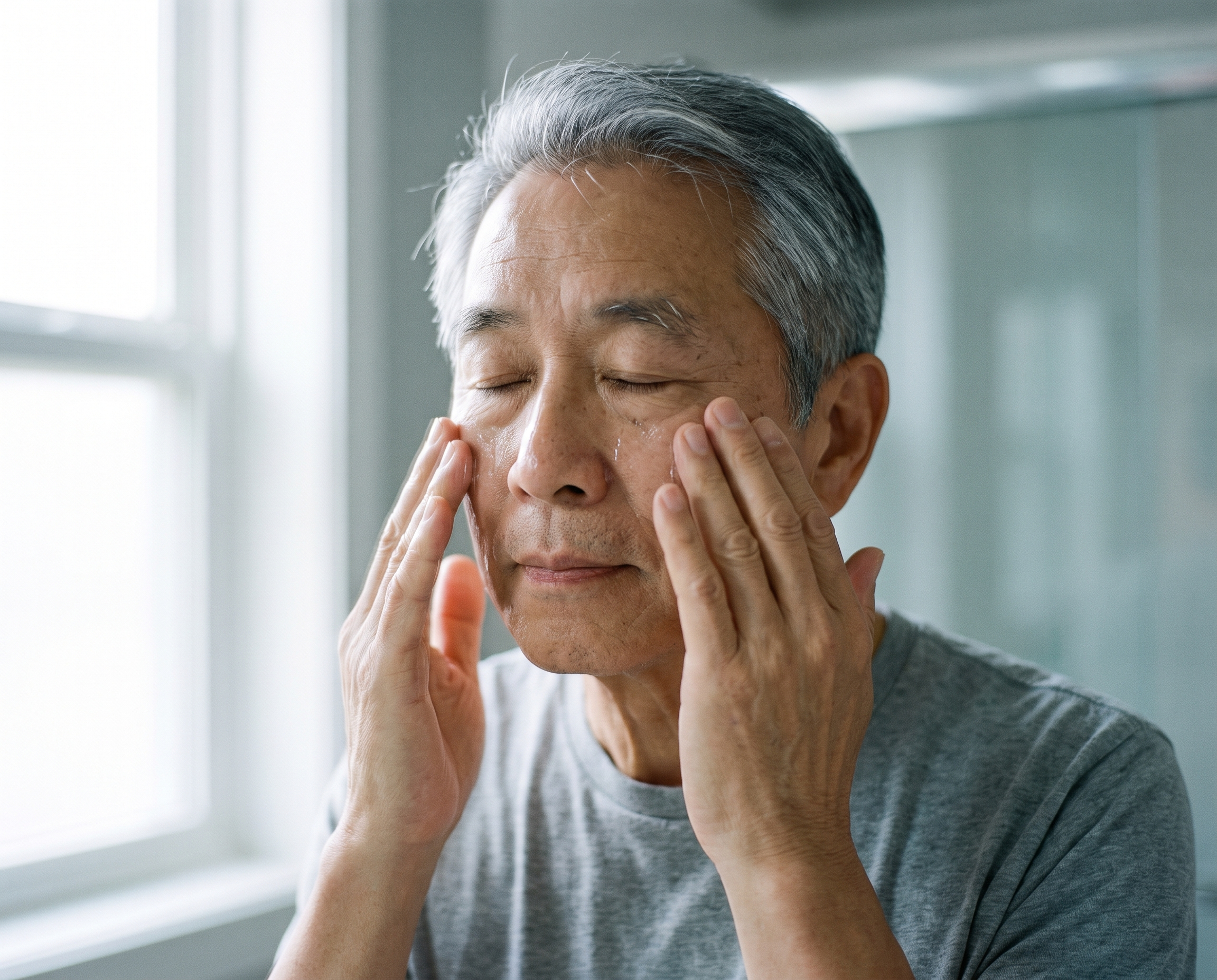
Many people over-exfoliate without recognizing what is happening. The classic signs include persistent tightness and dryness, increased sensitivity to products that previously caused no reaction, redness that does not settle within a few hours, and a strange surface shininess that looks nothing like a healthy glow. Some people experience new breakouts, which seems paradoxical but makes sense: a damaged barrier lets bacteria and irritants penetrate more easily, and the skin may also produce extra oil in a compensatory attempt to restore what has been stripped. The deeper problem with over-exfoliation is that it triggers chronic low-grade inflammation, and sustained inflammation is directly linked to the degradation of collagen and elastin – the very proteins responsible for firmness and elasticity. In other words, over-exfoliating does not just irritate your skin in the short term. It can actively accelerate the signs of aging you are trying to address.
The stratum corneum – the outermost layer of skin and the one most directly touched by exfoliation – acts as the body’s primary defense against moisture loss and environmental damage. Repeatedly stripping it before it has fully regenerated leaves skin functionally compromised: unable to retain water properly, more reactive to sun, wind, and pollution. For older skin, where barrier function is already reduced by the natural aging process, the margin for error is smaller than it is for younger skin. If you notice any of these warning signs, the right response is to step back entirely for a week or two, focus on gentle cleansing and barrier-repair moisturizers, and restart at a lower frequency when the skin has settled.
Does Regular Exfoliation Really Help With the Signs of Aging?
The evidence for exfoliation as an anti-aging strategy is solid. When dead cells accumulate on the surface, they create a physical barrier that scatters light, dulls the complexion, and prevents treatment products from reaching the living skin beneath. Clearing that layer does two things simultaneously: it immediately brightens the skin, and it improves the absorption and effectiveness of every other product you apply – serums, moisturizers, retinoids, vitamin C, and more. For mature skin that is investing in good actives, this absorption benefit is particularly valuable. But AHAs also have their own documented anti-aging effects beyond simple exfoliation. The foundational research by Dr. Eugene Van Scott and Dr. Ruey Yu, published from the 1970s onward, demonstrated that AHAs – particularly glycolic and lactic acid – could significantly improve photoaged skin. More recent clinical work confirms that regular use of AHA-based exfoliants can improve skin firmness, even out pigmentation, and soften the appearance of fine lines by stimulating cell renewal and encouraging collagen production over time. The key is consistent, appropriately paced use rather than aggressive short-term application. Full source: https://serumscientist.com/blogs/science-journal/aha-bha-exfoliation-decoded-the-complete-science-of-chemical-exfoliation-cell-turnover-and-why-most-people-are-over-exfoliating
How Do You Build an Exfoliation Routine That Actually Works for Mature Skin?

Starting is simpler than most people expect. The rule is begin low and go slow. If you are new to chemical exfoliation, or returning after a break, start with once a week using a low-percentage lactic acid product – around 5 to 8 percent. Apply it in the evening after cleansing, allow it to sit for the recommended time on the packaging (usually 10 to 15 minutes for a leave-on product), and follow immediately with a hydrating moisturizer. After four to six weeks, if your skin is responding well – no unusual dryness, redness, or sensitivity – you can move to twice weekly, or increase the percentage slightly. What you should not do is use multiple exfoliating steps at the same time. Layering a toner with glycolic acid, a serum with AHA, and a retinol in the same evening is a common mistake that compounds irritation quickly. Choose one exfoliating step and give it a genuine runway.
Sun protection the morning after exfoliation is non-negotiable. Chemical exfoliants accelerate the shedding of the outermost skin cells, which makes the fresh cells beneath more vulnerable to UV damage. This is especially significant for mature skin that already carries decades of cumulative sun exposure. SPF 30 or higher every morning – not just the day after exfoliating, but every day – is the minimum. If you use retinol as part of your routine, alternate it with your exfoliant rather than stacking them on the same evening. Both accelerate cell turnover and increase skin sensitivity, and using them together significantly raises the risk of barrier disruption. A simple alternating schedule – exfoliant on Monday and Thursday evenings, retinol on Tuesday and Friday evenings, for example – gives each active space to work without overwhelming the skin.
FAQs
Can I use a physical scrub if my skin seems to tolerate it?
Physical scrubs are not automatically ruled out for mature skin. If you enjoy a gentle scrub and your skin shows no signs of irritation, thinness, or sensitivity, once a week may be fine. Look for formulations with very fine, rounded particles rather than coarse grains or walnut shell powder, which can cause micro-abrasions even on resilient skin. Never use a physical scrub on skin that is already irritated, sunburned, or freshly treated with a chemical exfoliant.
Is exfoliation safe if I use retinol?
It can be, but the combination needs careful handling. Both retinol and chemical exfoliants increase cell turnover and skin sensitivity. Using both on the same evening significantly raises the risk of irritation and barrier damage. The most sensible approach is to alternate: exfoliant some evenings, retinol on others. Always follow both with a good moisturizer, and consider using retinol just once or twice a week to begin with if you are also exfoliating regularly.
What about exfoliating the body, not just the face?
Body skin also accumulates dead cells more slowly with age, so exfoliation there is equally worthwhile. Body skin tends to be less reactive than facial skin, which means you can often tolerate slightly more frequent or robust exfoliants – a gentle AHA body lotion used a few times a week, or a mild scrub in the shower once or twice a week, can make a noticeable difference to texture and radiance on the arms, legs, and decolletage. Apply a rich body moisturizer while the skin is still slightly damp to lock in hydration immediately afterward.
Is twice a week too much for someone in their 70s?
It depends entirely on the individual and the product. Some people in their 70s exfoliate twice weekly without any problems. Others find once a week – or even once every ten days – is what their skin handles best. The right frequency is the one that produces smoother, brighter skin without ongoing redness, tightness, or irritation. Let your skin guide you. If you notice any of those warning signs, dial back the frequency rather than switching products first.
When should I see a dermatologist about my exfoliation routine?
If your skin reacts to every exfoliant you try, or if it remains irritated and sensitized despite reducing frequency, a dermatologist visit is worth it. Conditions like rosacea, eczema, or a chronically compromised barrier may need targeted treatment before exfoliation can be reintroduced safely. A dermatologist can also recommend professional-grade chemical peels calibrated specifically to your skin’s condition – sometimes a supervised in-office peel delivers better results than months of home use.
Exfoliation, done right, is one of the most reliable tools available to older skin. The slower cell turnover that comes with age makes it genuinely more necessary – but the same biological changes that create that need also call for a more careful, more strategic approach. Pick a gentle chemical exfoliant, start with once a week, protect the next morning with SPF, and give it real time to work. The results – a brighter, smoother complexion with measurably better absorption from everything else in your routine – are worth the patience.
Related Posts