Sep
If you click on links we provide, we may receive compensation.
Chemical peels are consistently ranked among the top five minimally invasive cosmetic procedures performed in the United States – so popular, in fact, that the global chemical peel market hit an estimated USD 2.09 billion in 2024, with projections pushing it to USD 2.8 billion by 2030 according to Grand View Research (https://www.grandviewresearch.com/industry-analysis/chemical-peel-market-report). And yet for all that popularity, most people sitting in the treatment chair have only the vaguest idea of what is actually happening to their skin. You know there is an acid involved. You have probably heard that your face might peel afterward. But the actual chain of events – the biology unfolding layer by layer, from the moment the solution touches your skin to the moment fresh new skin finally appears – is something most practitioners do not spend much time explaining. That gap is worth closing. When you know what is really happening, you can make a smarter choice about which peel is right for you, you can recognize what is normal during recovery, and you will not be alarmed when the frosting shows up.
What Is a Chemical Peel Actually Doing to Your Skin?
The term chemical peel sounds dramatic, but the fundamental principle is precise and controlled. A chemical peel is an intentional, managed wound. An acidic solution is applied to the skin, and that solution disrupts the bonds holding dead and damaged cells together, forcing the skin to respond with its own repair processes. At the cellular level, the primary action is breaking desmosomal bonds – the protein connections that link keratinocytes, which are the cells making up your outer skin layers. When those bonds are disrupted, the cells detach and shed in an accelerated and orderly way, revealing the newer cells beneath. This is why the results often look like your complexion has been refreshed rather than harmed – because the disruption is targeted, predictable, and followed immediately by a natural healing response.
Beyond exfoliation, something more interesting happens deeper in the skin. Alpha hydroxy acids – AHAs – activate keratinocytes, which then release signaling molecules including interleukin-1 alpha that communicate with the fibroblasts in the dermis. Fibroblasts are the cells responsible for producing collagen, elastin, and hyaluronic acid. When they receive these signals, they ramp up production of all three. Research published by the National Institutes of Health (https://pmc.ncbi.nlm.nih.gov/articles/PMC7928281/) found that professional-grade TCA and lactic acid peels measurably increase collagen synthesis and modulate the extracellular matrix – meaning the improvement in skin texture and firmness you notice after a peel is not cosmetic sleight of hand, it is actual structural change in the dermal architecture. This collagen remodeling is one of the reasons peels done consistently over time tend to produce cumulative results that keep improving between appointments.
How Do Different Acids Work and Why Does the Type Matter?
Not all chemical peels are the same, and the acid being used matters enormously – both for the results you get and the experience during the procedure. Superficial peels typically use alpha hydroxy acids like glycolic or lactic acid, or beta hydroxy acids like salicylic acid. These agents work primarily within the epidermis, the outermost skin layer, making them the gentlest option and the easiest to tolerate. Glycolic acid is water-soluble and penetrates the skin efficiently due to its small molecular size, which gives it a rapid and predictable action. Salicylic acid is lipid-soluble, which means it moves through oil and is particularly effective at clearing congested pores – the reason it is so commonly used on acne-prone skin. For most people, superficial peels require no downtime beyond mild redness for a day or two, and many people return to normal activity the same afternoon.
Medium-depth peels use higher concentrations of glycolic or lactic acid, or trichloroacetic acid – TCA – typically in concentrations of 20 to 35 percent. TCA is a particularly versatile agent because it is self-neutralizing, meaning the skin stops the reaction on its own rather than requiring the practitioner to apply a separate neutralizing solution. Medium peels reach the upper dermis, which makes them effective for treating more established sun damage, moderate hyperpigmentation, and fine-to-medium lines. Deep peels go further still, using phenol – carbolic acid – or TCA at concentrations above 50 percent to reach the mid-dermis. Deep peels produce the most dramatic results but come with the most significant recovery time and, in some cases, require anesthesia or sedation. According to StatPearls at the National Institutes of Health (https://www.ncbi.nlm.nih.gov/books/NBK547752/), phenol peels are reserved for patients with severe photoaging or deep acne scars and should only be performed by experienced practitioners in settings equipped to handle the associated risks, including cardiac monitoring in some protocols.
What Happens in the Room from Start to Finish?
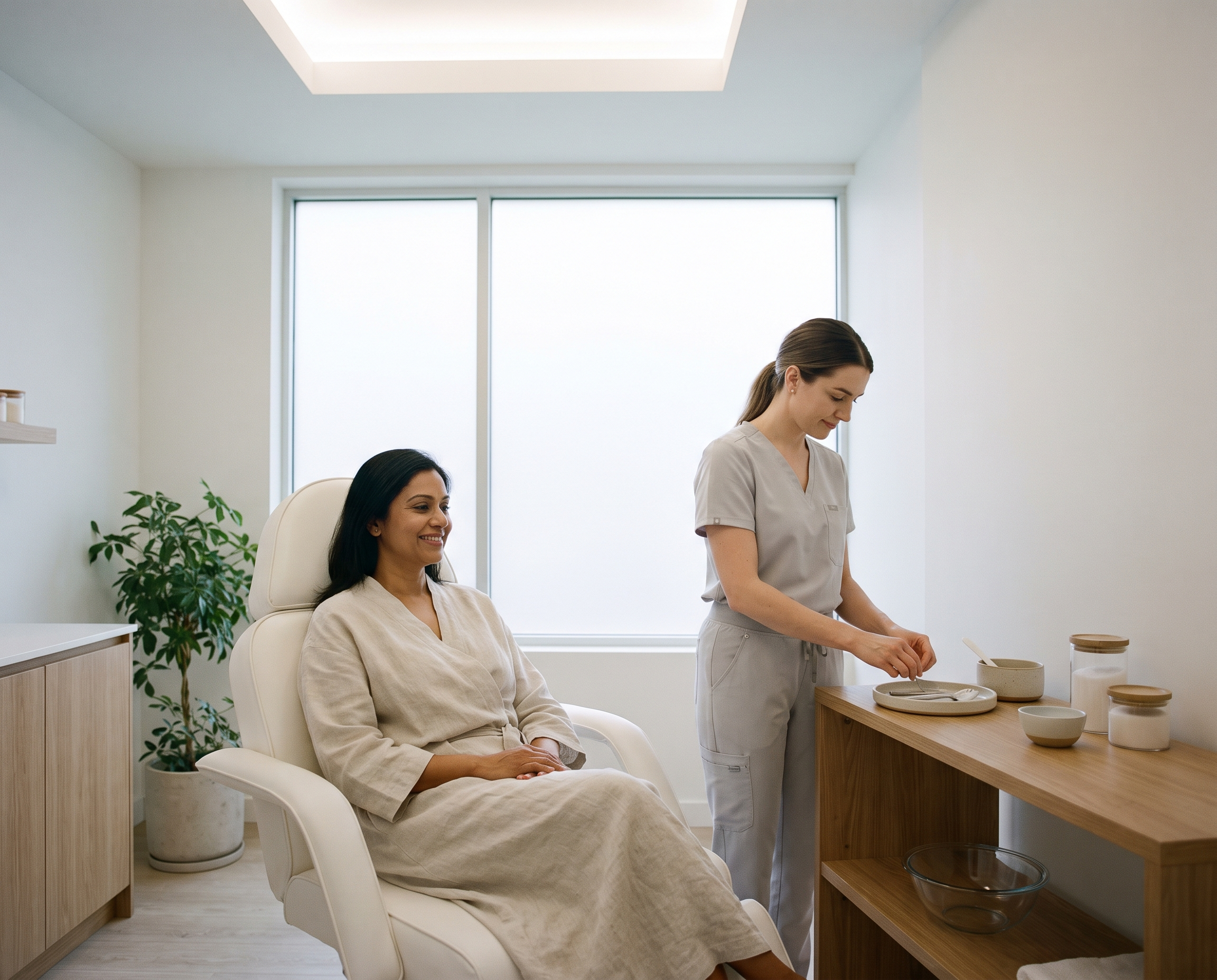
Before any acid touches your skin, a good practitioner will have done a thorough skin assessment – evaluating your Fitzpatrick skin type, reviewing your medical history, and discussing your goals. People with darker skin tones are typically started on lighter peels because there is a higher risk of post-inflammatory hyperpigmentation with deeper agents. Most clinics also recommend a pre-peel protocol at home that includes retinoids and sometimes a skin-brightening agent like kojic acid for two to four weeks beforehand, which primes the skin and ensures more even acid penetration on the day. On the day itself, you will sit in a reclined chair and the technician will remove all makeup and surface oils with a gentle cleanser, followed by an acetone or alcohol degreasing wipe to strip any remaining barrier-forming residue. That stripping step is more important than most people realize: any oil left on the skin will prevent the acid from penetrating evenly and can lead to patchy results.
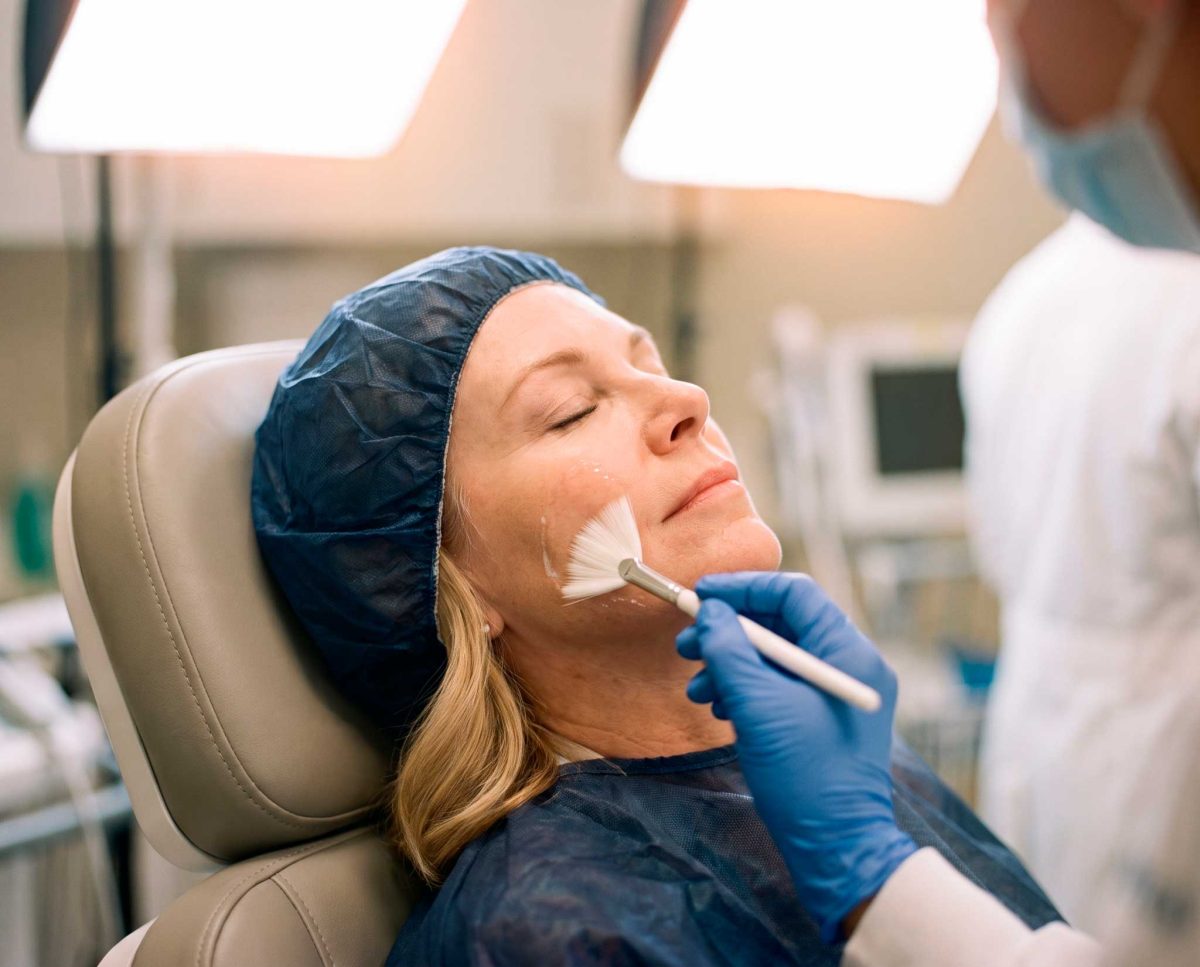
The acid is then applied using a fan brush, cotton gauze, or applicator, starting with the least sensitive zones – typically the forehead – and working toward the more reactive areas like the nasolabial folds and the area around the mouth. Timing matters here: the practitioner is monitoring the skin’s response in real time, watching for the endpoint that tells them the peel has reached its intended depth. For superficial peels, that endpoint might simply be a uniform pinkness or mild erythema. For medium peels, they are looking for the frosting reaction, described in detail below. The acid is then neutralized – either with a neutralizing solution in the case of AHAs, which do not self-neutralize, or by rinsing with water for TCA. A cool compress is typically applied immediately afterward to ease the sensation and calm the initial inflammatory response. The whole in-office procedure usually takes 30 to 60 minutes depending on the peel depth and the size of the treatment area.
Why Does It Sting and What Does That Sensation Mean?
The sensation during a chemical peel varies considerably depending on the acid being used and the depth of penetration. Superficial peels typically produce a mild tingling or warmth that most people find easy to tolerate and that resolves quickly once the acid is neutralized. Medium peels tend to produce a more noticeable burning sensation – not unbearable for most people, but uncomfortable, particularly in the 90 seconds to two minutes while the acid is active and the practitioner is completing the application. Some practitioners use a handheld fan during this phase to help manage the heat on the skin’s surface. Deep phenol peels are a different experience entirely: they can cause significant pain during application, which is why sedation or nerve blocks are often used, and the discomfort can persist during and after the procedure as the acid continues reacting in the deep dermis. It is worth knowing that the intensity of the sensation does not necessarily track with the quality of the result – some very effective superficial peels produce almost no discomfort at all.
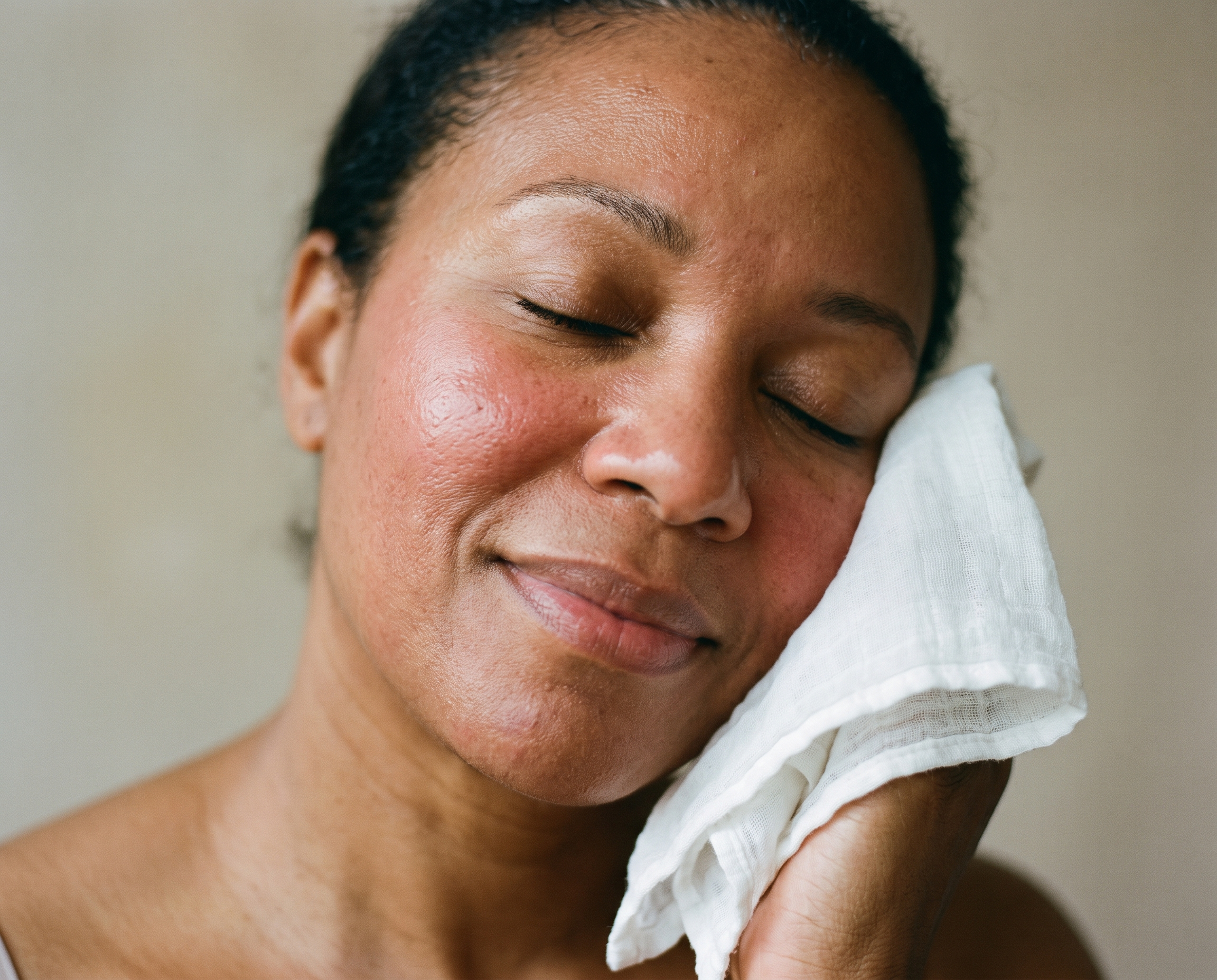
One thing that catches some people off guard is the sensation that continues after the neutralizer is applied. With TCA especially, the burning can linger for 20 to 30 minutes post-application because the reaction continues until the skin’s own buffering capacity shuts it down. A cool compress and sometimes an oral over-the-counter painkiller are all that is typically needed, but it helps to know this in advance so you are not alarmed. The vivid redness you see immediately after is a normal vascular response as blood rushes to the treated area. That redness is part of the healing inflammatory cascade that will drive the collagen remodeling you are hoping to achieve, and it typically fades to pink within a few hours for superficial peels, or over a period of days for medium and deep treatments.
Advertisement
What Is the Frosting Reaction and Is It Supposed to Happen?
For medium and deeper peels, you may look in the mirror mid-procedure and see white patches forming on your skin. This is called frosting, and it is not only normal – it is the signal practitioners are looking for to confirm that the peel has reached its target depth. Frosting occurs because the acid is denaturing the proteins in the skin, causing them to coagulate and form a visible white film on the surface. Dermatologists classify frosting into three levels. Level I frosting appears as a patchy, streaky white film over a red base, indicating the peel has reached the top of the dermis. Level II frosting shows as a more uniform white coating with redness still visible beneath it, suggesting deeper papillary dermis penetration. Level III frosting is a solid, porcelain-like white coverage with little to no redness beneath – indicating penetration into the deeper reticular dermis and typically seen only with phenol or very high-concentration TCA. An experienced practitioner controls which frosting level they reach by adjusting dwell time, application pressure, and the number of passes across the skin.
One of the most common misconceptions about chemical peels is that frosting signals damage. In fact, the frosting reaction is predictable and reversible. The coagulated proteins are what will shed in the days after the peel, and the fresh skin forming beneath them is the entire goal of the process. What you do not want to see is uneven frosting that suggests inconsistent penetration – that is the practitioner’s problem to manage in real time, not yours. If you see white patches forming during a medium-depth procedure, you can relax. It means the peel is working exactly as intended, and the skin is responding in the way it is supposed to.
What Actually Happens During Recovery?
In the days after a chemical peel, the skin goes through a predictable recovery sequence. For superficial peels, recovery is minimal – you might see some pinkness and mild flaking over two to three days, and most people return to normal activity the same day as the treatment. Medium peels produce a more visible recovery: the skin begins to feel tight and dry on day two or three, and visible peeling usually peaks around days three to five. The peeling is more pronounced than after a sunburn – strips of skin will visibly shed – and the skin beneath will look pink and feel tender. This is the controlled wound-healing response in action: the old epidermis is separating from the fresh layer below it. According to the American Academy of Dermatology (https://www.aad.org/public/cosmetic/younger-looking/chemical-peels-faqs), medium peels typically complete their initial healing within seven to fourteen days, though redness can persist for weeks in some patients.
Deep peels have a much longer and more involved recovery. Initial healing can take two to three weeks, and redness – sometimes quite intense – can persist for months as remodeling continues beneath the surface. During recovery from any peel, you should not pick or pull at peeling skin manually. Removing skin that is not ready to detach disrupts the new skin forming beneath it and can cause scarring or patchy pigmentation. Use only bland, fragrance-free moisturizers during the active peeling phase, avoid heat and sweating, and apply a broad-spectrum mineral sunscreen daily without fail. The new skin emerging after a peel is temporarily more vulnerable to UV damage and post-inflammatory hyperpigmentation than your usual skin – sun protection is not optional, it is the deciding factor in whether your results hold.
What Should People with Mature Skin Know Before Booking?
Chemical peels have particular relevance for mature and aging skin, and for people over 60 especially, they can do things that topical skincare alone cannot. As skin ages, the rate of natural cell turnover slows considerably – the cycle that takes roughly 28 days in young skin can extend to 45 days or more in the skin of someone in their 60s or 70s. That slowdown contributes to dullness, uneven texture, and the accumulation of sun damage that builds over decades. A well-chosen chemical peel accelerates that turnover, helping the skin behave more like it did when it was younger – clearing surface congestion, evening pigmentation, and triggering the collagen synthesis that gradually diminishes with age. The results in mature skin can be particularly striking precisely because there is more accumulated damage to address.
There are important considerations specific to mature skin, though. Thinner skin and reduced barrier function mean that acids penetrate more readily in older patients, which can be an advantage – but it also means practitioners need to start conservatively. Many experienced dermatologists recommend beginning with a series of superficial glycolic or lactic acid peels before attempting a medium-depth treatment, especially if the patient has not used topical retinoids or exfoliants regularly. Fitzpatrick skin type matters here too: people with lighter skin tones generally tolerate stronger peels more predictably, while those with medium or darker complexions benefit from careful acid selection and often a pretreatment protocol with a skin-brightening agent to reduce the risk of post-inflammatory hyperpigmentation. The Cleveland Clinic (https://my.clevelandclinic.org/health/treatments/11010-chemical-peels) notes that people with certain skin conditions including rosacea, eczema, or active infections should avoid peels, and this guidance is particularly worth reviewing before booking as a mature patient with a complex skincare history.
For mature skin specifically, TCA peels in the 15 to 30 percent range often represent a good middle ground – delivering real results on sun damage, deeper lines, and age spots without the extended recovery of a phenol peel. Some practitioners also favor combination approaches, pairing a medium peel with microneedling in alternating sessions to maximize both surface renewal and dermal collagen stimulation. After a peel, mature skin often responds with an especially satisfying result because there was more accumulated damage to address – the skin has more room to improve. Managing expectations is still important, though: a chemical peel is not a one-time fix. A series of treatments, typically four to six spaced four to six weeks apart for superficial peels, produces the most meaningful and lasting change, and ongoing maintenance treatments help sustain those results over time.
FAQs
How long do the results of a chemical peel last?
The duration depends heavily on the depth of the peel and how well you protect your skin afterward. A superficial peel produces results that may last a few weeks to a couple of months, particularly if you are doing a series of treatments. A medium peel can deliver visible improvement in pigmentation and texture that holds for several months, especially if you maintain the skin with a solid routine including SPF and a retinoid. The deepest peels – particularly phenol – produce long-lasting results, with significant photoaging correction that can hold for years. In all cases, regular sun protection is what determines how long your results hold. New UV damage will undo what a peel corrects, and no peel is a substitute for daily SPF.
Can I get a chemical peel if I have darker skin?
Yes, but the choice of acid and concentration matters significantly. People with darker Fitzpatrick skin types – IV through VI – are at higher risk of post-inflammatory hyperpigmentation, where the treated areas darken rather than lighten after the procedure. Superficial peels using lactic acid, mandelic acid, or salicylic acid at lower concentrations are generally considered safer starting points for deeper skin tones. A practitioner experienced with diverse skin types will typically incorporate a pretreatment brightening protocol and will be conservative with depth and concentration on first treatments. This is a case where the experience and judgment of your provider matters as much as the product being used – the same peel in less skilled hands can produce very different outcomes.
How soon can I wear makeup after a chemical peel?
After a superficial peel, most people can apply makeup the following day once any redness has settled. After a medium peel, you should wait until active peeling has completed – typically seven to ten days – before applying makeup, as fragile peeling skin can trap pigments and products in a way that causes irritation or uneven color. Deep peel recovery generally requires avoiding makeup entirely for at least two weeks. When you do return to makeup after any peel, opt for mineral formulations during the initial weeks of recovery, as they tend to be less irritating on newly revealed skin and offer the added benefit of SPF.
Can I do a chemical peel at home?
Over-the-counter products marketed as at-home peels typically contain much lower concentrations of the same acids used in professional settings – glycolic acid at 5 to 10 percent versus the 20 to 70 percent a dermatologist might use. These are legitimate products that can produce mild exfoliation and gradual improvement over time, and they are appropriate for general maintenance between professional treatments. But they are not doing what a professional peel does in terms of reaching the dermis and triggering meaningful collagen remodeling. If you have a specific concern – significant sun damage, deep acne scarring, pronounced age spots – an over-the-counter product is unlikely to produce the result you are looking for. At-home products at higher concentrations are available online but carry real risks if used without proper training, including chemical burns and long-term pigmentation changes.
Does a chemical peel hurt more than microdermabrasion?
Most people find superficial peels comparable to or only slightly more uncomfortable than microdermabrasion – a mild tingling or warmth versus the mechanical scratching sensation of the abrasion device. Medium peels are generally more uncomfortable than microdermabrasion during application, though the discomfort is brief and manageable for most people. Deep peels are in a different category entirely and require appropriate pain management before and during the procedure. The comparison matters because the two treatments serve overlapping but distinct purposes: microdermabrasion is a purely mechanical exfoliation that does not trigger the same depth of biological response as a chemical peel, particularly with regard to collagen stimulation. Many practitioners use both in complementary protocols, alternating between them across a treatment series.
Chemical peels have been used in dermatology for decades because they work – not through marketing, but through precise biochemistry applied by trained hands to a remarkably responsive organ. The tingling you feel, the frosting you see, the peeling that follows – all of it is your skin doing exactly what it is designed to do when given the right signal. Going in with a clear picture of what to expect at each stage makes the experience less intimidating and helps you take better care of your skin in the days that follow. If you have been curious but hesitant, the best next step is a consultation with a board-certified dermatologist who can assess your skin, recommend the right peel depth for your concerns, and walk you through the prep and recovery specific to your skin type. From there, the rest is chemistry.
Related Posts