Oct
If you click on links we provide, we may receive compensation.
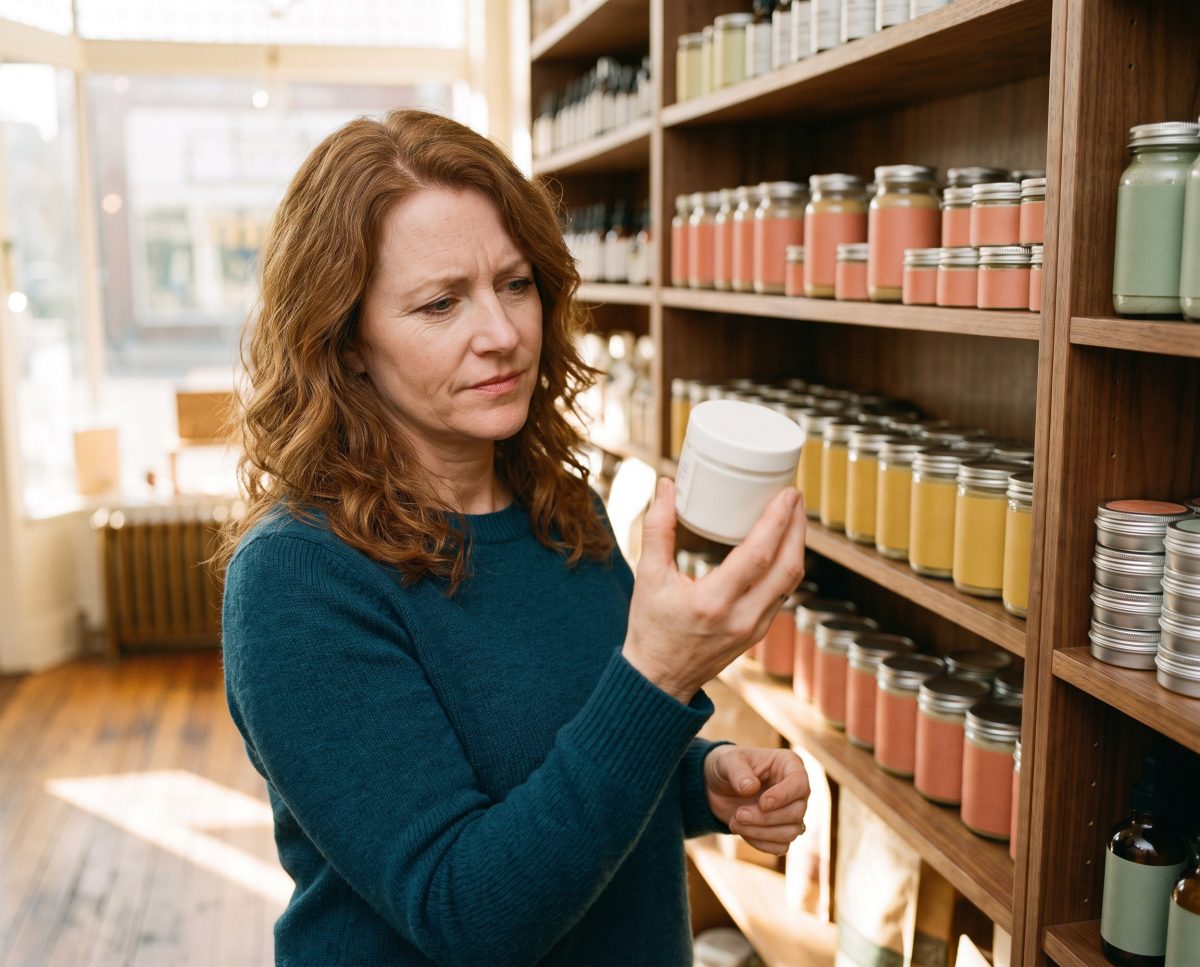
You’re standing in a store aisle and you turn a jar over in your hand. There it is on the front, printed in a soft green font. Preservative-free. It feels like a good sign, the kind of phrase that suggests a gentler formula and fewer things you can’t pronounce. I’ve felt that pull too, and I’ve read enough ingredient lists to know it’s one of the most comforting claims a brand can print. But a comforting claim should start a question. This one hides more than it tells you, and some of what it hides matters a lot for your skin.
Here’s the problem in plain terms. Any skincare product that contains water can grow bacteria, yeast, and mold. Preservatives are there to stop that from happening once you open the jar and start dipping your fingers in. So when a water-based cream says it has none, one of three things is true. It’s protected some other way, it’s using ingredients that preserve without being called preservatives, or it’s more likely to spoil. This piece walks through all three, because the difference matters at any age and matters even more as skin gets older.
What does preservative-free mean on a label in the first place?
In the United States, it means whatever the brand wants it to mean. The FDA doesn’t define the term, and it doesn’t define natural or clean either. There’s no list a company has to check against, no test it has to pass, and no approval it needs before the claim goes on the box. The FDA also doesn’t require cosmetics to carry an expiration date. The agency states that no U.S. law or regulation requires cosmetics to have specific shelf lives, and that working out shelf life is the manufacturer’s responsibility. Source: https://www.fda.gov/cosmetics/cosmetics-labeling/shelf-life-and-expiration-dating-cosmetics
Europe takes a firmer line. Since July 2019, EU regulators have used a technical guidance document on cosmetic claims that speaks to free-from language directly. Under that guidance, a product shouldn’t claim to be preservative-free if it contains an ingredient with antimicrobial properties, even when that ingredient isn’t on the EU’s official list of approved preservatives. The guidance isn’t a law on its own, but national authorities use it as their reference point. That makes it a useful benchmark for American shoppers. If a U.S. product couldn’t make the same claim in Paris, it’s fair to ask why. Source: https://ulprospector.ul.com/7603/pcc-eu-cosmetic-claims-updated-free-from-claims/
So the honest translation of preservative-free on an American label is narrow. It tells you the product doesn’t contain anything the brand chose to call a preservative. It says nothing about how the product is protected from microbes. It says nothing about how long it stays safe after opening. And it says nothing about whether another ingredient in the formula is quietly doing the preserving. Those are the questions worth asking, and the rest of this piece gives you a way to answer them.
Why does skincare need preservatives at all?
Water is the reason. Bacteria, yeast, and mold need water to grow, and most creams, lotions, gels, toners, and serums are mostly water. Add a few sugars from plant extracts, a warm bathroom, and a jar you open twice a day with your fingers, and you’ve built a comfortable home for microbes. The FDA notes that preservatives are there to control the bacteria and fungi that get in when fingers dip into a product, and that preservatives can break down over time, faster with heat. A preservative doesn’t make a product sterile. It keeps the small amount of contamination that always gets in from growing into a large amount.
This isn’t a theoretical risk. A study published in the Journal of the American Academy of Dermatology in 2024 looked at FDA recalls of cosmetic and personal care products from 2011 to 2023. The researchers counted 334 recalls covering about 77 million units, and microbial contamination caused 76.8 percent of them. Bacteria were the most common problem, led by Pseudomonas and Burkholderia species. Both can cause skin and eye infections, and both are known for surviving in watery products. Source: https://www.jaad.org/article/S0190-9622(24)02898-6/fulltext
Those recalls weren’t all preservative-free products. Many were ordinary formulas where preservation failed, a batch was made in a dirty plant, or the preservative system was too weak for the job. But that’s the point. Contamination is the most common reason cosmetics get pulled from shelves, and that’s with most companies using preservatives. Take the preservative out and the margin for error gets thinner. The product then has to rely on its formula, its packaging, and your habits to stay clean.
Can a product be truly preservative-free and still safe?
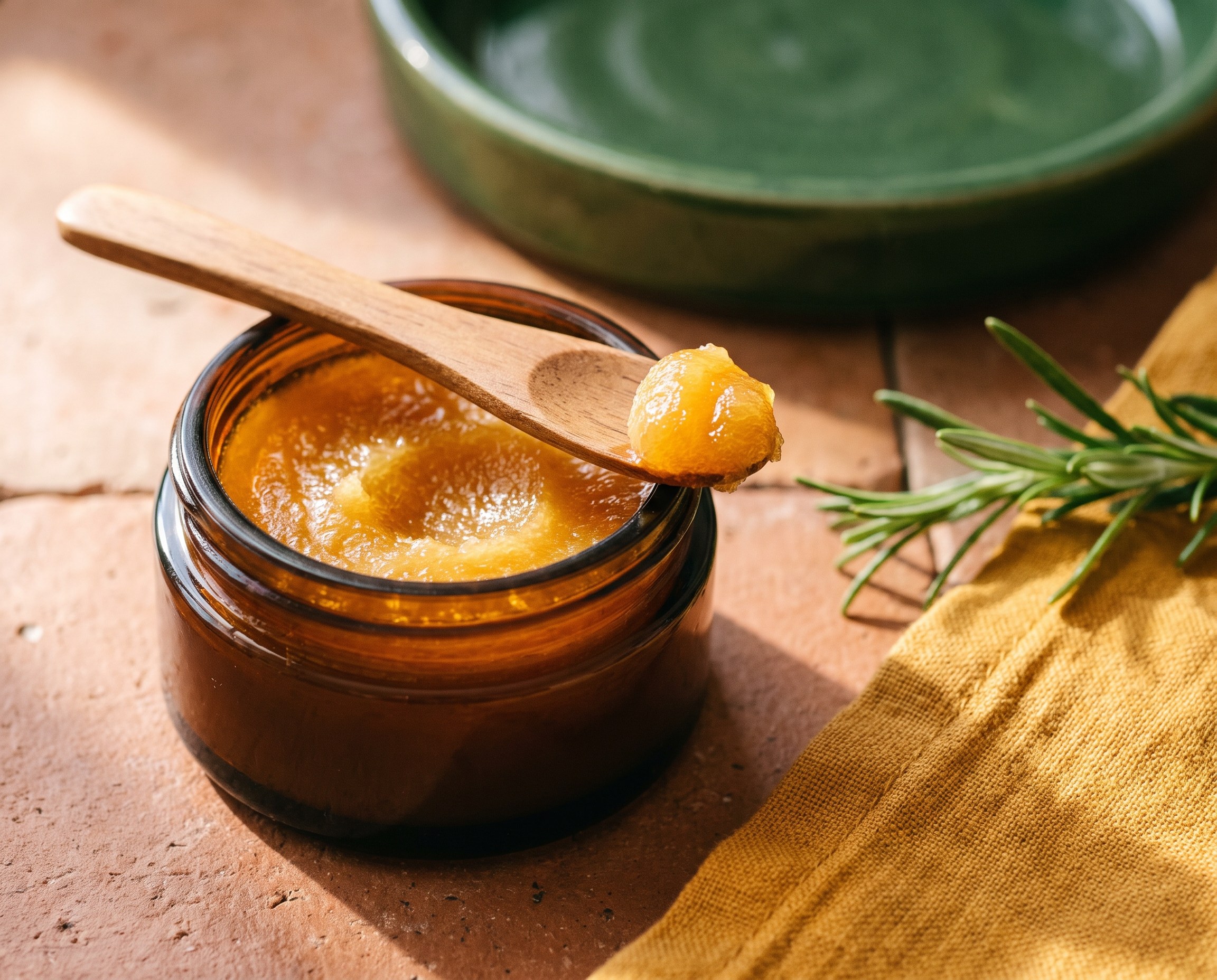
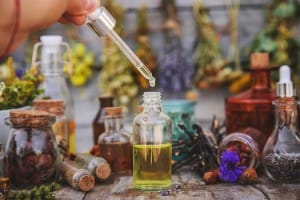
Yes, and this is the part the usual takedown of clean beauty gets wrong. Some products don’t need a preservative because microbes can’t grow in them. Pure oils, balms, butters, and oil serums with no water in them fall into this group. So do many powders, high-alcohol products, and formulas with very high or very low pH. A 2025 review in the journal Cosmetics notes that products are generally considered low microbiological risk when their water activity, a measure of how much water is free for microbes to use, sits at 0.75 or lower. A facial oil made only from plant oils sits well below that line. Source: https://www.mdpi.com/2079-9284/12/5/198
Advertisement
Water-free products still go bad, just in a different way. Oils oxidize. They react with air and light and turn rancid, which you’ll notice as a crayon or old-nut smell and sometimes a change in color. That’s why oil-based formulas often include vitamin E or rosemary extract. Those ingredients are antioxidants that slow rancidity, and they protect the oils from air rather than fighting bacteria. So their presence doesn’t contradict a preservative-free claim on a water-free product. If your oil serum smells off, it’s done, no matter how recently you bought it.
Packaging is the other honest route. Airless pumps keep air and fingers out of the product. Single-dose ampoules and capsules are opened once and finished. Some brands sell water-based products in small sizes meant to be used within weeks and kept in the refrigerator. The same review notes that airless systems block microbes that need oxygen but don’t stop every kind, so packaging lowers the risk without erasing it. Still, a preservative-free serum in single-use capsules is a far safer bet than a preservative-free cream in a wide-mouth jar.
What are self-preserving formulas doing?
This is where the label gets slippery. Many water-based products sold as preservative-free are protected by ingredients that work like preservatives but aren’t classified as preservatives. You’ll see names like caprylyl glycol, ethylhexylglycerin, 1,2-hexanediol, pentylene glycol, and glyceryl caprylate. On paper, they’re listed as moisturizers, skin conditioners, or emollients. In the formula, they also keep microbes from growing. Formulators call these multifunctional ingredients, and brands that use them often describe the product as self-preserving.
I don’t think these ingredients are a problem in themselves. Many are well studied and gentle, and some people tolerate them better than older preservatives. The problem is the claim. If an ingredient is in the formula partly because it stops bacteria, then the product is preserved. Calling it preservative-free tells you about the brand’s choice of words and nothing new about the product. And as the EU guidance shows, regulators in at least one major market agree that the claim doesn’t hold up when an ingredient has antimicrobial power.
The same goes for formulas that lean on essential oils, plant extracts, or ferments to do the job. Fermented radish root, certain honey derivatives, and essential oils like tea tree and thyme all have some antimicrobial activity. Some work reasonably well in combination. But the review in Cosmetics points out that natural preservatives tend to break down faster and have less of a track record with the industry than conventional ones. Essential oils add another wrinkle, since many contain common fragrance allergens. Swapping a preservative for a fragrant oil can trade one sensitivity risk for another.
What happens when a water-based product has nothing protecting it?
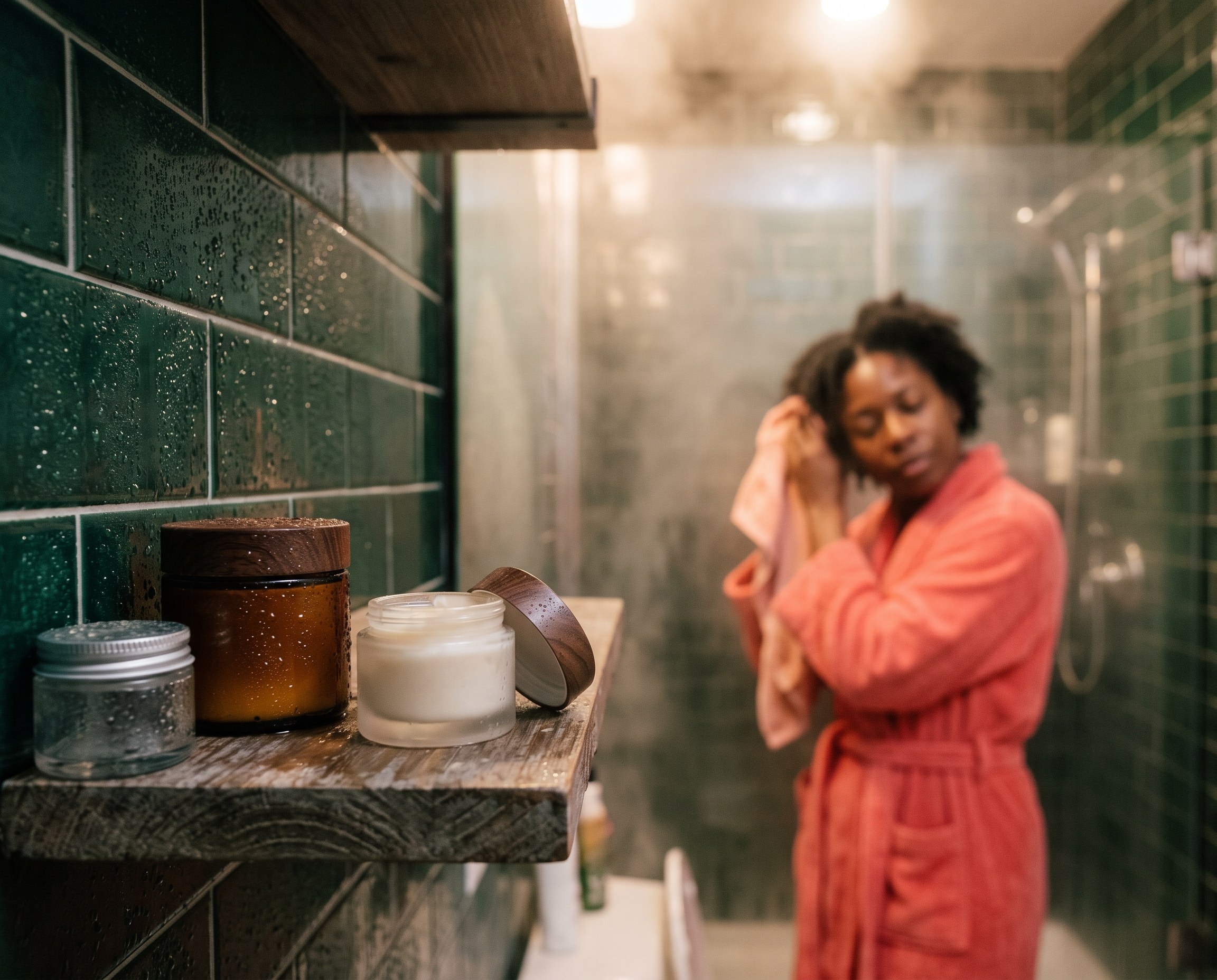
Then time and handling decide its fate. A truly unpreserved cream may be fine on day one and quietly contaminated by week three. You won’t always see it, because bacterial growth often doesn’t change how a product looks at first. When it does show, the signs include a sour or musty smell, separation that won’t mix back in, a change in color, a watery layer on top, or tiny dots of mold. Any of those means the product goes in the trash. Don’t scrape off the top and keep going.
Your own use is a big part of the story. The 2025 review in Cosmetics describes studies in which 79 to 90 percent of used cosmetics were contaminated, with makeup sponges among the worst offenders. Every finger in a jar, every damp bathroom shelf, and every product left in a hot car adds to the load. A good preservative system is designed to handle that daily wear. A product without one can’t absorb as much, so the more you handle it, the shorter its safe life becomes.
This is where honest brands show themselves. A responsible preservative-free product that contains water will usually come in small, sealed, or airless packaging. It will tell you how long it lasts after opening, often with a small open-jar symbol and a number like 3M or 6M. It may tell you to refrigerate it. If a preservative-free cream comes in a large open jar with no period-after-opening symbol and no storage advice, I’d be skeptical. That combination doesn’t add up.
Why does this matter more for mature skin?

Skin changes with age in ways that make contamination more costly. It gets thinner and drier, the barrier lets water out more easily, and healing slows down. A small irritation that would have cleared in two days at 35 can linger for a week or more at 65. Contaminated products can cause redness, bumps around hair follicles, rashes, and eye infections. On mature skin, that kind of reaction takes longer to calm, and it can leave you wary of the products you need most, like a good moisturizer.
The eye area deserves extra care. The FDA notes that eye-area products tend to have shorter shelf lives and that eye infections linked to cosmetics can be serious. It advises tossing mascara two to four months after purchase and throwing away any eye products you were using when an infection started. Eye creams belong in this conversation too. Many of us use the same jar for a year or more, dip a fingertip in every night, and keep going long past the point where its preservative, or lack of one, can keep up.
There’s also a practical side. Many readers in their 60s and beyond buy fewer products and make them last, which is sensible in a lot of ways. But that habit runs straight into how preservative-free products behave. The open-jar symbol on the back is tiny and easy to miss, especially without reading glasses. And a product bought on sale and stored in a warm cabinet for a year has already used part of its life before you open it. If you prefer preservative-free formulas, buy smaller sizes and write the date you opened it on the bottom with a marker.
Is anything changing in the rules?
Some things are. The Modernization of Cosmetics Regulation Act of 2022, known as MoCRA, gave the FDA new authority over cosmetics for the first time in decades. Companies now have to keep records showing their products are safe and report serious adverse events. The FDA can also order a mandatory recall when a cosmetic poses a serious health risk, and it issued draft guidance on that power in December 2025. In September 2025 it launched a public dashboard of cosmetic adverse event reports, which makes problems easier for anyone to see. Source: https://www.foley.com/insights/publications/2026/03/how-mocra-is-reshaping-fda-oversight-of-cosmetics-in-2026/
But the rules that would matter most here aren’t finished. As of this fall, the FDA still hadn’t finalized good manufacturing practice rules for cosmetics, the standards that would cover things like microbial testing and plant hygiene. Source: https://dicentra.com/blog/adverse-reaction-reporting/mocra-in-2026-what-has-changed-and-what-does-fda-expect-from-the-cosmetics-industry. And nothing in MoCRA defines preservative-free, natural, or clean, so the claim on the front of the box still has no legal meaning in the U.S. The safety records requirement does mean a brand should have evidence its product is safe as used. For a water-based preservative-free product, that evidence should include proof it resists contamination. Whether every small brand has done that testing is another matter.
How should you read a preservative-free label?
Start with the first ingredient. If it’s water, aqua, aloe juice, a floral water, or anything else watery, the product needs protection from microbes. Then look for that protection. Is the packaging airless, a pump, a tube, or single-dose? Is there an open-jar symbol with a short number, or a storage instruction? If the answer is no across the board, scan the list for the glycols and glyceryl esters mentioned earlier. If you find them, the product is preserved, whatever the front says.
If the first ingredient is an oil, a butter, or a wax, and there’s no water anywhere on the list, the preservative-free claim is likely honest. Your job there is to watch for rancidity and keep the product away from heat and direct sun. Balms in open tins are fine for a fingertip, as long as the finger is clean and dry. A wet finger brings water into a water-free product, and that’s how a perfectly safe balm can grow mold around the edges. A small cosmetic spatula is a cheap fix, and it keeps the whole jar cleaner.
It also helps to make peace with preservatives in general. The ones in common use today, like phenoxyethanol, sodium benzoate, and potassium sorbate, are approved for cosmetics and used at low levels. Some people do react to specific preservatives, and if that’s you, avoiding those ingredients makes sense. Methylisothiazolinone is a well-known example that caused a wave of allergic reactions and is now restricted in Europe. For most people, though, a well-preserved product is safer than an unpreserved one sitting in an open jar. The goal is a clean product, and preservatives are one of the main tools brands use to keep it that way.
FAQs
Is preservative-free skincare better for sensitive skin?
Not automatically. If you’ve reacted to a specific preservative before, avoiding it is smart, and a preservative-free product may help. But a contaminated product can irritate skin too, and essential oils used as stand-ins are common allergens. A patch test and a short ingredient list usually tell you more than the free-from claim.
How long does preservative-free skincare last after opening?
Follow the period-after-opening symbol, the small open jar with a number and the letter M. Water-free oils and balms usually last until they smell rancid. Water-based products without preservatives can be short-lived, sometimes only weeks. If there’s no guidance at all, treat a water-based product with caution and replace it sooner.
Is paraben-free the same as preservative-free?
No. Parabens are one family of preservatives, and most paraben-free products use a different preservative instead. Paraben-free tells you which preservative isn’t there. It doesn’t tell you the product is unpreserved.
Should I keep preservative-free skincare in the refrigerator?
Only if the label tells you to, or if the product contains water and has no other protection. Cold slows microbial growth but doesn’t stop all of it. At the very least, keep any skincare out of hot cars and away from radiators and sunny windowsills.
Can a contaminated product hurt my skin even if it looks fine?
Yes. Bacteria can grow without changing a product’s color or smell, especially early on. If a product you’ve used for months suddenly causes redness, bumps, or eye irritation, stop using it and replace it. See a doctor if an eye becomes red, painful, or swollen.
Preservative-free can describe a well-made oil serum or a cream that’s quietly spoiling in your bathroom cabinet. The words on the front are the same. What separates the two is water, packaging, and honesty about how long the product lasts. So read the back of the box before you trust the front. And when a brand tells you exactly how it keeps its product clean, that tells you more than any free-from claim ever will.
Related Posts