Sep
If you click on links we provide, we may receive compensation.
The global vitamin C serum market is valued at $5.1 billion in 2026 and still climbing. Millions of people layer it into their routines alongside glycolic acid, lactic acid, or another AHA – two types of products sitting in the same aisle, often used on the same face, sometimes in the same week. Both carry the word “acid.” Both produce a noticeable tingle on sensitive skin. Both show up together in every skincare-acids explainer on the internet. So the idea that they belong to the same category is easy to reach and, as it turns out, completely wrong. Vitamin C is not an alpha hydroxy acid. The reason comes down to molecular structure – specifically, what kind of acid each compound actually is – and getting that distinction clear changes how you build a routine, what results you can realistically expect, and why layering them requires a little thought.
What Does Alpha Hydroxy Acid Actually Mean?
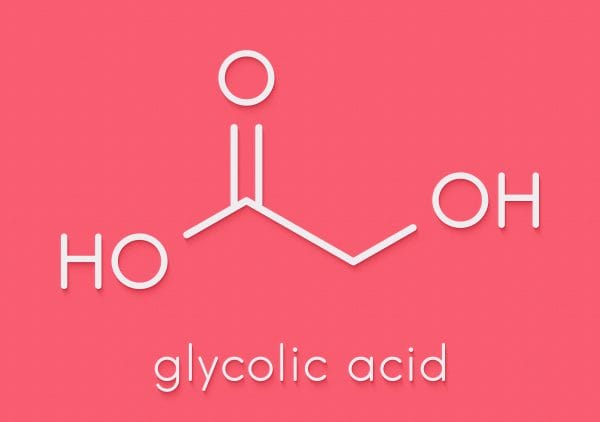
The term is more specific than it sounds. An alpha hydroxy acid – AHA for short – is an organic compound defined by two structural features that must exist together in the same molecule. The first is a carboxylic acid group: a carbon atom double-bonded to one oxygen and bonded to a hydroxyl group (-OH), written as -COOH. This is the defining feature of a broad class of organic acids, and it is not optional – without it, an acid cannot be an AHA by definition. The second feature is a hydroxyl group (-OH) attached to the very next carbon in the chain – the carbon sitting immediately adjacent to the carboxylic acid group. That neighboring position is called the alpha carbon, which is where the “alpha” in alpha hydroxy acid comes from. Both features, together, make an AHA what it is.
The most familiar AHAs are glycolic acid and lactic acid. Glycolic acid, derived from sugarcane, is the smallest AHA – its molecular weight is just 76 daltons, which makes it the best penetrator of the family and the one with the deepest clinical evidence base. Lactic acid, found naturally in milk, is larger and gentler, making it the more popular choice for sensitive skin and for people new to chemical exfoliants. Malic acid (from apples), tartaric acid (from grapes), mandelic acid (from bitter almonds), and citric acid (from citrus fruits) round out the family. Each one has the same fundamental structure: a carboxylic acid group and a hydroxyl group on the alpha carbon. That architecture is the entire requirement for membership in the AHA category.
AHAs are water-soluble and work primarily at the skin’s outer surface. Their exfoliating mechanism depends on lowering the local pH in the stratum corneum – the topmost layer made up of flattened, dead skin cells called corneocytes. When pH drops in that layer, the structural connections holding those cells together begin to weaken. The leading explanation involves calcium ions: AHAs chelate divalent calcium ions, which are essential for maintaining the integrity of desmosomes, the protein-lipid bridges that hold corneocytes together. When calcium is drawn away from those bonds, the desmosomes loosen and the dead cells shed faster than they would through the natural shedding cycle. A 2018 review in the International Journal of Molecular Sciences (https://pmc.ncbi.nlm.nih.gov/articles/PMC6017965/) confirmed this dual mechanism – AHAs both lower surface pH and disrupt desmosomal cohesion, accelerating desquamation and, with regular use, visibly improving skin texture, fine lines, and uneven tone.
The pKa of glycolic acid is approximately 3.8, and lactic acid sits close to that at around 3.86. When a product is formulated at or below those pKa values, a large proportion of the acid molecules exist in their free, uncharged form – the form that can enter the skin and trigger the exfoliating cascade. That pH dependency is not a technical footnote. It is the foundation of how AHAs work, and it explains why the concentration listed on a label tells only part of the story. A 10% glycolic acid formula at pH 6 is doing very little. The same 10% at pH 3.5 is doing quite a lot.
So What Is Vitamin C?
Here is where the chemistry gets interesting. Vitamin C – formally named L-ascorbic acid – contains the word “acid” in its name, behaves acidically in solution, and is typically formulated in skincare at a low pH. It is absolutely acidic. But it is not a carboxylic acid. And because the carboxylic acid group is the non-negotiable structural requirement for an AHA, vitamin C cannot be one – regardless of how many hydroxyl groups it contains or how acidic it tests.
Ascorbic acid is a lactone. A lactone is a cyclic ester: a ring formed when a carboxylic acid and a hydroxyl group within the same molecule react with each other and close into a loop, releasing water in the process. In ascorbic acid, this cyclization produces a five-membered ring that permanently locks up what would have been the free carboxylic acid group. The ring does not open under normal skincare conditions. There is no free -COOH available. The molecule’s acid group has, in effect, been incorporated into the ring structure and is no longer available to behave the way AHA carboxylic acids do. This is the structural fact that places vitamin C outside the AHA category entirely.
What makes ascorbic acid acidic despite lacking a free carboxylic acid group is a feature inside that ring called the 2,3-enediol system. Two adjacent carbon atoms within the ring are connected by a double bond, and each carries a hydroxyl group (-OH). The hydrogen on the C-3 hydroxyl is unusually easy to release – not because it is on an alpha carbon next to a carboxylic acid, but because the electron density through the conjugated double-bond system allows it to be donated readily. Chemists call this arrangement a “vinylogous carboxylic acid”: the compound acts like a carboxylic acid not through a direct -COOH group, but through a double-bond relay that transmits electron pairs between the hydroxyl and the adjacent carbonyl inside the ring. The Nobel Prize lecture of Walter Haworth, who first determined the correct structure of vitamin C in 1933, describes precisely this unique arrangement (https://www.nobelprize.org/uploads/2018/06/haworth-lecture.pdf). The pKa of ascorbic acid for this first ionization is approximately 4.17 – slightly less acidic than glycolic or lactic acid, but in a broadly similar range, which is part of why the two categories get conflated.

Does Vitamin C Exfoliate the Way AHAs Do?
No – and this matters practically. An AHA’s exfoliating action flows directly from its carboxylic acid group interacting with the skin’s calcium-ion-dependent bonds. Vitamin C has no equivalent mechanism. It does not chelate calcium in the way AHAs do. It does not weaken desmosomal bonds. It does not accelerate the shedding of corneocytes or thin the stratum corneum. Applying a vitamin C serum is not an exfoliating step, regardless of its low pH, and expecting it to function as one sets up a reasonable but mistaken routine logic.
The mild tingle that some people feel when applying a pure L-ascorbic acid serum is worth addressing here, because it is often interpreted as exfoliation at work. It is not. That sensation comes from the low-pH formulation – typically around pH 2.5 to 3.5 – coming into contact with the skin barrier and causing direct acidic irritation, particularly in people with a compromised or sensitive barrier. It is a side effect of the formulation environment needed to keep L-ascorbic acid stable and membrane-permeable. It does not signal that old cells are being dissolved or that desquamation has accelerated. The tingle of vitamin C and the tingle of glycolic acid may feel similar, but they originate from entirely different chemistry.
Vitamin C’s jobs in the skin are antioxidant protection, collagen synthesis support, and melanin suppression. These are fibroblast-level and enzyme-level effects – not surface effects. They happen below the stratum corneum that AHAs act on, in the living epidermis and dermis where pigment-producing melanocytes and structural fibroblasts reside. The two ingredient categories address different tissue depths and different biological processes. Using one does not replicate the results of the other, however much their shared pH range and “acid” branding might suggest otherwise.
Why Do People Mix the Two Up?
The confusion is understandable, and it is not entirely the consumer’s fault. Vitamin C and AHAs are marketed in similar product formats – thin serums in similar-sized bottles. They often appear on the same shelf, in the same “active ingredients” section of a brand’s line. Both are prominently described as “acids.” Both are associated with brightening and anti-aging benefits. Both require a low-pH formulation to work properly. And when used consistently, both can visibly improve uneven skin tone and a dull complexion – even though they do so through completely different mechanisms.
Citric acid adds another layer of confusion. Citric acid is a genuine AHA – it has a carboxylic acid group and a hydroxyl group on the alpha carbon – and it is found abundantly in citrus fruits, which are also a major source of vitamin C in the diet. But citric acid and vitamin C are two separate molecules. Eating an orange delivers both, which reinforces the impression that they are closely related. In skincare formulations, citric acid is sometimes used as a pH adjuster rather than as an active exfoliant. And vitamin C is not citric acid. The botanical overlap in food sources does not translate into chemical equivalence in a serum.
What both compounds share – genuinely – is a preference for an acidic formulation environment. L-ascorbic acid is unstable and poorly skin-permeable above pH 3.5. AHAs are relatively inactive above pH 4. That overlapping window has led to a categorization in popular skincare discourse of “acids that need low pH,” and both vitamin C and AHAs get thrown into it together. The resulting advice – “don’t use too many acids at once,” “be careful combining low-pH actives” – is correct as practical guidance, but it can make the two categories seem like versions of the same thing when they are not.
How Does Vitamin C Actually Work Inside the Skin?
Vitamin C’s most consequential effects happen in living tissue below the stratum corneum. Once a stable, uncharged form of L-ascorbic acid (or a well-chosen derivative) crosses the skin barrier, it reaches active keratinocytes and fibroblasts. In those cells, it performs multiple roles simultaneously. As an antioxidant, it scavenges reactive oxygen species – the unstable molecules generated by UV radiation, pollution, and normal metabolic activity – that damage DNA, degrade cell membranes, and attack the collagen matrix. It also regenerates vitamin E by donating an electron to it, restoring vitamin E’s antioxidant function so the two work as a team in protecting lipid-rich cell membranes from oxidative damage.
Its role in collagen synthesis is direct and enzymatic. Two enzymes are essential for building stable collagen fibers – prolyl hydroxylase and lysyl hydroxylase – and both require vitamin C as a cofactor to function. Without adequate ascorbic acid, these enzymes cannot properly hydroxylate proline and lysine residues in the collagen chain, and the resulting collagen triple helix is structurally weak and prone to early breakdown. Vitamin C also upregulates the genes that code for type I and type III collagen (COL1A1 and COL3A1) in fibroblasts, while simultaneously downregulating the matrix metalloproteinases (MMPs) that break existing collagen apart. A 2022 review in Nutrients (https://www.ncbi.nlm.nih.gov/pmc/articles/PMC9495646/) summarized clinical evidence showing that topical ascorbic acid can increase dermal collagen density, reduce wrinkle depth, and improve skin elasticity – effects that reach well beyond what surface-level exfoliation can produce.
Vitamin C also inhibits tyrosinase, the enzyme that converts tyrosine into melanin – the pigment responsible for dark spots and uneven tone. By slowing melanin production at the source, vitamin C reduces the formation of new hyperpigmentation and gradually lightens existing spots. AHAs brighten by a completely different route: they shed the surface cells where pigment has already accumulated, removing discoloration from the outside in. Vitamin C works from the inside out, at the point where pigment is produced. Neither approach is superior – they are targeting different stages of the same problem, and combining them tends to give faster and more sustained brightening results than either alone.
What Does This Distinction Mean for Older Skin?
The structural difference between vitamin C and AHAs carries real weight for skin in its 50s, 60s, and beyond. As skin ages, two separate processes slow down at once: cell turnover, which means dead cells accumulate on the surface longer before shedding, and collagen production, which means the structural scaffold of the dermis thins year by year. Both problems affect how skin looks and feels, and they require different tools to address effectively.
AHAs are well matched to the cell turnover problem. When the natural shedding cycle lengthens with age – as it does significantly after 50 – dead corneocytes pile up longer than they did in younger skin, creating dullness, rough texture, and an uneven, almost caked look to makeup. A well-formulated AHA product – glycolic acid at 5 to 10%, lactic acid at 5 to 15%, used two to three times a week as part of an evening routine – speeds up that shedding to something closer to the rate younger skin manages naturally. With consistent use over weeks and months, AHAs also improve the appearance of surface-level hyperpigmentation and fine lines that live in the stratum corneum and upper epidermis.
Vitamin C addresses the deeper concerns. The antioxidant protection it provides is arguably more critical for older skin than younger, because decades of cumulative UV exposure have depleted the skin’s endogenous antioxidant reserves. Sun damage that accumulated silently in the 30s and 40s becomes visible as photoaging in the 50s and 60s – and ongoing exposure without adequate antioxidant protection continues to accelerate it. The collagen-support effect matters enormously in this context, because while everyone’s collagen synthesis slows with age, the fibroblasts that remain active in older dermis can still be meaningfully supported by sufficient vitamin C. And the tyrosinase-inhibiting brightening mechanism addresses the stubborn, deeper hyperpigmentation that often develops in mature skin – the kind of discoloration that surface exfoliation alone rarely clears completely.
For mature skin, the most practical approach is not to choose between these two ingredient types but to use both with clear intent. A vitamin C serum applied in the morning delivers antioxidant protection throughout the day and supports ongoing collagen synthesis. An AHA product used at night handles cell turnover and surface refinement. Neither one is redundant when the other is present, because they are addressing different depths and different biological processes. That clarity – knowing that vitamin C is not a substitute for an AHA and an AHA is not a substitute for vitamin C – makes it much easier to build a routine that actually does what you need it to do.

Can You Use Vitamin C and AHAs Together?
You can, and many people do with good results. But the low-pH requirements of both create a real irritation risk when they are applied too close together. L-ascorbic acid serums are formulated at pH 2.5 to 3.5. AHA products are typically formulated at pH 3 to 4. Using both at the same time effectively doubles the acidic load on the skin barrier without proportionally doubling the benefit – because they are targeting different mechanisms anyway. For sensitive or compromised skin, that combination can trigger redness, stinging, and barrier disruption that takes days to settle down.
The standard recommendation, supported by most dermatologists and cosmetic chemists, is to separate them by time of day. Vitamin C in the morning – where its antioxidant role is most valuable as protection against daytime UV and pollution – and an AHA in the evening – where the skin can recover overnight and sun exposure will not complicate freshly exfoliated skin. That split also respects the skin barrier, allowing it to normalize pH between applications rather than sustaining an acidic environment for an extended period. If you want to use both at night, apply the AHA first, let the skin recover for 20 to 30 minutes, then apply vitamin C – though this is more demanding than the morning/evening split and is generally better suited to more resilient skin types.
Vitamin C derivatives change this calculation somewhat. Ascorbyl glucoside, sodium ascorbyl phosphate, and ascorbyl tetraisopalmitate are all forms of vitamin C that are stable at a much higher pH – typically 5.5 to 7.0. Because they do not require the same low-pH environment as L-ascorbic acid, they can be layered with AHAs with much less irritation risk. The tradeoff is conversion efficiency: each derivative must be enzymatically converted to L-ascorbic acid inside the skin, and that conversion rate varies. For most people over 50 who are prioritizing gentleness, a stable vitamin C derivative used alongside an AHA is a practical and well-tolerated approach.
FAQs
Is ascorbic acid an AHA?
No. Despite its name, ascorbic acid is not a true carboxylic acid – it is a lactone with an enediol group that creates acidity through a vinylogous mechanism, not through a free -COOH group. AHAs require both a free carboxylic acid group and a hydroxyl group on the alpha carbon. Ascorbic acid has neither, which places it definitively outside the AHA category.
Why do both vitamin C and AHAs need a low pH?
For different reasons. AHAs need low pH because their exfoliating mechanism depends on the free acid form, which predominates when pH is near or below the pKa. Vitamin C needs low pH primarily to maintain L-ascorbic acid’s stability and keep it in its uncharged, membrane-permeable form. The practical outcome looks similar – both perform better in an acidic environment – but the underlying chemistry is distinct.
Can vitamin C brighten skin the way an AHA does?
Yes, but through a different route. AHAs brighten primarily by accelerating the shedding of pigmented surface cells and improving cell turnover. Vitamin C brightens by inhibiting tyrosinase, the enzyme that produces melanin, acting on the pigmentation process itself rather than the surface layer. Used together, the two mechanisms offer more complete brightening than either alone.
Does vitamin C exfoliate at all?
Not in a meaningful way. Some people notice mild smoothing after using a high-concentration L-ascorbic acid serum, but this is likely due to the low-pH formulation environment rather than any AHA-like action on the skin. Vitamin C does not break down desmosomal bonds or chelate calcium the way AHAs do, and should not be relied on as an exfoliation step.
Which is better for fine lines – vitamin C or an AHA?
Both contribute, through different pathways. AHAs smooth the skin surface and have shown some ability to stimulate collagen gene expression with consistent use. Vitamin C directly supports collagen synthesis in the dermis and protects existing collagen from oxidative breakdown. For meaningful anti-aging results, most dermatologists suggest using both rather than selecting one over the other.
Which one should people with mature skin prioritize?
Both address problems that become more significant with age, so an either-or framing tends to underserve mature skin. If choosing only one starting point, vitamin C’s role in collagen synthesis and antioxidant protection becomes more critical as the skin’s natural defenses decline with age. But adding an AHA routine addresses the cell turnover slowdown that is a major contributor to dullness and rough texture in older skin, and the two together cover more ground than either alone.
These two ingredients have been sold alongside each other in the same serum format for long enough that the distinctions have blurred. But knowing that vitamin C works inside the dermis through antioxidant protection and collagen support, while AHAs work on the surface by clearing dead cells, changes how you build a routine. They are not redundant. They are not interchangeable. And they are not the same type of acid – even if both happen to need a low pH and end up on the same shelf. Once you know the structural difference, the logic of using them at different times of day stops feeling like an arbitrary rule and starts making chemical sense. The morning slot and the evening slot exist for a reason, and each one belongs to a genuinely different ingredient doing a genuinely different job.
Related Posts