Jul
Beauty, Skincare, Trends & Opinions, Wellness
How Often Should You Really Have a Spa Day
If you click on links we provide, we may receive compensation.
Research from the University of Miami’s Touch Research Institute found that a single massage session can reduce cortisol levels by an average of 31 percent – and that’s just after one session. For women navigating the physical and emotional demands of midlife, regular spa treatments may be one of the most evidence-backed investments in skin health, stress recovery, and overall wellbeing you can make. The question most of us ask is ‘can I justify this?’ But that’s the wrong question. The right question is: how often do you actually need it to see real results? The answer, it turns out, is more often than you might think – and the science gives you every reason to book that appointment.
What Does a Spa Day Actually Do to Your Body?
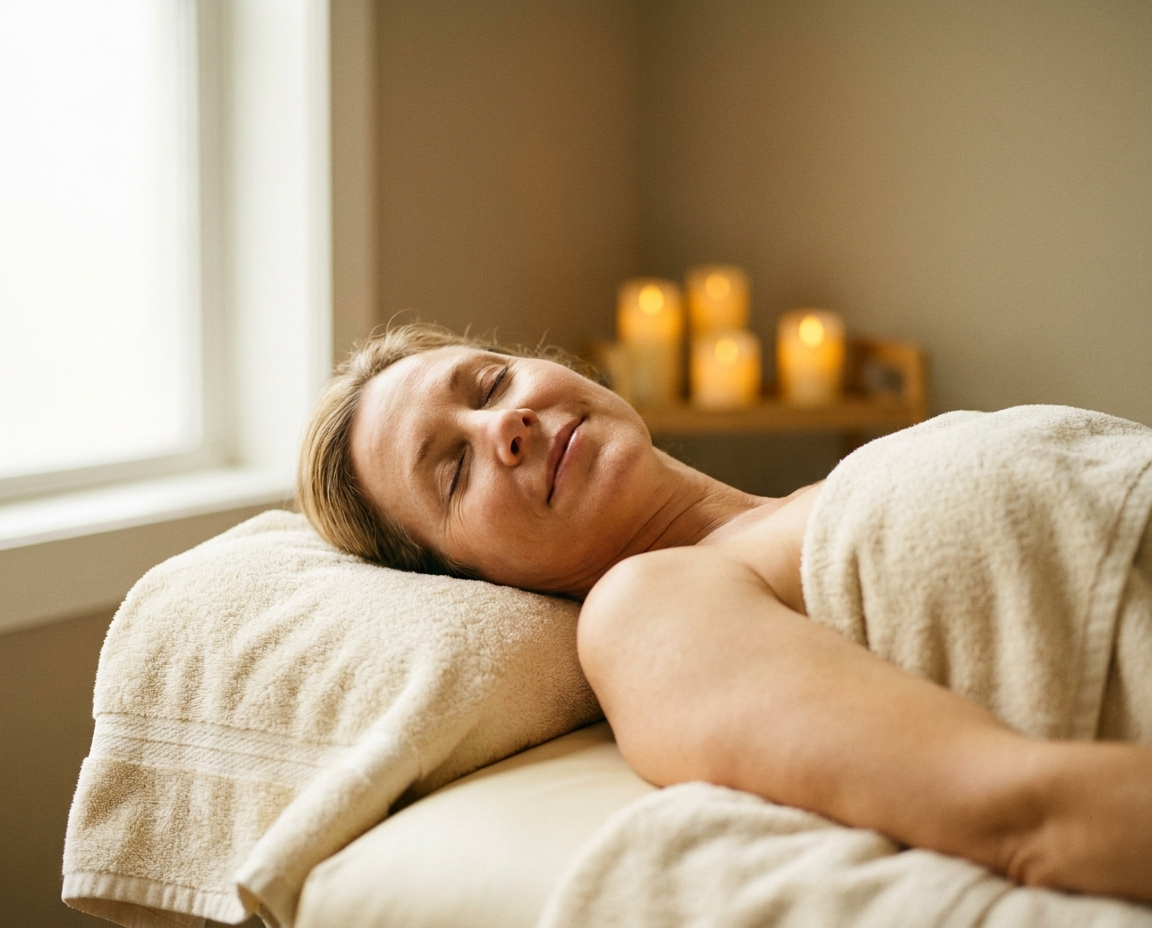
The stress hormone cortisol is at the root of a surprising number of skin and health concerns. When cortisol stays chronically elevated – as it does for many women managing careers, family, and the hormonal shifts of perimenopause and menopause – it directly degrades collagen, impairs the skin’s barrier function, disrupts sleep, fuels inflammation, and drives weight gain around the midsection. This is not a cosmetic concern. It is a physiological cascade, and it compounds over time. Massage therapy has some of the strongest evidence of any wellness intervention for interrupting this cycle. Multiple randomized controlled trials show significant cortisol reduction after even a single session. Dr. Tiffany Field and her team at the Touch Research Institute at the University of Miami have published over 350 peer-reviewed studies on the science of touch. Their work shows that massage activates pressure receptors under the skin that send calming signals to the brain, slowing the nervous system, reducing cortisol, and increasing dopamine and serotonin. Full citation: https://pubmed.ncbi.nlm.nih.gov/16162447/
A facial massage – even one that lasts just a few minutes – activates the parasympathetic nervous system, which is the branch of your nervous system responsible for the ‘rest and digest’ state. This reduces the stress response in a measurable, physiological way. It’s not a feeling. It’s biology. And when the stress response is dampened, your skin stops receiving the inflammatory signals that lead to breakouts, redness, dullness, and accelerated aging. The cumulative effect of regular massage is that your body spends more time in a low-cortisol state – and your skin, sleep, and mood all reflect that. One spa day a year is a nice treat. Monthly spa days are a wellness practice with genuinely different outcomes.
Why Can’t You Just Do This at Home?
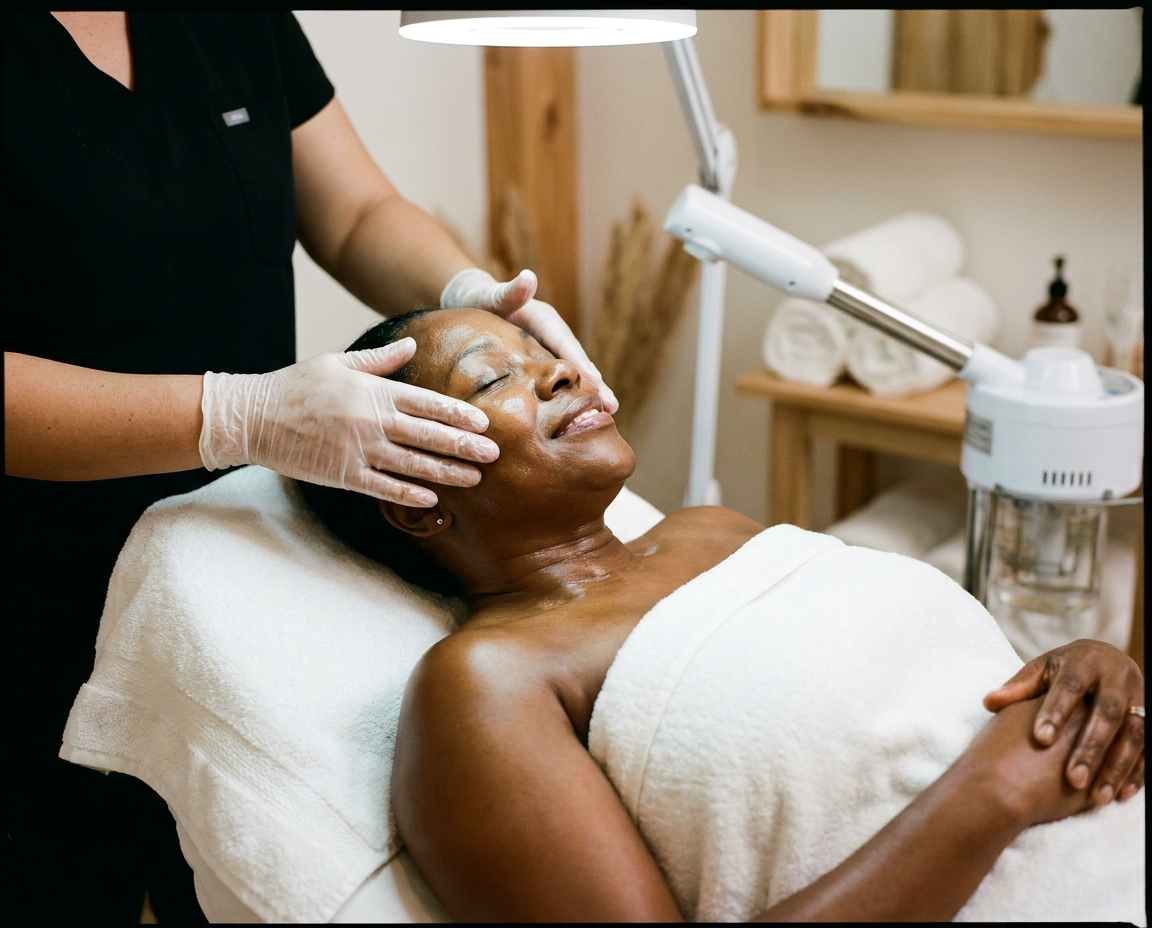
Your home skincare routine matters enormously, and nothing in this article should suggest otherwise. But professional spa treatments offer things that are simply not replicable at home – and this distinction gets more meaningful as we age. Medical-grade equipment operates at intensities and wavelengths your at-home tools cannot match. A licensed aesthetician performing extractions does so with sterile technique and trained hands, which prevents the scarring and post-inflammatory hyperpigmentation that often results from attempting the same thing in a bathroom mirror. Professional-grade chemical actives are formulated at concentrations not available over the counter. And a skilled pair of hands performing lymphatic drainage during a facial is doing something that takes years of training to do well.
Steam and professional exfoliation improve the penetration of active ingredients for days and even weeks afterward – meaning your expensive serums actually work better after a professional treatment. Lymphatic drainage, whether during a body massage or facial, moves excess fluid from tissue and reduces puffiness in a way that improves skin tone noticeably. A controlled study on lymphatic drainage massage found that after ten sessions, participants lost 1.84 cm from thigh circumference and saw measurable reductions in subcutaneous fat thickness – which partially explains why regular body treatments visibly improve skin texture. This is not magic. It is mechanics. The lymphatic system has no pump of its own; it depends on movement and manual stimulation to do its job.
How Does a Spa Visit Actually Improve Your Sleep?
The connection between spa treatments and sleep runs deeper than simply feeling relaxed. Massage therapy consistently improves sleep quality in clinical research across multiple populations – from surgical patients to cancer survivors to people with fibromyalgia. The mechanism is well understood: massage reduces cortisol and simultaneously increases serotonin, which is the precursor to melatonin, the hormone that regulates sleep onset. When you stimulate serotonin production during a massage, you are essentially filling the reservoir that your body draws on to initiate and maintain sleep later that night. Research cited by the American Massage Therapy Association confirms this pathway is reliable and consistent across study populations. Full citation: https://www.amtamassage.org/about/position-statements/massage-therapy-can-help-improve-sleep/
The sleep connection extends to hydrotherapy as well. A meta-analysis of 17 studies found that taking a bath or soak in water between 104 and 108 degrees Fahrenheit improved sleep quality – with water-based passive warming for as little as ten minutes, one to two hours before sleep, shortening the time it takes to fall asleep by approximately 36 percent. The mechanism here is the subsequent drop in core body temperature after leaving the water, which mimics the natural thermal drop your body uses to signal sleep onset. Spa hydrotherapy – whether a hot tub soak, a mineral bath, or a steam room followed by a cool rinse – produces this same response. And why does better sleep matter for your skin? Deep sleep is when growth hormone is released and collagen synthesis occurs. A spa treatment that gives you a better night’s sleep is also giving you better skin the next morning. Full citation: https://www.sciencedirect.com/science/article/abs/pii/S1087079218301552
How Often Should You Book a Facial?
The short answer for most women is every four to six weeks. This timing is not arbitrary – it is calibrated to the skin’s natural cell turnover cycle. Healthy young skin renews itself in roughly 28 days; by age 50, that cycle has slowed to 45 to 60 days; after 60, it can extend beyond 90 days. As cell turnover slows, dead cells accumulate on the surface and reduce the effectiveness of every product in your skincare routine. An expensive vitamin C serum cannot penetrate through a layer of dead, compacted skin. A professional facial clears that surface and resets your skin’s baseline – making everything you do at home work better for the next several weeks. Full citation: https://www.zuriplasticsurgery.com/about/press/why-skin-cell-turnover-rate-should-be-your-number-one-skin-care-goal/
For basic hydrating or maintenance facials, four to six weeks is the right cadence. Light chemical peels done in a series can be spaced every four to six weeks as well, with maintenance every six to eight weeks afterward. Microdermabrasion follows a similar schedule. Medical-grade treatments like microneedling or laser resurfacing are typically done as a series and then maintained every three to six months – these treatments initiate a healing response in the skin that takes time to resolve, so spacing them out is both appropriate and necessary. What this means in practice is that a monthly facial is not excessive. For women over 50 dealing with hyperpigmentation, texture changes, loss of elasticity, or dryness related to declining estrogen, a monthly professional facial is closer to therapeutic maintenance than it is to luxury.
What About Massage – How Frequently Does It Actually Help?

For general stress management and wellbeing, monthly massage is the minimum frequency at which you will maintain meaningful benefits – and bi-weekly massage is more effective for chronic stress. This matters because the cortisol-reducing effects of a single massage session diminish over the two to three weeks that follow. Studies show that cortisol returns toward its baseline relatively quickly without repeated intervention. Irregular massage – whenever you can manage it – is meaningfully better than nothing. But consistent, scheduled massage is what produces the lasting physiological changes in stress hormone levels, sleep quality, and immune function that the research documents. Think of it the way you think of exercise: the dose and the consistency determine the outcome.
The type of massage matters too, depending on what you are trying to accomplish. Swedish massage targets relaxation and circulation, making it the most accessible and most appropriate for general wellness maintenance. Deep tissue massage addresses chronic muscle tension and is particularly valuable for active women over 50 who carry tension in the neck, shoulders, and lower back. Lymphatic drainage massage is specifically designed to move fluid through the lymphatic system – reducing puffiness, improving skin texture, and supporting the body’s waste removal processes. Hot stone massage uses heated basalt stones to warm the muscles deeply, improving circulation and relaxation simultaneously, and is particularly well suited to women who experience joint stiffness or who simply find heat deeply therapeutic. For specific muscle issues or injury recovery, weekly or bi-weekly sessions during the acute phase are appropriate and effective.
What Does the Sauna Research Actually Say?
The evidence base for sauna is surprisingly strong. A landmark Finnish cohort study followed 2,315 middle-aged men from eastern Finland and found that regular sauna use was associated with significant reductions in cardiovascular mortality. Men who used the sauna two to three times per week had a 24 percent lower risk of death than those who went once a week. Those who went four to seven times per week had a 40 percent lower mortality risk. Separately, the same frequent sauna users showed a 65 to 66 percent reduced risk of dementia and Alzheimer’s disease. These are substantial numbers, and the research has been replicated in women as well as men. Full citation: https://pmc.ncbi.nlm.nih.gov/articles/PMC6262976/
The mechanisms are multiple. Sauna use raises heart rate in a way that mimics moderate aerobic exercise, improving cardiovascular conditioning. It reduces inflammatory markers in the blood. It is strongly associated with reduced cortisol and improved mood. And the thermal experience – particularly the body temperature drop that follows – promotes the same deep sleep effect as hydrotherapy. For women over 50 specifically, regular sauna use has implications beyond relaxation: the cardiovascular and anti-inflammatory benefits become increasingly important as estrogen’s protective effects on the heart decline after menopause. Two to three sauna sessions per week represents the threshold at which meaningful benefits begin to accumulate; four or more per week is where the strongest effects are observed. One important note: always cleanse your skin after a sauna session. The heat opens pores and loosens everything in them, and you want to remove that before it re-deposits.
What Happens When You Make This a Regular Practice?
The difference between an occasional spa day and a consistent spa practice is the difference between a one-time mood boost and a genuine change in how your body functions. Cortisol levels maintained at a lower baseline over time mean less ongoing collagen breakdown – and since collagen loss is one of the primary structural drivers of facial aging, this is not a trivial benefit. Skin that receives regular professional exfoliation, hydration, and lymphatic stimulation improves progressively over months, not just in the days after a single treatment. Professional aestheticians consistently report that clients who come monthly or bi-monthly show different skin at six months and twelve months than they did when they started – with more even tone, better texture, less reactivity, and stronger barrier function.
The sleep improvements from regular massage compound as well. Better sleep means more consistent growth hormone release, more collagen synthesis, more cellular repair, and lower cortisol the following day. It is a reinforcing cycle – the spa treatment helps you sleep better, and better sleep makes your skin more resilient and your stress response more manageable. The women who report looking and feeling their best in their 50s and 60s are typically the ones who have built consistent self-care practices over years, not the ones who occasionally splurge when they feel burned out. This is not a coincidence. It is biology working as designed.
How Do You Build a Spa Practice Without Spending a Fortune?
You do not need an expensive day spa membership to build an effective spa practice – though if that is accessible to you, it is worth it. A full-service spa visit monthly is ideal if you can manage it, but there are equally effective approaches at lower price points. Many women combine a professional facial every six weeks with monthly massages at a franchise like Massage Envy, Elements, or Hand and Stone, where membership pricing brings sessions to $60 to $80. Medical spa treatments like microneedling, chemical peels, and laser resurfacing can be treated as a separate investment category – typically quarterly or less frequently – because their effects are longer-lasting and their price per visit reflects that.
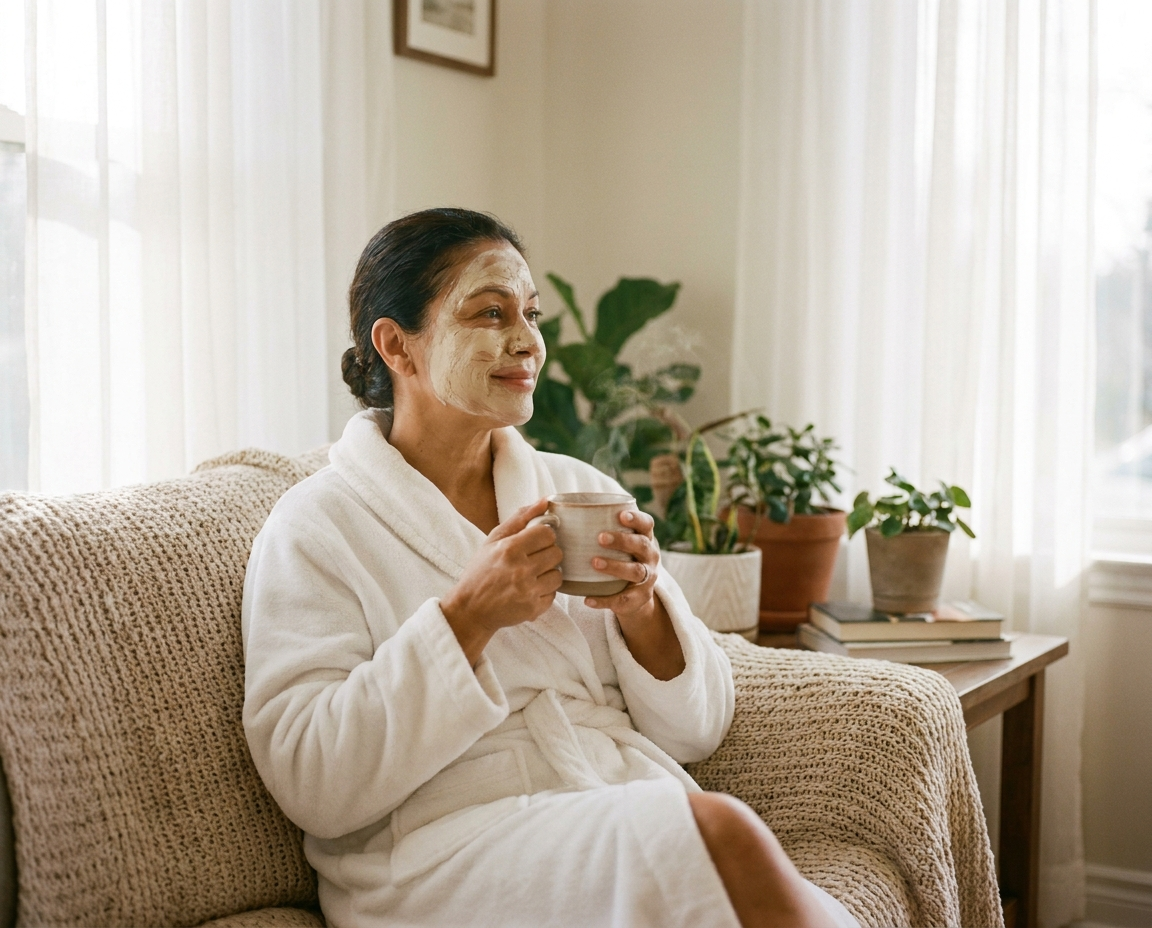
For those working with a tighter budget, a quarterly full spa day plus a consistent home ritual is genuinely effective. Daily dry body brushing before showering provides lymphatic stimulation at no ongoing cost. A bath with two cups of Epsom salts two to three times per week delivers the thermal and magnesium benefits of hydrotherapy at home. A weekly face mask and a good at-home facial massage tool – gua sha or a jade roller used correctly – maintain some of the lymphatic and circulation benefits between professional visits. The goal is not perfection. The goal is consistency. A monthly $70 massage at a franchise studio, repeated every month for a year, will produce more measurable benefit than an annual $700 spa splurge.
It is also worth reframing the cost relative to what you likely already spend on skincare. A single high-end serum can run $80 to $150 or more – and if dead skin cells are preventing active ingredients from penetrating, that product is not delivering its full value. A professional facial that removes that barrier and improves penetration may deliver more net benefit to your skin than the serum alone. Monthly massage at $70 to $100 is comparable to a single therapy session – and the evidence for massage as a stress-reduction tool is at least as strong as many other wellness interventions most of us do not question. Think of it as preventive healthcare, because that is genuinely what it is.
Is There a Real Mental Health Benefit, or Is That Just Marketing?

The mental health benefit is real, and it is underestimated. Dedicated time for yourself – genuinely disconnected, phone away, held in a warm and quiet environment – has become increasingly rare. The nervous system impact of that alone is meaningful. But beyond the ambient benefit of quiet, the tactile stimulation of professional touch activates the body’s parasympathetic response in a reliable and repeatable way. Research has linked regular self-care rituals to lower rates of burnout, better emotional regulation, and reduced symptoms of anxiety. For women who have spent years – sometimes decades – in caretaking roles for children, aging parents, or partners, the experience of being taken care of, of having someone attend to your physical comfort, is not indulgent. It is restorative in a way that is hard to replicate otherwise.
There is something important in the signal a spa visit sends to your own nervous system: that you are worth care. This is not a sentiment. It is a practice. The women who maintain consistent self-care practices do not do so because their lives are easier or their schedules are less full. They do it because they have learned – usually through experience – that they function better when they do. Burnout is often preceded by the gradual elimination of the practices that sustain us. Rebuilding a spa practice, even a modest one, is one concrete way to reverse that erosion.
What Should Women Over 50 Know About Their Skin and Spa Treatments?
After 50, your skin is operating under a different set of conditions. Cell turnover has slowed significantly – from the roughly 28-day cycle of young skin to 45, 60, or even 90-plus days. This means dead cells accumulate on the surface more persistently, and the dull, thickened texture that many women notice in their 50s is partly a reflection of this. Professional exfoliation – done with training, appropriate products, and the right equipment – becomes more valuable as you age, not less, because it compensates for what your skin can no longer do efficiently on its own. The same is true of professional hydration: as estrogen declines, skin becomes drier and loses elasticity, and professional-grade hydrating facials with high-concentration hyaluronic acid, peptides, and ceramides address that at a level home products cannot fully reach.
Collagen production is also declining, at roughly 1 percent per year after 30, with a significant additional drop in the years following menopause. Treatments that stimulate collagen production – including microneedling, certain laser treatments, and regular professional massage – become proportionally more meaningful as natural production slows. Hot stone massage and hydrotherapy are particularly beneficial for joint stiffness, which becomes more common after 50 and is exacerbated by inflammation and declining estrogen. The cardiovascular benefits of sauna use are specifically relevant for postmenopausal women, since estrogen previously provided protective effects on the heart that are reduced after menopause. Sauna use two to three times per week is one lifestyle intervention with genuine, well-documented evidence – and it also happens to feel wonderful.
Menopause-related skin changes – dryness, increased sensitivity, loss of elasticity, uneven pigmentation – respond particularly well to the combination of regular hydrating facials with professional actives and consistent lymphatic stimulation. Many women in their 50s find that their skin improves meaningfully once they shift from a sporadic facial to a monthly one, simply because the professional treatment addresses the backlog of dead cells and depleted moisture that at-home products cannot fully manage. This is the age at which professional treatments earn their keep most clearly.
FAQs
How soon will I see results from regular facials?
Most women notice improved skin texture and hydration within 24 to 48 hours of a first facial. But the more significant results – improved tone, reduced pigmentation, better barrier function – typically become visible over three to four months of consistent monthly visits. This is because the skin’s renewal cycle takes weeks, and cumulative professional treatments layer their effects over time. Think of the first visit as resetting the baseline and the subsequent visits as building on it progressively.
Is a $150 spa facial really better than an $80 one?
Not always. Price varies more by location and brand than by outcome. What matters most is the skill of the aesthetician, the quality of the products used, and whether the treatment is appropriate for your skin type. A knowledgeable aesthetician at a mid-range spa who assesses your skin and tailors the treatment will outperform an expensive facial on a fixed menu every time. Ask about the aesthetician’s training and how they will customize the treatment before booking.
Can I replicate a professional facial at home between visits?
You can maintain the benefits between visits, but you cannot replicate a professional facial at home. Home tools lack the precision, intensity, and sterility of professional equipment. What you can do effectively at home: daily SPF, targeted actives (retinol, vitamin C, niacinamide), a gentle exfoliant two to three times per week, and a weekly face mask. Gua sha or a facial roller used correctly adds lymphatic benefit. The home routine is what preserves and extends the professional treatment – they work together, not instead of each other.
Is a spa membership worth it?
For most women, yes – if it is a service you will actually use monthly. Spa and massage memberships typically reduce per-visit cost by 20 to 40 percent, and the commitment of a membership tends to increase follow-through. Massage Envy, Hand and Stone, and similar franchise spas offer memberships in the $60 to $80 per month range for a monthly massage, which is a genuinely reasonable price for a monthly wellness practice. Medical spa memberships are worth evaluating if you are planning ongoing treatments like chemical peels or laser sessions, as the bundled pricing is often significantly more favorable.
What is the single most impactful spa treatment for skin anti-aging?
If you can only choose one, a monthly professional facial with a skilled aesthetician who uses medical-grade actives appropriate for your skin is likely the highest-return treatment. It addresses cell turnover, hydration, product penetration, and stimulation of collagen synthesis. If anti-aging is the priority and budget allows for a medical spa, a series of microneedling sessions followed by quarterly maintenance has some of the strongest evidence for improving fine lines, texture, and collagen density. For overall wellbeing – including the stress and sleep benefits that have indirect but significant skin effects – monthly massage and two to three weekly sauna sessions together form a powerful combination.
The most compelling argument for a consistent spa practice is not that it feels good – though it does. It is that the evidence is clear, the mechanisms are understood, and the benefits compound over time in ways that occasional treatments simply do not. Skin that receives regular professional attention looks and behaves differently than skin that does not. A body that experiences regular massage maintains lower cortisol, better sleep, and improved immune function compared to one that does not. A woman who builds a spa practice – even a modest, budget-conscious one – is not indulging herself. She is doing something practical, grounded in science, and genuinely good for her long-term health. Book the appointment.
Related Posts