Jun
Beauty, Skincare, Trends & Opinions, Wellness
Why Sleeping With Your Pets Is Basically the Best Decision You Ever Made
If you click on links we provide, we may receive compensation.
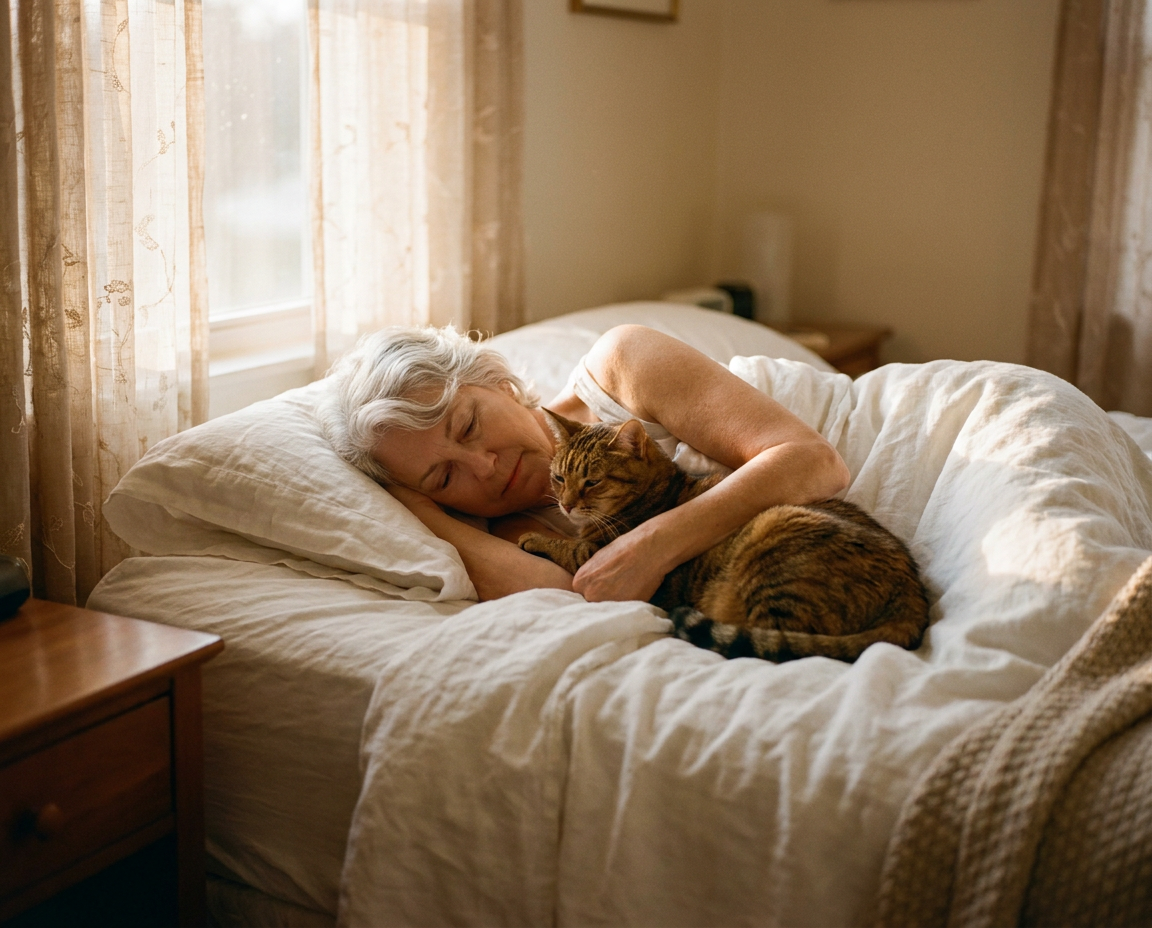
Nearly half of all American adults share their bed with a pet – and according to a 2024 nationally-representative study published in Scientific Reports, around 47.6 percent of the 1,591 participants surveyed reported doing exactly that. The real number is probably higher. Other surveys put it closer to 65 or even 74 percent, depending on how you ask the question. Which is to say: if you have a cat curled into the back of your knees or a dog sprawled across two-thirds of your pillow, you are not alone. You are, in fact, part of a very cozy, very devoted majority. And yes, the researchers have opinions about this. They always do. But before we get to what the scientists say about sleep efficiency and insomnia severity, let’s acknowledge what you already know from lived experience – that waking up next to a warm, quietly breathing creature who thinks you are the greatest person on earth is genuinely one of life’s better moments.
The debate over whether pets belong in bed has been going on for a while, and it is not going away. Sleep specialists point to disrupted sleep architecture. Allergists point to dander. Infectious disease researchers point to – and we will come to this – something called zoonotic risk, which sounds much scarier than it generally is for a healthy adult. Meanwhile, approximately 65 percent of American pet owners are ignoring all of this advice and sleeping deeply, happily, sandwiched between a Labrador and a tabby cat. We are going to look honestly at both sides of this story. The cons are real, in some cases genuinely important, and worth knowing about. But we are also going to look at the research that explains why so many of us keep doing this anyway – and why, for a lot of people, the benefits are not just emotional but physiologically measurable.
What Does the Research Actually Say About Sleep Quality?
The flagship study most sleep doctors will cite is a 2020 piece from the Mayo Clinic Proceedings, which used actigraphy – wrist monitors that measure actual movement – to track both human and dog sleep in real time. The finding that gets repeated: dogs in the bed (as opposed to the bedroom) were associated with reduced sleep efficiency in humans. Sleep efficiency is a technical measure of how much of your time in bed is spent actually sleeping, and getting a dog off your pillow, apparently, is one way to improve it. Fair enough. On the other hand, a 2024 survey conducted by the same Mayo Clinic found that over 40 percent of pet owners actively reported that their pets helped them sleep better. That is not a small number. That is four in ten people saying the exact opposite of what the actigraphy suggests – which tells you something important about the limits of measuring sleep with a motion tracker when what you are actually measuring is comfort.
The 2024 Scientific Reports study – a large, nationally-representative sample – found that co-sleeping with pets was associated with poorer perceived sleep quality and greater insomnia severity in some participants. That result deserves honest acknowledgment. But here is what the same study could not capture: the 93 percent of co-sleeping pet owners in a separate 2024 survey who said their pet had either a positive or neutral overall effect on their sleep. Ninety-three percent. That is not a rounding error. That is an overwhelming majority of people telling researchers, politely but firmly, that their data does not match life on the ground. Science is great at measuring movement. It is less good at measuring what it feels like to have a purring cat nestle against your shoulder at midnight when your mind will not stop running. Source: https://www.nature.com/articles/s41598-024-56055-9
Part of what is happening here is that sleep quality and sleep quantity are not the same thing as sleep satisfaction. A night with a dog who occasionally resettles is technically less efficient than a night alone. But if you fell asleep faster, felt less anxious lying there in the dark, and woke up feeling connected to something alive and loving – did you sleep worse? That is a genuinely hard question, and the clinical literature has not fully worked out how to answer it. The Better Sleep Council has noted the importance of separating subjective experience from objective measurement in this area, and that seems right. Your Fitbit and your 14-year-old golden retriever are measuring different things.
What Is Actually Happening in Your Body When Your Pet Is Near?
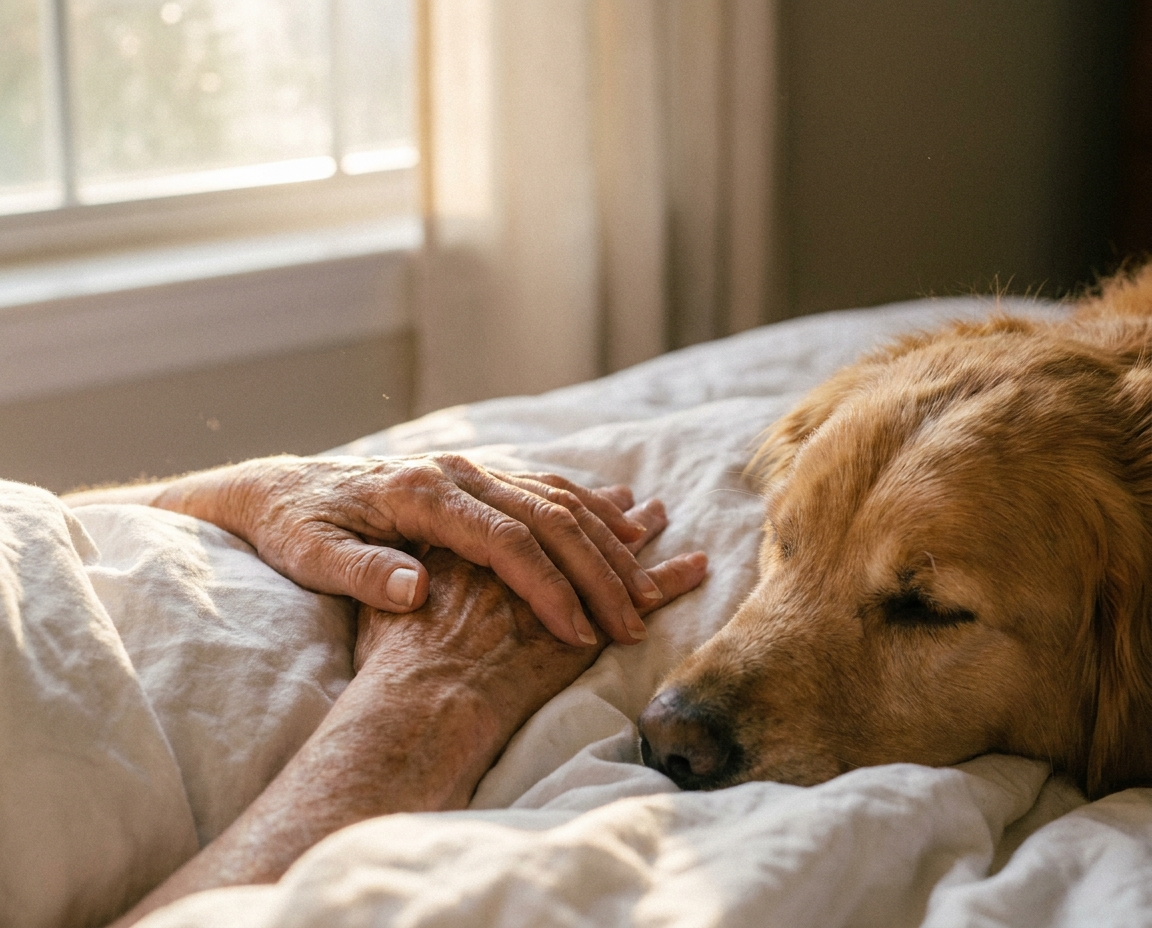
The physiological story behind pet co-sleeping is more interesting than the sleep-efficiency debate. When you interact closely with a dog or cat – including the low-key physical contact of sleeping near them – your brain releases oxytocin, the hormone associated with bonding, trust, and social connection. A 2024 review in the journal Animals outlined the measurable increase in oxytocin and corresponding decrease in cortisol – the stress hormone – that occurs during positive human-pet interaction. Cortisol suppression is not a minor thing. Chronically elevated cortisol is associated with impaired sleep, anxiety, cardiovascular risk, and accelerated skin aging. Anything that reliably brings it down in the evening is worth paying attention to.
There is also something that psychologists call co-regulation – the process by which two nervous systems in proximity naturally synchronize. Heart rates slow, breathing becomes rhythmic, the state of quiet alertness that keeps you lying awake at 2am simply has less room to take hold. A dog’s steady heartbeat and body warmth create a kind of sensory anchor. A cat’s purr – which occurs at frequencies between 25 and 50 Hz – has been studied for its possible role in promoting physiological calm and even bone density. That last part sounds like a stretch until you consider that purring vibrations fall within a range that researchers have associated with tissue healing. Whether sleeping next to a purring cat is literally therapeutic in a clinical sense is an open question. But that it is calming? Anyone who has tried it already knows the answer. Source: https://www.sleepfoundation.org/animals-and-sleep/sleeping-with-pets
Dopamine and serotonin also enter the picture. The Cleveland Clinic noted in 2024 that interaction with dogs has measurable effects on both neurotransmitters – the ones most directly associated with mood regulation and depression. If spending time with your pet in the evening, including falling asleep next to them, reinforces that neurochemical pattern, then the sleep you get may be qualitatively different from what an actigraph can detect. You might move more in the night. You might also wake up feeling genuinely better. Both things can be true simultaneously, and they often are.
What About Allergies and All the Rest of the Hygiene Concerns?
Here is where we have to slow down and be straight with you, because some of these risks are not nothing. Pet dander – the microscopic skin flakes that cats and dogs shed continuously – is one of the most common allergen triggers for asthma and allergic rhinitis. If you have a diagnosed allergy to cats or dogs, sharing a bed with one will likely worsen your symptoms. This is not a contested point. It is fairly well established that the bedroom is the single most important room to keep allergen-free for people who suffer from pet-related allergies, and the bed itself is the highest-exposure surface in that room. If this is you, the honest advice from allergists is to keep your pet out of the bedroom entirely – not just off the bed, because dander circulates in the air and settles on all surfaces. That is a real trade-off, and it is one that some people will have to make.
Advertisement
Then there is the question of zoonotic disease – illnesses that can pass from animals to humans. A 2022 review published in the journal Pathogens (https://pmc.ncbi.nlm.nih.gov/articles/PMC9606909/) did catalog cases of cat scratch disease, Chagas disease, and other infections that have been linked to close human-pet contact, including co-sleeping. Studies found that dogs and cats can carry Enterobacteriaceae on their fur and footpads, and fleas can transmit pathogens under the right conditions. This sounds alarming. In context, though, the actual population of healthy adults who contract serious illness from their well-cared-for, vaccinated, flea-treated indoor pet is very small. The same review acknowledged that risk is substantially elevated for immunocompromised individuals, young children, and older adults with weakened immune systems. For everyone else – a healthy adult whose cat has had its shots and its flea prevention – the zoonotic argument against bed-sharing is real but modest. Keep your pet’s veterinary care current, wash your hands, do not let a sick animal sleep on your face, and you have addressed the bulk of it.
Hygiene is also worth a word. Pets do walk on floors, roll in things, and bring the outside world in on their paws. A 2022 survey found that 42 percent of pet owners cited hygiene as a reason not to allow their pets in bed – yet most of them did it anyway. Washing your bedding more frequently than you otherwise might is a reasonable response. Wiping down paws after outdoor walks, keeping up with grooming, and maintaining your pet’s general cleanliness covers the rest. None of this requires a medical degree or a particularly strict routine. It just requires remembering that your dog has been outside and maybe wiping his feet before he climbs up.
What Does This Mean Specifically for Women Over 60?
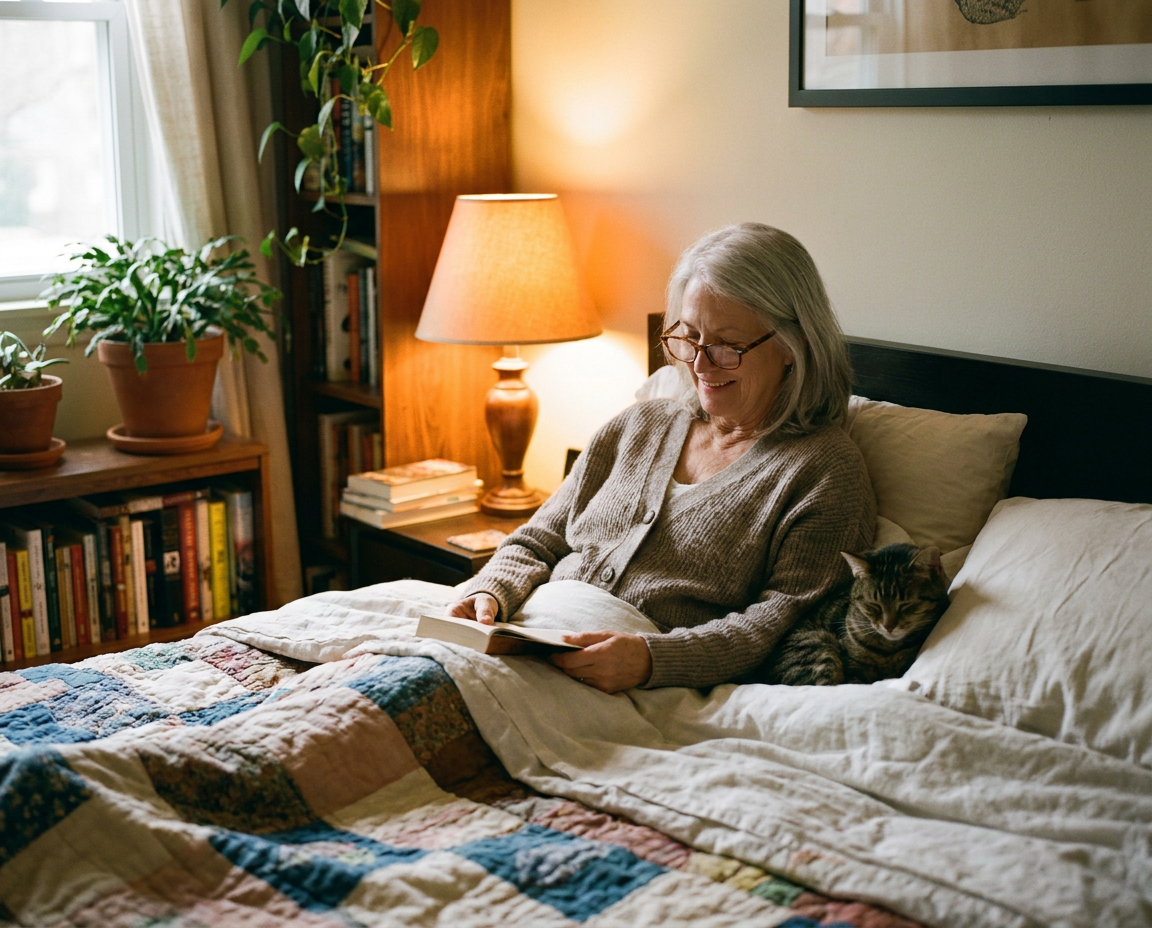
For women in the 60-and-over age group, the case for pet co-sleeping gets notably stronger – and the research on this is more specific than most people realize. Loneliness and social isolation are documented risk factors for a range of health outcomes in older adults, including cardiovascular disease, cognitive decline, and depression. A study published in BMC Geriatrics found that pet ownership in community-dwelling older adults was associated with meaningful reductions in feelings of loneliness and improved subjective well-being. A separate COVID-era study in PLOS ONE found that older adults who walked dogs and maintained pet routines showed greater resilience against the social impact of isolation. These are not soft wellness findings. They are measurable health outcomes.
Sleep itself becomes a more complex issue as we age. Changes in sleep architecture – more time in lighter sleep stages, more frequent nighttime waking, earlier natural wake times – are common in women over 60. Add to that the cortisol dysregulation that can come with menopause and post-menopause, and you have a population for whom the calming, cortisol-lowering effects of pet proximity may be particularly meaningful. The Mayo Clinic survey finding – that over 40 percent of pet owners say their animals help them sleep better – likely includes a significant portion of older adults for whom that sense of comfort and companionship is doing real physiological work. Source: https://aasm.org/is-fido-a-bed-hog-or-a-cuddle-buddy-almost-half-of-americans-sleep-with-pets/
There is also the matter of skin. Chronic stress and poor sleep are two of the most well-documented drivers of accelerated skin aging – collagen breakdown, increased inflammation, impaired barrier function. If sharing your bed with a cat or dog consistently reduces your evening anxiety and improves your subjective sense of sleep quality, the downstream effects on your skin are real. Cortisol damages collagen. Oxytocin is broadly anti-inflammatory. You do not need a peer-reviewed paper specifically on pets-and-wrinkles to connect those dots – the mechanisms are well-established. What is good for your nervous system is generally good for your skin, and what helps you sleep better helps both.
For women who live alone – a group that represents a substantial proportion of women over 60 – the case is even more direct. A warm, breathing presence in the bed is not a luxury or an indulgence. It is a physiologically meaningful source of companionship that influences cortisol, oxytocin, heart rate, and the general sense of safety that makes it easier to let go of the day. Research from 2025 in the journal Frontiers in Public Health found that pet companionship was associated with decreasing depressive and anxiety symptoms in 73 percent of older adult participants, and eased feelings of loneliness in 68 percent. Those are not small numbers. Source: https://www.ncbi.nlm.nih.gov/pmc/articles/PMC11860329/
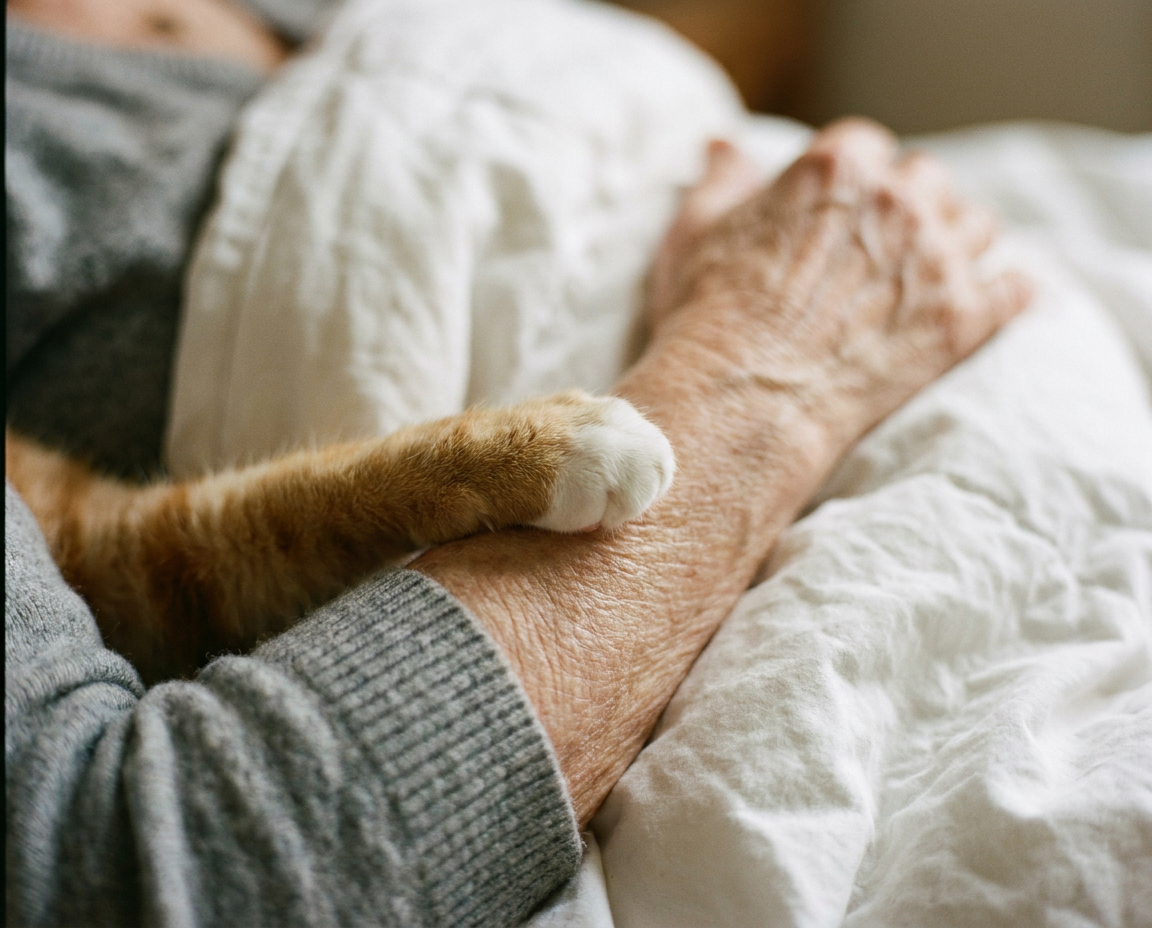
Does the Type of Pet or Sleeping Arrangement Make a Difference?
It does, somewhat. The Mayo Clinic actigraphy data suggested that a dog in the bedroom but not in the bed was associated with better human sleep efficiency than a dog on the bed itself. If you are genuinely concerned about sleep disruption and you want to keep your dog close without the movement factor, a high-quality dog bed on the floor of the bedroom is a reasonable middle ground. Many dogs will accept this arrangement without complaint, particularly if they have been sleeping that way since puppyhood. Your cat, by contrast, will do exactly what your cat wants to do and has already made its feelings clear on the matter of boundaries.
Cats are, in some respects, the better co-sleeper for light-sensitive humans – they tend to be more still through the middle of the night, though their crepuscular nature means early mornings can get lively. Dogs vary enormously by breed and individual temperament. A calm, older dog of a medium breed will disrupt your sleep far less than a young, active one who considers 4am a reasonable time to rearrange himself. Size matters too – a 12-pound dog at the foot of the bed is not the same as a 90-pound dog who sprawls horizontally. Knowing your particular animal, and being honest about whether their sleep schedule and yours are genuinely compatible, is the most practical guide here.
Multiple pets introduce another layer. Two animals who are bonded may sleep more calmly together – and by extension disturb you less – than a solo pet who is looking for interaction. On the other hand, two cats who occasionally decide to have a disagreement at 3am are their own category of problem. The research does not go deep into multi-pet co-sleeping, but experience suggests that households who have done it for years develop their own equilibrium. You learn your animals’ rhythms. They learn yours. The first few weeks are the adjustment period, and after that most people settle into something that works, even if it does not look exactly like the sleep hygiene literature’s ideal.
How Do You Make Pet Co-Sleeping Actually Work Well?
If you are going to do this – and statistically, most of you are already doing this – there are a few things that make it work better. Keeping up with your pet’s veterinary care is the single most important one. A pet who is current on vaccinations, parasite prevention, and regular checkups is a pet who poses minimal zoonotic risk. That is not an opinion, it is what the infectious disease literature says. Flea and tick prevention in particular addresses the most common vector for the bacterial infections that show up in the zoonotic risk studies.
Washing your bedding once a week rather than once every two weeks makes a measurable difference if dander is a concern. If you have mild seasonal allergies rather than a true pet allergy, a good HEPA air purifier running in the bedroom overnight can reduce the particle count significantly. These are not difficult adjustments. They take about as much effort as keeping your pet groomed, which you are presumably already doing. Wiping muddy paws before the leap onto the duvet is the kind of habit that takes about three days to establish and then becomes automatic.
For people with diagnosed pet allergies or asthma, the honest answer is that co-sleeping is not recommended, and no amount of air purifiers fully compensates for having a dander-producing animal in your face for eight hours. That is a real limitation. For everyone else, the practical steps are modest and the payoff – in terms of the comfort, the oxytocin, the reduced loneliness, the simple pleasure of it – is significant. A relationship with an animal that trusts you enough to sleep beside you is something genuinely valuable, and treating it as a health hazard to be managed rather than a gift to be enjoyed misses rather a lot of the point.
Frequently Asked Questions
Is it actually bad for your sleep to have a pet in the bed?
The clinical answer is: it can reduce sleep efficiency, which is the technical measure of how much of your time in bed you spend actually sleeping versus awake. A 2020 Mayo Clinic study found this was more pronounced when the dog was in the bed versus simply in the room. However, in surveys, over 40 percent of pet owners report that their pets help them sleep better – and 93 percent say their pet has a positive or neutral overall effect. The subjective experience and the actigraph data are telling different stories, and both are worth taking seriously.
Are there real health risks to sleeping with my cat or dog?
For healthy adults with pets that are up to date on vaccinations and parasite prevention, the zoonotic risk is low. The cases documented in medical literature tend to involve immunocompromised individuals or people with pets who were not receiving veterinary care. If you or someone in your household is immunocompromised, elderly and frail, or a young child, it is worth discussing with your doctor. For the average healthy adult, good veterinary care and basic hygiene cover the main bases.
What if I have pet allergies – can I still co-sleep?
If you have a diagnosed allergy to cats or dogs, sharing a bed is likely to worsen your symptoms, and most allergists would advise keeping pets out of the bedroom entirely. The bed is the highest dander-exposure surface in the room, and eight hours of close contact will deliver a significant allergen load. An air purifier may help with mild sensitivity but is unlikely to fully compensate for a true allergy. This is one situation where the cons genuinely outweigh the emotional benefits.
Is this better or worse for older women specifically?
The evidence suggests it can be particularly beneficial. Older adults are at higher risk for loneliness and its health consequences, and the research on pet companionship for this group shows measurable reductions in depression, anxiety, and isolation. The cortisol-lowering, oxytocin-raising effects of pet proximity may be especially meaningful for women whose sleep has already been altered by age-related hormonal changes. The main caveat is that older adults with weakened immune systems should take the zoonotic risk guidance more seriously than their younger counterparts.
Does it matter whether the pet sleeps in the bed or just the room?
According to the Mayo Clinic actigraphy study, yes – dogs in the bedroom but not in the bed were associated with better sleep efficiency than dogs in the bed. If you find your sleep is genuinely disrupted by a pet who moves around a lot, a comfortable pet bed on the floor of the bedroom can be a practical middle ground that preserves the closeness and the calm without the movement disruption. Cats are generally less amenable to this kind of negotiation, as most cat owners already know.
At the end of all this research, what you are really weighing is the difference between a metric and an experience. The actigraph says your sleep efficiency dropped two points. The other part of your brain says you fell asleep to the sound of purring and woke up to a warm weight against your legs and felt, for a moment, profoundly not alone. Both of those things happened. Only one of them shows up in a sleep study. Keep your pet’s vaccinations current, wash your sheets on schedule, wipe the muddy paws – and then make the bed, pull back the duvet, and let your animal in. The research is more on your side than the headlines suggest, and the joy of it is entirely your own.
Related Posts