

Aug
Beauty, Skincare, Trends & Opinions, Wellness
What Creatine Actually Does for Women Going Through Menopause
If you click on links we provide, we may receive compensation.
By age 50, the average woman has already lost a measurable portion of the muscle she had at 35. It happens quietly – a little less strength here, a little more fatigue there – and most of it is driven by falling estrogen. Researchers estimate that women lose roughly 3 to 8 percent of muscle mass per decade after age 30, with that rate accelerating sharply after menopause. The numbers get more specific: postmenopausal women can lose around 0.6 percent of lean muscle mass every single year, according to research published in BMC Women’s Health (https://www.ncbi.nlm.nih.gov/pmc/articles/PMC12325020/). That adds up to a meaningful change in how the body moves, how it holds itself upright, and how it manages blood sugar and metabolic health. Creatine – a compound the body makes naturally and that has been studied in athletes for decades – is now drawing serious scientific attention as a tool that can slow that process down, and a 2025 review published in the Journal of the International Society of Sports Nutrition made the case that its benefits for women have been systematically underappreciated (https://www.ncbi.nlm.nih.gov/pmc/articles/PMC12086928/).
What Exactly Happens to Your Body During Perimenopause and Menopause?
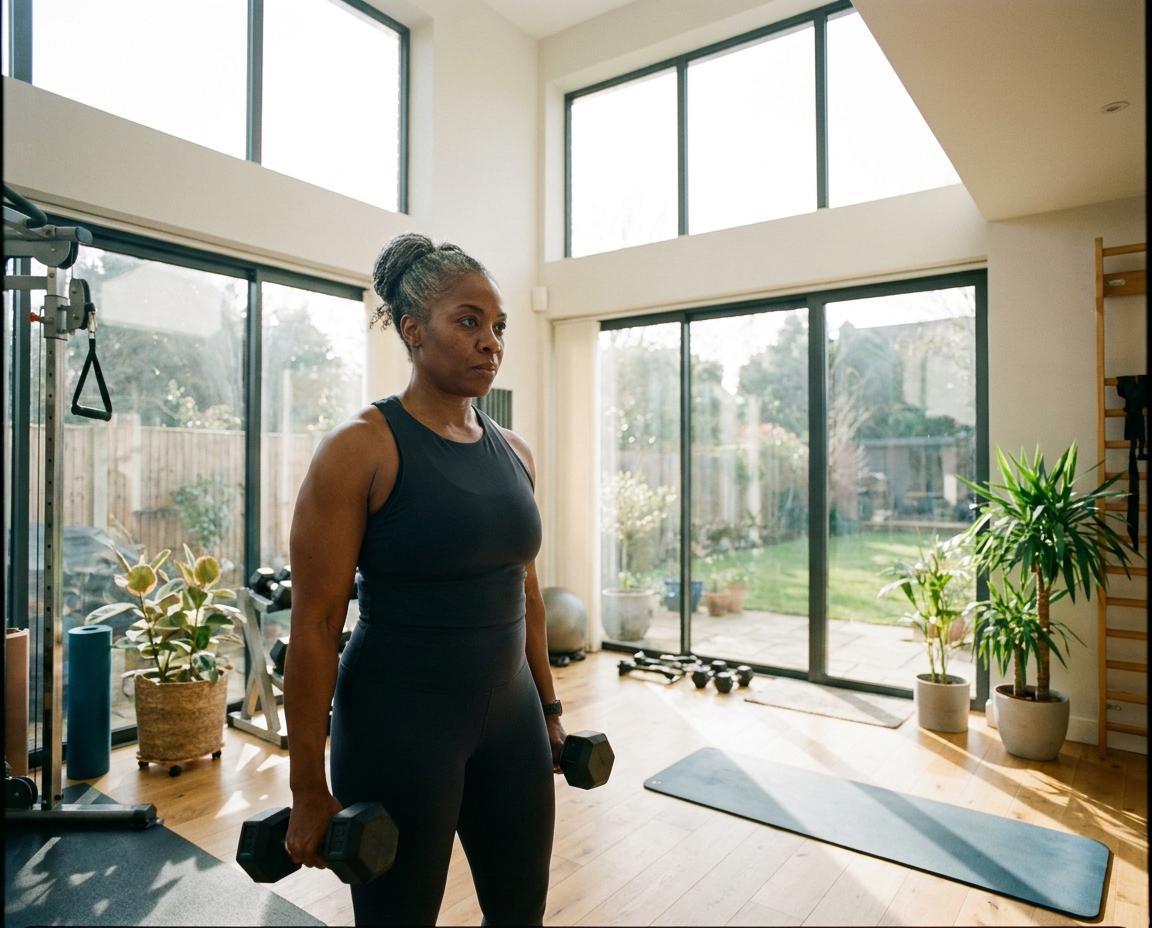
Perimenopause can start anywhere from the mid-thirties to the late forties and typically runs for several years before the final menstrual period. During this stretch, estrogen and progesterone levels don’t just drop – they fluctuate widely, which is part of what makes the transition so disorienting. Estrogen plays a direct role in muscle protein synthesis, so when levels fall, the body becomes less efficient at building and maintaining muscle tissue. Testosterone, which also supports muscle mass in women, trends downward at the same time. The result is a hormonal environment that makes sarcopenia – the clinical term for age-related muscle loss – nearly inevitable without intentional intervention.
Beyond the muscles, this shift affects bone density, brain function, mood stability, and energy metabolism all at once. About 70 percent of middle-aged women report musculoskeletal symptoms during the peri- and postmenopausal years, including muscle weakness, joint discomfort, and a noticeable drop in physical endurance (https://www.ncbi.nlm.nih.gov/pmc/articles/PMC12325020/). Sleep often suffers too, which compounds fatigue and makes physical activity harder to sustain. The well-documented “brain fog” – slower thinking, difficulty with word recall, trouble concentrating – is reported by a substantial proportion of women and is tied to the loss of estrogen’s neuroprotective effects. And falling estrogen pulls serotonin levels down with it, which is one biological reason anxiety and low mood are so common during the transition. All of this tends to arrive at the same time, in the same body, usually without a clear roadmap.
That is where supplementation research has been catching up. For years, creatine was associated almost entirely with male athletes looking to build bulk and recover faster from training. The science has moved well past that framing. Researchers are now examining how creatine works across different life stages in women, and the picture emerging from perimenopause and post-menopause research is genuinely compelling. This is not a supplement trend without evidence – it is a field of study that has accumulated enough rigorous data to be worth taking seriously.
How Does Creatine Work, and Why Does It Matter for Women?

Creatine is a compound made from three amino acids – glycine, arginine, and methionine – that the liver and kidneys produce naturally. About 95 percent of the body’s creatine is stored in muscle tissue, where it helps regenerate adenosine triphosphate, or ATP – the primary energy currency that cells use to do work. When muscles contract, ATP breaks down rapidly, and creatine phosphate steps in to restock the supply almost instantly. This is why creatine has been so extensively studied in the context of high-intensity exercise: more available creatine means more rapid energy recycling, which means better performance and faster recovery. The body can only store so much creatine on its own, and dietary sources – primarily red meat and fish – don’t always fill the gap, particularly as eating patterns change with age.
But creatine’s function doesn’t stop at the muscle membrane. Around 5 percent of the body’s creatine is stored in the brain, where it supports the same energy-buffering work it performs in muscle cells. The brain is an extraordinarily energy-demanding organ, and when its creatine stores run low – which can happen with poor diet, aging, stress, or hormonal changes – cognitive function can suffer. There is also evidence that creatine interacts with pathways involved in mood regulation, including those linked to serotonin and dopamine. Women naturally have lower creatine concentrations in the brain’s frontal cortex than men, which may partly explain why women are more susceptible to depression and cognitive changes as they age, and why some researchers believe women may benefit more from supplementation than men do.
Can Creatine Actually Prevent Muscle Loss During Menopause?

The short answer is yes – with an important condition attached. Creatine supplementation on its own shows modest benefits for muscle mass, but when paired with resistance training, the results are consistently and meaningfully stronger. A 2021 systematic review and meta-analysis published in Nutrients examined randomized trials specifically in older women and found that adding creatine to a resistance training program produced significantly greater gains in muscle strength compared to resistance training alone – particularly in programs lasting 24 weeks or more (https://www.ncbi.nlm.nih.gov/pmc/articles/PMC8619193/). Twenty-four weeks is six months – which means the benefits compound with time and consistent use, not just with high doses.
The mechanism behind this matters for women in perimenopause. Creatine doesn’t just fuel workouts; it also appears to have direct anabolic signaling effects that support muscle protein synthesis independently of exercise. During menopause, when estrogen can no longer provide that anabolic signal, creatine may partially compensate by keeping the cellular machinery running more efficiently. It also has anti-inflammatory properties that become more relevant with age – chronic low-grade inflammation is one of the drivers of accelerated muscle breakdown, and creatine may dampen some of that activity. For women who are already strength training or ready to start, adding creatine is a low-cost, well-studied complement that the biology supports.
It is worth being honest about what the research does and doesn’t show. Most of the well-powered trials have been conducted in postmenopausal women rather than perimenopausal ones, though a 2025 randomized controlled trial – the CONCRET-MENOPA study – specifically examined perimenopausal and menopausal women and found meaningful improvements in both cognition and mood (https://pubmed.ncbi.nlm.nih.gov/40854087/). Perimenopausal-specific data remains thinner than the post-menopausal literature, but the biological rationale applies just as strongly to that transitional period – estrogen is already declining, muscle breakdown is already accelerating, and the case for intervention is just as real. What the data doesn’t support is waiting until menopause is complete before considering creatine; starting earlier may protect against the steepest losses.
What Does the Research Show About Creatine and Bone Density?
Bone loss after menopause is one of the most clinically significant changes the body undergoes, and it begins earlier than most women realize. Estrogen regulates bone turnover – the ongoing process of breaking down old bone and forming new – and when estrogen falls, resorption begins to outpace formation. The result is a gradual thinning that raises the risk of osteopenia, osteoporosis, and eventually fractures. Creatine is not a bone-density drug and doesn’t function like bisphosphonates or hormone therapy. But a growing body of evidence suggests it may meaningfully slow the rate of bone mineral density loss when combined with exercise, and that is a clinically relevant finding even without reversal of the trend.
The most widely cited study in this area assigned 47 postmenopausal women to a year of resistance training alongside either creatine supplementation or placebo. After 12 months, the creatine group had lost 1.2 percent of femoral neck bone mineral density, compared to a loss of 3.9 percent in the placebo group (https://www.researchgate.net/publication/268230400_Effects_of_Creatine_and_Resistance_Training_on_Bone_Health_in_Postmenopausal_Women). That is a substantial difference in rate of decline – not a reversal, but a meaningful slowing. A subsequent 2-year trial in 237 postmenopausal women showed mixed results at the femoral neck but some protective signals at the lumbar spine, and a 2025 systematic review and meta-analysis of the combined literature concluded that creatine at 5 grams or more per day, used alongside resistance training, yields small but meaningful protective effects on lean mass and strength without evidence of harm (https://pubmed.ncbi.nlm.nih.gov/42141930/). The most likely mechanism is indirect – stronger muscles generate more mechanical loading on bone, and that mechanical signal is one of the key drivers of bone-building cell activity.
Does Creatine Help With Brain Fog and Mood Swings?

This is where some of the most intriguing recent research sits. Brain fog – that frustrating combination of slower thinking, poor word recall, and trouble concentrating – is one of the most commonly reported menopause symptoms, and also one of the least directly addressed in clinical settings. The connection to estrogen is well established: estrogen has direct neuroprotective effects, supports cerebral blood flow, and influences neurotransmitter systems including serotonin and dopamine. When estrogen falls, some of that protective scaffolding falls with it. Women who have sailed through earlier decades cognitively often find the menopause transition genuinely surprising in this regard.
Creatine may offer a partial workaround through the brain’s energy systems. Since creatine phosphate helps the brain regenerate ATP under conditions of demand or stress – including the metabolic stress that accompanies hormonal changes – supplementation could help maintain the brain’s functional capacity during the transition. Research in general populations shows that creatine supplementation improves short-term memory, working memory, and reasoning ability, particularly under conditions of sleep deprivation or elevated stress. Perimenopausal and menopausal women often deal with both at once. The CONCRET-MENOPA randomized controlled trial found that women taking 1,500 mg of creatine hydrochloride daily for eight weeks showed improved reaction time and meaningfully reduced severity of mood swings compared to placebo (https://pubmed.ncbi.nlm.nih.gov/40854087/). That is a lower dose than the standard 3 to 5 grams of creatine monohydrate most guidelines recommend, and the fact that benefits were visible at this dose is notable.
Mood effects deserve their own attention here. A large epidemiological study published in Translational Psychiatry found that higher dietary creatine intake was inversely associated with depression risk in adults, and women showed a stronger protective association than men (https://www.nature.com/articles/s41398-020-0741-x). The likely explanation connects back to estrogen: as estrogen falls during perimenopause, serotonin levels decline with it, because estrogen modulates serotonin receptor sensitivity and synthesis. Creatine may partially stabilize this by keeping brain energy systems running more efficiently, which in turn supports healthier neurotransmitter function. It is not an antidepressant, and women experiencing significant depression should seek appropriate clinical support. But for mood variability in the context of hormonal transition, there is now a real biological rationale for why creatine may help, not just anecdote.
What Do Women Over 50 Need to Know About Creatine?
For women past menopause, the argument for creatine becomes arguably even more pressing than during the transition itself. Once estrogen has settled at its lower post-menopausal level, the body’s capacity for muscle building and maintenance is operating in a fundamentally different environment than it was in the twenties and thirties. Muscle loss continues at roughly 0.6 percent per year, bone density continues its gradual decline, and the brain’s metabolic demands don’t ease with age. The tools available to counter these changes without pharmaceutical intervention are more limited than most people appreciate – and creatine is one of the few supplements with a meaningful, peer-reviewed evidence base that spans all three areas simultaneously. That makes it unusually practical as part of a wellness strategy for this life stage.
Women over 50 who have not previously done resistance training will get the most from starting both creatine and strength exercise at the same time. Sequencing doesn’t seem to matter much – beginning creatine while launching a strength program works just as well as adding creatine to an existing training routine. What the evidence consistently shows is that the combination of creatine plus resistance training is more powerful than either alone, and that the muscle and strength benefits accumulate over months rather than weeks. For women already managing early osteopenia alongside muscle decline, creatine sits naturally within a broader protocol that also includes adequate dietary protein, calcium, and vitamin D. None of these elements replace each other; they work best in conjunction.
Women in this age group also tend to have lower dietary creatine intake than younger women and men. Creatine comes primarily from red meat and fish, and many women over 50 consume less of both – whether for digestive comfort, cardiac health reasons, or personal preference. That dietary gap makes supplementation more meaningful, not less. Creatine monohydrate – the most extensively studied form, with decades of accumulated safety data – remains the standard recommendation. It is inexpensive, widely available, and does not require cycling or loading at the maintenance doses studied in older women, which typically fall between 3 and 5 grams per day.
One practical consideration for women over 50: the initial water retention that some people notice when starting creatine – linked to creatine’s role in drawing water into muscle cells – is generally less pronounced at the maintenance doses (3 to 5 grams daily) than at the higher loading doses sometimes used by athletes. Most women who experience it report it resolves within two to four weeks as the body adjusts. Taking creatine with food and staying well hydrated makes the adjustment more comfortable. And for women on multiple medications or with any history of kidney conditions, a brief conversation with a doctor before starting is the sensible step – not because creatine is harmful in healthy people, but because creatinine levels on routine bloodwork can temporarily rise with creatine use in a way that may look alarming without context.
How Much Should Women Take, and Is It Safe?
The consensus across research and clinical guidance lands on 3 to 5 grams of creatine monohydrate per day as the appropriate maintenance dose for women, including those in perimenopause and post-menopause. A loading phase – typically 20 grams per day for five to seven days – saturates muscle stores faster but is not necessary. Simply starting at 3 to 5 grams daily and continuing consistently achieves the same saturation point within about four weeks. The 2025 review in the Journal of the International Society of Sports Nutrition concluded that creatine supplementation across the female lifespan is well-supported and safe, and that women represent an underserved population in terms of creatine research that deserves more direct attention (https://www.ncbi.nlm.nih.gov/pmc/articles/PMC12086928/). That is a significant statement from a peer-reviewed source – it acknowledges the gap and calls for it to be filled.
The safety profile of creatine in women is well documented. A 2020 analysis spanning multiple clinical studies concluded that creatine supplementation was not associated with significant weight gain, liver complications, kidney complications, serious adverse events, or death in otherwise healthy individuals. The persistent idea that creatine is harmful to kidneys is not supported by the evidence in healthy people – though women with existing chronic kidney disease should get medical guidance before starting. Creatine monohydrate is the recommended form. Other forms – creatine hydrochloride, creatine ethyl ester, buffered creatine – are marketed with various claims but lack the same depth of clinical study behind them, and they tend to cost considerably more. Unless a specific form has been prescribed for a particular reason, monohydrate is the evidence-backed default, and timing – morning, post-workout, with meals – makes minimal difference to outcomes.
FAQs
Is creatine just for athletes and bodybuilders?
Not at all. Creatine research has long moved past the gym context. Studies in older women, women during perimenopause, and postmenopausal populations show benefits for muscle mass, bone protection, cognitive function, and mood – none of which require competitive athletic goals. Women taking creatine to support their health during hormonal transition are using it for exactly the purposes the science now supports.
Will creatine make women look bulky or cause too much weight gain?
This is the most common concern, and it is not what the research shows. Some women experience a small initial gain from water being drawn into muscle cells – typically one to two pounds and temporary – but creatine does not cause fat gain. The lean mass increases seen in studies on older women are modest, take months to develop, and are associated with the kind of functional strength that improves daily life. The 2020 multi-study analysis specifically found no evidence of problematic weight gain.
Can I take creatine without doing any exercise?
You can, and some benefits – particularly for brain energy and mood – do not depend on exercise. But for muscle and bone health, the research is clear that resistance training is what activates most of creatine’s benefits in these areas. Creatine amplifies what training does; it does not fully replace it. For women who are not yet strength training, starting both at the same time is the most efficient approach.
How long does it take to notice results?
Most women starting at a daily maintenance dose of 3 to 5 grams report noticing changes in workout recovery and energy within two to four weeks. Strength and muscle changes take longer – expect eight to twelve weeks of consistent use alongside regular training before seeing meaningful differences. Cognitive effects in the CONCRET-MENOPA trial were observed at the eight-week mark, suggesting that brain-related benefits emerge on a similar timeline.
Is creatine monohydrate better than other forms?
Yes, for most practical purposes. Creatine monohydrate is the most extensively studied form, with the largest body of clinical trial data accumulated over decades. Other forms are marketed with various claims but lack the same depth of research. Monohydrate is also the least expensive option. Unless a specific form has been prescribed for a particular reason, creatine monohydrate is the sensible default.
Does creatine interact with hormone therapy or other menopause medications?
No significant interactions between creatine supplementation and hormone replacement therapy have been reported in clinical research to date. Women using HRT who want to add creatine can discuss the combination with their prescribing physician, but there is no published evidence of concern. As with any supplement, mentioning it to the doctor managing other medications is the careful and sensible approach.
The conversation around menopause supplements has expanded considerably in recent years, and most of it is long overdue. Creatine is one of the few additions to that conversation that arrives with genuine science behind it – not just marketing claims or anecdote. What the research keeps showing, across muscle, bone, brain, and mood, is that the menopause transition does not have to mean an inevitable and unmanaged decline. Creatine isn’t a replacement for a thoughtful diet, regular movement, or medical care where it’s needed – but for women navigating this chapter and looking for something concrete and evidence-backed to add to their routine, it is one of the strongest options the current science supports.