Sep
If you click on links we provide, we may receive compensation.
In a head-to-head test comparing three of skincare’s most talked-about actives, copper peptides stimulated collagen production in 70% of participants – compared to 50% for vitamin C and just 40% for retinol. That figure alone tends to stop people mid-scroll. Copper peptides – or more precisely, the tripeptide glycyl-L-histidyl-L-lysine bound to a copper ion, known as GHK-Cu – have been circulating in skincare conversations for years, but the science supporting them has grown substantially more convincing in recent years. This is not another ingredient riding a trend. It is a molecule your body already produces, does a great deal of work with, and gradually makes less of as the years pass. Knowing why that decline matters, and what topical copper peptides can do about it, starts with what GHK-Cu actually is.
GHK-Cu is a naturally occurring tripeptide found in human plasma, saliva, and urine. It was first isolated and identified by researcher Loren Pickart in the 1970s, and it has since become one of the better-studied peptides in dermatology. The three amino acids – glycine, histidine, and lysine – combine with a copper ion to form a small, highly active molecule that can pass through cell membranes with ease and interact with a wide range of biological targets. The copper component is not decorative. Copper is a cofactor for numerous enzymes involved in building connective tissue, including lysyl oxidase, which cross-links collagen and elastin fibers to give them tensile strength. Without adequate copper at the cellular level, those structural proteins lose their integrity over time.
The body uses GHK-Cu as a wound-healing and tissue-remodeling signal. When skin is damaged, GHK-Cu concentrations in the affected area rise, drawing repair cells to the site and triggering the production of fresh collagen. The problem is that GHK levels in human plasma peak around age 20 and decline steadily thereafter. By age 60, circulating GHK concentrations have fallen to roughly 20% of their peak level – a drop that tracks closely with the slowing of skin repair and the gradual thinning of the dermis that most people notice in their later decades. That relationship between declining GHK and declining skin quality is not coincidental. It is one of the reasons this peptide has attracted serious scientific attention rather than fading as a passing fad.
How do copper peptides actually work inside the skin?

GHK-Cu influences skin health through several intersecting pathways, and the most studied is its effect on fibroblasts – the cells in the dermis responsible for manufacturing collagen and elastin. When GHK-Cu binds to receptors on fibroblasts, it upregulates transforming growth factor-beta, a signaling protein that tells fibroblasts to ramp up collagen production. The result is an increase in both type I collagen, the primary structural form that gives skin its thickness and strength, and type III collagen, which contributes to skin suppleness and elasticity. Both types decline measurably with age, and GHK-Cu appears capable of stimulating the production of each.
Beyond fibroblast stimulation, GHK-Cu has a meaningful anti-inflammatory effect. It suppresses the production of inflammatory cytokines including interleukin-1 beta and tumor necrosis factor-alpha – two molecules that, when chronically elevated, break down existing collagen and impede the skin’s ability to regenerate. Chronic low-grade inflammation is one of the hallmarks of aging skin, and anything that reduces it without compromising the skin barrier is genuinely useful. In a 2024 multicenter study, application of a 0.05% GHK-Cu gel after fractional laser resurfacing reduced IL-1 beta and TNF-alpha levels by 30%, while accelerating epithelial recovery by 25% compared to standard post-procedure care. That kind of measurable anti-inflammatory response gives the molecule credibility well beyond typical cosmetic ingredient claims.
GHK-Cu also promotes angiogenesis – the formation of new blood vessels – which improves the delivery of oxygen and nutrients to the skin’s deeper layers. It increases the activity of antioxidant enzymes, helping to neutralize the free radicals that contribute to UV-related damage and accelerated aging. And it appears to stimulate keratinocyte proliferation, which supports the regular turnover of surface skin cells and can improve texture over time. Taken together, these mechanisms explain why this particular peptide keeps appearing in serious dermatology research rather than only in brand marketing materials.


The molecule’s small size matters here. Many larger peptides struggle to penetrate the skin barrier effectively, limiting their impact to surface-level effects. GHK-Cu, with only three amino acids, is compact enough to slip through lipid layers and reach the cells that actually need it. Research published in PMC at https://pmc.ncbi.nlm.nih.gov/articles/PMC4508379/ describes GHK as a natural modulator of multiple cellular pathways, with effects that span collagen synthesis, inflammation control, antioxidant enzyme activation, and gene expression across a broad range of human skin cells. That is a remarkably wide biological footprint for such a small molecule.
What does the clinical evidence actually show?
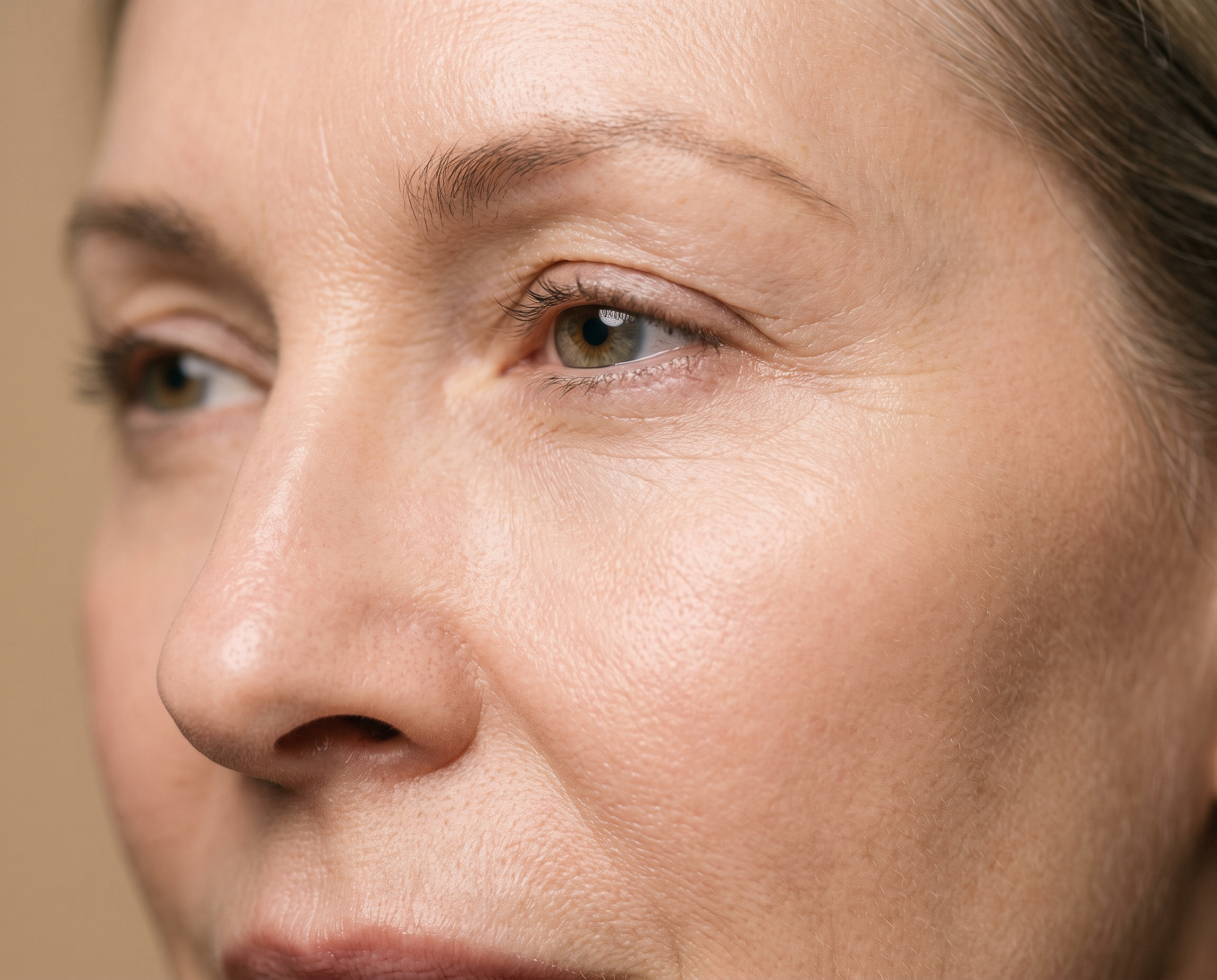
The clinical picture for topical GHK-Cu is encouraging, with the honest caveat that most individual studies are still relatively small. A 2024 randomized controlled trial enrolled 60 women between 40 and 65 years of age and applied a 0.1% GHK-Cu cream twice daily for twelve weeks. By the end of the trial, participants using the active formula showed a 31% reduction in measurable wrinkle depth and a 28% improvement in skin elasticity compared to the placebo group. Those are meaningful numbers, particularly for a topical ingredient, and they compare favorably to outcomes reported in comparable retinoid and peptide trials using similar measurement methods.
The head-to-head collagen comparison provides additional context. After one month of use, GHK-Cu stimulated collagen production in 70% of participants, compared to 50% for topical vitamin C and 40% for retinol at equivalent application frequencies. That does not make copper peptides a replacement for either of those actives – they work through different mechanisms and each brings distinct benefits – but it positions GHK-Cu as a serious player in collagen support rather than a secondary option. The clinical review summarizing this data is available at https://grandingredients.com/copper-peptides-clinical-benefits/. The regenerative and protective properties of GHK-Cu in the context of gene-level data are explored in depth at https://pmc.ncbi.nlm.nih.gov/articles/PMC6073405/.
Advertisement
The ingredient has also shown results beyond the face. A 2022 randomized controlled trial in patients with androgenetic alopecia found that a 0.5% GHK-Cu serum increased hair count by 22% at the sixteen-week mark, compared to 8% in the minoxidil control group. That application is early-stage and warrants further replication, but the mechanism is consistent with what we know about the peptide – copper activity at the scalp supports follicle repair and reduces the inflammation that can impair hair growth. It is a promising area of investigation rather than an established treatment, but the biology makes sense.
A credible review of the broader evidence, published by The Conversation at https://theconversation.com/copper-peptides-these-powerful-molecules-are-worth-the-skincare-hype-272964, described copper peptides as worth the hype while noting that most published trials are industry-funded and smaller than ideal. That is an honest assessment. The direction of the evidence is consistently positive – improved elasticity, reduced wrinkles, faster healing, collagen induction that outperforms established actives in at least some measurements – but the research community would benefit from more large-scale, independently funded studies over longer time frames. The signs are good. They are not yet definitive at the scale that would satisfy the most rigorous standards of evidence-based medicine.
Are copper peptides particularly effective for mature and aging skin?
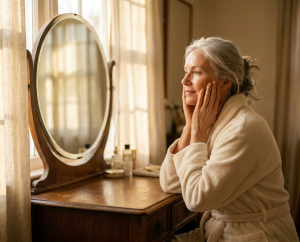
This is where the case for copper peptides becomes most compelling. Mature skin – generally defined as skin in the 50s, 60s, and beyond – faces a compounding set of challenges that GHK-Cu is well positioned to address simultaneously. Collagen production declines at roughly 1% per year from around age 30, and by the time most people reach their 60s, the dermis has lost a substantial portion of its structural scaffolding. Skin becomes thinner, more fragile, and slower to repair. Recovery from wound healing, environmental stressors, and cosmetic procedures takes longer. The background inflammation that accumulates with age – sometimes called inflammaging – further accelerates this structural breakdown, creating a reinforcing cycle that is difficult to interrupt.
GHK-Cu acts on several of these problems at once. By stimulating fibroblasts to produce collagen and elastin, it partially offsets the output decline that comes with aging. Its anti-inflammatory properties directly address the chronic low-grade inflammation that erodes structural proteins over time. Its support for angiogenesis improves circulation to skin that is often underperfused in older individuals, where thinning vessel networks reduce the delivery of nutrients and oxygen to the dermis. And its antioxidant enzyme activation provides ongoing protection against UV-derived free radical damage, which accumulates over decades of exposure. These do not reverse aging, but they address multiple underlying mechanisms rather than just one.
For mature skin, copper peptides also distinguish themselves through their tolerance profile. Unlike retinoids, which can cause significant irritation, peeling, and photosensitivity – particularly in thinner, more reactive aging skin – GHK-Cu is typically very well tolerated at the concentrations used in consumer products. There are few reported instances of allergic contact dermatitis, and no meaningful phototoxicity concerns. That makes it suitable for daily use in older skin without the mandatory acclimatization period that retinoids require and without the barrier disruption that strong chemical exfoliants can cause.
Women in postmenopause have particular reason to pay attention. Estrogen plays a significant role in maintaining collagen levels and supporting the dermal matrix, and its decline at menopause accelerates structural thinning of the skin considerably. The first five years after menopause are associated with collagen loss of up to 30% – a steep decline that explains why so many women notice a rapid change in skin quality around that transition. Copper peptides cannot replace the hormonal signaling that drives this shift, but their direct stimulation of fibroblast activity provides a meaningful compensatory mechanism. Many dermatologists now recommend them as part of a postmenopausal skincare strategy alongside other supportive actives such as growth factors and ceramide-rich moisturizers.
Skin that has experienced significant lifetime sun exposure – which describes most people over 60 – typically shows elevated UV-induced inflammation and compromised barrier function. Copper peptides address both. Their antioxidant enzyme activation helps neutralize residual free radical damage left by years of UV exposure, and their support for epidermal cell turnover can gradually improve texture and even out pigmentation irregularities over time. A 2018 review in the journal Biomedicines described GHK-Cu’s capacity to reset certain aspects of aged skin cell behavior toward a younger functional profile – a striking finding, even if its full clinical implications are still being mapped. For aging skin specifically, the combination of collagen stimulation, inflammation control, and UV damage mitigation makes copper peptides one of the more rationally targeted interventions available without a prescription.
How should copper peptides fit into your daily routine?

The most practical recommendation is to use copper peptides in the evening. They complement the skin’s natural overnight repair cycle, and keeping them separate from vitamin C – typically applied in the morning for antioxidant protection and brightening effects – avoids the theoretical interaction where copper ions can catalyze the oxidation of ascorbic acid. That interaction is not definitively proven to cause harm in well-formulated consumer products, but there is enough plausibility in the chemistry to make the morning/evening split a sensible habit. Both ingredients can do their jobs without interference if you keep them in different parts of the day.
After cleansing and any targeted serum, apply a copper peptide product before a heavier moisturizer. Most formulas work well used once daily, though twice-daily application is what the clinical trials showing the strongest results have tested. Starting with once daily and assessing your skin’s response over two to four weeks is a reasonable approach. The ingredient is gentle enough that building up gradually is more about confirming compatibility with your existing routine than managing irritation risk. If your routine already includes a retinoid, vitamin C, and several other actives, introducing copper peptides at once daily and keeping the routine simple for a few weeks is a wise approach.
Retinol and copper peptides are frequently asked about as a pairing. There is no strong clinical evidence that the two undermine each other’s efficacy, and the combination is actually biologically rational – retinol accelerates cell turnover and initiates processes that increase collagen, while copper peptides directly stimulate fibroblast collagen production and reduce the inflammation that retinoids can sometimes trigger. For prescription-strength retinoids, alternating nights can help keep the skin barrier stable. Over-the-counter retinol and copper peptides can generally be used on the same evening without concern. Results from topical copper peptide use require patience – most clinical trials run eight to twelve weeks before observing significant changes in wrinkle depth and elasticity, which is consistent with the biology of collagen remodeling.
Is there anything you need to be cautious about with copper peptides?
The safety record of topical GHK-Cu in consumer skincare is genuinely favorable. The ingredient has been in cosmetic use for several decades, and at the concentrations found in reputable products – typically 0.01% to 0.5% – adverse reactions are uncommon. Patch testing before full-face use is always sensible when introducing any new active, but copper peptides are not a high-irritation ingredient for most skin types. Unlike glycolic acid, retinoids, or benzoyl peroxide, they rarely cause the redness, dryness, or stinging that drives many people to abandon an otherwise effective skincare routine.
The one area that warrants clear caution is the injectable market. As NPR reported in September 2026 at https://www.npr.org/2026/09/07/nx-s1-5955552/copper-peptides-skin-aging-health-safe, some people have begun self-injecting copper peptides ahead of any meaningful safety or efficacy data for that route of administration. Topical GHK-Cu and injectable GHK-Cu are not the same conversation at all. There is no published human data establishing that injectable copper peptides are safe for cosmetic use, and the risks of infection, dosing errors, and unknown systemic effects are real and potentially serious. Topical formulations from reputable brands with proper stability testing are a different matter entirely – they are what the research supports.
A small number of people report mild skin reactions when first starting copper peptides – usually transient redness or a brief tingling sensation. These typically resolve within a few days as the skin adjusts. If your routine includes strong exfoliants or acids regularly, applying those on different evenings from your copper peptide products helps keep the skin barrier in good condition. And as always, sunscreen every morning is non-negotiable – not because copper peptides increase photosensitivity, but because photoprotection is the single most evidence-supported intervention for preventing accelerated skin aging, and nothing you apply at night will undo the UV damage that accumulates without it.
FAQs About Copper Peptides
What is GHK-Cu and why is it called a copper peptide?
GHK-Cu stands for glycyl-L-histidyl-L-lysine copper complex. It is a tripeptide – a short chain of three amino acids – that naturally binds to a copper ion. The copper component is what gives the molecule much of its biological activity, since copper is a cofactor for several enzymes that build collagen and repair tissue. The term copper peptide is used loosely in skincare to refer to any peptide-copper complex, but GHK-Cu is the most extensively studied and the one found most commonly in consumer formulations.
How long does it take to see results from copper peptide serums?
Most clinical studies run between eight and twelve weeks before detecting significant changes in wrinkle depth, skin elasticity, or texture. Individual results vary depending on starting skin condition, age, and application consistency. A noticeable improvement in skin feel and hydration can often appear within four weeks, but visible structural changes take longer because they depend on collagen remodeling – a slow biological process even under optimal conditions. Patience is not optional here; it is baked into how the mechanism works.
Can you use copper peptides with vitamin C and retinol?
Yes, with some practical guidance. Vitamin C works best in the morning and copper peptides in the evening – both because of the theoretical chemical interaction between copper ions and ascorbic acid and because each ingredient aligns naturally with a different phase of the skin’s cycle. Retinol and copper peptides can be used together in the same evening routine, or alternated on separate nights. There is no strong evidence that the combination undermines either ingredient’s effectiveness, and the biological rationale for using them together is actually quite sound.
Are copper peptides safe for sensitive skin?
Generally, yes. GHK-Cu is one of the better-tolerated actives in skincare. It does not cause the purging phase associated with retinoids, does not increase photosensitivity, and rarely causes irritation at the concentrations found in consumer products. Sensitive skin types should still patch test before applying anything new to the full face, but copper peptides are not a high-risk ingredient. Most people with reactive skin find them easier to introduce than almost any other anti-aging active.
Do copper peptides work on mature skin, or are they mainly for younger skin?
Mature skin is arguably where copper peptides are most beneficial. The combination of naturally declining GHK levels, reduced fibroblast activity, accumulated UV damage, and postmenopausal collagen loss creates exactly the conditions this ingredient is designed to address. Older skin typically tolerates it well and stands to benefit substantially from both the collagen-stimulating and anti-inflammatory effects. The case for copper peptides gets stronger, not weaker, as skin ages.
Copper peptides occupy a rare space in skincare – an ingredient with a coherent biological mechanism, a growing body of clinical evidence, and a safety record that supports long-term use across a wide range of skin types and ages. They are not a shortcut or a single-ingredient fix, and they work best as part of a consistent routine that includes good sun protection and other well-supported actives. But for anyone serious about supporting collagen production, managing the low-grade inflammation that ages skin from the inside out, and keeping mature skin resilient and functional, GHK-Cu deserves a considered and permanent place in the evening routine. The science is still growing. What we already know is more than enough to make it worth your attention.
Related Posts