Aug
If you click on links we provide, we may receive compensation.
Around 80 percent of adults report visible dark circles under their eyes, according to research published in the Pakistan Journal of Medical and Health Sciences (https://pjmhsonline.com/index.php/pjmhs/article/download/6456/6008/12611). That figure is staggering, and yet most people treat dark circles as a single, uniform problem – when in reality they arise from at least three distinct biological causes. Some circles are brown or gray because of excess melanin deposited in the skin. Others are blue or purple because blood vessels are visible beneath thin periorbital skin. And others are really shadows cast by hollow, sunken tissue that has lost volume over the years. Each type responds to different ingredients, which means the eye cream your best friend swears by might do nothing for you – not because the cream is poor quality, but because it is targeting a completely different mechanism than the one behind your darkness. The ingredient list on any under-eye product only makes sense once you know what you are actually working with.
Why Are Dark Circles So Hard to Shift?
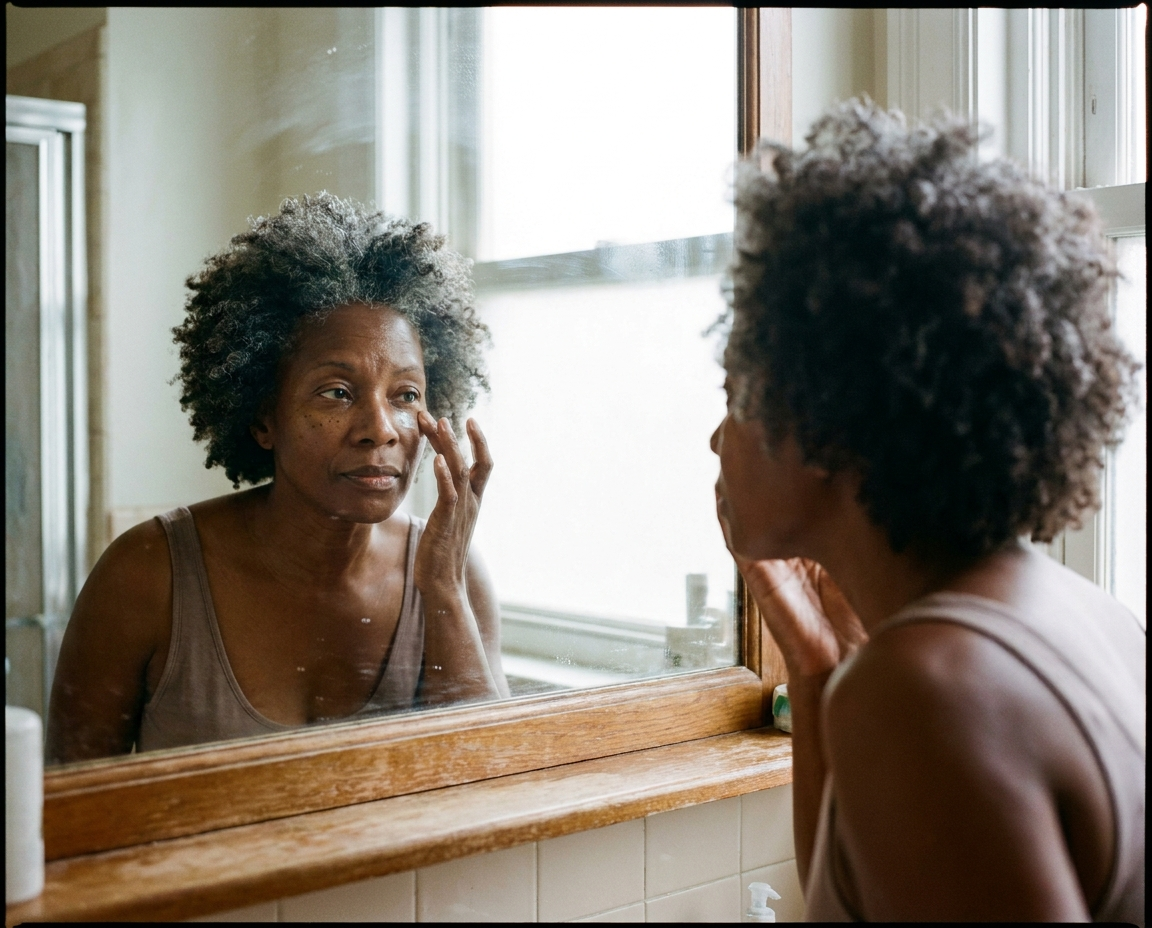
Dermatologists classify periorbital dark circles into three broad types – pigmented, vascular, and structural – and each one has a distinct cause and a distinct treatment logic. Pigmented dark circles are driven by excess melanin deposited in the under-eye skin, and they tend to appear brown or grayish. They are especially common in people with medium to deep skin tones and can be worsened by sun exposure, rubbing, or post-inflammatory changes. Vascular dark circles arise when tiny blood vessels or capillaries beneath the thin periorbital skin become more visible, producing that characteristic bluish or purplish cast that makes people look perpetually tired. Structural dark circles are perhaps the most misunderstood of the three – they occur because the fat pads and soft tissue beneath the eye have thinned and descended with age, creating a hollow at the tear trough that casts a shadow regardless of the skin’s actual pigment level. Most people have a combination of two or even all three types, which is partly why a single ingredient rarely delivers dramatic results across the board and why layered formulas tend to outperform any one active. Getting even a rough sense of which type dominates in your particular case is well worth doing before you spend money on an eye cream.
Does Vitamin C Really Brighten the Under-Eye Area?

For pigmented dark circles – the brown, melanin-driven kind – vitamin C is one of the best-studied brightening ingredients in the category. It works by inhibiting tyrosinase, the enzyme that catalyzes the production of melanin, which slows down the excess pigment deposition that creates discoloration in the skin. In the periorbital zone, where the skin is thinner and more reactive than anywhere else on the face, a stabilized form of vitamin C is usually preferable to pure L-ascorbic acid. Forms like ascorbyl glucoside, sodium ascorbyl phosphate, or 3-O-ethyl ascorbic acid deliver meaningful brightening activity with less risk of the tingling or irritation that L-ascorbic acid can sometimes cause. Formulators frequently pair vitamin C with ferulic acid and vitamin E – a combination that research has shown significantly boosts the stability and antioxidant efficacy of vitamin C over time (https://pubmed.ncbi.nlm.nih.gov/16401026/). Niacinamide, a form of vitamin B3 with its own melanin-transfer-blocking mechanism, often appears alongside vitamin C in combination dark circle formulas. A clinical study assessing a multi-ingredient formula containing niacinamide, arbutin, tranexamic acid, and ubiquinone found an average 47.94 percent reduction in periorbital hyperpigmentation after six weeks of twice-daily application (https://pmc.ncbi.nlm.nih.gov/articles/PMC12235579/). Numbers like that put combination brightening complexes firmly in the evidence column.
What Makes Caffeine Such an Effective Under-Eye Ingredient?
Caffeine addresses a completely different cause of dark circles than vitamin C does, which is why it appears in so many eye formulas alongside brightening agents. It acts as a phosphodiesterase inhibitor – a mechanism that raises cyclic AMP in tissue and triggers vasoconstriction, the narrowing of blood vessels. When applied to the under-eye area, this temporarily restricts the small capillaries just beneath the skin surface, reducing their visibility and the bluish tone they contribute to vascular circles. Caffeine also supports lymphatic drainage in the periorbital region, which helps clear the fluid that accumulates overnight when you lie flat and gravity pulls fluid toward the lowest point of your face. Topical 5% caffeine has been shown in clinical research to significantly reduce periorbital puffiness and visibly improve vascular dark circles over four weeks of consistent use (https://medspot.ai/blog/caffeine-skincare-guide). The puffiness-reducing effect is partly acute – many people notice a real difference within 10 to 15 minutes of their morning application – but the vasoconstrictive action is temporary, so maintaining results requires daily use. As a practical guideline, caffeine should appear among the first five ingredients on the label for the concentration to be clinically meaningful.
Is Retinol Too Harsh to Use Around the Eyes?
The thin, oil-gland-poor skin of the under-eye area – roughly 0.5 millimeters thick compared to about 2 millimeters on the rest of the face – makes many people cautious about retinol, and the caution is understandable. At the concentrations used in face retinoids, retinol can cause redness, peeling, and persistent dryness in the periorbital zone. But retinoids formulated specifically for the eye area, at concentrations between 0.025% and 0.05%, have a strong clinical record that is hard to ignore. A 12-week trial using a retinoid-based eye cream documented a 41% improvement in under-eye darkness, a 33% improvement in wrinkles, and a 55% improvement in puffiness (https://northbiomedical.com/articles/best-eye-cream-dark-circles/). Retinol delivers these outcomes by accelerating cell turnover – clearing away pigmented, damaged surface cells – and by stimulating fibroblasts to produce new collagen, which thickens the skin over time and makes blood vessels less visible. Adding a peptide-rich moisturizer in the morning, when retinol is not being applied, further amplifies benefits – research suggests this combination produces greater improvements in skin texture, firmness, and overall tone than retinol alone. Start with a two-nights-per-week frequency, use the smallest amount needed to cover the area, and build up slowly over several weeks.
Do Peptides Actually Earn Their Place in Eye Creams?
Peptides are short chains of amino acids that function as biological signaling molecules, communicating to skin cells that they should increase production of collagen, elastin, or hyaluronic acid. For the under-eye area, where structural support is often the biggest issue – particularly after 40 – this signaling role is genuinely useful. Peptides like palmitoyl pentapeptide-4, sold under the trade name Matrixyl, have shown in studies that they stimulate collagen synthesis and improve the appearance of wrinkles over time. Acetyl hexapeptide-3, known as Argireline, works somewhat differently – it reduces the micro-contractions of facial muscles around the eye, which lessens the depth of expression lines without any injection. Used consistently, peptides make the skin around the eye more resilient and better able to hold its structure against the daily forces of muscle movement and gravity. They also tend to reduce irritation from more potent actives like retinol, making them a smart companion in any layered eye routine. The tradeoff is that peptides work gradually and quietly – you are unlikely to see an acute effect the morning after first use the way you might with caffeine. Think of peptides as the ingredient building a better foundation over months rather than producing the quick visible win you can photograph at week one.
What Do Niacinamide and Vitamin K Bring to an Eye Cream Formula?
Niacinamide is one of the more versatile ingredients in skin care, and that versatility makes it particularly valuable in eye cream formulas where you want multiple benefits without loading up on actives. It blocks the transfer of melanin between melanocytes and keratinocytes, reducing the appearance of hyperpigmentation. It simultaneously stimulates ceramide production in the skin, strengthening the barrier and helping the thin under-eye skin retain moisture – something that matters more in this zone than almost anywhere else on the face. It also carries a mild anti-inflammatory effect, which is useful given how frequently the periorbital area is irritated by product overuse, rubbing, or environmental exposure. On its own at 5%, niacinamide has been shown to reduce visible pigmented spots by around 11% over four weeks – modest, but a real and measurable change. In combination with arbutin, tranexamic acid, and other melanin-blocking ingredients, as that 47.94% study illustrates, those effects compound considerably. Vitamin K is worth noting specifically for vascular-type dark circles – it plays a role in blood coagulation and vessel wall integrity, and an 8-week study using a gel combining 2% vitamin K with retinol and vitamins C and E found that nearly half of participants saw a reduction in darkness, with the clearest benefit in those whose circles were driven by blood pooling beneath the skin (https://www.clinikally.com/blogs/news/exploring-vitamin-k-can-it-really-help-with-dark-circles). Vitamin K has not yet achieved the mainstream profile of caffeine or vitamin C, but the vascular evidence for it continues to build.
How Does Under-Eye Care Need to Change After 50?

The biological changes that happen to under-eye skin after 50 are significant enough that they warrant their own ingredient strategy. The orbital fat pads that cushion and support the under-eye area begin to shrink and descend with age, and the skin over them loses thickness and elasticity as collagen production declines at roughly 1% per year from the mid-20s onward. The rate accelerates sharply around perimenopause and menopause – research suggests women can lose up to 30% of dermal collagen in the first five years after menopause (https://us.yonka.com/blogs/anti-ageing-tips/how-to-treat-dark-circles-and-wrinkles-under-eyes). That dramatic structural thinning means the shadow-type, structural dark circle becomes the dominant concern for many women over 50, even when some pigmented or vascular darkness is also present. Hyaluronic acid – particularly low-molecular-weight forms small enough to penetrate beneath the skin surface rather than sit on top of it – can temporarily plump the hollow tear trough area and soften the shadow effect. Peptides matter more, not less, with age, supporting whatever collagen-producing capacity the skin still retains. Retinol, applied gently and consistently at an appropriate eye-area concentration, remains one of the few topical ingredients with enough clinical evidence behind it for thinning periorbital skin – rebuilding collagen and improving skin thickness over months of consistent application. For those who find retinol too sensitizing – which is more common in mature skin that has already lost significant barrier function – bakuchiol is a plant-derived alternative that targets overlapping biological pathways and has been shown to reduce fine lines and improve pigmentation with considerably less irritation risk. The goal at this life stage is layered support: something for brightness, something for structure, something for barrier integrity, and a renewal active to encourage the skin to keep regenerating.
Does the Order You Apply Ingredients Actually Matter?
Routine order matters more under the eyes than on almost any other part of the face, because the skin there is thin enough that even a modest film of moisturizer between an active ingredient and the skin surface can reduce how much of the active gets through. The practical rule is to apply your eye product after cleansing and toning but before your face moisturizer – not after – so the actives in the eye formula make direct contact with the skin. If you use both a serum and an eye cream, apply the serum first, let it settle for 30 to 60 seconds, then follow with the eye cream. At night, if you are incorporating retinol, apply it after your serum step and consider placing a thin layer of moisturizer over it to buffer its potency and reduce the irritation risk – a technique sometimes called the sandwich method. Morning routines should lead with caffeine or a vitamin C formula under the eyes, followed by the eye cream, and then SPF over everything. Sunscreen over the orbital area is non-negotiable: UV exposure is a primary driver of periorbital pigmentation, and any brightening progress will be steadily undermined without daily sun protection. Most people dramatically underestimate the timeline for eye cream results – caffeine offers a near-immediate puffiness effect, but vitamin C, niacinamide, and retinol typically require a minimum of four to eight weeks before meaningful change is visible.
FAQs

What is the single most important ingredient to look for in an under-eye dark circle cream?
There is no universal most important ingredient because the best choice depends on the type of dark circles you have. For brown or grayish pigmented circles, vitamin C and niacinamide are the strongest starting points. For blue or purple vascular circles, caffeine and vitamin K are better targeted. For the shadowing caused by hollowness or volume loss – especially common after 50 – hyaluronic acid and peptides address the structural cause more directly. A cream that combines two or three of these categories tends to be the most practical solution if you are not certain which type is driving your darkness.
Can an under-eye cream completely get rid of dark circles?
Topical ingredients can significantly reduce the appearance of dark circles – studies have documented reductions close to 48 percent in measurable periorbital hyperpigmentation with consistent use of multi-ingredient combination formulas (https://pmc.ncbi.nlm.nih.gov/articles/PMC12235579/). But complete elimination is not a realistic expectation for most people, and particularly not for structural circles caused by volume loss, which typically require in-office procedures like filler to address the underlying hollowing. A well-chosen eye cream is most useful as a consistent improvement and maintenance tool.
Is it safe to use retinol under the eyes?
Yes, when the formula is designed specifically for the periorbital area. Eye-area retinol products use concentrations in the range of 0.025% to 0.05%, considerably lower than what you find in face retinoids. Start two or three nights per week rather than every night, and apply a nourishing eye moisturizer over it to buffer any dryness. If you experience persistent redness, flaking, or tightness, switch to bakuchiol – it works through overlapping mechanisms and has shown comparable benefits for fine lines and pigmentation with far less sensitizing potential.
How long does it take to see results from an under-eye cream?
For caffeine-rich formulas, visible puffiness reduction can happen within the first morning of use. For brightening ingredients like vitamin C and niacinamide, expect four to eight weeks before meaningful improvement is visible. Retinoids and peptides typically show their fullest effects on skin thickness and pigmentation after eight to twelve weeks or longer. Taking a photograph of your under-eye area in consistent lighting on day one and comparing it at the six-week mark is the most reliable way to track whether a product is working.
Should eye cream ingredients differ from what I use on the rest of my face?
Yes, in meaningful ways. The periorbital skin is thinner and less tolerant of potent actives than facial skin, so eye formulas use lower concentrations and gentler delivery systems. Avoid applying face-strength AHAs, BHAs, or full-concentration retinoids directly beneath the eyes – the irritation risk is real and barrier damage can worsen the appearance of dark circles rather than improve it. Products formulated specifically for the eye zone are calibrated to the delicate demands of that skin, and the lower concentrations are deliberate, not a cost-cutting measure.
The under-eye area rewards patience and a little ingredient literacy more than almost any other part of a skin care routine. Getting one thing right – matching the ingredient to the type of circle you actually have – changes the entire experience of using an eye cream. Caffeine for puffiness and vascular darkness, vitamin C and niacinamide for pigment, retinol and peptides for structure and renewal, vitamin K for blood-vessel visibility: these are not interchangeable, and the differences matter. A formula that combines several of these well-matched actives at appropriate concentrations is the practical goal for most people. Apply it consistently every morning and evening, protect the skin with sunscreen daily, and give the actives the weeks they genuinely need to produce their results. When the right ingredients meet the right problem, the improvement is more noticeable than most people expect it to be.