
Jun
If you click on links we provide, we may receive compensation.
Melasma alone affects an estimated 5 to 6 million Americans, the majority of them women – and that figure does not include the many millions more dealing with sun spots or the dark marks left behind by acne. What dermatologists know, and what most skincare marketing glosses over, is that hyperpigmentation is not a single condition. It is three distinct ones, each with its own biology, its own triggers, and – critically – its own best treatment approach. A vitamin C serum that fades a sun spot may do almost nothing for a hormonal patch on your cheekbone. An azelaic acid treatment that clears post-inflammatory marks may leave a stubborn melasma completely unmoved. The mismatch between cause and treatment is the main reason so many women cycle through dark spot products for months and see little change.
Before reaching for another brightening serum, it is worth knowing which kind of dark spot you are actually dealing with. The three root causes – UV damage, inflammation, and hormonal signaling – each leave different marks, respond to different ingredients, and follow different timelines. Getting that right is the whole game.
What Is Actually Happening Inside Your Skin?
Melanin is the pigment that gives skin its color, produced by specialized cells called melanocytes. Under normal circumstances, melanocytes distribute melanin evenly across the skin’s surface. But when they are triggered by UV radiation, inflammation, or hormonal signals, they can go into overdrive – depositing concentrated melanin in localized areas. That localized excess is what we see as a dark spot. The trouble is that different triggers activate melanocytes through different biochemical pathways, and different pathways respond to different ingredients. Understanding which pathway is at work is the first step to treating it effectively. Most “dark spot” products are formulated for only one type of hyperpigmentation, which is why results can be so unpredictable.
Is This a Sun Spot? UV-Induced Hyperpigmentation Explained

Solar lentigines – the flat brown patches that appear on sun-exposed skin over time – are caused by cumulative UV damage. When UV radiation hits the skin, it generates reactive oxygen species (ROS) that damage DNA and prompt keratinocytes to release alpha-melanocyte-stimulating hormone (alpha-MSH). This hormone binds to receptors on melanocytes, ramping up an enzyme called tyrosinase. Tyrosinase converts the amino acid tyrosine into DOPA, then oxidizes DOPA into dopaquinone, and ultimately into melanin. Over years of UV exposure, certain melanocytes get stuck in high-production mode, continuing to pump out melanin long after the initial sun exposure is gone. This is why sun spots tend to look darker in summer and persist even when you stay indoors – the overactivation becomes semi-permanent in affected cells.
The best approach for UV-induced hyperpigmentation targets the tyrosinase pathway directly. Vitamin C in its most active form – L-ascorbic acid – works by interrupting DOPA oxidation, preventing dopaquinone from forming and short-circuiting melanin production at a critical early step. A 2019 meta-analysis in the Journal of Clinical and Aesthetic Dermatology, reviewing 31 randomized controlled studies, found that vitamin C consistently prevented ultraviolet-induced pigmentation compared to vehicle controls. (Source: https://jcadonline.com/february-2019-vitamin-c/) The effective range for L-ascorbic acid is 10 to 20 percent; below 10 percent and the penetration may not be sufficient to produce visible results. Niacinamide (vitamin B3) works differently – it does not block melanin production but interferes with the transfer of melanin from melanocytes to the skin cells on the surface. At 5 percent concentration, clinical studies show visible reduction in pigmentation within four weeks of consistent use. Alpha arbutin, a stabilized derivative that slowly releases a hydroquinone-like molecule, inhibits tyrosinase more gently and is particularly useful for sensitive skin types who find high-dose vitamin C irritating.
And SPF is not optional here – it is the treatment. UV is the root cause of solar lentigines, which means applying brightening actives without daily broad-spectrum sunscreen is like bailing water while leaving the tap open. Any product gains made without consistent SPF protection will reverse with continued sun exposure. This is not fine print. It is the single most important variable in any sun spot protocol.
Real products worth knowing: SkinCeuticals C E Ferulic ($185) contains 15 percent L-ascorbic acid paired with vitamin E and ferulic acid, which dramatically stabilize the vitamin C and enhance its antioxidant effect – it remains one of the best-studied vitamin C serums available and shows up in more dermatology publications than any comparable product. Paula’s Choice C15 Super Booster ($49) offers the same 15 percent L-ascorbic acid plus ferulic acid and peptides at a significantly lower price point, and has performed comparably in independent testing. For alpha arbutin, The Ordinary Alpha Arbutin 2% + HA ($12) is a straightforward, affordable option that pairs the brightening ingredient with hyaluronic acid in a formula that layers well under moisturizer or SPF without heaviness.
Did Inflammation Leave This Mark? Post-Inflammatory Hyperpigmentation and Skin of Color

Post-inflammatory hyperpigmentation (PIH) is the dark mark that lingers after a breakout, an eczema flare, a scratch, or any skin trauma. Unlike sun spots, PIH is not about chronic UV overactivation – it is the skin’s wound response going slightly too far. When skin experiences inflammation, keratinocytes release prostaglandins, interleukins, and other inflammatory mediators that signal melanocytes to produce more melanin as part of the repair process. In most cases that extra melanin clears gradually on its own. But in some people – and particularly in people with deeper skin tones – the melanocyte response is more intense and the resulting pigmentation persists for months or even years after the original inflammation has fully resolved.
The reason PIH is more pronounced in deeper skin tones is not about having more melanocytes – everyone has roughly the same number regardless of ethnicity. It is about how active those melanocytes are and how much melanin they produce per inflammatory signal. Research published in the Journal of Clinical and Aesthetic Dermatology has found that PIH is among the most common dermatological concerns in patients with Fitzpatrick skin types IV through VI, and that in many cases the resulting pigmentation causes more long-term distress than the original acne or skin trauma that triggered it. (Source: https://jcadonline.com/postinflammatory-hyperpigmentation-a-review-of-the-epidemiology-clinical-features-and-treatment-options-in-skin-of-color/) This is a clinical reality that standard skincare marketing consistently underserves. Products marketed broadly for dark spots are frequently tested primarily on lighter skin tones without acknowledgment of the different presentation, intensity, and treatment timeline in skin of color. The approach matters – what works in eight weeks on a Fitzpatrick II may take six months on a Fitzpatrick V, and harsh products that cause additional irritation can create new PIH on top of old.
The most effective ingredient for PIH is azelaic acid, which stands out because it does double duty: it is both an anti-inflammatory and a tyrosinase inhibitor, meaning it works against both the trigger (inflammation) and the mechanism (excess melanin production). A 2024 study found that twice-daily use of 15 percent azelaic acid gel over 16 weeks produced significant PIH improvement, with more than half of participants showing complete resolution. (Source: https://pmc.ncbi.nlm.nih.gov/articles/PMC11116308/) Retinoids accelerate cell turnover and help surface pigmented cells shed faster, which shortens the timeline to clear skin – particularly useful in a condition where slow epidermal turnover is part of the problem. Niacinamide remains valuable here too, for its melanin-transfer blocking and barrier-supporting properties. Kojic acid chelates the copper at the active site of tyrosinase, effectively shutting down melanin production, though it can cause irritation in some people – and that irritation can paradoxically trigger more PIH, so a slow introduction is wise.
A word on treatment approach: the single biggest mistake people with PIH make is reaching for the most aggressive product available. Harsh exfoliants, over-exfoliation, or high-concentration actives used too frequently can easily cause new inflammation – and new PIH on top of old. PIH responds best to consistent, moderate treatment over time, not to aggressive intervention. Patience is part of the protocol.
Real products worth knowing: Paula’s Choice 10% Azelaic Acid Booster ($36) blends azelaic acid with 0.5% salicylic acid and soothing botanical ingredients including bisabolol and allantoin, making it an excellent choice for acne-prone skin where PIH is common. The Ordinary Azelaic Acid Suspension 10% ($12) is a budget-friendly option, though its silicone-based texture can feel thick under other products. For a multi-ingredient approach specifically formulated with skin of color in mind – a notably rare positioning in this category – Topicals Faded Brightening & Clearing Serum ($36) combines azelaic acid, tranexamic acid, niacinamide, and salicylic acid in one product. It is one of the more thoughtfully composed over-the-counter options for PIH available today.
Is This Melasma? Hormonal Hyperpigmentation and Why It Is Different

Melasma is the most difficult type of hyperpigmentation to treat, and the most frequently mismanaged. It appears as larger, often symmetrical patches of brown or grayish pigmentation – most commonly on the cheeks, upper lip, forehead, and chin – and it is strongly linked to estrogen and progesterone. It is most common during pregnancy (earning the colloquial name the mask of pregnancy), among women on hormonal contraceptives, and during perimenopause when hormone levels fluctuate. Estrogen and progesterone stimulate melanocytes through several pathways, including the upregulation of melanogenesis enzymes like tyrosinase and the transcription factor MITF, which acts as a master regulator of melanocyte activity. A 2024 review in the International Journal of Molecular Sciences confirmed that both hormones regulate melanogenesis through genomic and non-genomic signaling, and that they interact with oxidative stress pathways to sustain melasma’s characteristic focal hypermelanogenic state. (Source: https://www.mdpi.com/1422-0067/26/22/10856)
What makes melasma uniquely stubborn is that it does not live only in the epidermis. Unlike sun spots, which are primarily superficial, melasma involves dermal melanophages – immune cells in the deeper dermis that have ingested melanin granules and can hold them there for years, well beyond the reach of most topical ingredients. Histological studies of melasma skin also show an increased density of blood vessels and elevated VEGF expression, meaning there is a vascular component to melasma that most brightening serums simply do not address. This explains the pattern so many women recognize: successfully fade the surface pigmentation, then have it return within weeks of minor sun exposure or a hormonal shift. The dermal reservoir of melanin remains untouched, and the melanocytes are primed to refill it quickly.
Tranexamic acid has become one of the most important active ingredients for melasma because it specifically targets the interaction between plasminogen and keratinocytes that drives melanocyte overactivation – a pathway particularly relevant to hormonally-mediated pigmentation. Both oral and topical forms have clinical evidence. A 2025 randomized clinical trial published in the Journal of Cosmetic Dermatology compared oral tranexamic acid (250 mg twice daily) to topical 5% cream applied twice daily over 12 weeks, with both showing significant improvement in Melasma Area Severity Index scores. (Source: https://pmc.ncbi.nlm.nih.gov/articles/PMC12418907/) Oral tranexamic acid is prescribed off-label by dermatologists for moderate to severe melasma; it is not a first step, but for cases that have not responded to topical treatment it can make a real difference. Topically, 2 to 5 percent tranexamic acid is well-tolerated across skin tones and is a reasonable first-line option. Cysteamine, a naturally occurring aminothiol compound, has shown efficacy comparable to hydroquinone in clinical trials with better tolerability – a 2024 meta-analysis in the Journal of Clinical Medicine confirmed significant reduction in MASI scores with topical cysteamine compared to placebo, with fewer irritant reactions than hydroquinone. (Source: https://pmc.ncbi.nlm.nih.gov/articles/PMC11642093/) Azelaic acid and kojic acid round out the topical toolkit, both inhibiting tyrosinase through different mechanisms.
Professional treatment is frequently necessary for moderate to severe melasma. Prescription hydroquinone – the long-standing gold standard – inhibits tyrosinase directly and is most effective as part of a triple combination cream with tretinoin and a mild corticosteroid. Chemical peels using glycolic acid or trichloroacetic acid can accelerate results when used carefully. Laser treatment is a more complicated story: while certain modalities can improve melasma, they carry real risk of paradoxical darkening in patients with deeper skin tones, and in melasma specifically the heat-induced inflammation can reactivate the same hormonal-melanocyte cascade all over again. The American Academy of Dermatology notes that any laser consideration for melasma – particularly in skin of color – should involve a dermatologist with specific expertise in that area. (Source: https://www.aad.org/public/diseases/a-z/melasma-treatment)
Real products worth knowing: Paula’s Choice Clinical Discoloration Repair Serum ($52) combines tranexamic acid with niacinamide and bakuchiol in a formulation designed for visible, sustained tone correction. Good Molecules Discoloration Correcting Serum ($12) features tranexamic acid alongside niacinamide at an accessible price point, and earns consistently strong reviews for its performance relative to cost. Topicals Faded Brightening & Clearing Serum ($36) appears here again because its combination of tranexamic acid and azelaic acid makes it particularly relevant for melasma, where targeting multiple pathways simultaneously tends to outperform single-ingredient approaches.
What All Three Have in Common and Why SPF Is the Non-Negotiable
Whatever the type of dark spot – UV-induced, inflammatory, or hormonal – SPF is the single most important product in the routine. This is worth saying clearly because it is often treated as optional when it is anything but. UV exposure worsens all three types of hyperpigmentation. Sun activates the melanocyte pathways that drive solar lentigines. It triggers inflammatory cascades that worsen PIH. It is the primary external stimulus that reactivates melasma even when hormonal levels are managed or contraceptives have been discontinued. Dermatologists describe daily SPF use as both treatment and prevention simultaneously – without it, every other product in the routine is working at a fraction of its potential. A broad-spectrum SPF 30 or higher, applied every morning and reapplied during extended outdoor exposure, is the foundation on which any hyperpigmentation protocol rests. If you use only one product for dark spots, it should be this one.
Beyond SPF, all three types benefit from niacinamide and tranexamic acid to some degree – which is why many well-formulated brightening products include both. But the primary ingredient that addresses the root cause still matters. Vitamin C for sun spots. Azelaic acid for PIH. Tranexamic acid – and often professional guidance – for melasma. Knowing which you are dealing with shapes every other decision in the routine.
Why Dark Spots Get Harder to Fade After 50
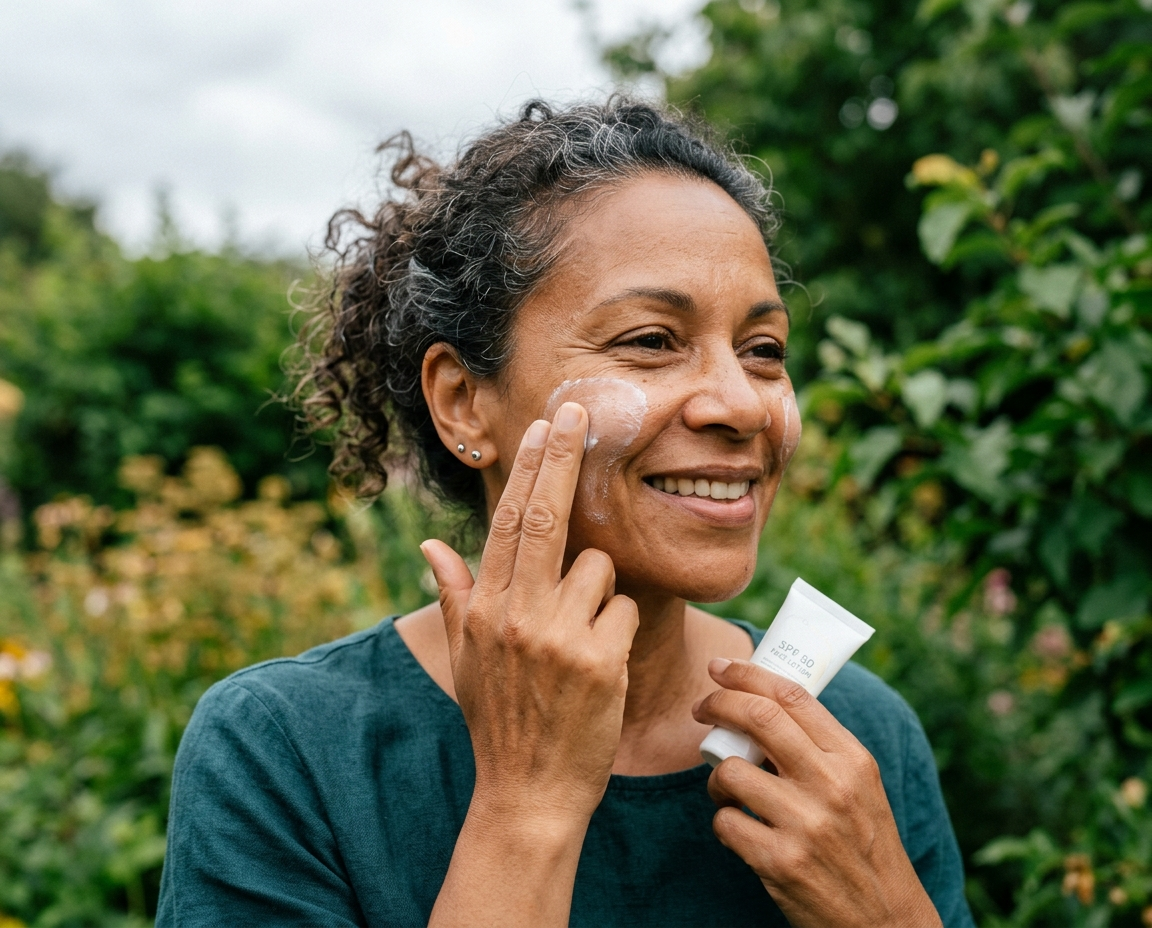
After menopause, several factors converge to make hyperpigmentation more persistent and slower to respond to treatment. Cell turnover slows significantly – in younger skin, the epidermal layer renews itself roughly every 28 to 30 days; by the mid-50s and 60s, that cycle can stretch to 45 to 60 days. Slower turnover means pigmented cells stay on the skin’s surface longer, making spots look darker and more defined than they might otherwise appear. Decades of cumulative UV exposure have also left melanocytes in a state of chronic low-grade overactivation, where even brief sun exposure triggers more pigment production than it would have 30 years earlier.
And the hormonal fluctuations of perimenopause can trigger new melasma in women who never experienced it before – or reactivate patches that had been dormant. Estrogen decline affects skin thickness, vascularity, and barrier function in ways that can make the skin simultaneously more reactive and slower to heal. Women in this life stage also frequently develop sun spots and PIH together, which can make it difficult to tell the conditions apart and easy to reach for the wrong treatment. For this reason, a layered approach – daily SPF without exception, a well-chosen vitamin C or tranexamic acid serum depending on the type of pigmentation, and a retinoid introduced slowly in the evening routine – tends to outperform aggressive single-product strategies. Retinoids are particularly valuable after 50 because they work on cell turnover, collagen, and pigmentation simultaneously, though they should be introduced at low concentration and always paired with good moisturizer to manage the initial adjustment period.
Patience is genuinely part of the protocol here. Hyperpigmentation that took years of sun exposure or hormonal shifts to develop will not reverse in a month. The timeline for meaningful change with topical actives in mature skin is typically three to six months of consistent use, and professional treatment – prescription retinoids, in-office peels, or targeted laser for sun spots specifically – can meaningfully accelerate that. Working with a board-certified dermatologist is particularly worthwhile for women over 50 who have not seen results from an over-the-counter approach, since the combination of slower cell turnover and deeper dermal pigmentation often calls for prescription-strength tools.
When Should You See a Dermatologist About a Dark Spot?
Some dark spots respond well to over-the-counter treatment given patience and consistency. Others do not, and pursuing professional care sooner rather than later saves time and avoids unnecessary product spending. See a dermatologist if a spot changes in shape, color, or borders – this warrants evaluation to rule out anything beyond benign hyperpigmentation. If melasma covers a significant portion of the face or has not responded to several months of topical treatment, prescription options including hydroquinone, combination triple therapy, or oral tranexamic acid are worth discussing with a specialist. If PIH is severe, widespread, or linked to an underlying condition like active acne that is not controlled, addressing the root cause is more effective than treating the resulting pigmentation alone. And if over-the-counter products have been used correctly and consistently for three to six months without meaningful change, that is a reasonable signal to seek a professional evaluation. The AAD maintains public resources on hyperpigmentation treatment at https://www.aad.org/public/diseases/a-z/melasma-treatment.
Frequently Asked Questions
Can I use vitamin C, azelaic acid, and tranexamic acid together in the same routine?
Yes, and for many people a combination approach works better than any single ingredient. A practical way to layer them is vitamin C in the morning (it also provides antioxidant protection against UV throughout the day) and azelaic acid or tranexamic acid in the evening. Niacinamide can go in either routine and plays well with most other actives. When adding multiple new ingredients, introduce them one at a time over a few weeks so that any reaction can be traced to a specific product.
How long does it actually take to see results?
Realistically, six to twelve weeks of consistent daily use is the minimum window for seeing meaningful change with most topical brightening actives. Sun spots and PIH in the upper layers of the skin tend to respond faster than dermal melasma. Melasma, because of its vascular and deep dermal components, can take six months or longer with topical treatment alone – and may require professional intervention for significant improvement.
Are these ingredients safe for darker skin tones?
Most are well-tolerated across all skin tones. Azelaic acid, tranexamic acid, niacinamide, and alpha arbutin are frequently recommended by dermatologists who specialize in skin of color and have favorable safety profiles across Fitzpatrick types IV through VI. Kojic acid and retinoids carry more potential for irritation and should be introduced slowly. Avoid procedures – including certain laser treatments and aggressive chemical peels – that can cause PIH as a side effect, which is a particular concern in deeper skin tones.
My dark spot gets darker in summer and fades a bit in winter. What does that mean?
Seasonal darkening strongly suggests UV involvement, whether in a true sun spot or in melasma triggered or worsened by sun exposure. This pattern is one of the clearest signs that SPF is the most critical product in the routine – and that any topical brightening actives need to be paired with strict sun protection to hold their gains year-round.
Is there a way to tell at home whether I have sun spots, PIH, or melasma?
Location and history are your best clues. Sun spots appear on sun-exposed areas – hands, forearms, face, shoulders – and tend to be small, well-defined, and scattered. PIH follows the exact site of a previous breakout, rash, or injury, and often has a more recent timestamp. Melasma typically appears as larger, blotchier, somewhat symmetrical patches on the face, and often has a hormonal history behind it – pregnancy, birth control use, or perimenopause. When in doubt or when spots do not match the pattern you expect, a dermatologist can make a definitive assessment.
Dark spots are not simply a cosmetic inconvenience – they are a signal from your skin about what it has been through. Whether years of sun exposure, a past breakout, or hormonal changes are the underlying story, matching the treatment to the cause makes all the difference. No single serum fixes all three, and no amount of product spending substitutes for understanding what you are actually treating. Start with the right ingredient for the right cause, add sunscreen every single morning without exception, and give it time. The results tend to follow – and they hold better when the logic behind them is sound.