Jun
If you click on links we provide, we may receive compensation.
Collagen production peaks around age 25 and then drops by roughly one percent every year for the rest of your life – a slow erosion that accounts for nearly everything we associate with aging skin. The dermis, the thick and structurally complex layer that sits beneath the epidermis, is where that production happens, and where the real consequences of that decline play out. It holds collagen, elastin, hyaluronic acid, and the fibroblasts responsible for making all of them. And it is protected, with impressive efficiency, by the very skin layers above it. So the question at the heart of this article is not just anatomical. It is practical: when you smooth a serum onto your face, how much of it, if any, makes it past the epidermis and into the dermis where it could actually change something?
What Is the Dermis and What Does It Actually Do?
The dermis is the middle layer of skin, sandwiched between the epidermis above and the hypodermis below, and it is considerably thicker than most people expect. Where the epidermis measures roughly 0.1 to 1.5 millimeters, the dermis runs between 1 and 4 millimeters depending on body location, making it by far the most substantial structural layer of the skin. It is organized into two distinct sublayers: the papillary dermis, which sits just beneath the epidermis and connects to it via interlocking projections called rete ridges, and the reticular dermis, which is deeper, denser, and where the majority of structural proteins are concentrated. The papillary dermis contains looser, thinner collagen fibers – mostly type III – along with capillaries and nerve endings that supply the avascular epidermis above it. The reticular dermis is where the heavy architecture lives: thick bundles of type I collagen, elastin fibers, and the glycosaminoglycans that form the water-binding matrix of the skin.
Collagen makes up approximately 75 to 80 percent of the dry weight of the dermis, which is a remarkable proportion when you consider how much else is down there. The dominant form is type I collagen, which provides tensile strength and structure. Type III collagen – more elastic and present in higher proportions in younger skin – contributes flexibility and resilience. Elastin fibers, which make up only 2 to 4 percent of dermal weight by mass, are nonetheless responsible for the bounce and recoil we associate with youthful skin. When you press young skin and let go, it snaps back immediately. That is elastin. Then there is hyaluronic acid – not the ingredient in your serum, but the glycosaminoglycan molecule that the body itself produces and distributes throughout the dermis as part of its ground substance. Skin hyaluronic acid can bind up to 1,000 times its weight in water, keeping the dermis plump and hydrated from the inside. The cells at the center of this entire operation are fibroblasts, which produce collagen, elastin, and hyaluronic acid. Everything the anti-aging industry cares about in the dermis ultimately comes down to fibroblast activity.
The dermis also houses a rich network of blood vessels and lymphatic channels that serve a critical function: feeding the epidermis. Because the epidermis has no blood supply of its own, it depends on diffusion from the dermis to receive nutrients, oxygen, and to clear waste. This is also why dermal health and epidermal health are not separate conversations – they are deeply linked. Disruption in one affects the other. The dermis additionally contains hair follicles, sebaceous glands, sweat glands, and the nerve endings that allow us to sense pressure, temperature, and pain. It is, in short, far more complex and metabolically active than the smooth surface of skin would suggest, and understanding it changes how you think about every product you use.
How Does the Dermis Change as We Age?

The changes that happen in the dermis over time are, to a significant degree, the visible face of aging itself. Fibroblasts slow their activity gradually, producing less collagen, less elastin, and less hyaluronic acid as decades pass. The collagen fibers that remain become increasingly disorganized – rather than the neat, aligned bundles seen in young skin, aged dermis shows tangled, fragmented fibers with open spaces between them, a pattern that is visible even in cross-section under a microscope. Elastin fibers fragment and lose their recoil capacity, which is why aged skin takes longer to spring back when pressed and eventually stops springing back at all. Hyaluronic acid synthesis decreases with age, and the remaining HA changes its interaction with surrounding tissue, reducing its capacity to hold water and maintain dermal volume. All of these changes happen whether or not you spend time in the sun, though sun exposure dramatically accelerates every one of them.
The dermal-epidermal junction – the interface where the two layers meet – also flattens with age. In younger skin, this junction is highly textured with deep, interlocking rete ridges that maximize the contact surface area between dermis and epidermis, improving nutrient exchange and keeping the layers tightly bonded. As skin ages, these ridges flatten out, reducing contact area, slowing nutrient diffusion upward to the epidermis, and making the skin more prone to shearing forces. It is one reason why older skin bruises and tears more easily. The combination of thinning dermis, fragmented structural proteins, flattened rete ridges, and reduced hyaluronic acid creates the hollowness, sagging, and wrinkling that no surface moisturizer can fully address.
And then there is UV radiation – which deserves its own emphasis because it is the single largest external driver of dermal aging. UV exposure is responsible for the type of damage dermatologists call photoaging, which is clinically and structurally distinct from chronological aging. Research from the University of Michigan, including foundational work by Sewon Kang, Gary Fisher, and John Voorhees, established the mechanism clearly: UV radiation triggers rapid induction of a transcription factor called AP-1, which in turn upregulates matrix metalloproteinases, particularly MMP-1 (interstitial collagenase), MMP-3 (stromelysin-1), and MMP-9 (gelatinase B). These enzymes actively degrade dermal collagen. The cumulative effect, sometimes called a solar scar, is a zone of disrupted connective tissue in the dermis that builds up over years of unprotected sun exposure. A single day in the sun without protection triggers measurable MMP induction. A lifetime of them rewrites the dermis. (Reference: https://pmc.ncbi.nlm.nih.gov/articles/PMC2909639/)
Can Anything in a Jar Actually Reach the Dermis?
This is the question the beauty industry would rather you not ask too directly, because the honest answer is more nuanced than most product labels suggest. To reach the dermis, a molecule must first cross the stratum corneum – the outermost layer of the epidermis and one of the most effective biological barriers on earth – and then traverse the rest of the viable epidermis below it. The 500-Dalton rule, first described by Bos and Meinardi in the journal Experimental Dermatology in 2000, provides a useful framework: compounds smaller than 500 Daltons can penetrate the stratum corneum, while compounds larger than 500 Daltons essentially cannot. (Reference: https://onlinelibrary.wiley.com/doi/pdf/10.1034/j.1600-0625.2000.009003165.x) The rule has its nuances and exceptions – lipophilicity, formulation, and concentration all matter – but it holds up well as a first-pass filter for evaluating skincare claims.
Topical collagen creams fail this filter spectacularly. A full collagen molecule weighs approximately 300,000 Daltons – roughly six hundred times the threshold for stratum corneum penetration. When you apply a cream containing collagen, the molecules sit on the surface of the skin and form a temporarily moisture-retaining film. They may make skin feel smoother and more supple in the short term, which is not worthless, but it is entirely a surface effect. The collagen in the cream does not reach the collagen in your dermis. It cannot get there. The same applies to topical elastin, which faces an identical barrier problem, and to high-molecular-weight hyaluronic acid, which is similarly too large to penetrate past the stratum corneum. High-MW HA hydrates the surface beautifully and is genuinely useful as a humectant, but calling it a dermal replenisher misrepresents the science. Low-molecular-weight hyaluronic acid can penetrate to the upper epidermis and may have some signaling effects, but even it does not reach the dermis in meaningful concentrations under standard topical application.
Advertisement
What does have genuine evidence of dermal effects is a shorter list than the marketing landscape implies. But that list is real, and it is worth knowing precisely because it cuts through the noise efficiently. Once you understand which ingredients have actually been shown – in human skin biopsies, not cell culture dishes – to change what happens in the dermis, you can build a routine around evidence rather than expectation.
Which Ingredients Have Real Evidence of Reaching Deeper?
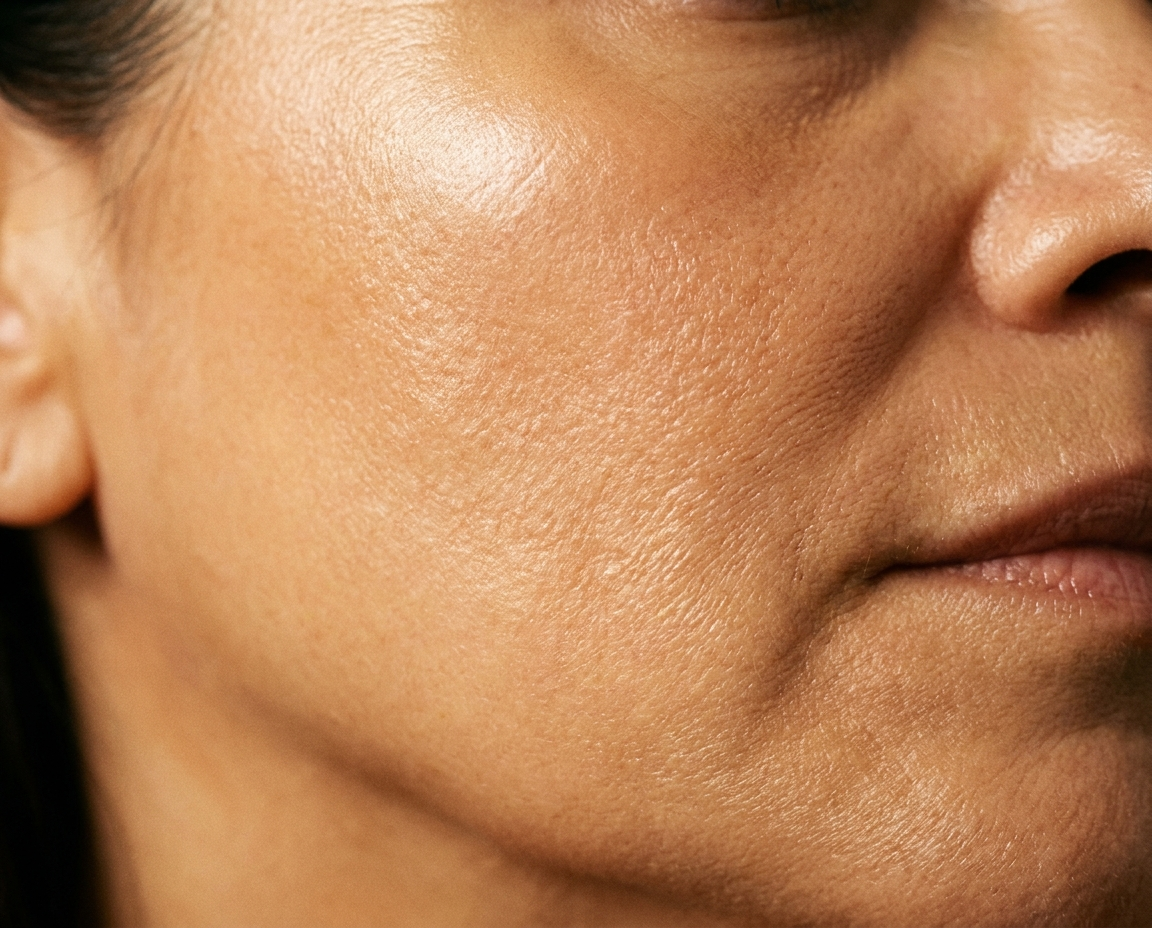
Retinoids are the gold standard for dermal effects from a topical ingredient. Not because of marketing, but because of decades of rigorously conducted human studies. Retinol, the over-the-counter form, is converted by skin enzymes first to retinaldehyde and then to retinoic acid (tretinoin), the biologically active form that binds to retinoic acid receptors in the nuclei of skin cells. Retinoic acid penetrates through the epidermis and reaches dermal fibroblasts, where it stimulates the production of procollagen, inhibits MMP activity, and counteracts several of the mechanisms that drive dermal aging. Prescription tretinoin works via the same pathway at higher concentrations. Foundational work from Voorhees, Kang, and colleagues at the University of Michigan, published across journals including JAAD and the Journal of Investigative Dermatology, established this mechanistic understanding across several decades of meticulous research. (Reference: https://pubmed.ncbi.nlm.nih.gov/16243124/) Critically, this is not just in vitro cell culture data – it has been demonstrated in human skin biopsies taken from retinoid-treated skin, where histological analysis shows measurable increases in papillary dermal collagen density. Among topical skincare ingredients, retinoids have no peer in the quality and depth of their evidence.
Vitamin C, specifically L-ascorbic acid at the right formulation parameters, is the second most evidence-backed topical ingredient for dermal effects. To penetrate the stratum corneum, ascorbic acid must be formulated at a pH below 3.5 – at higher pH it becomes ionized and cannot cross the lipid-rich barrier. At the correct pH and at concentrations of 10 to 20 percent, it can penetrate through the viable epidermis and reach the upper dermis. Once there, it acts on fibroblasts directly, stimulating collagen synthesis and serving as an essential cofactor for collagen hydroxylation – specifically the conversion of proline to hydroxyproline, an amino acid that stabilizes the collagen triple helix. Without adequate vitamin C, newly synthesized collagen is structurally unstable and prone to early breakdown. Clinical evidence includes histological studies showing measurable increases in dermal collagen density after 12 or more weeks of consistent daily application. (Reference: https://pmc.ncbi.nlm.nih.gov/articles/PMC9495646/) A well-formulated vitamin C serum is doing something genuinely dermal, not just surface-level. But the formulation requirements are strict enough that a significant proportion of vitamin C products on the market, those with a high pH or unstable form, do not meet them.
Niacinamide is another ingredient with epidermal penetration and some downstream dermal effects, including supporting fibroblast function and reducing chronic low-grade skin inflammation that can accelerate collagen degradation over time. Its dermal impact is more modest than retinoids or vitamin C, but it is a stable, well-tolerated, multi-tasking ingredient with legitimate science behind it. Peptides, including the widely studied Matrixyl (palmitoyl pentapeptide-4), present a more nuanced story. The palmitoyl fatty acid chain attached to signal peptides like KTTKS improves their ability to cross the stratum corneum, and studies have actually detected palmitoyl pentapeptide in the dermis at low concentrations following topical application. In vitro studies show impressive collagen-stimulating effects in fibroblast cultures, and some clinical trials have demonstrated wrinkle reduction comparable to mild retinol concentrations. The honest caveat is that the bioavailability of peptides in the dermis remains genuinely debated, the concentrations detected in dermal tissue are quite low, and some of the most-cited studies have been conducted or funded by manufacturers. The evidence is promising enough to take seriously but not yet as robust as retinoid data.
Growth factors – EGF, TGF-beta, and related molecules – face even larger molecular size challenges, and while specialized delivery systems can improve their penetration, the in vivo dermal evidence in humans remains limited compared to the in vitro data. Chemical exfoliants like AHAs at higher concentrations act primarily at the epidermal level, accelerating cell turnover and improving stratum corneum function, but consistent long-term use can have secondary dermal effects through cellular signaling. Professional treatments are a different matter entirely. Microneedling creates direct physical channels through the epidermis, allowing ingredients to bypass the barrier and reach the dermis. Radiofrequency devices deliver energy that penetrates to the reticular dermis and stimulates fibroblast activity through heat. Fractional laser resurfacing causes controlled dermal injury that triggers a wound-healing response including collagen remodeling. Injectable biostimulators like poly-L-lactic acid (Sculptra) stimulate the body’s own collagen production over several months. These interventions genuinely change the dermis in ways that even the best topical products cannot fully replicate, and for anyone whose primary concern is structural dermal loss, they are worth an honest conversation with a board-certified dermatologist.
What Does This Mean for How You Actually Build Your Routine?

The practical upshot of all this science is not complicated, even if the underlying biology is. Sun protection is the single most important thing you can do for your dermis, full stop. Every day of unprotected UV exposure triggers MMP induction and cumulative collagen degradation in the dermis. Every day with adequate SPF interrupts that process. Broad-spectrum SPF 30 or higher, applied daily and reapplied when needed, is the most evidence-based anti-aging intervention available without a prescription – not because it reverses existing damage, but because it stops the primary mechanism of dermal destruction from continuing to operate. No topical ingredient, however sophisticated, can outpace ongoing UV-driven MMP activity.
After that, the combination of a retinoid and a well-formulated vitamin C serum is the most evidence-supported topical stack for dermal health. Retinoids are best used at night given their light sensitivity, starting at lower concentrations and building tolerance over weeks – real results require consistent long-term use, not dramatic short-term transformation. Vitamin C, used in the morning under SPF, adds both antioxidant protection against UV-induced oxidative stress and a pathway for collagen cofactor activity in the dermis. These two ingredients have different mechanisms that genuinely complement each other. And when you read a product label that claims it stimulates collagen production, the useful questions are: which ingredient does this, at what concentration, in what formulation, and what does the human in vivo evidence actually show? In vitro data showing fibroblast activation in a cell culture dish is not the same as clinical evidence of measurable dermal collagen increase in real human skin biopsies. The distinction matters.
What Happens to the Dermis After 50 and Why This Decade Matters?

For women going through or past menopause, the dermis changes in ways that go beyond ordinary chronological aging. Estrogen is a direct driver of fibroblast activity – it binds to estrogen receptors on fibroblasts and upregulates collagen production. When estrogen levels decline rapidly during menopause, the effect on the dermis is measurable and swift. Research has found that approximately 30 percent of skin collagen is lost within the first five years following menopause, a rate considerably faster than the roughly one percent annual decline seen in earlier decades. Skin thickness decreases at about 1.1 percent per year after menopause, and collagen content drops by approximately 2.1 percent per year. This is not a gradual fade – it is a structural acceleration that makes the years surrounding menopause a particularly important window for protective and supportive skin habits. (Reference: https://www.tandfonline.com/doi/full/10.4161/derm.23872)
The encouraging news – and there genuinely is some – is that fibroblasts remain responsive to retinoids even in older skin. A study by Varani and colleagues examined the effect of topical retinol application in individuals aged 80 and above, finding that just seven days of treatment led to measurable increases in fibroblast growth and collagen synthesis, alongside decreases in MMP-1 and MMP-9 activity of 48 and 39 percent respectively. (Reference: https://pmc.ncbi.nlm.nih.gov/articles/PMC2699641/) The cellular machinery is still there. It still responds. This is not a case where the ship has sailed – it is a case where earlier and more consistent use of evidence-based tools produces better outcomes, but later adoption still delivers real biological benefit. If you are in your fifties, sixties, or beyond, the core strategy is the same as at any age – daily SPF, a retinoid used consistently, vitamin C where tolerated – with the added recognition that this is the decade where structural losses can be most pronounced and where professional options may offer improvement that topicals alone cannot achieve.
Frequently Asked Questions
Does applying collagen to my skin actually rebuild my collagen?
No. Topical collagen molecules are roughly 300,000 Daltons – far too large to penetrate even the outermost layer of skin. When collagen appears in a cream or serum, it works as a humectant and film-former at the surface, improving the feel and immediate appearance of skin but not communicating with the fibroblasts in your dermis. The collagen that matters for skin structure is the collagen your own fibroblasts produce, and retinoids and vitamin C are the best-supported topical tools for encouraging that production.
Is high-molecular-weight hyaluronic acid in skincare pointless?
Not pointless – it is genuinely effective at surface hydration, which has real benefits for how skin looks and feels. But it should not be marketed as a dermal replenisher. High-MW HA stays on the surface and in the upper stratum corneum, working as a humectant that pulls moisture from the air. Low-MW HA can penetrate somewhat deeper, into the viable epidermis, and may have some signaling effects. Neither reaches the dermis in meaningful concentrations under normal topical application. Supporting dermal hyaluronic acid is really a conversation about fibroblast health, and the tools for that are retinoids and vitamin C.
How long does it take to see results from retinoids?
Consistent retinoid use for collagen and structural improvement requires patience. Most dermatologists describe initial textural changes emerging around 12 weeks, with more meaningful structural improvement over 6 to 12 months of consistent use. This is because the mechanism involves actual cellular reprogramming – inhibiting MMPs, upregulating procollagen synthesis, encouraging fibroblast activity. None of that happens overnight. If a product promises visible wrinkle improvement in 7 to 14 days, it is almost certainly reflecting a surface or hydration effect, not a dermal one.
What is the difference between retinol and prescription tretinoin?
Both are forms of vitamin A that work through the same ultimate mechanism – conversion to retinoic acid and binding to nuclear receptors in skin cells – but prescription tretinoin is already in its active form and works more quickly and potently than retinol, which must be converted through two enzymatic steps in the skin. Over-the-counter retinol is genuinely effective, particularly at concentrations of 0.5 percent or higher, but it typically produces results more gradually and with less irritation than prescription strength. Retinaldehyde, the intermediate conversion product, sits between the two in terms of potency.
Do I need professional treatments if I use good topical skincare?
It depends on your goals. Consistently excellent topical skincare – SPF, retinoids, vitamin C – can meaningfully support dermal health and slow the visible signs of aging over time. But the structural dermal changes that come with significant age and UV exposure – substantial collagen and volume loss, deep wrinkles, marked sagging – are not fully addressable with topicals alone. Professional treatments like microneedling, radiofrequency, and injectables work through mechanisms that no topical can replicate. They are not replacements for a good daily routine, and a daily routine is not equivalent to them. They operate in different registers, and for some skin goals, both matter.
The dermis is the part of your skin that quietly holds everything together – the scaffold, the water-binding matrix, the elasticity, the structural resilience that you notice most in its absence. Most of what you apply each day works at the surface or just beneath it, in the epidermis, and that is genuinely valuable – a well-functioning epidermal barrier feeds and protects the dermis below it. But the ingredients that reach deeper, retinoids and vitamin C above all others, do so because they have been shown in real human skin to change what fibroblasts do. That is the standard worth holding the rest of the market to. When you understand where your skin works and what can actually get there, the marketing clutter resolves itself quickly. You end up with a shorter routine, better tools, and a clearer sense of why you are using each one.
Related Posts