Oct
Beauty
The Good, the Bad, and the Ugly Truth About Cheap and Pricey Shampoo
If you click on links we provide, we may receive compensation.
In 2010, the Australian consumer group CHOICE handed 11 shampoos to 41 volunteers each and asked them to rate the results. The winner cost about $2 per 100 mL. Two of the worst performers cost $5 to $6 per 100 mL. A trichologist on the project said the ingredient lists barely differed, and that the pricier bottles mostly bought better perfume, packaging, and marketing. You can read the trial here: https://www.choice.com.au/health-and-body/beauty-and-personal-care/hair-care-and-removal/articles/shampoo-user-trial. I find that result both reassuring and a little annoying, given how much money I have watched people pour down the drain.
This piece started with a long Reddit post I came across. It was titled as an honest guide to shampoo and conditioner, and it walked through hair bonds, drugstore surfactants, and the cost per wash of a premium brand. It was well written. It was also a paid post from a haircare company, ending with a shop link. That doesn’t make everything in it wrong. But it does mean the question deserves a second look from someone who isn’t selling a bottle. So here’s the good, the bad, and the ugly of cheap and expensive shampoo and conditioner, and how to tell which one your hair needs.
What does shampoo actually do to your hair?
Shampoo has one main job. It removes oil, sweat, dead skin, and product buildup from your scalp and hair. It does this with surfactants, which are molecules with one end that grabs water and another end that grabs oil. Lather them up, rinse, and the grime goes down the drain with the water. The same basic chemistry runs dish soap, body wash, and face cleanser, which is why chemists like to point out that a shampoo is a carefully tuned detergent.
Hair itself is mostly keratin, a protein held together by several kinds of chemical bonds. Water temporarily breaks the weak hydrogen bonds, which is why wet hair stretches and why it sets into shape as it dries. The strong disulfide bonds hold the structure together and are not affected by plain water. Those are the bonds that bleach, perms, and heavy heat styling damage. The outer layer, the cuticle, is a set of overlapping scales that protects the inside of the strand. When the cuticle lies flat, hair looks shiny and feels smooth. When it is roughed up, hair tangles, frizzes, and breaks more easily.
Here’s the part that matters for your wallet. Almost every shampoo, at any price, cleans well enough. The differences show up in what else happens during the wash. How much oil it strips. How much it roughs up the cuticle. What it leaves behind. And how it feels and smells, which is where a lot of the money goes.
Are sulfates really the villain?
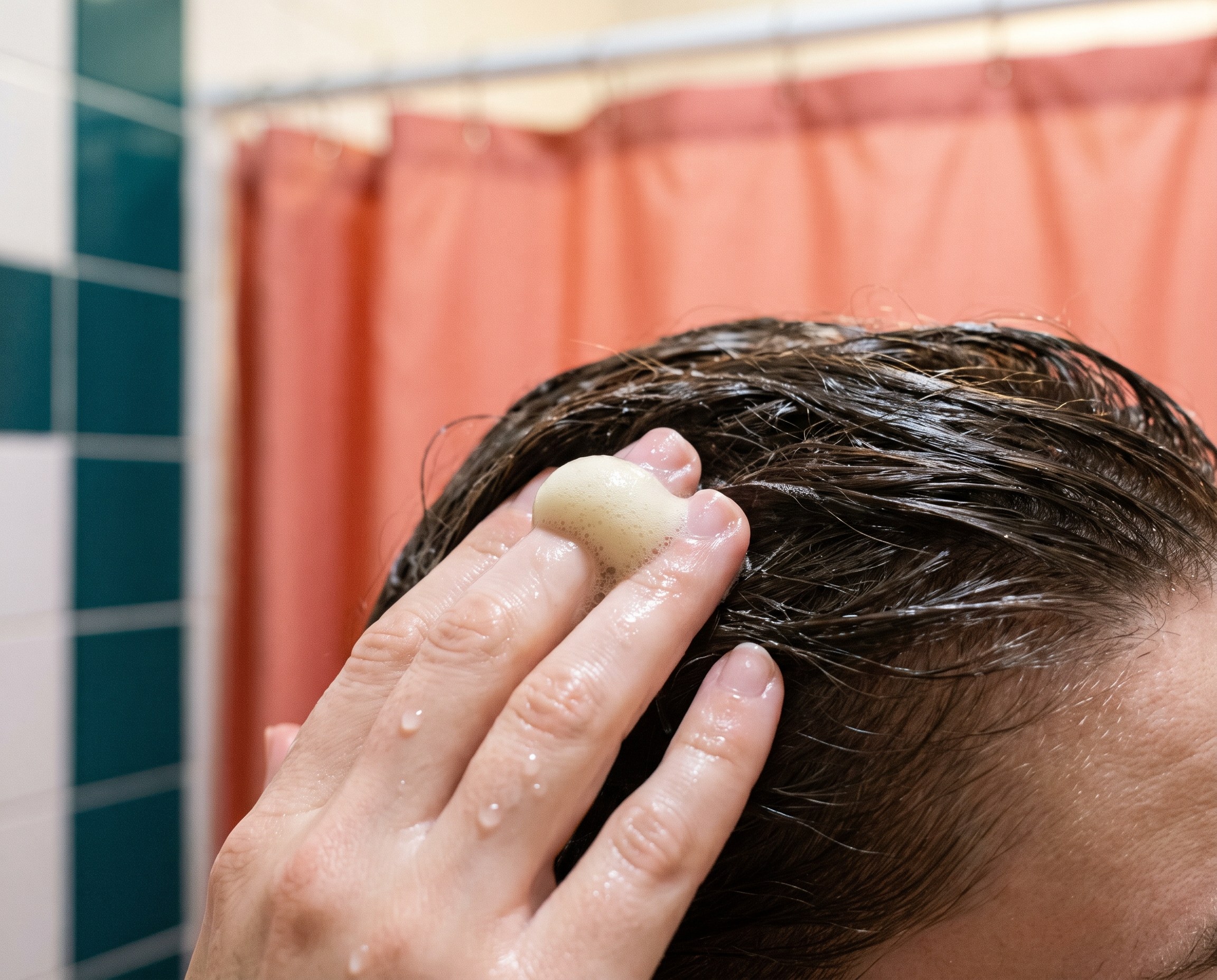
Sulfates have the worst reputation in the shampoo aisle. Sodium lauryl sulfate, or SLS, is a strong cleanser that foams a lot and can irritate skin at higher concentrations. Dermatologists use it in patch testing as a known irritant. Sodium laureth sulfate, or SLES, is a modified version that is noticeably milder. Many drugstore shampoos use SLES, often blended with gentler helpers like cocamidopropyl betaine that soften the overall effect.
So are sulfates bad? For a lot of people, no. If you have an oily scalp, fine straight hair, and you wash often, a sulfate shampoo can work well. The trouble shows up with hair that is dry, curly, color-treated, or older. A strong cleanser removes protective oil from strands that don’t have much to spare. Some people also notice that sulfate formulas fade color faster or leave the scalp tight and itchy. In those cases, a sulfate-free formula built on milder surfactants is a reasonable switch.
But sulfate-free is not a guarantee of quality. Some sulfate-free shampoos use other strong detergents that behave about the same way. And plenty of affordable brands now sell sulfate-free lines, so you don’t need to pay salon prices to avoid sulfates. The honest version is this. Sulfates are strong, not evil. Match the strength of the cleanser to your scalp and hair, and read the label instead of the front of the bottle.
Does an expensive shampoo get your hair any cleaner?
Not really. A science writer filming for the BBC program Horizon asked volunteers to skip washing for a week, then washed hair samples with shampoos at very different prices and looked at them under a microscope. The cleanest results were about equal across the range. The mid-priced shampoo and one costing over 40 pounds performed the same. The very cheapest bottle left a slight static charge that seemed to attract dirt back afterward, which is a fair point against rock-bottom formulas. You can read the summary at https://theconversation.com/does-the-price-of-your-shampoo-affect-how-clean-your-hair-is-heres-the-science-71597.
That lines up with the CHOICE trial and with what cosmetic chemists have said for years. Thickness doesn’t mean better cleaning either. Manufacturers thicken shampoo because people assume a thick product is a quality product. The extra cost of a luxury bottle tends to go into fragrance, conditioning ingredients, packaging, and advertising. None of those are worthless. A lovely scent and a nice bottle make a daily routine more pleasant. But they don’t change how clean your hair is.
Where price can matter is in the details that aren’t about cleaning. Is the formula gentle enough for your scalp? Does it leave hair soft or squeaky? Does it protect your color? Those differences are real, and some expensive brands handle them well. But some affordable brands handle them well too, and some luxury bottles handle them badly. Price is a weak signal. The ingredient list and your own hair are better ones.
Where does the extra money go, and is any of it worth it?
One real difference between professional and mass-market shampoos is pH. A 2014 study in the International Journal of Trichology tested the pH of 123 shampoos. About 62 percent had a pH above 5.5, which is more alkaline than the scalp and the hair surface. Among popular commercial brands, roughly 66 percent were above that line. Among professional salon shampoos, only 25 percent were. The study is free to read at https://pmc.ncbi.nlm.nih.gov/articles/PMC4158629/.
Why does pH matter? The authors explain that an alkaline shampoo increases the negative electrical charge on the hair surface. That means more static, more friction between strands, and more tangling, which all lead to frizz and cuticle wear. A slightly acidic shampoo tends to leave the cuticle flatter. This is a fair point in favor of many salon formulas. But it’s not about price itself. Plenty of affordable shampoos are pH balanced, and a good conditioner afterward also lowers pH and smooths the surface.
The rest of the extra cost usually goes to things you can see and smell. Fragrance oils. Botanical extracts listed high on the label for marketing appeal. Heavier conditioning polymers. Glossy packaging and shelf placement at a salon. Some premium brands also fund real research and patented ingredients, and you pay for that development too. Whether that is worth it depends on whether the ingredient does something your hair needs. And that is where the claims start to get slippery.
What makes a conditioner worth buying?
If you are going to spend a little more anywhere, conditioner is usually the better place. Shampoo is on your hair for a minute and then rinsed away. Conditioner is designed to leave something behind. The main ingredients are positively charged conditioning agents that stick to the negatively charged, damaged parts of the strand. That evens out the surface charge, cuts static, and makes hair easier to detangle. Less friction during combing means less breakage over time.
Silicones are the other big player. Ingredients like dimethicone and amodimethicone coat the hair with a thin, slippery film. That film adds shine, smooths the cuticle, and protects strands from heat and friction. The Reddit post called them cheap fillers that weigh hair down, and that’s only half true. Heavy silicones can build up on fine hair, and some people prefer to avoid them. But silicones are some of the best-studied hair ingredients available, and they show up in expensive conditioners as often as cheap ones.
A good drugstore conditioner can do this job well. What you are looking for is slip, meaning your fingers or a comb glide through wet hair without snagging. You want hair that feels soft when dry, not coated or limp. Fine hair usually does better with a lighter formula applied only from mid-length to ends. Thick, curly, or dry hair can take a richer conditioner through the full length. The American Academy of Dermatology recommends exactly that split, and their hair care tips are at https://www.aad.org/public/everyday-care/hair-scalp-care/hair/healthy-hair-tips.
Can a shampoo really repair broken bonds?
This is the claim at the heart of the Reddit post, and it is worth looking at carefully. Bond-building products use ingredients designed to reconnect broken disulfide bonds inside the hair. The best-known one, bis-aminopropyl diglycol dimaleate, is patented and found across one brand’s line. It reacts with sulfur-containing parts of keratin to help restore some of those links. In salons, it was first used during bleaching and coloring, where bond damage is heavy and the product sits on the hair for a long time. That use has real support from hairdressers and colorists.
A shampoo is a different situation. It sits on your hair for a minute or two and then rinses away. Can a bond builder do meaningful work in that window? Maybe some. But most of the clinical numbers you see, like three times stronger or five times less breakage, come from studies run or paid for by the brands themselves. They are often measured against untreated, damaged hair rather than against a decent ordinary conditioner. That doesn’t make the claims false. It means the gap between a bond-building shampoo and a well-made regular one is probably smaller than the ads suggest.
Here’s who stands to benefit most. If you bleach or lighten your hair, use high heat often, or have hair that snaps easily, a bond-building treatment can make a visible difference. A leave-on or pre-shampoo treatment gives the ingredient more contact time than a wash-off product. If your hair is healthy and untreated, the difference will likely be small. And I’d be skeptical of any product that calls itself an insurance policy for your hair. That’s sales language.
Is the cost per wash math honest?

Premium brands like to argue that their concentrated formulas save you money because you use less. The Reddit post claimed one bottle outlasts three bottles of budget shampoo, based on a coin-sized dose of about 2.5 mL per wash. On paper, that’s roughly 100 washes from an 8.5 ounce bottle. Say that bottle costs around $30. That works out to about 30 cents a wash. It’s not a crazy number for something you use every day or two.
But look at the trick inside the math. The comparison assumes you pour a big handful of drugstore shampoo and only a coin-sized squeeze of the premium one. Use the same small dose of a $7, 12-ounce drugstore bottle and you get about 140 washes at roughly 5 cents each. Most of us simply use too much shampoo, whatever the price. Thin formulas spread easily with water, and a second lather after the first rinse usually needs less product anyway. Using less is a good habit. It just isn’t a reason to switch brands.
There is one cost argument that holds up better. If you pay a few hundred dollars for salon color, a harsh shampoo can fade it faster and send you back to the chair sooner. In that case, a gentle, color-safe formula can pay for itself. But color-safe formulas exist at every price. Ask your colorist what they recommend, and then check whether a cheaper option has a similar ingredient list. Many stylists will tell you honestly that it does.
How should hair care change after 50 and 60?

Hair changes with age just as skin does. Oil glands slow down, so the scalp and strands get drier. Gray hair lacks pigment and often feels coarser or more wiry, and it can pick up a yellow cast from sun, pollution, hard water, and heat styling. Many women also notice thinning. A study published in the journal Menopause found female-pattern hair loss in 52 percent of the 178 postmenopausal women examined, with a summary at https://community.the-hospitalist.org/index.php/content/hair-loss-affects-more-half-postmenopausal-women. If you notice sudden or patchy shedding, see a dermatologist, since no shampoo can fix that on its own.
For drier, older hair, a strong daily shampoo is usually the wrong tool. Washing less often, every two or three days or even once a week for thick or curly hair, lets natural oils do some of the work. A gentle, sulfate-free or low-sulfate formula applied to the scalp only is kinder to the lengths. Then a moisturizing conditioner on the mid-lengths and ends restores slip and softness. If your hair is fine and thinning, look for lightweight volumizing formulas so conditioner doesn’t flatten it.
Gray and silver hair has its own needs. Purple shampoos deposit a little violet pigment to cancel yellow tones. They work at any price point, and drugstore versions are often just as effective. But they can be drying, so use them once a week or so rather than every wash. A clarifying shampoo once or twice a month can also remove mineral and product buildup that dulls gray hair. Follow it with a rich conditioner, because clarifying formulas are strong by design.
So when does it make sense to spend more?
The good news is that most people can get clean, healthy-looking hair from an affordable shampoo and a well-chosen conditioner. Price does not predict cleaning power, and independent tests keep showing that. The bad news is that cheap formulas can be harsh, too alkaline, or poorly matched to dry, color-treated, or aging hair. The ugly part is the marketing. Fear-based language about industrial chemicals, brand-funded statistics, and cost math built on unequal doses all push you toward a bigger bill without proving much.
Spending more can make sense in a few cases. If you lighten or color your hair, a gentle color-safe routine and an occasional bond-building treatment can protect that investment. If your scalp is sensitive and you have found a pricier formula that doesn’t itch, keep it. And if you love the scent and feel of a luxury shampoo and it fits your budget, that is a fine reason too. Enjoying your routine has value. Just be clear about what you are paying for.
Otherwise, put your money into the conditioner, use less shampoo than you think, and focus it on your scalp. Rinse well. Detangle gently with a wide-tooth comb instead of yanking. Pat hair dry rather than rubbing it with a towel. Those habits cost nothing and protect your hair more than any price tag. I’d take a $7 shampoo used well over a $40 shampoo used badly every time!
FAQs
Is salon shampoo really better than drugstore shampoo?
Not automatically. Independent trials have found little difference in cleaning power across price points. Salon shampoos are more often pH balanced, which can mean less frizz, but many affordable shampoos are too. Check the ingredient list and how your hair responds rather than the price.
Should I avoid sulfates?
Only if they bother you. Sulfates are strong cleansers that suit oily scalps and fine hair well. If your hair is dry, curly, color-treated, or older, a milder sulfate-free formula is often more comfortable. Sulfate-free options are widely available at drugstore prices.
Do bond-building shampoos work?
They may help hair that is heavily bleached or heat damaged. A shampoo has a short contact time, so leave-on or pre-wash treatments are usually more effective. Most published results come from the brands themselves, so expect a modest difference on healthy hair.
How much shampoo should I use?
For most medium-length hair, a quarter-sized amount is plenty, focused on the scalp. Longer or thicker hair may need a bit more. The suds that rinse through the lengths clean them enough. Using too much is a common reason bottles run out fast.
Are silicones bad for my hair?
No. Silicones add slip and shine and protect against heat and friction. Heavier ones can build up on fine hair, which a clarifying wash every few weeks will remove. If you prefer to avoid them, that’s a personal choice rather than a safety issue.
What is the best shampoo routine for gray hair?
Use a gentle shampoo on the scalp, a moisturizing conditioner through the lengths, and a purple shampoo about once a week to cancel yellow tones. Add a clarifying wash once or twice a month if your hair looks dull from buildup or hard water.
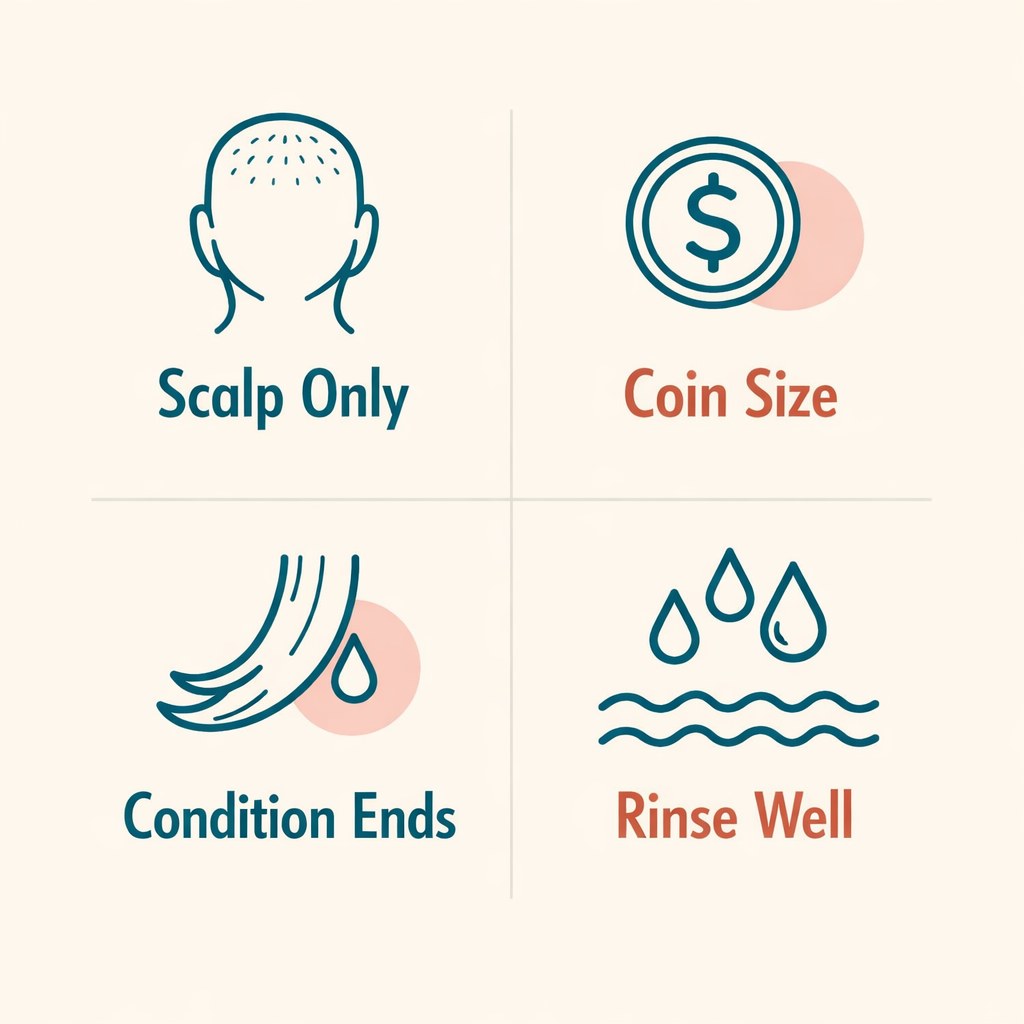
The shampoo aisle runs on promises, and the most expensive bottle often makes the biggest ones. But your hair doesn’t read the label or check the receipt. It responds to how gently it gets cleaned, how well it gets conditioned, and how carefully it’s handled while wet. Get those three things right and an affordable routine will serve most people well. Save the bigger spending for real problems like chemical damage or color you want to keep, and spend it on the product type that has the best chance of helping. That’s not a glamorous rule. It just works.
Related Posts