
Oct
If you click on links we provide, we may receive compensation.
Endurance athletes pay a price in their skin. In a 2006 study in the Archives of Dermatology, researchers in Austria examined 210 marathon runners and 210 matched non-runners. The runners had more atypical moles and more sun spots, and the runners who trained hardest had the most. The same group of runners was also more likely to be sent to a dermatologist for a suspicious lesion (https://www.sciencedaily.com/releases/2006/11/061120182227.htm). Now think about a triathlete. You run, but you also spend hours on a bike and in the water, often in midday sun.
That is a lot of exposure, and sun is only part of it. Chlorine strips oil from the skin. Sweat and salt sit on the skin for hours. Wetsuits rub the neck raw, and bike saddles cause their own trouble. And many of the people doing this sport are not in their twenties. USA Triathlon reported that its biggest membership group is 40 to 49, with growth in every age group from 50 to 99 (https://www.sportsdestinations.com/about-us/trends-multisport-insights-usa-triathlon-12992). Here’s how to care for your skin through each part of the training.
Why is triathlon training so hard on skin?
Most sports stress the skin in one way. Triathlon stresses it in three ways, often on the same day. A typical brick workout might start with a pool swim, move to a two-hour ride, and end with a short run. Your skin goes from wet and chlorinated to sweaty and sun-baked to rubbed by damp fabric. Each of those steps weakens the outer barrier a little, and the next step hits skin that has not recovered. The result is dryness, redness, chafing, breakouts along the strap lines, and more sun damage than most people expect.
Training volume matters too. Someone getting ready for a sprint race might train five or six hours a week. Half Ironman and full Ironman training can run to 12 or 15 hours, with long sessions on weekend mornings that stretch into the hottest part of the day. That is a lot of time outdoors, and much of it happens with little more than a tri suit for cover. The good news is that most of this damage is preventable. A few habits, done every time, make a real difference.
What does chlorine do to your skin?

Chlorine keeps pools safe, but it is hard on skin. It breaks down the natural oils that hold water in the outer layer. Researchers at the CE.R.I.E.S. skin research center in France measured skin after a one-hour pool swim. Four hours later, hydration on the upper chest had dropped by about 20 percent, skin pH had risen by about one full unit, and surface oil on the chest had fallen by 76 percent (https://www.dermatologytimes.com/view/researchers-swimming-affects-skins-hydration). Everything returned to normal within 24 hours. But a triathlete may swim three or four times a week, so the skin rarely gets a full day to reset.
The fix is simple and it starts before you get in. Rinse off in the pool shower first. Skin that is already wet with fresh water absorbs less pool water. Some swimmers also apply a thin layer of a barrier balm or a light oil to the most sensitive spots, like the face, neck and the backs of the hands. After the swim, shower right away with lukewarm water and a gentle, low-foam cleanser. Hot water and harsh soaps strip even more oil, which is the last thing your skin needs at that point.
Then moisturize while your skin is still damp. This is the step most people skip in a busy locker room, and it is the one that matters most. A cream with ceramides, glycerin or hyaluronic acid will pull water back into the skin and help rebuild the barrier. Look for something fragrance-free if you notice stinging or redness. I keep a small tube in my swim bag so there is no excuse to skip it!
What changes when you swim in open water?
Most races start in a lake, a river or the ocean, so you will need to train there too. Open water brings its own skin issues. Salt water dries the skin much like chlorine does, and it leaves a crust that can rub under a wetsuit or tri suit. Fresh water lakes can carry swimmer’s itch, an itchy rash caused by tiny parasites that come from birds and snails. The CDC says the parasites burrow into skin and cause an allergic reaction, with red bumps that can appear within 12 hours and itch for a week or more (https://www.cdc.gov/swimmers-itch/about).
To lower your risk, avoid shallow, marshy water near the shore where the parasites gather, and skip any lake with posted warnings. Towel off hard as soon as you get out, since the CDC notes that drying off right away can help. Then rinse with fresh water when you can. Wetsuits bring a different problem. The neck seal and armpits rub with every stroke, and a long swim can leave a raw red line at the back of the neck. Apply an anti-chafe balm made for wetsuits to the neck, underarms and wrists before you zip up, and rinse the suit in fresh water after every use.
How do you protect your skin on the bike?

Cycling is where most triathletes get the most sun. You are outside for hours, often on open roads with no shade, and the breeze keeps you from feeling the burn. Wind also dries the skin and can leave the face red and chapped. The tops of the thighs, the forearms and the back of the neck take the most direct sun in the riding position. Many riders also miss the tops of their ears and the part line in their hair under the helmet vents. Those are common spots for sun damage in long-time cyclists.
Arm sleeves and a light cycling cap under the helmet help a lot. Many sleeves now carry a UPF rating, which tells you how much UV gets through the fabric. Sunscreen goes on everything that stays bare, at least 15 minutes before you head out. Then there is the saddle. Hours of pressure and friction in damp shorts can cause saddle sores, which are painful bumps or raw patches where your body meets the seat. A chamois cream applied before each ride cuts friction, and getting out of wet shorts right after the ride matters just as much. Never wear underwear under cycling shorts, since the seams are what cause much of the rubbing.
Which sunscreen holds up to sweat and water?
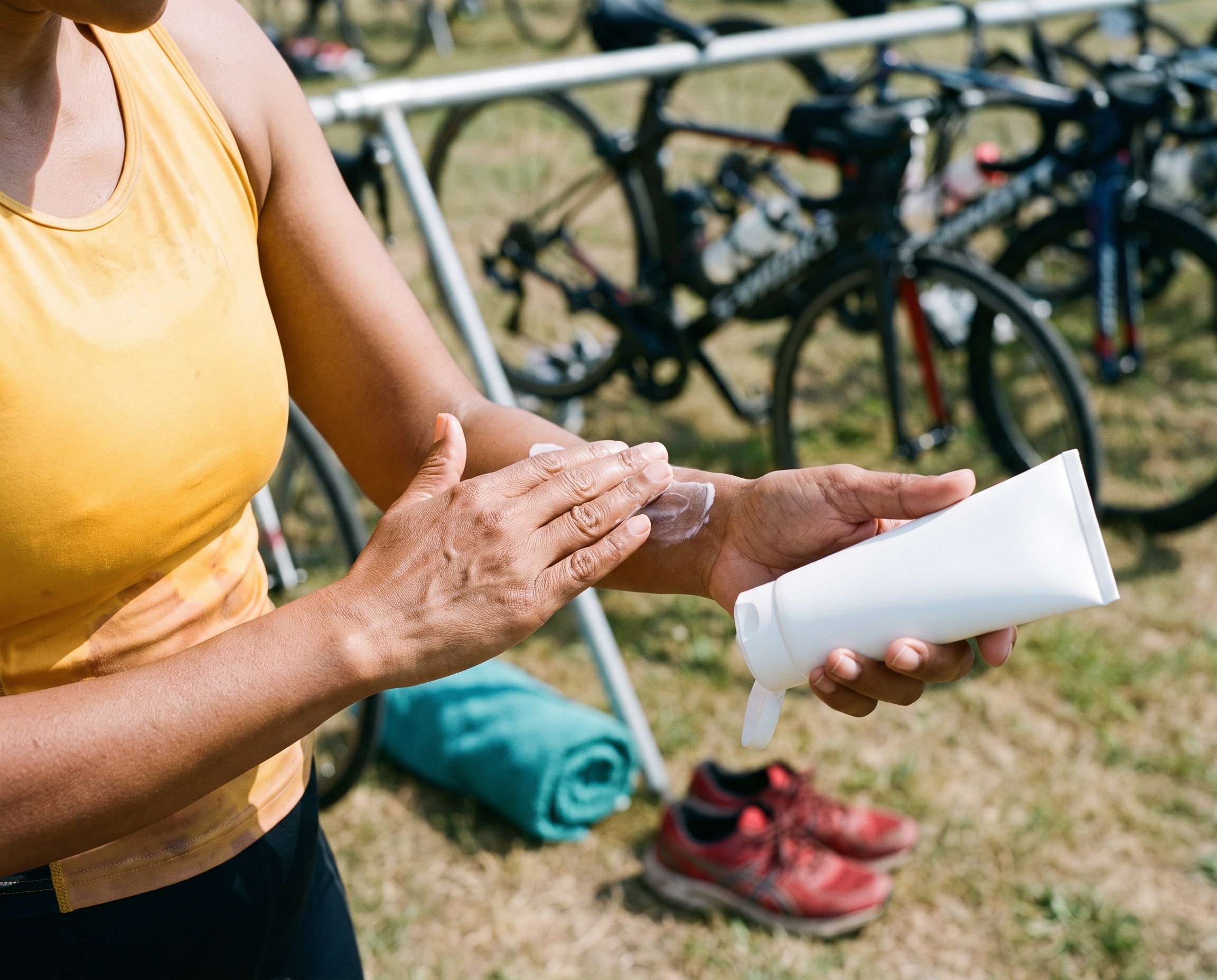
No sunscreen is waterproof or sweatproof, and in the United States brands are not allowed to say so. The FDA rules let a label claim water resistance for either 40 minutes or 80 minutes, based on testing (https://dps-admin.fda.gov/omuf/sites/omuf/files/monograph-documents/2022-09/OTCMonograph_M020-SunscreenDrugProductsforOTCHumanUse09242021.pdf). For triathlon training, choose a broad-spectrum SPF 30 or higher that says 80 minutes. Reapply after you swim, after you towel off, and about every two hours on long rides and runs. A small stick or travel tube fits in a jersey pocket or a transition bag.
Many athletes skip sunscreen because they hate how it feels. In a study presented at the American Academy of Dermatology meeting in 2026, athletes said they avoided sunscreen because it made their hands slippery, felt sticky, or stung their eyes when they sweated. The same summary cited earlier research in which 96 percent of college athletes agreed sunscreen helps prevent skin cancer, yet more than half never used it (https://www.emjreviews.com/dermatology/symposium/addressing-barriers-to-sunscreen-use-in-athletes-new-data-from-aad-2026-j24126/). If sunscreen runs into your eyes, try a mineral formula with zinc oxide on the forehead and around the eyes. A sport stick works well there because it stays put. And don’t forget an SPF lip balm, since lips burn fast and heal slowly.
How do you stop chafing before it starts?
Chafing happens when skin rubs against skin or fabric, and sweat and salt make it worse. In triathlon the usual spots are the inner thighs, underarms, the neck, the bra line, and the waistband. Once skin is chafed, every workout opens it up again, so prevention is far easier than repair. Apply an anti-chafe balm or stick to known hot spots before every session, including the run off the bike. A good, well-fitted tri suit helps too. Loose fabric and thick seams cause most of the rubbing.
Test everything in training, not on race day. A new suit, new shorts or a new sports bra can rub in places you never expected. If you do get chafed, clean the area gently with water, pat it dry, and cover it with a thin layer of plain petroleum jelly or a zinc oxide ointment. Give it a day or two to heal if you can. Watch for signs of infection, like spreading redness, warmth, or pus, and see a doctor if they show up.
What should your post-workout routine look like?
The hour after training is when your skin needs the most help. Sweat, salt, sunscreen and grime all sit on the skin, and tight, damp clothing traps them there. Get out of wet gear as soon as you can and shower within the hour. Use a gentle cleanser on the face and a mild body wash on the rest of you. If you break out along your back or chest, a body wash with salicylic acid or benzoyl peroxide used a few times a week can help keep pores clear.
Then moisturize face and body while the skin is still damp. On days with a swim and a long ride, your skin has lost oil and water twice, so a richer cream is worth it. Pay attention to your feet as well. Damp socks, shared locker rooms and pool decks are an easy path to athlete’s foot. Dry well between the toes, wear sandals in the shower, and let your running shoes dry out between sessions. Drinking enough water won’t fix dry skin on its own, but it supports everything else you are doing.
How does triathlon training affect mature skin?

Older athletes are a big part of this sport, and their skin has different needs. With age, the outer layer of skin gets thinner, oil glands make less oil, and the fat layer beneath the skin shrinks. UCLA Health notes that thinner skin bruises and tears more easily and heals more slowly (https://uclahealth.org/news/skin-gets-thinner-as-people-age). For a triathlete in their 60s or 70s, that means a chafed patch or a wetsuit rub can take much longer to close. It also means chlorine and wind dry the skin out faster, because there is less natural oil to start with.
So the basics matter even more after 60. Use a richer moisturizer after every swim, and look for ceramides and fatty acids that help rebuild the barrier. Be generous with anti-chafe balm, and treat any broken skin right away instead of training through it. If you use a retinoid or an exfoliating acid in your evening routine, know that both can make skin more sensitive to sun and to friction. On heavy training weeks, it can make sense to use them less often.
Sun protection carries extra weight for mature skin, too. Decades of sun add up, and many people over 60 already have sun spots, rough patches or old damage from years before sunscreen was common. New training hours add to that total. Wear sleeves and a cap, reapply often, and try to schedule long rides early in the morning. Older adults also tend to sweat less and handle heat less well, so cover-ups that block sun without trapping heat are a smart choice.
When should a triathlete see a dermatologist?
Given what researchers have found in endurance athletes, a yearly full-body skin check is a good idea for anyone training outdoors. That applies even more if you are over 50, fair-skinned, or have a history of sunburns. Between visits, look over your own skin once a month. Watch for a mole that changes in size, shape or color, a sore that won’t heal, or a rough, scaly patch that keeps coming back. Have someone check the spots you can’t see, like your back and scalp.
You should also see a doctor for skin problems that don’t clear up with basic care. That includes a rash after open water swimming that spreads or blisters, chafed skin that looks infected, or saddle sores that keep returning. Persistent breakouts on the back and chest can usually be managed with the right treatment. Fixing these early keeps you training. Waiting often means more time off later.
FAQs
Should I shower before swimming in a pool?
Yes. Rinsing first wets your skin and hair with fresh water, so they take up less chlorinated water during the swim. Most pools require it anyway. Follow it with a full shower and moisturizer after you get out.
What SPF should a triathlete use?
Use a broad-spectrum sunscreen with SPF 30 or higher that is labeled water resistant for 80 minutes. Reapply after every swim and about every two hours on long rides and runs. A mineral stick works well around the eyes because it is less likely to sting.
Can I use sunscreen under a wetsuit?
Yes, and it is worth doing on the neck and arms near the edges of the suit. Let it dry for 15 minutes before you put the wetsuit on. Apply anti-chafe balm on top at the neck and underarms. Then reapply sunscreen to exposed skin after the swim.
How do I treat a saddle sore?
Keep the area clean and dry, get out of cycling shorts right after riding, and take a day or two off the bike if you can. A warm compress can ease pain. If the sore grows, drains, or keeps coming back, see a doctor.
Is triathlon training bad for aging skin?
Not if you protect it. Exercise is good for circulation and overall health. The risks come from sun, chlorine and friction, and you can manage all three with sunscreen, cover-ups, anti-chafe products and a steady moisturizing habit.
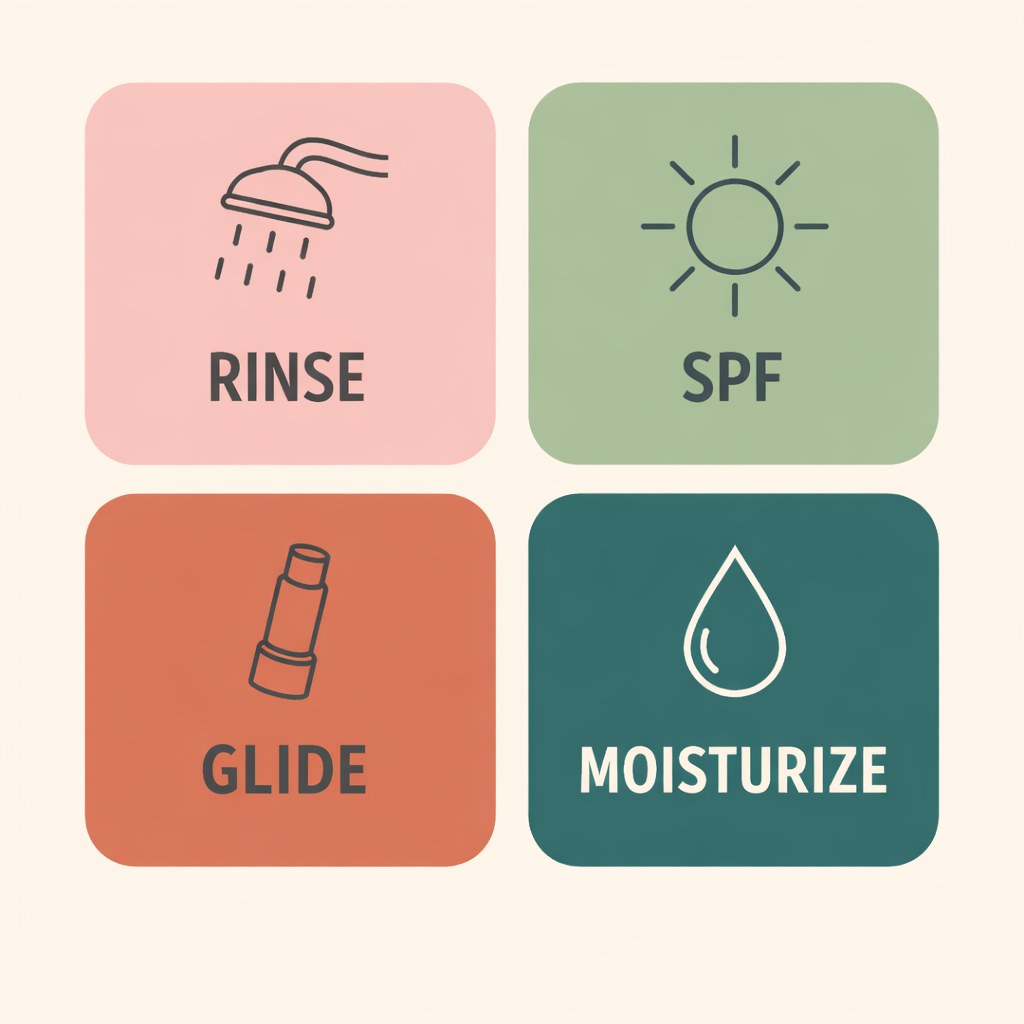
Triathlon asks a lot of your body, and your skin is part of that body. It takes the sun on the bike, the chlorine in the pool, and the rubbing on the run, sometimes all before lunch. The habits that protect it are not complicated. Rinse before and after you swim, wear sunscreen and reapply it, use anti-chafe balm, and moisturize every single time. If you are over 50 or 60, add richer creams, more cover, and a yearly skin check. Do that, and your skin will be in good shape when you cross the finish line.
Related Posts