Oct
If you click on links we provide, we may receive compensation.
Americans are on track to spend about $2.1 billion on at-home beauty devices this year, according to Grand View Research, and the firm expects that figure to double by 2033 (https://www.grandviewresearch.com/industry-analysis/us-at-home-beauty-devices-market-report). Light-based tools like LED masks make up more than half of those sales. That is a lot of glowing red faces in a lot of living rooms. Some of that money buys real results. Some of it buys a very expensive drawer ornament. The difference is rarely obvious from the box, so this guide sorts them by the one thing that matters – what the research says they can do.
Why is everyone buying skin care gadgets right now?
Part of the answer is price. A course of in-office LED or radiofrequency treatments can run well over a thousand dollars, while a decent home device costs a few hundred and lasts for years. Part of it is time, since a ten-minute mask session fits into an evening of television in a way a dermatology appointment does not. And part of it is social media, where a woman in a light-up mask has become as familiar as a sheet mask selfie was five years ago. Grand View Research reports that devices in the $150 to $500 range hold the largest share of the market, which tells you most buyers are not chasing the cheapest option or the most luxurious one. They want something that works without a second mortgage. That is a sensible instinct, and it is the right lens for everything that follows.
The catch is that home devices are built to be safe in untrained hands. That means lower power than what a dermatologist uses, which means slower and smaller results. A home gadget will not match a professional laser or a course of in-office microneedling. But for steady maintenance between appointments, or for people who never plan to book one, the better devices can make a visible difference over months. The word that matters there is months. Almost every study on these tools runs between eight and twelve weeks, with use several times a week, and results fade when you stop.
What does “FDA cleared” really mean on a device?
You will see “FDA cleared” printed on nearly every premium gadget box, and it is worth knowing what that phrase does and does not promise. Most LED masks, microcurrent tools and home radiofrequency devices are Class II medical devices. They reach the market through the FDA’s 510(k) process, which asks the maker to show the device is substantially equivalent to one already sold legally (https://www.fda.gov/medical-devices/premarket-submissions-selecting-and-preparing-correct-submission/premarket-notification-510k). That is different from FDA approval, which requires the heavier clinical trial work that goes into high-risk devices. Clearance is a meaningful safety check. It is not proof that a particular mask will smooth your particular wrinkles.
So treat clearance as a floor, not a finish line. A cleared device has had its power output, heat limits and intended use reviewed by regulators, and that is a real advantage over the no-name gadgets sold through social media ads. Beyond that, look for a brand that has published its own clinical data and is clear about the wavelengths or currents its device uses. If a product page leans on phrases like “clinically inspired” or “dermatologist approved” without naming a study, that tells you something. And if the price looks too good for an LED mask with hundreds of bulbs, the light output is often too weak to do much.
Does an LED mask really work?

Red and near-infrared LED therapy has the strongest evidence of any home skin care gadget. In a controlled trial published in Photomedicine and Laser Surgery, 136 volunteers received red or broadband light twice a week for 30 sessions (https://pubmed.ncbi.nlm.nih.gov/24286286/). The treated groups showed measurable gains in skin roughness and collagen density on ultrasound compared with controls, along with better skin tone and texture in clinical photos. The light is thought to work on the mitochondria in skin cells, nudging them to produce more energy and, over time, more collagen. Results are gradual and modest. But they are real, and the treatment is gentle enough for most skin types, including sensitive and mature skin.


Two of the most widely reviewed masks this year are the CurrentBody Skin LED Mask and the Omnilux Contour Face, both FDA cleared and both built around red light in the 630 nanometer range and near-infrared around 830. Shark’s CryoGlow added an under-eye cooling feature that many people like for morning puffiness. When comparing masks, look past the bulb count and check for those two wavelengths, a fit that keeps the LEDs close to the skin, and a session time you will stick with. I would rather use a ten-minute mask five times a week than a twenty-minute mask twice a month. Consistency beats intensity with light therapy, every time.
One safety note matters here. In 2019, Neutrogena recalled its Light Therapy Acne Mask over a risk of eye injury in people with certain eye conditions or those taking medicines that make the eyes more sensitive to light (https://cosmeticsbusiness.com/neutrogena-recalls-light-therapy-acne-mask-in-the-us-156698). That mask used blue light for acne, which carries more eye risk than red. Still, the lesson applies to every mask. Keep your eyes closed during treatment, use any goggles that come in the box, and check with your doctor if you take photosensitizing medicines or have a retinal condition.
Can microcurrent lift a sagging face?

Microcurrent devices send a low-level electrical current through the skin to stimulate the facial muscles beneath it. Fans describe the effect as a workout for the face, and the NuFACE Trinity remains the best-known tool in the category. Many users see a lifted, more defined jawline and cheekbones right after a session. The trouble is that the effect is short-lived without steady use, and the research base is thin. A 2024 systematic review in Clinical, Cosmetic and Investigational Dermatology looked at 18 studies of home facial devices and found they can improve signs of skin aging “to a certain extent,” but flagged small sample sizes and short follow-up periods across the field (https://doi.org/10.2147/CCID.S449599).

That does not make microcurrent a scam. It makes it a maintenance tool that suits a certain kind of person. If you enjoy a five-minute ritual and will do it most days, you will probably like what you see in the mirror. If you expect a permanent lift from a few weeks of use, you will be disappointed. Microcurrent needs a conductive gel to work, so budget for that as an ongoing cost. And skip it entirely if you have a pacemaker or another implanted electronic device, a warning that appears in nearly every microcurrent manual for good reason.
Is at-home radiofrequency worth the heat?
Radiofrequency devices warm the deeper layers of skin to encourage collagen production and a gradual tightening effect. In-office versions like Thermage use far more energy, so home tools are a gentler version of the same idea. The best evidence I found is a 2022 randomized split-face trial in Dermatology and Therapy, in which 32 women aged 35 to 60 used a home RF device on one side of the face and a commercial anti-aging cream on the other for 12 weeks (https://link.springer.com/article/10.1007/s13555-022-00697-y). The device side showed greater improvements in wrinkles, radiance and skin thickness, with no adverse reactions. That is a small study, but it is a well-designed one.

Home RF tools tend to cost more than LED masks and take more effort, since you glide them across the skin in slow passes for several minutes. Look for a device with built-in temperature sensors and an automatic shut-off, which prevent the burns that cheaper models occasionally cause. TriPollar is one of the longer-running brands in this space. RF pairs well with LED, and some people use both on alternating days. As with microcurrent, avoid RF if you have a pacemaker or metal implants in the treatment area.
What about cleansing brushes, rollers and microneedling pens?
Sonic cleansing brushes were the gadget of the 2010s, and they still have a place for people who wear heavy makeup or sunscreen and want a deeper clean. But daily use can over-exfoliate, especially on thin or dry skin, and many dermatologists now suggest your hands and a gentle cleanser do the job just as well. Jade rollers, gua sha stones and ice rollers are pleasant to use and can reduce morning puffiness for an hour or two by moving fluid. They will not change your skin‘s structure. An ice roller in the freezer is a nice morning treat, but no one should expect it to erase a wrinkle.
Microneedling pens are a different matter, and here I would urge caution. Professional microneedling has good evidence for scars and texture, but it is done with sterile, single-use cartridges by someone trained to judge depth. Home pens are often not FDA cleared, and using them at depths beyond a fraction of a millimeter raises the risk of infection, scarring and pigment changes. Short 0.25 millimeter rollers mainly help serums absorb, which is a far smaller benefit than the marketing suggests. If texture or scarring is your goal, put that money toward a professional session instead.
Which gadgets make sense for mature skin?

After 60, skin is thinner, drier and slower to heal, and that changes the math on gadgets. Red and near-infrared LED is the safest place to start. It involves no heat, no friction and no broken skin, and the collagen benefits it offers matter most when your own production has slowed. Microcurrent can help with the loss of muscle tone that shows up along the jaw and cheeks, though it takes daily commitment. Radiofrequency is reasonable for many people in this age group, but go slowly and stick with devices that have firm temperature controls. Thinner skin feels heat faster, and a mild burn takes longer to heal than it would at 40.
I would steer most readers over 60 away from home microneedling and aggressive cleansing brushes. Both rely on a little controlled damage, and mature skin repairs that damage more slowly, with a higher risk of irritation and lasting discoloration. Check your medicine cabinet too. Some common prescriptions, including certain antibiotics, diuretics and blood pressure drugs, increase light sensitivity, which is worth raising with your pharmacist before you start LED therapy. And if you have a pacemaker, a defibrillator or other implanted electronics, rule out microcurrent and RF altogether. A good LED mask paired with a daily SPF and a solid moisturizer will do more for most mature skin than a drawer full of devices.
What’s new in 2026 and what’s coming next?
The biggest story at CES this January was the merger of light therapy with personalization. L’Oréal showed an ultra-thin, flexible LED face mask and matching eye mask that use red light at 630 nanometers and near-infrared at 830, set for release in 2027 (https://www.engadget.com/science/loreals-ces-2026-beauty-devices-include-a-skin-like-flexible-led-mask-070000576.html). The flexible design should keep the light closer to the skin than today’s rigid masks. Amorepacific and LG both showed devices that pair skin sensors with AI to read signs of aging and suggest treatments, according to Cosmetics Design Europe (https://www.cosmeticsdesign-europe.com/Article/2026/01/06/ai-led-and-smart-styling-key-beauty-tech-trends-at-ces-2026/). Most of these are prototypes or still a year away. I would not wait for them if a proven mask fits your budget now.
The other trend worth watching is the drift toward multi-tool devices that combine LED, microcurrent and RF in a single handheld unit. In theory that saves money and drawer space. In practice, each function is often weaker than a dedicated device, and the clinical data, when it exists, usually covers only one of the technologies. My advice is to buy for the one result you care about most. If that is fine lines and overall tone, start with LED. If it is a softer jawline, look at microcurrent or RF.
Frequently asked questions
How long does it take to see results from an LED mask?
Most studies measure results after eight to twelve weeks of use three to five times a week. Some people notice a brighter, calmer look sooner, but changes in fine lines and firmness take at least two months of steady use.
Can I use an LED mask with retinol or vitamin C?
Yes, and many people do. Apply the mask to clean, dry skin first, then follow with your serums. If you use a prescription retinoid and your skin is irritated, give it a day off from both.
Are cheap LED masks from online marketplaces safe?
Some are fine, but many are not FDA cleared and do not publish their wavelengths or power output. A weak mask is mostly a waste of money, while a poorly made one can overheat. Stick with brands that list clearance and specific wavelengths.
Do I need to keep using a device forever?
Yes, if you want to keep the results. Collagen and muscle tone respond to steady stimulation, and benefits fade over a few months once you stop. Most people settle into a lighter maintenance routine after the first three months.
Can skin care gadgets replace sunscreen?
No. Daily sun damage breaks down collagen faster than any home device can build it. A broad-spectrum SPF 30 or higher remains the single most effective anti-aging step you can take.
So which one should you buy first?
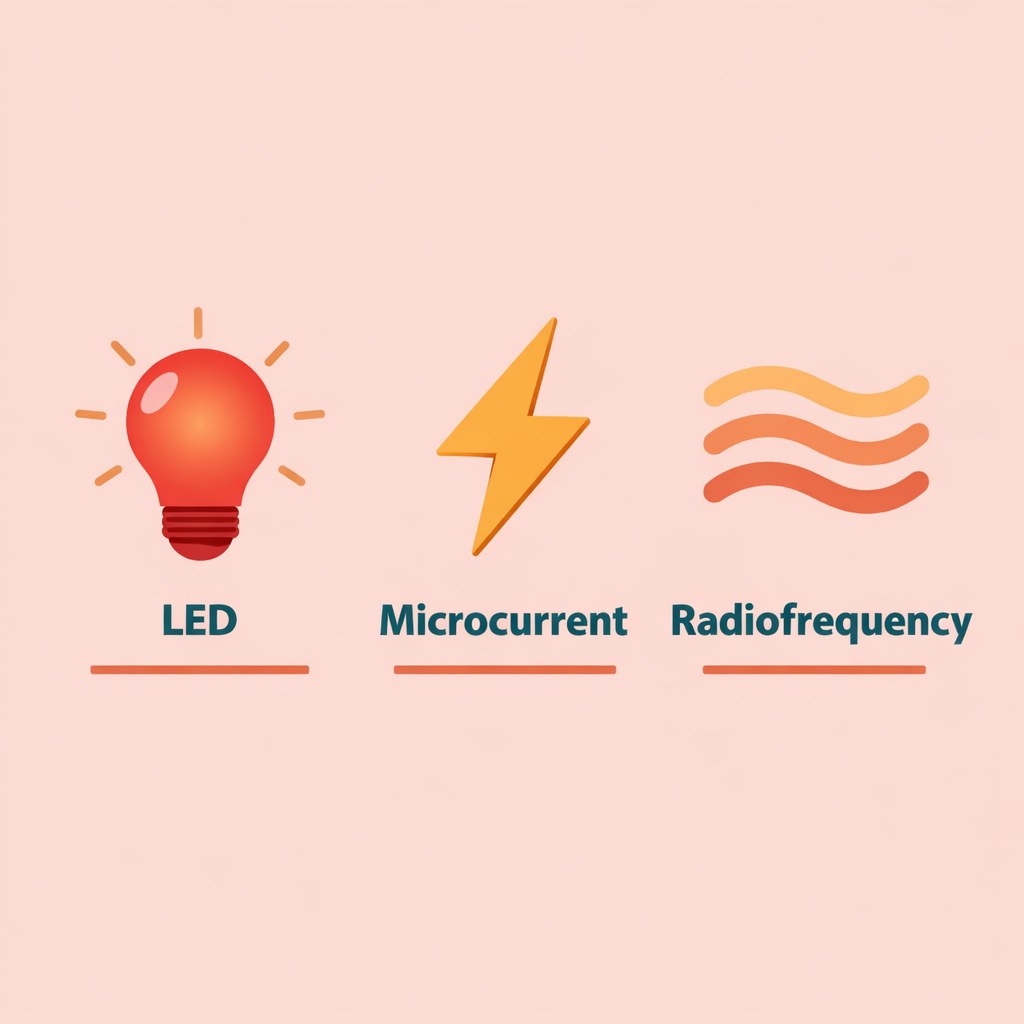
If you buy only one gadget this year, make it a well-made red and near-infrared LED mask from a brand that publishes its wavelengths and holds FDA clearance. It has the deepest research behind it, it is gentle on every age and skin type, and it asks for nothing more than ten quiet minutes a few times a week. Add microcurrent or radiofrequency later if you want more help with firmness and you know you will use it. Skip the gimmicks, protect your eyes, and stay patient through the first eight weeks. The best device is the one that leaves the drawer and gets used, week after week!
Related Posts