Nov
Skincare
Darker Skin Doesn’t Age Later, It Ages Differently
If you click on links we provide, we may receive compensation.
You notice it in the bathroom light before anyone else does. Your forehead is still smooth. There’s barely a line around your eyes. But the skin on your cheeks looks a little cloudy, the area under your eyes has gone a shade darker, and a spot from a pimple you had in the spring is still hanging around in the fall. Foundation that used to match now seems to sit on two different colors at once. None of it looks like the aging you were warned about, so it’s easy to shrug off as a bad month. I want to make the case that it isn’t a bad month at all – it’s what aging often looks like on medium and deep skin.
Most of us grew up with a picture of aging that came from lighter skin. Crow’s feet. Forehead creases. Fine lines that deepen into wrinkles. That picture shows up in ads, in before-and-after photos, and in the way many products describe their results. And there’s a familiar saying that darker skin doesn’t crack, which holds a sliver of truth and a fair amount of myth. Darker skin does age. It just tends to tell the story in a different order, starting with tone and texture and saving lines for later. Once you know what to look for, you can care for your skin based on what’s actually happening instead of what a wrinkle cream promises.
What makes darker skin age on a different schedule?
The short answer is melanin, along with the way the deeper layers of skin are built. Melanin is the pigment that gives skin its color, and it also absorbs and scatters ultraviolet light. In a well-known study by Kaidbey and colleagues, black epidermis provided an average sun protection factor of about 13.4, while white epidermis came in around 3.4. That’s a big difference in built-in protection, though it’s still far below what any dermatologist would call enough. A 2016 review in the Journal of Clinical and Aesthetic Dermatology by Vashi, Maymone and Kundu summarized the research this way, and you can read it here: https://www.bumc.bu.edu/derm/files/2017/09/Aging-article.pdf. Sun exposure drives most visible aging, so more melanin means a slower start on the kind of damage that breaks down collagen.
The same review notes that Black and Asian skin tend to have a thicker, more compact dermis than lighter skin. The dermis is the layer underneath the surface that holds collagen and elastin, the proteins that keep skin firm and springy. A thicker dermis resists folding, which is part of why lines and creases show up later. The authors report that skin of color generally shows signs of aging 10 to 20 years later than lighter skin of the same age. In one comparison of Chinese and French women, wrinkles appeared about a decade later in the Chinese group. Those numbers are averages, of course, and your own timeline depends on sun habits, genetics, smoking, and stress.
But here’s the part that often gets lost. Melanin protects against one kind of change while making skin more reactive in another. The cells that make pigment in darker skin are quick to respond to heat, inflammation, hormones, and light. That responsiveness is why tone changes tend to arrive before lines do! A dermatologist speaking at the South Beach Symposium earlier this year described it as a pigment-first pattern, with dullness and uneven tone usually leading the way, as reported by Dermatology Times at https://www.dermatologytimes.com/view/rethinking-aging-in-skin-of-color-a-pigment-first-approach. So the more useful question is which signs show up first and how to respond to them.
Why does uneven tone show up before wrinkles?
Think of it as years of small events adding up in color instead of creases. Every breakout, bug bite, scrape, rash, or bout of irritation can leave a mark called post-inflammatory hyperpigmentation. On lighter skin those marks often fade in a few weeks. On deeper skin they can stay for months, and some of them never fully clear on their own. Over twenty or thirty years, that slow buildup turns into a mottled, patchy look that many women describe as dullness. It’s not one dark spot so much as a loss of evenness across the whole face.
Sun and hormones add their own layers. Melasma, which shows up as brownish patches on the cheeks, forehead, and upper lip, is more common in medium and deep skin and often flares with pregnancy, birth control, or perimenopause. Sun spots still happen too, though they may look more like scattered freckling than the larger flat brown spots common on fair skin. And visible light matters more than most people realize. Research suggests that the light from the sun that you can see, not only ultraviolet light, can trigger and deepen pigmentation in darker skin types. That’s one reason a standard sunscreen can leave tone problems untouched even when you wear it faithfully.
Then there’s the area around the eyes. Darker circles under the eyes are one of the most common complaints from women with deeper skin, and they often get worse with age as the skin thins and shadows deepen. A 2026 survey called MOSAIC, published in the Journal of Clinical and Aesthetic Dermatology, asked nearly 800 Black women which facial traits bothered them most, and you can find it at https://jcadonline.com/demographic-survey-of-aesthetic-interests-and-concerns-mosaic-us-survey-study-of-facial-and-body-aesthetic-concerns-and-treatment-interests-among-black-women/. Dark under-eye circles came in at 57 percent, and uneven skin color ranked among the top five concerns. Wrinkles and fine lines didn’t make the top of the list at all. The authors also point to an earlier study of African American women where 57 percent named uneven tone as a concern compared with 33 percent who named lines and wrinkles. That gap says a lot about where the real changes show up first.
What happens to skin texture over time?
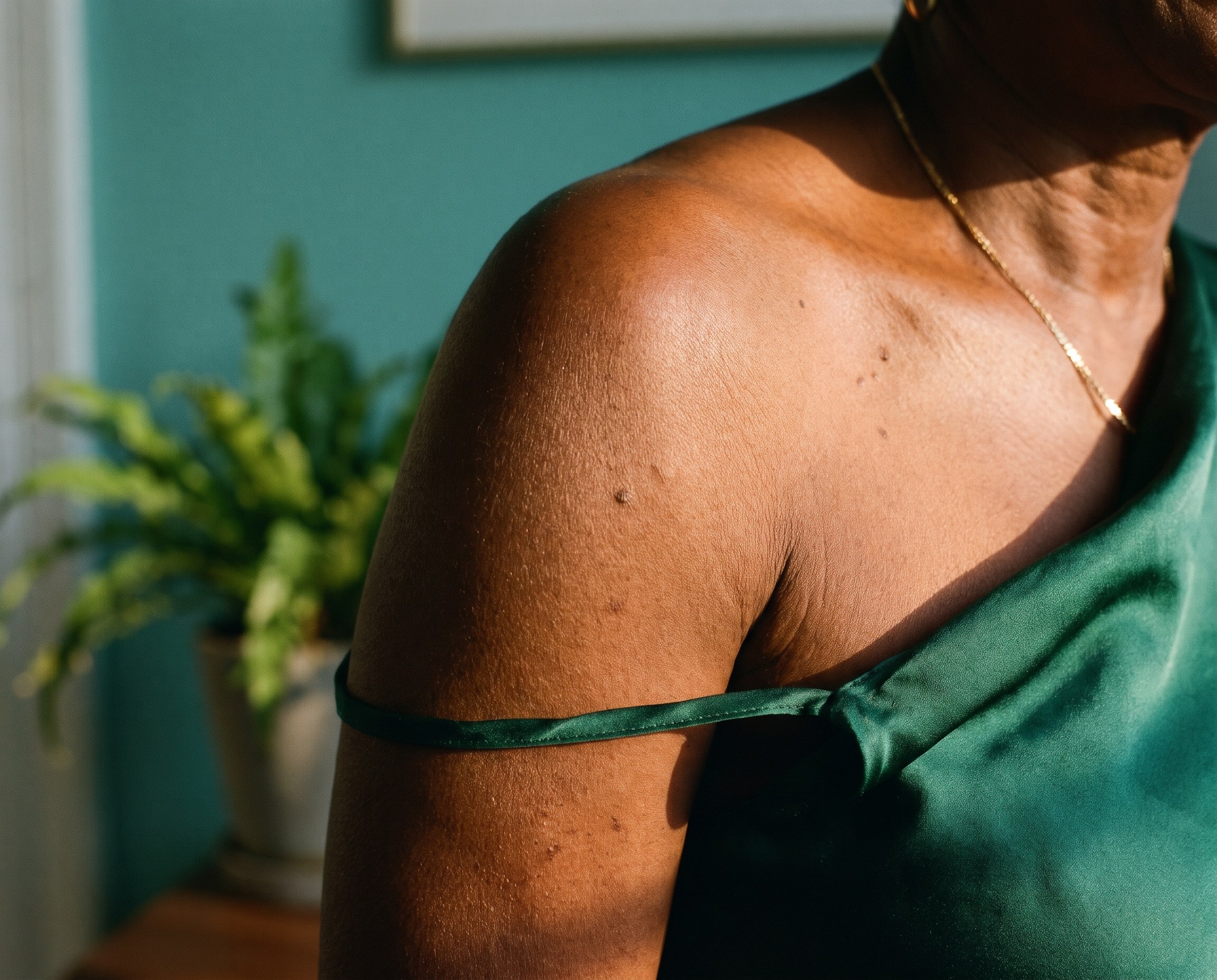
Texture usually follows close behind tone. Pores can look larger as the skin around them loses firmness, especially on the cheeks and nose. The surface may feel rougher, and makeup can catch on it in ways it didn’t before. Many women with deeper skin also notice an ashy, grayish cast when skin is dry, which is really a sign of a weak moisture barrier showing through. Because darker skin can look dull for both pigment and dryness reasons, it’s easy to blame one problem when the other is doing the damage. A good moisturizer often brightens deep skin more than people expect, simply because it fixes the surface that light bounces off.
Advertisement
There’s also a texture change that’s specific to darker skin. Small, dark, raised bumps called dermatosis papulosa nigra tend to appear on the cheeks, around the eyes, and on the neck, and they increase with age. They’re harmless and very common, and they often run in families. Seborrheic keratoses, the waxy, stuck-on looking growths that show up on many older adults, also appear in skin of color. Neither one is a problem you can fix with a cream. A dermatologist can remove them, but the method matters, because aggressive treatment can leave light or dark marks behind.
I’d add one more texture issue that gets overlooked. Years of picking, squeezing, or treating breakouts too hard can leave shallow scars and uneven patches. On deeper skin those spots tend to hold color, so they look like texture and tone problems at the same time. Treating them takes patience and a gentle hand. The common thread across all of these changes is that darker skin rewards calm, steady care and punishes harsh shortcuts.
Where do wrinkles and sagging fit in?

They still arrive. They just tend to come later, and when they do, they often look different. Instead of fine crinkles across the cheeks, many women with deeper skin notice changes in shape first. The fat pads in the midface slowly slide downward, the area under the eyes hollows out, and the folds from the nose to the corners of the mouth get deeper. The jawline may soften into jowls. The Vashi review describes these shifts in Black and Hispanic skin, including more prominent midface aging and laxity, along with less of a tendency toward lip thinning.
The MOSAIC survey lines up with this. Under-eye bags and sagginess topped the list of concerns at 59 percent, and sagging skin came in at 56 percent. Those numbers matter because they push back on a common assumption. Darker skin isn’t immune to aging just because the forehead stays smooth. The changes move from the surface into the structure underneath, and they can catch people off guard because no one told them to expect it.
This is where I’d push back a little on the usual advice. A lot of anti-aging marketing aimed at women of color focuses almost entirely on dark spots. That makes sense for the first decade or two of visible aging. But once you’re in your fifties and beyond, firmness and volume deserve just as much attention as tone. Collagen support, good sleep, steady weight, and sun protection all play a part in how the face holds its shape over time.
What does aging on darker skin look like after 60?

By your sixties, the picture usually includes everything at once. Tone changes from earlier decades are still there, often settled into a softer, more general unevenness. Dryness tends to increase after menopause as oil production drops and the skin barrier weakens, and on deep skin that dryness shows up as ashiness, flaking, and a dull surface. Lines finally start to appear, especially around the eyes and mouth. Sagging and hollowing become more noticeable. And the dark raised bumps of dermatosis papulosa nigra can become more numerous on the face and neck.
The good news is that mature darker skin often responds well to a simple, comfortable routine. Rich creams with ceramides, cholesterol, fatty acids, and glycerin can do a lot for both ashiness and fine lines. Thinner, older skin is more easily irritated, and irritation on deep skin can lead to new dark marks, so gentleness matters even more now than it did at forty. That means fewer exfoliating acids, lower-strength retinoids used a few nights a week, and patch testing anything new. It also means paying attention to the neck and chest, which show dryness and pigment changes just like the face.
I also think it’s worth saying plainly that it’s never too late to start. Pigment can still fade with consistent care in your sixties and seventies, though it takes months rather than weeks. Barrier repair can make skin look brighter and feel better within a few weeks. And daily sun protection still slows further damage at any age. If you’ve spent decades thinking your skin didn’t need much because it didn’t wrinkle, this is a fine time to give it some attention.
Which ingredients help even tone without causing new dark spots?
The rule for deeper skin is simple. Anything that irritates can cause the very problem you’re trying to fix. So the best ingredients for tone are the ones that work steadily without stinging, peeling, or redness. Niacinamide is a strong starting point. It helps reduce the transfer of pigment to the surface of the skin, supports the barrier, and is well tolerated at moderate levels. Azelaic acid is another good option, since it calms inflammation and targets overactive pigment cells without bleaching normal skin.
Vitamin C helps with brightness and offers antioxidant protection during the day. Stable forms like ascorbyl glucoside or magnesium ascorbyl phosphate tend to be gentler than high-strength pure vitamin C. Tranexamic acid has gained attention for melasma and stubborn discoloration, and it’s showing up more often in serums. Licorice root extract, alpha arbutin, and kojic acid can also help over time. Retinoids remain useful for both tone and firmness, but they need a slow start on darker skin, because the redness and peeling they cause can trigger new marks.
Hydroquinone deserves a mention because it’s been used for decades to treat dark spots. In the United States it’s now available only by prescription, and long-term or unsupervised use has been linked to a rare darkening condition called ochronosis that’s more of a concern in deeper skin. If you and a dermatologist decide to use it, it should be for a limited time and under guidance. For most people, a steady routine built on gentler ingredients, plus sun protection, will do more good over the long run. Expect to wait at least two to three months before judging results.
Why does sunscreen matter so much for darker skin?

Melanin gives some protection, but it’s not enough to prevent pigment changes, and that’s the part of aging deeper skin is most prone to. Daily broad-spectrum sunscreen of SPF 30 or higher helps slow new dark spots and keeps existing ones from getting darker. Without it, every brightening product you use is fighting uphill. The other piece is visible light, which ordinary sunscreens don’t block well. Tinted sunscreens that contain iron oxides add that extra coverage.
Dermatologist Susan Taylor has recommended looking for iron oxide at 3 percent or more, as reported by MDedge at https://www.mdedge.com/fedprac/article/263329/pigmentation-disorders/spf-only-start-when-recommending-sunscreens. The challenge is that iron oxide is usually listed as an inactive ingredient, so the exact amount isn’t always on the label. Shade range is another real problem. A 2022 analysis cited in the same article found that only 38 percent of tinted sunscreens came in more than one shade, which leaves many women with deeper skin stuck with a tint that looks gray or chalky. It’s worth trying samples until you find one that blends, because a sunscreen you actually like is one you’ll wear every day.
What should you know before booking professional treatments?
Not every popular treatment is a good fit for deeper skin. Some lasers and light devices are absorbed by melanin, which raises the risk of burns, light patches, or new dark spots. Intense pulsed light, often sold as a photofacial, is generally not recommended for deeper skin tones for this reason. Chemical peels can help with tone and texture, but many dermatologists favor a series of gentle peels over one strong one. Some laser wavelengths are safer for darker skin, and so are carefully done microneedling treatments. The safest choice depends on the specific concern and the skill of the person doing the work.
That’s why the most important step is finding a provider who has real experience treating medium and deep skin. Ask how many patients with your skin tone they treat. Ask what they do to prevent post-inflammatory hyperpigmentation before and after a procedure. A good provider will often have you protect your skin from the sun for weeks ahead of time, and may pause retinoids for several days before a peel or laser. If someone promises dramatic results in one session, I’d be cautious. On deeper skin, slow and steady is what actually works.
FAQs
Is it true that darker skin doesn’t age?
No. Darker skin often shows wrinkles later because melanin and a thicker dermis offer some protection from sun damage. But it still ages, usually through uneven tone, dullness, texture changes, and later through sagging and volume loss. The changes look different, so they’re easy to miss if you’re only watching for lines.
Why do dark spots last so long on deeper skin?
The pigment cells in deeper skin respond strongly to inflammation, so they produce more pigment after a breakout, scratch, or irritation. That extra pigment can sit in the skin for months. Daily sunscreen, gentle care, and ingredients like niacinamide or azelaic acid help them fade faster. Picking or scrubbing tends to make them worse.
Can I use retinol if I have darker skin?
Yes, and it can help both tone and firmness. Start with a low strength two or three nights a week, apply it over or after moisturizer if your skin is sensitive, and increase slowly. If you see redness or peeling, back off, because irritation can cause new dark marks.
What causes the small dark bumps on my cheeks and neck?
They’re often dermatosis papulosa nigra, a harmless condition that’s common in darker skin and tends to increase with age. Creams won’t remove them. A dermatologist with experience in skin of color can remove them safely if they bother you.
Do I really need a tinted sunscreen?
If you’re dealing with melasma or uneven tone, a tinted sunscreen with iron oxides adds protection against visible light that regular sunscreens don’t cover well. If you’re mainly preventing future damage, any broad-spectrum SPF 30 or higher that you’ll wear daily is a good start. The best sunscreen is still the one you’ll use every morning.

Aging on darker skin doesn’t follow the script most of us were handed. It starts with color and texture, moves into shape and volume, and saves lines for later. That doesn’t make it easier or harder, just different. When you care for skin based on how it’s really changing, the routine gets simpler. Protect it from light, keep it calm, feed the barrier, and give tone treatments the time they need. Your skin has been telling you its story for years, and it’s worth listening to the version it’s actually telling.
Related Posts