Jun
If you click on links we provide, we may receive compensation.
Research published in Scientific Reports found that postmenopausal skin contains significantly lower levels of ceramides – the lipid molecules that act as mortar between the skin’s outermost cells – with shorter chain lengths compared to premenopausal skin. Those shorter, less robust ceramides translate directly into a weakened barrier, which means water escapes more quickly and irritants get in more easily. That is not a minor cosmetic inconvenience. It is a structural change to your skin driven by one of the biggest hormonal shifts of your life. Estrogen, which has been quietly orchestrating your skin’s health for decades, begins to decline sharply in perimenopause and falls steeply through menopause itself. The dryness, tightness, and flaking that many women notice in their late 40s and 50s is not just aging – it is a specific biological event, and it responds best to a specific approach. (Source: https://www.nature.com/articles/s41598-022-26095-0)
Why does menopause make skin so dry?
Estrogen is far more involved in skin biology than most people realize. It binds to receptors throughout the dermis and epidermis, where it regulates collagen production, sebaceous gland activity, skin thickness, and the synthesis of hyaluronic acid – the molecule that keeps skin plump and hydrated from within. When estrogen levels drop, all of these processes slow down simultaneously. Studies suggest that women lose up to 30 percent of their dermal collagen within the first five years after menopause, then continue to lose roughly 2 percent per year after that. That collagen loss reduces the dermis’s water-holding capacity, making skin thinner and less able to stay hydrated. The epidermis – the skin’s outer layer – also thins, and cell turnover slows, leaving older, drier cells on the surface longer than they should be. The result is skin that looks and feels perpetually parched, no matter how much water you drink.
Sebum production falls alongside estrogen. Sebaceous glands, which produce the natural oils that lubricate the skin and help seal in moisture, are highly sensitive to hormonal cues. When those cues change, oil output drops noticeably. For women who once had normal or oily skin, this shift can be particularly disorienting – skin that never needed heavy moisturizer suddenly craves it. Meanwhile, progesterone levels also decline during menopause, and the relative shift in the estrogen-androgen balance can introduce new problems like sensitivity and reactivity alongside the dryness. It is a layered, interconnected process, and understanding it helps explain why the solutions need to be equally multi-layered. Simply adding a richer moisturizer is often not enough on its own, though it is certainly a worthwhile start.
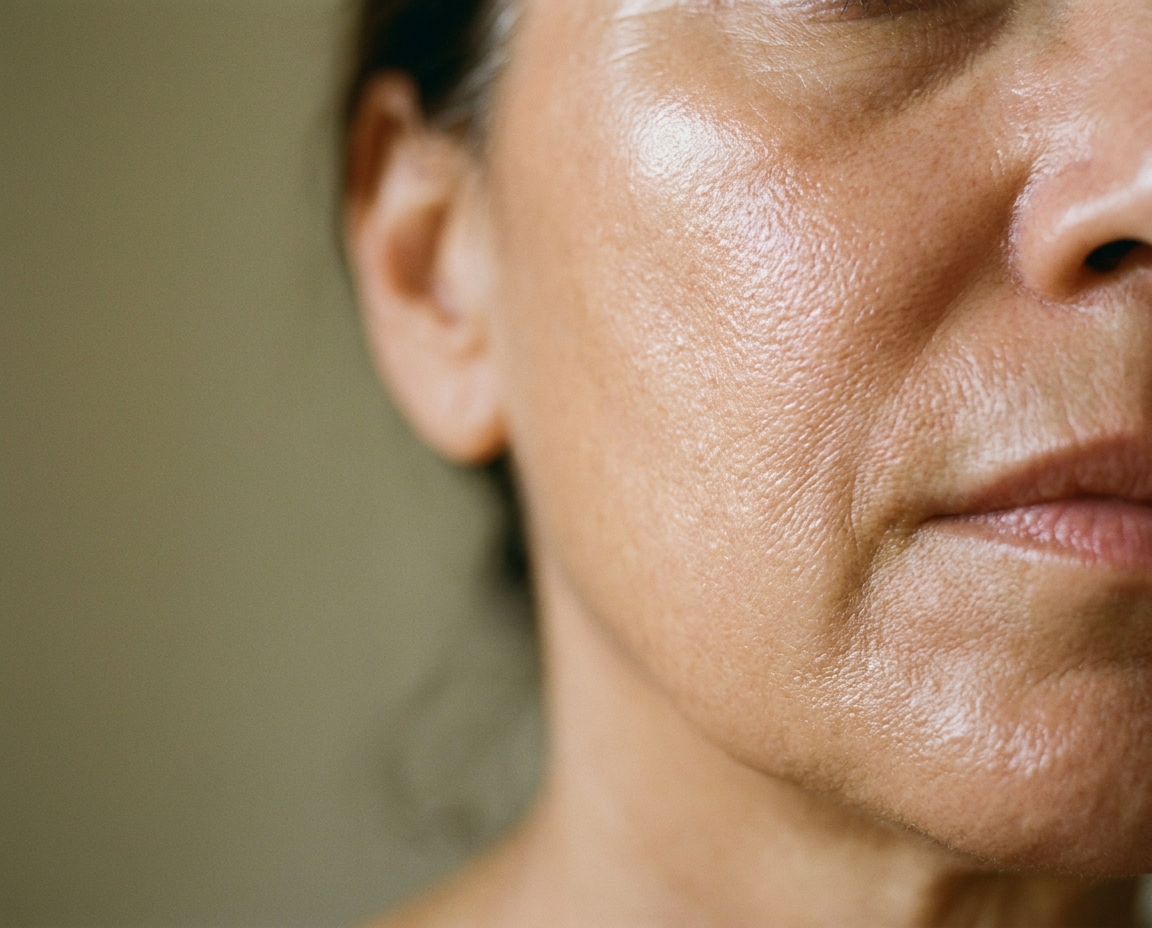
Is menopausal dry skin actually different from ordinary dry skin?
Yes – and the distinction matters because it changes what actually works. Ordinary dry skin is typically a surface-level issue: the outermost layer lacks water or oil, which a standard emollient or humectant moisturizer can address reasonably well. Menopausal dry skin is a systemic hormonal shift with structural consequences at the cellular level. The ceramide disruption described in the Scientific Reports research is one clear example. Because the ceramide profile of menopausal skin changes – not just in quantity but in chain length – the barrier behaves differently, losing water more rapidly through a process called transepidermal water loss, or TEWL, and reacting more intensely to products, weather, and temperature changes. A lightweight lotion that worked perfectly at 35 may do almost nothing at 55, because the skin’s fundamental architecture has shifted. Women often describe using more product, more often, with diminishing returns – that frustration is real and has a physiological explanation.
The inflammatory threshold also lowers during menopause. Estrogen has anti-inflammatory properties, so when it declines, skin becomes more reactive – more prone to redness, stinging, and sensitivity to previously tolerated ingredients. Fragrances that were once fine can suddenly cause irritation. Exfoliants that felt good at 40 may be too aggressive at 55. This combination – a weakened barrier, a lowered inflammatory threshold, reduced sebum, and an altered ceramide composition – means that menopausal skin demands ingredients that actively repair rather than simply coat the surface. The dry skin you experienced in your 30s and what you are experiencing now are genuinely different conditions, even if they look similar from the outside.
Which ingredients actually help menopausal skin?
Ceramides are probably the single most important ingredient category for menopausal dry skin, precisely because of what the research shows about the ceramide deficit in postmenopausal skin. Look for products that list multiple ceramide types – ceramide NP, AP, and EOP are among the most common – since formulas that blend several types more closely mimic the skin’s natural lipid matrix. Topical ceramides do not restore internal ceramide synthesis – that is a hormonal process – but they reinforce the barrier from the outside, reducing TEWL and giving the skin the structural support it needs to hold on to moisture. Hyaluronic acid is a logical partner ingredient. Since estrogen decline reduces the skin’s natural production of hyaluronic acid, applying it topically helps compensate. Choose a serum or essence that uses multiple molecular weights of HA – low-molecular-weight molecules penetrate deeper, while larger molecules sit on the surface and provide immediate plumping and surface hydration.
Niacinamide – vitamin B3 – earns a strong recommendation for menopausal skin because it works on multiple fronts at once. It boosts the skin’s natural ceramide and lipid synthesis, reduces transepidermal water loss, calms redness and sensitivity, and helps even out the uneven pigmentation that often accompanies menopause. Research suggests concentrations between 4 and 10 percent can increase skin elasticity meaningfully. A clinical trial involving 44 women found that two months of combined niacinamide and hyaluronic acid treatment produced measurable improvements in fine lines, wrinkles, luminosity, smoothness, and plumpness – exactly the constellation of concerns menopausal skin tends to present (https://pmc.ncbi.nlm.nih.gov/articles/PMC11251187/). Squalane – not to be confused with squalene – is another standout. It is a stable, lightweight oil that closely mimics the skin’s own sebum, making it effective at replenishing the lipid layer that shrinks during menopause. It absorbs without feeling heavy and is unlikely to cause breakouts or sensitivities.
Peptides are small chains of amino acids that signal the skin to produce more collagen and elastin. They are particularly valuable for menopausal skin because they work with the skin’s own biology to stimulate repair rather than simply coat the surface. Look for matrikine peptides like palmitoyl pentapeptide-4 or palmitoyl tripeptide-1 in serums and moisturizers targeting firmness and texture. Retinoids – the vitamin A family that includes over-the-counter retinol and prescription tretinoin – remain among the most clinically supported ingredients for collagen stimulation and skin renewal. They are still valid options for menopausal skin, but with an important caveat: already-sensitized, barrier-compromised menopausal skin may not tolerate the concentrations that worked in earlier years. Starting low – around 0.025 to 0.05 percent retinol – and introducing it slowly, perhaps two nights per week initially, gives the barrier time to adapt. If persistent redness or flaking occur, encapsulated retinol or bakuchiol are gentler alternatives worth considering.
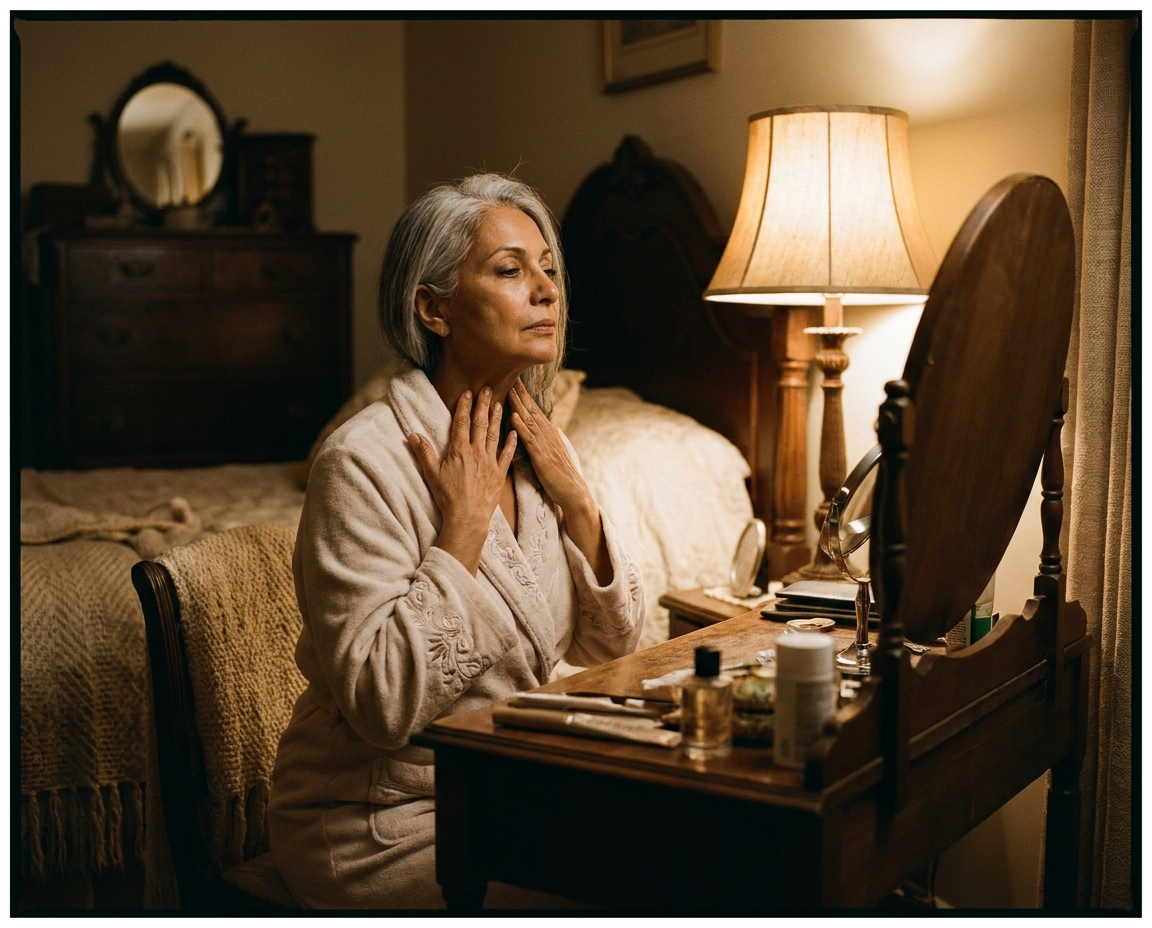
What should a menopausal skincare routine actually look like?
Cleansing deserves more attention than it usually gets. Many standard cleansers – including those marketed as gentle – contain sulfates or surfactants aggressive enough to strip the already-diminished lipid layer from menopausal skin. A cream or oil cleanser, or a low-foaming milky formula, preserves far more of the skin’s natural oils while still removing sunscreen and makeup effectively. Limiting face washing to once a day at night – rinsing with lukewarm water in the morning – is often enough for skin that is not producing excess oil. Water temperature matters more than most people think. Hot water accelerates lipid loss from the skin surface, and the same logic applies to showers: turning down the temperature even slightly makes a meaningful difference in full-body dryness over time. Lukewarm to cool water is better for barrier integrity across the board.
Advertisement
The classic layering principle – thinnest to thickest, humectants before emollients before occlusives – remains sound for menopausal skin, but the emphasis shifts toward richer formulas at each step. A hyaluronic acid serum applied to damp skin draws moisture into the epidermis before it is sealed in by a ceramide-rich moisturizer. For daytime, SPF is non-negotiable. Post-menopausal skin is thinner and more vulnerable to UV-induced collagen breakdown, and the uneven pigmentation that accompanies estrogen decline is worsened by sun exposure. A broad-spectrum SPF 30 or higher as the final morning step protects both appearance and long-term skin health. At night, an overnight mask or a rich sleeping cream with peptides, ceramides, and squalane provides extended repair support while the skin’s own renewal processes are most active. Applying a facial oil over a moisturizer as the final evening step – oils work well as occlusives to lock everything underneath in – is a practical upgrade for very dry nights or dry climates.
Does what you eat and drink affect menopausal skin dryness?
What goes on the skin matters enormously, but so does what goes into the body. Hydration is the most obvious factor – adequate water intake supports skin moisture, though it is not a stand-alone fix for menopausal dryness. Omega-3 fatty acids, found in fatty fish like salmon and mackerel, walnuts, flaxseed, and chia seeds, play a meaningful role in maintaining the skin’s lipid barrier. They help regulate the inflammatory processes that become more prominent when estrogen declines, and they support sebum quality – making the oils the skin does produce more effective at moisturizing the surface. Including these foods regularly, rather than as an occasional supplement, appears to provide the most consistent benefit for skin health alongside topical care.
Phytoestrogens are another interesting dietary tool. These plant-based compounds – found in soy, flaxseed, chickpeas, and edamame – weakly mimic estrogen in the body. The research on their direct effect on skin dryness is still developing, but some studies suggest they offer modest benefits for skin hydration and elasticity, particularly for women who are not candidates for hormone therapy. They are not a replacement for topical skincare, but they are a sensible dietary addition for women looking to support their skin from multiple angles. Alcohol and high-sugar diets can worsen inflammation and dehydration, so moderating those – particularly alcohol, which is a diuretic and directly affects skin moisture – is worth factoring in alongside dietary additions.
Environmental controls often get overlooked entirely. Heated indoor air in winter strips moisture from skin rapidly, and maintaining a humidity level of 40 to 60 percent in the home – particularly in the bedroom, where you spend several hours each night – helps skin stay hydrated while you sleep. A cool-mist humidifier in the bedroom is a straightforward and inexpensive investment that many dermatologists recommend for menopausal dryness. Keeping showers short and applying a rich body moisturizer immediately while skin is still slightly damp – within two minutes of getting out – is one of the most effective ways to address full-body dryness. Products containing urea, ceramides, or shea butter applied at this step work particularly well, because they are used at the moment when skin is most receptive to absorbing them.

What do women over 60 need to know about menopausal skin?
By the time women reach their 60s, many are well past the acute transition of menopause, but the skin consequences of estrogen loss continue to compound. The skin is typically thinner, with less subcutaneous fat providing cushioning, and the collagen deficit that began in perimenopause has had years to deepen. Retinoids may still be appropriate and beneficial at this life stage, but the starting concentration should be even lower than in the early 50s, and the introduction even more gradual – once a week to start is not excessive caution. The priority at 60 and beyond shifts somewhat from prevention to active repair: rebuilding the barrier with rich, ceramide-forward formulas, supporting collagen with peptides, and protecting aggressively from UV exposure. Sun avoidance and broad-spectrum sunscreen take on additional urgency because skin this thin is less able to repair UV damage efficiently and more prone to the accelerated collagen breakdown that unprotected sun exposure triggers.
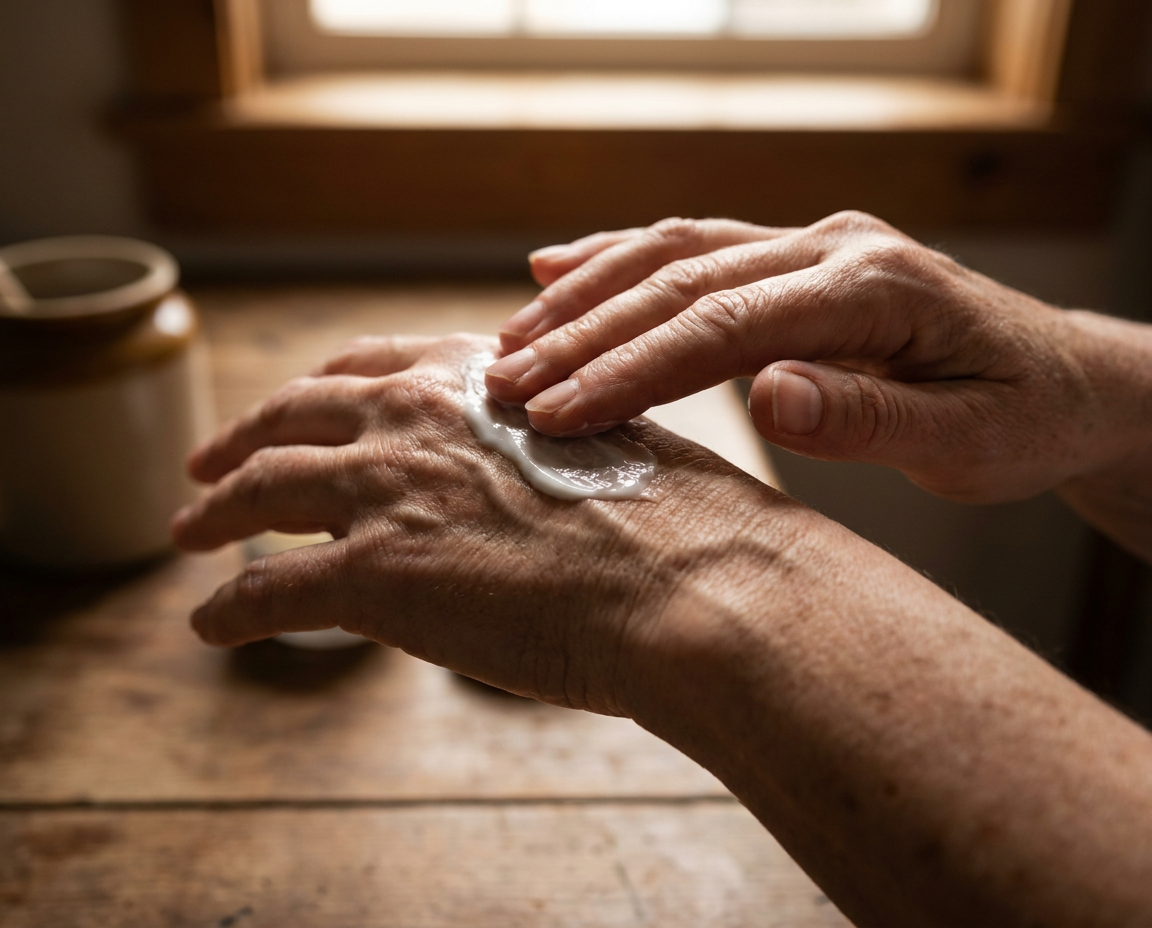
Women in their 60s and beyond often notice that dryness extends well beyond the face to the neck, decollete, hands, and body – areas that are frequently underserved by targeted skincare attention. The same ceramide-and-peptide approach that applies to the face is equally valid for the neck and chest, which show significant collagen and lipid loss and benefit from regular application of the same types of actives. Hands age visibly during and after menopause because the skin there is thin and subject to frequent washing, which strips lipids with every cycle. A rich hand cream applied after each wash – ideally one with SPF for daytime use – is practical maintenance, not excessive. For full-body skin, oat-based or ceramide-rich body lotions used daily are more effective than occasional use of richer products. Consistency matters more than the price point here.
When should you see a dermatologist?
Some menopausal skin changes go beyond what even the best topical routine can address, and a board-certified dermatologist is the right resource for those situations. Persistent itch – called pruritus – is actually common during menopause due to reduced barrier integrity and changes in nerve sensitivity, and it can become distressing enough to affect sleep and daily comfort. A dermatologist can recommend prescription-strength topicals, rule out other causes, and guide you toward the right treatment plan. Severe barrier disruption leading to frequent flares, raw patches, or eczema-like symptoms also warrants professional input rather than self-treatment with progressively richer creams. Prescription tretinoin remains one of the most evidence-backed topicals available for menopausal skin changes, and a dermatologist visit is the route to accessing it safely and at the right concentration for your current skin.
If topical interventions are not enough, some women choose to explore hormone therapy with their physician – and the science gives them good reason to consider it. The Scientific Reports study found that the ceramide changes associated with menopause were largely prevented in women using hormone replacement therapy, which speaks to just how central estrogen is to skin barrier health (https://www.nature.com/articles/s41598-022-26095-0). That is a decision that involves far more than skincare and belongs in a conversation with a physician. But it is worth knowing that the option exists and that there is solid evidence behind its dermatological benefits. In the meantime, a dermatologist can help you get as far as possible topically – and for many women, that goes surprisingly far.
FAQs
Can drinking more water fix menopausal dry skin?
Water intake supports overall skin health and is worth prioritizing, but it is not sufficient on its own to address the structural changes that menopause causes. The problem is not primarily lack of water in the diet – it is a weakened barrier that cannot hold moisture, reduced ceramide production, and lower sebum output. Topical barrier repair with ceramides, hyaluronic acid, and emollients is necessary alongside good hydration habits, not instead of them.
Is retinol safe for sensitive menopausal skin?
Yes, but it requires a careful approach. Start at the lowest concentration available – around 0.025 to 0.05 percent – and use it no more than two nights per week initially. Applying it over a layer of moisturizer rather than directly onto bare skin reduces the risk of irritation. Many women find encapsulated retinol less irritating than standard retinol, and bakuchiol is a plant-based alternative with some supportive evidence for women whose skin cannot tolerate any form of retinoid.
Do ceramide creams actually replace the ceramides lost during menopause?
Not in the sense of restoring hormonal ceramide synthesis – that is an internal process. What topical ceramides do is supplement the barrier from the outside, helping reduce transepidermal water loss and reinforce the skin’s protective function. The effect is real and clinically meaningful, even if it is not the same as restoring internal production. Think of topical ceramides as structural scaffolding rather than a hormonal replacement.
What is the best time of day to moisturize for menopausal skin?
Both morning and evening applications matter, but the evening application is arguably more impactful for very dry skin. The skin’s barrier repair activity is most active at night, and applying a rich moisturizer or sleeping cream before bed gives it hours to work without interference from sunscreen, makeup, or environmental exposure. A second, lighter application in the morning – under SPF – rounds out the routine and helps lock in morning hydration.
Should menopausal women avoid fragrance in skincare?
As a general rule, yes. Fragrance is a common sensitizer even in younger skin, and menopausal skin – with its lower inflammatory threshold and compromised barrier – is more susceptible to fragrance-triggered reactions. Fragrance-free does not mean unpleasant or medicinal; most ceramide-rich, peptide-forward formulas recommended for menopausal skin are fragrance-free as a matter of design. When in doubt, fragrance-free is the safer default.
Menopausal dry skin is one of those changes that catches many women off guard, partly because the conversation around menopause has historically focused so heavily on hot flashes and mood shifts that the skin side effects get crowded out. The good news is that the biology is increasingly well understood, and the ingredients and routines that help are accessible – not exotic or expensive. Ceramides, hyaluronic acid, niacinamide, squalane, and a carefully introduced retinoid go a long way. The lifestyle pieces – omega-3s, a bedroom humidifier, cooler showers, consistent moisturizing right after washing – add up faster than most people expect. And when things feel beyond the reach of the bathroom cabinet, a dermatologist can calibrate treatments to exactly where your skin is now, not where it was a decade ago. That is the approach that actually works.
Related Posts