Sep
If you click on links we provide, we may receive compensation.
One in five Americans will develop skin cancer in their lifetime – and that statistic comes from the American Academy of Dermatology, not a moisturizer brand with a marketing budget. Yet the same science that underpins that number also points to a surprisingly simple fix: a consistent routine built on just three products. Dermatologists have been saying it for years. The average bathroom shelf, meanwhile, looks like a chemistry lab, stacked with serums, toners, essences, exfoliating acids, face oils, and eye creams. Products accumulate, costs climb, and yet many people still feel like something is missing. The missing thing is rarely another product. More often, it is consistency with the basics.
The global skincare market is valued at well over $180 billion, and much of that money goes toward products that layer on top of a foundation people never properly built. Every credible dermatologist will point to the same starting line: a gentle cleanser, a good moisturizer, and a broad-spectrum sunscreen are the core of any effective routine, regardless of age, skin type, or budget. Everything else is optional. These three products handle the fundamentals – cleansing without damaging the skin barrier, maintaining hydration, and protecting against UV radiation, which is the leading driver of both premature aging and skin cancer. Once those are solid, additions like retinol or vitamin C serums have something healthy to work with.
Why Does a Shorter Routine Often Work Better?
There is a real cost to overloading your skin. Using too many active ingredients at once – vitamin C alongside retinol alongside exfoliating acids – can damage the skin barrier, cause irritation, and actually set progress back rather than forward. A compromised barrier means skin that is more reactive, more prone to breakouts, and less able to retain moisture. Simplifying to three well-chosen products is not a beginner approach; it is what many dermatologists use themselves. The products do the work, not the quantity.
When you use fewer products, you also know exactly what is working and what is not. If your skin improves, you can attribute it clearly. If something causes a reaction, you narrow it down fast. Complex multi-step routines make it nearly impossible to identify problem ingredients, and they introduce more opportunities for incompatible combinations to irritate skin. A simple three-product approach also removes the decision fatigue that causes people to skip their routine entirely – and consistency is the single biggest factor in whether any skincare routine actually delivers results. A perfect routine you follow twice a week is far less effective than a simple one you do every morning and evening without thinking about it.
What Makes a Cleanser Worth Using Every Day?
Your cleanser is the first product you use and, because of that, it sets up everything that comes after. A bad cleanser – one that strips the skin’s natural oils or disrupts its pH – can undermine every moisturizer and serum applied on top. Healthy skin maintains a slightly acidic pH between 4.5 and 5.5. This acidity is not incidental; it is the environment in which beneficial skin bacteria thrive and harmful bacteria struggle to take hold. Traditional bar soaps often register at pH 9 to 11, alkaline enough to cause measurable disruption to that balance. Research published in the Journal of Cosmetic Dermatology (2024) found that skin microbiome diversity is the single strongest predictor of barrier function, and that diversity is directly threatened by harsh cleansers. https://onlinelibrary.wiley.com/doi/10.1111/jocd.16557

What you actually want is a gentle, sulfate-free cleanser that removes makeup, sunscreen residue, and the day’s pollution without stripping sebum below healthy levels. Synthetic detergents – sometimes called syndets – are formulated at a more skin-compatible pH range of 5 to 7 and are widely recommended by dermatologists for daily use, especially for people with sensitive or aging skin. Gel cleansers tend to work well for oily and combination skin types, while cream or milk cleansers are usually better for dry and mature skin because they cleanse while providing some mild moisturizing. Foaming formulas containing sodium lauryl sulfate should generally be avoided – they feel satisfying in the moment but consistently outperform other formats at stripping the skin barrier of its protective lipid layer.
Two cleanses per day is the standard recommendation: once in the morning to remove what accumulates on skin overnight, and once in the evening to clear sunscreen, makeup, and environmental debris. Some people find that a single evening cleanse works well, especially if skin is very dry – rinsing with water only in the morning is a reasonable alternative for that group. The key is that whatever you choose, you do it every day. Occasional deep-cleansing combined with days of nothing is harder on skin than a gentle daily routine. Your skin has a rhythm; disrupting it repeatedly prevents it from stabilizing. Think of it less as washing away impurities and more as maintaining a living system that works better when treated predictably.
Why Is Moisturizer More Important as You Age?
Moisturizer is the product people are most tempted to skip when skin is oily, and most likely to underuse when skin is dry. Both are mistakes. Even oily skin benefits from a lightweight, non-comedogenic moisturizer because oil and water are separate things – skin can produce excess sebum while simultaneously being dehydrated at the surface. The excess oil production is often the skin’s response to that dehydration. Giving skin the moisture it needs often normalizes oil production over weeks of consistent use. Dry skin, meanwhile, needs a more substantial formula that can genuinely repair the barrier rather than simply sitting on top of it.
The most effective moisturizers work across three mechanisms simultaneously. Humectants – ingredients like hyaluronic acid and glycerin – draw water from the environment and from deeper layers of skin toward the surface. Occlusives – ingredients like petrolatum, dimethicone, and squalane – form a physical layer that slows water from evaporating off the surface. Emollients – ingredients like fatty acids and plant oils – fill the microscopic gaps in the skin’s outer surface, improving its texture and flexibility. The best moisturizers combine all three in ratios tuned to the intended skin type. A formula for dry skin skews heavier on occlusives; one for oily skin relies more on humectants in a lightweight gel base.
Advertisement

Ceramides deserve close attention because research shows their decline is one of the most clinically significant changes in aging skin. Ceramides are sphingolipids that make up approximately half of the stratum corneum‘s lipid composition – they are the mortar between the bricks of your outermost skin layer. Studies have found that ceramide levels can drop by as much as 40% by a person’s 30s and 60% by their 40s, with continued losses into later decades. Research published in the British Journal of Dermatology found that ceramide-rich moisturizers significantly reduced transepidermal water loss and improved skin hydration compared to standard emollients. https://pmc.ncbi.nlm.nih.gov/articles/PMC11915079/ A moisturizer that lists ceramides in its top ingredients is genuinely doing more for skin structure than one that does not.

What Should You Actually Look for in a Sunscreen?
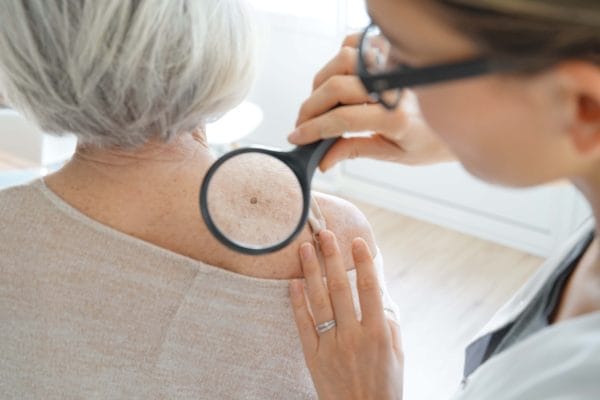
Sunscreen is the most impactful single product in any skincare routine, and the research on this is not even close. According to the Skin Cancer Foundation, one in five Americans will develop skin cancer in their lifetime, with approximately 9,500 people diagnosed every single day. https://www.skincancer.org/skin-cancer-prevention/sun-protection/sunscreen/ Regular daily use of SPF 15 sunscreen, when applied as directed, reduces the risk of squamous cell carcinoma by approximately 40% and cuts melanoma risk by 50%. An SPF 30 blocks 97% of UVB radiation – the kind responsible for sunburn and contributing to skin cancer – while SPF 15 blocks 93%. But UVB is only part of the UV picture.
UVA rays, which range from 315 to 400 nanometers on the electromagnetic spectrum, penetrate deeper into the dermis than UVB rays and are primarily responsible for the photoaging that shows up as wrinkles, brown spots, and loss of skin firmness. UVA rays also pass through glass, which means you accumulate meaningful UV exposure sitting near a window or during a daily commute. This is exactly why the label ‘broad-spectrum’ matters. A sunscreen labeled broad-spectrum has been tested to confirm it protects against both UVA and UVB radiation. That is the minimum standard worth insisting on, paired with an SPF of at least 30. https://www.aad.org/media/stats-sunscreen

Chemical and mineral sunscreens both work effectively, and choosing between them is mostly a matter of preference and skin type. Mineral sunscreens – those using zinc oxide or titanium dioxide as the active ingredient – sit on top of the skin and reflect UV rays. They tend to be well-tolerated by sensitive skin and work immediately on application. Chemical sunscreens use organic compounds that absorb UV energy and convert it to heat; they are generally lighter and more cosmetically elegant, which makes them easier to use consistently because they do not leave a white cast. Whatever type you choose, apply it generously to your face, neck, and ears every morning, rain or shine. UV radiation reaches the skin through cloud cover and on overcast days.

How Do These Three Products Work Differently for Mature Skin?
Aging skin has genuinely different needs, and it is worth being specific about what changes. The skin barrier becomes measurably less efficient with age – research measuring transepidermal water loss after barrier stress found readings of 45.02 grams per square meter per hour in adults over 60, compared to 34.17 in the 18 to 39 age group. That is roughly 32% higher water loss from the same level of stress. Skin also produces less sebum as hormone levels shift, which means the protective lipid film that helps retain moisture gets thinner over time. Cell turnover slows, so the skin takes longer to shed dead cells and regenerate. And collagen production decreases with age, with losses accelerating particularly around menopause in people with female hormones.
These changes have direct implications for how to choose within each of the three product categories. For cleansers, cream or balm formulas work better for mature skin than gel or foaming options because they cleanse without accelerating the moisture loss that already happens faster with age. Avoid anything that leaves skin feeling tight after rinsing – that tightness is the barrier signaling that something has been stripped. For moisturizers, a richer formula with ceramides, cholesterol, and fatty acids – the three components that most closely mirror the skin’s own barrier lipids – will do far more than a lightweight lotion. Applying moisturizer immediately after washing, while skin is still slightly damp, improves how much moisture gets locked in rather than lost to the air.
For sunscreen, physical mineral formulas often work better on mature skin because they do not require the skin to absorb active ingredients, and they are less likely to trigger the sensitivity or flushing that some chemical filters produce in thinner, more reactive skin. Many people over 60 also find that a tinted mineral sunscreen does double duty – providing broad-spectrum protection while evening out skin tone, which means one fewer step and one fewer product to manage. And if retinol is on your radar, the three-product foundation needs to be stable and working before adding it. Retinol is the best-studied ingredient for stimulating collagen production and speeding cell turnover – both of which slow dramatically with age – but it works best and causes the least irritation on skin that is already well-moisturized and protected.

What Is the Right Way to Layer These Three Products?
Order matters because skin can only absorb what it is given access to. The rule is simple: apply products from thinnest to thickest consistency. In the morning that means cleanser first, then moisturizer, then sunscreen. The moisturizer goes on after cleansing while skin is still slightly damp – this seals in the water already on the surface rather than trying to add moisture to dry skin. Sunscreen goes on last in the morning and should never be mixed into your moisturizer. Applying them separately ensures both products remain at their intended concentration and cover your skin evenly. At night, the order is cleanser and then moisturizer – no sunscreen needed after dark, and a richer moisturizer than you might use in the morning can work well if your skin is on the drier side.
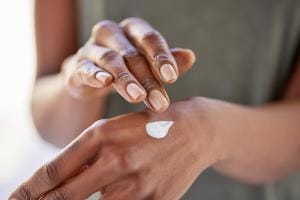
One of the most common mistakes is using too little product. Most people apply about a quarter of the sunscreen they need to achieve the stated SPF protection level. For the face and neck, a nickel-sized amount is the standard guideline – it should feel like slightly more than seems natural at first. Moisturizer works similarly: a thin film that absorbs immediately may feel good but may not be delivering the hydration or barrier support your skin actually needs. Skin should look visibly more hydrated after application, not just feel less tight. If your moisturizer disappears the moment you touch your face, try applying it on slightly damp skin or consider switching to a richer formula that has more occlusive ingredients to hold the moisture in place.
FAQs
Do I really need all three products if my skin looks fine?
Yes – and the reason comes down to prevention rather than correction. Sunscreen in particular delivers most of its value before you can see any damage. The photoaging and DNA changes that lead to wrinkles, brown spots, and skin cancer accumulate over years of unprotected exposure. By the time those changes are visible, the underlying damage has been building for decades. Using sunscreen when your skin looks fine is exactly when it is most effective.
Can I use a moisturizer with SPF and skip a separate sunscreen?
It depends on how you apply it. If you use a generous, even layer all over your face, neck, and ears and reapply every two hours when you are outside, a combined product can work. In practice, most people apply moisturizer too lightly and too unevenly to get consistent sun protection from it. A dedicated sunscreen applied after moisturizer gives you more control over coverage and dosage. Many dermatologists recommend the two-product approach for that reason, especially for anyone over 50 whose skin is seeing more cumulative UV exposure.
What if my skin is too oily for a moisturizer?
Oily skin still needs moisture – the oil and the water content of skin are separate things. Look for a gel or fluid moisturizer formulated for oily or combination skin, with ingredients like niacinamide and hyaluronic acid rather than heavy oils. These hydrate without adding to surface oiliness. Niacinamide specifically has research behind its ability to regulate sebum production over time, so a good lightweight moisturizer can actually reduce oiliness with consistent daily use, rather than making it worse.
How much should I expect to spend on these three products?
Very little, if budget is a concern. The active ingredients that matter – SPF filters, ceramides, hyaluronic acid, gentle surfactants – are available at every price point. CeraVe, La Roche-Posay, and Vanicream consistently appear in dermatologist recommendations and cost drugstore prices. A complete three-product routine can be built for under $30. Where price tends to matter more is in formulation texture – premium products are often more pleasant to use, which may make you more consistent. And consistency always matters more than product quality.
Is there anything else I should add once I have these three locked in?
Once cleanser, moisturizer, and sunscreen are a daily habit and your skin barrier feels stable, retinol is the most evidence-backed addition for anyone concerned about aging. It stimulates collagen production and accelerates cell turnover – both of which slow significantly after your 30s. Start with a low concentration two or three nights a week and always apply it over moisturizer rather than on bare skin. If your skin is still sensitive or reactive, get the basics working smoothly first before introducing any active ingredient.
These three products have been in every dermatologist’s toolkit for a reason. They are not exciting, and they do not promise visible results in seven days. But consistent use of a gentle cleanser, a barrier-supporting moisturizer, and a broad-spectrum SPF 30 sunscreen is what decades of clinical research consistently shows actually changes skin health over time. The most effective skincare routine is the one you actually do – and three products are a lot easier to do every day than twelve.
Related Posts