Mar
Beauty, Skincare, Trends & Opinions
Skincare Brands That Actually Understand Skin Over 60
If you click on links we provide, we may receive compensation.
Women lose up to 30 percent of their skin collagen in the first five years after menopause. After that, it keeps declining – roughly 2 percent every year. That single fact changes everything about how you should shop for skincare. Not because aging is a problem. But because the products designed for a 38-year-old simply will not do the same job for skin that has been through decades of hormonal shifts, UV exposure, and structural change.
Skin over 60 is thinner. It holds less moisture. It reacts faster and heals slower. Oil production has dropped, often sharply. Fine lines have settled into something deeper. Dark spots from years of sun exposure are more visible. And ingredients that felt fine a decade ago can now cause redness, stinging, or flaking. The biology is real, and it demands products built around it – not around vague promises of turning back the clock.
The good news? Some brands actually get it. Not the ones that slap “anti-aging” on a moisturizer and call it done. The ones that formulate with collagen loss, barrier fragility, and post-menopausal dryness as real design constraints. Here is what you need to know about them.
What Does Skin Over 60 Actually Need?
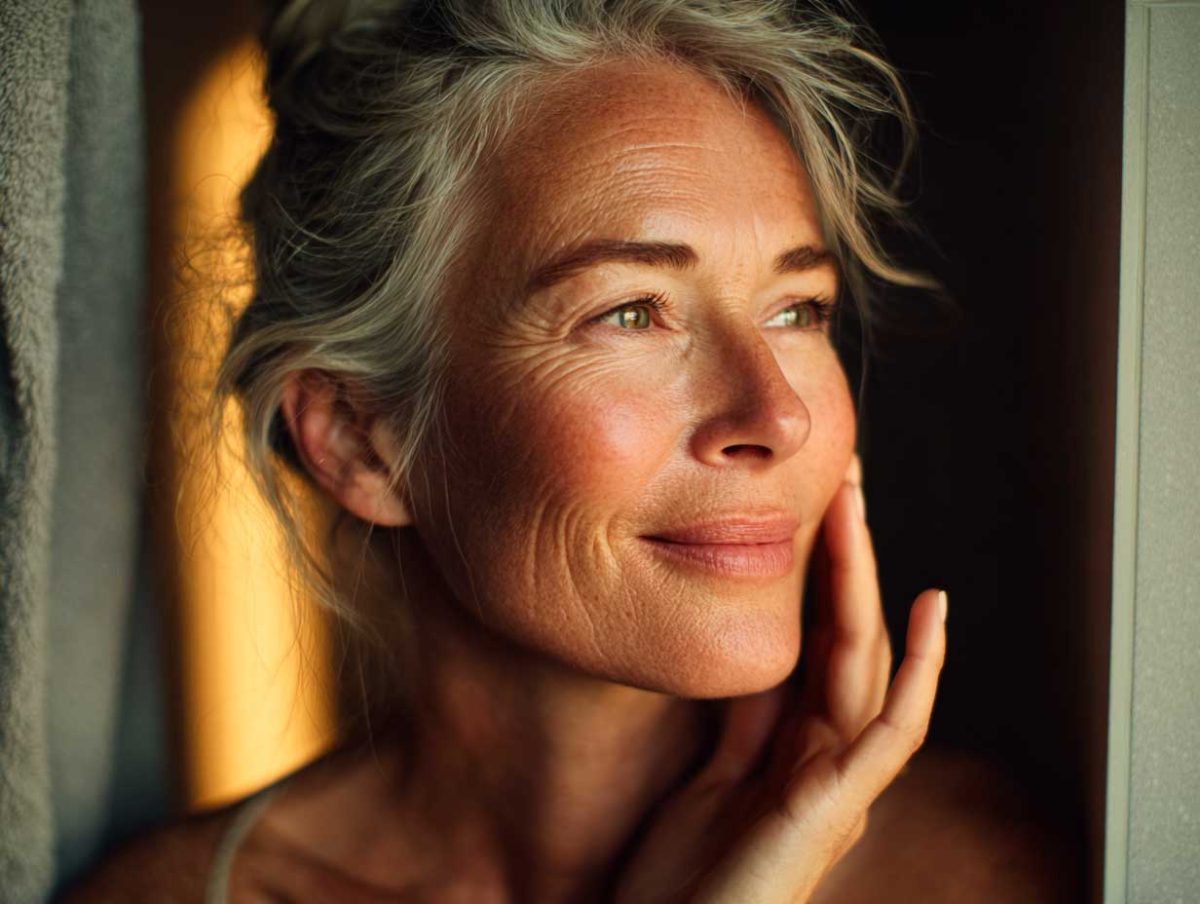
The goal shifts after 60. It is no longer about correction or transformation. It is about preservation and comfort. Skin produces less oil, which means its natural lubrication is mostly gone. The lipid barrier weakens. Transepidermal water loss increases – water escapes the skin faster than it can be replenished. You feel it as tightness after washing, roughness by midday, and that papery sensation that was not there ten years ago.
What works at this stage centers on barrier support, hydration retention, and gentle collagen stimulation. Ingredients like ceramides, peptides, niacinamide, bakuchiol, stabilized vitamin C, and low-dose retinol in soothing delivery systems tend to perform better than aggressive resurfacing. The skin still responds to good formulation. It just responds differently than it did at 40. Harsh actives that once tightened pores now cause peeling. Strong exfoliants that once worked now sting. Fragrance that never bothered you may now trigger redness.
Brands that specialize here recognize all of this. They design for comfort and resilience first. They build correction in around the edges, not as the headline promise. That distinction matters when you are reading labels and trying to figure out what will actually help.
Which Brands Actually Formulate for This Stage of Life?
Elizabeth Arden has long concentrated on visible aging concerns, particularly for women over 55. Its Prevage line is built around idebenone, a potent antioxidant designed to reduce oxidative stress – one of the main drivers of skin aging. The Ceramide Capsules are just as central to its positioning. Ceramide levels in skin drop with age, and replenishing them supports barrier repair and moisture retention. Elizabeth Arden leans into lipid replenishment and antioxidant defense with richer textures and messaging that speaks directly to lines, sagging, and loss of firmness.
Estee Lauder built its reputation on repair science and has invested heavily in research around skin longevity and cellular repair signaling for decades. Advanced Night Repair remains one of the most studied serums in prestige skincare. Their Re-Nutriv and Revitalizing Supreme+ lines combine peptides, hyaluronic acid, antioxidants, and barrier-supporting ingredients in formulas designed around dryness, visible sagging, and loss of radiance – the actual concerns of skin over 60. The downside for some is fragrance and price point. But in terms of research commitment to mature skin, they remain a serious player.
RoC built its entire brand identity around retinol and aging. Retinol remains one of the most evidence-backed topical ingredients for wrinkles and collagen stimulation, and RoC centers its formulations on controlled, stabilized delivery that reduces irritation while improving fine lines over time. This works well for those who can tolerate retinol. A slow introduction schedule matters – start twice weekly, not nightly. But if collagen support is the priority and you have reasonably resilient skin, RoC offers clear specialization.
What Sets Reviva Labs Apart for Mature Skin?
Reviva Labs has more than 50 years of heritage in functional skincare. That is not a marketing point – it is a formulation philosophy. The brand has historically focused on treatment-style products rather than trend-based launches. For mature skin over 60, Reviva uses ingredients like DMAE for visible firming, peptides, and stabilized vitamin C. The Bakuchiol Plus Serum offers a gentler alternative to retinol for sensitive or thinning skin, which matters a lot when skin at this stage simply cannot tolerate high-strength actives.
What stands out most is ingredient transparency and a treatment mindset. Many Reviva formulas avoid unnecessary fragrance and focus on actives that address firmness, pigmentation, and hydration without harsh resurfacing. For buyers who want clinical-style formulas without luxury pricing, Reviva fits comfortably into a 60-plus routine. It is not a splashy brand. But it keeps showing up in conversations about what actually works for this skin type, and that consistency means something.

Are There Brands Focused Specifically on Menopausal Skin?
Yes, and it is a growing category worth knowing about. Pause Well-Aging positions itself entirely around menopause-driven skin changes – dryness, thinning, loss of elasticity. Its formulations emphasize phytoestrogens and barrier repair, and the brand speaks to hormonal shifts directly rather than dancing around them. That specificity is rare and appreciated by people in post-menopausal age groups who are tired of being lumped into a general anti-aging bucket.
No7’s Restore and Renew line invests in research on menopausal skin elasticity and firmness, with the brand citing clinical testing specifically on post-menopausal age groups. That is notable. Most brands reference general aging. No7 references the specific biology of hormonal decline – how it affects skin thickness, hydration, and healing speed. L’Oreal’s Age Perfect line was created specifically for mature skin including 60-plus consumers, with richer textures, pro-calcium support, and tone-brightening ingredients. It remains one of the most accessible options in drugstores for this skin type.
StriVectin rounds out this group with tightening-focused positioning. It speaks directly to visible sagging and crepey texture – the concerns that become more relevant as collagen continues declining through the 60s and 70s. Their formulas tend to be richer and more targeted toward visible structural changes rather than prevention. NIA-114, their patented niacin form, works alongside peptides and retinol blends to address the kind of visible change that older skin actually shows.
Which Ingredients Matter Most After 60?
Hydration is not optional at this stage. Ceramides, cholesterol, and fatty acids restore the lipid barrier. Hyaluronic acid draws moisture into skin that has lost its ability to hold onto water. These are not exciting ingredients. They do not make for compelling marketing copy. But they are the foundation that every other active in your routine depends on. A serum full of peptides will not do much if the barrier underneath it is depleted.
Peptides support collagen signaling without irritation – they signal skin to keep producing structural proteins and work slowly but consistently. Niacinamide improves barrier strength and reduces discoloration with very low irritation risk. Bakuchiol offers retinol-like benefits for those who cannot tolerate the real thing. And low-strength retinol, used intermittently with a slow introduction schedule, still plays a meaningful role in collagen support for many people over 60 – the key is delivery system and concentration.
Antioxidants remain essential because older skin has accumulated decades of UV damage. Vitamin C, vitamin E, and green tea extract help defend against further oxidative stress. And sunscreen becomes non-negotiable if it is not already. Daily broad-spectrum SPF reduces additional collagen breakdown and prevents worsening hyperpigmentation. According to the American Academy of Dermatology, daily sunscreen use helps prevent new dark spots and reduces visible aging. Source: https://www.aad.org/public/everyday-care/sun-protection – everything else in the routine loses impact without it.

How Should You Choose a Brand for Your Skin?
Start with tolerance. If your skin stings easily, reacts to fragrance, or takes a long time to calm down after trying new products, prioritize barrier-first brands with fragrance-free formulations. Skin over 60 is more reactive – not because it is damaged, but because its defenses are thinner and recovery takes longer. What caused mild irritation at 50 can cause a significant flare at 65. Patch testing is worth the extra step.
Next, consider your main concern. Is it dryness? Sagging? Pigmentation? Crepey texture on the neck and chest? Different brands emphasize different strengths. Elizabeth Arden and Estee Lauder emphasize overall visible aging. RoC focuses on collagen stimulation through retinol. Reviva Labs brings treatment focus at accessible pricing. StriVectin targets tightening and crepey texture specifically. Pause Well-Aging addresses hormonal skin shifts. These are not interchangeable.
And do not assume luxury equals better. Ingredient lists and formulation balance matter far more than packaging. A mid-range brand with a focused, well-researched formula can outperform a luxury product loaded with trendy botanicals and fragrance. The real test is whether your skin feels comfortable, hydrated, and less reactive after consistent use – not whether the jar looks beautiful on your bathroom shelf.
FAQs
Is retinol safe after 60?
Yes, in appropriate strengths. Start at a low concentration – 0.1 to 0.25 percent – used once or twice weekly, and increase slowly over months. Always use barrier-supporting moisturizer alongside it. Skin over 60 can still respond well to retinol, but it needs a gentler introduction schedule than younger skin.
Is it too late to improve wrinkles after 60?
No. Collagen stimulation continues with consistent retinoid, peptide, and sunscreen use. Results take longer than they would at 40, and the degree of change is more modest. But visible improvement is possible and worth pursuing. Consistency matters far more than product potency at this stage.
Should women over 60 avoid exfoliation?
Avoid aggressive exfoliation. Gentle chemical exfoliation once a week – lactic acid works well for dry mature skin – can improve texture and product absorption. More than that tends to worsen dryness and sensitivity. Physical scrubs with large particles are best avoided entirely. The barrier is too thin to handle that kind of friction without damage.
Is fragrance a problem for mature skin?
Often yes. Skin becomes more reactive with age, and fragrance – even natural fragrance – is a common trigger for redness and irritation. Fragrance-free options reduce this risk significantly. If you enjoy scented products, test them carefully before committing to regular use.
Do I need a separate neck cream?
Not necessarily. The neck has thinner skin and fewer oil glands, which is why it shows aging quickly. But most well-formulated facial products can be extended to the neck and chest. The key is consistent application – most people stop at the jawline and the neck pays the price.
The Bigger Picture on Brands for Mature Skin
Skin over 60 is not a niche. It is a major demographic with serious purchasing power and very specific needs. Research cited in Dermato-Endocrinology confirms that collagen loss after menopause is substantial and ongoing. Source: https://www.ncbi.nlm.nih.gov/pmc/articles/PMC2856356/ – and the brands that acknowledge this biology, rather than papering over it with generic anti-aging language, are the ones worth paying attention to.
Elizabeth Arden, Estee Lauder, RoC, Reviva Labs, L’Oreal Age Perfect, StriVectin, Pause Well-Aging, and No7 all bring different strengths to the table. Some excel at hydration and barrier repair. Some focus on collagen stimulation. Some speak directly to hormonal skin changes. None of them are perfect for everyone.
The right brand for you depends on your skin’s tolerance, your budget, and which concerns matter most right now. But the best brands share one quality. They respect aging skin instead of treating it like a problem to be erased. That respect shows up in ingredient choices, in texture, in how they talk about what their products can realistically do. And that is exactly the standard worth holding them to.
Related Posts