Sep
If you click on links we provide, we may receive compensation.
Approximately 40 to 50 percent of people who start using a retinoid will experience some degree of skin irritation during the adjustment period, according to dermatology specialists at Skin Wellness Dermatology (https://skinwellness.com/learn/using-retinol-heres-what-experts-say-to-expect-and-what-abnormal-side-effects-to-look-out-for/). For most, the redness and flaking fade over weeks as the skin acclimates to the ingredient. For others, the reaction simply does not improve – the burning keeps coming back, the skin stays inflamed, and the product that promises to turn back the clock ends up making things worse. Then there are people for whom retinoids never agreed with their skin to begin with: those with rosacea, extremely reactive complexions, certain medication sensitivities, and a small group with a genuine allergic response. If retinol is off the table for you, the question becomes what to reach for instead. The good news is that the answer is no longer just lower the dose and hope for the best.
Is It a True Allergy or Just Your Skin Reacting to Retinol?
True allergic contact dermatitis to retinoids is extremely rare. Most of what people describe as a retinol allergy – the stinging, the peeling, the red and angry face – is actually irritant contact dermatitis, which is a different mechanism entirely. An allergic reaction involves the immune system identifying the ingredient as a threat and mounting a response against it. An irritant reaction is more direct: the ingredient disrupts the skin barrier and causes inflammation without triggering a full immune response. The distinction matters because it affects what you can use going forward. Irritant reactions tend to show up within the first few days of starting a retinoid and generally improve over several weeks with reduced frequency of application and proper barrier support.
Allergic reactions, by contrast, tend to worsen with each exposure rather than improve over time. They may include hives or raised welts alongside the redness, and they often feature an intense, persistent itch that does not settle down regardless of how slowly the product is introduced. Dermatologists at SkinDetekt note that a true retinol allergy is genuinely uncommon – the vast majority of reactions attributed to allergy are irritation responding to the product’s potency or to how it is being used (https://skindetekt.com/blog/retinol-irritation-vs-allergy). Concentrations matter, frequency matters, and the skin condition at the time of application matters. That said, if you have tried every low-concentration formulation, every slow-introduction method, and every buffer-moisturizing technique – and your skin still reacts badly every single time – it is entirely reasonable to stop. Chasing results with an ingredient that actively harms your skin is not good skincare.
What if you are genuinely sensitive rather than truly allergic? This is by far the more common situation. Your skin can handle some retinol but not much – a little is fine, a lot triggers a reaction, and the line between tolerable and too much shifts with the seasons, stress levels, and what else is in your routine. In that case, gentler retinoid forms become relevant before you move off the ingredient class entirely. Hydroxypinacolone retinoate – often sold under the trade name Granactive Retinoid – is one option worth knowing about. But if any retinoid causes a reaction, or if you simply prefer to avoid the class altogether, the non-retinoid alternatives available now are strong enough that you will not be sacrificing as much as you might expect.
What Is Bakuchiol and Why Does It Keep Coming Up?
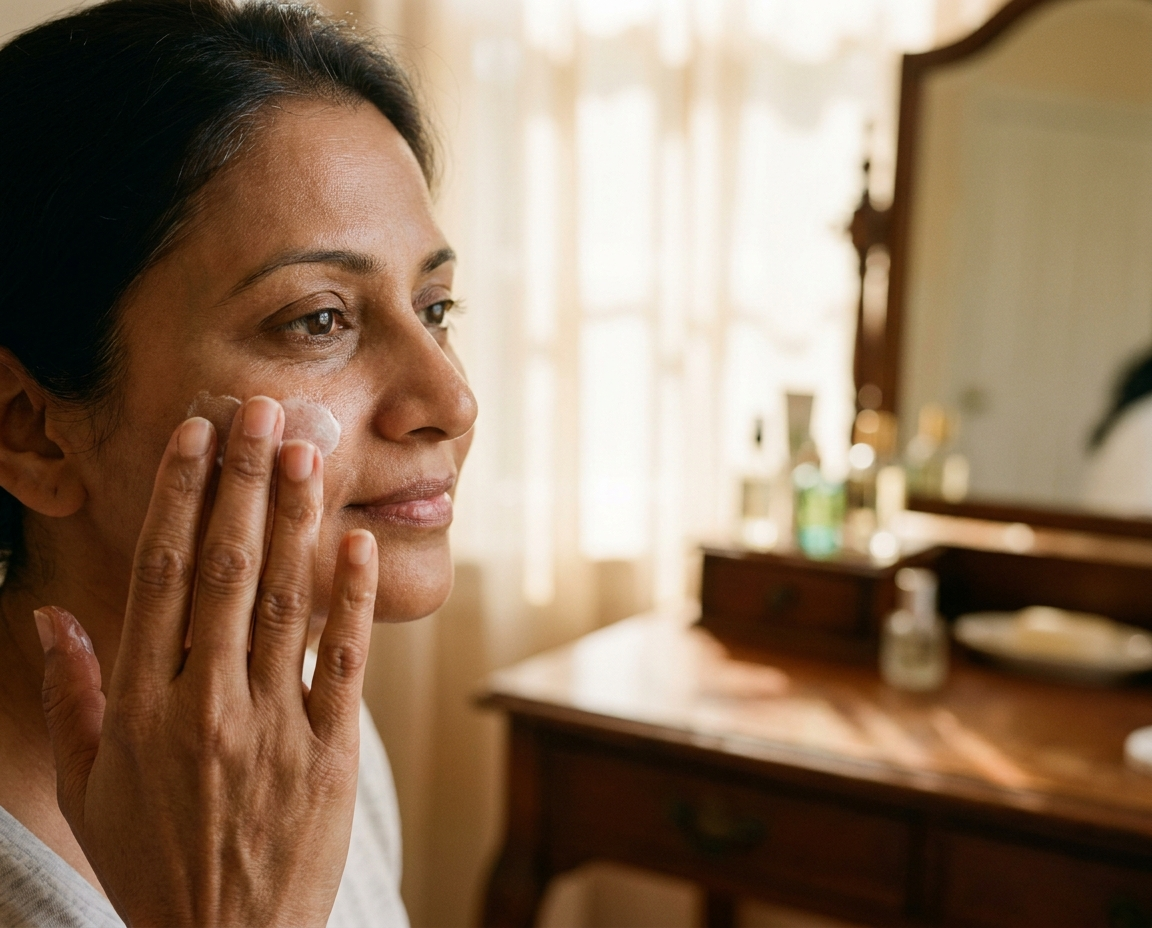
Bakuchiol is a plant-derived compound extracted from the seeds and leaves of Psoralea corylifolia, a plant used for centuries in Ayurvedic medicine. It has attracted serious scientific attention since researchers discovered it activates some of the same genetic pathways as retinol without sharing retinol’s chemical structure. This is the key point: bakuchiol is not a retinoid. It has no structural resemblance to vitamin A and does not convert to retinoic acid in the skin. Because of this, it sidesteps the irritation mechanism entirely – which is why skin that reacts to retinoids can typically tolerate bakuchiol without issue. The molecular evidence for bakuchiol’s anti-aging action was first published in detail in a 2014 gene expression profiling study that found it could stimulate new collagen synthesis and inhibit the same extracellular matrix degradation processes that retinol targets (https://pubmed.ncbi.nlm.nih.gov/24471735/).

The most widely cited clinical evidence for bakuchiol comes from a 2018 randomized, double-blind study published in the British Journal of Dermatology. Forty-four participants applied either 0.5% bakuchiol cream twice daily or 0.5% retinol cream once daily for twelve weeks. Both groups saw significant decreases in wrinkle surface area and hyperpigmentation, with no statistically significant difference in efficacy between the two compounds – bakuchiol matched retinol on fine lines, pigmentation, skin elasticity, and firmness. Where they diverged was in tolerability: the retinol group reported more skin scaling and stinging, while bakuchiol users experienced far fewer adverse effects, and those that did occur were mild and transient. The full study is available via ResearchGate at https://www.researchgate.net/publication/326015204_Prospective_randomized_double-blind_assessment_of_topical_bakuchiol_and_retinol_for_facial_photoaging.
For people who have given up on retinoids, bakuchiol offers something genuinely useful: results comparable to what they were chasing in the first place, without the skin crisis. It tends to be well tolerated by rosacea-prone skin, dry and sensitive skin, and skin that has never gotten along with vitamin A derivatives in any form. You can use it morning or evening without strict sun avoidance precautions – though daily SPF is always a good idea regardless of which actives you use. The concentration to look for in over-the-counter products is typically 0.5% to 1%, used twice daily for best results. Most clinical studies measured outcomes at twelve weeks, which is roughly the same timeline as retinol, so realistic expectations and patience matter equally with both ingredients.
Is There a Gentler Form of Retinoid That Might Work for Sensitive Skin?
This section is specifically for people whose sensitivity lies on a spectrum – those who react to standard retinol but may not have a true allergy to the entire retinoid class. Hydroxypinacolone retinoate (HPR) is a synthetic retinoic acid ester that behaves differently to retinol once it is applied to the skin. Standard retinol has to undergo two conversion steps before it becomes active: first to retinaldehyde, then to retinoic acid. Each conversion adds a delay and creates opportunities for irritation as the skin processes the compound. HPR skips those steps entirely. It binds directly to the skin’s retinoic acid receptors without needing to be converted first, which means it acts more efficiently at lower concentrations and early research suggests it causes significantly less irritation than either retinol or prescription tretinoin.

Paula’s Choice and other ingredient-focused sources note that HPR provides high dermal delivery with a meaningfully lower incidence of the redness and peeling associated with retinol (https://www.paulaschoice.it/en/hydroxypinacolone-retinoate/ingredient-hydroxypinacolone-retinoate.html). For sensitive skin that still wants to stay within the retinoid family, this can be a real upgrade over standard retinol. It is worth noting, though, that because HPR is technically still a retinoid – it interacts with the same receptors – people with a confirmed retinoid contact allergy would likely react to it the same way. If your dermatologist has confirmed an allergy to the retinoid class, not just irritation, the non-retinoid ingredients further on in this article are the appropriate path. HPR is a solution for sensitive skin, not allergic skin.
Advertisement
Can Peptides Actually Do What Retinol Does for Aging Skin?
Peptides are short chains of amino acids – the building blocks of proteins – and certain peptides can communicate directly with skin cells to encourage them to produce more collagen and elastin. In principle, this overlaps significantly with what retinol does: it upregulates collagen synthesis and promotes cell turnover. Peptides take a different route to arrive at a similar destination. Rather than working through the retinoic acid receptor pathway, they typically signal through cytokine pathways or act as messenger peptides that direct fibroblasts – the cells in the dermis responsible for producing collagen – to increase their activity. They are safe for virtually all skin types, they do not cause photosensitivity, they can be used morning and evening without restriction, and they have no adjustment period requiring a gradual introduction. For people whose skin has been reactive and embattled, this profile is genuinely appealing.
A 2026 systematic review and meta-analysis published in Frontiers in Medicine analyzed randomized controlled trials on both oral and topical peptides for skin aging, finding meaningful improvements in firmness, hydration, and the appearance of fine lines and wrinkles across multiple studies (https://www.frontiersin.org/journals/medicine/articles/10.3389/fmed.2026.1618306/full). Perhaps more striking, a double-blind clinical trial published in the Proceedings of the National Academy of Sciences compared a cyclized hexapeptide-9 directly against retinol and found the peptide produced significantly larger improvements on most outcome measures – including wrinkle reduction and collagen stimulation (https://www.ncbi.nlm.nih.gov/pmc/articles/PMC12207714/). This is early data for one specific peptide formulation, not a sweeping statement about all peptides, but it signals that this area of research is maturing quickly and that the gap between retinoids and peptides may be smaller than it once appeared.

Peptides do have one limitation worth naming honestly: the category is enormously varied, and not all peptides have strong independent clinical backing. Matrixyl (palmitoyl pentapeptide-4), acetyl hexapeptide-3 (often called Argireline), and copper peptides are among the best-studied options available in over-the-counter formulations. The key is to look for products where the active peptides appear high in the ingredient list, not tucked at the very bottom as a trace addition. And while peptides are gentler than retinol, they are also somewhat slower to produce visible change – expect meaningful results over three to six months with consistent twice-daily use. That timeline is longer than retinol in some cases, but the trade-off is skin that does not have to fight the ingredient it is using.
Which Other Ingredients Can Replace Retinol in a Real Skincare Routine?
Beyond bakuchiol and peptides, several other ingredients deserve genuine consideration for people who cannot use retinoids. Niacinamide – vitamin B3 – is one of the most versatile options available. It supports the skin’s barrier function, which tends to be compromised in sensitive and reactive skin, and it reduces the appearance of hyperpigmentation, enlarged pores, and fine lines over time without causing irritation. It is anti-inflammatory, which makes it particularly useful for skin types that struggle with background redness or that tip easily into reaction. Studies have shown that 5% niacinamide used consistently over twelve weeks produces measurable improvements in skin texture and tone – and there is virtually no population for whom it causes irritation at standard concentrations. It also pairs safely with almost every other skincare ingredient, which makes it easy to layer.

Azelaic acid is another strong option, particularly for people managing hyperpigmentation, rosacea, or post-inflammatory marks alongside their anti-aging goals. It works by inhibiting tyrosinase – the enzyme that controls melanin production – making it effective at reducing dark spots without the sensitivity risk that comes with higher-strength exfoliants. Unlike glycolic acid or lactic acid, azelaic acid is not an exfoliant in the traditional sense: it does not dissolve dead skin cells. This makes it well suited to very reactive skin that cannot tolerate acids. It also has anti-inflammatory and antimicrobial properties, which makes it especially valuable for skin that sits in a reactive, inflamed baseline state much of the time. Prescription-strength azelaic acid (15% or 20%) requires a doctor’s prescription in most countries, while 10% formulations are available over the counter.
Vitamin C in a stable form – typically L-ascorbic acid or a gentler derivative like ascorbyl glucoside or 3-O-ethyl ascorbic acid – offers antioxidant protection alongside genuine collagen support. It neutralizes free radicals from UV exposure and pollution that would otherwise accelerate collagen breakdown over time, and it has direct evidence for reducing hyperpigmentation by blocking melanin formation. The challenge with vitamin C is that some formulations – particularly high-concentration L-ascorbic acid at a low pH – can sting or irritate sensitive skin. If that is a problem, a gentler derivative will deliver similar benefits with considerably less bite. Using vitamin C in the morning is standard practice, where it provides a layer of environmental defense throughout the day and works synergistically with SPF. Together, niacinamide, azelaic acid, and vitamin C cover pigmentation, inflammation, barrier support, and antioxidant protection – a wide functional range for people building a routine without retinoids.
What Do People with Mature Skin Need to Know About These Alternatives?

Mature skin – particularly skin in the sixties and beyond – faces a compounding set of changes that make the retinoid conversation especially relevant. Estrogen decline after menopause accelerates collagen loss, reduces skin thickness, compromises the barrier function that keeps skin plump and hydrated, and slows the rate of cell turnover. Retinol can be genuinely useful here – it addresses several of these concerns directly – but mature skin is also more susceptible to irritation from it. The barrier is already compromised, cell turnover has already slowed significantly, and the skin processes actives differently than it did twenty years earlier. This is not a reason to avoid all actives. It is a reason to be thoughtful about which ones you choose and how you support the skin around them.
For mature skin that does not tolerate retinoids, bakuchiol is probably the first ingredient to reach for. It does not thin or sensitize the skin the way retinoids can at higher concentrations – a real concern for skin that is already thinner with age – and it provides collagen-stimulating benefits that matter especially at this life stage. Peptides add another layer of value: their collagen-signaling benefits are cumulative over months of consistent use, and there is no adjustment period or fragility risk involved. Together, bakuchiol and a well-formulated peptide serum can do meaningful anti-aging work for mature skin that has run out of patience for retinoid side effects or that has never tolerated them at all. Both ingredients are compatible with the other staples of a mature skin routine – ceramides, hyaluronic acid, niacinamide, and a good SPF.
Hydration and barrier repair also become central concerns in mature skin in a way they often are not earlier in life. A compromised skin barrier – common in skin that has been through the retinoid-reaction cycle repeatedly, or that has simply thinned with age – makes every ingredient work less effectively and every potential irritant more damaging. Ceramides, cholesterol, and fatty acids in the right ratio replenish the lipid matrix of the skin barrier. Hyaluronic acid and glycerin maintain water content in the upper layers of the skin. These are not glamorous ingredients, but they create the foundation that allows whatever actives you choose to actually penetrate and perform. If your skin has been reactive for years, spending four to six weeks on barrier repair before layering in new actives is not wasted time – it is the work that makes everything else more effective.
FAQs

Can I use bakuchiol if I am pregnant?
Bakuchiol is generally considered a safe option during pregnancy, which is one reason it has become popular as a retinol alternative for this period of life. Retinoids – including over-the-counter retinol and prescription tretinoin – are advised against during pregnancy due to potential risks. Bakuchiol has no such contraindication based on current evidence. That said, always confirm with your OB or midwife before introducing any new skincare during pregnancy, since individual circumstances vary and medical guidance is preferable to a general rule.
How long will it take to see results from bakuchiol?
Most clinical studies have measured outcomes at the twelve-week mark, which gives you a reasonable benchmark. You may notice improvements in skin texture and radiance earlier – sometimes around six to eight weeks – but meaningful changes to fine lines and firmness typically take the full three months to become visible. This is roughly the same timeline as retinol, so patience matters equally with both ingredients. Consistency is the most important factor: twice-daily use of 0.5% to 1% bakuchiol gives you the best chance of matching the clinical results.
Can I use peptides and bakuchiol together?
Yes – these two ingredients are complementary, not competitive. They work through different mechanisms: bakuchiol via gene expression pathways, peptides via cell-signaling and fibroblast stimulation. Using both provides broader anti-aging coverage than either would alone. Neither causes the other to become less effective, and neither is irritating at standard concentrations, so layering them is both safe and sensible. A typical approach is to apply a peptide serum after cleansing, then a bakuchiol serum or cream on top, followed by your moisturizer and SPF in the morning.
Is azelaic acid strong enough to replace retinol?
Azelaic acid and retinol do somewhat different jobs, so the answer depends on your primary concerns. If you are focused mainly on hyperpigmentation, post-acne marks, or redness, azelaic acid is genuinely excellent and may even outperform retinol for those specific goals. For pure wrinkle reduction and collagen stimulation, azelaic acid is less targeted. Pairing azelaic acid with bakuchiol and peptides gives you coverage across most of the anti-aging spectrum without requiring retinol at all. Your dermatologist can help map your specific concerns to the best combination for your skin type.
My skin is sensitive to almost everything – where do I start?
Start with barrier repair before introducing any active ingredient. Spend four to six weeks focused purely on rebuilding the skin’s protective layer – a gentle fragrance-free cleanser, a ceramide-based moisturizer, and daily SPF. Once the barrier is more stable and reactive episodes have calmed, introduce one ingredient at a time beginning with niacinamide, which is tolerated by almost all skin types. From there, add bakuchiol slowly before anything else. Introducing one new ingredient every three to four weeks lets you identify exactly what your skin does and does not like, rather than guessing within a complicated multi-step routine.
The prevailing message in skincare has long been that retinol is the gold standard – the ingredient everyone concerned with aging skin should be using. That framing has left a lot of people feeling like they are doing something wrong when their skin refuses to cooperate. But the evidence increasingly shows that bakuchiol, peptides, niacinamide, azelaic acid, and stable vitamin C can deliver real results for people who never tolerated retinoids – or who simply decided they were done trying. The right routine is the one your skin can actually use without fighting back. And for more people than the conventional wisdom once acknowledged, that routine is entirely possible without a vitamin A derivative in sight.
Related Posts