Sep
Skincare, Trends & Opinions
How to Heal an Inflamed Skin Barrier and Get Your Calm Skin Back
If you click on links we provide, we may receive compensation.
In a study of nursing home residents, 99.1% showed signs of xerosis cutis – severe dry skin caused by a failing skin barrier. That figure is striking, but barrier trouble does not arrive only in old age or clinical settings. Millions of people experience a red, stinging, reactive complexion at some point, and many of them are doing everything right by their previous standards – or at least everything their skincare routines once called for. The problem is that the barrier itself has changed, and the products and habits that used to work are now the source of the trouble. When your skin barrier is inflamed, the playbook flips: less is more, gentler is better, and patience is non-negotiable. (Source: https://www.ncbi.nlm.nih.gov/pmc/articles/PMC5683462/)
The skin barrier is not glamorous to talk about – it sounds technical, almost clinical – but it is absolutely the foundation of everything your skin does. It sits at the outermost layer of the skin, the stratum corneum, and its job is to keep moisture locked in and irritants locked out. When the barrier is healthy, it does this invisibly. When it is not, you feel it immediately as tightness, stinging, flaking, redness, and a general sense that your skin is angry at you for no clear reason. Learning how to repair it – and how to keep it that way – is one of the highest-return investments you can make in your skin.
What exactly is the skin barrier, and why does it get inflamed?
The stratum corneum, the outermost layer of the epidermis, is made up of dead skin cells called corneocytes surrounded by a lipid matrix rich in ceramides, fatty acids, and cholesterol. Scientists often describe this structure as a brick-and-mortar arrangement: the corneocytes are the bricks, and the lipid matrix is the mortar that holds them together and seals in moisture. Ceramides alone account for roughly 50% of this lipid mortar, making them the single most important molecule in barrier integrity. When ceramide levels drop – through aging, environmental exposure, or the wrong skincare products – the bricks start to separate, gaps form in the barrier, and moisture escapes while irritants slip in.
Inflammation follows barrier disruption almost automatically. Once the barrier develops gaps, the immune system in the skin detects the breach and mounts a defensive response. This response involves the release of pro-inflammatory cytokines – chemical messengers that trigger redness, heat, itching, and swelling. Research published in Frontiers in Medicine found that skin barrier disruption and immune dysregulation are deeply intertwined, each driving the other in a cycle that makes barrier conditions like atopic dermatitis and rosacea so persistent. (Source: https://public-pages-files-2025.frontiersin.org/journals/medicine/articles/10.3389/fmed.2024.1335551/pdf) Breaking the cycle requires calming the inflammation and restoring the physical barrier at the same time – you cannot do one without the other and expect lasting results.
Your skin barrier is also sensitive to its environment in ways that can seem almost stubborn. Hard water, cold winds, central heating, air conditioning, and dramatic temperature swings all strain the barrier on their own. Combine one of those environmental stressors with an overloaded skincare routine and an over-exfoliated complexion, and you have the conditions for a full barrier breakdown. The inflammation that follows can take weeks to months to fully resolve, which is why prevention matters at least as much as treatment. Understanding the causes is the first step to stopping the cycle before it starts.
How do you know your skin barrier is compromised?
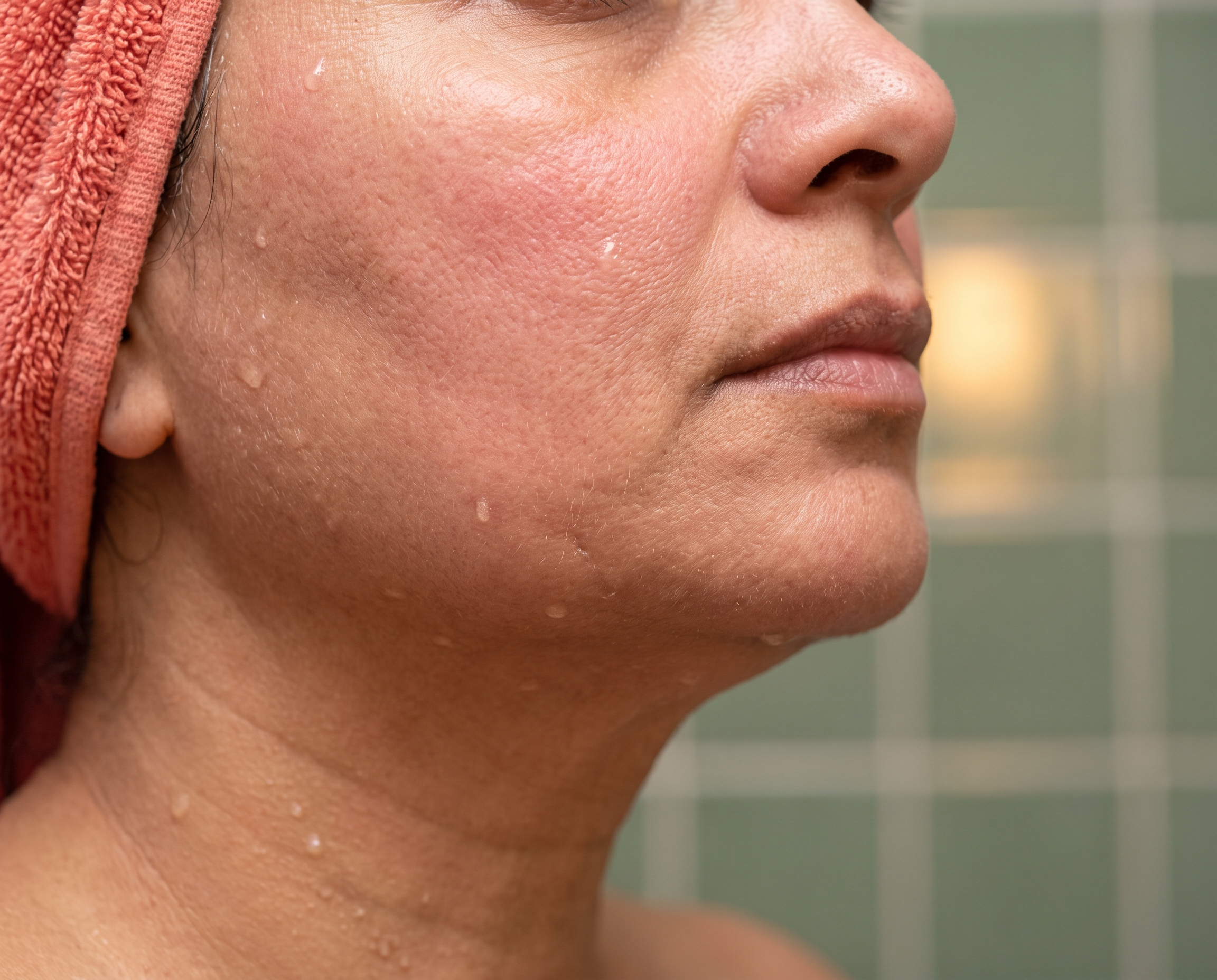
The signs of a compromised barrier are usually unmistakable once you know what you are looking for. Redness is often the first thing people notice, followed by dry or flaking patches that appear even when the skin has been freshly moisturized. Products that once felt comfortable start to sting, tingle, or burn – sometimes immediately on contact, before the active ingredient even has a chance to do anything. Skin that was once fairly resilient suddenly reacts to water, changes in temperature, or fabrics that never caused problems before. If your skin checks multiple boxes on that list, your barrier is almost certainly compromised, even if you have not done anything dramatically different.
Transepidermal water loss – known in dermatology as TEWL – is the clinical measure of how much moisture is escaping through the skin, and it rises sharply when the barrier is damaged. You cannot measure TEWL at home, but you can feel its effects: that tight, parched sensation that persists even after layering moisturizers, and the way skin feels uncomfortable all day rather than settling down after your morning routine. Another sign is a sudden sensitivity to fragrance. Many people who tolerate scented products normally find that the same products become unbearable when the barrier is damaged, because fragrance molecules penetrate deeper and trigger irritation that an intact barrier would have blocked entirely.
Breakouts can also signal a damaged barrier – which surprises people who associate barrier issues only with dryness. When the barrier is compromised, bacteria and environmental pollutants penetrate the skin more easily, triggering a different kind of inflammation that can look like congestion or cystic acne. If you are experiencing a mix of dryness, redness, and breakouts at the same time, a damaged barrier is likely a contributing factor. Throwing more actives at the breakouts will almost certainly make things worse because it adds more insult to skin that is already struggling. The counterintuitive move is to simplify everything.
What causes the barrier to break down in the first place?

Over-exfoliation is probably the most common culprit in modern skincare routines. Alpha-hydroxy acids like glycolic and lactic acid, beta-hydroxy acids like salicylic acid, and physical scrubs all work by removing dead skin cells – but remove too many, too often, and you strip away the lipid matrix that holds the barrier together. Dermatologists have noted a rise in barrier-related skin complaints as high-concentration acid products became more accessible through direct-to-consumer skincare brands. The promise of visible results from actives is real, but so is the damage when those actives are applied too frequently, layered with each other, or used on skin that has not had adequate recovery time.
Combining too many actives at once is another frequent cause of barrier breakdown. Retinol, vitamin C, AHAs, and BHAs each have real, evidence-backed benefits, but they are not meant to be used simultaneously – especially by people new to them, or by those with naturally drier or more reactive skin. Research on retinol and acid combinations confirms that pairing retinoids with strong exfoliating acids significantly increases the risk of barrier damage and persistent redness. (Source: https://superskin.fr/en/blogs/beauty-dossiers/retinol-and-exfoliation-when-too-much-damages-your-skin) The skin needs time to process each active, and when they compete, the barrier pays the price.
Cleansers are often overlooked as a source of barrier damage. Sulfate-based cleansers, particularly those containing sodium lauryl sulfate, can disrupt the skin’s natural pH and strip away protective lipids even in a single wash. The skin’s optimal pH sits between 4.5 and 5.5 – slightly acidic – and a high-pH cleanser pushes it toward neutral or alkaline, which disrupts the enzyme activity that keeps the barrier functioning properly. Hot water, steam, and long showers compound the damage. Harsh weather, particularly low humidity and cold temperatures, draws moisture out of skin cells directly. Stress, poor sleep, and a diet low in omega-3 fatty acids and zinc also reduce the skin’s capacity to repair and maintain the barrier from the inside.
Which ingredients should you stop using while your barrier heals?
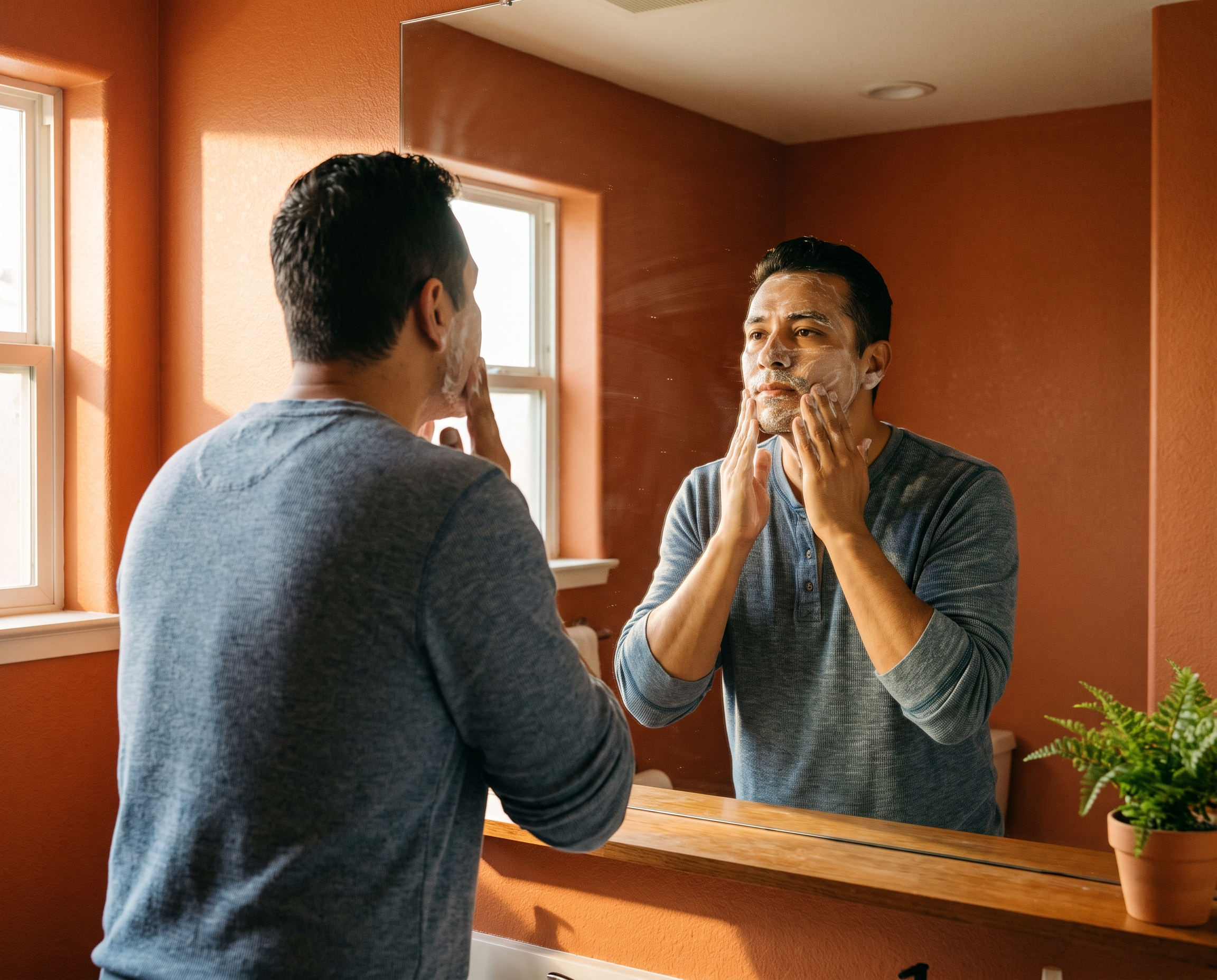
When the barrier is inflamed, the most important move is to stop adding insult to injury. That means pausing every active in your routine – glycolic acid, lactic acid, salicylic acid, benzoyl peroxide, retinol, and vitamin C. These are ingredients with real jobs to do, and you will use them again, but right now the barrier needs a rest from anything that accelerates cell turnover or has a notably low pH. The Associated Skin Care Professionals recommend stripping your routine back to just a gentle cleanser and a simple moisturizer until the inflammation has settled. (Source: https://www.ascpskincare.com/updates/blog-posts/identifying-and-treating-impaired-skin-barrier) That advice applies even if your skin is normally used to and tolerates a fuller routine – during a barrier flare, tolerance goes down across the board.
Certain alcohols are particularly irritating to a damaged barrier. Denatured alcohol, isopropyl alcohol, and benzyl alcohol – often found in toners and lightweight serums – evaporate quickly and leave the skin dry and vulnerable. These are different from fatty alcohols like cetyl alcohol and stearyl alcohol, which are actually beneficial to the barrier, so it pays to read ingredient lists carefully rather than avoiding anything labeled alcohol. Fragrance is another ingredient to put aside during this window – both synthetic and natural fragrances can trigger sensitization reactions in compromised skin, and the inflammation does not need any more fuel.
Physical exfoliants – scrubs, brushes, and cleansing tools – should also go on the shelf until the barrier is fully repaired. Even gentle physical exfoliation can cause micro-abrasions in inflamed skin that would be insignificant on a healthy barrier but become entry points for bacteria and irritants when the skin is already broken down. It can feel counterproductive to give up a carefully assembled routine, but simplifying is genuinely the fastest path to recovery. Most people find that a stripped-back two-step routine resolves barrier inflammation more quickly than a complex one, even when the complex routine is designed to be skin-repairing.
What actually helps repair an inflamed skin barrier?

Ceramides are the non-negotiable starting point. Research published in the International Journal of Cosmetic Science confirmed that topically applied ceramides integrate into the stratum corneum’s lipid matrix and help restore barrier function in compromised skin. (Source: https://onlinelibrary.wiley.com/doi/10.1111/ics.12972) Look for moisturizers that list ceramides among the first several ingredients, or that specify ceramide NP, ceramide AP, or ceramide EOP – the three most commonly studied types in barrier repair. A formula that combines ceramides with cholesterol and fatty acids in the right ratio is even better, because the barrier depends on all three lipid types working together, not any one of them alone.
Humectants are the next layer to add. Hyaluronic acid, glycerin, and panthenol all draw water into the skin and help restore the internal hydration that is leaking out through a damaged barrier. Apply them while the skin is still slightly damp after cleansing – this gives them water to work with – and then seal them in with your ceramide moisturizer on top. The order matters: humectants first, then an emollient or occlusive moisturizer. Petrolatum, found in products like Vaseline and Aquaphor, is one of the most effective occlusives for sealing in repair, and it has a strong evidence base in dermatology for barrier healing.
Your cleanser is doing more than you might think. Switch to a pH-balanced, sulfate-free formula if you have not already – one that uses mild surfactants like cocamidopropyl betaine or glucosides rather than sodium lauryl sulfate. Wash with lukewarm water, not hot, and pat the skin dry rather than rubbing. Sunscreen is not optional during healing – UV radiation causes direct oxidative stress to the stratum corneum and will slow recovery even on overcast days. A mineral sunscreen with zinc oxide tends to be far better tolerated on inflamed skin than a chemical UV filter, because it sits on top of the skin rather than being absorbed.
From the inside, omega-3 fatty acids from fatty fish, flaxseed, or a supplement help reduce systemic inflammation and provide the building blocks the skin needs to rebuild its lipid content. Zinc, found in pumpkin seeds, oysters, and legumes, supports wound healing and skin cell production. Staying well-hydrated helps, though drinking more water alone will not repair a damaged barrier – the structural repair has to happen topically, with the right ingredients applied consistently. The inside-out approach works best as a complement to topical treatment, not a replacement for it.
Why does aging make barrier inflammation harder to bounce back from?
Skin changes significantly with age, and the barrier is no exception. Research shows that aged epidermis has markedly lower levels of filaggrin – the structural protein that breaks down into natural moisturizing factors including amino acids, urocanic acid, and pyrrolidone carboxylic acid. (Source: https://www.aging-us.com/article/102946/text) These natural moisturizing factors are what keep corneocytes hydrated from the inside, and when filaggrin production slows, cells dry out faster, the lipid matrix becomes less organized, and the barrier grows more permeable. By age 60 and beyond, this process is well underway even in people with no diagnosed skin condition.
Ceramide levels in the stratum corneum also shift with age. The overall lipid content decreases, and the specific ceramide composition changes in ways that make the barrier less effective at preventing water loss. A 2024 paper in the Journal of the American Academy of Dermatology on age-related skin barrier dysfunction noted that older skin is significantly more susceptible to xerosis, eczematous dermatoses, and cutaneous infections – not because of poor skincare habits, but because of changes happening at the molecular level. (Source: https://www.jaad.org/article/S0190-9622(24)02753-1/abstract) This is worth naming clearly: a compromised barrier in someone aged 60 or older is not a sign of a bad skincare routine so much as it is a predictable result of how skin ages.
Healing also takes longer because cell turnover slows with age. Younger skin cycles through a new layer of cells roughly every 28 days; in older skin that cycle extends to 45 days or more. Products formulated for mature skin – those that include barrier-supportive ingredients like cholesterol, niacinamide, and peptides alongside ceramides – will often outperform standard barrier creams when healing inflamed older skin. Ceramide-containing moisturizers trialed specifically in subjects aged 60 and older showed significant improvement in dryness, tightness, and barrier integrity scores when used consistently twice a day. (Source: https://www.jaad.org/article/S0190-9622(16)00241-3/abstract) The habit matters as much as the formula.
If you are 60 or older and dealing with barrier inflammation, apply your moisturizer immediately after bathing – within three minutes if possible, while the skin is still slightly damp. This window is more important in aging skin than in younger skin because the natural moisture-retention capacity of the stratum corneum is reduced, so the moisturizer needs to trap the water that is already present. Night is often the best time to use a richer, more occlusive formula, since the skin’s repair processes are most active during sleep and there is no UV exposure adding to the stress. Consistency over time – not the occasional intensive treatment – is what actually rebuilds barrier function in older skin.
FAQs
How long does it take for an inflamed skin barrier to heal?
Mild barrier inflammation often improves within one to two weeks of simplifying your routine and using the right repair-focused products. More significant damage – from prolonged over-exfoliation or a severe reaction – can take four to six weeks or longer, especially in older skin where cell turnover is slower. Consistency matters more than speed: applying a ceramide-rich moisturizer twice a day every day will rebuild the barrier more reliably than using more sophisticated products sporadically.
Can you use niacinamide on a damaged skin barrier?
Niacinamide is generally considered safe and beneficial for a compromised barrier. It helps strengthen the barrier, reduce redness, and regulate sebum without the irritation risk of acids or retinol. Most people tolerate it well even during a barrier flare, and it pairs well with ceramide moisturizers. Start with a lower concentration of 2% to 5% if you are new to it or if your skin is very reactive.
Is it safe to use SPF on inflamed skin?
Yes, and it is important. Sun exposure directly damages the stratum corneum and will slow barrier healing. Choose a mineral sunscreen containing zinc oxide or titanium dioxide, which sits on top of the skin rather than being absorbed, and is far less likely to sting or irritate inflamed skin than chemical UV filters. Avoid sunscreens with alcohol, fragrance, or exfoliating ingredients during healing.
Does drinking water help repair the skin barrier?
Hydration from the inside contributes to overall skin health, but water alone will not repair a damaged barrier. The barrier is primarily a lipid structure, and it needs topical ceramides, fatty acids, and cholesterol – not more water – to rebuild. Internal nutrition matters more than water intake: omega-3s, zinc, and vitamin D all play documented roles in barrier function and are worth prioritizing in your diet.
Can diet affect skin barrier health?
Yes, significantly. Diets low in omega-3 fatty acids and high in processed foods tend to increase systemic inflammation, which shows up in the skin. Foods rich in omega-3s – fatty fish, walnuts, flaxseed, chia seeds – support the lipid integrity of the barrier. Zinc, found in oysters, pumpkin seeds, and legumes, supports wound healing and cell renewal. Adequate protein also matters, because filaggrin and other structural proteins in the skin depend on amino acids to be produced at the right levels.
Healing an inflamed skin barrier is not about finding the perfect product or the most sophisticated serum. It is about taking the pressure off long enough for your skin to do what it was built to do. Strip the routine back, give it ceramides, keep it moisturized, and leave it alone – that is most of the formula. If your barrier keeps breaking down despite consistent effort, it is worth seeing a dermatologist who can assess whether an underlying condition like atopic dermatitis or rosacea is driving the cycle. But for most people, the skin’s capacity to repair itself is genuinely remarkable. It just needs the right conditions and enough time to get there.