

Nov
If you click on links we provide, we may receive compensation.
You’ve probably had this happen. You open the front door and there’s the box, sitting on the step in full afternoon sun. You pick it up and it’s warm, the way a car seat gets warm in July. You carry it in, cut the tape, and wonder if the night cream you waited all week for is still the same cream that left the warehouse. I’ve asked myself that question more times than I can count, and after years of working alongside cosmetic chemists, I can tell you the answer isn’t simple. Some products shrug off a hot ride with no harm done. Others arrive weaker, separated or smelling slightly off, and you can’t always tell by looking.
How hot does it get in the back of a delivery truck?

Hotter than most of us would guess. Cargo areas in most parcel vans and trucks have no air conditioning, and metal boxes in the sun heat up fast. The German logistics company trans-o-flex logged 152,920 temperature readings from delivery vehicles at 17 locations, and the numbers are sobering (https://transportjournal.com/?p=18118). When it was about 73°F (23°C) outside, cargo areas peaked above 122°F (50°C). At 86°F (30°C) outside, peaks topped 140°F (60°C), and the color of the vehicle made only a degree or two of difference. Those are ordinary summer temperatures.
Cold is a problem too, and it gets less attention. A study presented by the American Society of Health-System Pharmacists tracked packages mailed to six U.S. cities, including Chicago, Baltimore and Tucson (https://www.eurekalert.org/news-releases/841330). In winter, the packages spent 68% to 87% of their transit time outside the 68 to 77°F range recommended for medications. In summer, it was 27% to 54%, and every single package spent some time out of range. Those were prescription drugs, but your moisturizer rides in the same trucks. Then there’s the time a box sits on a porch, in a metal mailbox or in a sorting hall, which none of these numbers fully capture.
What happens to a cream or lotion when it overheats?

Most creams and lotions are emulsions – tiny droplets of oil spread through water, or water through oil, held in place by emulsifiers. Heat thins the product and makes those droplets move faster. They bump into each other, merge into bigger droplets and start to drift apart from the water. Some emulsifier systems also stop working well above a certain temperature. When that happens, you may see an oily ring at the top of a jar, a watery puddle under a lotion, or a cream that suddenly feels thin or grainy. Cooling the product down doesn’t always bring it back, because the droplets that merged don’t split again on their own.
Balms and butter-rich creams react differently. Shea butter and similar fats melt in the heat and then harden again slowly, often forming small gritty bumps as they cool. That graininess looks alarming, but it’s mostly cosmetic, and the bumps melt as soon as they touch warm skin. Cold brings its own trouble. When the water in a cream freezes, ice crystals push the oil droplets apart, and the product can come back looking curdled once it thaws. Water-based gels may turn cloudy or lumpy. Some of these products recover after a few hours at room temperature, and some don’t.
Can heat weaken the preservatives in your products?
It can, though the risk depends on the formula. Bacteria and mold grow in the water part of a product, so preservatives need to be there in enough strength to do their job. In an emulsion, a preservative splits itself between the oil and the water, and chemists have long known that temperature shifts that balance (https://library.scconline.org/v016n01/14). If heat breaks the emulsion, you can end up with pockets of water that carry less protection than the formula was designed to have. Some preservatives are also a bit volatile, and a hot, poorly sealed container lets a small amount escape.
Manufacturers run challenge tests that add microbes to a product and measure whether the preservative system knocks them down. That test is done on a product that’s intact. A cream that’s separated in a hot truck isn’t the same product anymore, so the test results no longer fully apply to what’s in your jar. One hot afternoon won’t make a well-made product unsafe in most cases. But if separation is followed later by a sour smell, spots or a change in color, it’s time to throw it out.
Advertisement
Why does fragrance change in the heat?
Fragrance is the first thing many people notice, and for good reason. Scent molecules are made to evaporate, and heat speeds that up, so the light top notes fade first and the product can smell flat or different. Heat and air also speed up oxidation. Two of the most common fragrance ingredients, limonene and linalool, are a good example. Researchers have found that the pure compounds rarely cause allergy, but their oxidation products can (https://pubmed.ncbi.nlm.nih.gov/19125719/).
The numbers here matter. In an international study of 2,900 patients with dermatitis, 5.2% reacted to oxidized limonene and 6.9% reacted to oxidized linalool (https://pubmed.ncbi.nlm.nih.gov/26918793/). Both are found in citrus and lavender oils as well as in many blended fragrances. A product that smelled fresh and bright when you bought it, and now smells sharp, waxy or stale, may have oxidized. If your skin is reactive, I’d treat a scent change as a reason to stop using it rather than something to push through.
Don’t panic. Most cosmetic products from reputable manufacturers are tested for stability in both heat and cold. At my former company, we tested products at extreme heat and below freezing, and we often retested a product when we received a complaint.
Which active ingredients lose strength first?

Vitamin C in the form of L-ascorbic acid is the classic weak spot. It oxidizes on contact with air and light, and heat speeds the process up. The usual warning sign is color – a clear or pale serum turning yellow, then orange, then brown. Retinoids are just as fragile and give you fewer clues. A study in the Journal of Cosmetic Dermatology measured retinoid content in commercial products and found losses of 0% to 80% after six months at 77°F (25°C), and 40% to 100% at 104°F (40°C) (https://pubmed.ncbi.nlm.nih.gov/33206444/). A few hot days won’t equal six months, but heat adds up, and the retinol cream that looks perfect may already be weaker.
Sunscreen deserves special care. In the U.S., sunscreen is regulated as an over-the-counter drug, and the FDA requires the label to say “protect the product in this container from excessive heat and direct sun” (https://www.law.cornell.edu/cfr/text/21/201.327). Heat can break down some chemical UV filters and cause mineral formulas to clump or separate. When zinc oxide or titanium dioxide settles unevenly, the coverage on your skin is uneven too. Peptides, enzymes and live-culture products can also be sensitive. Sturdier ingredients like glycerin, niacinamide and hyaluronic acid tend to handle a warm trip better.
What does heat do to the packaging?
Packaging is easy to overlook, but it’s often where the damage shows first. Air inside a bottle or tube expands as it heats, which pushes product up through pumps and out through loose caps. That’s why a box sometimes arrives with a sticky film on everything inside. Thin plastic bottles can soften and warp, and jar lids can loosen as the materials expand at different rates. Aerosol cans carry heat warnings because the pressure inside rises with temperature. Airless pumps can lose their prime and stop dispensing properly.
There are quieter changes too. At higher temperatures, some fragrance and active ingredients can move into plastic packaging or escape through it, which formulators check for in stability testing (https://ulprospector.ul.com/20879/pcc-stability-testing-in-cosmetics-bridging-science-standards-and-market-success/). Cold causes its own damage. A water-based product expands as it freezes, which can crack a glass jar or split a cap. And condensation can form inside a cold container that’s opened too quickly in a warm kitchen, adding a bit of water to the surface of the product.
How do manufacturers test for shipping stress?
Responsible brands put new formulas through stability testing before they ever reach a shelf. Samples sit at room temperature and at higher temperatures such as 104°F (40°C) or 113°F (45°C) to speed up aging. A common rule of thumb is that 12 weeks at 104°F (40°C) helps support a 12-month shelf life (https://ulprospector.ul.com/20879/pcc-stability-testing-in-cosmetics-bridging-science-standards-and-market-success/). Chemists also run freeze-thaw cycles, spin samples in a centrifuge to force separation, and store containers upright, upside down and on their sides. Throughout, they track color, smell, thickness, pH, active ingredient levels, microbial safety and weight loss from the package. The ISO/TR 18811:2018 guidance gives the industry a shared framework for this work.
For shipping in particular, the International Safe Transit Association publishes heat and cold profiles built from real-world parcel measurements taken in summer and winter (https://ista.org/refresh/process_standards.php). Labs use those profiles to see how packaging and products hold up on a realistic trip. Testing has limits, though. It shows a product can handle typical stress, not every bad day, and smaller brands vary in how much testing they can afford. Some companies pause shipping during heat waves or switch to insulated mailers and cold packs for sensitive products. If a brand tells you how it ships in summer, that’s a good sign.
Is mature skin more affected when a product breaks down?
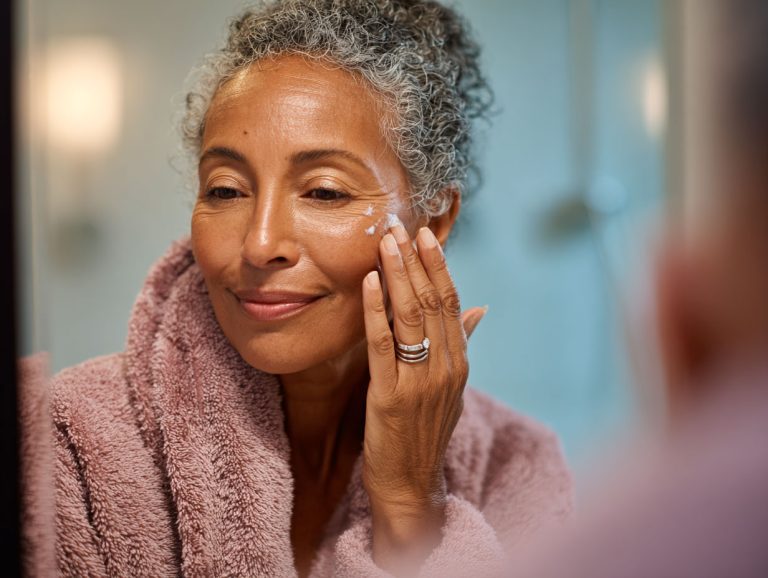
In some ways, yes. As skin ages, the outer barrier gets thinner and drier, and it takes longer to recover from irritation. That makes oxidized fragrance and degraded ingredients more likely to cause redness, stinging or itching. Many of us in our 60s and beyond also lean on the most fragile ingredients – retinoids for texture and fine lines, vitamin C for brightness, and sunscreen every single day. When those lose strength, you’re paying for results you won’t get, and you may not notice for weeks.
Sunscreen is the one I’d watch most closely. Sun damage adds up over a lifetime, and a separated or clumped sunscreen can leave patches of skin with less protection than you think. There’s a practical side too. Subtle color changes in a serum are hard to see in a dim bathroom, so check new arrivals near a bright window. If you have arthritis or less hand strength, a pump that’s lost its prime or a lid that’s warped shut is more than an annoyance. It’s worth asking the seller for a replacement rather than wrestling with it.
What should you check when a package arrives hot or frozen?
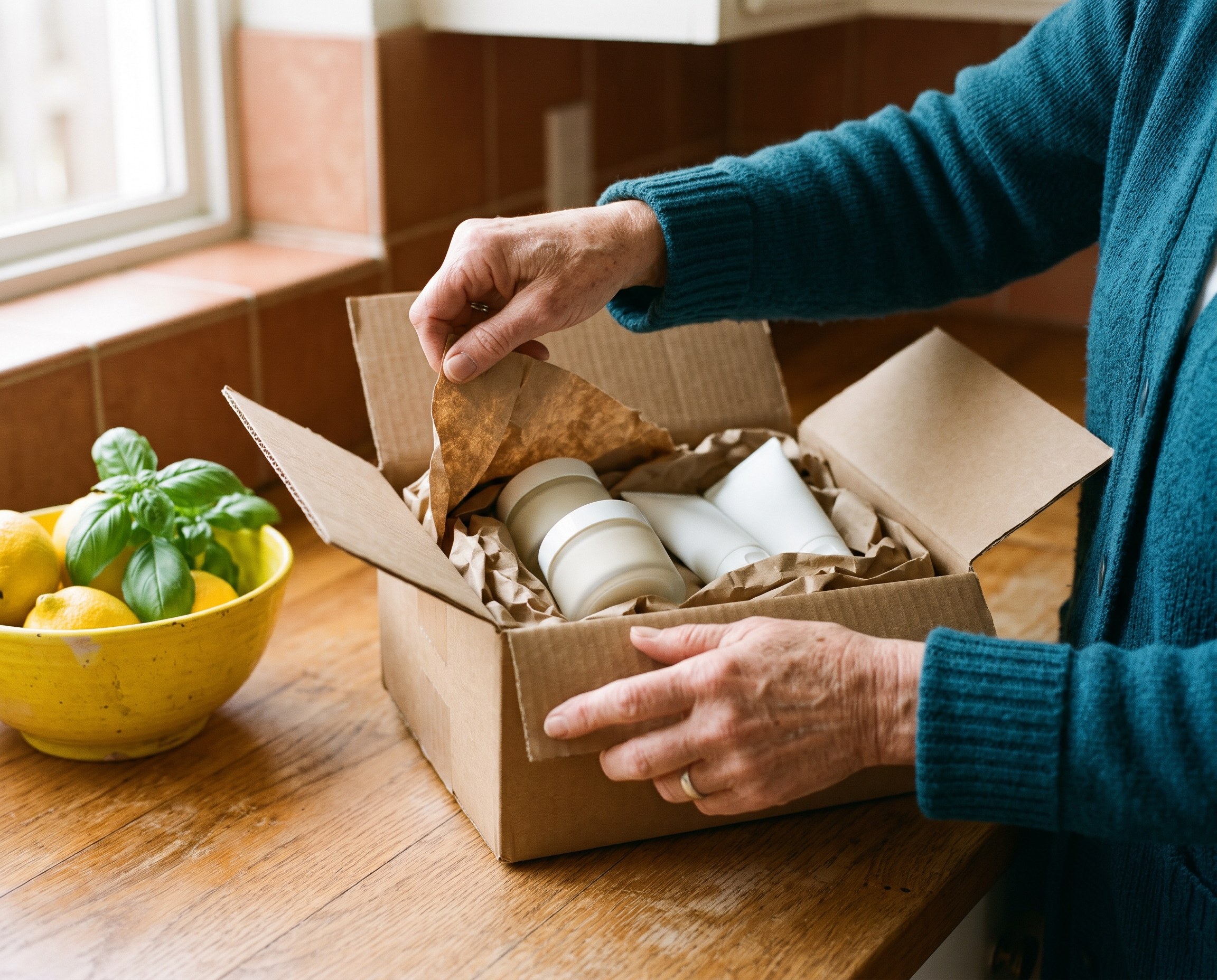
Start by bringing the box inside and letting everything come to room temperature before you judge it. A cold cream will look thick and odd, and a warm one will look thin, so give it a few hours. Then look at each product closely. Check for an oily layer, a watery puddle, streaks, lumps or a change in color compared with what you remember. Smell it – a sharp, sour or stale note is a warning. Rub a small amount between your fingers and notice whether it feels grainy, stringy or thinner than usual.
Put your attention on the products that matter most. Sunscreens, vitamin C serums and retinoids are the first to check, followed by anything with fragrance or essential oils. A grainy shea balm is usually fine, and a slightly cloudy gel that clears at room temperature is usually fine too. A separated cream or sunscreen is a different story. Don’t try to fix it by microwaving or heating it, because that tends to make things worse. Take clear photos and contact the seller, since most reputable brands will replace a product damaged in transit.
How can you keep your next order safer?
A little planning goes a long way. Watch your tracking and bring packages inside soon after they’re dropped off, especially in summer. If you’ll be away, have the box held at the carrier’s location or delivered to a neighbor who’s home. Parcel lockers are convenient, but outdoor ones can heat up just like a truck. During a heat wave, consider waiting a few days to order heat-sensitive products like retinol or vitamin C.
Once products are home, give them the same care. Bathroom windowsills and sunny vanities get warm, and a car’s glove box is one of the worst places to keep sunscreen. A cool cabinet away from the shower works well for most things. If you go through a product slowly, buying a smaller size means less of it sits around losing strength. And if a brand offers insulated shipping for summer orders, it’s often worth the extra dollar or two.
FAQs
Is it safe to use a moisturizer that separated during shipping?
A moisturizer that separated isn’t necessarily dangerous, but it may not perform the way it should, and its preservative system may be less even. If it smells normal and you can’t see mold or spots, a basic moisturizer is a lower-risk case than a sunscreen or treatment product. Still, the safest choice is to ask the seller for a replacement.
Should I put my skincare in the fridge after a hot delivery?
No. Chilling a product right after it’s overheated adds a second temperature swing and can make separation worse. Let it settle at room temperature instead. A few products, such as some vitamin C serums, may say on the label that cool storage is fine, and in that case you can follow the label once the product is back to normal.
Does sunscreen still work after it froze?
It might, but freezing can cause separation and clumping, especially in mineral formulas. If the texture is smooth and even once it’s back to room temperature, it’s likely fine. If it’s lumpy, watery or streaky, replace it.
How long does a package have to sit in the heat before products are affected?
There’s no single answer, since it depends on the formula, the packaging and how hot it gets. Delicate products like vitamin C serums can start to change within hours at high temperatures. Sturdier creams may handle a long hot day with little visible change. Shorter exposure is always better.
Should I stop ordering skincare online in the summer?
Not at all. Just be smart about timing, bring packages in quickly and save fragile actives for cooler stretches when you can. Buying from brands that use insulated packaging also helps.
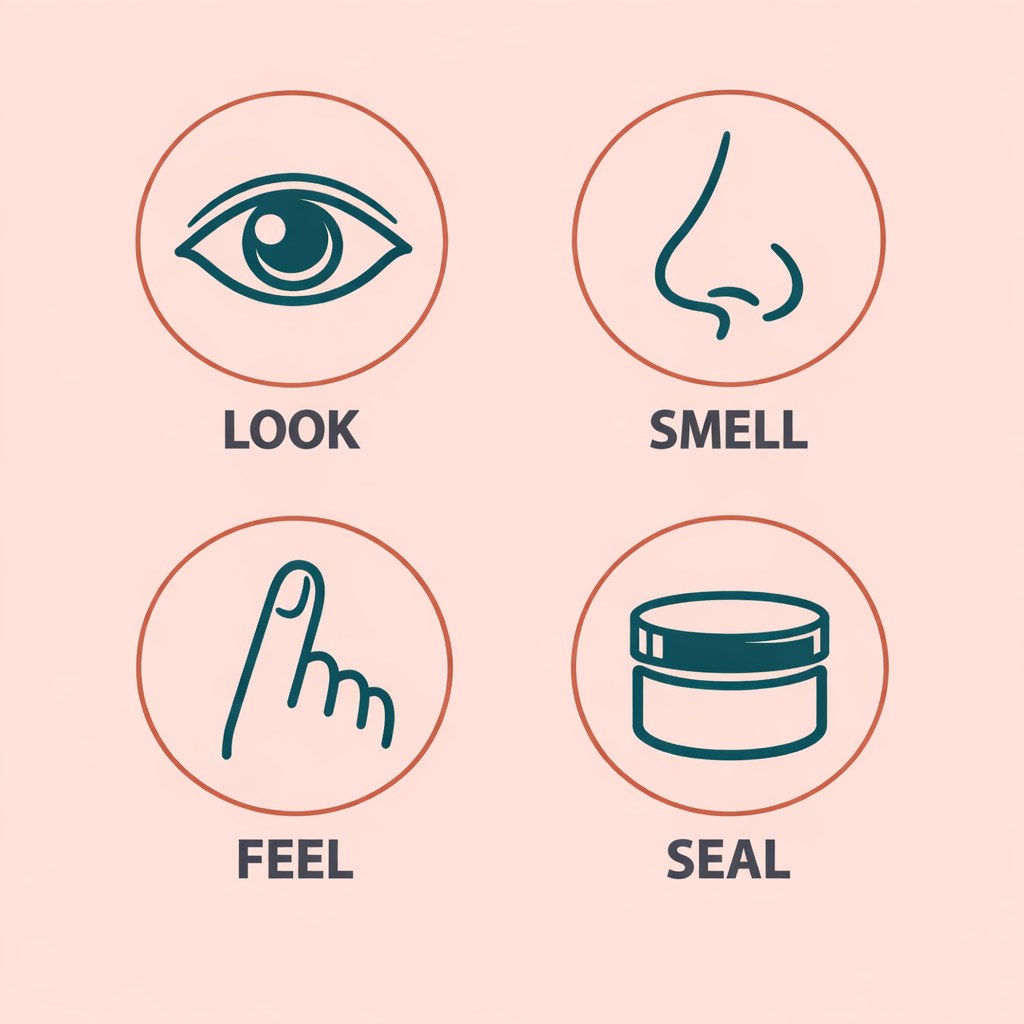
Most of what we buy will survive the trip just fine, and there’s no need to treat every warm box as a loss. But your skincare isn’t as tough as the cardboard around it. A few minutes of looking, smelling and feeling each product when it arrives can tell you a lot. If something seems off, trust that instinct and ask for a replacement. The products you count on every day should work the way they were made to, and that’s worth a quick check at the front door.
Related Posts
 Why Your Skincare Dupe Isn’t a Twin Even When the Ingredients Match
 Everything I Wish I Had Known About Skincare in My Twenties
 The Salmon DNA Skincare Ingredient Dermatologists Love and Its Vegan Rival
 Switch This One Thing in Your Skincare Routine When Fall Arrives
 Three Skincare Products That Actually Do the Heavy Lifting
 The Age to Start Anti-Aging Skincare Will Probably Surprise You
 The Skincare Ingredients Worth Your Attention Right Now in 2026
 Your Drugstore Is Hiding Some of the Best Skincare Money Can Buy
 What Actually Reaches Your Dermis and Why Most Skincare Stops Short
 10 Best Private Label Skincare Manufacturers to Launch Your Own Brand
 The Skincare Step Most People Skip That Makes Everything Else Work Better
 Skincare Products for Mature Skin That Are Actually Worth Your Money
