Jun
If you click on links we provide, we may receive compensation.
The global private label beauty market is growing at a compound annual growth rate of more than 7 percent, and for good reason – entrepreneurs are discovering that you no longer need a lab coat or a million-dollar budget to put your name on a world-class skincare product. Private label manufacturing has quietly become the backbone of some of the most exciting indie beauty brands out there, from small-batch serums sold on Etsy to full lines stocked at boutique spas. If you have ever imagined a cleanser with your logo on it, a moisturizer with your signature scent, or an entire skincare collection that reflects exactly what your customers are asking for, private label is the fastest path from idea to shelf. This guide is designed to cut through the noise and give you a real, honest look at ten of the best manufacturers in the industry – so you can stop researching and start building.
What is the difference between private label and contract manufacturing?
These two terms get used interchangeably a lot, but they are not exactly the same thing, and the difference matters when you are choosing a partner. Private label manufacturing means you are selecting from a manufacturer’s existing, pre-formulated product catalog, putting your branding on it, and selling it as your own. The products are already tested, stable, and ready to go – your main job is choosing which ones fit your brand and then designing your packaging and label. This is the faster, more affordable path, and it is where most indie founders start. Contract manufacturing, on the other hand, means you are bringing a concept or a brief to a manufacturer and asking them to develop a formula specifically for you. You get a truly custom product, but it comes with a longer timeline, higher costs, and often a much larger minimum order quantity. Many of the best manufacturers on this list offer both options, which gives you the flexibility to start with private label and grow into custom formulation as your brand scales. Knowing which path fits your stage of growth will help you narrow the list faster.
What should you look for in a private label skincare manufacturer?
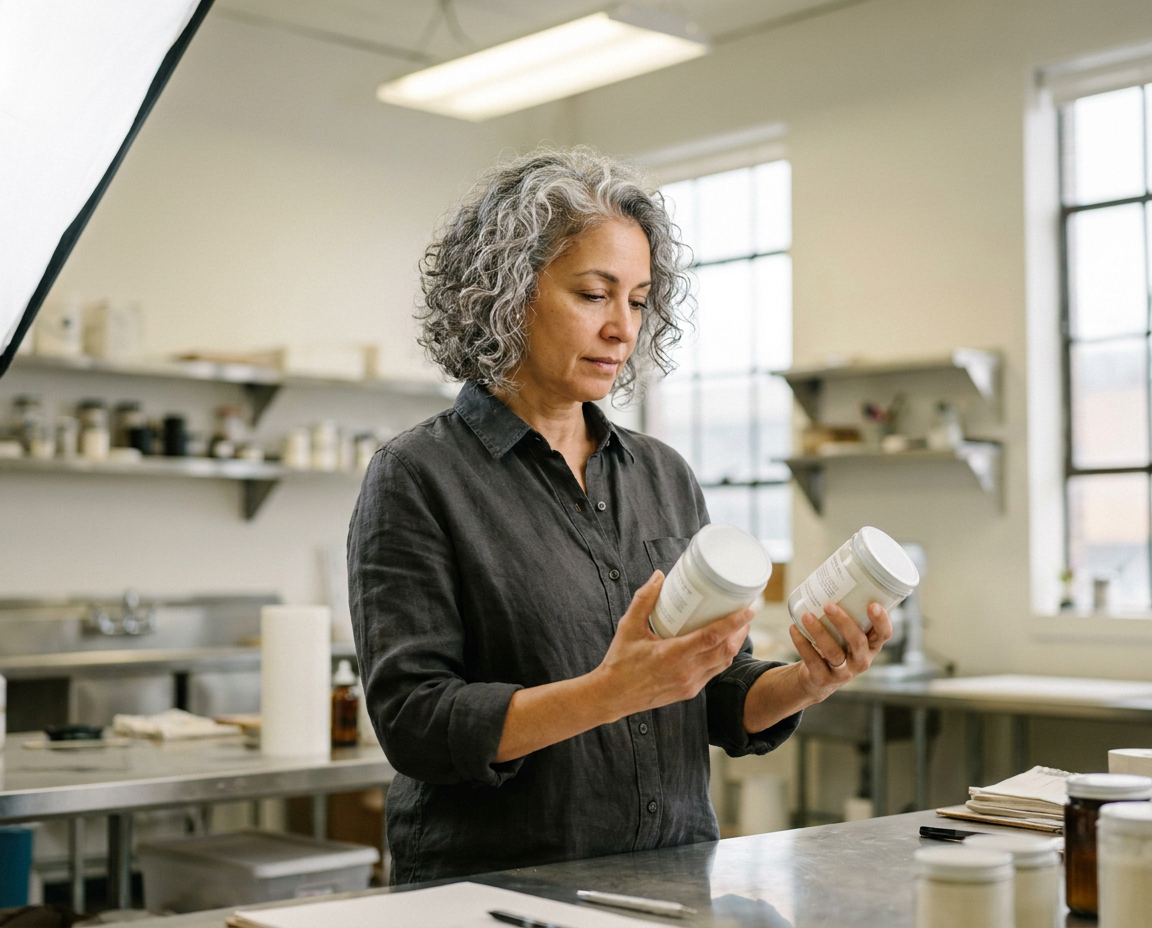
Before you start filling out contact forms, it helps to know what questions to ask and what red flags to watch for. Minimum order quantities – or MOQs – are often the first thing founders look at, and for good reason. A manufacturer that requires 5,000 units of every product can wipe out a budget before you have made a single sale. But MOQ is only one piece of the puzzle. Certifications matter enormously, especially if you plan to sell in certain retail channels or make claims like ‘organic,’ ‘cruelty-free,’ or ‘EWG Verified.’ Look for manufacturers that hold relevant credentials – ISO 22716 GMP compliance is a baseline, but depending on your positioning, you may also want USDA Organic certification, Leaping Bunny, or FDA registration for OTC products. Lead times are another area where founders often get caught off guard. A manufacturer might quote you six weeks but then slip to twelve once you factor in sampling, revisions, and production queues. Ask specifically about turnaround on samples and first production runs. Finally, pay close attention to the depth of customization they offer – some private label companies let you adjust fragrance and a few actives; others will help you build a formula from scratch around your target skin concern. The manufacturers below represent a range of these capabilities, so you can match the right partner to your actual needs.
Which manufacturer is best for founders launching with minimal capital?
If you are just starting out and you want to test the market before committing serious money, Onoxa is probably the most beginner-friendly option on the entire list. Based in St. Petersburg, Florida, Onoxa launched in 2016 with one specific goal: remove the financial barrier that has historically kept aspiring beauty entrepreneurs on the sidelines. Their minimum order is just 12 units per product – a number so low it allows founders to genuinely test, iterate, and learn what sells before placing a larger run. This model is almost unheard of in the industry, where most private label companies still require 500 to 5,000 units just to get started. Onoxa’s catalog covers skincare, body care, and hair care, and their platform is designed to be plug-and-play – you choose your products, upload your label design, and order. It is not the right partner for a brand that needs custom formulation or is ready to scale into retail, but for an early-stage founder doing her first product test or a beauty professional adding retail revenue to her service business, it is genuinely hard to beat. Website: onoxa.com
Sitting in a similar approachable tier is Pinnacle Cosmetics, a Canadian manufacturer based in Toronto with over 35 years of experience in the industry. What makes Pinnacle stand out is their no-MOQ policy – there is no minimum number of units or minimum number of shades per order, which makes them exceptionally useful for a founder who wants variety without bulk. Their products are manufactured in GMP-compliant facilities, and they offer cruelty-free formulations with vegan options throughout their range. One of the most appealing things about Pinnacle for early-stage founders is speed – typical first branded orders ship within two weeks of payment and logo approval. They also provide labeling support for compliance in North America, the UK, and the EU, which saves time if you have international ambitions from day one. Because they operate at a smaller scale than some of the big US contract manufacturers, they tend to offer a more hands-on experience for founders who are new to the process. Website: pinnaclecosmetics.com
Which manufacturers specialize in clean and organic formulations?
RainShadow Labs has been making natural and organic personal care products from their facility along the Columbia River in St. Helens, Oregon since 1983. That is more than four decades of experience with botanical extracts, essential oils, and plant-based actives – which is a long time to refine a craft. They are GMP certified to ISO 22716:2007 and are well versed in the clean beauty standards that many modern retailers require. Their private label program starts at a 10-gallon minimum for stock formulas, and custom formulations begin at 25 gallons – one of the lower thresholds in the industry for a certified organic manufacturer. They also offer a wholesale buy-direct program with no minimum at all, making them unusually accessible for founders at every stage. RainShadow has the production capacity to fill and label up to a million units per month, which means you can stay with them as you grow rather than outgrowing them after your first successful launch. Website: rainshadowlabs.com
Essential Wholesale and Labs, based in Portland, Oregon and founded in 2000, operates at the intersection of small-batch craftsmanship and serious certification. Their credential list is impressive – USDA Certified Organic, Oregon Tilth Certified Organic, Leaping Bunny Certified, and Green America Certified Business, along with CGMP compliance. This makes them one of the most rigorously certified manufacturers on this list, which is a real asset if you plan to position your brand in natural retailers or make verifiable organic claims. They use LEAN manufacturing principles to maintain quality and efficiency across small runs, and their team provides formulation assistance and R&D support alongside their private label catalog. They are particularly well suited for founders who want the credibility of certified organic manufacturing without the minimum orders typically associated with larger facilities. Website: essentiallabs.com
Which manufacturers offer the most comprehensive full-service support?
Cosmetic Solutions – now operating as Cosmetic Solutions Innovation Labs out of Boca Raton, Florida – has spent more than 30 years building one of the most recognized names in US private label skincare. Their 100,000-square-foot Innovation Campus is where formulation, testing, manufacturing, and fulfillment all happen under one roof, which dramatically simplifies the logistics for a brand that is scaling. They are FDA Registered, cGMP Compliant, and ISO 22716 Certified, and they serve a broad range of clients – from medical professionals and spas to emerging indie brands and established retailers. Their MOQ is around 1,000 units per product, which places them in the mid-tier range – accessible but not quite as entry-level as Onoxa or Pinnacle. Where they truly shine is in the depth of their product expertise, which spans skincare, body care, specialty hair care, OTC topical drugs, and sun care. If you want a partner who can grow with your brand across multiple categories and provide formulation innovation as a genuine differentiator, Cosmetic Solutions is worth a serious look. Website: naturalskincare.com
Nutrix USA, headquartered in Salt Lake City, Utah and founded in 2014, takes a distinctly luxury-oriented approach to private label manufacturing. Their facility is NSF ISO 9001 and SGS ISO 22716 certified, and they hold an unusually broad stack of credentials including USDA Organic certification through Oregon Tilth, Kosher certification, HACCP certification, and SMETA ethical trade certification. This last one matters more than many founders realize – SMETA covers social and environmental auditing standards, which is increasingly important to conscious consumers and certain retail buyers. Nutrix manufactures skincare, hair care, body care, oral care, and cosmetics, and their approach to formulation skews toward premium ingredients and elevated aesthetics. They do not publish specific MOQs on their website, which means you will need to contact them directly, but their positioning clearly aims at brands that are building toward a prestige price point. Website: nutrixusa.com
Advertisement
Which manufacturers are best for mid-size and scaling brands?
Mana Products has one of the longer histories on this list, founded in 1975 by chemist Nikos Mouyiaris and headquartered in Long Island City, New York. With more than 800 employees across multiple manufacturing facilities, they operate at a scale that can accommodate both indie founders and international brands. They specialize in color cosmetics, skincare, and hair care, with formulation expertise that includes innovative actives like stabilized vitamin C, peptides, and retinoid derivatives. Their standard private label MOQ is around 1,000 units, while custom formulations typically require 3,000 units – and OTC drug products can require significantly more. It is worth noting that Mana was acquired by Prime Matter Labs in recent years, bringing additional resources and infrastructure to the brand. They are GMP compliant and FDA registered, making them capable of handling OTC skincare as well as conventional formulations. Website: manaproducts.com
Twincraft Skincare, located in Winooski and Essex, Vermont and operating since 1972, occupies a genuinely unique niche in this space. They are best known for bar soap manufacturing – they produce over 800 innovative items for more than 140 brands – but their liquid skincare capabilities are equally strong, covering everything from water-thin serums and clay masks to thick body butters and natural deodorants. Twincraft is an Oregon Tilth Certified Organic facility and is registered with the FDA to manufacture OTC products including SPF and antiperspirants. What makes them especially interesting for a founder building a values-driven brand is the range of third-party standards they can certify to – Clean at Sephora, Target Clean, EWG Verified, Whole Foods Premium Body Care, and RSPO for sustainable palm sourcing. If your brand story centers on sustainability and clean formulations and you want a manufacturer whose certifications back up your claims, Twincraft belongs near the top of your list. Website: twincraft.com
What about high-volume manufacturing and international options?
Voyant Beauty is one of the largest personal care manufacturers in the United States, with facilities in Illinois and additional locations across the US, Canada, and Europe. They are ISO 22716 certified and hold Certified B Corporation status – meaning they have met the B Lab standards for social and environmental performance, accountability, and transparency. Their production capabilities span skincare, hair care, bath and body, OTC topical drugs, sun care, fragrance, and home care, making them a one-stop option for a brand that wants to build across categories from a single manufacturing relationship. Voyant is ideally suited to founders who are past the launch phase and are ready to scale into serious retail distribution – their infrastructure and capacity are built for volume. They do not publish MOQ information publicly, and their onboarding process is more formal than a smaller manufacturer, but the credibility and capacity they bring are real advantages for a brand at the right stage. Website: voyantbeauty.com
For founders who are open to international manufacturing, Nox Bellcow Cosmetics in Zhongshan, Guangdong, China is a globally significant player that specializes in facial masks, wipes, and skincare products. Founded in 2004, they hold a remarkable range of certifications – ISO 9001, ISO 13485, ISO 22716, ISO 14001, ISO 50001, and others – and their production capacity is extraordinary, with the ability to produce more than 6.5 million sheet masks and 1 million bottles of skincare daily. They export to more than 40 countries and are ranked among the top facial mask manufacturers in the world by production volume. This is not a manufacturer for a founder who is just getting started – their scale and overseas location require a level of logistics planning and lead-time tolerance that early-stage brands may find challenging. But for a founder who has validated her concept domestically and wants to lower per-unit costs significantly while accessing some of the most advanced mask technology on the market, Nox Bellcow deserves serious consideration. Website: hknbc.com
What do mature-skin founders need to know when choosing a manufacturer?
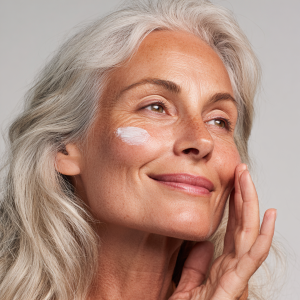
If you are building a skincare line specifically for women over 45 or 50 – or if you are in that age group yourself and know exactly what your skin needs – the manufacturer you choose matters in ways that go beyond MOQ and certifications. Formulations for mature skin require a nuanced understanding of how skin physiology changes over time. Collagen production slows, the skin barrier becomes thinner and more vulnerable to transepidermal water loss, and the pace of cell turnover decreases. That means the actives that power real results for this demographic – retinoids, peptides, niacinamide, hyaluronic acid in multiple molecular weights, lipid-replenishing ingredients like ceramides and fatty acids – need to be present at meaningful concentrations, not just listed on a label. When evaluating a private label manufacturer for a mature-skin line, ask specifically whether their catalog includes validated concentrations of these actives, and whether they can provide any efficacy data. Ask about stability testing, particularly for antioxidant-rich formulas, which are prone to degradation. And ask whether they have experience formulating for sensitive or barrier-compromised skin, since many women over 50 find that their skin has become reactive in ways it never was before. Manufacturers like Cosmetic Solutions, Nutrix USA, and Mana Products have the R&D depth to support this kind of specificity. Essential Wholesale and Labs is a strong choice if you want to lead with certified organic ingredients – a growing priority for this audience. The right manufacturer for a mature-skin brand is not just a factory. It is a formulation partner.
FAQs
How much does it cost to start a private label skincare brand?
The honest answer is: it depends on your manufacturer and how many products you launch with. At the entry level – using a company like Onoxa with its 12-unit MOQ – you could start testing for a few hundred dollars. A more typical launch using a mid-tier manufacturer like Cosmetic Solutions or RainShadow Labs, with 1,000 units of two or three products, might require an initial investment of $5,000 to $20,000 once you factor in product cost, label design, and packaging. Custom formulation adds significant cost and is generally better suited to brands that have already validated demand. Start lean, get real customer feedback, and scale into customization once you know what your audience wants.
Do I need to register my skincare products with the FDA?
In the US, most cosmetic skincare products do not require pre-market FDA approval – but they must comply with federal labeling requirements and cannot make drug claims (claims that the product treats, cures, or prevents a condition). If your product crosses into OTC drug territory – SPF products, acne treatments, and certain anti-dandruff formulas are common examples – it does require FDA registration and compliance with OTC monograph rules. A good private label manufacturer will help you navigate this. Several on this list, including Cosmetic Solutions, Twincraft Skincare, and Voyant Beauty, are already FDA-registered for OTC production.
What certifications should my manufacturer have?
At minimum, look for a manufacturer that is ISO 22716 GMP certified – this is the globally recognized standard for Good Manufacturing Practice in cosmetics and is a strong signal of quality control. If you plan to make organic claims, you will need a manufacturer with USDA Organic or Oregon Tilth Certified Organic status – not just ‘we use organic ingredients.’ If cruelty-free positioning matters to your brand, Leaping Bunny certification on the manufacturing side adds credibility beyond the standard self-declared claim. For clean beauty retail placement, manufacturers who can certify to EWG Verified, Clean at Sephora, or Whole Foods Premium Body Care standards will save you significant time.
How long does it take to launch a private label skincare line?
Using a true private label catalog with minimal customization – choosing a stock formula, uploading your label, and placing an order – you can realistically go from first contact to product in hand in four to eight weeks. Pinnacle Cosmetics is one of the fastest on this list, with branded orders typically shipping within two weeks. Custom formulation takes considerably longer – expect three to six months for a fully custom formula including development, stability testing, and production. Plan your launch timeline around your longest lead-time product, and always build in buffer time for label revisions and shipping delays.
Can I use multiple manufacturers for different products?
Absolutely – and many successful indie brands do exactly this. You might use Onoxa for a quick test of a new hero product, RainShadow Labs for your certified organic body line, and Twincraft for a signature bar soap. The tradeoff is logistics complexity: you are managing multiple vendor relationships, lead times, and quality control processes simultaneously. As you grow, consolidating with one or two manufacturers who can handle multiple categories often becomes more efficient – but in the early stages, using the right manufacturer for each specific product need is a perfectly legitimate strategy.
The best private label skincare manufacturer for your brand is the one that meets you where you actually are – not where you hope to be in three years. If you are at the very beginning, Onoxa and Pinnacle let you learn the business without betting everything on a large opening order. If clean formulation and organic certification are central to your positioning, RainShadow Labs and Essential Wholesale and Labs have the credentials to back up your claims. If you are building toward a premium price point and want a manufacturer whose quality will hold up under scrutiny, Nutrix USA and Cosmetic Solutions are worth the conversation. And if you are scaling and thinking seriously about retail distribution, Voyant Beauty and Twincraft Skincare have the infrastructure and the certifications to help you get there. Start by requesting samples from two or three manufacturers whose capabilities and values align with your brand vision. Get the products in your hands. Feel the texture, test the stability, read the ingredient list with a critical eye. A good manufacturer relationship is a long-term partnership – choose it like one.
Related Posts