Jun
Wellness
Why Your Feet Hold the Secret to Aging Well
If you click on links we provide, we may receive compensation.
Why Your Feet Hold the Secret to Aging Well
In 2024, 43,020 Americans aged 65 and older died as a result of preventable falls – and foot problems are one of the most overlooked contributors to that number. The CDC reports that over 14 million older adults, roughly one in four, fall every year. That is a staggering toll, and it traces back – at least in part – to what is happening at ground level. Your feet are the foundation of every movement you make, and yet they are the one body part most people consistently ignore. We slather our faces in retinol, layer serums on our necks, and fuss over our hands – but our feet? They get a rinse in the shower and a pair of whatever shoes happen to be on sale. That neglect has real consequences that go far beyond cracked heels or a chipped pedicure.
What Actually Happens to Your Feet as You Age?
Feet change more dramatically with age than almost any other body part, and those changes begin quietly, well before pain announces itself. The fat pads that cushion the heel and ball of the foot – nature’s built-in shock absorbers – gradually thin and lose their elasticity. By the time most people notice their feet feeling harder, bonier, or more sensitive on hard floors, significant fat pad atrophy has already occurred. This is not just a comfort issue. Reduced cushioning changes how force travels up through the ankle, knee, hip, and spine, meaning that the biomechanical ripple effect of aging feet can show up as knee pain or lower back tension long before it ever announces itself as a foot problem.
The arches change too. Ligaments that support the medial arch weaken over decades of weight-bearing, and the arch itself may flatten – a shift that alters gait, increases pronation, and places stress on tendons and joints that were never designed to absorb load that way. Meanwhile, circulation to the feet decreases as peripheral blood vessels become less elastic and the heart’s pumping efficiency changes. Less blood flow means slower healing, reduced sensation, cooler skin, and diminished capacity to fight minor infections before they escalate. Skin on the feet thins and dries out faster, losing the oil gland activity and cell turnover that keep it supple. Nails thicken, yellow, and grow more slowly – and become more prone to fungal infection. These are not random indignities. They are predictable biological processes that respond well to consistent, informed care.
How Do Foot Problems Directly Drive Fall Risk?
The link between foot health and falls is direct, well-documented, and under-discussed. A landmark study published in the Journal of the American Geriatrics Society found that among older adults studied, 90% had at least one foot problem, 51% had at least one structural deformity such as bunions or hammertoes, and 42% had peripheral neuropathy (https://pmc.ncbi.nlm.nih.gov/articles/PMC6647839/). Each of these conditions independently increases fall risk. Bunions shift the big toe out of alignment, throwing off the stable base the foot provides with every step. Hammertoes cause the toes to curl, making it harder to grip the ground and easier to trip. Neuropathy – reduced sensation in the feet – means the brain receives less real-time information about balance and ground surface, essentially asking the body to walk with blurred spatial feedback.
Poorly fitting shoes compound every one of these problems. Research published in the Journal of the American Geriatrics Society in 2026 found that shoes with wide soles, low heels, and high collars significantly reduced postural sway in older adults, while rocker-bottom soles helped accommodate bunion deformities and custom insoles reduced plantar pressure in those with diabetic neuropathy (https://agsjournals.onlinelibrary.wiley.com/doi/10.1111/jgs.70111). Almost 90% of the population wears the wrong shoe size, according to podiatric research – often the same size they were measured at decades ago, despite the reality that feet lengthen, widen, and change shape across a lifetime. Falls are not just accidents. They are often the predictable outcome of foot problems that were present and addressable long before the fall happened.
Is Foot Pain Quietly Limiting Your Life?
Foot pain does something insidious before it becomes severe enough to report to a doctor – it shrinks the radius of your life. You cut the walk short. You skip the farmers market because the parking is far. You decline the invitation to tour the museum. Each of these small adjustments feels reasonable in the moment, but they compound. The Framingham Foot Study, published in Arthritis Care and Research, found that foot pain is independently associated with mobility limitation in both men and women, even after controlling for other health factors (https://pmc.ncbi.nlm.nih.gov/articles/PMC3779626/). Reduced activity, even mild and gradual, sets off a cascade of decline that is far more serious than the original foot complaint.
When you move less, muscle mass decreases – sarcopenia, the age-related loss of muscle, is dramatically accelerated by inactivity. Less muscle means worse balance, less bone density, slower metabolism, and reduced cardiovascular endurance. Less activity also means fewer social interactions, and social isolation in older adults is independently associated with cognitive decline, depression, and early mortality. It is a cascade that starts, for many people, with a foot that hurts too much to take a long walk. That is not an overstatement. It is the documented trajectory of untreated foot pain in aging adults, and it is one of the most preventable sequences in all of geriatric health.
What Are the Most Common Foot Conditions to Know About?

Plantar fasciitis is probably the best-known foot complaint, and it does not discriminate by age – but it becomes both more common and more stubborn as the plantar fascia loses elasticity. The classic presentation is sharp heel pain on those first steps in the morning, caused by inflammation in the thick band of tissue connecting the heel bone to the toes. Consistent stretching of the calf and plantar fascia, supportive footwear, and avoiding prolonged periods barefoot on hard floors are the cornerstones of management. Bunions – bony prominences that develop at the base of the big toe – affect roughly one in five older adults and are largely the result of genetics, compounded by decades of wearing shoes with narrow toe boxes. They are painful, they alter gait, and they significantly increase fall risk. Early management focuses on wide, accommodating footwear and toe spacers, with surgery reserved for severe cases.
Hammertoes, where the smaller toes curl abnormally due to muscle imbalance, are nearly as common as bunions in older populations. They cause friction on the top of the toe joint, leading to corns – thickened skin that develops as a protective response to repeated pressure. Corns are painful and, unlike calluses, concentrated and pinpoint. They can be managed with proper footwear, moleskin padding, and professional debridement by a podiatrist – but they will recur unless the underlying pressure source is addressed. Fungal toenail infection (onychomycosis) affects up to 20% of adults over 60, according to dermatology literature. The nails become thickened, discolored, and brittle, and left untreated the infection can spread to adjacent nails or skin. Over-the-counter antifungal treatments have limited efficacy for nail infections; a podiatrist can prescribe topical or oral antifungals with far better outcomes.
Advertisement
Diabetic peripheral neuropathy deserves special attention. An estimated 50% of people with diabetes will develop some degree of neuropathy over the course of their illness, and the feet are the first and most commonly affected site. Reduced sensation means cuts, blisters, and pressure ulcers can go unnoticed until they become serious. Reduced circulation means those wounds heal poorly. The combination is responsible for a significant proportion of all lower limb amputations in the United States each year. If you have diabetes, daily foot inspection – using a mirror for the soles if necessary – is not optional. It is a clinical requirement. Heel fissures, deeply cracked skin at the heel, are another condition that moves from cosmetic nuisance to real concern when the cracks deepen enough to bleed or become infected. They are especially prevalent in people who spend a lot of time barefoot on hard surfaces, who have dry skin, or who have reduced sweating capacity – all things that become more common with age.
What Does Good Foot Skincare Actually Look Like?
Feet need skincare just as much as your face does – maybe more, given the punishment they absorb daily. The starting point is moisture. Feet have very few sebaceous glands relative to the rest of the body, which is why they dry out so much faster. A urea-based cream is the gold standard recommendation from podiatrists for dry, thickened, or cracked foot skin. Urea is both a humectant, drawing moisture into the skin, and a keratolytic, meaning it gently breaks down thickened keratin. A 10-25% urea concentration is effective for daily maintenance and is safe even for people with diabetes. Formulations in the 40% range are used for more severe cracking and thickening but should be used with guidance, particularly on compromised or sensitive skin (https://skinintegra.com/blogs/skin-facts/urea-vs-ammonium-lactate-for-cracked-heels).
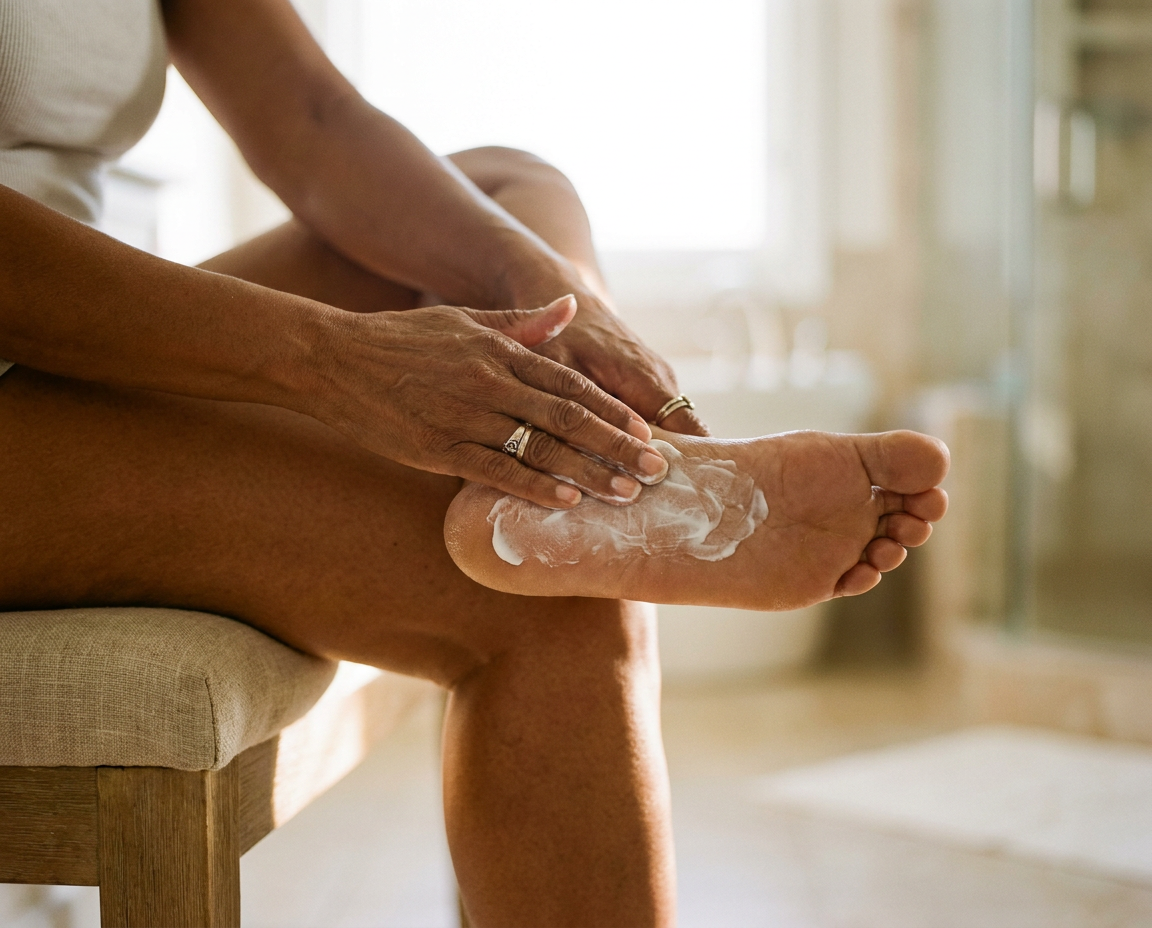
Apply foot cream every evening after washing, and then put on a pair of cotton socks to lock in the moisture overnight. This sounds almost too simple, but the consistency of it – night after night – genuinely transforms the skin on the feet over weeks. For exfoliation, a pumice stone or foot file used on damp skin a few times a week removes the surface layer of dead cells that would otherwise build up into calluses. Go gently. Over-filing can thin protective calluses to the point of pain, and aggressive exfoliation on already-dry skin can cause microtears. For cracked heels specifically, a targeted heel balm used twice daily and covered with socks is more effective than a full-foot moisturizer, because the occlusive barrier that socks create dramatically improves penetration. If heel cracks are deep, bleeding, or showing any sign of infection, see a podiatrist rather than attempting home treatment.
How Should You Be Caring for Your Toenails?
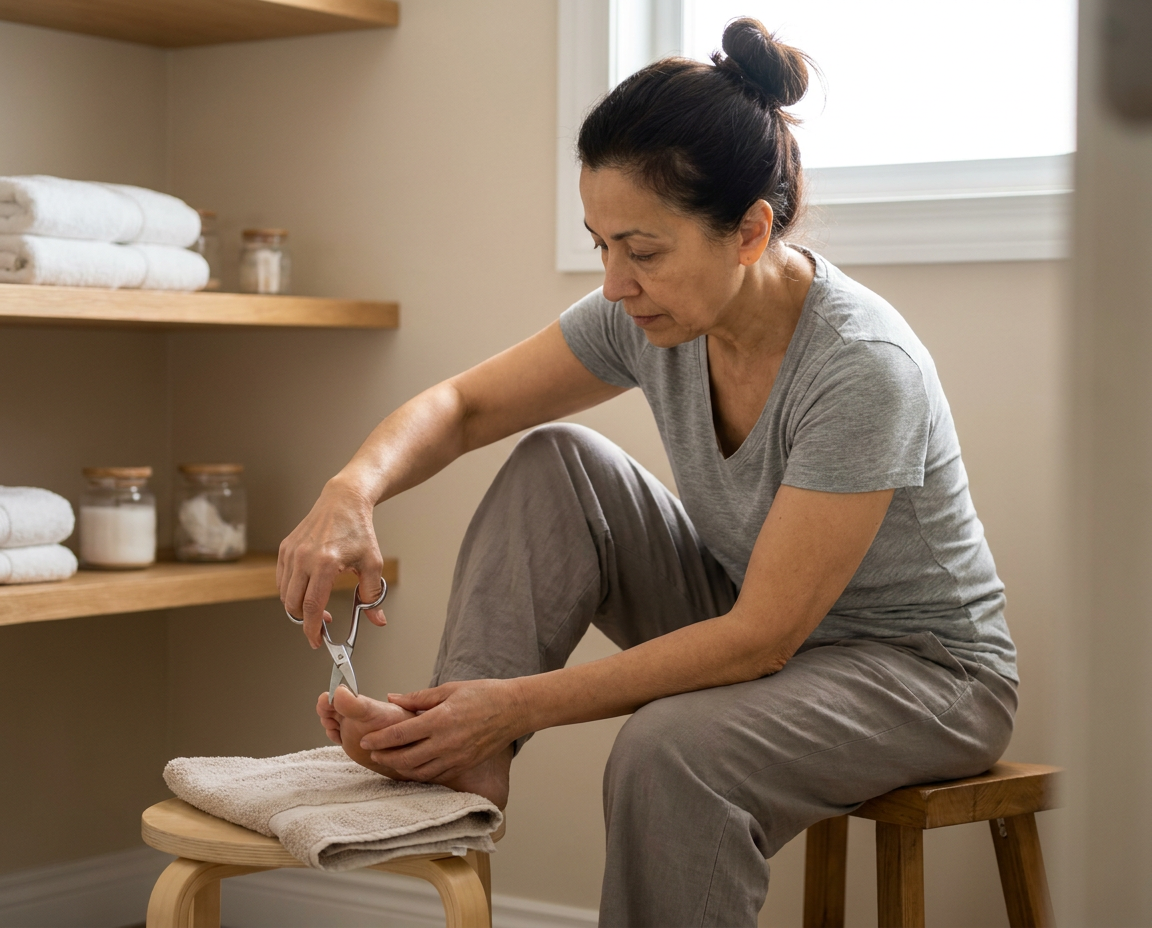
Toenail care is one of the most overlooked personal care routines in adults over 60, and the consequences of neglect are significant. Nails that are too long catch on socks and sheets, tear, and create pressure against the front of the shoe that can cause pain, bruising under the nail, and toe deformity over time. The correct technique is straightforward: trim straight across, not curved, and file any sharp corners smooth. Curved trimming encourages the nail edges to grow into the surrounding skin, the mechanism behind ingrown toenails – which are far more serious and more prone to infection in older adults and in anyone with diabetes or circulatory issues. Use proper nail scissors or toenail clippers rather than regular fingernail clippers, which tend to be too small and create pressure that can crack thickened nails.
If toenails have become very thick, discolored, or difficult to cut without pain or risk, this is exactly the work a podiatrist is trained for. Many older adults – particularly those with limited mobility, vision changes, or diabetes – receive regular podiatry appointments specifically for nail care, and this is not an indulgence. It is genuine preventive healthcare. A podiatrist can also identify early signs of fungal infection, nail psoriasis, or changes that may indicate systemic health issues, including cardiovascular disease, before they are visible to the untrained eye. Think of regular podiatry the way you think of regular dental check-ups – maintenance care that prevents small problems from becoming large ones.
What Should You Actually Look for in Footwear at This Stage of Life?
Footwear is probably the single highest-impact intervention available for foot health in older adults – and it is almost entirely within your control. The non-negotiables are these: adequate toe box width, so that toes are not compressed and bunion pressure is minimized; sufficient length, which means your longest toe should have roughly a thumb’s width of space in front of it; meaningful arch support, which reduces the compensatory strain that falls on the plantar fascia and ankle tendons when the arch has no reinforcement; and a low, stable heel, no higher than an inch or inch-and-a-half, that does not pitch your weight forward or require balance work just to stand still. Sole grip is equally critical – a rubber outsole with texture reduces slip risk on wet or polished surfaces, which is directly relevant to fall prevention.
The upper material matters too. Leather and quality mesh both provide breathability and reduce the friction that causes blisters and corns. Rigid synthetic uppers that do not flex with the foot are worth avoiding. Laces or adjustable closures are better than slip-ons, because they allow you to customize the fit as your feet change across the day – feet typically swell in the afternoon, so shoes that feel fine in the morning may be too tight by evening. Slip-on shoes, while convenient, offer almost no lateral stability and are associated with a higher rate of falls in older adults. And please do get your feet properly measured. Most good shoe stores still offer this, and the reality is that foot size, width, and shape change meaningfully over decades. The size you were at 40 is very likely not the size you are at 65.
Are Pedicures and Foot Massage Actually Good for Your Health?
Here is the beauty angle that does not get nearly enough credit: treating your feet as a self-care zone, not just a functional body part, has measurable wellness benefits. A professional pedicure, performed by a skilled technician, addresses the accumulation of dead skin, manages calluses, shapes and cleans the nails, and often includes a massage that improves circulation in the lower legs and feet. For many women over 55, a monthly pedicure is the most consistent foot care they receive – and if it is done well, it genuinely matters for foot health, not just aesthetics. The key is choosing a salon with rigorous sanitation standards, since the risk of fungal or bacterial infection from improperly sterilized tools is real, particularly for anyone with diabetes or compromised immunity.
Foot massage, whether professional or self-administered, has documented benefits for circulation, for reducing stiffness in the plantar fascia and ankle, and for the simple but real benefit of bringing attentive awareness to a body part most of us never look at carefully. Reflexology – the practice of applying pressure to specific zones of the foot that are mapped to other organs and systems – has a mixed evidence base for its more specific health claims, but the general relaxation and circulation benefits of the massage component are well-supported. Rolling the foot over a golf ball or firm massage ball for a few minutes daily is a low-cost way to release tension in the plantar fascia, improve proprioception, and maintain the health of the intrinsic foot muscles that play a critical role in balance. That balance, maintained or lost, is one of the central determinants of how well you age.
What Does Foot Care Look Like for Mature Skin?
For women in their 50s, 60s, and beyond, the specific skin changes of menopause and aging converge in the feet in ways that deserve direct attention. Estrogen decline reduces the skin’s capacity to retain moisture and produces collagen, so the feet – already prone to dryness – become significantly drier and more prone to fissuring in midlife. The fat pad thinning that begins in the fourth decade accelerates, meaning that even women who have always had comfortable feet may notice increasing discomfort on hard surfaces. The nails change too: they may grow more slowly, become more brittle or ridged, and are more vulnerable to fungal infection as immune function shifts with age. None of this is inevitable misery – it is biology that responds well to the right interventions.
The routine that works best at this stage is a layered one. Daily urea-based cream applied at night under cotton socks. Regular exfoliation two to three times per week to manage the buildup that dry, slow-turnover skin produces. Proper nail care every six to eight weeks, or more frequently if the nails are thick. Footwear that actually fits, with real arch support and a wide toe box. Monthly attention from a professional – whether a podiatrist, a skilled pedicurist, or both. And regular, deliberate movement that keeps the intrinsic muscles of the foot engaged, whether through walking, simple toe-gripping exercises, or balance work. These are not large asks. They are the kind of small, consistent habits that compound into real protection against the cascade of decline that poorly managed foot health can set in motion.
FAQs
How often should I see a podiatrist if I have no specific complaints?
Most podiatrists recommend an annual check for healthy adults over 60, increasing to every three to four months for anyone with diabetes, peripheral neuropathy, circulation issues, or a history of foot ulcers. Think of it as a routine preventive appointment, not a response to a problem.
What percentage urea should I look for in a foot cream?
A 10-25% urea formulation is the sweet spot for daily maintenance on dry, mature feet – it is effective for softening thickened skin and preventing heel fissures without being too intense for daily use. If you have diabetes, stay in the 10-20% range and confirm with your doctor before trying anything stronger.
Can foot pain really be causing my back or knee pain?
Yes – this is one of the most under-recognized connections in musculoskeletal health. When the foot’s fat pads thin and the arch flattens, the mechanics of every step change in ways that transfer abnormal stress up through the ankle, knee, hip, and lumbar spine. Many people experience significant improvement in knee or lower back symptoms simply by addressing foot mechanics with proper footwear or orthotics.
Are pedicures safe if I have diabetes?
Yes, with care. Choose a salon with impeccable sanitation practices – all tools should be sterilized between clients – and let the technician know about your diabetes. Avoid cutting cuticles aggressively and skip callus razors or blades. Better yet, ask your podiatrist to handle nail and skin care, or choose a medical pedicure from a trained professional.
How do I know if a toenail change is fungal or just aging?
Aging nails tend to become thicker, slower-growing, and more ridged – but they usually maintain their natural color. Fungal infection typically produces yellowing, browning, or white patches, along with brittleness, crumbling edges, and sometimes a faint odor. A podiatrist can confirm with a simple lab test and recommend the most effective treatment.
The foundation you stand on deserves the same level of care and attention you give the rest of your body. Feet are not a footnote in the story of aging well – they are the literal ground on which that story unfolds. The science is clear: foot health is directly connected to fall risk, mobility, activity levels, and through those, to cognitive health, social connection, and longevity itself. Building a real foot care routine – good skincare, proper nails, thoughtful footwear, regular professional attention – is one of the most practical and high-return investments you can make in the quality of your later decades. Start today, even if it is just booking a podiatry appointment and ordering a urea cream. Your future self will be steadier on her feet for it.
Related Posts