Oct
If you click on links we provide, we may receive compensation.
The global acne treatment market crossed $13 billion in 2025, and a surprisingly large chunk of that growth was driven by a small, round sticker you press onto your face before bed. Pimple patches have moved from novelty to medicine-cabinet staple in just a few years – and in 2026 there are more options than ever, from dirt-cheap Korean hydrocolloid discs to high-tech microdart patches that dissolve actives into a pimple before it even surfaces. For a category that started with one or two brands, the shelf is now genuinely crowded. Some of these patches do exactly what they promise. Others are better packaging than product. Sorting them out is worth doing.
I researched the most popular patches available this year – Mighty Patch from Hero Cosmetics, COSRX, Peace Out, Starface, Rael, ZitSticka, and a few others worth knowing about. Below is a breakdown by situation: best overall, best for overnight, least visible for daytime, best budget, and best for women 45 and older navigating the particular frustrations of hormonal or perimenopausal breakouts. The mature skin angle gets its own dedicated section because, as anyone who has dealt with a jawline pimple at 52 already knows, the rules change after menopause starts.



How Do Pimple Patches Actually Work?
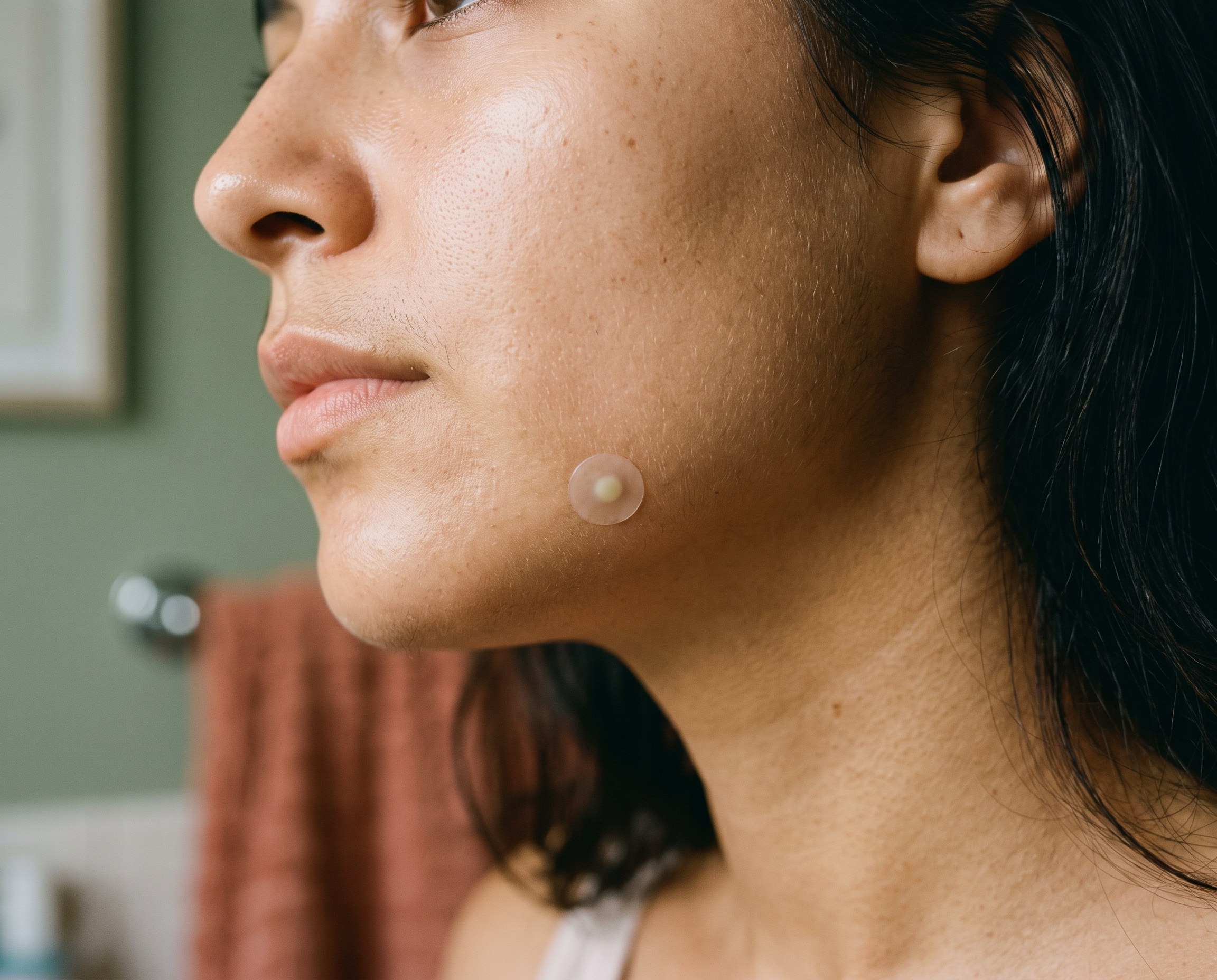
Most patches on the market use hydrocolloid – a wound-dressing material originally developed for hospitals. Hydrocolloid works by creating a moist, occlusive environment over a pimple that has already surfaced. The material absorbs more than 150% of its own weight in fluid within a few hours, drawing out sebum, pus, and other exudate while protecting the blemish from bacteria, fingers, and the temptation to pick. Within six to eight hours, the patch turns white and slightly raised – a visible sign that absorption has happened and the pimple is already flatter underneath. Research published in the Journal of the American Academy of Dermatology confirms that hydrocolloid dressings accelerate wound healing and reduce inflammation at the site, making them one of the better-supported over-the-counter acne interventions available.
Hydrocolloid patches are not magic, though, and knowing their limits saves frustration. They work on whiteheads and pustules – pimples that have already surfaced and contain fluid near the skin’s surface. They do nothing for blackheads, which are oxidized oil in a pore rather than an infected follicle. And they cannot reach cystic acne, which sits too deep for a surface patch to touch at all. If you press a hydrocolloid patch onto a hard, painful lump under the skin with no visible head, you will wake up to a flat, unchanged patch and an unchanged pimple beneath it. That is the most common frustration people report, and it’s entirely a function of using the wrong tool for the job.
What Is the Difference Between Hydrocolloid and Microneedle Patches?
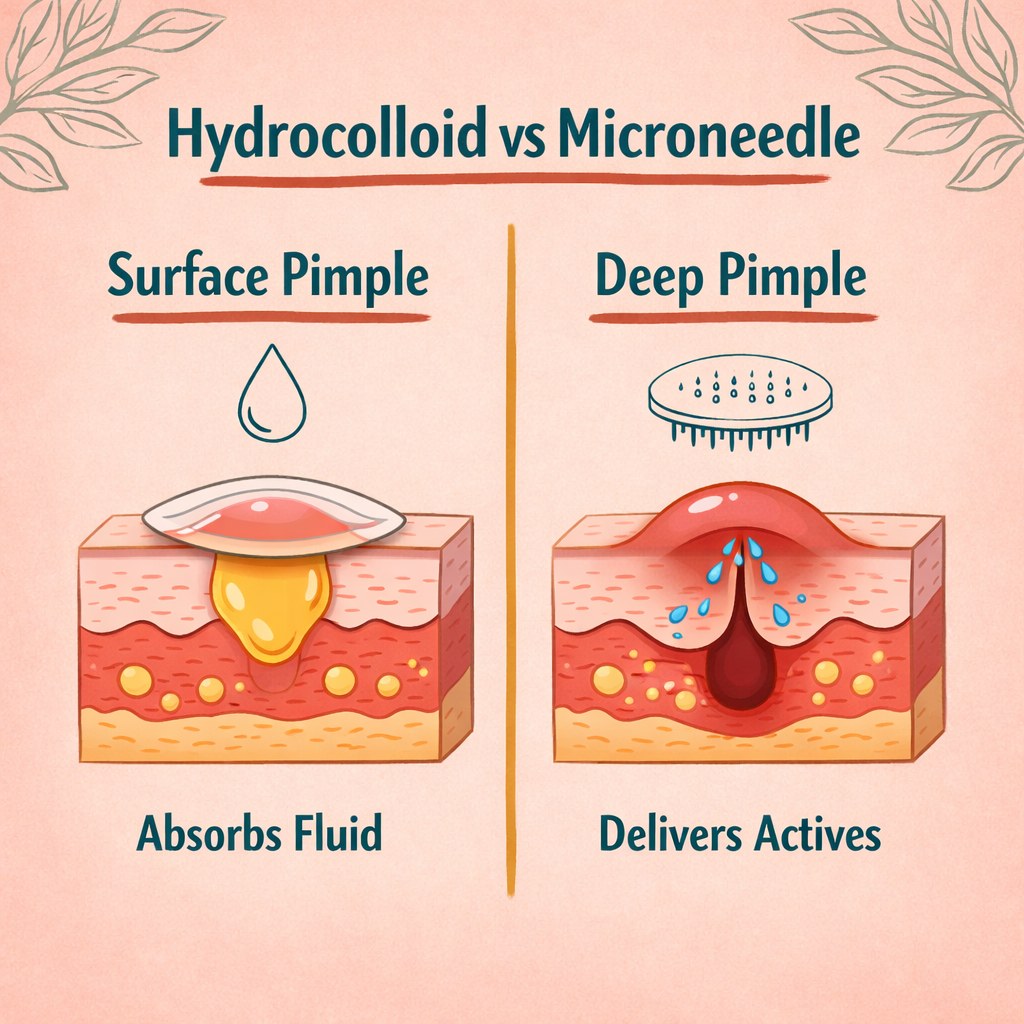
Microneedle patches – sometimes called microdart patches – work on a completely different principle. Instead of absorbing from above, they deliver active ingredients down into the skin through hundreds of microscopic dissolvable needles. The microdarts are made from materials like hyaluronic acid or salicylic acid that dissolve within two to four hours of contact with skin moisture, releasing actives into the dermis where a deep pimple is forming. ZitSticka KILLA is the best-known option in this category, and Rael’s Microcrystal Spot Cover is a more affordable alternative. The clinical evidence for microneedle patches is still catching up to consumer enthusiasm, but the mechanism is sound – microneedling is an established delivery method in dermatology, and applying it at a tiny, non-invasive scale for acne treatment makes genuine sense.
The practical distinction to keep in mind: hydrocolloid is for pimples that have surfaced, microneedle is for pimples that have not. A whitehead gets a hydrocolloid patch overnight. A deep, painful lump with no visible head – especially the kind that shows up along the jawline and chin during hormonal fluctuations – is a better candidate for a microneedle patch applied early, before inflammation peaks. Using the right type for the right situation is the single most important factor in whether a patch actually works.
Which Pimple Patch Wins Overall?

The Mighty Patch Original from Hero Cosmetics remains the benchmark in 2026, and nothing this year has meaningfully replaced it at the top. It’s a round, flexible hydrocolloid disc available in several sizes that adheres cleanly to the skin, stays put through eight hours of sleep, and consistently draws out the contents of a whitehead by morning. Hero has expanded its range well – the Invisible+ variant is thinner and clearer for daytime wear, the Surface patch is wider for flat blemishes that cover more area, and the Nose patch is shaped to fit the contours of the nose. The Original runs around $12 to $13 for 36 patches on Amazon, which works out to roughly 36 cents per patch. That is fair value for something this dependable. If you only buy one pimple patch this year, this is the one.
What earns Mighty Patch the top spot is consistency rather than any single standout feature. The adhesive holds all night without leaving a sticky residue. The hydrocolloid formula is reliable across skin types. The full line covers enough different scenarios that you are not left looking for a supplement from another brand. And the formula contains no unnecessary actives – just pure hydrocolloid – which makes it safe for sensitive skin, for skin that is reacting to something, and for mature skin that may not tolerate stronger ingredients as well as it once did. When a product does one thing and does it reliably, that earns loyalty.
Which Patch Works Best Overnight?
For maximum extraction while you sleep, Mighty Patch Original is still the right call – but COSRX Acne Pimple Master Patch is a serious competitor, especially if price matters. The COSRX patch is Korean-formula hydrocolloid that comes in three sizes in one pack of 96 patches, currently priced around $14 on Amazon – less than 15 cents per patch. With over 55,000 Amazon reviews at a 4.5-star average, the numbers are hard to argue with. The formula is clean and free of unnecessary actives. Three size options in a single pack mean you are not stuck with patches too small for a large blemish or too large for a tiny spot. COSRX also makes the AC Collection Acne Patch, which adds centella asiatica and madecassoside for a calming effect, if your skin tends toward inflammation. For the majority of overnight users, the original Acne Pimple Master Patch is the better buy – more patches, lower cost, and a straightforward formula that does not introduce anything your skin does not need.
Which Pimple Patch Is the Least Visible During the Day?

Peace Out Acne Day Dots hold a clear lead here. The daytime version is 61% thinner than standard hydrocolloid patches, genuinely sheer, and flexible enough to be covered with foundation or concealer without cracking, lifting, or leaving an obvious outline. Peace Out formulates the Day Dots with salicylic acid, retinol, and aloe vera alongside the hydrocolloid, so the patch is doing active treatment while it sits on your face. For a workday when you need to be in meetings and cannot walk around with a visible white disc on your chin, these deliver. They pair well with the Peace Out overnight patches, which use a thicker formula with higher active concentrations. You can find the Peace Out Day & Night range at Sephora and on Amazon.
Rael Miracle Patch Invisible is another strong option for daytime. It’s ultrathin and nearly transparent, with a soothing, hydrating formula that is notably gentle on reactive or sensitive skin. The Rael Miracle Patch range on Amazon runs around $8 to $10 per pack. It’s a particularly good choice if you find that patches with added actives leave your skin irritated at the edges. Starface Hydro-Stars take a completely different approach: star-shaped patches in bright colors that are not trying to hide at all. Starface leans into visibility as a statement rather than a flaw. The hydrocolloid formula works just as well as any other – the stars do absorb – but if discretion is the goal, this is not your patch.
What Is the Best Budget Pimple Patch?
COSRX Acne Pimple Master Patch wins on value by a significant margin. At roughly 15 cents per patch for 96 patches in three sizes, it’s the most cost-effective option from a brand with a legitimate track record. The formula is pure hydrocolloid without additives that could irritate or sensitize the skin. The three-size variety in one pack – small, medium, and large – covers different blemish sizes without requiring separate purchases. And the adhesion is strong enough to stay put through a night of sleep, which is a basic requirement some cheaper patches fail to meet. This is the patch to buy in bulk, keep in a bathroom drawer, and use without rationing.
What About Mature Skin – Do Pimple Patches Work Differently After 45?

The short answer is yes, with some important nuances worth knowing. Women in perimenopause and menopause commonly experience hormonal breakouts that look and behave differently from younger-skin acne. These blemishes tend to be deeper, more painful, and slower to surface – they show up along the jawline and chin, triggered by fluctuating estrogen and progesterone. Skin also thins slightly with age and produces less sebum overall, which means two things: it’s more sensitive to strong active ingredients, and it heals more slowly when a blemish does form. Standard teenage acne advice does not always translate.
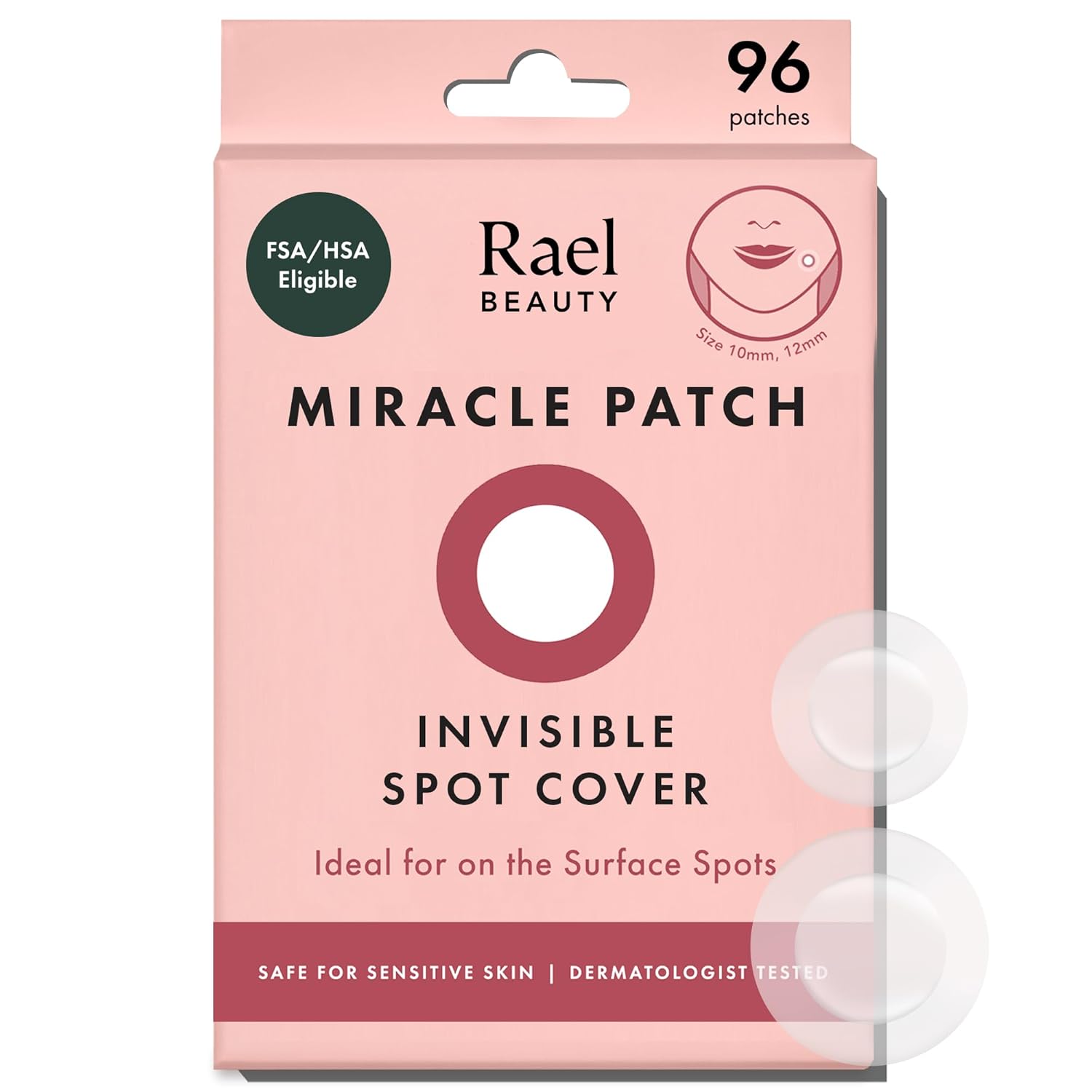
For surface-level breakouts, plain hydrocolloid patches remain an excellent choice for mature skin. They add no actives that could irritate thinner or more reactive skin – just a sealed, moist healing environment that supports the skin’s own repair process rather than hitting it with chemicals. Mighty Patch Original and COSRX work well here. Rael stands out particularly in this context. The brand was built with hormonal acne in mind, and the Miracle Patch line is notably gentle – free of fragrance, free of unnecessary irritants, and formulated with hydrating, calming ingredients that suit skin that is already under stress from hormonal fluctuation.
For the deep, pre-surface pimples that are especially common after 45, microneedle patches are worth trying. Rael’s Microcrystal Spot Cover on Amazon runs around $13 for 9 patches. The formula includes niacinamide and hyaluronic acid alongside the microdarts – both ingredients that mature skin generally responds well to, and neither of which is likely to cause irritation. This is a better fit for the 45-plus demographic than ZitSticka KILLA, which contains salicylic acid at levels that may be too stimulating for thinned, reactive perimenopausal skin – especially when left on for several hours. If you want to try ZitSticka, consider applying it for a shorter duration than recommended and monitoring how your skin responds at the patch edges.
One of the strongest arguments for any pimple patch after 45 is simply the physical barrier it creates. Mature skin heals more slowly, which means the consequences of picking or squeezing a pimple – post-inflammatory hyperpigmentation, scarring, and prolonged redness – are more significant and longer-lasting than they would have been at 25. A patch prevents touching the area entirely, which is often the single most impactful thing you can do for a blemish at any age, and especially at this one.
Which Patch Is Best for Deep or Hormonal Pimples?
When a pimple has not surfaced and you need something that can reach it, ZitSticka KILLA is the most well-tested microneedle option on the market. Each patch contains 24 dissolvable microdarts loaded with niacinamide, oligopeptide-76, hyaluronic acid, and salicylic acid. The darts dissolve within two hours of application; most users report the pimple is smaller and less inflamed within 8 to 12 hours, and some find it does not fully surface at all. Each kit comes with a prep swab to clean the skin before application, which is part of why the delivery is effective – alcohol and tea tree on the surface first, then the actives delivered deeper via the darts. ZitSticka KILLA is available at Ulta, Sephora, and on Amazon for around $25 to $29 for a 4-pack. That works out to roughly $7 per patch, which is steep – but for a deep pimple before something important, it’s a more targeted tool than pressing a flat disc over something a flat disc cannot reach.
Rael Miracle Patch Microcrystal is the more accessible alternative. At about $13 for 9 patches – roughly $1.45 each – the per-patch cost is a fraction of ZitSticka. The microcrystal formula is gentler, which makes it the better choice for mature or reactive skin. The trade-off is that it may be less aggressive on a particularly stubborn deep pimple. Still, for anyone building a practical pimple-patch routine that includes both a surface hydrocolloid patch and a microneedle option for deeper blemishes, Rael Microcrystal gives you both functions at a reasonable combined price.
Where Can You Buy Pimple Patches and What Should You Spend?
Most of the major pimple patch brands are now widely available – Amazon, Target, Ulta, Sephora, and CVS all carry the core options. Amazon tends to offer the best per-patch pricing, especially on COSRX and Mighty Patch in larger packs. Ulta and Sephora carry Peace Out and ZitSticka reliably, and both offer rewards programs that bring the effective price down over time. Rael is available at Target and Amazon. Starface sells direct at Starface.world and is also at Urban Outfitters and Target.
As for what to spend: a basic overnight hydrocolloid patch should cost between 10 and 40 cents per patch. If you are paying significantly more than that for a plain hydrocolloid patch, you are paying for packaging and marketing rather than performance. Microneedle patches are justifiably more expensive due to manufacturing complexity – $1 to $7 per patch is the realistic range. Budget accordingly: keep a large pack of COSRX or Mighty Patch for everyday breakouts, and reserve the microneedle patches for the deep, painful ones that actually call for them. That combination covers most situations without overspending.
Frequently Asked Questions
Do pimple patches work on cystic acne?
Standard hydrocolloid patches do not work on true cystic acne. Cystic pimples form deep in the skin with no fluid near the surface to absorb. Microneedle patches can help reduce inflammation in early-stage deep pimples, but a persistent cyst usually requires a dermatologist visit – a cortisone injection is the most effective treatment for a cyst that will not move.
Can I wear a pimple patch under makeup?
Yes, but not all patches are designed for it. Ultra-thin options like Peace Out Day Dots and Rael Miracle Patch Invisible are made specifically for daytime wear under or over foundation. Standard overnight patches like Mighty Patch Original and COSRX are thick and opaque and will show clearly through most makeup. Use the right patch for the right time of day.
How long should I leave a pimple patch on?
For hydrocolloid patches, six to eight hours is typically sufficient – which is why overnight use is the most practical option. You can tell a patch has worked when it turns white and slightly raised. If a patch has been on for eight hours with no visible change, the pimple was not at a stage where hydrocolloid could help. For microneedle patches, most brands recommend two to four hours for the microdarts to dissolve fully.
Are pimple patches safe to use every night?
Yes. Hydrocolloid is a medical-grade wound dressing material with an established safety profile. Applying a patch nightly is safe for most people. If you have very sensitive or reactive skin, choose a pure hydrocolloid option without added actives and monitor how your skin responds at the patch edges, where adhesive contact is most concentrated.
Can pimple patches make acne worse?
They are not generally associated with worsening acne. The main risk is an adhesive reaction – some people find that the patch border causes redness or mild irritation, particularly with sensitive or eczema-prone skin. If this happens, switch to a gentler formula or reduce wear time. Patches with added actives like salicylic acid carry a slightly higher risk of local irritation for sensitive skin types.
Are pimple patches good for hormonal breakouts?
They help, but the type of patch matters. Hormonal breakouts often form deeply, before surfacing, which means a standard hydrocolloid patch will not reach them at that stage. A microneedle patch applied early – when you first feel the tenderness that signals something forming – is more useful. Once a hormonal pimple has surfaced, a hydrocolloid patch overnight will help it heal faster. Rael is the brand most tailored to this use case.
Pimple patches have matured from a gimmick into a legitimate skincare category with real clinical logic behind the best options. In 2026 there are now specialized patches for every scenario – overnight, daytime, deep pimples, surface spots, budget, and premium. Getting the most out of any of them comes down to matching the formula to the type of pimple rather than expecting one product to handle everything. For most people most of the time, a reliable hydrocolloid patch – Mighty Patch Original or COSRX – will handle the majority of breakouts well and cheaply. For the deeper, more stubborn ones that show up along the jaw – especially if your hormones have been unpredictable lately – a microneedle option is worth having on hand. Keep both. Spend accordingly.
References
- Journal of the American Academy of Dermatology – Hydrocolloid Dressings and Wound Healing
- American Chemical Society ChemMatters – Pimple Patches and What They Offer
- Dr. Su Formulations – Microneedling Patches for Pimples
- Ulta Beauty – Best Pimple Patches 2026
- Sarasota Magazine Advantage Point – 8 Best Pimple Patches for Hormonal Breakouts 2026
- Huda Beauty – ZitSticka KILLA Review
- DermFind – Best Pimple Patches
- Peace Out Skincare – Acne Day Dots
- COSRX Acne Pimple Master Patch – Amazon
- Slick Deals – Mighty Patch Original Pricing
Related Posts