Oct
If you click on links we provide, we may receive compensation.
The skin on your eyelids is the thinnest on your entire body – less than a millimeter in most places. That single fact explains why eyelids dry out so much faster than the rest of your face, why they itch and flake at the slightest provocation, and why so many people reach for the wrong product and make everything worse. Nearly 61 percent of perimenopausal and menopausal women report dryness and discomfort in the eye area, according to Optometrists.org (https://www.optometrists.org/general-practice-optometry/guide-to-eye-conditions/dry-eye/what-is-dry-eye-syndrome/dry-eye-and-menopause/) – and yet most standard face moisturizers contain ingredients that will irritate this sensitive zone on contact. There is a short list of things that genuinely work, and a longer list of well-intentioned mistakes. This article covers both.
Why Are Dry Eyelids So Common?

Eyelid skin has almost no fat underneath it, fewer oil-producing glands than the rest of the face, and it moves hundreds of times every hour as you blink. That constant motion breaks down whatever protective film sits on the surface, which is why eyelid dryness tends to be persistent rather than seasonal. Environmental factors make it worse – central heating, air conditioning, and low humidity all pull moisture from the skin before any product can compensate. Spending hours in front of screens reduces your blink rate, which disrupts the tear film and dries the inner edge of the lids. Wind and cold air strip lipids from the skin surface the same way they do on lips and hands. On their own, any one of these stressors is manageable. Together, they create a cycle of dryness and mild irritation that is hard to break without addressing all of them at once.
The eyelid is also a high-traffic zone for skincare and beauty products. Shampoo runs down the face in the shower. Facial cleansers drift close to the eye. Foundation and setting powder sit on the lid for hours. Eye makeup remover – often solvent-based – scrubs that same small patch of skin twice a day. Each of those products carries its own ingredient list, any one of which can strip the barrier or trigger a reaction. The eyelid has been called one of the most reactive areas on the body, and the research backs that up. A review published in the journal Dermatitis found eyelid contact dermatitis to be far more common than assumed, with cosmetics and eye care products among the top sources of sensitizing ingredients (https://www.mdedge.com/dermatology/article/271040/contact-dermatitis/eyelid-dermatitis-common-patterns-and-contact). Even products used elsewhere on the face can migrate to the eyelid and cause a reaction there.
Allergic contact dermatitis on the eyelid looks like dryness but behaves differently. The skin becomes red, sometimes swollen, and itchy in ways that plain dryness does not usually produce. Irritant contact dermatitis – caused by direct damage to the skin surface rather than an immune response – produces tightness, scaling, and occasional stinging. Both are common, both can look similar at first, and both require removing the trigger before any moisturizer can make a meaningful difference. If you strip back your routine and the dryness does not improve within two to three weeks, that is a signal that something in your routine is still causing the problem and a dermatologist visit is worth scheduling.
What Actually Works on Dry Eyelids?

The American Academy of Dermatology lists plain petroleum jelly as its top recommendation for dry eyelid skin, and the reasoning is straightforward. Petrolatum does not penetrate the skin barrier – it sits on top of it, sealing moisture in and keeping irritants out, while having one of the lowest irritancy profiles of any skincare ingredient. A thin layer applied at night gives the eyelid skin several uninterrupted hours to repair without competing ingredients. Most dermatologists suggest using a pea-sized amount on clean, slightly damp skin. The result tends to be noticeably softer eyelids within four or five days of consistent use. More detailed guidance is available at https://my.clevelandclinic.org/health/symptoms/dry-eyelids.
Ceramides are the next most useful ingredient for the eye area. These lipid molecules are naturally present in healthy skin and form a major part of the skin barrier. When the barrier is compromised – through aging, dryness, or repeated irritation – ceramide levels drop and the skin loses its ability to hold water effectively. Ceramide-containing creams restore what the skin has lost rather than simply sitting on the surface. The benefit builds over time rather than appearing overnight. The only caveat is that even a good ceramide cream will cause eyelid irritation if it contains added fragrance, so fragrance-free formulas designed for sensitive or eczema-prone skin are the ones worth choosing.
Glycerin and hyaluronic acid work as humectants, meaning they draw water from deeper skin layers and hold it in the outer layer where it can prevent dryness. Glycerin is very well tolerated by eyelid skin, odorless, and inexpensive. It is often found in combination with petrolatum or ceramides in barrier-repair products, which is a useful pairing – the humectant draws moisture in while the occlusive ingredient keeps it there. Hyaluronic acid works similarly and is most effective when applied to damp skin. A lightweight hyaluronic acid serum patted around the eye area before a richer cream can help accelerate recovery. Full ingredient-safety guidance for the eyelid area is at https://www.myeczemateam.com/resources/choosing-the-best-eye-cream-for-eczema-on-the-eyelids-ingredients.
Shea butter offers a combination of emollient and nourishing properties that make it well suited to the eyelid area. It is rich in fatty acids – particularly oleic and stearic acid – which have a similar structure to the skin’s own lipids and absorb without leaving a heavy residue. Colloidal oatmeal rounds out the short list of genuinely eyelid-safe ingredients. The FDA recognized it as an effective skin protectant decades ago, and it contains compounds called avenanthramides that have measurable anti-inflammatory activity. For people whose dry eyelids overlap with eczema or general skin sensitivity, a product combining colloidal oatmeal with glycerin and ceramides tends to perform well without provoking further irritation. These ingredients may sound unglamorous compared to sophisticated eye serums, but they consistently outperform them because they work with the eyelid’s biology rather than against it.
What Should You Keep Away from Your Eyelids?

This list is longer than most people expect. Fragrance – including products marketed as natural fragrance or listing essential oils in the ingredient panel – is the leading cause of allergic contact dermatitis in the eye area. The molecules responsible for scent are small enough to penetrate thin eyelid skin with ease, and the immune response they trigger can persist for weeks after the offending product is removed. Retinoids are too strong for the eyelid surface and cause peeling and redness even in low concentrations. Exfoliating acids – glycolic, lactic, salicylic – damage the barrier here even though they function well elsewhere on the face. The eyelid simply does not have the resilience to tolerate them. Information on ingredients to avoid near the eye is detailed at https://flexitol.com/article/face-eyelid-eczema-guide/ingredients-to-use-avoid-near-the-eyes/.
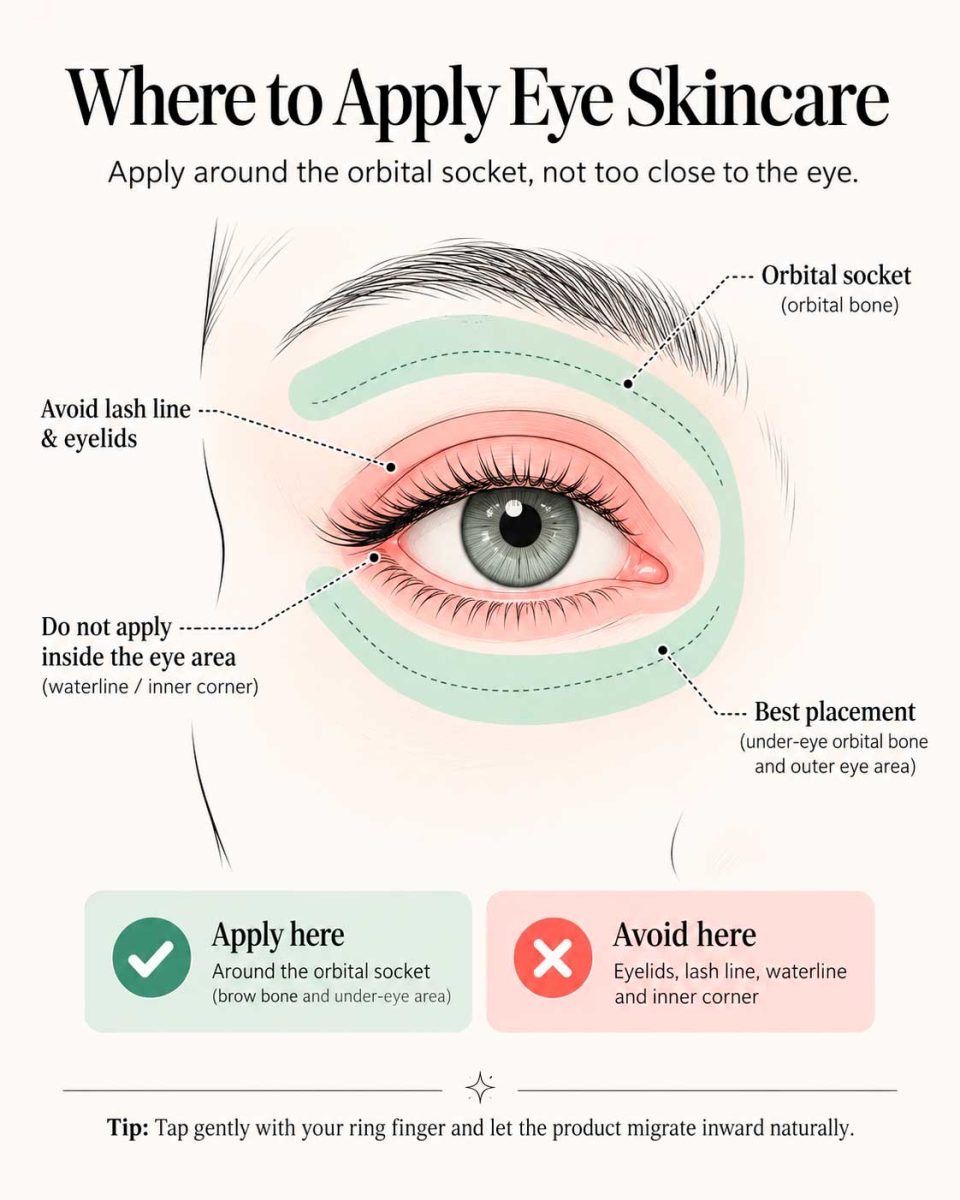
Alcohol-based products strip whatever protective oil remains on the eyelid surface. This includes many makeup removers and some toners that drift close to the eye. Preservatives deserve attention too – methylisothiazolinone and methylchloroisothiazolinone are common preservatives in rinse-off products with unusually high sensitization rates in the eyelid area. Checking ingredient labels for these is worth the effort, especially if you have tried several gentle products without improvement. Waterproof mascara is another common source of chronic eyelid dryness – not because of the mascara itself, but because removing it requires solvents that repeatedly strip the skin barrier. Switching to a regular formula and using a gentle oil-based remover removes one significant daily stressor from the eyelid. Full allergen information for the eye area is at https://www.doctorkatta.com/eyelid-allergic-contact-dermatitis.
Does the Cause of Dry Eyelids Change the Treatment?
Yes, meaningfully. Dry eyelids with no other symptoms – just tightness and mild flaking without redness or itching – usually respond to a barrier repair approach using petrolatum or ceramides, combined with reducing known irritants in the routine. Eyelid dermatitis, whether allergic or irritant in origin, requires identifying and removing the trigger first. Applying even the gentlest moisturizer on top of inflamed, reactive eyelid skin will not resolve the problem if the substance causing the reaction is still present in the routine. Blepharitis – inflammation of the eyelid margin often linked to bacterial overgrowth or dysfunction of the oil-producing glands along the lash line – produces dry and flaky eyelid symptoms but requires a different approach entirely. Warm compresses, lid hygiene, and in some cases antibiotic therapy prescribed by an eye doctor are the standard treatments, and moisturizer alone will not address it. https://my.clevelandclinic.org/health/symptoms/dry-eyelids
Seborrheic dermatitis is another condition frequently mistaken for plain dryness. It is driven by a reaction to yeast that naturally lives on the skin, and it tends to produce yellowish or faintly greasy scales rather than the white or clear flakes of simple dryness. It often comes with dandruff on the scalp and may extend to the eyebrows. A dermatologist can usually tell these conditions apart in a single visit, which saves a lot of time trialing products that will not work for the underlying cause. Getting an accurate picture of what is happening also matters because the treatment for seborrheic dermatitis – typically an antifungal – is specific and different from the barrier-repair approach that works for simple dry eyelid skin.
How Does Eyelid Skin Change After 50?

This is the section many articles skip, and it is the one that matters most for a large portion of people dealing with persistent dry eyelids. Estrogen plays a direct role in skin barrier maintenance – it promotes collagen production, stimulates ceramide synthesis, and helps regulate the moisture content of the outer skin layer. When estrogen levels fall during perimenopause and the years following menopause, all of those functions become less efficient. The eyelid skin, already the thinnest skin on the face, is one of the first places where this hormonal shift becomes visible. It may become more translucent, more prone to fine lines, quicker to dehydrate, and slower to recover from any kind of irritation. Details on these changes are covered well at https://genovaskincare.com.au/blogs/skincare/under-eye-changes-in-menopause-whats-common-whats-worth-checking.
The tear film also changes with age and hormonal shift. The meibomian glands – which produce the oily layer of the tear film that prevents evaporation – become less productive as hormone levels decline. Dry eyelid skin and dry eyes often co-exist in this age group, and treating both together is important. A 2017 study published in the Journal of Ophthalmology found that dry eye syndrome was significantly more prevalent in peri- and postmenopausal women than in premenopausal women, affecting approximately 61 percent of those in the transitional and postmenopausal groups (https://pubmed.ncbi.nlm.nih.gov/28706404/). Recognizing that connection helps explain why eyelid care that worked fine at 40 may stop being enough at 55 – the underlying biology has changed, not just the weather or your products.
For women in their 50s, 60s, and beyond, the treatment strategy for dry eyelids needs to be more consistent than it might have been earlier in life. A nightly application of petrolatum or a ceramide-rich balm is not a one-time fix – it is a maintenance habit that the skin now depends on. Layering a hyaluronic acid serum under an occlusive product addresses the deeper dehydration that hormonal change can cause. Using a humidifier overnight, particularly in winter, makes a genuine difference because heating systems pull moisture from the air, which worsens both skin and eye dryness simultaneously. Fragrance sensitivity can also increase with age, so products that felt fine for years may begin to cause reactions later on. Revisiting the ingredient list on every product used near the eye area is a practical step, not an overcautious one.
For women managing both dry eyelid skin and postmenopausal dry eye together, it is worth raising the topic with a gynecologist or ophthalmologist. There is growing evidence that systemic and topical hormonal support can improve skin barrier function and tear film quality, though these are conversations for a healthcare provider rather than a self-care decision. The point is that dry eyelids in this life stage are not a cosmetic problem to patch over with a better product – they reflect a shift in how the skin functions and benefit from a proportionally more thorough response.
Frequently Asked Questions
Can I use regular face moisturizer on my eyelids?
Most face moisturizers are not ideal for the eyelid area. They often contain fragrance, retinol, exfoliating acids, or other active ingredients that are too strong for this thin and sensitive skin. Fragrance-free, bland products designed for sensitive skin – or pure petrolatum – are safer and more effective choices for this specific area.
Is petroleum jelly safe to use around the eyes?
Yes. The American Academy of Dermatology endorses petroleum jelly for dry eyelid skin, and it has one of the longest safety records of any skincare ingredient. It does not penetrate into the eye and has a very low risk of causing reactions. Apply a small amount to clean eyelids at night and remove any excess with a clean tissue in the morning.
How long should it take for dry eyelids to improve?
Simple moisture-related dryness usually improves within five to seven days of consistent barrier care and irritant removal. If dryness is linked to contact dermatitis, the skin may take two to four weeks to recover even after the trigger is removed, because the immune and barrier response takes time to wind down. Symptoms that persist or worsen beyond two weeks of self-care are a clear reason to see a dermatologist.
Does drinking more water help dry eyelids?
Hydration plays a supporting role, but drinking water alone will not resolve dry eyelid skin when the underlying cause is a compromised barrier. Topical products that seal in moisture work more directly and faster. That said, a diet adequate in essential fatty acids – found in oily fish, flaxseed, and walnuts – does support skin barrier function over time, and general dehydration does make skin dryer overall.
What eye makeup is less likely to irritate dry eyelids?
Mineral-based makeup with short ingredient lists tends to be gentler on the eyelid area. Look for formulas that are not waterproof, and choose oil-based or micellar makeup removers rather than solvent-based ones. Patch-testing a new eye product on the inner forearm for a day or two before using it near the eye gives some indication of how it may react, though eyelid skin is more sensitive than most other test sites.
Dry eyelids are not a permanent condition and they respond well to the right approach. The skin here is remarkably capable of repairing itself when given the right environment – which mostly means removing what is disrupting the barrier and replacing it with the simplest possible occlusive support. Petrolatum, ceramides, glycerin, and shea butter are not exciting ingredients, but they address the biology of the problem directly. A few weeks of consistent, product-simplified care will almost always produce noticeable change, and for women navigating the skin shifts of midlife, building that consistency into a nightly habit pays off well beyond the eyelids alone.
Related Posts