

Nov
If you click on links we provide, we may receive compensation.
You used to be able to fix your feet in a weekend. A good soak, a few passes with a pumice stone, some cream before bed, and your heels were fine for sandal season. Now the same routine barely makes a dent. The rough edge comes back in days, the skin around your heels turns yellow and hard, and a crack or two shows up no matter how much lotion you use. It’s frustrating, and a little embarrassing when you’re the one tucking your feet under the table at a summer dinner. I’d argue it’s also one of the most ignored skin changes of midlife, because nobody warns you that your feet are going to change along with your face.
Here’s the honest version of what’s going on. Menopause doesn’t flip a switch on the soles of your feet. What it does is stack several slow changes on top of each other – less water-holding in the skin, a thinner cushion under the heel, more pressure on the same spots, and shoes that may have been working against you for decades. Each one on its own is manageable. Together they explain why the old routine stopped working, and they point to what will work now.
Why does menopause change the skin on your feet at all?
Start with the basic design of the sole. The skin on the bottom of your feet has no oil glands at all, so it never had the built-in moisture that your face and scalp get from sebum. It relies on sweat and on the skin’s own water-binding ability to stay flexible. That makes it more dependent than most skin on a healthy outer barrier. And the outer barrier is exactly what estrogen helps maintain.
The link between estrogen and skin water is real, though it’s worth being careful about how far it goes. In a small 1995 pilot study, women who used transdermal estrogen during the menopause transition showed a significant increase in the water-holding capacity of the stratum corneum, the outermost layer of skin (https://pubmed.ncbi.nlm.nih.gov/8538484/). Animal research points the same way, with reduced hydration and slower barrier repair after estrogen is removed. Not every human study finds a clear drop in surface hydration at menopause, though. What seems more consistent is that the skin gets worse at holding on to water and slower to recover when it’s stressed.
For a face, that might mean a moisturizer that no longer lasts all day. For a heel, it means something tougher. Heel skin is thick to begin with and gets stressed with every step. When it loses some of its ability to hold water, it stiffens. Stiff skin doesn’t flex when you walk, so it splits instead. Estrogen also supports collagen and elasticity in the deeper layers, which is why the whole foot can feel less springy and more fragile after 50.
What happens to the cushion under your heels?
This is the part most foot cream ads leave out. Under your heel sits a fat pad, a dense, honeycombed cushion that absorbs the shock of every step. It doesn’t stay the same thickness for life. A Japanese study that measured heel fat pads by ultrasound in 1,126 healthy people found the pad tends to thicken until about ages 30 to 44 and then thin steadily into the 80s and 90s (https://pubmed.ncbi.nlm.nih.gov/32745706/). The same study found women had thinner heel pads than men at every age.
Why does that matter for skin? When the cushion thins, more force lands on the skin itself and less is absorbed underneath. Skin responds to repeated pressure the only way it knows how, by building more layers. That’s a callus. So part of what looks like a dry skin problem is a pressure problem, and no cream can change that on its own. Podiatrists see this every day. They’ll tell you that a callus that keeps coming back usually has a pressure point feeding it.
Advertisement
Weight shifts can add to the load. Many women find their shape changes around menopause, and posture and gait often change with joint stiffness or bunions. The forefoot and the rim of the heel take more of the strain. None of this happens overnight, which is why the change can feel sudden when you finally notice it. Thin pad, more load and drier skin is a pretty reliable recipe for the hard, cracked heel edge so many of us know too well.
Why do heel calluses build up and then crack?
Calluses are common enough in later life that they’re almost the norm. In a study of 301 people aged 70 to 95 living independently in Australia, 60 percent had at least one hard skin lesion on the soles of their feet (https://pmc.ncbi.nlm.nih.gov/articles/PMC2669075/). Women were nearly three times as likely as men to have them. The same paper notes that trimming this kind of hard skin can make up as much as 75 percent of a podiatrist’s workload. That gives you a sense of how normal this is!
A callus starts as protection. The trouble begins when the thick layer dries out. Healthy skin can stretch a little as your heel spreads under body weight. Thick, dry callus can’t. It cracks at the edge, where the heel flattens and pushes outward with every step. Shallow cracks are mostly cosmetic. Deep ones can bleed, hurt and let bacteria in, which is a bigger worry if you have diabetes or poor circulation.
That’s why the goal isn’t to scrub every bit of hard skin away. Some thickening is your foot doing its job. The goal is to keep the callus thin enough and moist enough that it bends instead of breaking. Once you think about it that way, the treatment choices make more sense. Each one targets a different part of the problem.
Are your shoes making it worse?

Very possibly, and the effect lasts longer than you might expect. A study of older adults published in Gerontology found that incorrectly fitting shoes were common and strongly linked to forefoot problems and foot pain. Wearing heels higher than about one inch was tied to plantar calluses and bunions in women (https://doi.org/10.1159/000086373). Heels shift your weight onto the ball of the foot. Over time that builds callus under the forefoot and can push toes out of line.
The past counts too. Researchers working with the Framingham Foot Study found that older women who had worn high heels earlier in life had higher odds of foot skin problems, even after adjusting for age (https://media.isbweb.org/images/conferences/isb-congresses/2013/poster/ps2-12j.pdf). Giving up heels at 60 doesn’t erase the bunion or the toe that drifted. But it does stop adding to the problem. That’s worth a lot.
Flat shoes aren’t automatically better. Backless slides, flip-flops and open-heel sandals let the heel splay sideways with no support, and the skin at the back rim takes the strain. Very thin soles pass more ground force straight into a thinning fat pad. Shoes that are too tight rub, and shoes that are too loose let your foot slide and create friction. The best everyday shoe for most of us after 50 has a closed or strapped heel, a cushioned sole, a toe box wide enough for your toes to lie flat, and a fit that matches the size your feet are now, which may not be the size you bought in your 30s.
Do urea creams really work better than regular lotion?
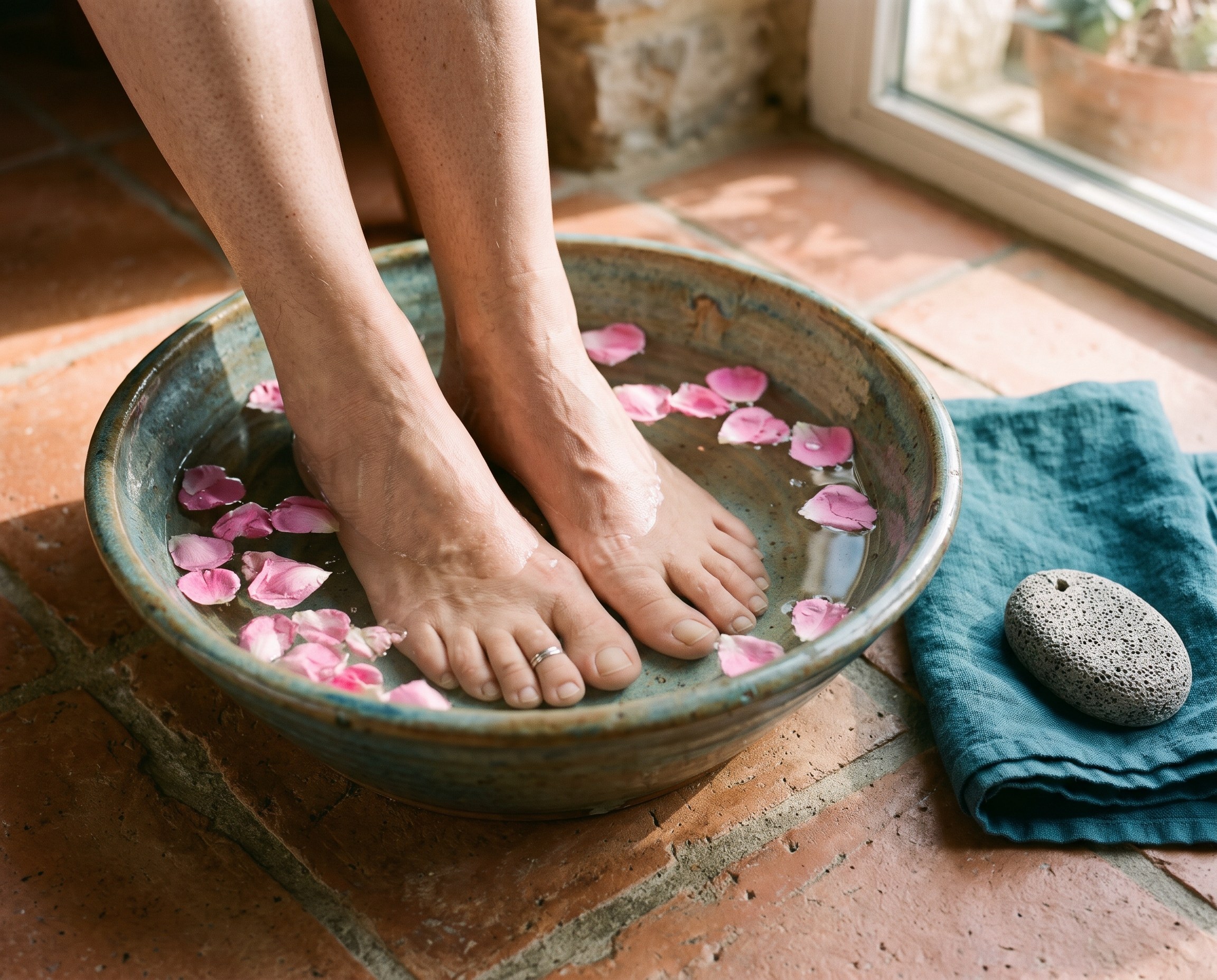
For rough heels, urea is the best-studied option, and the concentration changes what it does. At lower levels, roughly 10 percent and under, urea works mostly as a humectant, drawing water into the outer layer of skin. It’s a good choice for dry but not thickened feet. It’s also gentle enough to use every day. In the 20 to 40 percent range, urea starts to loosen the bonds between dead skin cells, so it softens and thins callus as well as hydrating.
The research backs up the higher strengths for tough skin. In a clinical comparison, a 40 percent urea cream improved roughness, cracks, thickness and dryness faster than a 12 percent ammonium lactate lotion, and was ahead by day 14 (https://pubmed.ncbi.nlm.nih.gov/11978141/). That’s meaningful when you’ve been applying regular lotion for months with little change. It suggests the strength matters more than the brand. Most drugstore foot creams stop at 10 or 15 percent, so if yours isn’t doing much, check the label before you give up on the ingredient.
There are a few catches. Higher-strength urea can sting on open cracks, so it’s better to start with a lower strength if your heels are split, then step up once they close. Keep the strong stuff on the callus and off the thinner skin on the top of your foot and between your toes. And give it time. Most people see a change within two weeks of nightly use, but you’ll keep the results only if you keep going a few times a week.
How much exfoliation is too much?
Gentle exfoliation helps urea and moisturizers reach where they need to go. A short soak in warm, not hot, water softens the top layer. Then a pumice stone or a foot file, used with light strokes on damp skin, takes off a little at a time. You’re aiming to smooth the surface, not reach pink skin. Two or three sessions a week is plenty for most people.
Overdoing it backfires. Aggressive filing tells the skin it’s under attack, and it often grows back thicker and faster. Callus shavers and razor blades are a bad idea at home because one slip can open a wound. An open wound on the sole is slow to heal at any age. The popular acid peel socks can work for some people, but they cause dramatic peeling and can irritate thin or sensitive skin, so they’re not for anyone with cracks or circulation problems.
If you have diabetes, neuropathy or poor circulation, skip the home tools and over-the-counter salicylic acid callus removers entirely. Reduced feeling means you can’t tell when you’ve gone too far. Small injuries can then turn serious. That’s not scare talk. It’s the standard advice from podiatrists, and it’s exactly the situation professional care is built for.
Why does an occlusive layer at night help so much?

Hydrating the skin is only half the job. You also have to keep the water from leaving. That’s what occlusives do. They sit on top of the skin and form a seal. Petrolatum is the standout. It reduces water loss through the skin by about 98 percent, compared with roughly 20 to 30 percent for many other oil-based moisturizers (https://mdedge.com/content/petrolatum-effective-moisturizer-there-are-more-uses-it).
On feet, the best use of an occlusive is as a top layer. Soak or shower, pat dry, apply your urea cream, then add a thin coat of petrolatum or a lanolin-based balm over the heels and pull on clean cotton socks for the night. Dermatologists call a version of this soak and smear. The socks keep the layer in place and off your sheets. Lanolin is worth a mention, since a double-blind trial found pure lanolin worked as well as 12 percent ammonium lactate cream for moderate to severe foot dryness (https://cdn.mdedge.com/files/s3fs-public/Document/September-2017/071010078.pdf).
What occlusives won’t do is thin a callus that’s already thick. They hold moisture in, but they don’t break down hard skin. That’s why they work best paired with urea rather than on their own. Think of the two as partners. If you only have the patience for one step, a thick urea cream with a waxy or petrolatum base covers both jobs reasonably well.
When is it time to see a podiatrist?
If you’ve been consistent with urea, gentle filing and an occlusive for four to six weeks and the roughness keeps coming back, it’s worth a visit. A podiatrist can remove thick callus with a sterile blade in a few minutes, and it usually doesn’t hurt because the skin being removed is dead. That alone can make walking more comfortable. It also gives your creams a fresh start on thinner skin. The bigger value is in finding the reason the callus keeps forming.
That might be a bunion pushing weight to one side, a thinning heel pad, a tight calf muscle or a shoe that’s simply wrong for your foot. Fixes can include cushioned insoles, custom orthotics, padding or specific shoe advice. These address the pressure. That’s the part no cream can reach. Many people find that once the pressure is handled, home care finally starts to hold.
Some situations call for a professional right away. Deep cracks that bleed and any sign of infection, such as warmth, swelling or discharge, need a professional look. So do numbness and color changes under a callus. A diagnosis of diabetes or circulation trouble also means you should get your feet checked rather than treat them yourself. In the US, routine callus care may be covered by Medicare for people with certain qualifying conditions, so it’s worth asking.
What should mature skin keep in mind?

Foot care gets a bit more practical after 60, and that’s fine. Reaching your feet can be harder, so a long-handled foot file or a lotion applicator makes the routine easier to stick with. Ointments on the soles can make floors slippery, so apply them at bedtime with socks, never right before walking across a tiled bathroom. Falls are a real risk at this stage of life. Soft heels aren’t worth a broken wrist.
Healing also slows with age, which is one more reason to be gentle. A crack that would close in a few days at 40 can linger for weeks at 70. Some common medicines, including diuretics, can dry skin further, and an underactive thyroid is a known cause of very dry feet. If your feet changed suddenly or a lot, mention it to your doctor. It may be worth a simple blood test.
Finally, look at your feet. It sounds obvious, but many of us don’t see our soles for weeks at a time. A quick check with a hand mirror after a shower catches cracks, blisters and color changes early. It takes a minute. And it’s one of the most useful habits you can build for foot health in your 60s and beyond.
Frequently asked questions
Is it normal for heels to get rougher after menopause?
Yes. Less water-holding in the skin, a thinning heel fat pad and years of pressure from shoes all add up, so heels that were easy to manage in your 40s often need more care in your 50s and 60s. It’s common, and it usually responds well to a steady routine.
What strength of urea cream should I use on my feet?
Around 10 percent works for dry but smooth skin. For thick calluses and rough heels, 20 to 25 percent is a good working range, and 40 percent is used for very thick, stubborn callus. Start lower if you have open cracks, since stronger urea can sting.
Can I use petroleum jelly instead of foot cream?
It’s an excellent seal, but it doesn’t soften thick callus on its own. The best results come from a urea cream first and a thin layer of petrolatum on top, with cotton socks overnight.
How often should I file my heels?
Two or three times a week is enough for most people. Use light strokes on damp skin and stop before you reach tender skin. Heavy filing tends to make callus grow back faster.
Does hormone therapy help dry feet?
Research suggests estrogen helps the skin hold water, and some women notice softer skin overall on hormone therapy. But it isn’t a treatment for calluses, and whether it’s right for you depends on many other health factors. That’s a conversation for your doctor.
When should I stop treating my feet at home?
If you have diabetes, neuropathy or poor circulation, or if you see bleeding cracks, signs of infection or color changes under the skin, see a podiatrist. The same goes for roughness that keeps returning after six weeks of consistent care.
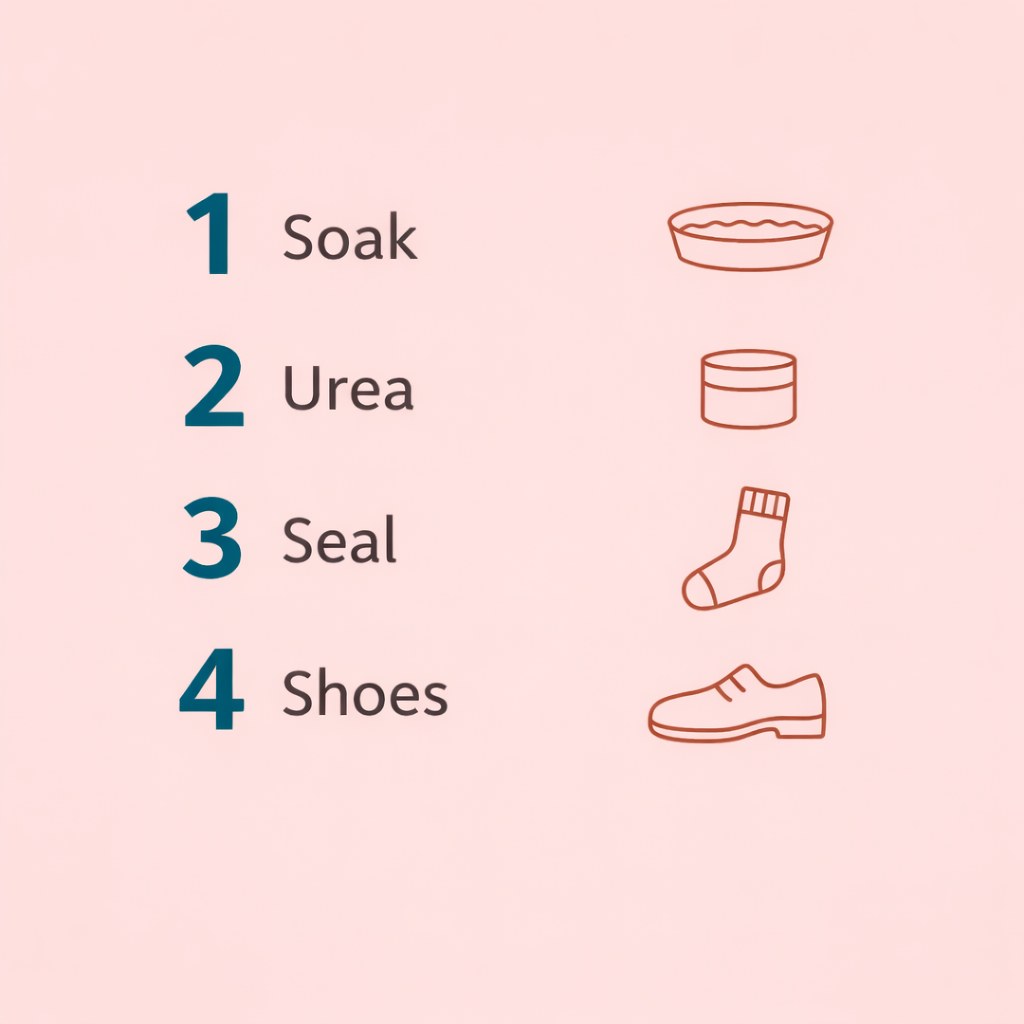
Soft feet after menopause take a different plan than they did at 35, and that’s no failure on your part. The skin is drier, the cushion is thinner, and the pressure points have had decades to settle in. A urea cream at the right strength, a gentle file, a sealing layer at night and shoes that fit the feet you have now will handle most of it. When they don’t, a podiatrist can deal with the pressure behind the problem. Your heels can still be comfortable and sandal-ready. They just need a little more consistency than before.
Related Posts
 Why Your Lymph System Could Be the Real Key to Smoother Skin
 What Creatine Actually Does for Women Going Through Menopause
 Your Skin Feels Like Sandpaper During Menopause and Here Is Why
 The Smell After Rain Makes You Feel Calm and There Is a Very Good Reason
 The 10 Best Hand Moisturizers for Winter That Actually Fix Dry Skin
 Your Skin Has an Immune System and It Changes With Age
 Is Your Rosacea Really Coming From Your Gut
 Can Glitter Eye Makeup Hurt Your Eyes? Here’s the Honest Answer
 Why Cuts and Scrapes Linger After 50 and How to Help Them Heal Faster
 Live Bacteria or Not? How to Pick a Probiotic That’s Worth Your Money
 Is It Rosacea or Just Sensitive Skin? Why Your Redness Deserves a Closer Look
 The Best Body Wash for Teen Body Acne Costs Less Than You Think
