
Oct
If you click on links we provide, we may receive compensation.
Women over 50 who strength train at least twice a week have 46 percent lower odds of dying from any cause than those who do not – a figure from a large-scale study that makes the case for lifting weights better than almost anything else could. Yet the exercises that get you to those benefits matter enormously, and several of the moves that show up in standard gym programs carry risks that rise sharply after the hormonal shifts of perimenopause and menopause. Estrogen, which was quietly protecting your joints, tendons, and bone mineral density for decades, has declined. Cartilage inside your joints is thinner. Connective tissue is less elastic. Recovery takes longer. None of that means you should train less – it means you should train with better choices.
This article is not medical advice, and nothing here replaces a conversation with your doctor or a certified personal trainer who can assess your specific mobility and history. What it is, is a clear-eyed rundown of seven popular exercises that routinely appear in gym programs for women and that carry elevated risk for the body over 50 – along with the smarter alternatives that deliver the same gains without the downside. The goal throughout is to help you lift more confidently, stay out of pain, and keep training for the long haul. Because the research is clear: the women who strength train consistently through their 50s and 60s are not just healthier – they are structurally more protected against the fractures, falls, and muscle loss that define the hardest parts of aging.
Why Does Exercise Carry Higher Risk After Menopause?
The mechanics of why these exercises become more problematic after 50 come down to several converging changes. Estrogen is anti-inflammatory and protective across multiple tissues – it supports bone remodeling, preserves cartilage, maintains muscle mass, and keeps tendons and ligaments supple. When estrogen drops during and after menopause, bone mineral density falls at an accelerated rate, particularly in the five years immediately following the final period. Among women aged 65 and older, 27.1 percent have osteoporosis – more than double the 13.1 percent prevalence seen in women aged 50 to 64 (source: https://www.nof.org/patients/what-is-osteoporosis/). That window moves fast.
Cartilage inside the joints becomes thinner and less resilient under load, and tendons and ligaments lose the elasticity that buffers joint stress during movement. Recovery time between sessions lengthens because inflammation clears more slowly without estrogen’s protective effect. All of this means that poor movement mechanics – the kind that went unnoticed for years when the body had more cushion – now start to produce consequences. The exercises below each expose one or more of these vulnerabilities in specific, preventable ways.
Is the Behind-the-Neck Lat Pulldown Actually Dangerous?
The behind-the-neck lat pulldown became a staple of gym programs in the 1980s and has lingered ever since. The motion looks like a productive way to load the lats and upper back, but the biomechanics tell a different story. To bring the bar behind the head, the cervical spine flexes forward into a compromised position, and the shoulder joint is forced into extreme external rotation and abduction simultaneously – a combination that concentrates excessive stress on the rotator cuff and the glenohumeral joint (source: https://livestrong.com/article/13769639-behind-the-neck-lat-pulldown). For anyone already dealing with reduced connective tissue elasticity and some degree of cervical disc wear, this is a high-risk movement with no advantage over safer variations.
The same logic applies to behind-the-neck overhead presses, which force the cervical spine into the same forward position while adding compressive load. The muscles the exercise targets – lats, rhomboids, rear deltoids – engage more fully and safely with front-of-face variations. Pull the bar to your upper chest during a lat pulldown, keep your chin level, and let your shoulder blades retract and depress. You will feel the lats load more efficiently, with no stress to the neck or shoulder capsule. For overhead pressing, a seated dumbbell press with the hands in front of the shoulders and a slight forward lean of the torso removes cervical stress entirely.
Are Sit-Ups and Crunches Making Your Back Worse?
Sit-ups and crunches have been synonymous with core training for so long that dropping them feels almost heretical. But the research has shifted, and for women over 50, the case against them is stronger than many gym-goers realize. Both exercises involve repeated lumbar flexion – curving the lower back under load – which produces shear forces on the lumbar discs at a stage of life when disc degeneration is common and bone integrity is reduced (source: https://www.goodrx.com/well-being/movement-exercise/are-sit-ups-bad-for-back). The hip flexors, which run along the front of the pelvis and are the prime movers in a full sit-up, pull on the lower back when they are overworked, contributing to anterior pelvic tilt and the lower back pain that many women in their 50s write off as just part of aging.
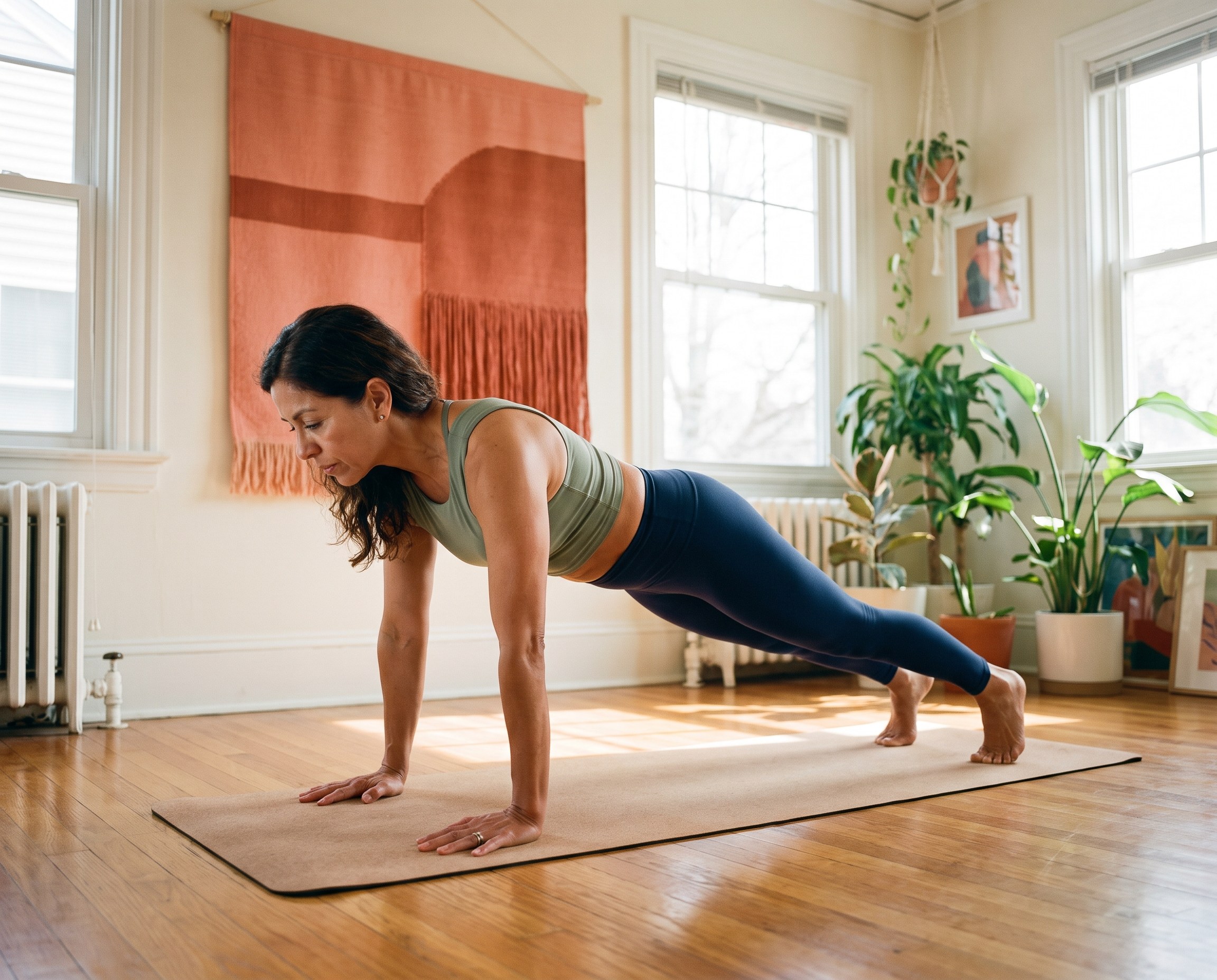
The alternative is not to abandon abdominal training – it is to move to exercises that train the core as it actually functions, as a stabilizer against rotation, extension, and lateral forces rather than a prime mover for spinal flexion. Dead bugs, bird dogs, pallof presses, and planks all work the deep stabilizing muscles – transverse abdominis, multifidus, and obliques – without compressing the lumbar discs under repeated flexion. A plank held for 30 to 40 seconds engages more total core musculature than most crunch variations, improves functional stability in ways that carry over to daily life, and places no harmful load on the spine.
Does Foot Position on the Leg Press Actually Matter That Much?
The leg press machine is often recommended as a knee-friendly alternative to squats, and when set up correctly, it can be. But foot placement errors – feet positioned too high on the platform, too low, too narrow, or angled in ways that do not match hip and knee anatomy – shift mechanical load dramatically and can concentrate stress on the kneecap and surrounding cartilage (source: https://www.nasm.org/resource-center/exercise-library/leg-press). Feet too low on the platform increase how far the knee travels forward, raising shear stress across the patellar tendon. Feet too high can cause the lower back to lift off the seat as the hips flex past a comfortable range, particularly in women with limited hip mobility.
The fix is about setup, not avoidance. Feet should sit mid-platform, approximately hip-width apart, with toes turned slightly outward to follow the natural angle of the hips and knees. Bringing the platform down to roughly 90 degrees of knee bend is safe for most people – going well past parallel adds compressive load to the knee joint without meaningfully improving muscle activation. Heel contact should be maintained through the full range of motion. A single session with a trainer to confirm foot position and depth can make the leg press a genuinely productive part of a lower-body program.
When Do Deep Barbell Squats Stop Being Worth the Risk?
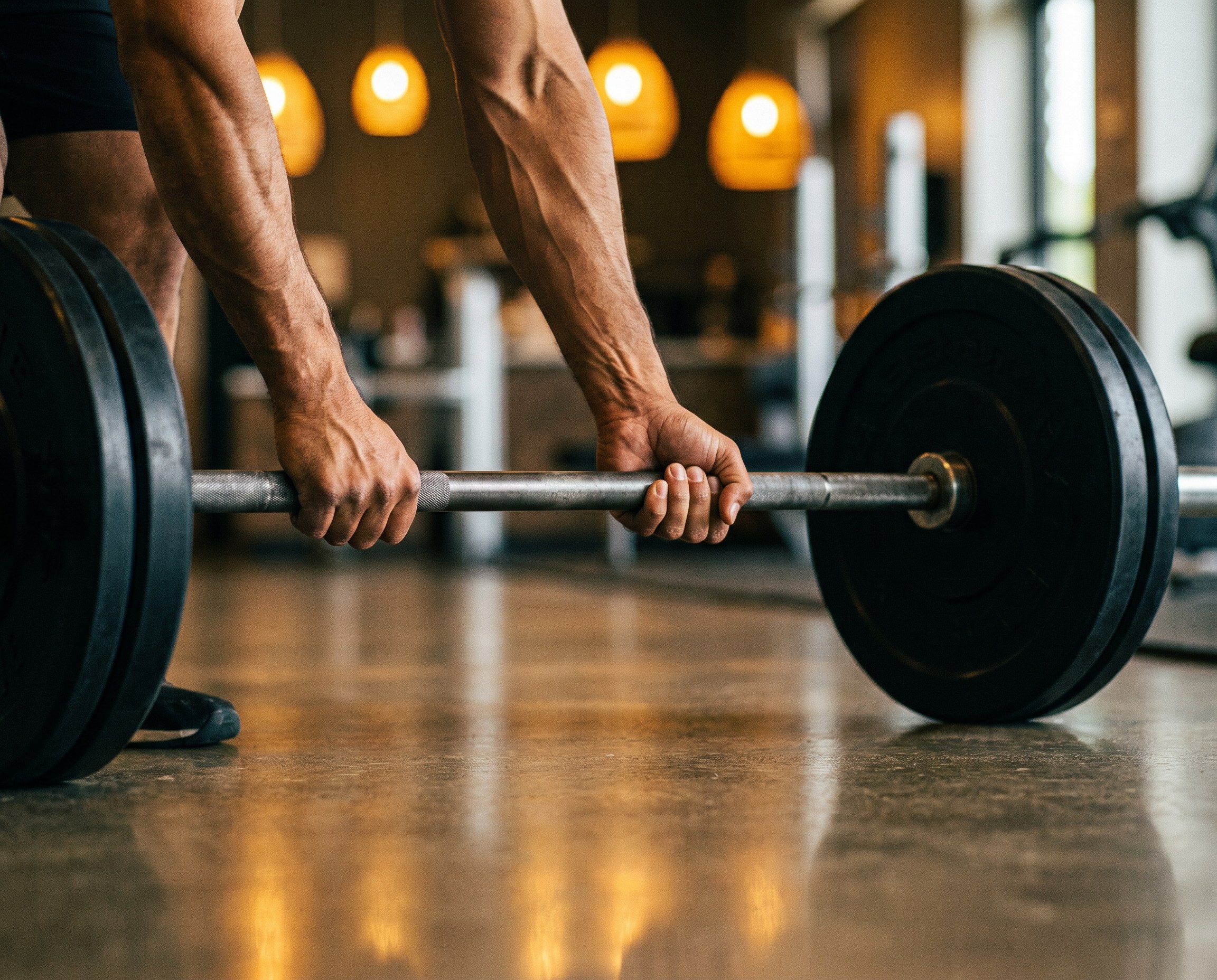
The barbell squat is among the most beneficial exercises for building lower-body strength, and plenty of women in their 50s and 60s perform it safely and productively. The problem is the combination of heavy weight and limited mobility – not the squat itself. As hip flexor tightness, reduced ankle dorsiflexion, and lower back stiffness accumulate with age, the deep barbell squat often produces what trainers call “butt wink” – the pelvis tucks under at the bottom of the movement, rounding the lower lumbar spine under load. That position concentrates compressive force on the discs exactly where they are most vulnerable, and the risk compounds as weight increases. Performing heavy barbell squats in this pattern over months is a reliable path to a lower back injury.
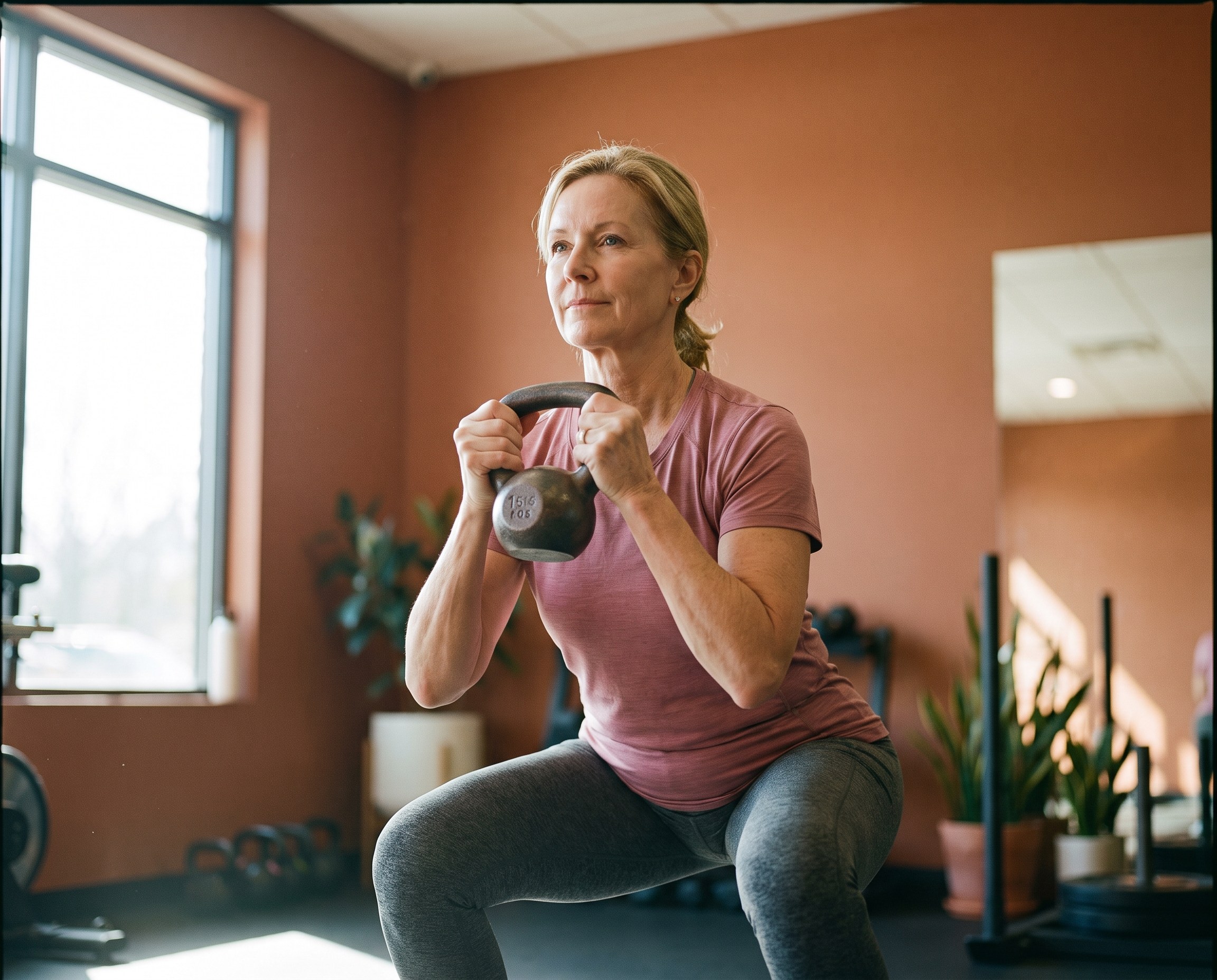
The solution is to earn depth before loading it. Goblet squats with a light kettlebell or dumbbell held at the chest act as a counterbalance, allowing a more upright torso and making it far easier to achieve depth without rounding the lower back. Box squats to a controlled, comfortable depth remove the mobility demand at the bottom while still producing strong glute and quad activation. If you want to stay with the barbell, reduce depth to the point where the pelvis stays neutral, drop the load, and commit to consistent hip and ankle mobility work before adding weight again. The squat is worth keeping – with form that matches where your mobility is now, not where it was ten years ago.
Why Do Upright Rows Keep Showing Up on Injury Lists?
Upright rows – pulling a barbell or dumbbells straight up toward the chin with elbows leading – have remained popular for training the deltoids and upper traps despite a documented association with shoulder impingement. The mechanics explain why. At the top of the movement, the shoulder joint is in internal rotation, adduction, and elevation at the same time – the exact position used in clinical tests to diagnose subacromial impingement. The tendons of the rotator cuff, particularly the supraspinatus, are compressed between the humeral head and the acromion (source: https://www.strengthafter50.com/weight-lifting-over-50/). For women in their 50s and 60s – whose tendons are less elastic and may already have some degree of rotator cuff fraying from decades of use – this compression can shift from manageable to damaging quickly, often before pain makes the problem obvious.
The deltoids and upper traps can be loaded without that impingement position. Lateral raises with dumbbells, resistance bands, or cables train the side deltoids through a range of motion that does not compress the subacromial space. Face pulls – a cable exercise where you draw a rope attachment toward your face with elbows at or just above shoulder height – train the rear deltoids and external rotators simultaneously, actively countering the rounded-shoulder posture that develops from desk work and screen time. These two exercises together cover what upright rows were supposed to accomplish, and they do it without the joint compromise.
Is the Smith Machine Squat Actually Safer Than It Looks?

The Smith machine looks safer than a free barbell because the bar travels on a fixed guided track and can be racked at any point in the range of motion. But the fixed vertical path is precisely what creates a problem for most people. A free-weight squat follows the natural arc of the body, letting the hips, knees, and ankles coordinate as they are designed to. A Smith machine forces the bar straight up and down regardless of where your individual joint angles need the load to travel. For most people, this means either positioning the feet well forward of the hips to prevent the knees from drifting too far over the toes – which creates a sharp backward lean and unusual stress on the lower lumbar – or squatting with feet directly under the bar, which drives the knees forward in a way that may not suit their anatomy at all.
Research shows that hamstring activation during a Smith machine squat is significantly lower than in a free-weight squat. The hamstrings are among the most important passive stabilizers of the knee joint, and their reduced contribution in the fixed-bar version means the knee must rely more heavily on the ligaments and cartilage to manage compressive load. Goblet squats, dumbbell front squats, and bodyweight squats with a resistance band for counterbalance all allow a natural movement pattern with full stabilizer engagement. If the concern is falling or struggling to bail out of a heavy squat, using a power rack with adjustable safety bars addresses that completely – without forcing the body into a mechanically compromised track.
When Do Heavy Deadlifts Become a Problem After 50?
Deadlifts are one of the most powerful tools available for building full-body strength, improving posture, and maintaining the posterior chain muscles that hold the body upright and protect the spine. Done well, they belong in almost every program for women over 50. Done poorly – with a rounded lower back, too much weight, insufficient core bracing, or a bar that drifts away from the body – they are among the fastest routes to a lumbar disc injury. Poor form during a deadlift causes the lower back to fall out of neutral under peak load, concentrating compressive and shear force on the discs at the transition from the floor to the standing position (source: https://www.eatthis.com/exercises-that-destroy-back-after-50/). As disc degeneration accumulates with age, the margin for absorbing that kind of load without injury shrinks.
The adjustment is not to abandon the deadlift but to fix the form before adding weight. A trap bar (hex bar) deadlift is widely recommended for anyone with limited hip mobility or a history of lower back issues – the handles position the load at the sides rather than in front of the body, allowing a more upright torso and reducing the lever arm on the spine. Romanian deadlifts with a moderate load train the same posterior chain muscles with less spinal compression, provided the back stays flat and the movement initiates at the hips rather than by bending at the waist. Working with a coach for even two or three sessions focused on deadlift mechanics is one of the highest-return investments any woman lifting weights in her 50s or 60s can make.
What Does All of This Mean Specifically for Women in Their 50s and 60s?
The hormonal changes of perimenopause and menopause affect not only bones and joints but recovery capacity and the body’s ability to manage inflammation after hard training. Women in this age group often find that they need longer rest periods between sessions, that muscle soreness lingers longer than it used to, and that the minor aches they once shook off in a day now take a week to resolve. This is not a reason to train less – it is a reason to train more strategically. The seven exercises above ask the body to perform through compromised positions under load, and post-menopausal tissue – less cushioned, less elastic, slower to repair – has less margin to absorb that kind of repeated mechanical stress before something gives.
A 2023 meta-analysis found that exercise protocols at 70 percent of one-rep max or above produce the largest gains in bone mineral density for postmenopausal women, which means the answer is emphatically not to go lighter on everything. It is to choose exercises where load travels through aligned, stable joints with engaged stabilizer muscles. That is where gains compound and where injury risk stays low. The exercises above fail that test – not because they are inherently dangerous to every person in every context, but because the risk-to-benefit ratio shifts unfavorably at this life stage, and better alternatives exist that produce the same or greater results.
If you work with a trainer, bring this list and ask them to audit your current program. If you train alone, consider booking a few sessions specifically for form review – not for workout design, just for mechanics on the movements you already do. A physical therapist can also assess joint mobility and identify any existing restrictions that should shape your exercise selection. You are not starting over. You are refining, and the women who refine at this stage tend to be the ones lifting confidently well into their 70s.
FAQs
Is it safe to strength train at all after 50?
Yes – not just safe but genuinely important. Strength training after 50 builds and maintains muscle mass, supports bone density, improves metabolic health, and reduces the risk of falls and fractures. Older adults who strength train at least twice a week show significantly better health outcomes across a range of measures. The question is not whether to train but how to train intelligently for where your body is now.
Do I need to stop lifting heavy once I pass 50?
Not at all. Heavy loading – relative to your individual capacity – is what drives bone mineral density and muscle gains. Research supports high-intensity protocols for postmenopausal women when form and joint mechanics are sound. The focus should be on progressing load deliberately, with form and stability as the prerequisites rather than an afterthought.
Can I still do squats and deadlifts after 50?
Absolutely. Both are among the most beneficial exercises available for this age group. The adjustments discussed above – reducing depth, using a trap bar, building mobility before adding load – are not workarounds for inferior movements. They are simply the right way to perform excellent exercises for a body that has specific needs around joint alignment and spinal position.
How often should women over 50 strength train?
Two to three sessions per week is the standard recommendation for most women in this age group, with at least 48 hours of recovery between sessions that target the same muscle groups. Recovery capacity matters more after 50, and training more frequently without adequate rest tends to produce diminishing returns and increased injury risk rather than faster progress.
Should I work with a trainer if I am over 50 and starting to lift?
If you can access one, yes – at least for an initial assessment or a handful of sessions to establish mechanics on the fundamental movements. You do not need a trainer indefinitely, but the upfront investment in correct form pays off in avoided injuries and better results over years of training. Look for someone with specific experience working with women in midlife and older.
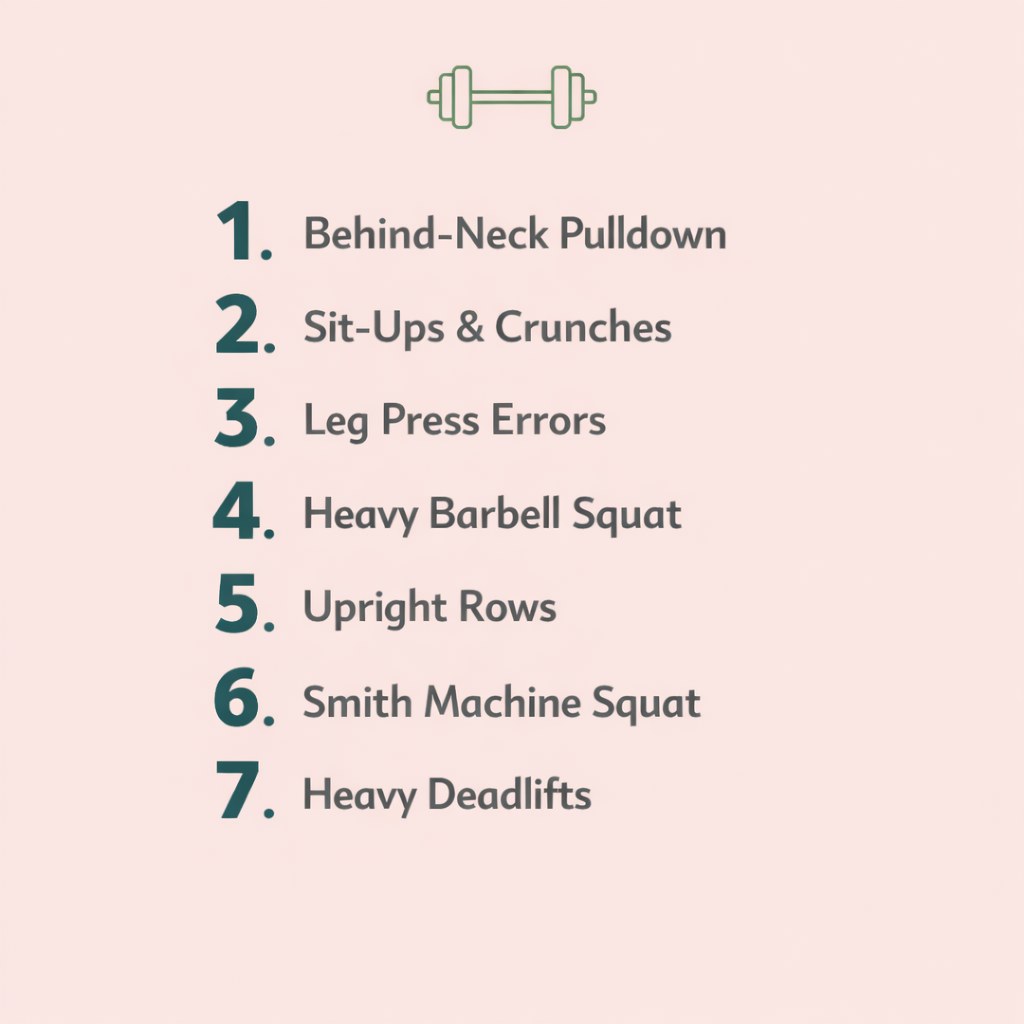
Strength training after 50 is one of the most evidence-backed things a woman can do for her long-term health, her bones, her metabolism, and her quality of life. The goal of flagging these seven exercises is not to shrink your gym routine – it is to make room for the versions that will keep you training hard, pain-free, and confident well into the decades ahead. The gym should be a place that works for you at every age. These adjustments make sure it stays that way.
Related Posts