
Jul
Wellness
How to Remove a Tick the Right Way and What to Watch for Afterward
If you click on links we provide, we may receive compensation.
Nearly 476,000 Americans are diagnosed and treated for Lyme disease every year – a number that climbs steadily as tick populations expand into new regions and outdoor activities remain a cornerstone of healthy living. Finding a tick attached to your skin is one of those moments that can turn a pleasant afternoon in the garden or on the trail into something unsettling. The good news is that the situation is almost always manageable if you act correctly and promptly. The bad news is that most of the folk wisdom about tick removal – things people have done for decades – is not only wrong but can actively increase the risk of disease transmission. Here is what actually works, backed by current CDC guidelines and medical research.
Why Does It Matter How You Remove a Tick?
Ticks transmit disease through their saliva. While a tick is feeding, it cycles its saliva in and out of the bite site, and this is the mechanism by which pathogens like Borrelia burgdorferi – the bacterium that causes Lyme disease – move from the tick into the human bloodstream. The critical thing to understand is that anything that agitates or stresses the tick while it is attached can cause it to regurgitate the contents of its gut directly into the wound – a process that dramatically increases the risk of pathogen transmission. This is why the method you use to remove a tick is not a minor detail. It is the whole game. The goal is to remove the tick quickly, completely, and without causing it any distress in the process.
Timing also matters, though perhaps not in the way you might assume. For Lyme disease specifically, the tick generally needs to be attached for at least 36 to 48 hours before it can effectively transmit the bacteria responsible – this is because the bacteria lives in the tick’s midgut and needs time to migrate to the tick’s salivary glands. But this is not a guarantee of safety if the tick has been on you for less than 36 hours. Transmission can occasionally happen faster, and other tick-borne illnesses like Powassan virus can transmit in as little as 15 minutes of attachment. The simple message is this: remove the tick as soon as you find it, and remove it correctly.
What Are Ticks, and How Do They End Up on Your Skin?
Ticks are arachnids, not insects – they are more closely related to spiders and mites than to mosquitoes or flies. This distinction matters because it explains some of their biology. There are about 900 species of ticks worldwide, and only a handful pose significant health risks to humans in the United States. Ticks do not jump or fly. Instead, they engage in a behavior called questing – positioning themselves on the tips of grasses, shrubs, and leaf litter with their forelegs extended, waiting for a warm-blooded host to brush past. Once they make contact, they crawl toward a warm, concealed spot before inserting their mouthparts into the skin.
The mouthpart structure is part of why tick removal feels tricky. Ticks use a specialized feeding organ called the hypostome, which is covered in backward-facing barbs that anchor them in the skin – a bit like a one-way fishhook. This is why you feel resistance when removing a tick, and why twisting is counterproductive. Those barbs do not unscrew. Steady, even, upward pressure is what dislodges them. Ticks also secrete a cement-like substance around the bite site that helps hold them in place, which is another reason they can be so stubbornly attached after a day or more of feeding. Knowing this structure helps you understand exactly why the correct removal technique works.
What Tools Do You Need Before You Start?
Having the right tools on hand makes the whole process calmer and more effective. The most reliable instrument is a pair of fine-tipped tweezers – the kind with pointed tips that allow you to grip close to the skin’s surface. Regular blunt tweezers are less effective because they tend to grasp the body of the tick rather than the mouthparts, which risks squeezing infectious fluid toward the bite site. If you spend time outdoors regularly, a dedicated tick removal tool is worth keeping in your hiking kit or first-aid drawer. Options include the Tick Twister, the Tick Key, and TickEase, all of which are designed to slide under the tick and lever it out without compression. Beyond the removal tool, you need an antiseptic wipe or rubbing alcohol, a small sealable bag or container for the tick, and good lighting – ticks are small and good light makes a real difference.
How Do You Remove a Tick Correctly?
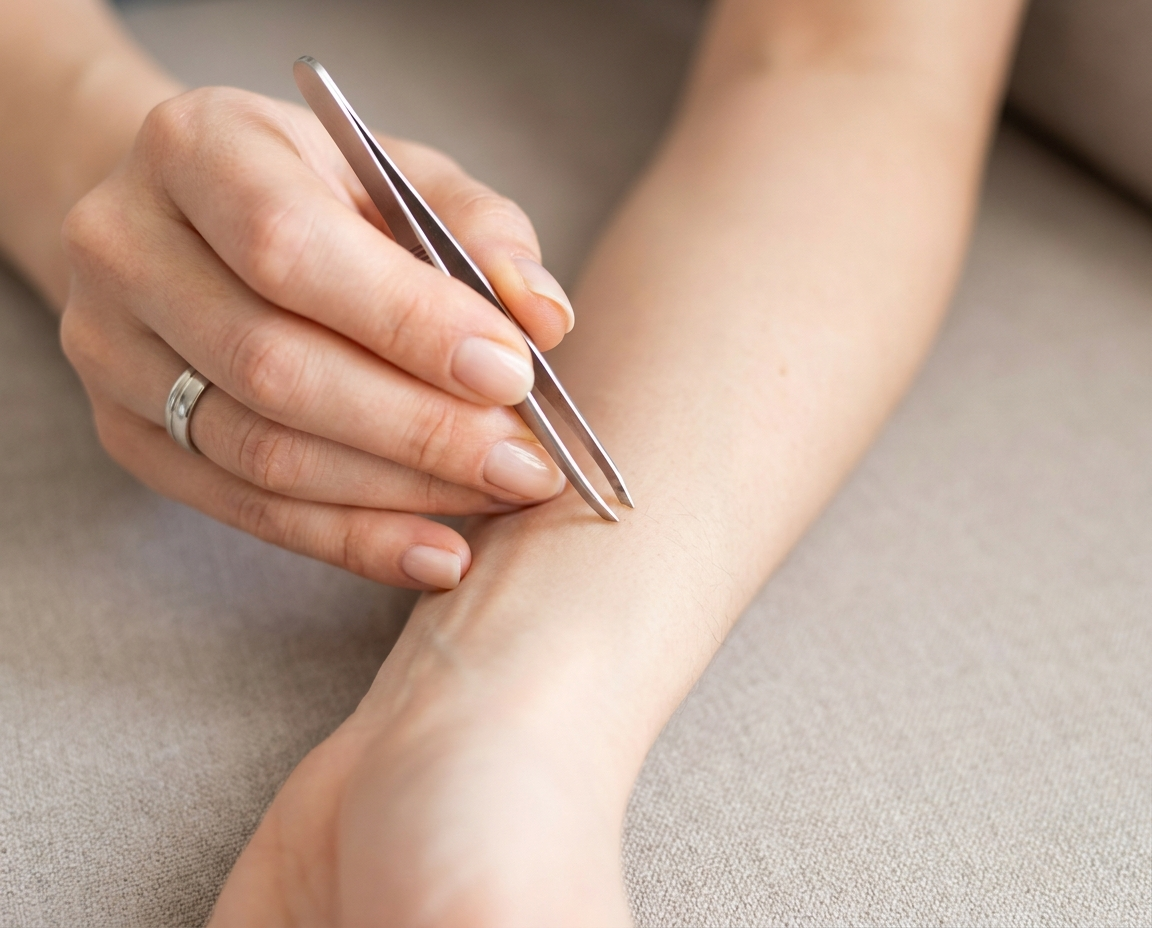
Begin by taking a breath. Panicking tends to cause hurried movements, and hurried movements tend to cause mistakes. Gather your tools and get good lighting before you touch the tick. Using your fine-tipped tweezers, grasp the tick as close to the skin’s surface as possible – you are aiming to grip the mouthparts where they enter the skin, not the tick’s swollen abdomen. If you grasp the body, you risk compressing the tick’s gut contents and forcing them toward the wound. Position the tweezers and take a moment to confirm your grip before you pull.
Once you have a firm grip, pull upward with steady, even pressure. Do not twist, jerk, or rotate. The goal is a slow, firm, straight extraction that works with the anatomy rather than against it. If the mouthparts break off and remain in the skin – which can happen especially with ticks that have been attached for a long time – try to remove them with tweezers if they are clearly accessible. If they are not easily grasped, leave them alone. The skin will work to expel them naturally, and digging aggressively creates more wound trauma and infection risk than simply monitoring the area. After removal, clean the bite site thoroughly with rubbing alcohol or soap and water. Dispose of the tick by sealing it in a plastic bag or submerging it in rubbing alcohol. Do not crush it with your fingers.
The final step is the one most people skip, and it is genuinely important: record the event. Write down the date, the location on your body where the tick was attached, what the tick looked like (its size and color, and whether it appeared engorged), and how long you estimate it had been attached. If you develop symptoms in the weeks that follow, this information will be valuable to any physician you see. Better still, photograph the tick before you dispose of it, or save it in alcohol – some university labs and commercial services such as TickReport will analyze a tick for pathogens, which can inform your physician’s decision about whether to prescribe preventive antibiotics. Source: https://www.cdc.gov/lyme/causes/index.html
Which Folk Remedies Should You Avoid?
The list of things people apply to ticks before or during removal is genuinely alarming from a medical standpoint, and almost all of it causes more harm than help. Applying a hot match, lighter, or lit cigarette to the tick is perhaps the most common piece of bad advice passed down through generations – the idea being that heat will cause the tick to back out on its own. What actually happens is that the heat causes the tick to regurgitate, and that regurgitation introduces infectious material directly into the bite site. Petroleum jelly (Vaseline) and fingernail polish cause the same problem through suffocation – the tick responds to oxygen deprivation by regurgitating, and the process takes long enough that the tick remains attached and stressed for an extended period.
Essential oils, hand sanitizer, and any topical substance meant to make the tick let go all work by the same flawed logic and carry the same risks. Twisting the tick while pulling is another persistent mistake – people instinctively rotate because it seems like it should help, but the hypostome’s backward barbs do not respond to rotation. What twisting accomplishes instead is increasing the likelihood that the mouthparts will break off inside the skin. And grabbing the tick by its swollen abdomen rather than near the head compresses the body and can force the gut contents toward the wound. Every one of these folk methods elevates disease transmission risk rather than reducing it. Fine-tipped tweezers, steady upward pressure, and a calm hand are all you need.
Which Tick Do You Have, and Why Does It Matter?
Not all ticks transmit the same diseases, which is why identifying the tick you removed can be genuinely useful. The blacklegged tick – also called the deer tick, scientific name Ixodes scapularis – is the primary vector for Lyme disease in the Northeast, mid-Atlantic, and upper Midwest. Its western counterpart, the western blacklegged tick (Ixodes pacificus), carries Lyme disease on the West Coast. Both species are notably small: the nymph stage is roughly the size of a poppy seed, which explains why so many bites go unnoticed until the tick has been feeding for quite some time. An adult female deer tick is about the size of a sesame seed – still quite small, but more visible, especially against light-colored skin or clothing.
The American dog tick (Dermacentor variabilis) is larger and more conspicuous, and while it can transmit Rocky Mountain spotted fever and tularemia, it does not carry Lyme disease. The lone star tick (Amblyomma americanum), identifiable by a distinctive white spot on the female’s back, transmits ehrlichiosis and STARI, and is increasingly associated with alpha-gal syndrome – a condition in which the tick’s bite triggers an immune response that causes some people to develop an allergy to red meat and other mammalian products. Alpha-gal cases have been rising sharply; research tracking data from 2010 to 2025 found a significant increase in positive test results, with cases now appearing well beyond the traditional Southeastern range of the lone star tick. Knowing which tick you found gives you and your physician important context about what to watch for. Source: https://wwwnc.cdc.gov/eid/article/31/4/24-1265_article
What Symptoms Should You Watch for After a Tick Bite?

The symptom most people know about is the bullseye rash – medically called erythema migrans – a red, expanding ring around the bite site that often has a clear center. It is the most recognizable early sign of Lyme disease and appears in roughly 70 to 80 percent of cases, anywhere from 3 to 30 days after the bite. The rash does not always look perfectly circular, and it does not always appear at the bite site – it can show up elsewhere on the body as the infection spreads through the bloodstream. But here is the thing most people do not know: not everyone with Lyme disease develops this rash. Many people’s first symptoms feel like a summer flu – fatigue, fever, chills, headache, muscle aches, joint pain, and swollen lymph nodes – with no visible skin involvement at all.
Early Lyme disease, caught in this initial phase, responds very well to antibiotics. Doxycycline is the most commonly prescribed treatment, typically for 10 to 21 days depending on the individual case. The prognosis for people treated promptly is excellent. If Lyme goes untreated and spreads through the body, it can affect the joints (Lyme arthritis causes pain and swelling, often in the knees), the nervous system, and the heart, where it can cause rhythm disturbances. This progression – called disseminated Lyme disease – is much harder to treat than early Lyme. Seek medical care immediately if a bullseye rash appears at any point after a tick bite, if flu-like symptoms develop within a month of a bite, or if joint pain or neurological symptoms develop without another clear explanation.
What Other Illnesses Can Ticks Transmit?
Lyme disease receives the most attention, but ticks carry a range of other pathogens worth knowing about. Rocky Mountain spotted fever (RMSF), despite its name, occurs across much of the eastern United States and is one of the most serious tick-borne illnesses in the country – it can be fatal if not treated promptly with doxycycline. The early signs are fever, headache, and a rash that typically begins on the wrists and ankles before spreading inward. Ehrlichiosis and anaplasmosis both cause flu-like illness and also respond well to doxycycline. Babesiosis, which is transmitted by the same deer tick that carries Lyme disease, produces a malaria-like illness characterized by fever, chills, and fatigue that can be especially serious in older adults, people who have had their spleen removed, or anyone who is immunocompromised.
And then there is Powassan virus – rare, but worth knowing about precisely because it does not follow the 36-to-48-hour rule. Powassan can be transmitted in as little as 15 minutes of tick attachment, which means that by the time you find the tick, transmission may already have occurred. It can cause encephalitis – inflammation of the brain – and while most people recover, some are left with lasting neurological effects. There is no specific antiviral treatment for Powassan, which makes prompt tick removal and bite prevention the only meaningful protection. The expanding range of tick species as climate and ecological conditions shift means that tick-borne diseases once considered regional are increasingly appearing in unexpected parts of the country.
Should You Ask Your Doctor About Preventive Antibiotics?
A single preventive dose of doxycycline can meaningfully reduce the risk of Lyme disease after a high-risk tick bite, and guidelines from the Infectious Diseases Society of America are specific about when this is appropriate. The criteria are four-part: the tick must be identified as a blacklegged tick (Ixodes species), it must appear to have been attached for 36 hours or more based on its degree of engorgement, the bite must have occurred in a Lyme-endemic area, and treatment must begin within 72 hours of removal. When all four conditions are met, a single 200 mg dose of doxycycline is the recommended approach for adults. This is a decision to make with your physician based on your specific situation – not something to handle by raiding leftover antibiotics. Unnecessary antibiotic use carries its own risks, and the criteria exist for good reason. Source: https://www.ncbi.nlm.nih.gov/books/NBK545493/
How Can You Prevent Tick Bites in the First Place?

DEET remains the gold standard for tick repellent applied to skin – products with a concentration of 20 to 30 percent provide reliable protection for several hours. Picaridin is an effective alternative that many people prefer for its lighter feel and more neutral scent. For clothing and gear, permethrin is in a category of its own: it kills ticks on contact and can be applied to clothing, shoes, and gear where it remains effective through multiple wash cycles. Wearing long sleeves and long pants tucked into socks when walking through wooded or grassy areas dramatically reduces the number of ticks that reach your skin. Light-colored clothing matters too – it makes ticks easier to spot before they find their way to a concealed area.
After every outdoor excursion – whether a serious hike or an afternoon in the garden – do a thorough full-body tick check. Ticks favor warm, concealed areas: the scalp, behind the ears, the neck, armpits, groin, behind the knees, and between the toes. Showering within two hours of coming indoors washes off any ticks that have not yet attached and gives you a good opportunity to check carefully. Check your pets as well – dogs that spend time outdoors frequently bring ticks into the home, and ticks will readily transfer from a dog’s coat to human skin. In your yard, keeping grass mowed short, removing leaf litter, and creating a wood chip or gravel barrier between lawn and wooded areas reduces tick habitat close to the house.
How Does a Tick Bite Affect Your Skin?
Even when no disease is transmitted, a tick bite is a wound that deserves proper care. The bite site will often show some local redness and mild swelling for a day or two – this is a normal inflammatory response and not necessarily a sign of anything more serious. Cleaning the area thoroughly with rubbing alcohol and then soap and water reduces the risk of secondary bacterial infection, which is a separate concern from tick-borne illness. If mouthparts were left behind, keep the area clean and monitor it closely for signs that the wound itself has become infected – these include increasing redness, warmth, swelling, and any discharge from the site.
As the bite site heals, keeping it clean and lightly moisturized supports the skin barrier’s natural recovery. A simple, fragrance-free moisturizer is all that is needed – the goal is preventing the wound from drying out or cracking, both of which slow healing and increase infection risk. Do not apply heavy occlusives or anything medicated to the bite area unless directed by a physician. If the area is itchy, a small amount of over-the-counter hydrocortisone cream can help calm the irritation without disrupting healing. Any rash that expands beyond the immediate bite site, or that appears elsewhere on the body, should prompt a call to your doctor immediately – do not wait to see whether it resolves on its own.
What Women Over 50 Should Know About Tick Bites

Women in their 50s, 60s, and beyond who spend time outdoors – whether hiking, gardening, or traveling through wooded areas – carry some health considerations that younger adults do not. Those who take immunosuppressive medications for conditions like rheumatoid arthritis, lupus, or other autoimmune diseases face a lower threshold for seeking medical care after a tick bite. Their immune systems may not mount the same early warning signals, and tick-borne illnesses can progress more quickly or atypically in an immunosuppressed system. Similarly, women who have recently completed cancer treatment, or who are immunocompromised for any reason, should contact their physician promptly after any tick attachment of more than a few hours, regardless of whether they can identify the tick species.
Women over 50 should also be alert to the way Lyme disease symptoms can mimic – or be hidden by – conditions common in this age group. Joint pain and fatigue are two of the most common early Lyme symptoms, and both are easy to attribute to arthritis, perimenopause, or the general business of aging. If you notice new joint pain or unusual fatigue within a month of spending time outdoors in a tick-endemic area – even if you do not remember a specific bite – it is worth raising with your doctor. Postmenopausal women may have a blunted fever response, so the absence of fever should not be taken as reassurance. And women on blood thinners should monitor tick bite sites carefully, as these wounds may bleed more than usual and take longer to resolve fully.
FAQs
How long does a tick need to be attached to transmit Lyme disease?
The general guideline is 36 to 48 hours of attachment before the bacteria responsible for Lyme disease can effectively migrate from the tick’s midgut to its salivary glands and into a human host. This is one reason prompt removal matters so much – every hour counts. That said, this is not an absolute safety guarantee for shorter attachment times, and other tick-borne illnesses like Powassan virus can transmit in as little as 15 minutes. Remove the tick as soon as you find it, regardless of how long you think it has been on.
What does a Lyme disease rash look like and how quickly does it appear?
The classic Lyme disease rash – called erythema migrans – is a red, expanding rash that often (but not always) has a clear center, creating a bullseye appearance. It can appear as early as 3 days after a bite or as late as 30 days afterward, and it may or may not occur at the actual bite site. It typically does not itch or hurt. However, the bullseye appearance is not universal – some erythema migrans rashes are uniformly red with no central clearing. Any expanding rash following a tick bite warrants a call to your doctor right away.
What should I do if the tick’s head breaks off in my skin?
Try to grasp the mouthparts with fine-tipped tweezers and remove them if they are clearly accessible. If you cannot get them out cleanly without digging, leave them. The body’s immune system will typically work to expel them over time, and aggressive probing creates more trauma and infection risk than monitoring the area calmly. Clean the site well with rubbing alcohol, watch for signs of wound infection (increasing redness, warmth, pus, or any expanding rash), and contact your doctor if you have concerns or if any of those signs develop.
Is there a vaccine for Lyme disease?
As of mid-2026, no Lyme disease vaccine is yet available in the United States, but one may be on the way. Pfizer and Valneva’s candidate vaccine completed a pivotal Phase 3 clinical trial in early 2026 showing approximately 74 percent efficacy against confirmed Lyme disease, and Pfizer has announced plans to submit a Biologics License Application to the FDA in 2026. If approved, it could reach the market as early as 2027. No Lyme vaccine has been available in the US since 2002. For now, prevention through repellents, protective clothing, and thorough tick checks remains the primary strategy. Source: https://www.medicaldaily.com/lyme-disease-vaccine-phase-3-valor-trial-pfizer-valneva-2026-efficacy-475606
How do I protect my dog from ticks?
Talk to your veterinarian about a tick preventive suited to your dog – options include monthly oral medications, topical treatments, and tick collars, and the right choice depends on your dog’s size, health history, and how much time it spends outdoors. After any outdoor time, run your fingers through your dog’s coat, especially around the face, ears, neck, between the toes, and near the tail, checking for any small bumps that might be a feeding tick. If you find one, remove it using the same method you would use on yourself: fine-tipped tweezers, steady upward pressure close to the skin. Then check your own body afterward, since ticks that ride in on a dog will readily transfer to human skin.
Ticks are one of the legitimate risks of living an outdoor life – but they are a manageable one. The right repellents before you go out, proper clothing for the terrain, and a thorough head-to-toe check when you come back inside reduce your exposure significantly. When you do find a tick, the calm, methodical approach outlined here – fine-tipped tweezers, steady upward pull, clean the wound, save and record the tick – is everything you need. The folk remedies passed down through generations are tempting because they feel decisive, but what they actually do is make things worse. Trust the evidence. Act promptly. Know what to watch for in the weeks that follow. And if anything about your symptoms after a bite feels off, call your doctor sooner rather than later – early treatment for Lyme disease is highly effective, and waiting is the one thing you do not want to do.
Related Posts