Jun
Trends & Opinions, Wellness
The Summer Packing Edit That Finally Gets You to Carry-On Only
If you click on links we provide, we may receive compensation.
Nearly three-quarters of travelers admit they have overpacked for a trip – and a full 40 percent come home with clothes they never once wore. According to data from Radical Storage, the average suitcase contains roughly a quarter of clothing and items that go completely untouched. We pack for the person we imagine we might need to be – the one who goes to a spontaneous black-tie dinner, who jogs at sunrise, who uses every face product in her cabinet – rather than for the trip that will actually happen. The result is a bag that weighs too much, sometimes costs extra fees, slows you down at baggage claim, and quietly drains the joy from travel. But there is another way, and once you try it, you will find it hard to go back.
Why Do We Overpack in the First Place?
The psychology of overpacking is worth a moment of honest reflection. Fear is the primary driver – the low-level anxiety of “what if” that leads us to pack three versions of an outfit for one occasion, or four pairs of shoes for a week of walking on cobblestones. There is also what behavioral economists call the sunk cost effect: if you invested in a beautiful piece of luggage, filling it up feels like getting value from it. And there is emotional comfort in the familiar – having your full skincare shelf on vacation makes it feel slightly more like home, even when the heat and humidity of summer mean you would never actually use half of it. These instincts are not irrational, but they are worth naming, because the moment you see them for what they are – fear dressed up as practicality – you can start to work around them.
Is Carry-On Only Really as Liberating as People Say?
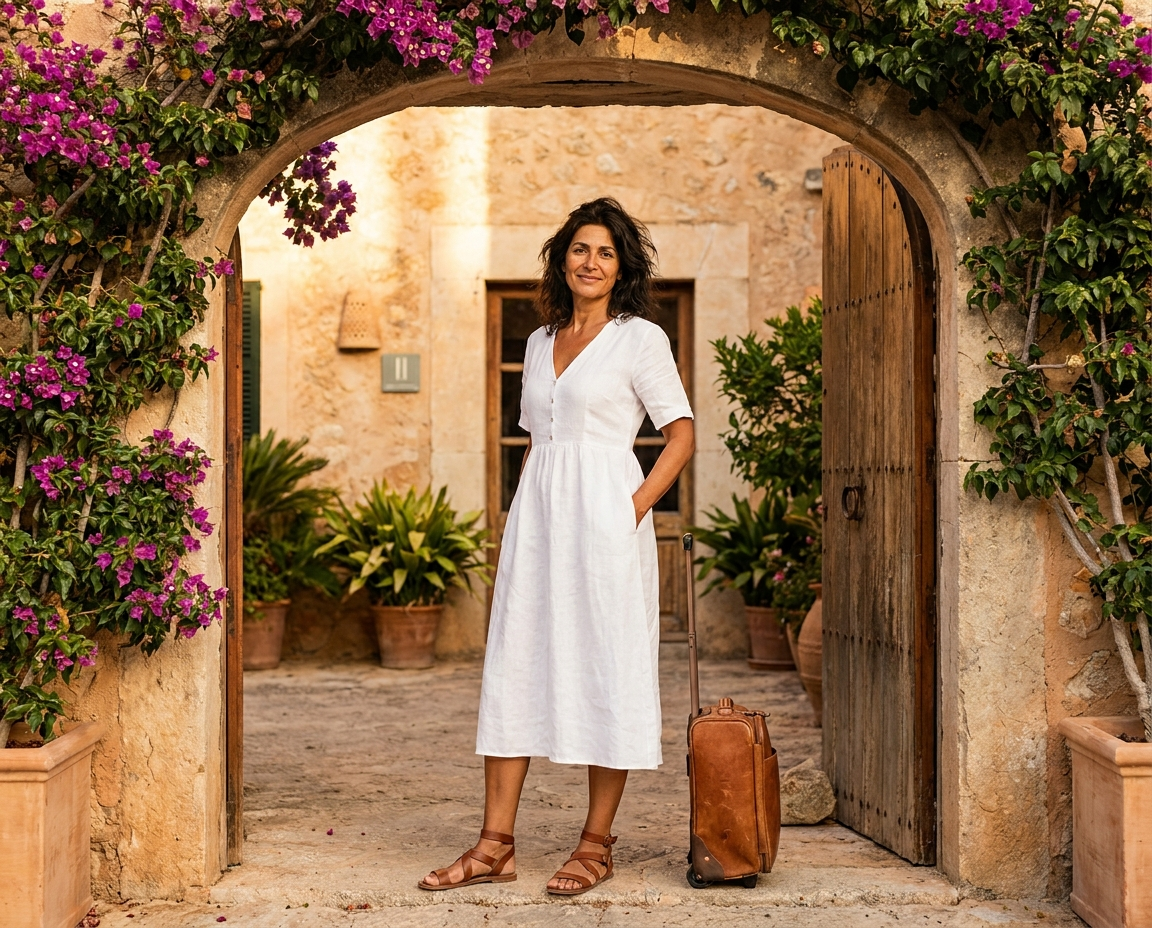
It sounds like a constraint. In practice, it feels like freedom. When you carry only what fits in the overhead bin, you walk off the plane and straight to your taxi, your rideshare, or your train. You never wait at baggage claim. You never lose a bag – because airlines cannot lose what they never touch. You move through airports faster, move through cities lighter, and make decisions faster because you have fewer options to second-guess. The carry-on only philosophy is not about deprivation; it is about editing. It is the travel equivalent of a capsule wardrobe: fewer pieces, more thought, better outcomes all around.
One important principle to understand is what seasoned packers call the one-week rule. Most people can fit the same amount for a full week as they would for three days, because by day four you are doing laundry anyway – whether at the hotel, a local laundromat, or by rinsing things in a sink. The math of a capsule wardrobe makes a full week entirely achievable in a single bag, and the structure of most summer trips, with their warm nights and casual days, actually makes it easier than a winter or shoulder-season trip ever would be.
How Do You Build a Summer Wardrobe That Actually Works on the Road?
The capsule approach for summer travel starts with a palette – two or three colors, maximum, that all work together without any styling gymnastics. Think white, navy, and tan. Or black, terracotta, and cream. Or soft neutrals with one pop of color anchored by a printed scarf. The point is that every top should be able to work with every bottom without thought. The formula is simple: multiply your bottoms by your tops, then multiply again by your accessories, and you have your outfit count. Three bottoms and four tops gives you twelve combinations before you add a scarf or swap earrings. Accessories are the real multipliers – a single statement necklace, a silk scarf, and two pairs of earrings can make the same linen trousers look like three entirely different outfits across three entirely different days.
Fabric matters enormously on summer trips, and not always in the ways you expect. Linen is the obvious choice – it breathes, it packs without much weight, and it looks deliberately good with a little natural wrinkle to it. But merino wool is the counterintuitive hero of smart travel packing. A lightweight merino T-shirt or tank can be worn two or three times before it needs washing, because merino is naturally odor-resistant in a way that synthetic fibers and regular cotton simply are not. Quick-dry synthetics are ideal for anything you plan to rinse in a hotel sink, and wrinkle-resistant blends in ponte or stretch-jersey keep their shape through a full day of sightseeing without needing attention. The pieces that require a steamer or careful folding are the ones that cause mid-trip regret.
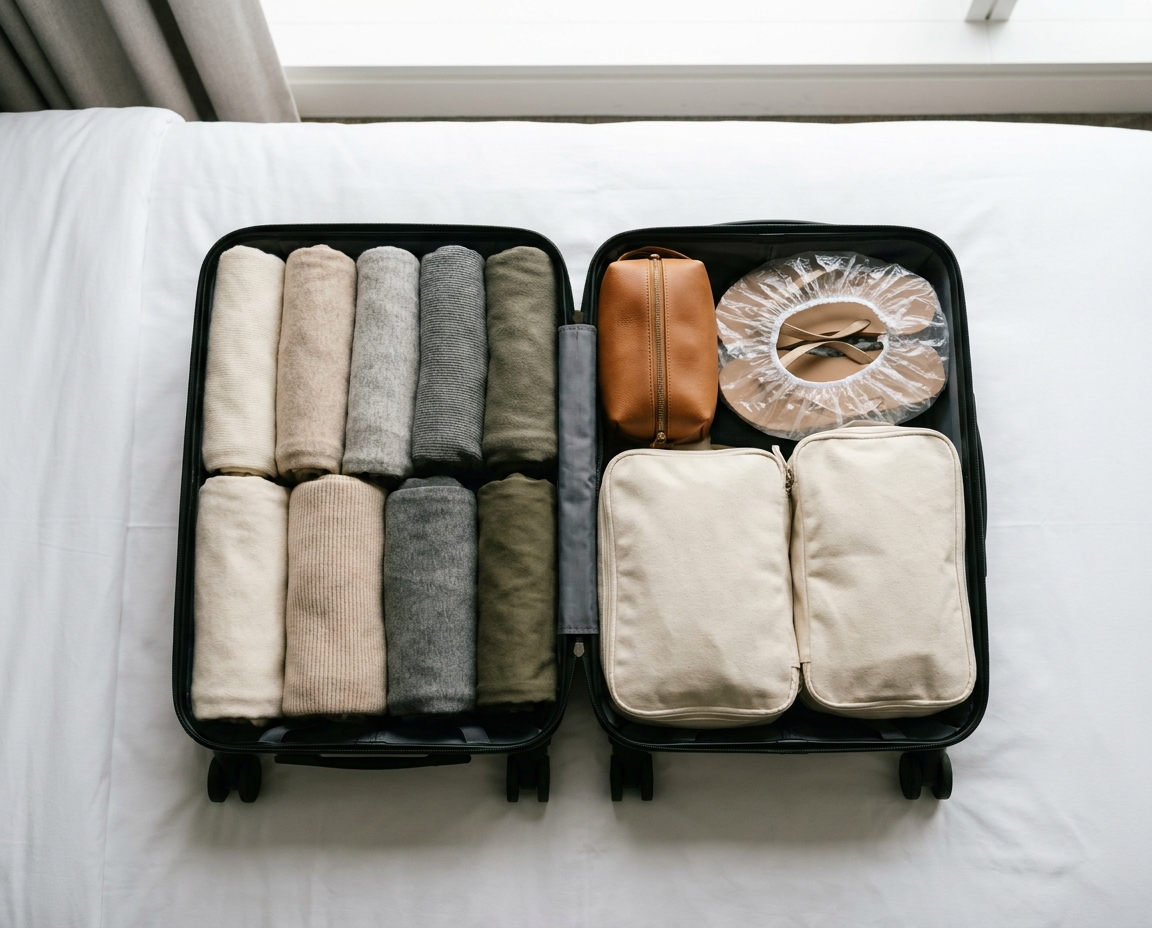
Shoes are the most over-packed category in travel and the biggest structural problem inside a bag. The rule is three pairs, maximum: one on your feet as you board the plane – ideally your heaviest or most structured option – and two in the bag. For summer, that typically means a comfortable sandal for daytime walking, a sneaker or flat that handles longer distances without complaint, and one evening option, whether a heeled sandal or a simple pointed flat. Shoes go into the bag first, each tucked into a shower cap to protect your clothing, and positioned along the bottom of the bag. Everything else gets packed around them. The fourth pair you are considering will not be missed.
Every summer travel wardrobe needs one versatile dress – the single piece that does more work than anything else in the bag. Worn with flat sandals and a straw bag, it reads as beach cover-up or casual lunch. Add block-heeled mules and a statement earring, and it holds its own at dinner. Knot the silk scarf at the neck and it becomes something else entirely. A dress like this – a wrap silhouette, a midi in a print, something in easy jersey or lightweight linen – eliminates the need for two or three other pieces and is the clearest evidence that packing well is mostly about choosing better, not packing more.
What Skincare Actually Belongs in Your Carry-On?

The TSA liquid rule is not the enemy. It is a clarifying constraint. Every liquid, gel, or cream in your quart-sized bag must be 100ml or 3.4oz or under – and fitting a functional skincare routine into that one bag is entirely possible once you are honest about what you actually need on a warm-weather trip versus what you reach for at home out of habit or routine inertia. Summer skin on vacation is different skin. Heat and humidity do your barrier a favor. Your routine can be shorter, lighter, and better suited to the environment than the twelve steps you have at home.
The non-negotiables are not complicated. A broad-spectrum SPF is your single most important product on any trip that involves daylight, full stop. A gentle cleanser that does not require a separate makeup remover step. A moisturizer light enough to double as a makeup base – something in a gel or lightweight lotion texture rather than a rich cream. And a lip balm with SPF, because lips are almost always the last thing people remember to protect and the first to show the consequences of sun exposure. Beyond that short list, the nice-to-haves are a tinted moisturizer or BB cream, which replaces both your foundation and a dedicated moisturizer and frees up one liquid-rule slot, and a single serum. If you use one at home and can only bring one, vitamin C in the morning is the one worth keeping – it defends against UV-induced damage and brightens uneven tone, which matters more when you are spending real time outdoors.
What to leave home is equally important as what to bring. Your full serum stack – the ten-step routine that lives on your bathroom shelf – does not need to travel with you. Heavy night creams and rich barrier repairers are genuinely less necessary in summer humidity; your skin can breathe more easily, and lighter products often perform better in heat. Powder foundation is a particular summer vacation mistake: humidity will fight you all day, and a tinted SPF or BB cream handles the task more elegantly with far less effort. Powder highlighters, contouring products, and the things you reach for on occasions you do not actually have on this trip – these are the products that fill the liquid bag and do nothing except make it heavier.
Which Products Do Double or Triple Duty?
Multi-tasking products are the real secret to a travel beauty bag that works. A tinted SPF – products like Supergoop Glow Screen, Ilia Super Serum Skin Tint SPF 40, or EltaMD UV Elements Tinted Broad Spectrum SPF 44 – covers, protects, and moisturizes in one step and replaces three separate products without any sacrifice in finish or protection. Micellar water removes makeup and cleanses the skin without rinsing, which makes it ideal for long travel days, red-eye flights, and the nights when you arrive somewhere exhausted and want the fastest possible route to clean skin. A face oil can serve as a serum in the morning, a nighttime moisturizer, and a conditioning treatment applied to the ends of hair. A tinted lip and cheek balm – a cream blush stick that also works on lips – gives you two products in one click. A small jar of coconut oil covers body moisturizing, a quick hair mask, cuticle care, and even gentle makeup removal. The math of travel beauty is not about deprivation; it is about choosing products that are too useful to leave behind.
The decant strategy is where most smart packers start, and where the cleverest ones stay. The HumanGear GoToob+ silicone squeeze bottles have been a packer’s staple for years – TSA-approved, with a wide mouth for easy filling, a locking loop cap that prevents accidental opening, and a lifetime warranty. They work with everything from thick conditioner to thin serums and cost considerably less than most alternatives. Cadence capsules are the newer, sleeker option: hexagonal magnetic containers made from recycled materials, BPA-free and non-porous so they will not absorb or alter your serums the way some silicone can with certain formulations. A set of three or four Cadence capsules can carry your cleanser, moisturizer, and a couple of serums in a way that actually looks organized rather than improvised inside your toiletry bag. The one category where decanting may not be worth it: sunscreen, shampoo, conditioner, and body wash, which you use in large quantities and are reliably available to buy at your destination.
Solid toiletries eliminate the liquid question entirely and have gotten genuinely excellent in recent years. Solid shampoo bars lather well and work for color-treated hair. Solid conditioner bars, solid perfume, and even solid moisturizer bars pack without any liquid-rule concern, cannot spill in your bag, and often last significantly longer than their bottled equivalents. For hair tools, the case against packing a hairdryer is simple: almost every hotel room provides one, including properties at most price points. A quick message to confirm before your trip closes any uncertainty. If you need a styling tool beyond what the hotel offers, a hot brush that doubles as a straightener and curler takes far less space than a dedicated kit and handles the majority of summer hair situations without drama.
What Does a Travel Makeup Bag Actually Need?
Five products is the number. Not twenty, not twelve – five. A tinted SPF that covers and protects. A concealer for under-eye circles and anything that needs a little extra attention. Mascara, which does more work per gram than any other makeup product in the bag. One lip color, ideally something that also works on the cheeks as a cream blush. And a brow pencil, because nothing reads as more polished with less effort than defined brows. Everything else – the eyeshadow palette, the contour kit, the setting spray, the illuminator – is vacation excess. The context of summer travel means natural light, relaxed dress codes, and a face that has been sunned, moisturized, and genuinely rested. That face does not need much. What it needs is SPF, mascara, and a lip color that works with whatever you are wearing that day.
How Does Smart Packing Change When Your Body Has Different Needs?
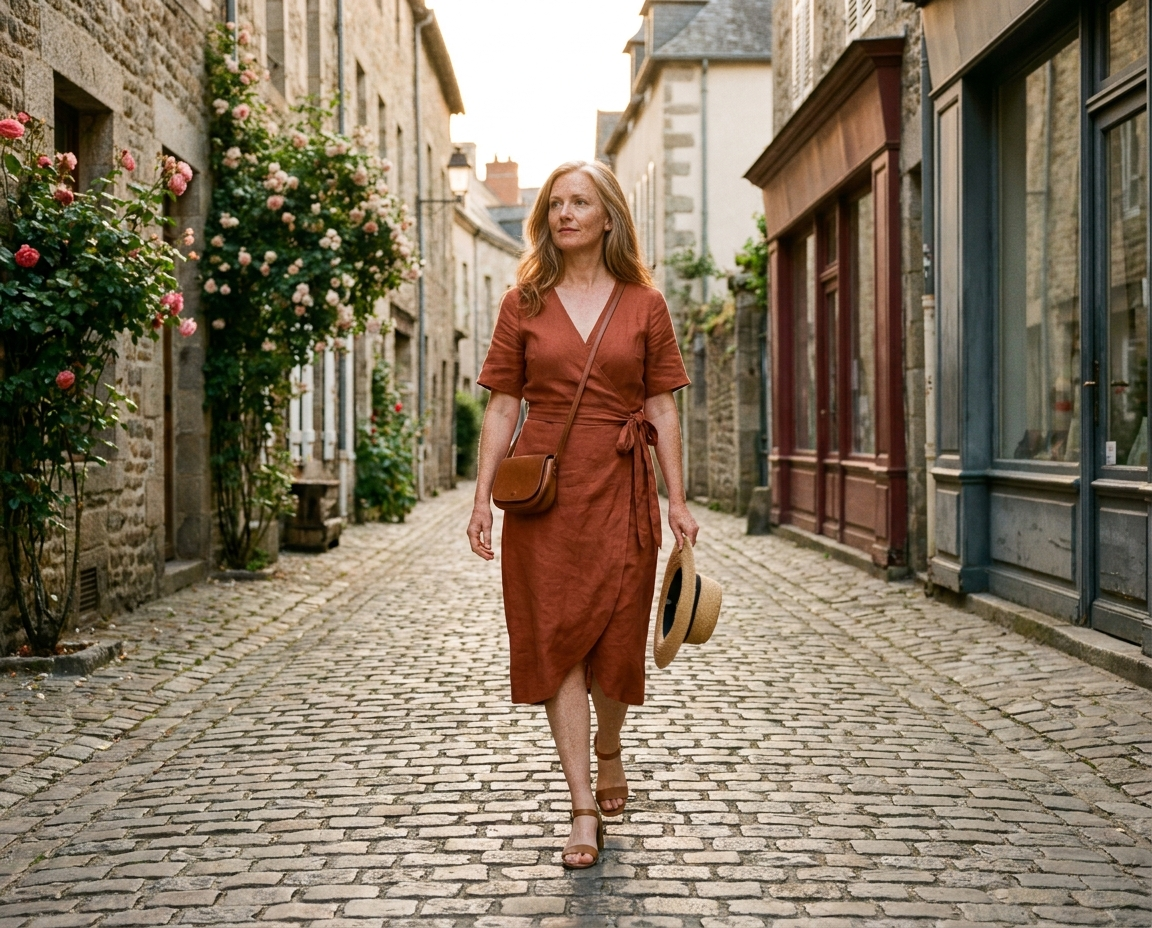
The physical experience of travel is worth taking seriously, and the carry-on only philosophy pays particular dividends here. A carry-on with four spinner wheels distributes weight far better than a rolling bag you drag on one side – and infinitely better than an overstuffed backpack pulled unevenly across a back that has carried a few decades of living. The weight test is blunt but useful: if you cannot comfortably lift the bag with one arm, something needs to come out. That is not merely a packing tip; it is a health principle. Joint comfort at the airport, through long transfers, and across uneven cobblestones matters far more than having a fourth pair of shoes on standby.
Compression socks for long-haul flights have finally received the aesthetic upgrade they deserved. Brands like Comrad and Sockwell make merino-blend travel socks in patterns and neutral colors that look entirely reasonable with ankle boots or sandals and bear no resemblance to medical hosiery. They reduce swelling on flights of three hours or more and genuinely make arrival easier – particularly when the first thing on the itinerary is a long walk through a city. Prescription medications belong in your carry-on, always, in their original pharmacy containers. A full trip’s worth of anything essential – blood pressure support, thyroid medication, anything you cannot easily replace abroad – travels on your person, not in checked luggage that might be delayed or separated from you. At your destination, a good leather crossbody bag with a zip closure keeps your hands free, sits more comfortably on the body than a shoulder tote after a long day on foot, and reduces pickpocket risk in busy tourist areas where open-top totes are an easy target.
For the carry-on bag itself, the Monos Carry-On Pro is consistently praised for its German Makrolon polycarbonate shell, quiet Hinomoto spinner wheels, and organized interior that makes packing genuinely easier rather than just containing it. The Beis Carry-On Roller has a devoted following among design-conscious travelers who want something that looks intentional on a hotel room floor. Away luggage remains a durable, well-considered choice with a built-in compression system and a clean design across most of its line. At any price point, the investments worth making are in smooth four-wheel spinner mechanics, a hard shell that resists scuffs, and a TSA-approved lock. These are the details that make a bag a pleasure to travel with rather than a chore to manage through a crowded terminal.
What Is the Best Way to Actually Fill the Bag?

Rolling versus folding is a long-running debate among frequent travelers, and the honest answer is that it depends on the fabric. Rolling works beautifully for cotton T-shirts, casual knits, and denim – it saves space and reduces wrinkles in relaxed materials. Folding, or the bundle method – where soft clothing is wrapped concentrically around a core of shoes or a toiletry bag – works better for structured dresses, linen trousers, and anything prone to creasing along a roll line. Compression packing cubes are genuinely useful when used with intention: one for clothes, one containing shoes already inside their shower caps, and a separate toiletry pouch. The cubes allow you to compress the clothing compartment and find things without unpacking the entire bag, which turns out to matter more than most people expect when you are moving between hotels mid-trip.
Technology is the most over-packed category after shoes, and it deserves its own ruthless edit. You do not need three chargers, two adapters, and a backup device for a leisure trip. One universal travel adapter, one cable per device, and a compact portable charger cover the vast majority of travel needs without adding meaningful weight. Books go on your phone or a Kindle – a device that carries a library and weighs nothing compared to a hardcover. The full-size hairdryer, the just-in-case umbrella, the outfit you have never worn at home, the backup shoes for a backup occasion – these are the things that sit in the bag untouched for two weeks and make you feel foolish at baggage claim on the return. The exercise is simple: pack the bag, then take out one third of it. That third is what you would have carried for no reason at all.
Frequently Asked Questions About Packing Light for Summer
Can I really pack for a full week in just a carry-on?
Yes – and the one-week rule holds up in practice. Most airline-compliant carry-ons (roughly 22 x 14 x 9 inches) hold enough for seven days when you pack strategically with a capsule wardrobe. Five to six outfits that mix and match into twelve or more combinations, combined with at least one laundry opportunity mid-trip, covers a week comfortably. Many seasoned travelers do it for two weeks with room to spare.
Do hotels really always have hairdryers?
Almost all hotels at any rating level provide a hairdryer. If you are staying somewhere more independent – a villa, an Airbnb, a small inn – send a quick message ahead of time to confirm. There are genuinely very few situations where packing your own is worth the space and weight it costs you.
What if I want to bring back souvenirs or do some shopping?
Pack a lightweight, foldable tote bag at the very bottom of your carry-on – something like a Baggu standard tote, which collapses to almost nothing. On the return, it becomes your personal item and holds whatever overflow you have accumulated. It costs you almost no space on the way out and solves the problem completely on the way back.
Should I buy sunscreen at my destination or bring my own?
Buying at your destination is often a quality upgrade rather than a compromise. European and Japanese sunscreen formulations are frequently ahead of what is widely available in the United States in terms of texture, finish, and broad-spectrum coverage. Picking up sunscreen locally also frees up significant liquid-bag space for the rest of your skincare routine. Research what is available at a local pharmacy where you are going – you may find something worth bringing home.
Packing light is not about denying yourself comfort. It is about getting clear on what actually makes a trip good – and recognizing that a bag you can lift with one arm, a skin routine you can fit in a quart bag, and an outfit that works for two occasions are not limitations. They are evidence that you know how to travel well. The most experienced travelers tend to have the smallest bags. They have learned, sometimes the hard way, that freedom of movement is the luxury that no amount of luggage can buy. Pack the edit, not the anxiety, and the trip begins before you even leave the house.