
Jun
Skincare, Trends & Opinions
What Washing Your Face in the Shower Is Actually Doing to Your Skin
If you click on links we provide, we may receive compensation.
A 2022 study published in the International Journal of Molecular Sciences found that hot water exposure more than doubled transepidermal water loss – from 25.75 to 58.58 grams per hour per square meter – compared to baseline skin. That is not a minor uptick. That is your skin actively losing moisture at a rate that undermines everything you are doing with serums, moisturizers, and SPF. And for millions of people, that exposure happens every single morning, right in the shower, when they are washing their face. Most people have never given this a second thought. They picked a spot – shower or sink – and stuck with it, figuring it is all the same as long as the cleanser is good. It turns out, it is not all the same. Where you wash your face matters quite a bit, and the reasons why are more interesting than you might expect.
The two camps are pretty evenly split. Shower face-washers love the efficiency – why make a separate trip to the sink when you are already standing under running water? They will tell you the steam helps, that it leaves skin feeling clean, that it saves precious morning minutes. Sink face-washers, often nudged there by a dermatologist or a particularly stubborn bout of breakouts, say they can actually see what they are doing, control the temperature, and feel more in command of the whole process. Both sides have real points. But the science – and the dermatological consensus – leans more heavily in one direction. Here is what is actually going on.
Why Does It Actually Matter Where You Wash?

Facial skin is not the same as the skin on your arms, legs, or back. It is thinner, more delicate, and has a higher density of sebaceous glands, which means it responds more strongly – for better and worse – to whatever you expose it to. The face also has a more complex relationship with its microbiome and acid mantle, the slightly acidic film that sits on the surface of skin and acts as its first line of defense against bacteria, irritants, and environmental damage. Normal skin pH sits between 4.5 and 5.5 – mildly acidic – and maintaining that range matters for the barrier to function properly. When you disrupt it, even temporarily, you leave skin more vulnerable to inflammation, sensitivity, and moisture loss.
The shower-versus-sink question touches on at least three genuinely distinct dermatological considerations: water temperature, hair product contamination, and control over cleansing technique. Get all three wrong and you have created conditions that can compromise your skin barrier every single morning – even if you are using the best cleanser on the market. The good news is that all three can be managed with small, practical adjustments. But first, it helps to see what happens when they go wrong.
Is Hot Water the Biggest Problem With Washing Your Face in the Shower?
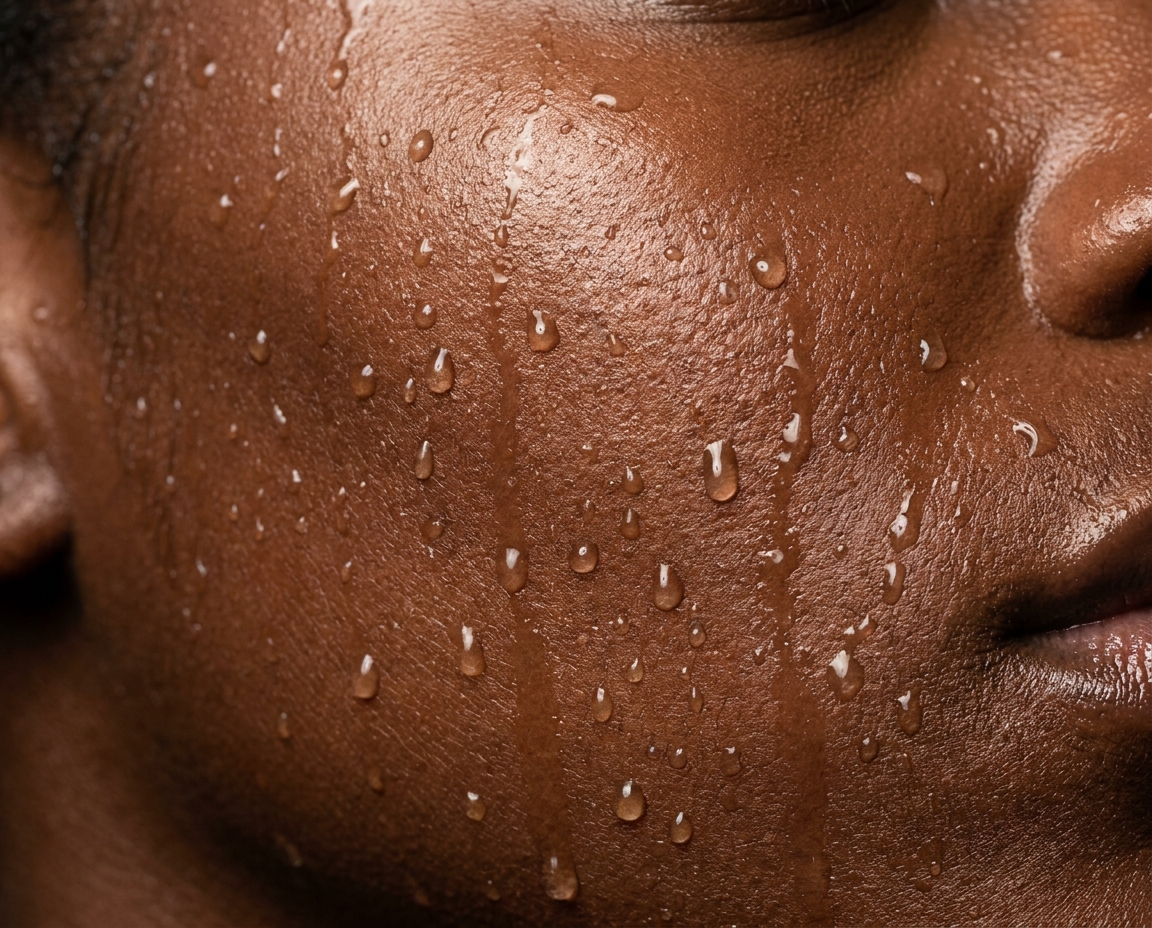
Short answer: yes. Water temperature is the single most consistently cited concern when dermatologists discuss washing your face in the shower. The American Academy of Dermatology recommends washing with lukewarm water – broadly defined as around 32 to 37 degrees Celsius (90 to 99 degrees Fahrenheit) – and avoiding temperatures that feel genuinely hot on skin. Most people shower well above this range. Research puts average shower temperature closer to 40 degrees Celsius and often higher, particularly in colder months. The temperature that makes your shoulders relax and your muscles loosen is frequently too high for the skin on your face.
What hot water does is dissolve the protective sebum layer that coats your facial skin faster than lukewarm water ever would. Sebum is not the enemy – it is part of the acid mantle and helps retain moisture in the outer layers of the stratum corneum, the top layer of skin. Strip it too aggressively and your skin reacts by feeling tight, looking dull, and eventually overproducing oil to compensate. The 2022 NCBI study found that hot water increased TEWL – transepidermal water loss, the rate at which skin loses moisture to the environment – from 25.75 to 58.58 g per hour per square meter, more than doubling the baseline measurement. Full citation: https://www.ncbi.nlm.nih.gov/pmc/articles/PMC8778033/ Cold water immersion also raised TEWL, though far less dramatically. The sweet spot for skin barrier preservation is, reliably, lukewarm.
For anyone with rosacea, sensitive skin, or persistent redness, this matters even more. Heat causes vasodilation – the widening of blood vessels near the skin surface – which is one of the most well-documented rosacea triggers. When you wash your face under a hot shower stream, you are delivering a direct thermal stimulus to blood vessels that are already prone to reactivity. Rosacea-focused dermatology practices consistently flag hot showers as a trigger to avoid, and some recommend temperatures no higher than 85 to 95 degrees Fahrenheit (around 29 to 35 degrees Celsius) for anyone with the condition. The flush you see immediately after a hot shower is temporary vasodilation. For rosacea-prone skin, repeated daily exposure to that kind of heat can make temporary flushing into something far more persistent.
Are Your Hair Products Breaking Out Your Face Without You Realising?
This is the part that surprises most people. Even if you keep the water temperature perfectly lukewarm and use an excellent facial cleanser, washing your face in the shower still carries one risk the sink avoids entirely: hair product runoff. When you shampoo and condition in the shower, those products rinse down your face, neck, chest, and back. Shampoo runoff can be irritating, but conditioner is where the real trouble lives. Conditioners are formulated with rich, occlusive ingredients designed to coat and smooth the hair shaft – silicones, fatty alcohols, shea butter, mineral oils, and sometimes lanolin. These work beautifully on hair. On facial skin, they are a different story.
This category of breakouts even has a clinical name: pomade acne. Originally coined to describe breakouts caused by hair styling products, the term now applies broadly to any acne triggered by hair care ingredients migrating onto facial skin. The pattern is distinctive – small flesh-colored bumps or blackheads along the hairline, forehead, and temples, sometimes the jawline if you wash your hair with your head tipped forward. Dermatologists note that patients often fail to connect their hair care routine with their facial breakouts because the products seem entirely unrelated. If you have persistent forehead congestion that does not respond to your usual acne treatments, this is worth investigating.
The ingredients to watch for include silicones such as dimethicone and cyclomethicone, sodium lauryl sulfate, mineral oil, lanolin, coconut oil, cocoa butter, and panthenol in high concentrations. Many of these score highly on comedogenicity scales, meaning they have a demonstrated tendency to clog pores. When they sit on facial skin after rinsing – especially if you do not wash your face again after conditioning – you have effectively applied a layer of pore-clogging product you never intended to put there. The solution is not to stop conditioning your hair. It is to be thoughtful about the order of everything that happens in the shower.
Does the Steam Actually Do Anything Good for Your Skin?
In fairness to shower face-washers, the steam argument has some real substance behind it. Warm steam does soften the outer layers of skin and helps cleansers emulsify more effectively – making it easier to break down sunscreen, sebum, and heavier makeup products that sit in the upper layers of the stratum corneum. This is exactly why professional facialists have used steam for decades as a prep step before extractions and deeper cleansing. The warm, moist air genuinely helps product glide and lift away more thoroughly than dry-air sink washing. It is a real benefit. It just is not the whole story.
Here is where the myth-busting becomes necessary. Pores do not open and close. They have no muscles. They cannot respond to temperature the way blood vessels do. The widespread idea that steam opens your pores to prepare them for cleansing is one of the most persistent myths in skincare – and it was thoroughly debunked by dermatologists long ago. What heat actually does to pores is increase sebum flow through them, which can help cleansing but can also mean that any comedogenic residue – like conditioner runoff – has a slightly easier path into the follicle. The steam benefit is real and useful. The open-pores framing is not. Steam helps the cleanser work better. It does not change the physical structure of your pores.
When Is Washing Your Face in the Shower Actually Fine?
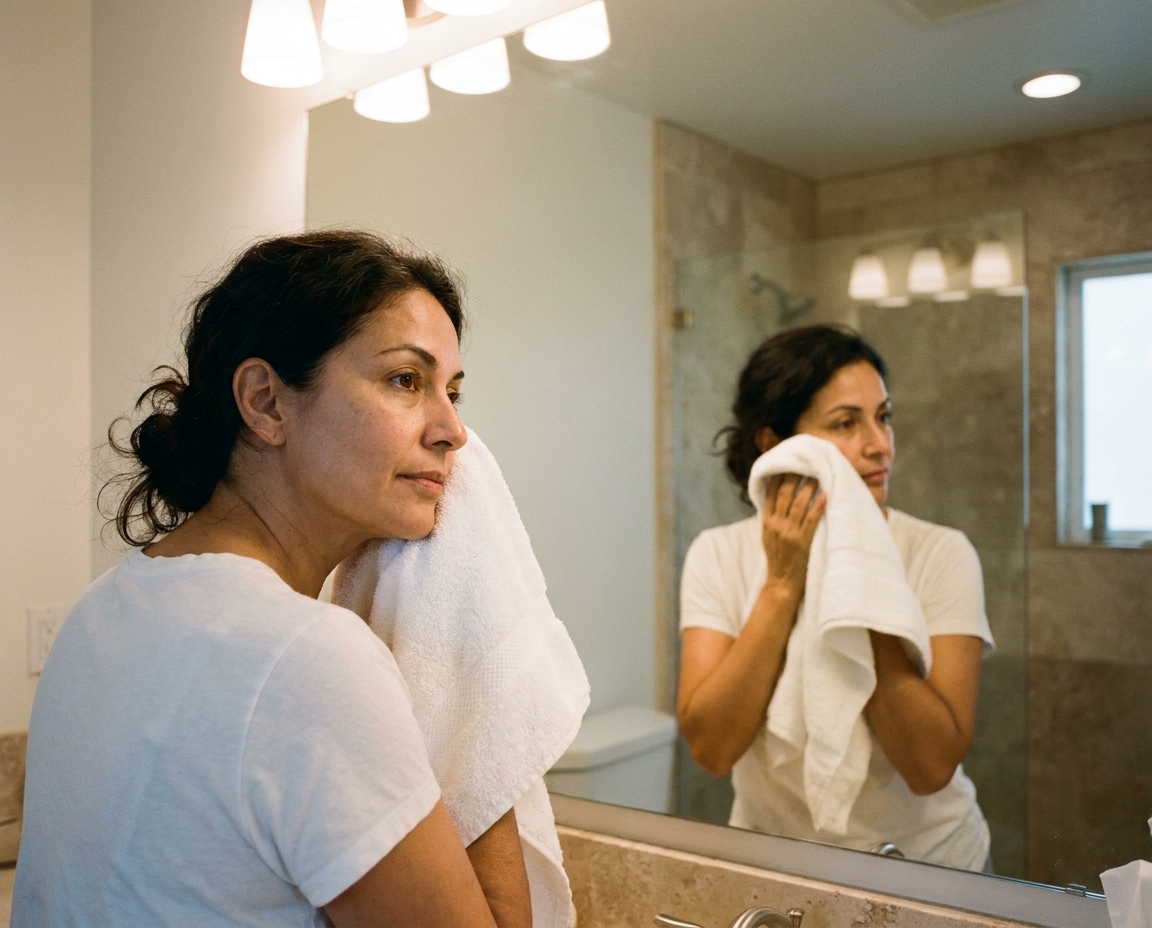
It would be too tidy to declare the shower universally bad for your face. For certain skin types, certain ages, and with the right habits, washing your face in the shower can be completely workable – and for some people, it is the routine most likely to actually happen consistently. Oily skin tolerates heat and steam better than dry or sensitized skin. Younger skin tends to have a more robust barrier function and recovers from temperature stress faster. If you are in your 20s or early 30s with normal-to-oily skin, no rosacea, and no active sensitivity concerns, a warm (not scalding) shower cleanse is probably not going to cause problems, particularly if you are careful about the other factors.
If you shower-cleanse and want to do it well, order matters enormously. Wash your face first – before you shampoo and definitely before you condition. This keeps hair product runoff off skin you have just cleansed. Turn the temperature down slightly while you wash your face, or step out of the direct stream. Rinse your face again thoroughly after you have finished conditioning, so any product that ran down during that stage gets washed away before you step out. Consider a gentler, sulfate-free shampoo and a lighter conditioner that is not packed with high-comedogenicity oils. These adjustments turn a potentially problematic habit into a manageable one without requiring you to redesign your whole morning.
What About the Double Cleanse – Does Location Matter There Too?
The double cleanse – using an oil-based cleanser first to break down sunscreen and makeup, followed by a water-based cleanser to address the skin itself – is one of the most effective approaches to thorough facial cleansing. And the location question adds a genuinely useful layer of nuance here. A hybrid approach works surprisingly well in practice: oil-cleanse at the sink first, removing the bulk of sunscreen and makeup with your fingertips, then step into the shower for the second cleanse using your water-based cleanser. This way you get the benefit of steam-assisted second cleansing without the risk of conditioner residue contaminating a freshly oil-cleansed face.
Timing matters. If you oil-cleanse, step into the shower, and then shampoo and condition before your second cleanse, you have partly undone the first step and potentially introduced hair product to freshly emulsified skin. The water-based cleanse should happen before hair washing – or if you prefer to wash hair first, make sure to rinse your face thoroughly after conditioning before applying your second cleanser. Once you establish the sequence, it becomes automatic and adds no meaningful time to your shower. The order of operations is something most people have never consciously considered, and getting it right makes a real difference.
What Does Lukewarm Actually Mean in Practice?
Lukewarm is one of those words everyone uses and almost nobody defines. In dermatological terms, the ideal water temperature for facial cleansing is generally cited as between 32 and 37 degrees Celsius, or 90 to 99 degrees Fahrenheit. To put that in context, a typical shower runs between 38 and 45 degrees Celsius (100 to 113 degrees Fahrenheit), and many people go higher in winter. The temperature that feels comfortably warm on your body – the kind that eases muscle tension and feels genuinely pleasant – is frequently above what your facial skin can handle without measurable barrier disruption. Your body skin is thicker and less reactive; what feels perfectly fine on your back is often too hot for the delicate skin around your cheeks, nose, and eye area.
A practical check: if the water turns your face noticeably red immediately after washing, it is too hot. That flush is vasodilation – your facial blood vessels widening in response to heat. It is not improved circulation or a healthy glow. It is a stress response, and applying it daily compounds over time. The acid mantle also operates within a narrow pH range, and hot water pushes skin pH upward temporarily, making it more alkaline and reducing its effectiveness as a barrier until it recovers. Healthy young skin recovers this pH balance relatively quickly. Mature, sensitized, or already-compromised skin does so more slowly – which is why the same habit can shift from harmless to genuinely damaging as skin changes with age.
What about the cold water splash that circulates endlessly on social media – the idea that ending your cleanse with cold water closes pores or seals in skincare? Pores do not open or close. But cold water does have some minor, legitimate benefits: it temporarily reduces redness through vasoconstriction, eases post-wash puffiness, and genuinely feels refreshing. It is not miraculous. But if ending on a cool splash feels good and helps you feel like your skincare moment is complete, it is a perfectly harmless habit. Just do not expect it to structurally alter your pores, because it will not.
What Does This Mean If You Are Over 50?

If you are in your 50s, 60s, or beyond, the shower-versus-sink question deserves extra weight – not less. Skin changes significantly with age, and the stratum corneum becomes thinner and less lipid-rich as we get older, which means barrier function is already more fragile before you introduce any external stressors. Estrogen decline after menopause plays a direct role here: estrogen supports collagen production and helps maintain the skin’s natural moisture retention capacity. As levels drop, skin becomes drier, more reactive, and slower to recover from disruption of any kind. The temperature stress that 30-year-old skin bounces back from in a few hours can linger considerably longer on mature skin.
Rosacea is also significantly more common post-menopause. Hot flashes – a well-known menopausal symptom – already represent a kind of repeated, involuntary vasodilation event for the skin. Adding a daily hot shower cleanse compounds redness and sensitivity in ways that can feel mysterious until you make the connection. Dermatologists who focus on mature skin consistently recommend washing the face at the sink with cool-to-lukewarm water as one of the simplest protective adjustments possible. It costs nothing, takes the same amount of time, and removes the two biggest shower risks – heat and hair product runoff – in one move.
There is also a visibility argument that matters specifically at this life stage. After 50, thorough sunscreen removal becomes even more essential – SPF is more important than ever, but any buildup of unremoved sunscreen can contribute to congestion and uneven texture. At the sink, with a well-lit mirror and full control over what you are doing, you can actually see whether your cleanser has emulsified properly, whether there is still residue along the hairline, whether your skin looks flushed or settled. In the shower, with steam, flowing water, and no mirror, you lose that feedback loop entirely. For a routine that genuinely supports skin health at this life stage, the sink simply offers a better environment for getting it right.
What Is the Right Choice for Your Skin Type?
Dry or mature skin benefits most from sink washing. Cool-to-lukewarm water at a tap – under 38 degrees Celsius – reduces the risk of further barrier disruption, moisture loss, and reactive redness. If your skin already feels tight or dry after cleansing, the water is too hot regardless of where you wash, and the sink makes temperature control far easier. This skin type is also most likely to have early rosacea or diffuse redness that a daily hot shower will worsen gradually over time without any single obvious cause.
Sensitive or rosacea-prone skin belongs at the sink. Temperature control is critical for this skin type, and the precision you have at a tap versus in a shower is genuinely meaningful. The risk of vasodilation, barrier disruption, and post-cleanse flushing is highest here, and the consequences – persistent redness, reactive flaring, skin that always feels a step behind – are also most pronounced. If you have rosacea and currently wash your face under a hot shower every morning, reconsidering that single habit is likely the most impactful change you can make to your whole skin routine.
Oily or acne-prone skin can work well in the shower, provided you follow the order-of-operations rules: face first, temperature dialled down, final rinse after conditioning. The steam can benefit this skin type by helping cleansers cut through excess sebum more effectively, and oily skin tolerates transient heat better than dry skin. The main risk remains hair product runoff, which causes breakouts along the hairline and forehead. Keep conditioner off your face and rinse thoroughly before stepping out. For normal skin with no specific sensitivities, either approach works with good habits – and consistency will always matter more than location.
FAQs
Is it ever okay to wash my face in the shower?
Yes, particularly if you have oily or non-sensitive skin and you wash your face before using any hair products. The main issues are hot water and hair product runoff, and both are manageable with the right habits. Wash your face first, turn the temperature down slightly, and rinse your face again after conditioning. For dry, mature, or rosacea-prone skin, the sink is a better fit.
My dermatologist said lukewarm water – what does that actually mean?
Dermatologists generally define lukewarm as 32 to 37 degrees Celsius (90 to 99 degrees Fahrenheit). A practical test: if the water turns your skin noticeably red immediately after washing, it is too hot. Water that feels barely warm – slightly above body temperature rather than genuinely hot – is about right for facial cleansing.
Can conditioner really cause breakouts on my face?
It can and does for many people. Conditioners often contain silicones, fatty alcohols, shea butter, and mineral oils that are highly comedogenic, meaning they have a tendency to clog pores. When conditioner rinses across your face in the shower and is not thoroughly washed off, these ingredients can sit in follicles and cause breakouts along the forehead and hairline. Dermatologists call this pattern pomade acne, and it is more common than most people realise.
Does cold water close pores?
No. Pores have no muscles and cannot open or close in response to temperature. Cold water temporarily reduces redness by constricting blood vessels and can slightly ease morning puffiness, which makes pores appear momentarily smaller. But this is cosmetic and temporary. There is no structural change to pore size from any water temperature.
Should I wash my face before or after I get in the shower?
Before, if possible. Washing your face before stepping in means you cleanse with fully controlled temperature and your face is done before any shampoo or conditioner enters the picture. If you prefer washing inside the shower, wash your face first – before hair products – and rinse again after conditioning.
I have rosacea. Is the shower definitely off limits for face washing?
Not absolutely off limits, but it requires real care. Heat is one of the most consistent rosacea triggers, and most people shower at temperatures above what rosacea-prone skin tolerates without flaring. Sink washing with cool-to-lukewarm water is the lower-risk choice. If switching entirely is not realistic, at minimum turn the water to the coolest temperature you can manage for the face-washing part.
The answer here is simpler than all the caveats might suggest. For most adults – and especially anyone over 40 – the sink wins. It lets you control temperature precisely, keeps hair products out of the picture entirely, and gives you a clear view of what you are actually doing. If you are a committed shower face-washer and that is not changing, the adjustments are straightforward: wash your face first, cooler water, final rinse after conditioning. Hot water and hair product runoff are the two real issues here – remove them from the equation and the shower becomes far less of a concern. The goal is not a perfect routine. It is skin that feels good and stays healthy over the long run. Knowing where and how you cleanse matters more than most people realise – and it costs absolutely nothing to get right.