

Nov
Skincare
Can You Actually Shrink Your Pores, or Are Skincare Brands Selling an Illusion?
If you click on links we provide, we may receive compensation.
You lean in close to the bathroom mirror, maybe under that unforgiving overhead light, and there they are. Little dots across your nose and cheeks that seem bigger than they were five years ago. Then you spot a jar at the store promising to shrink your pores in two weeks, and part of you wants to believe it. I get it. I’ve bought those jars too! But the word “shrink” is doing a lot of work on that label, and it’s worth knowing what’s actually possible before you spend the money. The honest answer is more interesting than either the ads or the skeptics would have you think.
What is a pore, anyway?
A pore is the opening at the top of a hair follicle. Each one is part of what dermatologists call the pilosebaceous unit, a small structure that includes a hair, an oil gland called the sebaceous gland, and the narrow canal that connects them to the surface. The oil gland makes sebum, a mix of fats and waxes that travels up the canal and spreads over your skin to keep it soft. The follicles on your nose, forehead and inner cheeks tend to have the biggest oil glands, which is why those areas show the most visible pores. Sweat glands open onto the skin too, but those openings are far too small to see. So when people talk about pores, they almost always mean follicle openings.
Here’s something the marketing rarely mentions. Pores don’t have muscles, so they can’t open or close. Steam doesn’t open them, and a splash of cold water doesn’t close them. Heat can soften the oil and debris inside, which makes extraction easier, and cold can briefly tighten the skin around them for a few minutes. But the opening itself stays the same size. Once you know that, a lot of skincare claims start to read a little differently.
Why do some pores look bigger than others?
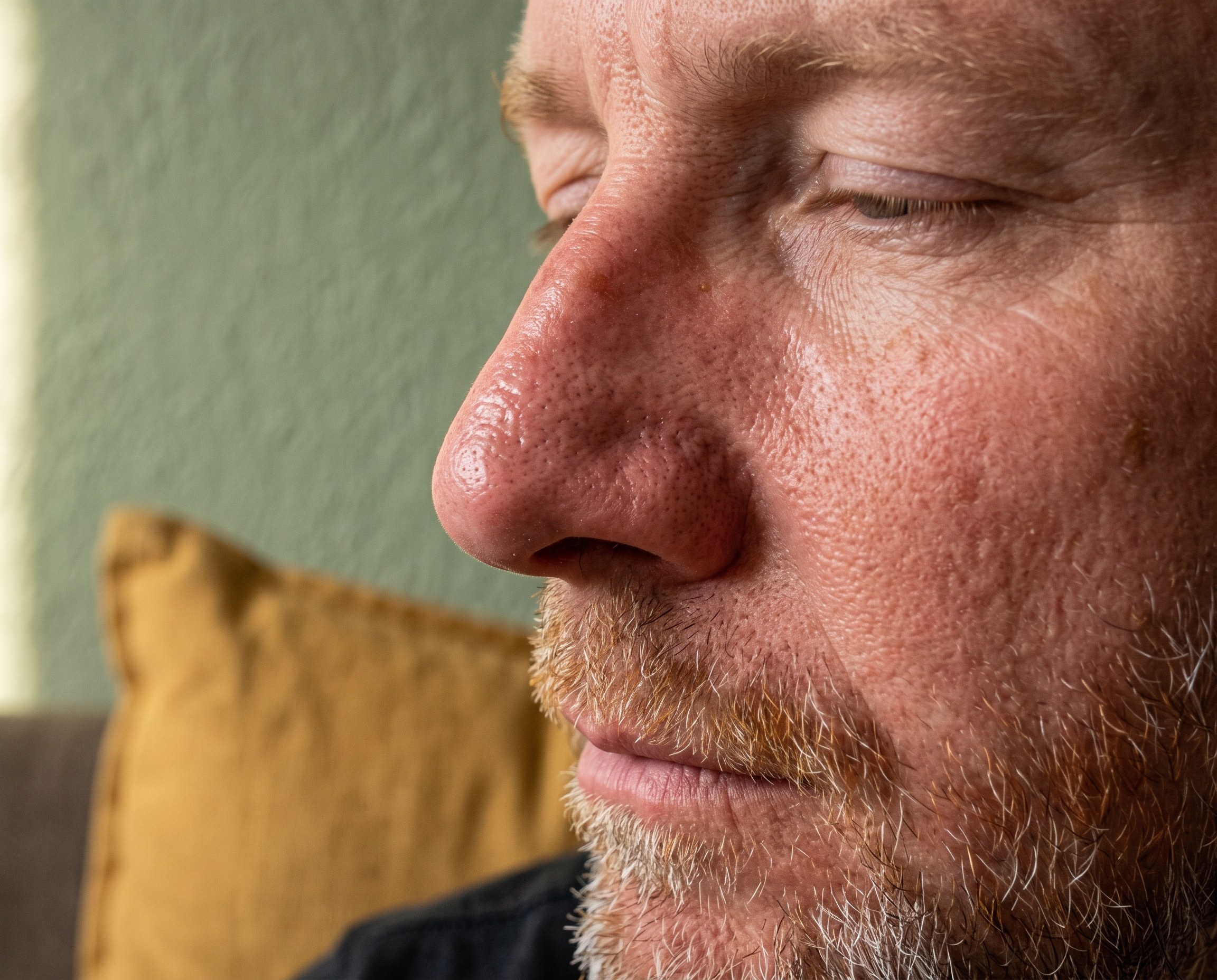
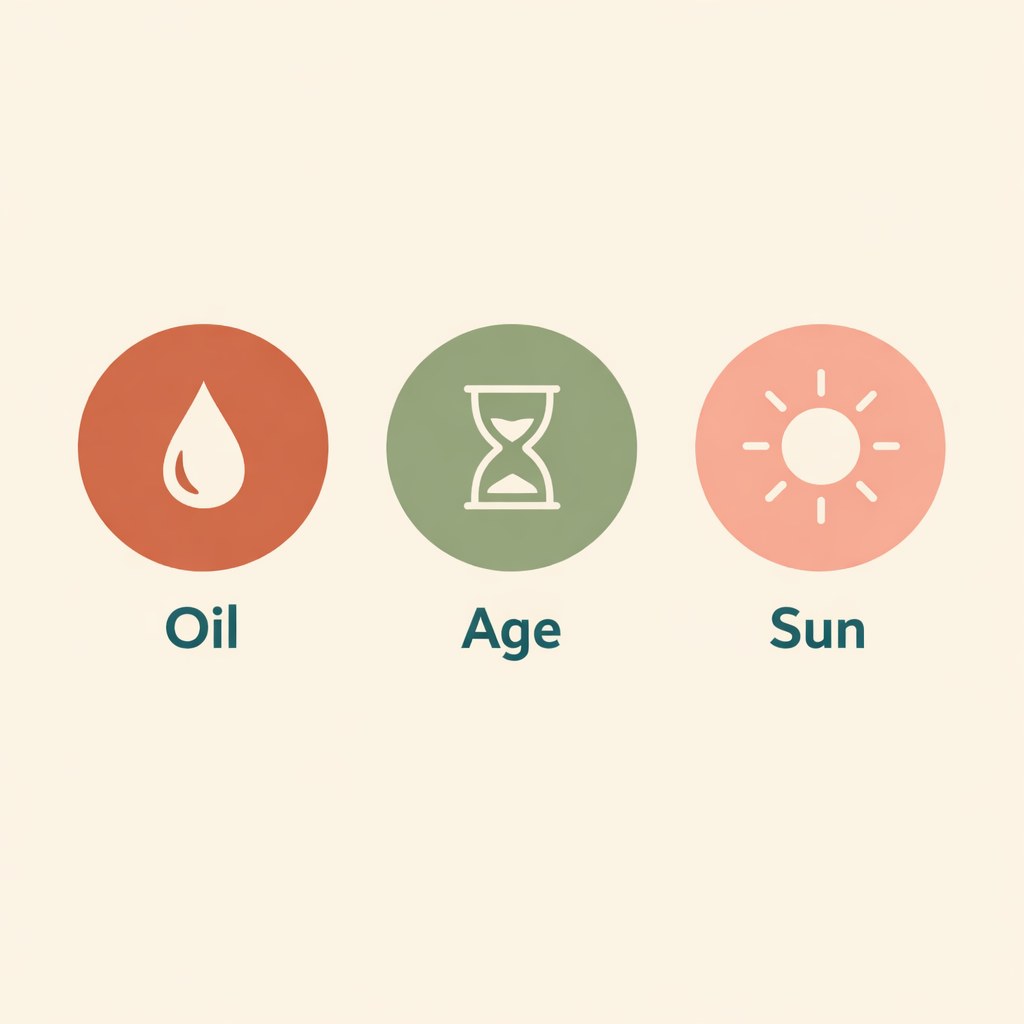
Researchers who study pores tend to agree on three main reasons. A 2016 review in Dermatologic Surgery named high sebum output, loss of elasticity around the pore, and larger hair follicles as the major clinical causes of enlarged pores (https://pubmed.ncbi.nlm.nih.gov/26918966/). The same review listed repeated acne, sex hormones and even your skincare routine as factors that can push things one way or the other. Genetics sits underneath all of it. Cleveland Clinic dermatologists put it plainly, saying pore size is mostly inherited, so if your parents had large pores, you probably will too (https://health.clevelandclinic.org/how-to-shrink-pores). That isn’t what anyone wants to hear, but it explains why two people with the same routine can have very different skin.
What fills a pore also changes how big it looks. When dead skin cells and sebum pack into the canal, the plug stretches the opening and catches light. If that plug oxidizes at the surface, it turns dark and becomes a blackhead, which makes the pore far more noticeable. Many people also mistake sebaceous filaments for blackheads. These are normal, pale gray strands of oil and cells that line the canal, and they refill within days of being squeezed out. Squeezing them doesn’t help, and it can inflame the pore and leave it looking larger than before.
How much does oil production matter?
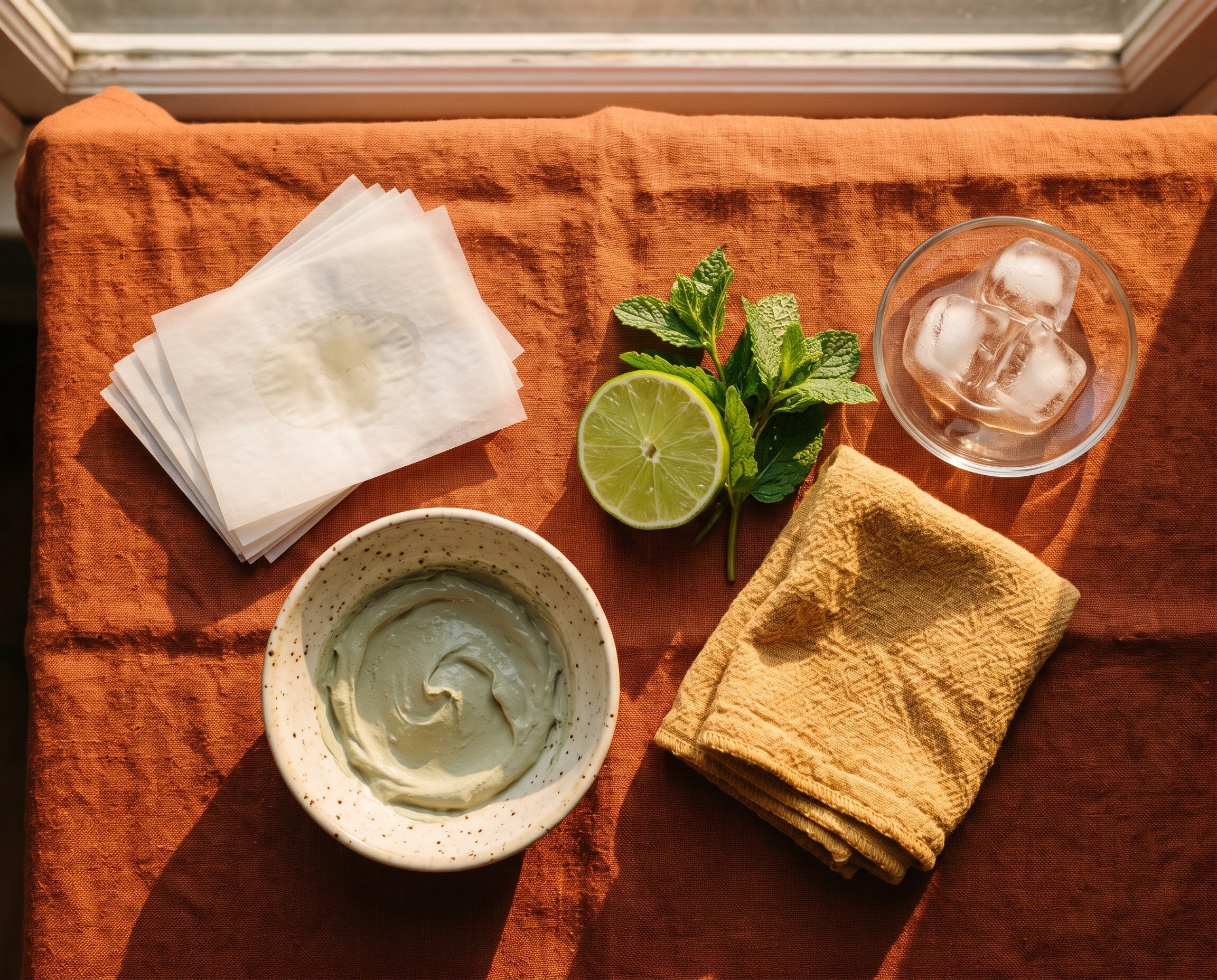
Quite a lot, it turns out. In a 2006 study in the British Journal of Dermatology, researchers in Korea measured pore size and oil output in 60 adults, half men and half women (https://pubmed.ncbi.nlm.nih.gov/17034515/). Larger pores were linked with higher sebum output, male sex and older age. Of all the factors they tested, oil output had the strongest connection to pore size, followed by being male. That fits what most of us see in the mirror, since the oiliest parts of the face usually have the most obvious pores.
Hormones drive a big part of this. Androgens, the hormones that rise in puberty, tell oil glands to grow and produce more sebum. That’s why pores often become noticeable in the teen years and why men tend to have larger ones. A 2016 review in the journal Cutis noted that sebum output and pore size both rise during the ovulation phase of the menstrual cycle (https://www.mdedge.com/cutis/article/110032/acne/enlarged-facial-pores-update-treatments). So if your pores look worse at certain times of the month, you aren’t imagining it. Heat and humidity also make skin oilier for a while, which is one reason pores seem more visible in August than in January.
Advertisement
What does aging do to your pores?
Age adds a second problem on top of oil. A 2018 study that counted enlarged pores on different parts of the face found that the numbers went up with age, and the biggest jump came between the 30s and the 40s (https://pubmed.ncbi.nlm.nih.gov/29393550/). The researchers also found that pore counts tracked closely with how severe a person’s wrinkles were. That link is a clue. It points to the skin around the pore, not the pore itself, as the thing that changes most.
Each pore is held in place by a framework of collagen and elastic fibers in the dermis. As we get older, that framework thins out and loses its spring. The edges of the opening slacken and the pore looks wider, even if the oil gland hasn’t changed at all. The American Academy of Dermatology makes the same point, noting that pores look larger when skin sags (https://www.aad.org/public/everyday-care/skin-care-secrets/face/treat-large-pores). It’s a bit like a buttonhole on an old sweater. The hole didn’t grow, but the fabric around it relaxed.
How does sun damage make pores look bigger?
Sun exposure speeds all of this up. Ultraviolet light breaks down collagen and damages the elastic fibers in the dermis. Over the years, the skin replaces those healthy fibers with a tangled, clumped material that doesn’t support much of anything. Dermatologists call this solar elastosis, and a review of collagen and elastin in aging skin describes it as the main microscopic feature that separates sun-aged skin from skin that has simply gotten older (https://pubmed.ncbi.nlm.nih.gov/18404866/). Without that support, the walls of each pore lose their shape. Sun-damaged skin also tends to thicken and roughen on the surface, which makes pores stand out even more.
This is the part of the pore story you have the most control over. You can’t change your genes or stop the calendar, but you can block a large share of the UV damage that loosens the skin around your pores. Daily broad-spectrum sunscreen won’t make your pores smaller next week. Over years, though, it keeps the scaffolding around them stronger than it would be otherwise. And if you spent your twenties at the beach without it, don’t panic, because some of that damage can be partly improved with retinoids and certain procedures.
Why do pores look bigger after 50?
For many women, menopause changes the pore picture in two directions at once. Estrogen falls, and a good deal of the skin’s collagen goes with it, so the support around each pore weakens faster than before. At the same time, the balance between estrogen and androgens shifts, and some women notice oilier patches on the nose and chin even as the rest of the face turns dry. On the cheeks, pores often stretch from round dots into ovals or teardrop shapes that line up in rows as the skin loosens. That pattern is a sign that sagging, not oil, is the main issue.
This matters because it changes which products make sense. A strong oil-control routine built for a 25-year-old can leave mature skin tight, flaky and irritated, and dry flakes catch light in a way that makes texture look worse. A 2023 review in the Journal of Cosmetic Dermatology that looked at 19 clinical trials made the same distinction (https://pubmed.ncbi.nlm.nih.gov/36440737/). For younger patients, the reviewers suggested focusing on sebum control. For older patients, they recommended adding treatments that rebuild and firm the skin alongside oil control. If you’re over 50, think firming first and degreasing second.
What can a product really do to your pores?
Most of what’s sold as pore shrinking falls into one of two groups. The first works on the surface for a few hours. Primers fill the openings with silicone, mattifying powders soak up oil, and clay masks pull out some sebum and leave skin looking tighter until your next wash. These are honest cosmetic tools, and they can make a real difference in photos. But the effect comes off at night, and nothing about the pore has changed.
The second group works more slowly by changing what’s happening in and around the pore. Salicylic acid, a beta hydroxy acid, dissolves in oil, so it can travel into the canal and loosen the plug of cells and sebum. Clearing that plug lets the opening relax back toward its normal shape, which is why a clean pore looks smaller. Niacinamide works on oil output itself. In a 2006 study, a 2% niacinamide moisturizer lowered sebum output in Japanese participants over four weeks and lowered surface oil in a separate group of Caucasian participants over six weeks (https://pubmed.ncbi.nlm.nih.gov/16766489/). Less oil usually means less stretching and less shine.
Retinoids have the strongest case of any topical. They speed up cell turnover, help keep the canal clear and, over months, help rebuild collagen in the dermis. In one study described in the Cutis review, 60 women used 0.025% tretinoin cream once a day for 90 days, and their average pore score improved from 3.2 to 2.0, with the improvement holding from day 28 on. Adapalene, which you can buy over the counter, and retinol, a gentler cosmetic cousin, work along the same lines but more slowly. Expect some redness and flaking in the first few weeks, and give any retinoid at least three months before you judge it.
Which procedures can make a longer-lasting difference?
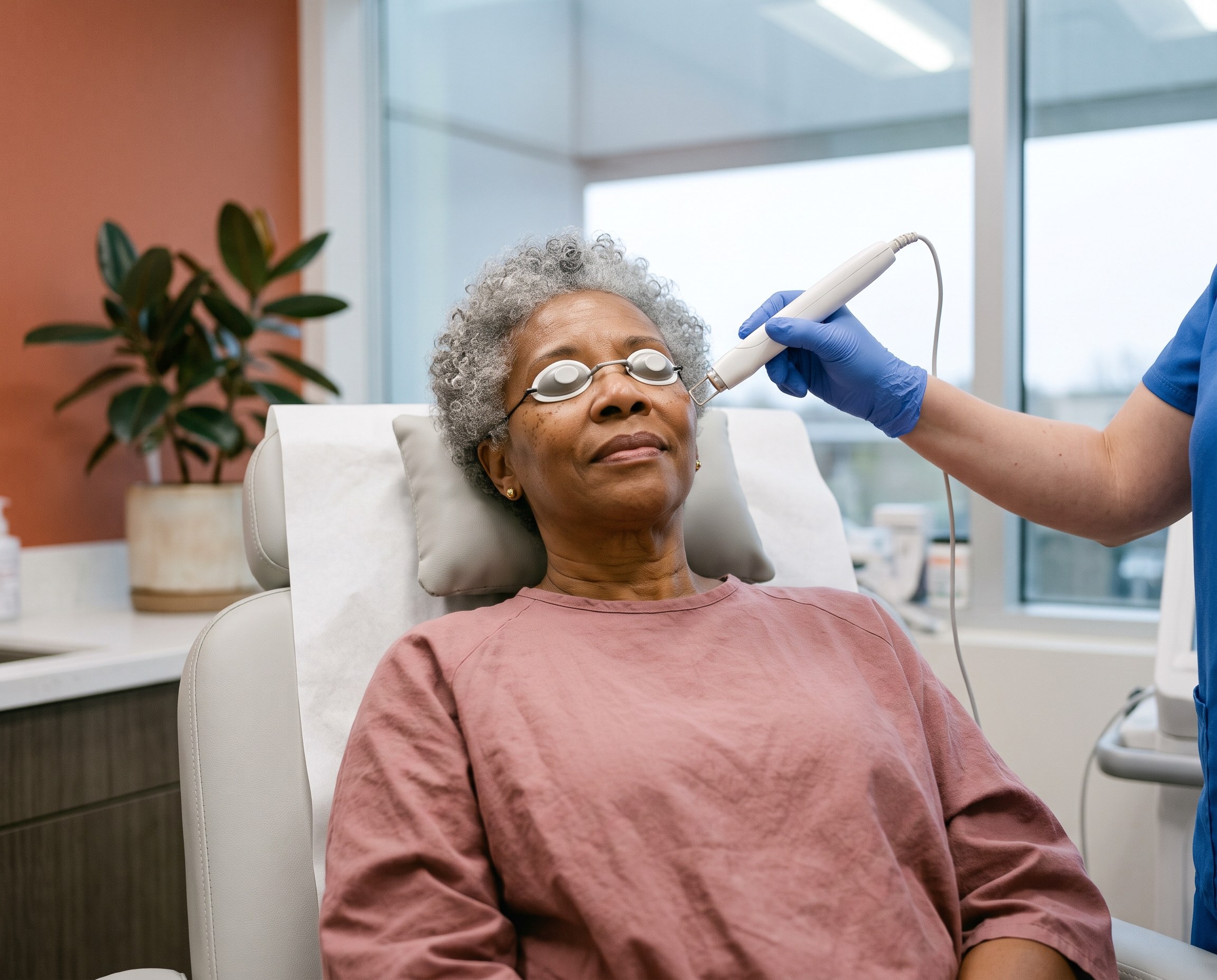
If you want a change that outlasts a good skincare routine, you’re looking at a dermatologist’s office. Chemical peels with glycolic or salicylic acid go deeper than home products and can improve texture over a series of sessions. One study in the Cutis review found that a 40% glycolic acid and vitamin C treatment improved facial pores by 28.3%. Microneedling creates tiny controlled wounds that push the skin to make new collagen around the pores. Both come with some downtime, and both need repeating.
Lasers and energy devices have some of the more striking numbers. Three sessions of a nonablative 1410-nm fractional laser reduced pore appearance by more than 51% in 14 of 15 people in one study, and a single intense focused ultrasound treatment improved pore appearance at 91% of treated sites after six weeks, according to the Cutis review. Radiofrequency devices, alone or paired with microneedling, heat the dermis and tighten the collagen around each pore. The 2023 review found that multiple sessions and combined treatments worked better than single ones, and that the usual side effects were mild burning and redness that went away. The catch is that the Cutis authors also warned that most pore studies are small, lack control groups and measure results in different ways.
There are a few medical options too. Isotretinoin, the prescription acne drug, shrinks oil glands and can make pores look noticeably smaller, but it carries serious side effects and requires close monitoring, so it isn’t a cosmetic choice. Some dermatologists inject tiny amounts of botulinum toxin into the skin of the nose and cheeks to cut oil output for a few months. Be very wary of anything sold as an exosome injection for pores. Doctors in South Korea have reported a case of skin necrosis, meaning tissue death, in a man who had exosome injections to shrink his pores (https://pubmed.ncbi.nlm.nih.gov/38327119/).
So is pore shrinking just an illusion?
Partly, yes. No cream can permanently change the basic size of a pore that your genes and hormones set up. When a label promises to shrink pores, it usually means it makes them look smaller, and that difference matters. The brands aren’t lying outright, but they’re leaning hard on the gap between appearance and anatomy. I’d rather they just said so.
But it isn’t all smoke and mirrors. Pores really do look bigger when they’re clogged, when oil output is high and when the skin around them loses support. Each of those can be improved. Clearing the canal, slowing oil and rebuilding collagen all change how large a pore looks in real life, not just in a filtered selfie. The fair way to put it is that you can make your pores look smaller, sometimes a lot smaller, but you can’t trade them in for someone else’s.
Which pore products on Amazon are worth trying?
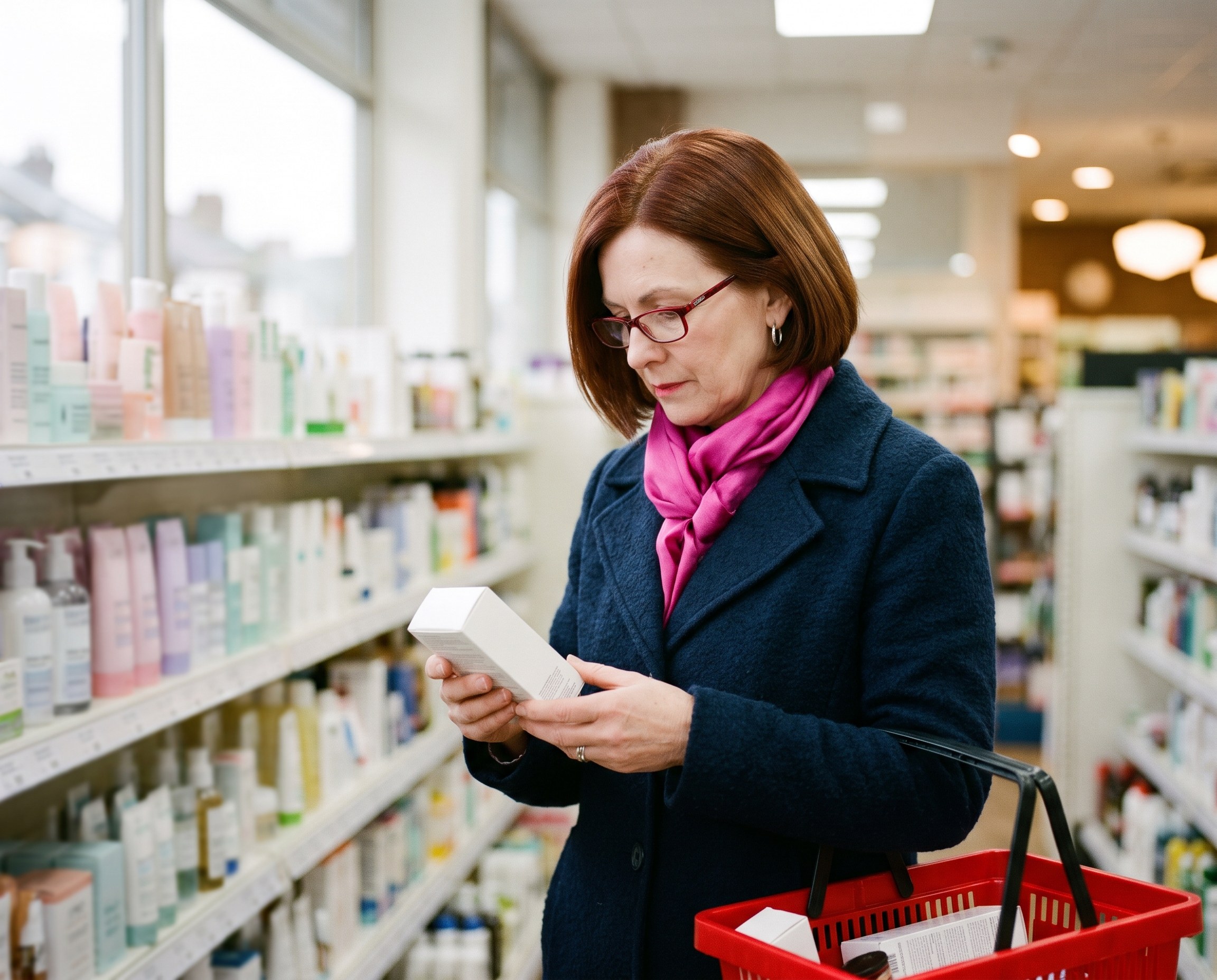
These five are among the most-bought pore products on Amazon right now, and each one earns its place for a reason beyond popularity. Four of them work on the causes we’ve covered, and one is a pure cover-up that’s handy for a night out. Prices and pack sizes change often, so check the listing before you buy. If you have sensitive or mature skin, start one active at a time. Watch how your skin reacts for two weeks before you add another.

Paula’s Choice Skin Perfecting 2% BHA Liquid Exfoliant
This leave-on salicylic acid liquid has been a cult favorite for years, and Amazon lists it as a best seller in its category. Swipe it on with a cotton pad after cleansing, a few nights a week to start. It’s fragrance-free and light enough to layer under moisturizer. It works best on the nose and chin, where blackheads and oil collect. Mature or dry skin may do better with every-other-night use.

The Ordinary Niacinamide 10% + Zinc 1%
This low-priced serum pairs a high dose of niacinamide with zinc, and it’s one of the best-selling facial serums on Amazon. The oil research on niacinamide mostly used 2% to 5%, so 10% is more than you strictly need, and some people find it causes redness or pills under makeup. Use a couple of drops, not a palmful. It’s a good match for oily T-zones and combination skin. If it stings, switch to a moisturizer with a lower dose of niacinamide.

CeraVe Resurfacing Retinol Serum
This drugstore serum combines encapsulated retinol with niacinamide and licorice root extract in a fragrance-free base. It’s a gentle way to start a retinoid habit if you’ve never used one. Apply it at night two or three times a week, then build up as your skin allows. It also helps with uneven tone and post-acne marks, which often show up alongside enlarged pores. Pair it with sunscreen every morning, since retinoids make skin more sensitive to the sun.

Differin Adapalene Gel 0.1%
Adapalene was prescription-only until the FDA approved it for over-the-counter sale in 2016, and it’s still the strongest retinoid you can buy without seeing a doctor. It’s labeled as an acne treatment, but it works on clogged pores and rough texture too. Use a pea-sized amount over the whole face at night, keeping it away from the corners of your nose and mouth. Expect some dryness and flaking for the first month. For mature or sensitive skin, put your moisturizer on first to soften the effect.

Benefit The POREfessional Face Primer
This is the cover-up in the group, and I’m including it because it’s honest about what it does. It’s a silicone-based balm that fills pores and smooths the surface so makeup goes on more evenly. Nothing changes once you wash it off, but for a dinner, a wedding or a video call it can make a visible difference. Pat it onto the spots where pores show most instead of rubbing it in. Use it on top of your treatment products, not in place of them.
Which everyday habits help, and which ones backfire?
Wash your face once or twice a day with a gentle cleanser, and always take off makeup and sunscreen before bed. Choose moisturizers and foundations labeled non-comedogenic, which means they’re formulated not to clog pores. Don’t pick or squeeze, and skip the pore vacuums and peel-off strips, which can bruise thin skin and stretch the opening. Wear sunscreen every morning, even in winter and even if you spend most of the day near a window. And be patient, because most of what works on pores takes eight to twelve weeks to show.
FAQs
Can pores close up completely?
No. Every hair follicle needs an opening, so a pore can’t seal shut. What can change is how stretched, clogged or shadowed it looks. Clearing out debris and firming the skin around a pore can make it hard to see at a normal distance.
Does ice or cold water shrink pores?
Cold makes the skin tighten for a few minutes, so pores may look a little smaller right afterward. The effect fades as your skin warms back up. It’s harmless to try before makeup, but it won’t change anything over the long term.
Are pore strips bad for your skin?
They pull out the top of blackheads and sebaceous filaments, which refill within days. On thin or mature skin, the adhesive can irritate or tear the surface. A salicylic acid exfoliant used a few times a week clears pores more gently and more lastingly.
How long do laser results last?
Results from lasers and radiofrequency usually last for months, sometimes a year or longer, because the treatments rebuild collagen. But aging and sun exposure keep going, so most people need maintenance sessions. Daily sunscreen and a retinoid help the results hold.
Do men need different pore products?
Not really. Men usually have more oil and larger pores, so they may tolerate stronger exfoliants and retinoids sooner. The same ingredients work for everyone. Shaving can irritate skin, so apply acids and retinoids at night rather than right after a morning shave.
Your pores aren’t a flaw to be erased. They’re the openings that keep your skin oiled and working, and everyone has them, including the people in the ads with airbrushed cheeks. What you can change is how much they stand out, and the tools for that are real. A salicylic acid exfoliant, a retinoid and daily sunscreen will do more over a year than any jar promising overnight results. If you want more than that, a good dermatologist can walk you through peels, lasers and radiofrequency. Just read the label with a skeptical eye, and remember that “minimizes the look of pores” is the honest version of what most products can do.
Related Posts
 Encapsulation in Skincare Sounds Impressive but Does It Actually Work
 Whatever Happened to All Those CBD Skincare Brands?
 Three Skincare Products That Actually Do the Heavy Lifting
 What Your Skin’s pH Actually Controls and Why It Matters More After 50
 Exosomes Are the Hottest Word in Skincare. Is the Science Ready for Them?
 Why Pharmaceutical Grade on a Skincare Label Isn’t the Promise It Sounds Like
 What a Hot Delivery Truck Really Does to Your Skincare
 The 10 Best Hand Moisturizers for Winter That Actually Fix Dry Skin
 Why Your Skincare Dupe Isn’t a Twin Even When the Ingredients Match
 Is Medical Grade Skincare Real or Just Clever Marketing
 Is SFC the Next Big Skincare Ingredient or Just the Next Big Promise
 Your Bentonite Clay Has a Hometown and That Actually Matters for Your Skin
