

Nov
Skincare, Trends & Opinions
Did Your Skin Really Get Used to Your Skincare?
If you click on links we provide, we may receive compensation.
You found it. The cream that finally made your skin look rested, or the serum that softened the lines around your mouth enough that a friend asked what you’d changed. For a few weeks you’d catch your reflection and feel a small lift. Then the lift faded. The jar is the same, the routine is the same, and your skin looks fine, just not better. So you start to wonder whether your skin has gotten used to it, the way a body gets used to coffee, and you find yourself in the skincare aisle looking for the next thing. I’ve done this more times than I’d like to admit. And I think the idea behind it deserves a harder look, because most of the time your skin hasn’t stopped listening.
Where does the idea that skin “gets used to” products come from?
The idea borrows from real medicine. Doctors use the word tachyphylaxis for a drop in response to a drug after repeated doses, and it does happen with some medications. Some dermatologists have repeated the idea in beauty magazines, saying skin can alter its signaling pathways so a product loses its effect. Others push back hard. In one widely shared interview, a dermatologist put it plainly, saying skin doesn’t become immune to active ingredients or get bored of them (https://www.hellomagazine.com/healthandbeauty/health-and-fitness/922234/do-creams-stop-working-dermatologist-myth-busted/). So even the experts disagree in public, and that leaves you guessing at the store.
The best way out of the confusion is to split the question into three parts. The first is true biological tolerance, where your skin changes how it reacts to an ingredient. The second is a slowdown in visible results, where the product keeps working but the changes you can see get smaller. The third is everything else, including a product that went bad, a routine that drifted, or skin that changed for reasons that have nothing to do with the jar. These three get lumped together all the time. But they have different causes and very different fixes, so it’s worth taking them one at a time.
What does true tolerance look like in skin?
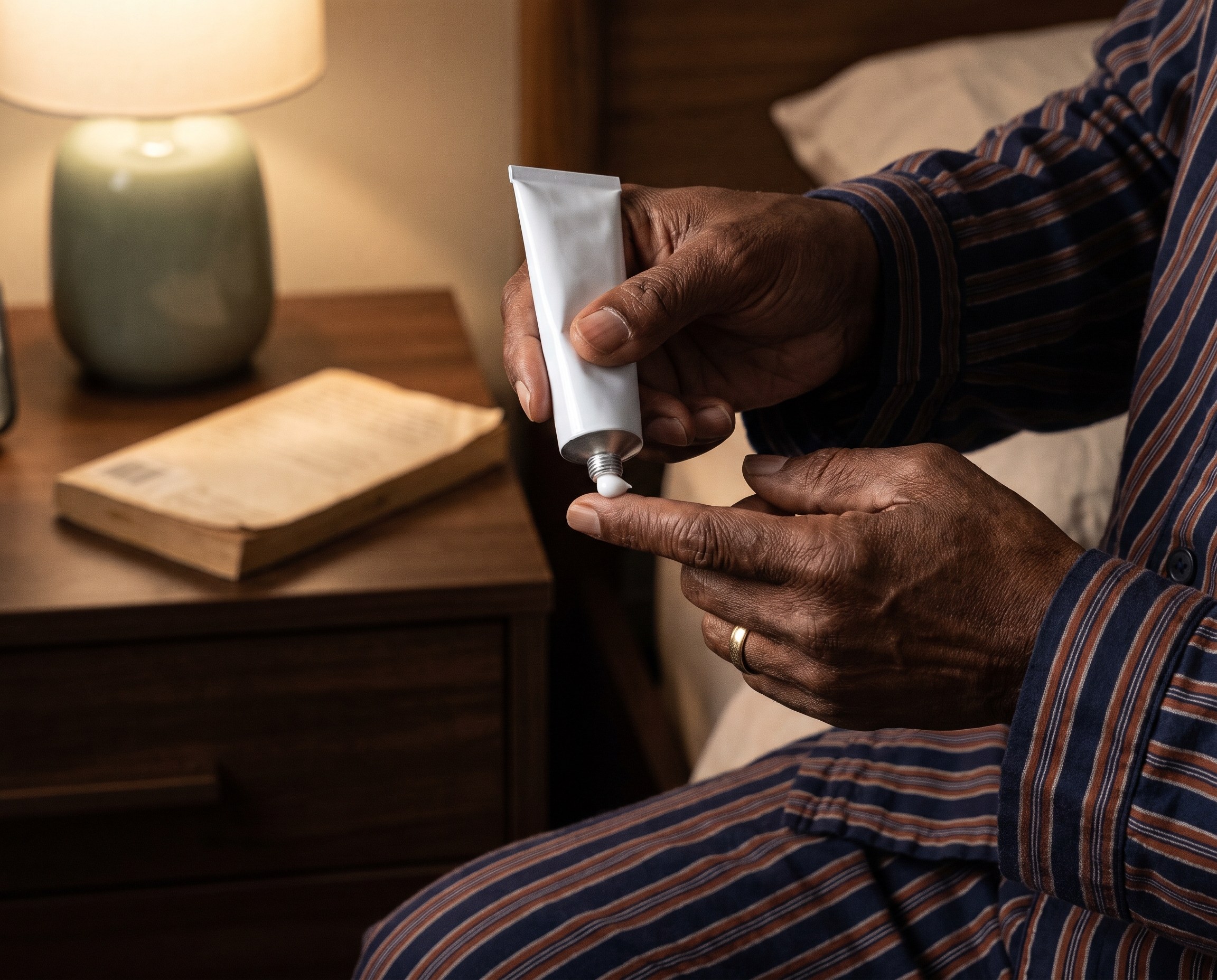
Retinoids are the clearest example of real adaptation, and it’s a helpful kind. When you start a retinoid, whether it’s prescription tretinoin or an over-the-counter retinol, your skin often turns red, dry and flaky for a few weeks. Dermatologists call this retinization or retinoid dermatitis. In a 44-week study that enrolled 355 people, those using retinoic acid had high rates of trouble in the first four weeks, with 44% developing redness, 35% scaling and 29% burning or itching (https://pubmed.ncbi.nlm.nih.gov/10473963/). That’s a lot of uncomfortable people. But for most of them, it didn’t last.
Here’s the interesting part. The irritation fades while the benefits keep coming. In a 48-week trial of tretinoin cream for sun-damaged skin, people who continued past the first 24 weeks kept improving or held their gains, and the researchers noted that skin side effects were less common in the second half than in the first (https://scholars.duke.edu/individual/pub791428). So the skin did get used to something. It got used to the sting, not the results. That’s a good trade, and it’s the main reason dermatologists ask you to push through the first month instead of quitting.
Part of the reason is chemistry inside your skin cells. Retinoic acid switches on genes for enzymes, including one called CYP26, that break retinoic acid down (https://pmc.ncbi.nlm.nih.gov/articles/PMC3103843/). Your skin is built to keep vitamin A signaling in a steady range, so it adjusts how fast it clears the excess. The outer layer also thickens and settles as it adapts. The early rush of peeling calms down, and what’s left is the slower work of building collagen and evening out pigment. That’s tolerance in the best sense of the word.
Do active ingredients ever lose their punch?
Sometimes, but less often than people think, and the evidence is weaker than the folklore. Topical steroids are the textbook case, because many patients and doctors believe they work less well over time. When researchers at Wake Forest searched the medical literature for proof, they found that rapid tolerance showed up in some lab measures, but clinically significant tolerance had not been identified in clinical trials (https://escholarship.org/uc/item/87v5x7hf). They found no evidence that steroids lose their effect on inflammatory skin disease during long, steady use. Their best guess for why treatment seems to stop working is that people stop using it as directed. That’s a humbling finding for anyone who has blamed a cream for a routine that slipped.
Advertisement
Hydroquinone, the prescription skin lightener, may be a partial exception. One dermatologist writing in Practical Dermatology described patients whose melasma improved for four or five months and then stopped improving, even with steady use (https://practicaldermatology.com/topics/general-topics/taking-the-pulse-of-hydroquinone-therapy-a-plea-for-caution/22946/). That’s clinical experience rather than a controlled trial, but it’s one reason doctors use hydroquinone in cycles instead of nonstop. For the ingredients most of us use every day, like moisturizers, niacinamide, hyaluronic acid, peptides and sunscreen, I couldn’t find good evidence that skin develops resistance. A humectant pulls water into the skin on day 300 the same way it did on day one. Sunscreen absorbs UV the same way every time it’s applied.
Why does the improvement seem to slow down?

This is where most of the disappointment comes from. Many products give their biggest visible change early. A moisturizer plumps fine lines within days by adding water to the outer layer, and an exfoliating acid smooths texture within a week or two. Those changes are real, and then they level off. The American Academy of Dermatology notes that a moisturizer can plump up fine lines in a few days, while most products take at least six weeks to work (https://www.aad.org/public/everyday-care/skin-care-secrets/anti-aging/maximize-anti-aging-products). After the fast change, the slow changes take over, and slow changes are hard to see in a mirror.
The long tretinoin studies show this pattern well. A review of the research found improvement was significant after four months and continued over a 24-month period (https://pmc.ncbi.nlm.nih.gov/articles/PMC9112391/). Biopsies taken after up to four years of use showed collagen organization still improving. So the product hadn’t stopped. But the change from month 12 to month 18 is far smaller than the change from week one to week eight. If you’re expecting your skin to keep looking better at the same speed forever, you’ll be disappointed by almost anything. Skin has a ceiling, and a product that holds you near it is doing its job.
There’s also a quieter effect at work. Your eyes adjust too. Once smoother skin becomes your new normal, you stop noticing it, and the remaining lines get your attention instead. Psychologists see the same pattern with a new car or a raise, where the good feeling fades even though nothing got worse. The AAD’s advice on this is blunt. People often stop using a product once they see results, and if you want to keep seeing results, you have to keep using it. Research on tretinoin backs that up, since improvements tended to regress in people who stopped treatment (https://scholars.duke.edu/individual/pub1082120).
Could the product be what changed?
Before you blame your skin, check the bottle. Vitamin C serums made with L-ascorbic acid are notoriously unstable, and they break down with air, light and heat. A serum that has turned from pale straw to amber has lost much of its active ingredient. Retinoids lose strength in warm, bright bathrooms too. Your second bottle might also be different from your first, since brands reformulate without much fanfare. If a product seems to stop working halfway through the jar, the jar is a likely suspect.
How you use it can drift as well. Sunscreen is the best example. Labels are tested at 2 milligrams per square centimeter of skin, but the Skin Cancer Foundation says research confirms people apply only 25 to 50 percent of that amount (https://www.skincancer.org/blog/how-much-sunscreen/). A lab study found that sunscreens labeled SPF 70 and 100 gave real protection closer to SPF 19 and 27 when applied that thinly (https://pubmed.ncbi.nlm.nih.gov/22463921/). The same thing happens with serums and creams. Over months, the pump gets lighter, the nights get skipped and the neck gets forgotten. Then the product gets the blame.
Could your skin be what changed?

Your skin isn’t a fixed target. It gets drier in winter when indoor heat runs and humidity drops. It responds to hormone shifts, new medications, stress, poor sleep and illness. A routine that suited you in June can feel thin in January, and that has nothing to do with tolerance. The product is doing the same thing it always did. Your skin simply needs something different from it now.
New products can also cause the problem they seem to reveal. People who feel a product has stopped working often add more actives on top of it, like an acid toner, a stronger retinol and a vitamin C serum at the same time. The AAD warns that using several anti-aging products at once can irritate skin, and irritated skin makes signs of aging more noticeable. So the routine gets busier and the skin looks worse, which feels like proof that the original product failed. In reality, the original product may have been the only thing in the routine that wasn’t causing trouble.
How does this play out for mature skin?

After 60, several of these effects get stronger. Skin turns over more slowly with age, so results take longer to show and longer to fade. The barrier also recovers from damage more slowly. In a study comparing adults in their 20s with adults over 80, young skin had recovered 50% of its barrier 24 hours after damage, while older skin had recovered only 15% (https://pubmed.ncbi.nlm.nih.gov/7738193/). That means retinoid irritation can last longer, and a harsh new product can cause trouble that lingers for days.
This changes how you should judge a product. Give anything aimed at wrinkles or dark spots at least three months before you decide, and expect the first changes to be subtle. If you’re starting a retinoid, go slower than the box suggests, with two or three nights a week for the first month and a plain moisturizer on top. The tolerance phase may take six weeks instead of four. And the reward for sticking with it is real, since a University of Michigan study found retinol improved fine wrinkles in people with an average age of 87 (https://pubmed.ncbi.nlm.nih.gov/17515510/). Older skin still responds. It just works on a longer clock.
Mature skin also tends to change underneath a routine more than younger skin does. Menopause lowers oil production and changes how the skin holds water, and many common medications dry the skin. If a product that worked at 55 feels inadequate at 63, it’s more likely that your skin needs more support than that the product stopped working. A richer cream, a gentler cleanser or a humidifier in the bedroom often fixes what feels like tolerance. It’s also worth asking your doctor whether a new prescription could be drying your skin out.
Should you rotate your skincare products?
I don’t think rotating products on a schedule makes much sense. There’s no good evidence that switching every few months keeps an ingredient working better, and constant change makes it impossible to know what’s helping. Every new product also brings a new chance of irritation or allergy. If a routine is working, the boring choice of keeping it is usually the right one. Boring is underrated in skincare!
There are good reasons to change, though. Switch when your skin’s needs change, like heavier creams in winter or gentler products after a procedure. Switch when a product has expired or changed color or smell. Step up when you’ve hit a real plateau with a gentle active and want more, such as moving from a low-strength retinol to a stronger one or to prescription tretinoin. And stop when something stings, burns or causes a rash that doesn’t settle. When you do change, change one thing at a time and give it at least six weeks. That’s the only way to know what did what.
It also helps to keep a record. Take a photo in the same spot by a window every month, with the same light and no makeup. Our memory for how our skin looked last spring is poor, and photos are much more honest. Many people who think their products stopped working find, when they compare photos, that their skin held its gains well. Others find a real change that points to a seasonal or hormonal cause. Either way, you’re working from facts instead of a feeling.
FAQs
Can my skin become immune to retinol?
There’s no good evidence that retinoids stop working with long-term use. What fades is the irritation, as your skin adjusts in the first several weeks. Long-term studies of tretinoin show continued improvement for two years and changes in collagen for up to four. If your results level off, you may be near your skin’s ceiling at that strength, and a dermatologist can help you decide whether to step up.
How long should I use a product before deciding it doesn’t work?
For moisturizers and hydrating products, a week or two is usually enough to judge comfort. For anything aimed at wrinkles, firmness or dark spots, give it at least three months of steady use. Mature skin may need closer to four. Take photos at the start so you have something to compare against.
Is it bad to use the same moisturizer for years?
Not at all. A moisturizer that keeps your skin comfortable is doing its job, and your skin won’t build resistance to it. Change it if your skin’s needs change, such as in a dry winter or after menopause. Otherwise, there’s no reason to switch.
Why does my skin look worse after adding new products?
Using several new actives at once often irritates skin, and irritated skin looks dull, red and more lined. Go back to a simple routine for two to three weeks and let your skin settle. Then add one product at a time.
Do I need to take breaks from my skincare actives?
For most cosmetic ingredients, there’s no need. Some prescription treatments, such as hydroquinone and topical steroids, are often used in cycles under a doctor’s care. If you’re using a prescription product, follow your dermatologist’s schedule.
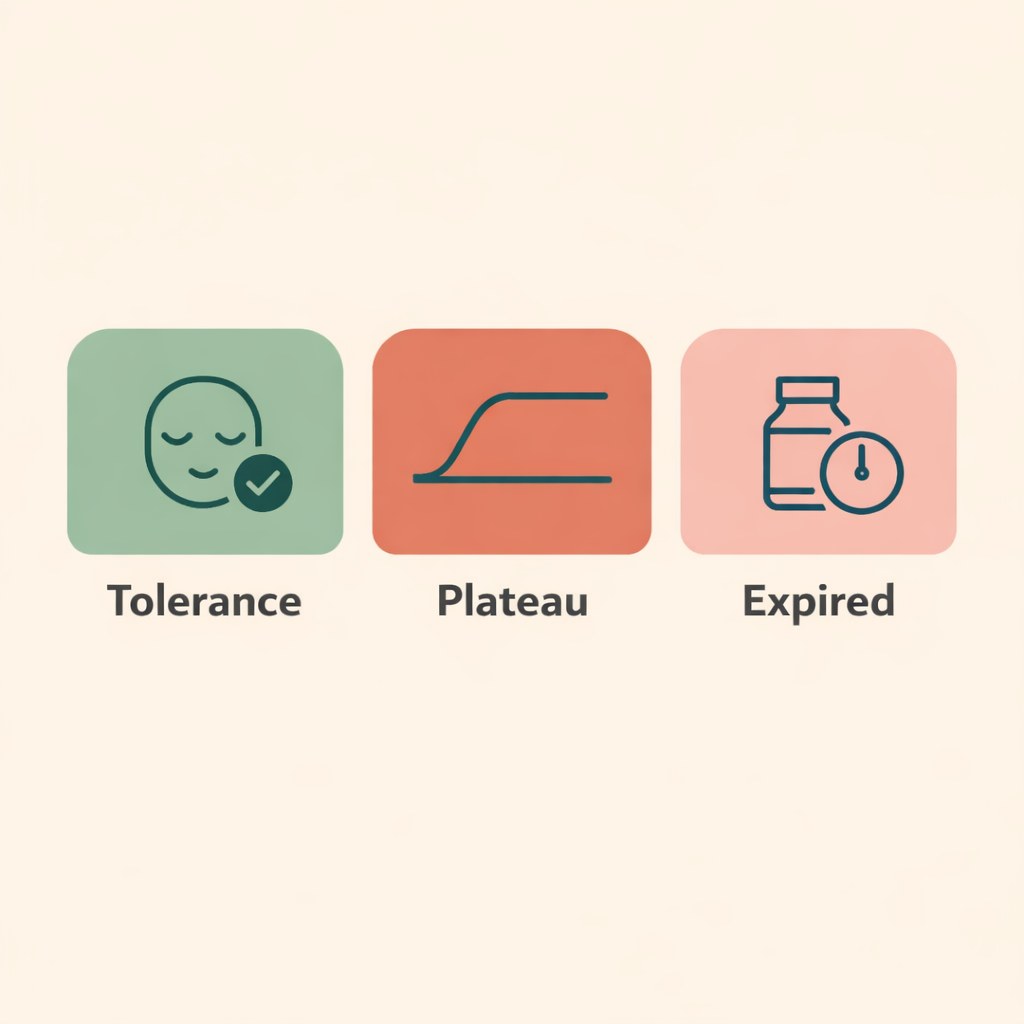
Your skin is changing all the time, and so is the bottle on your shelf. But the idea that skin quietly builds resistance to a good product, the way it might to a medicine, doesn’t hold up for most of what we use. What’s real is the helpful kind of tolerance, where retinoid irritation fades and the benefits stay. What’s also real is a slower pace of visible change after the first exciting weeks, plus a long list of ordinary causes like spoiled serums, thinner layers of sunscreen and seasons that shift your skin’s needs. Before you buy the next thing, check the date on the jar, look at last spring’s photos and ask whether your routine is doing what it was designed to do. Often the answer is yes, and the best move is to keep going.
Related Posts
 Skincare Brands That Actually Understand Skin Over 60
 Morning Skincare Routine for Dry Mature Skin That Actually Works
 The Rise of Men’s Skincare Brands: Why Guys Are Finally Getting Serious About Skin
 Why Piling On Active Ingredients Can Make Your Skincare Work Worse
 Exosomes Are the Hottest Word in Skincare. Is the Science Ready for Them?
 Encapsulation in Skincare Sounds Impressive but Does It Actually Work
 Is Medical Grade Skincare Real or Just Clever Marketing
 Can Bad Sleep Really Show Up on Your Skin? Here’s What the Research Shows
 Why Your Skin Makes Dark Spots and the Ingredients Proven to Fade Them
 Viral Eye Tighteners Work in Three Minutes and Your Skin Forgets by Lunchtime
 Your Skin Wants Pumpkin This Fall and Here Is Why It Works
 Everything I Wish I Had Known About Skincare in My Twenties
