

Nov
If you click on links we provide, we may receive compensation.
You smooth on a new serum, and a few seconds later your cheeks start to prickle. Then they get warm. Then they really sting. And somewhere in the back of your mind a little voice says that’s good, because it means the stuff is strong and it’s doing something. I’ve heard that voice too, and I’ve listened to it longer than I should have. It’s one of the most stubborn ideas in skincare, and it’s mostly wrong. A product can work without hurting you, and a product that hurts you isn’t proving anything except that your skin is unhappy.
Where did the idea that stinging means it’s working come from?
Part of it comes from the products themselves. Old-school astringents and toners were loaded with alcohol and menthol, and the cool burn felt like cleaning. Brands learned that people trust what they can feel, so a tingle became a selling point. Professional peels added to the myth, since a dermatologist’s peel really does sting and really does change the skin. And retinoids, which often cause redness and flaking in the first weeks, taught a whole generation that discomfort comes before results. The trouble is that in each of these cases the sting is a side effect, not the thing doing the work.
Research on retinoids makes the point well. In trials comparing strengths of prescription tretinoin, lower strengths improved sun-damaged skin about as well as higher ones, while redness, burning and peeling went up with concentration (https://www.aafp.org/pubs/afp/issues/1998/0315/p1404.html). So the extra burn bought extra misery and not much else. The same pattern shows up with exfoliating acids, where the useful effect levels off long before the irritation does. If stinging were the active ingredient, the strongest burn would always win. It doesn’t.
What’s happening in your skin when a product stings?
Your skin is packed with tiny nerve endings that sense heat, cold, pressure and chemical irritation. Some of them carry receptors that respond to acids, heat and certain plant compounds, and when they fire, your brain reads the signal as tingling, stinging or burning. One of these receptors, TRPV1, is the same one that makes chili peppers feel hot, and researchers have found it’s more active in people with sensitive skin (https://library.scconline.org/23pooid/39). The signal can fire even when there’s no visible damage at all. That’s why a product can sting without leaving your skin red. It also means the sting is a warning light, not a progress report.
How strongly you feel it depends on your barrier. When the outer layer of skin is intact, it slows down how fast an ingredient reaches those nerves. When it’s dry, cracked or freshly exfoliated, ingredients slip through faster and the nerves light up. Sensitive skin is also very common. A meta-analysis of studies from around the world found that 71% of people say their skin is sensitive to some degree (https://pubmed.ncbi.nlm.nih.gov/31869523/). Dermatologists even built a test around this, painting a 10% lactic acid solution beside the nose and asking people to rate the sting. The whole idea of sensitive skin took shape in the 1970s, when people complained that a sunscreen stung even though safety testing had found nothing wrong with it (https://www.frontiersin.org/journals/medicine/articles/10.3389/fmed.2019.00098/full).
What does harmless tingling feel like?
Not every sensation is a red flag. A mild tingle that shows up when you apply an exfoliating acid or a vitamin C serum, and fades within a minute or two, is usually just those nerve endings reacting to a low pH. It stays where you put the product. It doesn’t leave lasting redness, and your skin looks and feels normal an hour later. You can often reduce it by applying the product to completely dry skin, since damp skin lets ingredients in faster. It’s also common to notice more tingling in winter or right after shaving, when the barrier is a bit thinner than usual.
The test I use is simple. If I’d describe it as a tingle and it’s gone before I’ve finished brushing my teeth, I don’t worry about it. If I’d describe it as a burn, or I’m standing there waiting for it to stop, that’s a different story. Tingling that gets stronger each time you use a product is also worth noticing, because it often means the barrier is wearing down. And one point is worth saying plainly. A product doesn’t have to tingle to work, and plenty of very effective products never make themselves felt at all.
Advertisement
When does tingling cross the line into irritation?
Irritation is what happens when an ingredient actually damages the outer layer of skin. Dermatologists call the medical version irritant contact dermatitis, and it’s by far the most common kind of skin reaction to products. A review in Clinical Reviews in Allergy and Immunology found that irritant reactions make up about 80% of all contact dermatitis cases, often from repeated exposure to weak irritants rather than one strong one (https://pubmed.ncbi.nlm.nih.gov/30293200/). That’s the pattern most of us fall into with skincare. Each product seems mild, but the cleanser, toner, serum and night cream add up. Then one morning your face is tight, pink and stinging when you put on a moisturizer that never bothered you before.
Irritation usually shows up where the product went and nowhere else. It can appear within minutes with a strong product, or build slowly over days with a gentle one. Signs include redness, dryness, a shiny or tight look, flaking and stinging from things that used to feel fine, even plain water. The good news is that irritation isn’t an immune response, so it doesn’t follow you forever. Once you stop the cause and let the barrier recover, the skin usually settles in one to two weeks. Many people can go back to the same ingredient later at a lower strength or a slower pace.
How is an allergic reaction different?

Allergic contact dermatitis is a different animal. Here your immune system has learned to treat an ingredient as an intruder, and it reacts every time it meets that ingredient again. The reaction is delayed, which confuses people. It usually appears 24 to 72 hours after contact, and it can take a few days to peak. Itching tends to be the main complaint, more than burning, and the rash can include swelling, small bumps or tiny blisters. It also spreads beyond where you put the product, often showing up on the eyelids, neck or sides of the face, because that skin is thin and picks up whatever your fingers carry.
The other difference is that allergies tend to stick. You can use a product for months or years without trouble and then become sensitized, and from then on even a small amount can set off a reaction. The North American Contact Dermatitis Group, which patch tests thousands of patients, found in its 2021 to 2022 results that 72% of the 3,056 people tested had at least one positive allergic reaction (https://scholars.duke.edu/publication/1673428). Among the most common culprits were the preservative methylisothiazolinone at 11.5% and hydroperoxides of linalool, a fragrance compound, at 10.1%. These are patients sent to specialists, so the numbers run higher than in the general public. But they show how often personal care ingredients are behind the problem.
If you suspect an allergy, the answer isn’t to switch to a gentler version of the same product. It’s to find out which ingredient is responsible. A dermatologist can do patch testing, where small amounts of common allergens are taped to your back for a couple of days and then checked. Once you know your trigger, you can read labels and avoid it for good. Guessing usually means swapping one product for another that hides the same allergen under the same name.
What does a chemical burn from skincare look like?

A chemical burn is the far end of the scale, and it’s real tissue injury. It happens when a very strong acid or alkali, or a reasonable one left on far too long, destroys skin cells instead of just irritating them. The pain is intense and doesn’t ease after rinsing. The skin may turn bright red, then white, gray or dark brown, and it can blister, crust or weep. Some burns heal with lasting dark or light patches, and deeper ones can scar. This isn’t something to push through or treat with a soothing mask.
At-home peels are the most common route to this kind of injury. In July 2024 the FDA warned consumers not to buy or use certain chemical peel products without professional supervision, pointing to products sold online with 90% lactic acid, 70% glycolic acid and as much as 100% trichloroacetic acid (https://www.fda.gov/drugs/drug-safety-and-availability/fda-warns-against-purchasing-or-using-chemical-peel-skin-products-without-professional-supervision). The agency sent warning letters to six companies, including Amazon and Walmart, and said these products can cause injuries that may need emergency or specialist care. Trouble also comes from leaving a peel on longer than directed, layering two acid products, or applying a peel to skin already raw from retinoids or waxing. If a peel ever goes from a strong tingle to real pain, rinse it off right away. Don’t wait out the timer.
Which ingredients are most likely to sting?
Exfoliating acids top the list. Glycolic acid has the smallest molecule of the alpha hydroxy acids, so it moves into skin quickly and tends to sting more than lactic or mandelic acid at the same strength. Salicylic acid is often easier on the face but can sting on dry patches. Pure vitamin C, listed as L-ascorbic acid or ascorbic acid, has to be formulated at a very low pH to absorb, which is why many people feel a prickle with it. Azelaic acid is known for an itchy tingle in the first few weeks. Even friendly ingredients like urea and lactic acid, which are great for dry skin, can sting on skin that’s cracked.
Retinoids are the second big group. Tretinoin, adapalene, tazarotene and strong retinol products speed up cell turnover, and in the first few weeks that often means redness, peeling and burning, sometimes called retinoid dermatitis. Patient information for tretinoin warns that skin may become irritated during the first three weeks and says to check with a doctor if burning, stinging or peeling becomes severe (https://www.drugs.com/sfx/retin-a-side-effects.html). Benzoyl peroxide, the acne treatment, can cause a similar dry burn. These are irritant reactions, so they can usually be managed by using less, using it less often, or putting moisturizer on first. A mild adjustment period is expected, but a week of raw, burning skin is not.
Then come the ingredients that sting because of their chemistry or their scent. Alcohol, listed as alcohol denat. or SD alcohol, can sting on dry or broken skin and wears down the barrier with daily use. Menthol, peppermint, eucalyptus, camphor and cinnamon create a cooling or hot feeling by triggering the same nerve receptors that sense temperature. Fragrance and essential oils such as citrus, lavender and tea tree can irritate, and some of their compounds become stronger allergens once they react with air. That’s exactly what hydroperoxides of linalool are. The preservative methylisothiazolinone, which Europe has banned from leave-on cosmetics, and the hair dye ingredient p-phenylenediamine are classic allergy triggers rather than instant stingers, but they can show up as a hot, itchy rash a day or two later.
Chemical sunscreen filters can sting too, especially around the eyes and on sweaty skin. If that’s a problem for you, mineral sunscreens with zinc oxide or titanium dioxide are usually calmer. A low pH isn’t the whole story, either. A well-made glycolic toner with soothing ingredients can feel gentler than a poorly made one with half the acid. That’s why your own skin’s reaction tells you more than the percentage on the label.
Why does mature skin sting more easily?

Older skin is often more reactive, and there’s a clear biological reason. The outer barrier is thinner and drier, with fewer of the lipids that hold skin cells together, and it repairs itself more slowly. A study from the University of California, San Francisco compared adults in their 20s with adults over 80 (https://pubmed.ncbi.nlm.nih.gov/7738193/). The older skin broke down after fewer rounds of tape stripping, 18 compared with 31. Once damaged, young skin had recovered about half its barrier in 24 hours, while older skin had recovered only about 15%. So an irritating product doesn’t just sting for a moment. It can leave a gap that stays open for days.
That changes how you should judge a product after 60. The same acid you used without a thought at 45 may now sting because more of it reaches the nerves. Irritation can also linger into the next application, which makes it hard to tell what’s causing what. Menopause lowers oil production, and many common medications dry the skin further, so the margin for error gets smaller. Mature skin also tends to show irritation as dull, flaky patches and fine crepey lines rather than obvious redness, which can make it look older, the opposite of what you were after. Lower strengths, fewer actives and a ceramide-rich moisturizer usually beat a stronger product used through gritted teeth.
When should you stop using a product?
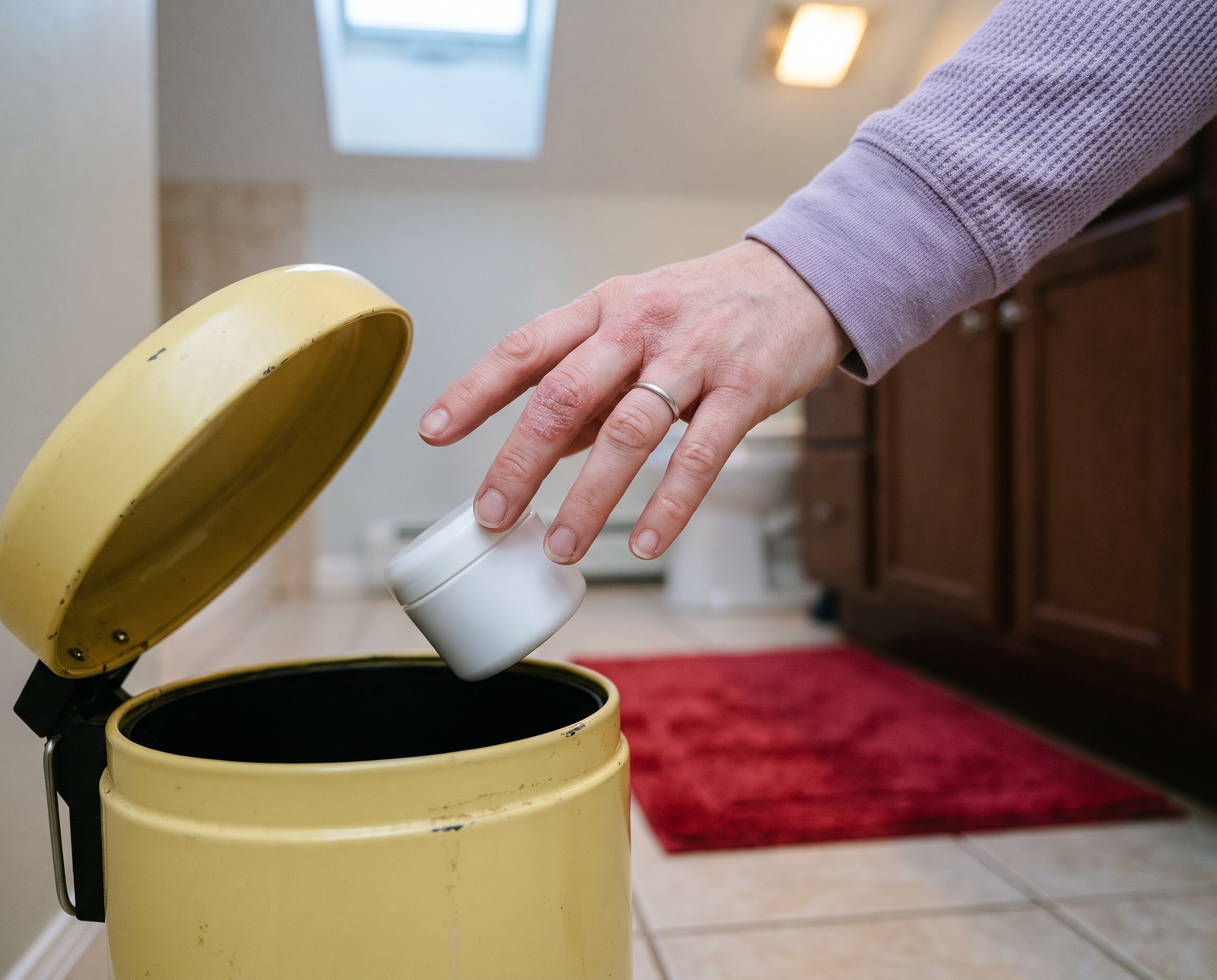
Stop right away and rinse with cool water if the burning is strong, lasts more than a few minutes, or keeps getting worse. Stop if you see swelling, blisters, oozing, hives, or skin that turns white, gray or very dark. Stop if a rash spreads beyond where you applied the product, or if itching builds over the next day or two, since those are signs of an allergy. Swelling of the eyelids or lips is a stop sign too. And if you ever have trouble breathing or swelling of the tongue or throat, which is rare, call emergency services.
For a suspected chemical burn, the first step is plenty of cool running water. Rinse the area for at least 15 to 20 minutes, and don’t try to neutralize it with baking soda or another product. Skip all actives afterward, use a plain ointment like petrolatum, and see a doctor if it blisters, covers a large area or involves the eyes. For an allergic-looking rash, stop every new product you’ve added in the past few weeks and see a dermatologist, who may prescribe a short course of a steroid cream. For simple irritation, cut your routine down to a gentle cleanser, a plain moisturizer and sunscreen, give it one to two weeks, and then add products back one at a time.
There’s a middle ground for retinoids and acids you want to keep. If the sting is mild, fades quickly and your skin isn’t peeling raw, you can usually stay the course by cutting back. Use it every second or third night, apply it over moisturizer, or wash it off after 30 to 60 minutes for the first few weeks. If the burn comes back even at that slower pace, the product or the strength isn’t right for your skin right now. That’s not a failure on your part. It’s useful information.
How can you test a new product before it touches your face?
The American Academy of Dermatology suggests a simple at-home test (https://www.aad.org/news/how-to-test-skin-care-products-before-use). Pick a small spot where the product won’t get rubbed off, such as the inner forearm, and apply it twice a day for seven to ten days. If you see no redness, itching or swelling, it’s probably safe to try on your face. The AAD also notes there are more than 15,000 allergens that can cause allergic contact dermatitis, and that products labeled hypoallergenic, natural or clean can still trigger one. Because allergies can take days to show up, don’t stop checking after the first evening.
Forearm skin is tougher than facial skin, so a product that passes the arm test can still sting on your cheeks or around your eyes. When you move to your face, start with a small area along the jaw and use it every other day at first. Introduce only one new product at a time, and wait two weeks before adding another. That way, if something goes wrong, you know exactly which bottle to blame. It feels slow, but it’s much faster than spending a month calming down a reaction you can’t trace.
FAQs
Is it normal for vitamin C serum to sting?
A brief tingle is common with L-ascorbic acid serums because they’re very acidic. If it fades within a minute or two and leaves no redness, it’s usually fine. If it burns or leaves your skin pink, try applying it to completely dry skin, using it every other day, or switching to a gentler vitamin C derivative. Stinging that gets worse with each use is a reason to stop.
Does retinol burning mean it’s working?
No. The redness and burning many people feel in the first weeks are side effects of faster cell turnover, not the source of the benefit. Lower strengths can improve wrinkles with less irritation. Cut back if it burns, and stop if your skin peels raw or swells.
Can I suddenly become allergic to a product I’ve used for years?
Yes. Allergies develop after repeated exposure, so a product you’ve used without trouble can start causing an itchy rash. Fragrance compounds and preservatives are common causes. A dermatologist’s patch test can tell you which ingredient is responsible.
Why does my moisturizer suddenly sting?
Usually because your barrier is damaged, not because the moisturizer changed. Cold weather, over-exfoliating or a new active can leave skin so raw that even gentle ingredients sting. Pare back your routine for a week or two and the sting should fade. If it doesn’t, look for an allergen in the moisturizer itself.
Should I put ice on skin that’s burning from a product?
Rinse with cool, not icy, water first to remove the product. A cool compress afterward can calm the heat, but ice pressed straight onto damaged skin can injure it further. Then apply a plain, fragrance-free ointment. See a doctor if it blisters or the pain doesn’t ease.
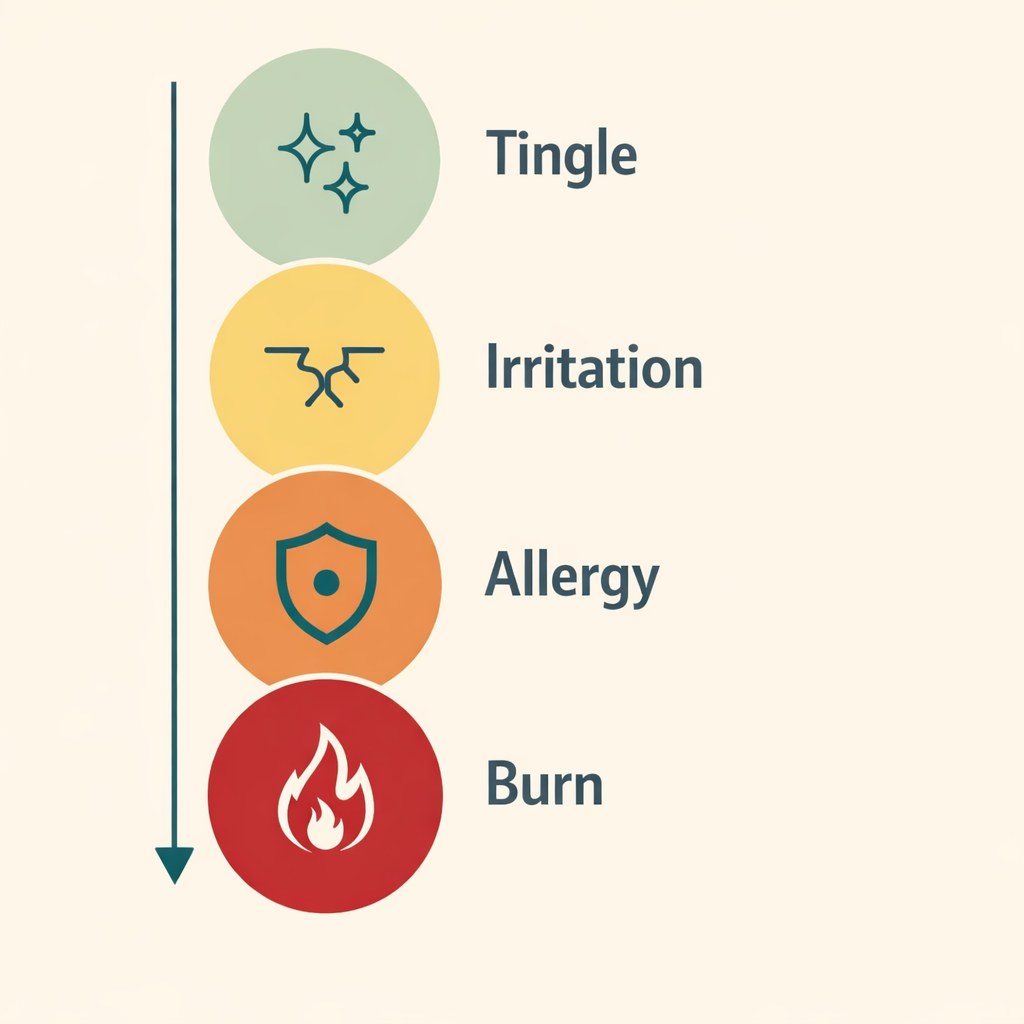
Good skincare often feels like nothing at all. It goes on, it sinks in, and over weeks your skin looks a little smoother, a little brighter or a little calmer. A brief tingle from an acid isn’t something to fear, but a burn isn’t a badge of honor either. Learn the difference between a passing prickle, the slow build of irritation, the delayed itch of an allergy and the real pain of a chemical injury. Then trust what your skin is telling you, and don’t let a label or a stubborn old idea talk you out of it. Your face isn’t an endurance test!
Related Posts
 The Salmon DNA Skincare Ingredient Dermatologists Love and Its Vegan Rival
 Switch This One Thing in Your Skincare Routine When Fall Arrives
 The Skincare Step Most People Skip That Makes Everything Else Work Better
 Where to Buy Natural Anti-Aging Skincare You Can Actually Trust
 Why Tallow Is Gaining Popularity in Natural Skincare
 Ferulic Acid in Skincare: What It Is and Why Your Skin Might Love It
 The Truth About Beef Tallow for Skincare: Ancestral Wisdom or Outdated Trend?
 Olive Oil for Skincare a Natural Elixir for Radiant Skin
 How to Choose a Collagen Moisturizer According to Skincare Professionals
 Why Your Conditioner Stopped Working and What a Hair Mask Can Do About It
 Why Your Hair Is Changing Right Along With Your Skin
 Should You Use Dandruff Shampoo Every Day? Here’s What Your Scalp Really Wants
