

Nov
If you click on links we provide, we may receive compensation.
You pick up a face cream that smells like a lavender field and the label says it’s scented only with pure essential oils. No synthetic perfume, no mystery chemicals. It feels like the safe choice, especially if your skin has been touchy lately. I’ve made that exact choice more times than I can count! And then, a few days later, there’s a patch of itchy pink skin along your jaw that won’t settle down. It’s confusing and a little unfair, because you did what you thought was the careful thing. The trouble is that your skin doesn’t care where a fragrance molecule came from. It only cares what the molecule is, how much of it there is, and what’s happened to it since the bottle was opened.
What is a fragrance, chemically speaking?
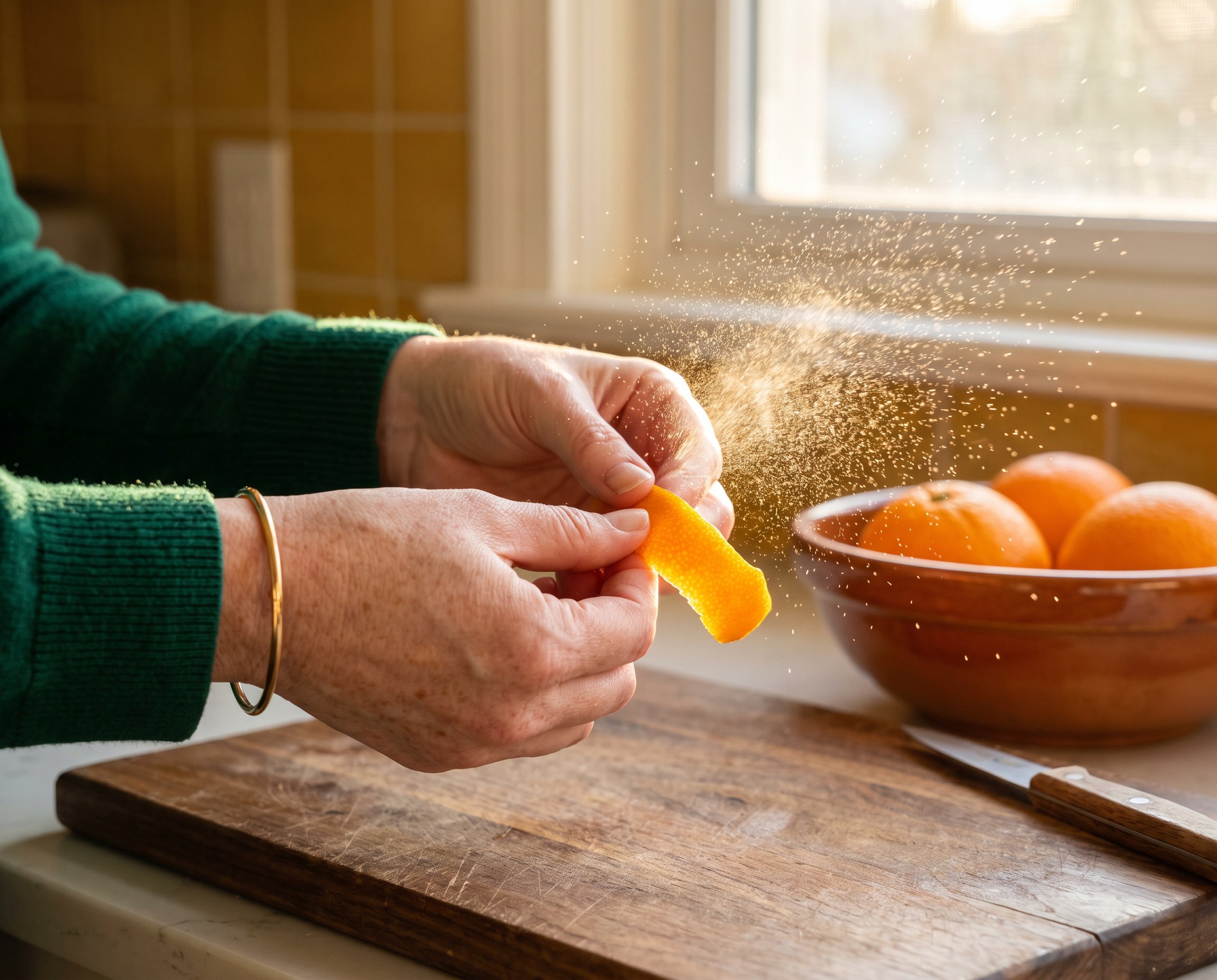
Every fragrance, natural or synthetic, is a mix of small, volatile molecules that drift up to your nose. Many of them belong to a family called terpenes, along with aldehydes, alcohols and esters. Lavender oil isn’t one ingredient. It’s a blend of dozens of compounds, and two of the biggest are linalool and linalyl acetate. Lemon and orange oils are mostly limonene. Rose, geranium and palmarosa carry geraniol and citronellol, while clove and cinnamon bring eugenol and cinnamal. When you smell an essential oil, you’re smelling a chemical cocktail that a plant made for its own reasons, like keeping insects away.
Synthetic fragrance uses many of the same molecules. A chemist can make linalool in a factory, or isolate it from a cheaper plant source, and the result is identical to the linalool in lavender oil. Same atoms, same shape, same behavior on your skin. Your immune system has no way of telling them apart. Some synthetic fragrance molecules don’t exist in nature at all, and a few of those have caused real problems. But the idea that “natural” and “synthetic” are two separate chemical worlds is mostly a marketing story.
Why doesn’t origin predict how your skin will react?
Skin reactions to fragrance come down to three things. The first is the molecule itself, since some are much more likely to provoke the immune system than others. The second is the dose, meaning how much reaches your skin, how often and for how long. The third is the condition of the molecule, because many fragrance chemicals change once they meet air. None of these depends on whether the molecule came from a farm or a lab. A plant-based oil can be packed with strong allergens, and a carefully made synthetic blend can leave the worst ones out.
There’s also a dose problem that’s easy to miss. Essential oils are concentrated, and products marketed as natural often use a lot of them to get a noticeable scent. A dermatology review in Cutis noted that most essential oils contain one or more of the fragrance allergens the EU requires brands to flag, and that many products labeled natural, unscented or fragrance free aren’t actually free of fragrance (https://www.mdedge.com/cutis/article/270333/contact-dermatitis/whiff-trouble-navigating-allergic-contact-dermatitis). That’s a lot of allergen exposure hiding behind a reassuring word. And because an essential oil is a blend, one drop can deliver several allergens at once.
This cuts both ways, and I think that’s worth saying. Synthetic isn’t automatically safer either. Hydroxyisohexyl 3-cyclohexene carboxaldehyde, better known by its old trade name Lyral, was a lab-made fragrance ingredient. It caused so many allergic reactions that the EU banned it in cosmetics. In the same 2017 regulation, the EU banned atranol and chloroatranol, two compounds that occur naturally in oakmoss and treemoss extracts (https://eur-lex.europa.eu/eli/reg/2017/1410/oj). One villain from the lab and two from the forest, all removed for the same reason.
How is irritation different from an allergy?
These two get lumped together, but they work very differently. Irritation is direct damage to the outer layer of skin. It depends on dose, it happens to almost anyone if the concentration is high enough, and it fades once you stop. Think of the sting from a strong citrus oil on freshly shaved skin. It’s unpleasant, but your body doesn’t remember it.
Advertisement
Contact sensitization is the immune system’s version, and it’s the bigger concern with fragrance. Small fragrance molecules are too tiny to trigger an immune response on their own. But once they get into the skin, some of them latch onto your own proteins, and that combination can look foreign to the immune system. The first exposures quietly train your immune cells. That’s the sensitization phase, and you usually don’t notice it at all. After that, any later contact can set off allergic contact dermatitis, an itchy, red, sometimes blistering rash that appears a day or two after exposure. And once you’re sensitized, it’s usually for life.
That’s why “I’ve used this for years without a problem” isn’t a guarantee. Sensitization can build over months or years of repeated use. It’s also why a strong allergen at a low dose can cause more long-term trouble than a mild irritant at a high one. Fragrance allergy is common, too. In a large multinational European study of the general population, allergy to fragrances showed up in 4.1% of participants (https://pmc.ncbi.nlm.nih.gov/articles/PMC7825391/). Among people who see a dermatologist for a rash, the numbers run much higher.
Why does oxidation turn mild ingredients into strong allergens?
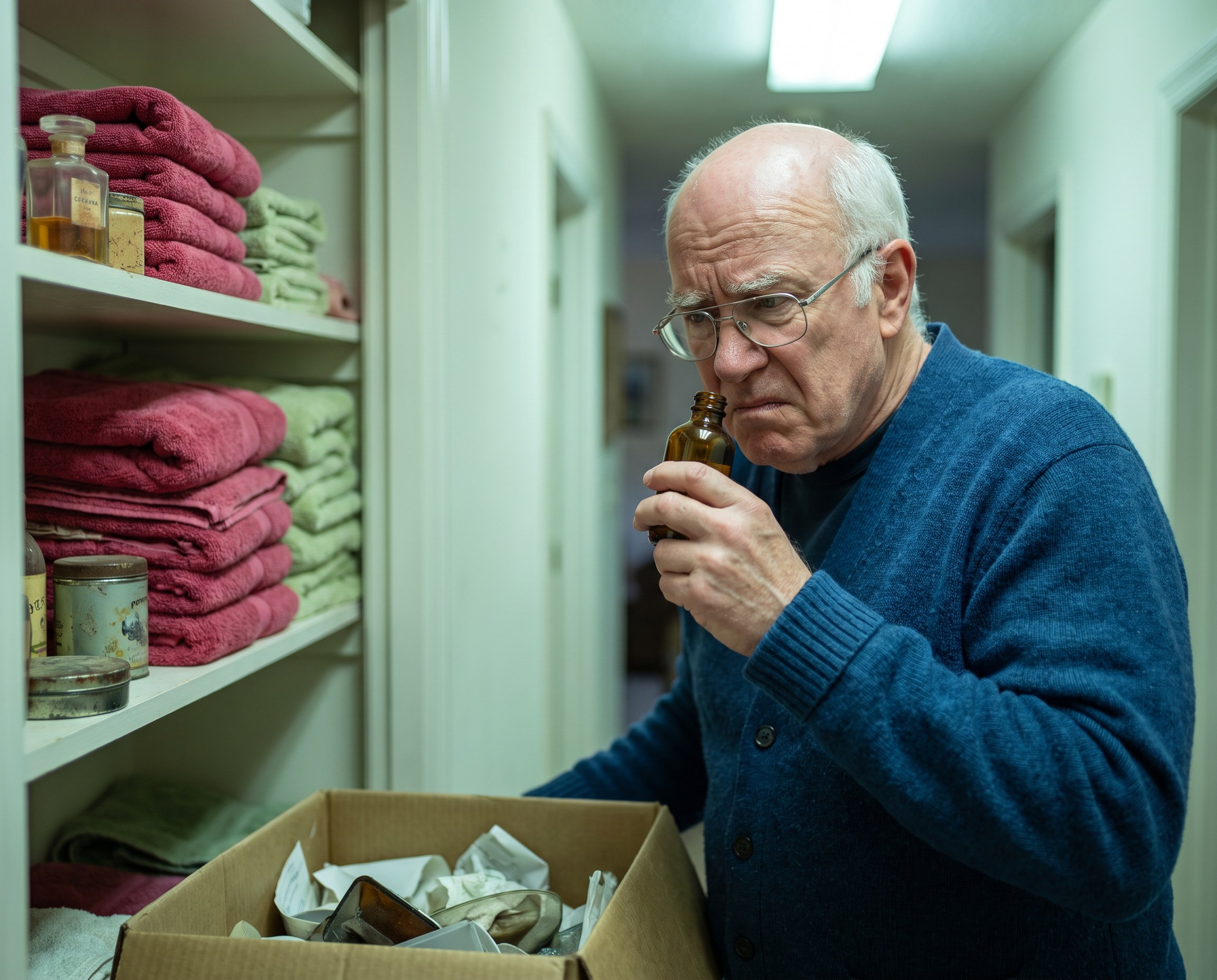
This is the part of the story most people have never heard. Linalool and limonene, the two fragrance chemicals you’ll see most often on labels, are only weak allergens when they’re fresh. But they react with oxygen in the air, a process called autoxidation. Over time they form hydroperoxides, and those are potent allergens. Research also shows that air exposure makes these terpenes more irritating, not just more allergenic (https://pubmed.ncbi.nlm.nih.gov/19125719/). Heat, light and a half-empty bottle all speed the process along.
The patch test numbers are hard to ignore. In a study of 2,900 dermatitis patients in Australia, Denmark, Singapore, Spain, Sweden and the United Kingdom, 5.2% reacted to oxidized limonene and 6.9% to oxidized linalool (https://pubmed.ncbi.nlm.nih.gov/26918793/). In North America, the picture is similar. The North American Contact Dermatitis Group’s 2019 to 2020 results listed hydroperoxides of linalool among the five most common positive allergens, at 11.1%, just behind fragrance mix I at 12.8% (https://pubmed.ncbi.nlm.nih.gov/36917520/). These are patients referred for testing, so they aren’t a random sample of the public. But it tells you oxidized fragrance terpenes are a common cause of real rashes.
Essential oils are especially exposed to this problem because they’re full of terpenes and often sold in small bottles that get opened again and again. Tea tree oil is the classic example. A review in Contact Dermatitis described fresh tea tree oil as a weak to moderate sensitizer whose allergic potency rises with oxidation, with compounds like ascaridole forming as it ages (https://pubmed.ncbi.nlm.nih.gov/27173437/). An older study found tea tree oil stored on a windowsill could oxidize within a few days to several months (https://pubmed.ncbi.nlm.nih.gov/10357714/). So the bottle that seemed gentle in March may be a very different product by August. Synthetic fragrance makers often add antioxidants to slow this down, and some natural brands do too, but the chemistry doesn’t take a day off for either.
Which natural ingredients cause the most trouble?
The usual suspects are worth knowing by name. Citrus oils, including lemon, orange and bergamot, carry a lot of limonene, and bergamot can also make skin react to sunlight. Lavender carries linalool and linalyl acetate. Ylang-ylang, jasmine, rose and geranium bring several listed allergens at once. Clove, cinnamon and cassia oils contain eugenol and cinnamal, which are among the stronger sensitizers. Balsam of Peru, a resin from a Central American tree, has been a standard marker for fragrance allergy for decades.
Europe has now put many of these on the label by name. Commission Regulation (EU) 2023/1545 expanded the list of fragrance allergens that must be declared individually to more than 80 substances, and new products placed on the EU market after July 31, 2026 have to comply (https://www.hpra.ie/regulation/cosmetics/labelling-and-claims/cosmetic-products-labelling/labelling-of-cosmetic-fragrance-allergens). Leave-on products must name a listed allergen when it’s above 0.001%, and rinse-off products above 0.01%. For the first time, many essential oils have their own entries, including lavender, rose, ylang-ylang, bergamot, lemongrass, peppermint and clove (https://www.personalcareinsights.com/news/eu-fragrance-allergen-labeling-deadline.html). A “clean” formula built on several essential oils can now end up with a longer allergen list than a conventional perfumed cream.
The US is behind. The Modernization of Cosmetics Regulation Act told the FDA to propose a fragrance allergen labeling rule by June 2024, and the agency has pushed that date back several times. Its 2026 regulatory agenda gave a target of November 2026 (https://cosmetic.chemlinked.com/news/cosmetic-news/us-fda-sets-november-2026-timeline-for-formaldehyde-ban-and-fragrance-allergen-rule). When I checked in late November, the proposal still hadn’t been published. Until it is, an American label can say “fragrance” or list an essential oil without naming the allergens inside it.
Why does fragrance hit mature skin differently?

Age changes the fragrance picture in a few ways. Older skin repairs its barrier more slowly, so an irritating product leaves a gap that stays open longer and lets more molecules in. Older adults have also had more years of exposure, which means more chances to become sensitized. In a study of 169 patients aged 65 and older at a US patch testing clinic, 84.6% had at least one positive reaction, and the most common allergens included balsam of Peru, hydroperoxides of linalool and fragrance mix (https://pubmed.ncbi.nlm.nih.gov/34405841/). A larger European comparison found older patients had higher rates of reaction to balsam of Peru than younger adults, 13.6% compared with 7.0% (https://www.dermatologytimes.com/view/age-influences-allergen-sensitivity-and-reaction-severity-in-patch-testing).
There’s a twist, though. The same research found older adults often have fewer and milder reactions on patch tests, likely because the skin’s immune response slows with age. That can make an allergy easier to miss. On mature skin, fragrance trouble may look less like an angry red rash and more like dry, scaly, itchy patches that never quite heal, especially on the eyelids, neck and around the mouth. It’s easy to blame the weather or age itself and keep using the product that’s causing it. If a patch of eczema keeps coming back, your scented products deserve a hard look.
Many people also turn to botanical remedies as they get older, from tea tree oil on a stubborn spot to lavender oil rubbed on the temples at night. These feel gentler than pharmacy products, but they’re often used straight from the bottle at full strength. In an Australian review of 41 people who tested positive to oxidized tea tree oil, eight said they had applied it neat (https://pubmed.ncbi.nlm.nih.gov/17535193/). Two-thirds remembered using tea tree oil before, which is how sensitization usually starts. If you love essential oils, keep them in a diffuser or a bath, well diluted, and away from thin facial skin.
How can you judge a fragranced product if your skin reacts easily?
Start with the label, and ignore the front of the box. “Natural,” “clean” and “botanical” tell you nothing about allergen content. “Unscented” usually means a masking fragrance was added to cover the base smell, so it can still cause a reaction. “Fragrance free” is the better bet, though the term isn’t defined by law in the US. Then check the ingredient list for both the word “fragrance” or “parfum” and for essential oils listed by their Latin names, like Lavandula angustifolia oil, Citrus aurantium bergamia peel oil or Melaleuca alternifolia leaf oil. Look for allergen names, too, such as limonene, linalool, citral, geraniol, citronellol, eugenol and cinnamal, especially on products made for Europe.
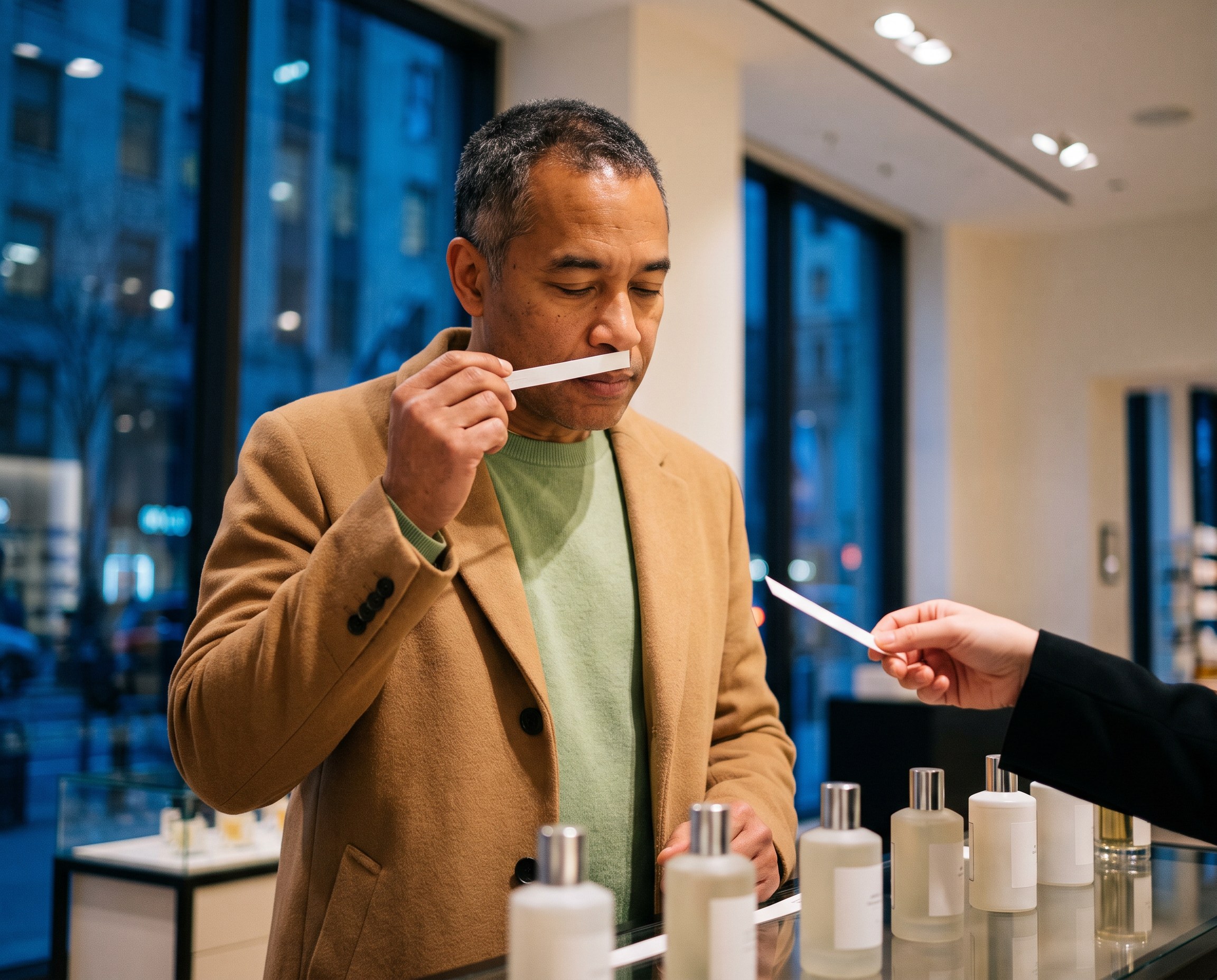
Think about where and how a product is used. A leave-on face cream or eye cream puts fragrance on thin skin for hours, which is the highest-risk spot. A shampoo or body wash rinses off in a minute. If you want scent in your life, put it in the rinse-off products and keep the leave-ons plain. For perfume, try it on a paper blotter strip at the counter before it ever touches your neck or wrists.
Treat fragranced products as perishable. Buy smaller sizes you’ll finish within a few months, keep caps tight, and store them away from heat and sunny windowsills. Write the opening date on the bottle. If an essential oil or a scented product starts to smell sharper, flatter or different, assume it has oxidized and toss it. Pumps and airless containers let in less air than open jars or bottles you uncap every day.
Test before you commit. The American Academy of Dermatology suggests applying a new product to a quarter-sized spot on the inner arm or the crook of the elbow twice a day for seven to ten days, and stopping if you see redness, itching or swelling (https://www.aad.org/public/everyday-care/skin-care-secrets/prevent-skin-problems/test-skin-care-products). Because allergic reactions are delayed, a clean result after one evening means very little. And if you keep reacting to products and can’t work out why, ask a dermatologist for patch testing. Standard panels can miss fragrance allergies, so it’s fair to ask whether they test for hydroperoxides of linalool and limonene, fragrance mixes and balsam of Peru.
FAQs
Are essential oils safe if they’re diluted?
Dilution lowers the risk of irritation and makes sensitization less likely, but it doesn’t remove the allergens. If you’re already allergic to linalool or limonene, a diluted oil can still set off a rash. Fresh, properly stored oils are less risky than old ones. Keep them off broken skin and thin facial skin, and never use them neat.
If a product is synthetic-only, is it safer?
Not automatically. Some lab-made fragrance ingredients, like Lyral, were strong enough allergens to be banned. Synthetic fragrance can be made without some of the worst natural allergens, and it often contains antioxidants that slow oxidation. But for reactive skin, the safest product is one with no added fragrance at all.
What does “limonene” or “linalool” on my label mean?
These are fragrance chemicals, and they’re listed because they’re known allergens. They may come from an essential oil or a synthetic blend, and the label won’t tell you which. Their presence doesn’t mean you’ll react. But if you’ve had a rash you can’t explain, they’re a good place to start looking.
Can I suddenly become allergic to a scent I’ve used for years?
Yes. Sensitization builds through repeated exposure, so a product can be fine for years and then start causing trouble. Oxidation can add to the problem as an older bottle forms stronger allergens. A dermatologist can confirm the cause with patch testing.
Does fragrance in a cleanser matter as much as in a cream?
Usually less, because a cleanser rinses off within a minute or two. Leave-on products like moisturizers, serums and eye creams keep fragrance on your skin for hours. If you have reactive skin, choose fragrance-free leave-ons first. A lightly scented body wash is a smaller risk, though very sensitive people may need to avoid both.

The word “natural” does a lot of comforting work on a label, and I understand why we want it to mean “gentle.” But fragrance chemistry doesn’t follow the marketing. A molecule of linalool is the same whether it came from a lavender farm or a factory, and it becomes a stronger allergen once it sits in air, wherever it started. What protects your skin is knowing which ingredients tend to cause trouble, how much of them you’re using and how fresh they are. If your skin is easily upset, read the back of the box, test before you trust, and keep scent in the products that wash away. Your nose can still have its lavender, just not on your face all night.
Related Posts
 Why Your Skin Makes Dark Spots and the Ingredients Proven to Fade Them
 What Your Bath Bomb Is Really Doing to Your Skin
 Start Your Holiday Skin Wellness Ritual Now and See the Difference by December
 The Truth About Removing Skin Tags That Most People Get Wrong
 What Rubbing Minerals on Your Skin Actually Does
 What Actually Works When You Go Natural About Sweat
 The Tiny Layer That Controls Everything Your Skin Does
 Your Skin Just Hit a Wall. Here Is How to Help It Heal.
 Your Skin Feels Like Sandpaper During Menopause and Here Is Why
 How to Keep Your Skin Healthy While Traveling (Without Losing Your Glow)
 Pureblome Sets a New Bar for Adult Skin Harmony
 Seaweed Extracts Give Skin a Marine Super boost
