
Nov
Skincare
Why Your Skin Takes So Much Longer to Bounce Back After 50
If you click on links we provide, we may receive compensation.
You nick your shin on the dishwasher door, and the scrape is still there two weeks later. A new serum leaves a pink patch that would have faded overnight at 35, and now it hangs around for days. A windy walk leaves your cheeks raw until the weekend. None of it is dramatic, and that’s part of what makes it so frustrating. You’re doing the same things you’ve always done, and your skin just doesn’t snap back the way it used to.
I want to say something plainly up front. Slow recovery isn’t a sign that you’re doing skincare wrong. It’s biology, and it follows a pattern researchers have been measuring for decades. Once you see how the pieces fit together, the fix gets a lot simpler. It also gets easier to spot the moments when slow healing has nothing to do with age and deserves a doctor’s eye!
What slows down in your skin after 50?
Your outer skin works like a conveyor belt. New cells form at the bottom of the epidermis, travel upward, flatten out, and eventually shed from the surface. That trip keeps the surface fresh, and it’s also how skin patches itself after a scrape, a rash, or a peel. In a classic study in the Journal of Gerontology, researchers Gary Grove and Albert Kligman measured how long the surface layer took to renew in younger and older adults. In young adults it took about 20 days, and in older adults it took more than 10 days longer. They also found the drop wasn’t steady across the decades. Renewal held fairly stable through the younger years and then fell off more sharply after age 50. Source: https://pubmed.ncbi.nlm.nih.gov/6827031/
A 2025 review in the Journal of Cosmetic Science breaks those numbers down further. In Grove’s forearm measurements, each layer of the outer skin turned over in about 28 hours in people under 35. In people over 60, it took about 40 hours. The number of layers stayed about the same in both groups, which tells you the change is mostly about speed. The cells that would replace damaged ones are arriving on a later train. Source: https://library.scconline.org/v075n05/20
You can see this on your own skin. Dullness is one sign, because old cells linger on the surface and scatter light unevenly. Rough patches on the shins and forearms are another. Small marks take longer to fade, from a paper cut to the pink spot left after a blemish. Slower renewal also explains why exfoliating harder doesn’t solve the problem. Scrubbing off the top layer faster only creates more repair work for a system that’s already running behind.
Why does your skin barrier take so long to rebuild?
The barrier is the outermost layer of skin, called the stratum corneum, and its job is to keep water in and irritants out. People often compare it to a brick wall. The skin cells are the bricks, and a blend of fats – ceramides, cholesterol, and free fatty acids – acts as the mortar. When something breaks that wall, like harsh soap, a strong acid, or a long hot shower, skin rushes to replace the missing mortar. In younger skin, that repair starts within hours.
Here’s the study that stopped me in my tracks. In 1995, a team led by dermatologists Ruby Ghadially and Peter Elias disrupted the barrier on the forearms of people in their 20s and people over 80, then measured how fast it came back. The younger group recovered about half of their barrier function within 24 hours. The older group recovered only about 15 percent in the same time, and their recovery stayed behind for days after that. The Journal of Cosmetic Science review notes that younger skin reached 90 percent recovery in about four days, while older skin needed about seven. Source: https://www.jci.org/articles/view/117919
Advertisement
The researchers traced the delay back to the mortar. Older skin made fewer of the tiny packets that deliver fats to the surface, and the total amount of barrier lipid dropped. The balance between ceramides, cholesterol, and fatty acids stayed roughly normal. There was simply less of everything. That detail matters for what you put on your skin, and I’ll come back to it below. For now, the practical point is this: every time you break the barrier after 50, you’re signing up for a longer repair window than you used to.
Why does inflammation linger when it used to pass?

Inflammation is the skin’s alarm system and cleanup crew rolled into one. When something irritates skin, immune cells release signaling proteins that call in help, clear debris, and then switch the response off. In younger skin, that cycle is quick and tidy. With age, it gets messier. Scientists call the pattern “inflammaging,” a low, steady hum of inflammation that never fully shuts off.
A 2023 review in the International Journal of Molecular Sciences describes what drives it. Older skin collects more senescent cells, which have stopped dividing but haven’t cleared out. These cells release a steady stream of inflammatory signals and enzymes that break down collagen. The review also notes that immune cells called macrophages in older skin lean toward their pro-inflammatory form, with fewer of the types that help wounds close. So the alarm is louder at baseline, and the crew that’s supposed to clean up and rebuild is smaller. Source: https://www.mdpi.com/1422-0067/24/9/7784
Here’s the odd part. Older skin can also be slower to react at first. The same review reports fewer Langerhans cells, the immune cells that patrol the epidermis, and says they’re less likely to travel to the site of an injury. That gives you a delayed start and a slow finish. A reaction that once flared and faded in a day can now creep in quietly and stay for a week. It can also make it harder to connect a reaction to the product or habit that caused it.
Why do small irritations turn into bigger problems?
Put those changes together and you get a loop. A weak barrier lets more water escape and more irritants in. Irritants trigger inflammation, and lingering inflammation slows barrier repair even more. Dry, inflamed skin itches, and scratching breaks the barrier again. The loop can start with something as small as a new laundry detergent or a retinoid used two nights in a row instead of one.
This is also why skin can seem to turn sensitive overnight. You may have used the same cleanser or the same perfume for 20 years with no trouble. Then one winter it starts to sting. The product didn’t change. What changed is how much margin your skin has before irritation outruns repair, and dry indoor heat, hot showers, and a couple of strong actives can be enough to use it up.
Health and medications can add to the load. Diuretics and some other common prescriptions can dry the skin. Blood thinners make bruising more likely and bruises slower to clear. Diabetes slows wound healing on its own, which is why foot care matters so much for people who have it. None of this means you should change a medication yourself. It does mean it’s worth telling your doctor if your skin changed around the same time a prescription did.
How do hormones change the recovery clock?
For women, menopause speeds up many of these changes. Estrogen supports collagen, skin thickness, and moisture, and it plays a part in wound repair. In a small study published in Nature Medicine in 1997, researchers from the University of Florida and the University of Manchester compared wound healing in women of different ages. Postmenopausal women who weren’t taking estrogen healed more slowly. Women of the same age who were on estrogen healed much like premenopausal women and had more collagen at the wound site. Source: https://www.sciencedaily.com/releases/1997/11/971105064511.htm
That doesn’t mean anyone should start hormone therapy for the sake of their skin. Hormone therapy carries its own risks and benefits, and that decision belongs with your doctor and your whole health picture. But it helps explain why so many women notice a turn in their skin in their late 40s and early 50s. Men aren’t exempt. Their hormone levels fall more gradually and their skin starts out thicker, so the change often shows up later, and decades of sun and shaving irritation fill in the rest.
How can you tell normal aging from a skin condition?
This is the question I care about most, because slow healing can hide real problems. Normal age-related changes are gradual and fairly even. Skin gets drier, especially on the shins, forearms, and backs of the hands. Small cuts and scrapes take longer to close, but they do close, and you can see progress from week to week. Irritation from a product calms down once you stop using it, even if that takes several days.
Some patterns call for a dermatologist. According to the American Academy of Dermatology, a sore that won’t heal, or one that heals and then comes back, is a classic sign of basal cell carcinoma, the most common skin cancer. These spots often show up on the face, ears, scalp, and neck, and they can bleed or crust after minor rubbing. The AAD advises having any spot that’s growing, bleeding, changing, or not healing checked by a board-certified dermatologist. It’s easy to blame a slow sore on age, and that’s exactly the mistake to avoid. Source: https://www.aad.org/diseases/skin-cancer/basal-cell-carcinoma-symptoms
Itch deserves attention too. Dry-skin itch is common after 60, and it usually improves with moisturizer and shorter, cooler showers. Itch that doesn’t respond, keeps you up at night, or covers large areas of the body is a different story. Bullous pemphigoid, an autoimmune blistering condition that often begins after 60, can start with weeks or months of itching before any blisters appear, and the AAD notes that some people never blister at all. Widespread itch without a rash can also point to thyroid, kidney, or liver problems, or to a reaction to a medication. Source: https://www.aad.org/public/diseases/a-z/bullous-pemphigoid-symptoms
Other conditions can pass for stubborn irritation. Rosacea brings lasting redness across the cheeks and nose, often with flushing and small bumps. Seborrheic dermatitis causes greasy, yellowish flakes around the eyebrows, the sides of the nose, and the scalp, and it’s common in older adults. Allergic contact dermatitis can show up with a product you’ve used for years, because new allergies can develop at any age. The AAD also says rashes that spread quickly, blister, hurt, come with a fever, or affect the eyes, mouth, or genitals need medical care. If a slow recovery keeps circling back no matter what you change, that’s your cue to get it looked at. Source: https://www.prnewswire.com/news-releases/american-academy-of-dermatology-signs-your-rash-needs-medical-attention-302042387.html
What changes for skin in your 60s, 70s, and beyond?
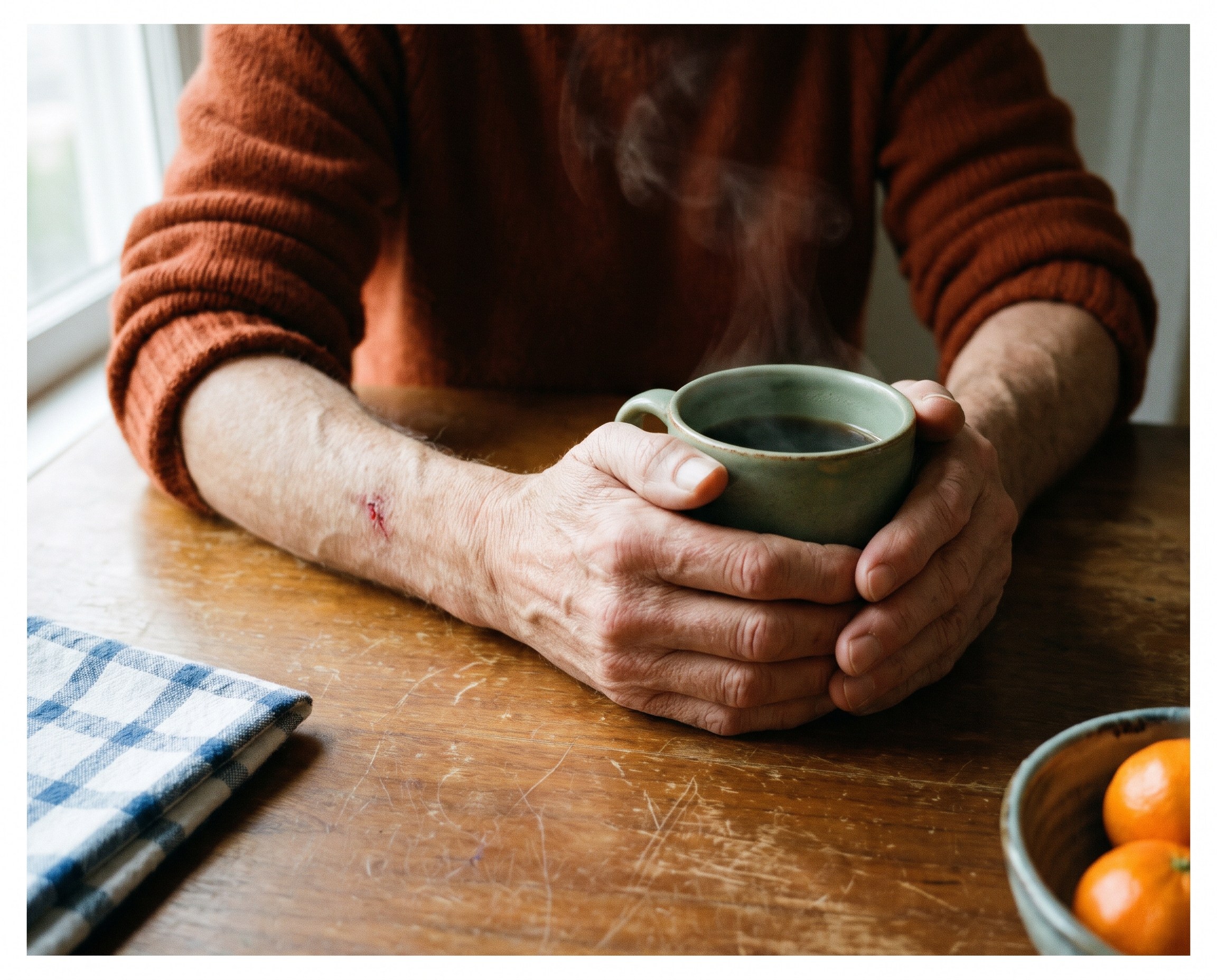
Most of what the research describes grows more noticeable with each decade. The barrier study compared people over 80 with people in their 20s, and the gap was wide. By the 60s and 70s, the epidermis is thinner, and the dermis underneath has lost much of its collagen and elastic support. Skin tears more easily, especially on the forearms and the backs of the hands. A bump against a cabinet that once left nothing can now leave a deep purple bruise or a small flap of torn skin.
Tears and bruises in thin skin need gentle handling. Rinse them with lukewarm water, cover them with a non-stick dressing, and keep adhesive tape off fragile skin, since pulling it away can cause a new tear. Long sleeves and well-moisturized skin both lower the risk of tears in the first place. Thin skin also burns more easily, from the sun and from heating pads. And because healing is slower, any wound that turns red, warm, swollen, or more painful after a few days should be checked for infection.
I’d add one more thing for skin past 60. Less is often more. Every active ingredient you add asks your skin to adapt, and older skin adapts slowly. A short routine you can keep up every day usually does more than an ambitious one that leaves you red and flaky half the week. Patch testing new products on the inner arm for a few days is worth the patience, and sunscreen still matters, because UV exposure drives much of the inflammation and collagen loss that slows repair to begin with.
How can you help your skin recover faster?
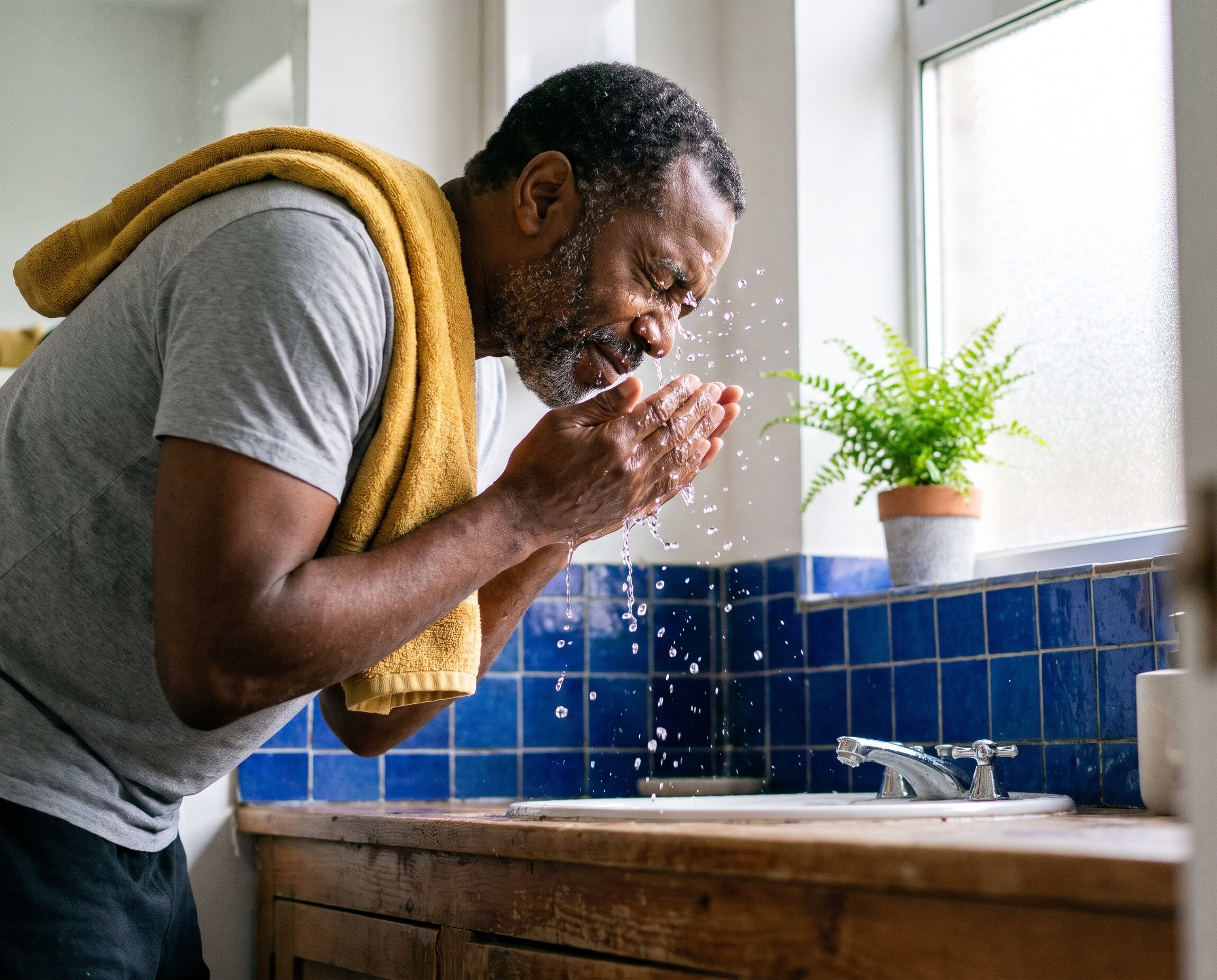
Start with cleansing, because that’s where a lot of barrier damage happens. Use lukewarm water instead of hot, and keep showers short. Choose a cream, milk, or lotion cleanser without strong foaming agents. Pat your skin dry instead of rubbing it. If your face feels clean in the morning, a splash of water is often enough, and you can save the real cleanse for the evening.
Then put the mortar back. Apply moisturizer within a few minutes of washing, while your skin is still slightly damp. Look for formulas that combine ceramides, cholesterol, and fatty acids, along with glycerin or hyaluronic acid to draw in water. Cholesterol is worth looking for by name. A small 1997 study in the Journal of the American Academy of Dermatology, from the same research group behind the barrier study, found that a lipid mix with cholesterol as the main fat sped up barrier recovery in aged skin. Source: https://em-consulte.com/article/1214426/resume/optimal-ratios-of-topical-stratum-corneum-lipids-i
Space out your actives. Retinoids, acids, and vitamin C all have a place, but older skin needs more time between doses. Many people do well with a retinoid two or three nights a week instead of every night, and with exfoliating acids on separate nights from retinoids. If something irritates your skin, stop all actives and stick to cleanser, moisturizer, and sunscreen until it calms down, which can take one to two weeks. Then add products back one at a time so you know what caused the trouble.
Look at your surroundings and habits too. Indoor heating drops humidity sharply in winter, and a humidifier in the bedroom helps. Fragrance-free products lower the odds of a reaction. Protein in your diet gives skin the raw material for repair, and much of that repair happens while you sleep. Smoking slows healing and breaks down collagen, so quitting helps your skin as much as anything in a jar. And if you have diabetes, keeping your blood sugar in range is one of the best things you can do for how your skin heals.
What do people ask most about slow skin recovery?
Is it normal for small scratches to take weeks to heal after 50?
It’s common for minor scrapes to take noticeably longer than they used to, because skin renewal and barrier repair both slow with age. What matters is steady progress. If a scratch is getting smaller and less red each week, that’s usually normal. If it stalls, reopens, or bleeds, have a dermatologist look at it.
Should I stop using retinol if my skin recovers slowly?
Not necessarily. Retinoids still help aging skin, but older skin usually needs a lower strength and fewer nights per week. Pair it with a good moisturizer and pause it whenever your skin is irritated. Start back slowly once things have calmed down.
Can moisturizer speed up barrier recovery?
A well-made moisturizer can help. Research from the team that first measured the aged barrier found that a cholesterol-dominant mix of skin lipids sped recovery in older skin. Look for ceramides, cholesterol, and fatty acids together, and apply them on slightly damp skin.
How long should I wait before seeing a doctor about a sore?
If a sore hasn’t made clear progress in a few weeks, or it heals and keeps coming back, book a visit with a board-certified dermatologist. The same goes for any spot that’s growing, bleeding, or changing. Don’t wait it out because you assume it’s just age.
Does slow healing mean my immune system is weak?
Some immune changes are a normal part of aging, and they do play a part in slower skin repair. That’s different from a weakened immune system caused by illness or medication. If you’re healing much more slowly than people your age, or getting frequent skin infections, talk to your doctor.
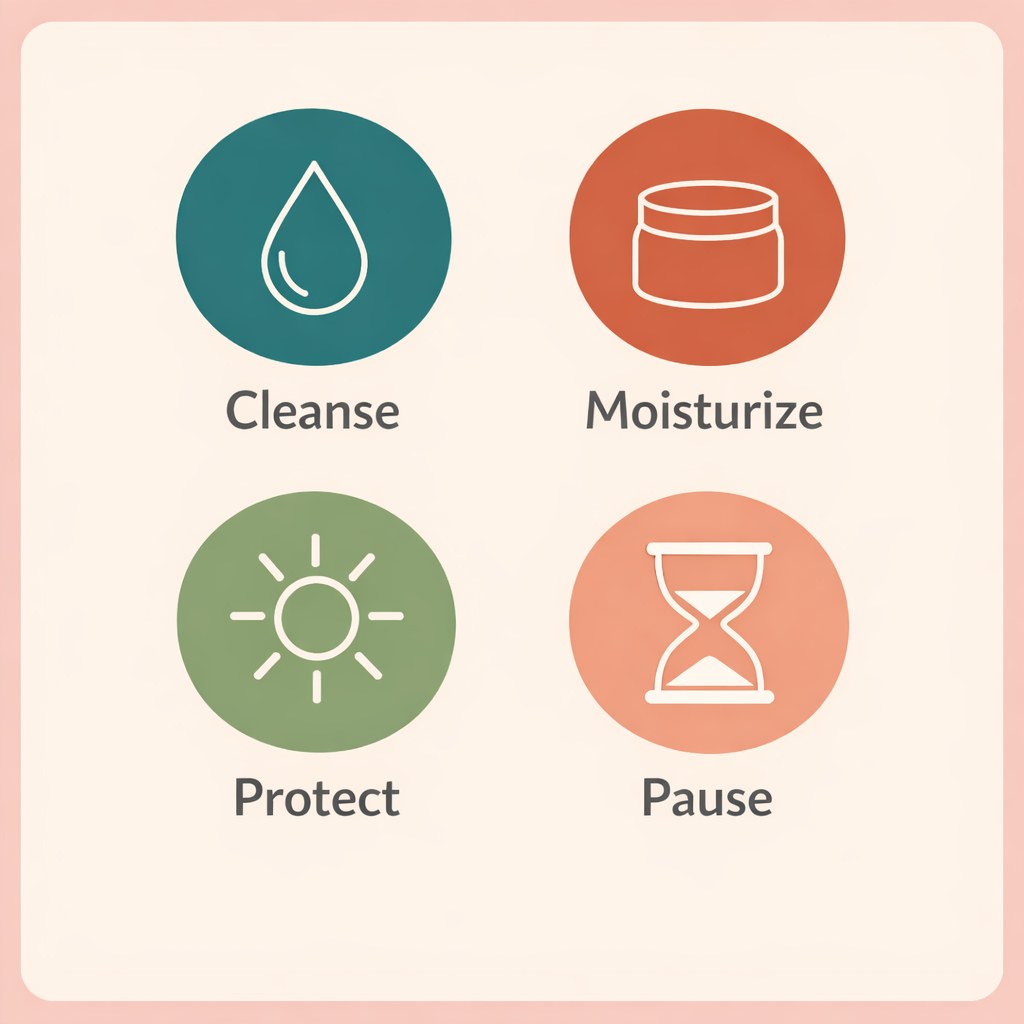
Your skin after 50 is still doing its job. It’s doing it on a slower clock, with less mortar on hand and a louder alarm system, and that changes how you should treat it. Be gentler than you think you need to be. Give it time to finish one repair before you hand it the next. And keep an eye on anything that refuses to heal, because that’s the one place where patience can work against you.
Related Posts
 How to Heal an Inflamed Skin Barrier and Get Your Calm Skin Back
 Your Skin Has an Immune System and It Changes With Age
 Darker Skin Doesn’t Age Later, It Ages Differently
 Is It Rosacea or Just Sensitive Skin? Why Your Redness Deserves a Closer Look
 Does Collagen Powder Really Do Anything for Your Skin? The Honest Answer
 Why Your Hair Is Changing Right Along With Your Skin
 The Perimenopause Skin Changes Nobody Warns You About
 Can Bad Sleep Really Show Up on Your Skin? Here’s What the Research Shows
 Your Skin at 35 Needs Less Than You Think
 Why Your Skin Falls Apart Every November
 Swim, Bike, Run and Bring Your Skin Across the Finish Line
 The Skin Care Gadgets Worth Your Money in 2026 (and the Ones to Skip)
