

Nov
If you click on links we provide, we may receive compensation.
You put on moisturizer every morning and every night, and you’ve done it for years. Then one evening you skip it, and by morning your face feels tight, flaky and a little betrayed. It’s easy to read that as proof of something. Maybe your skin has forgotten how to take care of itself, or maybe all those jars trained it to sit back and wait for you. I’ve heard this worry from friends, read it in magazine columns and seen it pitched by people selling the cure, so it deserves a real answer. The short answer is no, your skin isn’t addicted. The longer answer is more interesting, because a couple of real findings sit underneath the myth.
Where did the idea of moisturizer addiction come from?
The idea is older than most skincare trends, and it grew up around lip balm. For decades people have joked about being hooked on their lip stick, and online groups such as Lip Balm Anonymous gave the joke a home. Some people went further and claimed brands built their formulas to keep you coming back. McGill University’s Office for Science and Society looked at those claims and found no addictive ingredient and no evidence of physical dependence (https://www.mcgill.ca/oss/article/you-asked/lip-balm-addictive). What it did find was a habit loop. Lips are thin and have no oil glands, cold air dries them out, licking makes it worse, and some people react to menthol or peppermint, which keeps the cycle spinning.
From the lips, the idea spread to the whole face. Dr. Zein Obagi, a Beverly Hills dermatologist and the founder of ZO Skin Health, has argued for years that daily moisturizer makes skin dependent and tells the deeper layers they can stop doing their jobs. He has suggested a three- to six-week break from moisturizer and blamed cosmetic marketing going back to the 1950s for convincing women they needed it (https://www.refinery29.com/is-moisturizer-bad-for-you). The skincare brand Mirai Clinical later helped popularize “skin fasting,” a night or two a week with no products. Its own pages say daily moisturizer makes skin lazy because it no longer has to make its own oils (https://www.miraiclinical.com/skin-fasting/). Neither source points to a study showing that this happens, and both sell skincare.
The third root is a body of real research that got simplified on its way to the public. Barrier scientists working with hairless mice found that damaged skin repaired more slowly when it was sealed under a wrap that blocked all water vapor. Later work in Denmark and Sweden found that some moisturizers, used for weeks on healthy skin, left it more reactive to irritants. Trade headlines followed, including one that read “Long-term moisturising may harm skin barrier function.” Put those pieces together and you get a tidy story about lazy skin. As you’ll see, the studies say something much narrower.
How does your skin hold onto water in the first place?

Most of the action happens in the stratum corneum, the thin outer layer of dead, flattened cells called corneocytes. Dermatologists often describe it as bricks and mortar. The bricks are the corneocytes, and the mortar is a mix of ceramides, cholesterol and fatty acids stacked in tight layers. That mortar slows water from escaping into the air, a loss scientists measure as transepidermal water loss, or TEWL. Inside the bricks is a second system called natural moisturizing factor, or NMF, a blend of amino acids, salts, lactic acid and urea that grabs and holds water. NMF makes up about 10% of a corneocyte’s mass and 20% to 30% of the stratum corneum’s dry weight (https://practicaldermatology.com/topics/general-topics/understanding-the-role-of-natural-moisturizing-factor-in-skin-hydration/21612/).
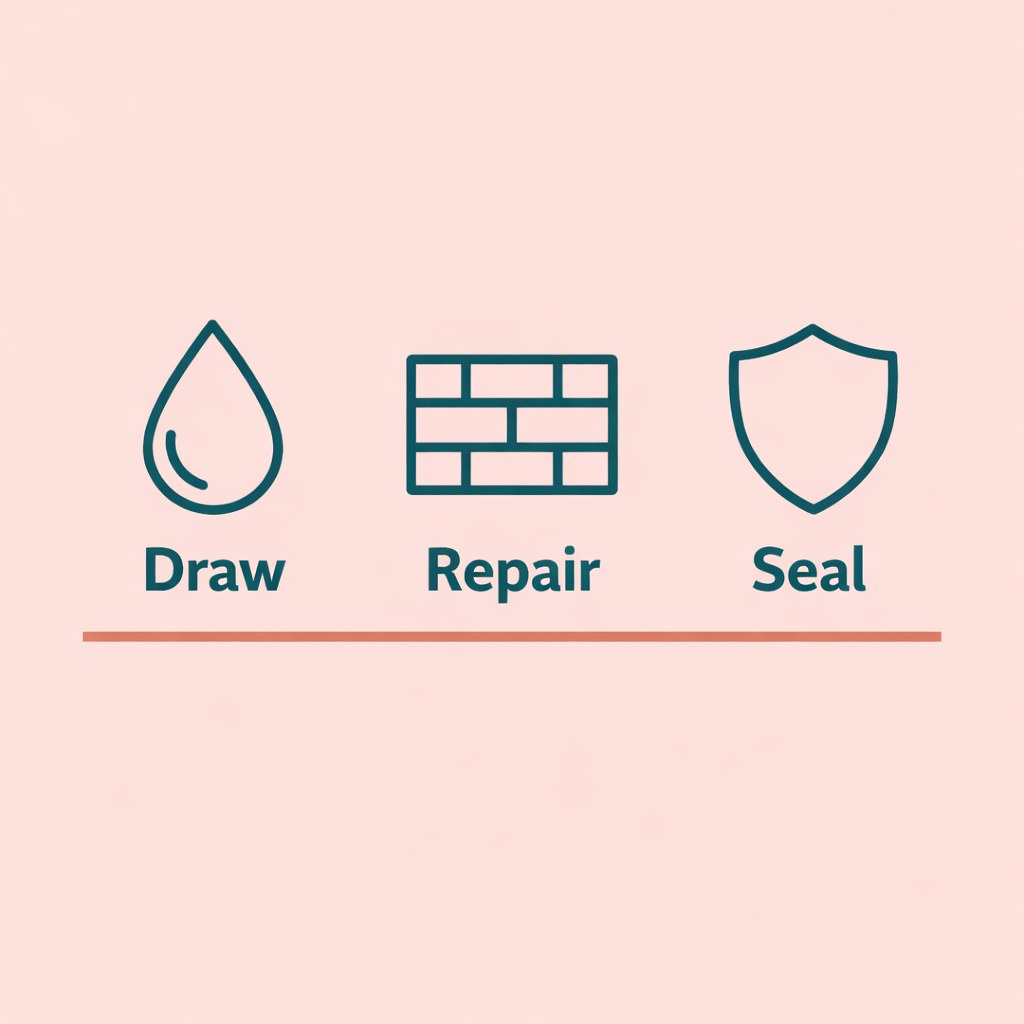
Here’s something that surprises a lot of people. Your skin’s water doesn’t come from the surface. It comes from inside your body and moves outward through the living layers until it reaches the stratum corneum. The skin’s job is to slow that water down on its way out, so the phrase “stops producing its own moisture” is off from the start. A moisturizer can help in three ways. It can add water-grabbing ingredients called humectants, such as glycerin and urea, it can add lipids that patch the mortar, and it can lay down a film, such as petrolatum, that slows evaporation.
Does moisturizer tell your oil glands to slow down?
This is the heart of the lazy-skin claim, so it’s worth getting right. Sebum is the oily mix of triglycerides, wax esters and squalene that your sebaceous glands push up through the hair follicles. Its output is set mostly by hormones, especially androgens. That’s why oil surges in puberty and drops after menopause, and why hormone therapy can raise it again in older women, as a 2024 review in Frontiers in Aging summarizes (https://www.frontiersin.org/journals/aging/articles/10.3389/fragi.2024.1353082/full). There’s no good evidence that a cream sitting on the surface sends a message down to the glands telling them to make less. Skin has no dial that reads “enough oil from outside, shut it down.”
It also helps to know that oil and water aren’t the same thing. Sebum adds some slip and helps slow water loss, and lower sebum has been linked to higher TEWL. But the main hydration machinery is the lipid mortar and the NMF inside the cells, and those come from a separate process in the epidermis. Plenty of people have oily skin that feels dehydrated, and plenty have dry-feeling skin with active oil glands. When someone says moisturizer made their skin stop making oil, they’re usually describing something else. A change in season, a new cleanser or the slow drift of hormones is a far more likely culprit.
What happens when your skin barrier gets damaged?
This is where the mouse research comes in, and it’s the most interesting part of the story. When the barrier is damaged, water escapes faster. The living cells just beneath the stratum corneum sense that change and respond by making more ceramides, cholesterol and fatty acids. They pack these lipids into tiny sacs called lamellar bodies and release them to rebuild the mortar. In the early mouse studies, sealing damaged skin under a membrane that blocked all water vapor slowed that repair. With the water-loss signal gone, the cells had less reason to rebuild.
Advertisement
If the story ended there, the lazy-skin theory would have a leg to stand on. It doesn’t end there. In 1992, Ruby Ghadially, Lars Halkier-Sorensen and Peter Elias tested petrolatum on human volunteers whose barrier had been stripped with acetone. Petrolatum didn’t slow repair, and in their words it “accelerated, rather than impeded, barrier recovery” (https://www.em-consulte.com/en/article/1149344). It spread into the spaces between the cells and filled gaps in the mortar instead of acting like plastic wrap on top. A German team tested occlusion on irritated human skin in 1996 and also found no significant delay in barrier repair. Everyday moisturizers, even heavy ones, let enough of the signal through for repair to carry on.
Is there any real feedback between moisturizer and your skin?
There is one, and it’s worth knowing about. NMF forms when a protein called filaggrin breaks down inside the corneocytes as they rise toward the surface. That breakdown only happens within a narrow range of water content inside the cell. In humid air it happens close to the surface, and in dry air it starts deeper. When skin is kept wet under an occlusive patch, filaggrin may not break down at all, according to the same Practical Dermatology review. So your skin does adjust how much NMF it makes based on how wet its outer layer is.
That’s a real, local feedback loop, and it’s the closest thing the myth has to a scientific basis. But it’s quick, it’s reversible, and it’s how healthy skin is supposed to work. It’s the same loop that helps your skin cope when you move from a humid summer into a heated winter office. Stop moisturizing, and the outer layer dries a bit, the enzymes kick back in and NMF production picks up again. That shift takes some days, which is why you may feel tight and flaky in the meantime. A short lag while a system resets is a very different thing from dependence.
What happens when people stop moisturizing?
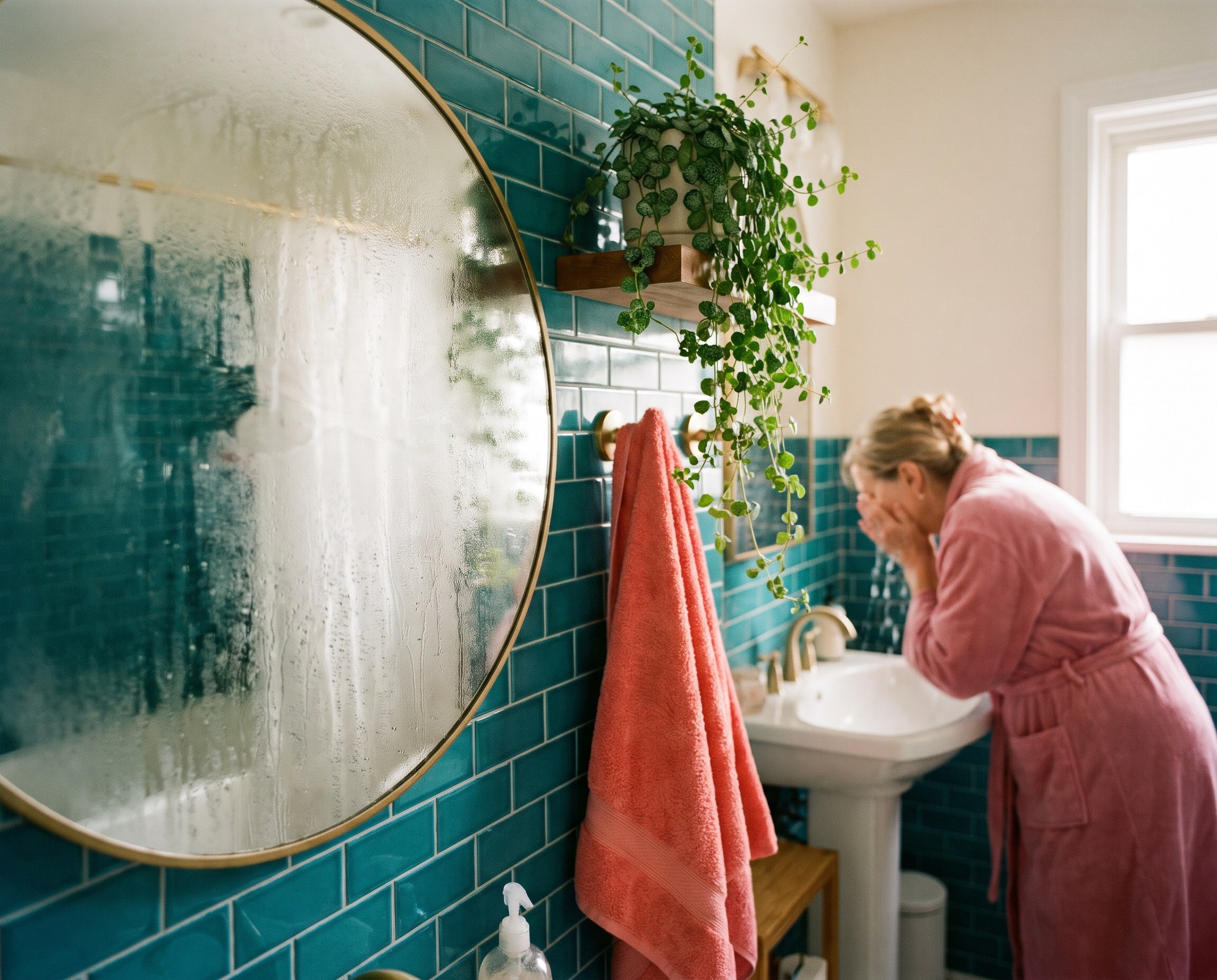
Surprisingly few studies have tested this head on. The most direct one I found is a 2020 pilot study from Swiss researchers, published in Dermatology and Therapy (https://link.springer.com/article/10.1007/s13555-020-00453-0). Healthy women stopped their usual facial moisturizer on one side of the face and kept using it on the other. In a winter group of 20 young women, the bare side felt clearly drier during the first week, with average self-rated dryness of 4.37 out of 10 against 2.62 on the moisturized side. Photos told a similar story. By about day six in the photos and day ten in the women’s own ratings, the bare side had caught up with the moisturized side.
A second, summer group included 13 women aged 40 to 55 alongside younger women. In the younger group, dryness was back to baseline after 11 days and matched the moisturized side by day 21. The older women showed smaller differences overall, but their bare side never returned to its starting point within the three weeks. The researchers saw no rebound, meaning the skin didn’t overshoot into worse dryness once it adjusted. The study is small, unblinded and short, and the authors say so. Still, the pattern looks like skin readjusting to a new routine, and doing it fairly fast.
Why does mature skin feel the change more?

If you’re past 50, that last result probably rings true, and it’s no sign of addiction. Older skin starts from a different place. A well-known 1995 study in the Journal of Clinical Investigation compared adults aged 20 to 30 with adults over 80 (https://www.jci.org/articles/view/117919). After the barrier was stripped, the younger group had recovered about half its function at 24 hours and 80% at 72 hours. The older group had recovered about 15% at 24 hours, and repair kept lagging for days. Their barrier also broke down more easily, after about 18 rounds of tape stripping compared with 31 for younger skin.
Other changes stack on top of that. NMF levels fall with age as the skin makes less of the protein that feeds it. Sebum output drops after menopause as hormones shift, and falling estrogen is tied to thinner, drier skin with less hyaluronic acid. Put together, many people in their 50s, 60s and beyond have skin that loses water faster and fixes itself more slowly. When you stop moisturizing, the dryness you notice is that baseline showing through. The jar was covering a real gap, and that’s a good reason to keep using it.
For mature skin, the most helpful formulas tend to do all three jobs at once. That means a humectant like glycerin or urea, barrier lipids like ceramides and cholesterol, and an occlusive like petrolatum or a plant butter at night. Petrolatum is one of the strongest options, cutting water loss by about 98%, compared with 20% to 30% for many other oils (https://mdedge.com/content/petrolatum-effective-moisturizer-there-are-more-uses-it). Apply right after washing, while skin is still a little damp, so there’s water to hold in. Pay extra attention to your hands, shins and neck, which tend to dry out first. And if your skin stays rough, itchy or cracked even with a good routine, see a dermatologist, since eczema and other conditions can look like plain dryness.
Can moisturizer ever weaken your skin barrier?
It can, and this is the part most myth-busting articles skip. In a Danish study published in Acta Dermato-Venereologica in 1999, healthy volunteers used a moisturizer on one forearm three times a day for four weeks (https://medicaljournals.se/acta/content/abstract/10.1080/000155599750011705). Their treated skin was better hydrated, but it reacted more to a harsh detergent called sodium lauryl sulfate than the untreated arm did. A later Swedish trial with 20 volunteers ran for seven weeks and compared two creams (https://cosmeticsdesign-europe.com/Article/2008/10/23/Long-term-moisturising-may-harm-skin-barrier-function). A cream with about 20% lipids plus 5% urea lowered water loss and made skin less sensitive to the same detergent. A heavier cream with about 40% lipids and no urea did the opposite.
The researchers suspected that some high-lipid creams, and the emulsifiers in them, mix into the skin’s own lipid layers and loosen their structure. That’s a real effect, and it points straight at the formula. Both groups used moisturizer every day for weeks, and one group came out with a stronger barrier. Urea-containing products came out well across several of these studies. So the practical takeaway is to choose a well-made product and go easy on heavy creams your skin doesn’t need.
Why does it feel like your skin needs more and more?

If the biology doesn’t support addiction, why does the feeling seem so real? Part of it is contrast. Once you’re used to soft, comfortable skin, ordinary skin feels rough by comparison, the way a quiet room sounds loud after you take off noise-canceling headphones. Part of it is the product. Columbia University’s Go Ask Alice notes that a moisturizer heavy on humectants and light on occlusives can pull water into the outer layer and then let it escape, leaving skin thirsty again (https://goaskalice.columbia.edu/answered-questions/can-skin-become-dependent-moisturizers). Hot showers, foaming cleansers, retinoids, acids and dry indoor heat chip away at the barrier too. Often the routine around the moisturizer keeps undoing its work, and that’s what makes you reach for more.
What else do people ask about moisturizer dependence?
Should I try skin fasting?
A night off now and then won’t hurt healthy skin, and it can show you how your skin behaves on its own. Expect some tightness for the first several days, more so in winter. If you have mature, dry or eczema-prone skin, a long break is more likely to leave you uncomfortable than to teach your skin anything. There’s no evidence that a fast makes skin produce more oil or moisture afterward. Keep your sunscreen in the routine no matter what.
Is lip balm addictive?
No. There’s no addictive ingredient in lip balm and no evidence of physical dependence. Lips have no oil glands, so they dry out fast in cold or dry air. Licking, flavored balms and ingredients like menthol or peppermint can irritate them and keep you reaching for the tube. A plain, fragrance-free balm with petrolatum or a simple wax usually breaks the cycle.
Can I use too much moisturizer?
You can use more than your skin needs. Heavy layering can leave skin greasy and clog pores in acne-prone areas. Some studies also suggest very high-lipid creams can make a healthy barrier more reactive over time. A thin layer on damp skin usually does the job, and if your face still feels slick an hour later, you’re probably using too much or the wrong texture. Adjust by season instead of sticking with one product all year.
Will my skin get oilier if I stop moisturizing?
Probably not in any lasting way. Oil production is driven mostly by hormones, and there’s no good evidence that stopping a cream pushes your glands into high gear. Some people notice more shine after a change, often because a new cleanser or the weather shifted at the same time. Dehydrated skin can also look shiny and feel tight at once. If you have oily skin, a light moisturizer with glycerin is usually a better fix than skipping it.
How long does skin take to adjust if I stop?
In the Swiss study, younger women’s skin settled within about one to three weeks, depending on the season. Winter brought stronger dryness at first, but it faded faster than expected. Women aged 40 to 55 hadn’t fully returned to their starting point after three weeks. Your own timeline will depend on your age, climate and the rest of your routine. If you’re still uncomfortable after a few weeks, your skin is telling you it wants the moisturizer back.
So should you keep moisturizing?
For most people, yes. Your skin isn’t addicted, and it hasn’t forgotten how to hold water. What it may be doing is telling you about real dryness from age, weather, hormones or the products you wash with. A good moisturizer works with the skin’s own repair system by holding water in and filling gaps in the barrier. If you’re curious, try a short break and watch what happens, and remember that a week of tightness is your skin adjusting rather than going through withdrawal. And if that week shows you more dryness than you expected, that’s useful information about what your skin needs.
Related Posts
 Bee Sting Home Remedies That Actually Work and What the Science Says
 Is It Rosacea or Just Sensitive Skin? Why Your Redness Deserves a Closer Look
 The Perimenopause Skin Changes Nobody Warns You About
 Can Bad Sleep Really Show Up on Your Skin? Here’s What the Research Shows
 Swim, Bike, Run and Bring Your Skin Across the Finish Line
 Start Your Holiday Skin Wellness Ritual Now and See the Difference by December
 Why Your Lymph System Could Be the Real Key to Smoother Skin
 The Five Vitamins That Time Forgot and What They Actually Do for Your Skin
 Walking Barefoot on the Earth Is Changing How Scientists Think About Skin Aging
 How Stress Impacts Skin Health and Ways to Manage It
 Unlocking the Relationship Between Gut Health and Skin Clarity
 Why Is Grandma’s Skin So Flaky
