
Oct
Skincare
The Dorm Beauty and Shower Kit Every College Girl Should Pack
If you click on links we provide, we may receive compensation.
Your daughter is about to trade her own bathroom for one she shares with a hallway full of strangers. She’ll also share a bedroom about the size of a big closet, with a roommate she may have met once on FaceTime. That changes what makes sense to pack. The full-size bottles, the lighted vanity mirror, and the ten-step routine that worked at home won’t fit in a shower caddy. And they won’t hold up to a walk down the hall at 7 a.m. with wet hair and an 8 o’clock class. My advice is to pack about half of what you think she needs and buy the rest once she’s settled! Here’s what a college girl really needs for beauty, showering, and skin care in a small, shared space.
What makes dorm life so hard on skin and hair?
Dorm living puts every beauty habit through a stress test. Most first-year students share a bathroom, either down the hall or with a suitemate or two. That means carrying everything to the shower and back, often in a hurry. Rooms are small, so there’s no counter space for a long row of products. Heating systems run hard in winter and dry the air, which pulls moisture from skin and lips. Sleep is short and schedules are strange. And for many students, this is the first time nobody else is buying the shampoo or reminding them to wash a towel. A good dorm kit solves these problems with fewer, better choices. It should be easy to carry, quick to use, and simple to keep clean.
What should go in a shower caddy?
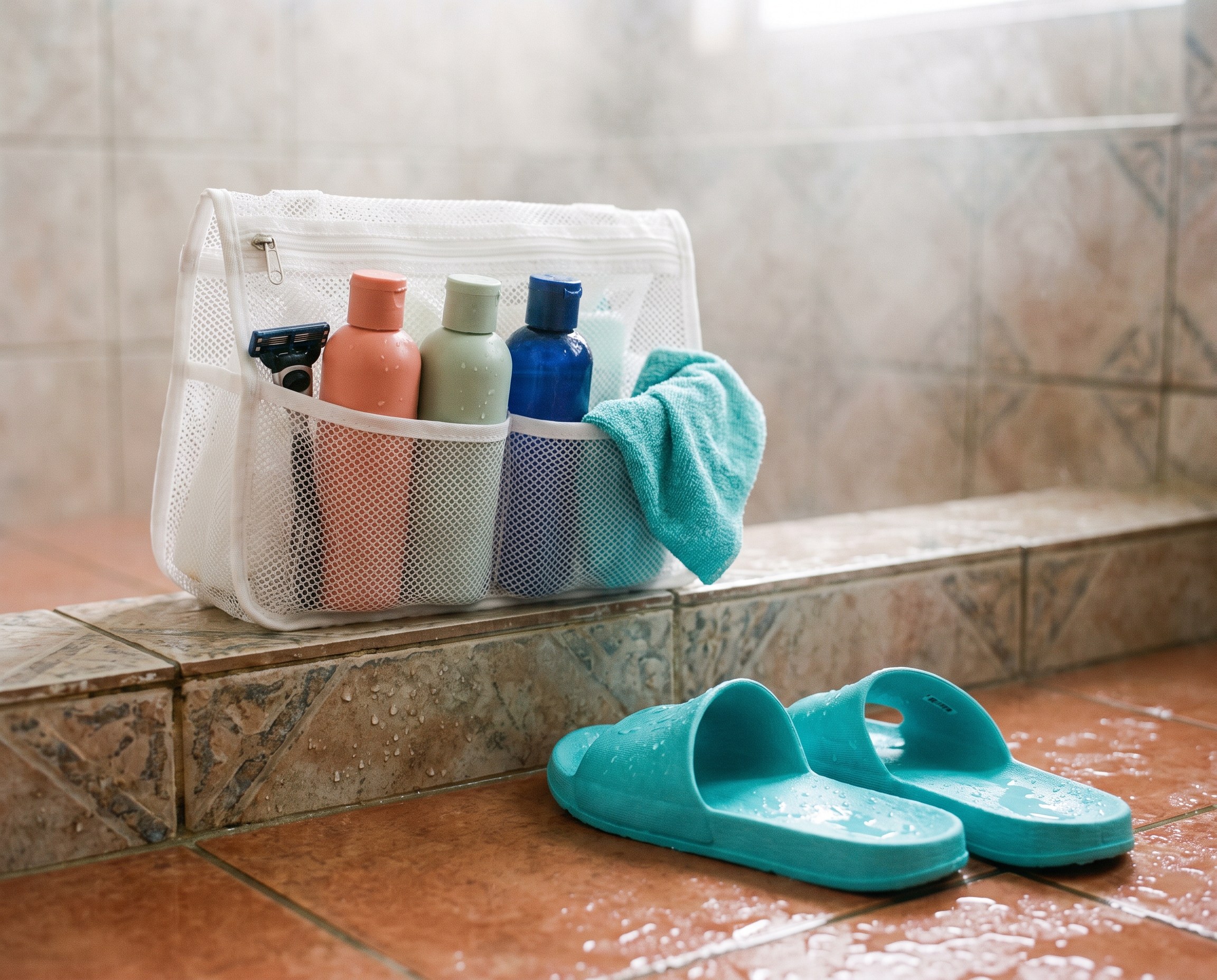
Start with the caddy itself. A mesh or open plastic tote with drainage holes is the best choice, because water runs out instead of pooling at the bottom. Solid bins collect soap scum and grow mildew fast. Look for one with a sturdy handle that won’t snap when it’s full and wet. Inside, keep it simple. She’ll need a gentle body wash or bar soap in a travel case, shampoo, conditioner, and a razor with a cap. Travel-size or mid-size bottles make sense here, since a full liter of shampoo turns the caddy into a weightlifting session. A face cleanser can live in the caddy too, though many students prefer to wash their face at the sink. A small pouch for hair ties and a wide-tooth comb rounds it out.
Then add the things people forget. A robe or a terry shower wrap makes the walk down the hall far less awkward. A microfiber hair towel or wrap cuts drying time and frees up the bath towel. Some girls like a waterproof speaker or a shower cap for days when they aren’t washing their hair. Label the caddy with her name or a strip of bright tape. Every bathroom on campus has at least one lost caddy sitting on a ledge by the second week, and they all look the same.
Are shower shoes really necessary?
Yes, and this is the one item I would never skip. Communal shower floors stay warm and wet for most of the day, which is exactly where the fungus behind athlete’s foot thrives. The American Academy of Dermatology recommends wearing shower shoes, flip-flops, or sandals in shared showers and locker rooms (https://www.aad.org/public/diseases/a-z/athletes-foot-prevent). The same advice helps prevent plantar warts, which are caused by a virus that spreads on damp floors. Pick a pair of quick-drying rubber or foam slides with some grip on the sole, since wet tile is slippery. Keep them only for the shower so they don’t track in dirt from outside. And after showering, she should dry her feet well, including between the toes. That small step matters as much as the shoes.
How should she handle towels in a shared space?
Towels are where good intentions go to die. In a dorm room, a wet towel usually ends up on the back of a chair or the end of the bed, where it stays damp for hours. Damp fabric breeds bacteria and smells sour within a few days. The fix is a set of two bath towels and two hand towels, so one can be in the wash while the other is in use. Over-the-door hooks or a small towel bar give each towel room to dry fully. Most experts suggest washing bath towels after three or four uses, or about once a week. Washcloths should go in the wash more often. Dark or patterned towels hide stains better, and white towels are smart if she uses an acne wash with benzoyl peroxide, since that ingredient bleaches colored fabric.
Up to 90% of used makeup products carry bacteria, according to a study from Aston University in the UK. The worst offender was the makeup sponge. Researchers found that 93% of the sponges they tested had never been cleaned, and 64% had been dropped on the floor at some point.
https://safetyandhealthmagazine.com/articles/19261-researchers-find-superbugs-in-most-used-makeup-including-on-sponges
One more rule is worth saying out loud. Towels, razors, loofahs, and washcloths are not for sharing, even with a close roommate. Skin infections like staph and fungal rashes pass easily through shared fabric and blades. It can feel rude to say no to a friend. But a friendly no now saves a trip to the campus health center later.
What is the simplest skin care routine for a dorm room?
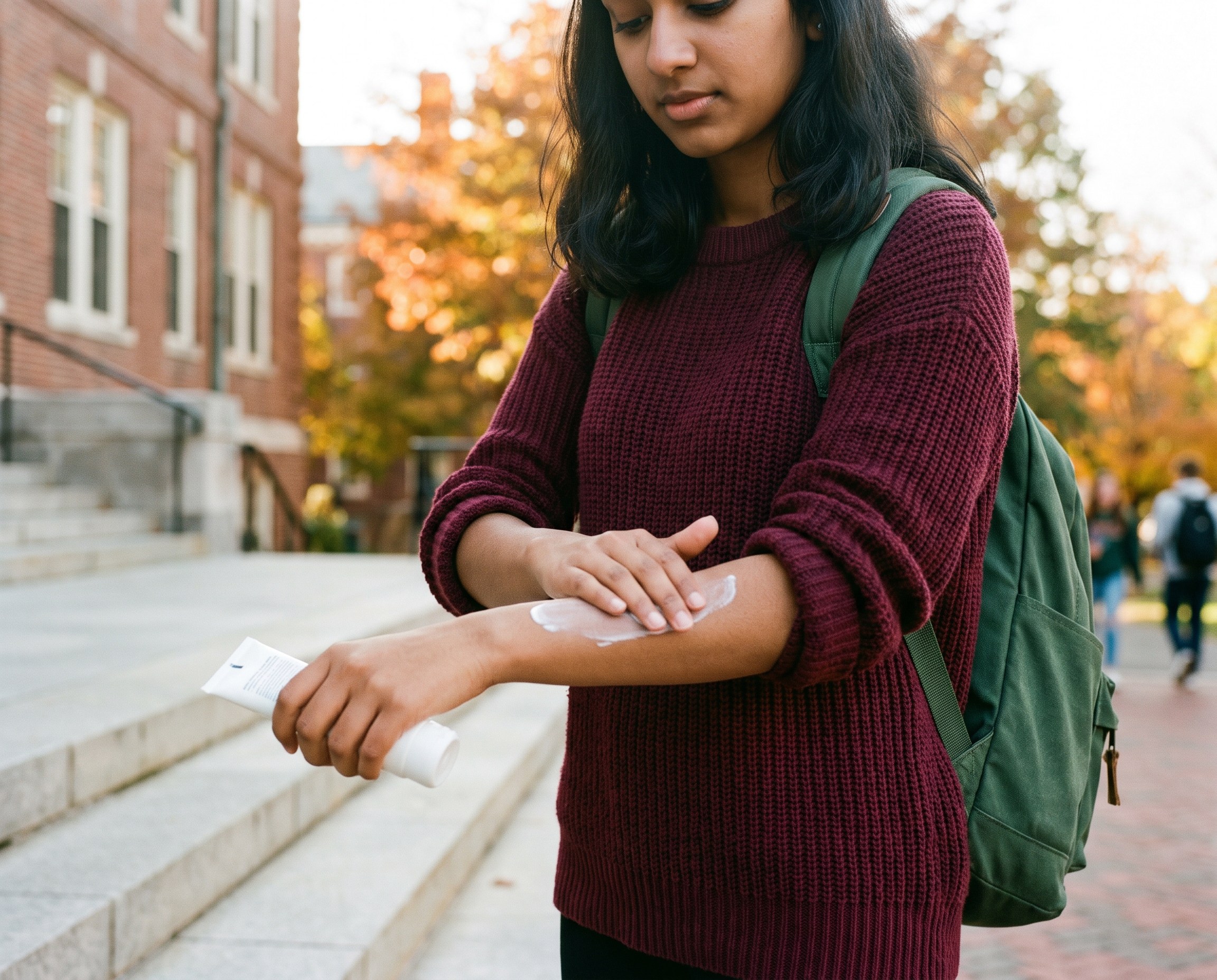
Three products cover almost everything. A gentle cleanser, a moisturizer, and a broad-spectrum sunscreen of SPF 30 or higher make up a routine that takes less than five minutes. The cleanser should be mild and fragrance-free, since harsh foaming washes strip skin that is already dealing with dry air. A basic moisturizer helps hold water in the skin, and in winter a slightly richer cream may feel better at night. Sunscreen is the step most young adults skip. A study in the Journal of the American Academy of Dermatology found that only about 36% of women aged 18 to 24 regularly used sunscreen on their face (https://pmc.ncbi.nlm.nih.gov/articles/PMC4475428). Walking across campus several times a day adds up to real sun exposure, even in cloudy weather.
If breakouts are a concern, one targeted treatment is enough. Products with benzoyl peroxide, salicylic acid, or adapalene are sold over the counter and work well for mild acne. Stress and short sleep can make skin flare during exam weeks, so it helps to keep the routine steady rather than piling on new products when a pimple shows up. Changing pillowcases once a week also helps, and it’s an easy habit to tie to laundry day. A lip balm, a hand cream, and a few pimple patches can live in a backpack. Beyond that, the ten-step routines on social media are more likely to irritate skin than help it.
How can she keep makeup clean when space is tight?
Makeup is personal, and that Aston University study shows why it should stay that way. The bacteria the researchers found included E. coli and Staphylococcus aureus, which can cause skin and eye infections. Sponges and brushes collect oil, dead skin, and moisture, then sit in a dark makeup bag where germs multiply. Washing brushes and sponges once a week with mild soap or a gentle shampoo is the easiest fix. She should let them dry completely on a clean towel before putting them away. A small makeup bag that zips shut keeps products off the bathroom counter and away from the spray of a flushing toilet. Lending lipstick or mascara to a friend, even once, is a common way to pass along a cold sore or pink eye.
Expiration dates matter too. The FDA notes that some industry experts recommend replacing mascara three months after purchase, and that eye products carry the highest risk of infection (https://www.fda.gov/cosmetics/resources-consumers-cosmetics/cosmetics-safety-qa-shelf-life). A strip of tape with the date on each tube makes it easy to remember. If a product changes smell, color, or texture, it goes in the trash. A smaller makeup collection is easier to keep fresh, and it fits better in a shared bathroom anyway.
What extras help with dry air and laundry day?
Dry indoor air is the hidden problem in most residence halls. Older buildings often run radiators or forced-air heat that the student can’t control. A small cool-mist humidifier can help skin and sinuses, but check the housing rules first, since some schools limit what can be plugged in. Clean it every few days so it doesn’t grow mold. A rich lip balm and a fragrance-free body lotion are cheap and do most of the work. A refillable water bottle helps more than people expect, both for skin and for getting through long study nights.
Laundry is part of skin care, too. A fragrance-free, dye-free detergent is a good choice for anyone with sensitive skin or eczema. Detergent pods are easy to carry to the laundry room, and a mesh bag keeps delicates and washcloths from getting lost. A small bottle of stain remover saves favorite shirts from makeup and pizza. Washing sheets every week or two keeps oil and sweat from building up, which can help with breakouts on the chest, back, and face. It’s not glamorous, but it works.
What should she leave at home?
Before buying anything, read the school’s packing list. Many colleges ban candles, open coils, and some heating appliances, and a few restrict hair tools or extension cords. Flat irons and curling irons with automatic shut-off are usually allowed, but it’s worth checking. Full-size bottles of everything can stay home, since most campuses have a drugstore nearby or same-day delivery. Large lighted vanity mirrors take up desk space that she’ll need for studying. A big collection of skin care products is more likely to expire than get used. And pricey devices like facial steamers rarely survive a year of moving between rooms. A lean kit that fits in one caddy and one zip bag is the goal.
What does a 19-year-old’s routine have to do with skin at 60?
Quite a lot, as many of our readers already know. Research published in Clinical, Cosmetic and Investigational Dermatology found that sun exposure accounts for about 80% of the visible signs of facial aging, including wrinkles, uneven pigment, and sagging (https://pmc.ncbi.nlm.nih.gov/articles/PMC3790843/). Much of that damage builds up quietly in the teens and twenties, long before it shows. The daily sunscreen habit a college student forms now is the single best thing she can do for her skin decades from now. Gentle cleansing, steady moisture, and not picking at breakouts also help prevent the dark spots and scars that are harder to treat with age. These are habits, and habits formed early tend to stick.
There’s a lesson here for mothers and grandmothers, too. The same simple routine works at 60 and beyond, with a few changes. Mature skin makes less oil and holds less water, so a richer moisturizer and a creamy, non-foaming cleanser make more sense. Sunscreen still matters every day, since skin keeps responding to UV at any age. If you’re putting together a care package for a granddaughter at school, a good sunscreen and a fragrance-free moisturizer make a thoughtful gift. And if she sees you using the same products, the message lands better than any lecture!
FAQs
How many towels does a college student need?
Two bath towels, two hand towels, and a few washcloths is a good start. That lets her rotate one set while the other is in the wash. A microfiber hair wrap is a helpful extra.
Should she wear shower shoes even in a private suite bathroom?
It’s still a good idea if the bathroom is shared with suitemates. Any shower used by several people can spread athlete’s foot and plantar warts. Quick-drying slides are cheap protection.
What sunscreen is best for a college student?
Any broad-spectrum sunscreen of SPF 30 or higher that she likes enough to wear every day. A lightweight lotion or a moisturizer with SPF works well under makeup. Mineral formulas with zinc oxide are a good option for sensitive or acne-prone skin.
How often should makeup brushes be cleaned?
Once a week is a good rule for brushes and sponges used on the face. Sponges should be replaced every few months. Let everything dry fully before storing it.
Is it safe to share makeup with a roommate?
It’s best not to, especially eye and lip products. Shared makeup can spread bacteria, viruses, and eye infections. Lending a powder or a palette with a clean brush is lower risk, but personal tools should stay personal.
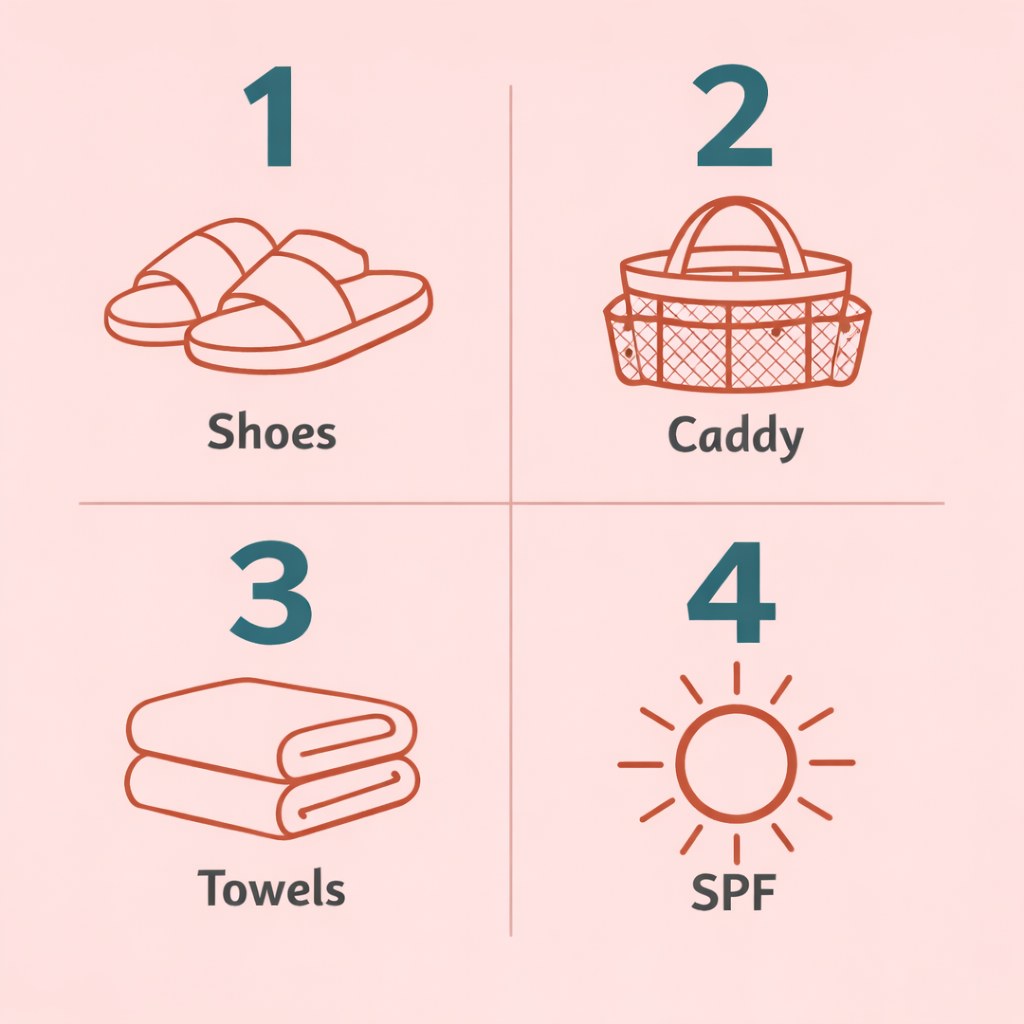
College brings enough surprises without a moldy shower caddy or a case of athlete’s foot in the first month. A small, smart kit makes dorm life easier from day one. Shower shoes, a draining caddy, two sets of towels, and a three-step routine with daily sunscreen cover the basics. Clean brushes, a short makeup list, and a fragrance-free detergent handle the rest. None of it is expensive, and all of it fits in a small room. The habits she builds now will look after her skin for years, and that might be the most useful thing she packs.
Related Posts