Aug
Skincare
Lactic Acid Works Harder on Your Skin Than You Probably Think
If you click on links we provide, we may receive compensation.
In a 22-week double-blind clinical trial at Massachusetts General Hospital, 71% of patients who applied an 8% L-lactic acid cream twice daily saw at least one full grade of improvement in overall photodamage severity – compared to just 40% of patients using the control cream. That gap came from a concentration you can find in drugstore products. Lactic acid is one of the most studied alpha-hydroxy acids in dermatology, yet it still gets overshadowed by glycolic acid in most skincare conversations. That’s a shame, because lactic acid does several things glycolic cannot. It exfoliates, yes, but it also pulls moisture into the skin, helps fade dark spots, and supports collagen production – all at once. Source: https://pubmed.ncbi.nlm.nih.gov/8651713/
What exactly is lactic acid doing on your skin?

Lactic acid belongs to the alpha-hydroxy acid (AHA) family, a group of carboxylic acids derived from natural sources. You’ll find it in fermented dairy and sour milk, and the body produces it during muscle metabolism. When applied topically, lactic acid works by loosening the bonds between dead skin cells in the outermost layer of the epidermis. It targets desmosomes – the cellular adhesive structures that hold corneocytes together on the skin surface. When those bonds weaken, dead cells shed more easily and a smoother, brighter surface is left behind. Dermatologists call this controlled desquamation, and it’s the reason AHAs became fixtures in clinical skincare decades ago.
Exfoliation is only the first part of what lactic acid does. It also stimulates fibroblast activity in the dermis, the deeper layer where collagen and elastin live. Research published in Cosmetics (MDPI, 2023) shows that AHAs including lactic acid increase collagen biosynthesis by activating the transforming growth factor-beta (TGF-beta) signaling pathway, while simultaneously increasing production of hyaluronic acid and glycosaminoglycans in the extracellular matrix. The practical result over time: skin becomes not just smoother at the surface but denser and firmer at a structural level. A separate study on 12% topical lactic acid found measurable increases in both epidermal and dermal thickness after consistent use, along with visible improvement in the appearance of fine lines and wrinkles. These are not superficial changes. Source: https://www.mdpi.com/2079-9284/10/5/131
Does lactic acid really hydrate as well as exfoliate?

Here’s something many people miss: lactic acid is a natural component of the skin’s own moisture-retaining system. It is part of what dermatologists call the Natural Moisturizing Factor (NMF) – a collection of water-binding molecules found inside the cells of the outer skin layer. The NMF includes amino acids, urea, sugars, and lactic acid, all of which pull water from the surrounding environment and hold it in the stratum corneum. When lactic acid appears in a skincare formula, it is reinforcing something the skin already produces on its own. That’s a fundamentally different mechanism from a standard moisturizing ingredient, and it makes lactic acid uniquely suited for skin that has trouble holding onto water.
This humectant property matters especially when skin is dry, compromised, or aging, because NMF levels tend to decline over time. At lower concentrations – typically below 10% – lactic acid functions more as a hydrating humectant than as a strong exfoliant. At concentrations above 10 to 12%, the exfoliating and collagen-stimulating effects become dominant. This concentration dependence is one reason lactic acid is unusually versatile: a gentle daily moisturizer and a clinical peel can both contain lactic acid and serve entirely different purposes. Research confirms that lactic acid at concentrations up to 12% has been safely used for decades in treating dry skin and ichthyosis, a group of conditions involving severe scaling and chronic moisture loss. The range of effective use cases – from everyday hydration to serious dermatological treatment – is broader than most AHAs can claim. Source: https://www.ncbi.nlm.nih.gov/books/NBK545171/
Can lactic acid actually fade dark spots and even out skin tone?
For people dealing with hyperpigmentation – whether from sun damage, post-breakout marks, or melasma – lactic acid has two mechanisms working in its favor. The first is straightforward: by accelerating cell turnover, it physically removes the melanin-laden cells sitting in the upper epidermis. Old, pigmented cells shed faster, and newer, lighter cells surface in their place. The second mechanism is subtler. Research suggests lactic acid may inhibit tyrosinase, the enzyme that drives melanin production deeper in the skin. Less tyrosinase activity means less pigment being produced at the source. The combination of faster removal at the surface and reduced production below it makes lactic acid more effective against discoloration than simple exfoliation alone would explain.
The Massachusetts General Hospital trial offers some of the clearest clinical evidence on this. After 22 weeks of twice-daily use, lactic acid cream was significantly superior to the vehicle control in reducing mottled hyperpigmentation, sallowness, and roughness on both the face and forearms (P < .05). What stands out is the comparison to glycolic acid: at equivalent 8% concentrations, lactic acid showed comparable overall results – but it performed particularly well on hyperpigmentation and sallowness. Glycolic acid is often positioned as the stronger acid, but that depends on what you’re treating. For uneven tone and discoloration, lactic acid matches it and sometimes edges ahead. People with melasma or persistent post-inflammatory marks should know that lactic acid is not a consolation-prize acid – it is a clinically validated option that some dermatologists now prefer for pigmentation precisely because it delivers results without the irritation that can worsen post-inflammatory marks. Source: https://pubmed.ncbi.nlm.nih.gov/8651713/
Is lactic acid the right choice for mature and aging skin?

Aging skin faces a specific set of challenges that lactic acid addresses unusually well. Collagen production declines steadily from the mid-20s onward, and cell turnover slows too – meaning dead skin cells accumulate on the surface longer. The skin looks duller and feels rougher as a result. The stratum corneum becomes less efficient at retaining moisture, partly because NMF production decreases with age. Pigmentation becomes patchier and more persistent because melanin turnover slows alongside cell turnover. Lactic acid addresses all four of those problems simultaneously, which is rare for a single topical ingredient.
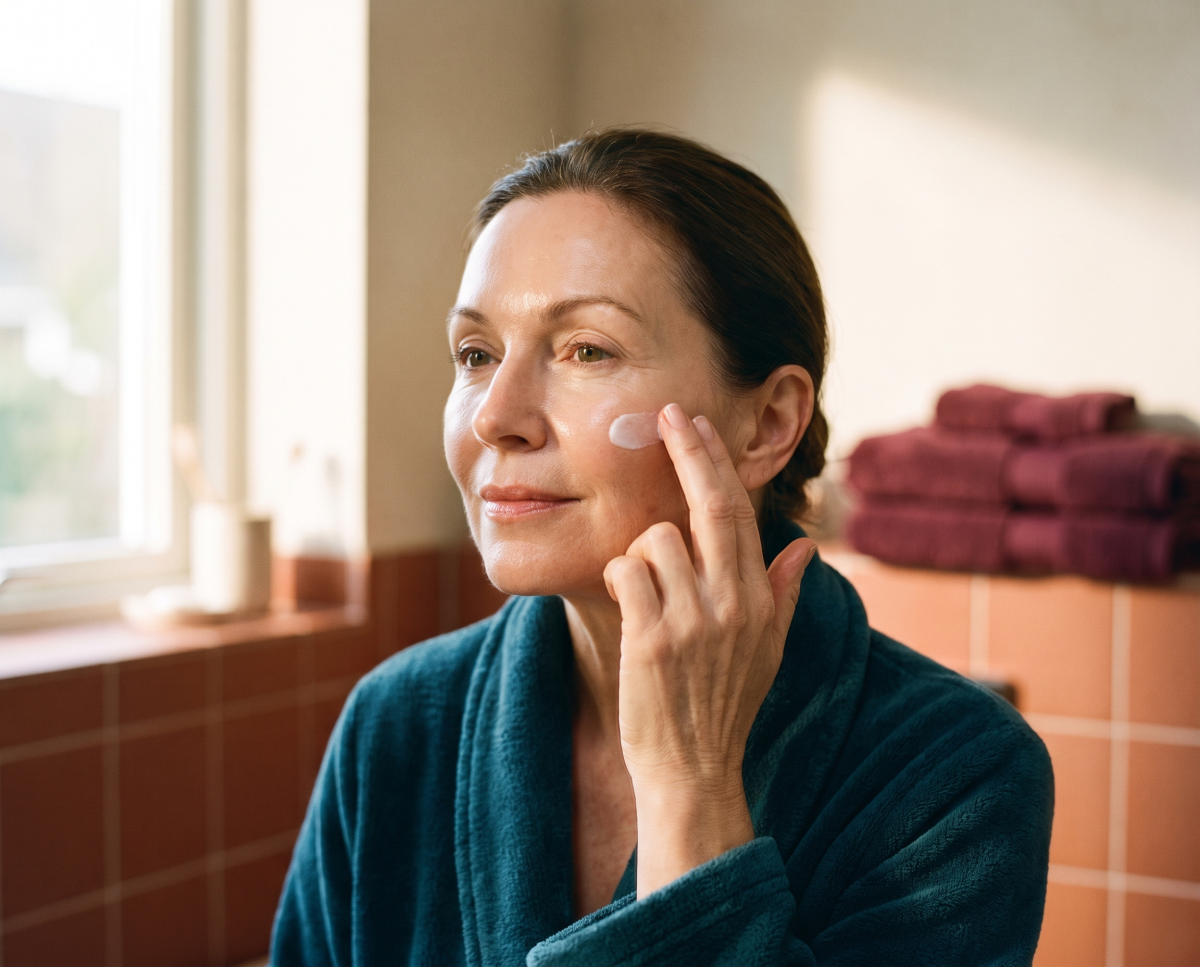
For women in their 50s, 60s, and beyond, the gentleness of lactic acid relative to glycolic acid is not a minor footnote – it’s often the deciding factor. Glycolic acid has a smaller molecular size and penetrates more deeply and quickly, which makes it more aggressive and more likely to cause redness or irritation on skin that has become thinner and more reactive with age. Lactic acid has a larger molecular size, so it penetrates more slowly and evenly. That slower absorption tends to mean fewer side effects and better tolerability for people whose skin barrier has weakened over the years. Dermatologists routinely recommend lactic acid as a first AHA for sensitive or mature skin for precisely this reason. The MGH trial measured its results specifically in women aged 40 to 70, which makes those 71% improvement statistics directly relevant to mature skin – this is not data extrapolated from younger cohorts.
Advertisement
The collagen-stimulating effect is especially relevant for older skin. Topical treatments that measurably increase dermal thickness are uncommon and genuinely valuable. The 12% lactic acid study found increased epidermal and dermal firmness after consistent use, not just smoother surface texture. For skin that has lost structural density over decades, that has real implications beyond aesthetics. And because lactic acid simultaneously improves hydration through its NMF-reinforcing mechanism, it does not leave aging skin feeling stripped or tight the way some exfoliants can. That dual action – resurfacing the surface while supporting the moisture barrier – is what makes lactic acid a particularly sensible fit for mature skin routines. It delivers measurable results without the irritation trade-off that often stops people from sticking with acid-based treatments long enough to see real change.
What concentrations and product formats actually work?

The right concentration of lactic acid depends on what you need it to do. Low concentrations between 2 and 5% work well in daily products like moisturizers, serums, and cleansers – they contribute to hydration and gentle exfoliation without any significant adjustment period. Medium concentrations between 5 and 10% appear in more targeted exfoliating toners, pads, and serums; these deliver visible changes in texture, pore appearance, and light discoloration over several weeks of consistent use. Concentrations above 10% move into the territory of clinical formulas and professional peels. In-office lactic acid peels at 30% or higher have been shown to outperform glycolic peels of equivalent concentration in some studies, particularly in darker skin tones where glycolic acid’s deeper penetration increases the risk of post-inflammatory hyperpigmentation. Source: https://pmc.ncbi.nlm.nih.gov/articles/PMC11055559/
pH matters as much as concentration. Lactic acid only functions as an active exfoliant when a product is formulated at a low pH, typically between 3.5 and 4.0. At higher pH values, the acid is neutralized and the exfoliating action largely disappears. A lactic acid moisturizer formulated at pH 6 is delivering humectant hydration but very little exfoliation. Many brands do not publish pH on packaging, so looking for brands that disclose formulation pH – or checking community resources where users test with pH strips – is worth the effort if exfoliation is your goal. Some products are deliberately buffered to a higher pH to reduce irritation risk, which is a reasonable trade-off for sensitive or reactive skin, but knowing what you are and are not getting from a formula helps you set realistic expectations.
Are there real downsides to using lactic acid?
Every effective skincare ingredient involves trade-offs, and lactic acid is no different. The most significant one is increased sun sensitivity. AHAs accelerate the rate at which outer skin cells shed, which means newer, more sensitive cells are exposed to UV radiation sooner than they would otherwise be. Studies have shown that regular AHA use can increase UV sensitivity by roughly 25 to 50% in some formulations, though this returns to baseline within about a week of stopping use. This is not a reason to avoid lactic acid – it is a reason to use broad-spectrum SPF 30 or higher every morning, without exception, whenever you are using any AHA product. Daily sun protection is already the single most impactful thing you can do for aging skin, so this is reinforcing a habit that should already be in place.
Some people experience mild redness, stinging, or peeling when they first start using lactic acid, particularly at medium or higher concentrations. This is normal and usually settles within two to three weeks as the skin adjusts. Starting with a lower concentration two or three times per week and gradually increasing frequency is the standard approach for anyone new to AHAs. People with rosacea, eczema, or severely compromised skin barriers should approach lactic acid cautiously and ideally check with a dermatologist before adding it to their routine. For the majority of people, however, lactic acid is one of the better-tolerated acid ingredients available, and the adjustment window is typically short. The MGH trial ran at twice-daily application for 22 weeks across a 74-patient cohort without significant adverse events – that gives a reasonable sense of how manageable the tolerability profile is in practice.
Frequently Asked Questions
Can I use lactic acid every day?
Many people tolerate daily use of low-concentration lactic acid products (under 5%) without difficulty, especially in moisturizer or cleanser form. Higher concentrations – 10% or above in a toner or serum – are better used two to three times per week at first. If you notice persistent redness, flaking, or tightness, dial back frequency and give your skin two weeks to settle before pushing higher.
How long does it take to see results?
Improved skin texture often shows within two to four weeks of consistent use. Visible changes in hyperpigmentation and skin tone typically take longer – six to twelve weeks is realistic, and the MGH trial ran for 22 weeks to capture the full range of improvement. Collagen-building effects develop over months of continued use. Patience matters more than concentration here.
Does lactic acid help with keratosis pilaris?
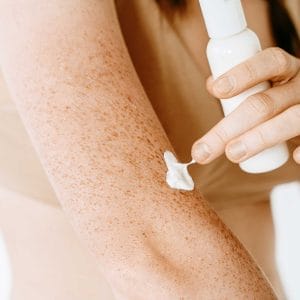
Yes. Lactic acid is one of the most commonly recommended over-the-counter treatments for keratosis pilaris, the condition that causes rough, bumpy texture on the upper arms, thighs, and sometimes cheeks. Its keratolytic action loosens the keratin plugging hair follicles. Products formulated with 12% lactic acid, such as AmLactin, are frequently cited by dermatologists for this use. Daily application over several weeks is generally required to see real smoothing.
Is lactic acid safe for sensitive skin?
Lactic acid is generally considered gentler than glycolic acid because its larger molecular size means slower penetration. That said, any active acid ingredient can irritate compromised or reactive skin. Patch testing on a small area first, starting with low concentrations, and avoiding combination with retinol or vitamin C on the same day are sensible steps. Most people with sensitive skin tolerate lactic acid well once they introduce it gradually.
Can lactic acid be used around the eye area?
The skin around the eyes is thinner and more delicate. Most dermatologists recommend avoiding AHAs directly on the eyelid or very close to the lash line. Many people apply low-concentration lactic acid serums and moisturizers near the orbital area without problems – just use a small amount and stay at least a centimeter from the lash line to minimize the risk of migration.
Will long-term use thin my skin?
The evidence says no. Lactic acid increases cell turnover in the epidermis, but its collagen-stimulating effects in the dermis can actually increase dermal thickness with sustained use. A properly formulated lactic acid product used as directed supports structural integrity rather than depleting it. The MGH trial showed meaningful improvements in photodamaged skin without evidence of barrier damage after 22 weeks of twice-daily use.
Lactic acid has been used in clinical dermatology for decades, and its track record reflects that experience. It is one of the few skincare ingredients backed by solid peer-reviewed evidence across multiple benefits – exfoliation, hydration, pigmentation reduction, and collagen support – rather than compelling claims without data. For anyone building a serious skincare routine, especially after 40, it belongs in the conversation. Whether you start with a gentle daily lactic acid moisturizer or work up to a more concentrated serum over time, the fundamentals remain the same: use broad-spectrum SPF every day, introduce it gradually, and give it enough time to work. The research suggests it will deliver.
Related Posts