Sep
Beauty, Skincare, Trends & Opinions
The Fall Skin Reset You Need Before the Season Turns
If you click on links we provide, we may receive compensation.
More than half of adults over 50 report dealing with dry, uncomfortable skin during the cooler months – and the shift often begins earlier than most people expect. It does not wait for November. As soon as outdoor humidity starts its late-summer dip, the skin begins registering the change, often through tightness, flakiness, and a dullness that no amount of summer moisturizer seems to fix. The problem is not just dryness as a cosmetic inconvenience. When the skin barrier is compromised, everything from sensitivity to inflammation becomes more likely, and recovery takes longer the older we get. Getting ahead of fall means doing a few targeted things before you actually need them.
Why Does Fall Hit Your Skin So Hard?
The short answer is humidity – or rather, the absence of it. Skin moisture levels are closely tied to the amount of water vapor in the surrounding air, and autumn brings a consistent drop in relative humidity across most of the country. That drop forces the skin to work harder to hold onto the water it already has. A well-documented measure called transepidermal water loss, or TEWL, tracks how much moisture evaporates passively from the skin surface, and research confirms that TEWL increases as environmental humidity falls. Source: https://pmc.ncbi.nlm.nih.gov/articles/PMC9168018/. The result is skin that feels tighter, looks duller, and becomes more reactive to products it previously handled fine.
But humidity is not the whole story. Inside the outermost layer of skin – the stratum corneum – a group of lipid molecules called ceramides act as the mortar holding skin cells together, sealing in moisture and keeping irritants out. Ceramide levels in the stratum corneum are known to drop dramatically in the drier seasons. A study examining stratum corneum lipids found significant depletion across multiple body sites during winter compared to warmer months. Source: https://pubmed.ncbi.nlm.nih.gov/8950457/. Autumn is when this decline begins, not when the first frost arrives. Adjusting your routine before the season peaks means giving your barrier time to stabilize rather than scrambling to repair it after the fact.
What Is Your Skin Actually Losing When Summer Ends?
Ceramides are the central story here. The skin naturally produces these lipid molecules to lock in hydration and shield itself from the outside environment. The trouble is that ceramide production decreases with age, and levels drop further in response to low humidity and cold temperatures. A 2024 review in the International Journal of Cosmetic Science confirmed that ceramides play a central role in barrier function, maintaining the dense lamellar structures between corneocytes that prevent water from evaporating out of the skin. Source: https://onlinelibrary.wiley.com/doi/10.1111/ics.12972. As autumn strips moisture from the air, the skin barrier that depends on ceramides is left doing its job with steadily fewer resources.
Beyond ceramides, skin also loses some of the supplementary moisture it picks up passively from humid summer air. Hyaluronic acid – a naturally occurring molecule in the skin that can hold many times its weight in water – relies partly on environmental humidity to draw moisture inward from the surroundings. When that external source dries up, hyaluronic acid has less to work with, and the skin ends up looking flatter and less plump even before any visible dryness sets in. This is not a sign that your summer products have stopped working. It is a sign that the environment has changed and your routine needs to catch up. The products are the same; the conditions around them are not.
Should You Swap Out Your Moisturizer for Fall?
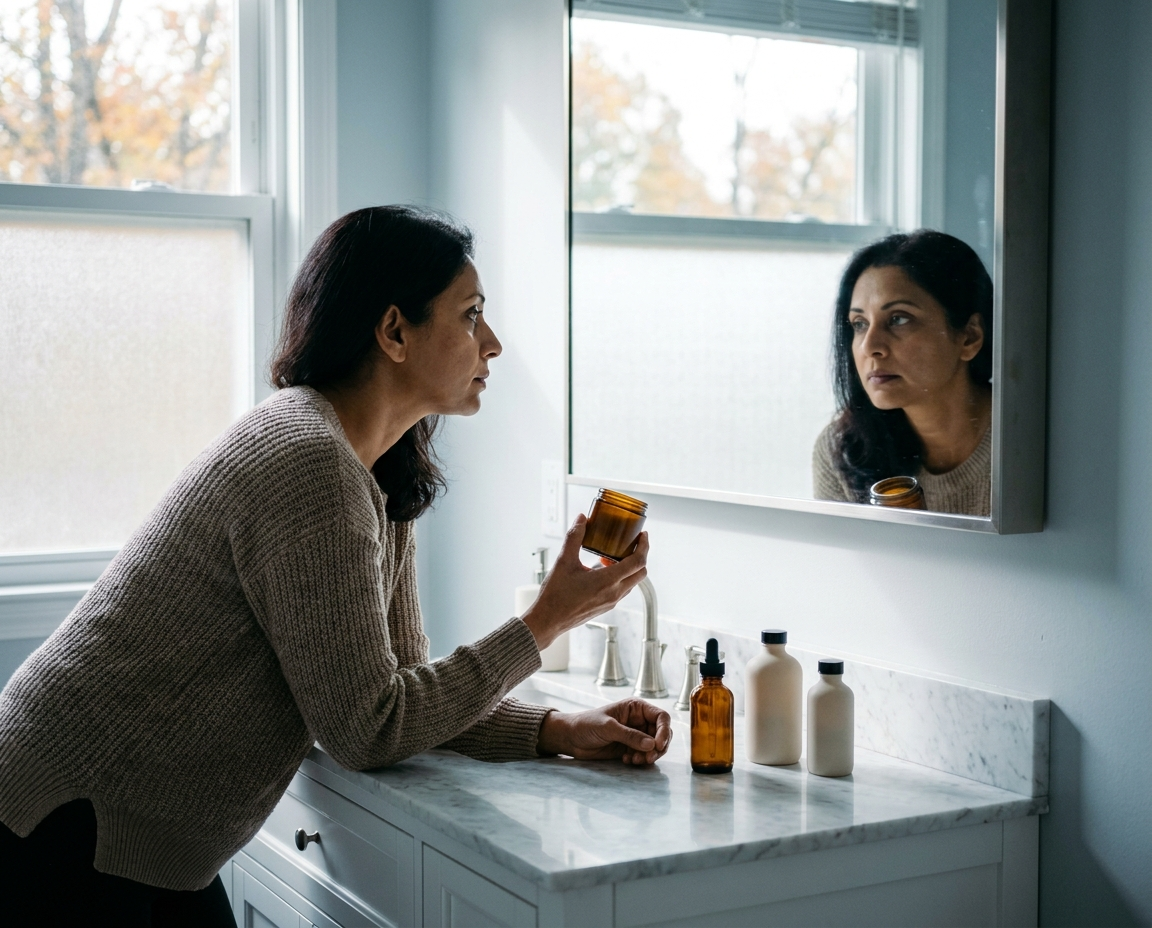
Yes – and the timing matters. Most people reach for a lightweight lotion or gel moisturizer in summer because heavier creams feel uncomfortable on warm, sweat-prone skin. That logic reverses in fall. A lotion that worked perfectly in July may leave skin feeling tight by October, not because the formula changed but because the conditions changed around it. Switching to a cream – a thicker emulsion with a higher ratio of oil to water – provides a more substantial layer that slows moisture loss from the surface. This is a practical shift, not a luxury one.
Look for a cream that carries ceramides, glycerin, and hyaluronic acid in the ingredient list. Ceramides help rebuild the barrier from within the skin’s own lipid structure. Glycerin draws water into the skin and holds it there with reliable efficiency. Hyaluronic acid adds that immediate plumping sensation that comes from surface-level hydration. Squalane is another excellent addition for fall – it mimics the skin’s own sebum and provides a layer of protection without feeling greasy or heavy. If you love your current moisturizer, simply layering it over a ceramide serum before applying can make a meaningful difference. Apply morning and night, and always apply your evening moisturizer to slightly damp skin to seal in as much water as possible.
Is Your Cleanser Working Against You in Fall?
This is a step most people overlook when transitioning a seasonal routine. The cleanser you relied on in summer – often a foaming formula designed to cut through sweat, sunscreen, and excess oil – may be too stripping for fall skin. Surfactants that work hard in humid summer months can take more than just dirt and oil with them when the air turns dry. They can disrupt the very lipid layer that ceramides are working to maintain, setting up a cycle where you moisturize to compensate for a cleanser that keeps undoing the work.
Fall is a good time to switch to a cream or milk cleanser, or at minimum a gentle low-pH gel that does not foam aggressively. These formulas clean effectively without disturbing the acid mantle – the slightly acidic surface environment that keeps bacteria out and moisture in. If your skin feels tight or squeaky after washing your face, that is a reliable signal that your cleanser is stripping too much. The goal after cleansing is skin that feels comfortable and neutral, not skin that feels briefly clean and then immediately uncomfortable. A gentler cleanser makes every step that follows more effective, because the barrier starts each routine in better shape.
Which Active Ingredients Actually Belong in a Fall Routine?

This is where fall becomes genuinely useful for skincare goals. Lower UV intensity makes it safer and more effective to use certain actives that carry photosensitivity risks during summer. Retinol is the most obvious example. It accelerates cell turnover, supports collagen production, and helps address the fine lines, uneven texture, and sun-related pigmentation that summer often aggravates. Many dermatologists recommend easing retinol back in during autumn – starting with two nights per week and building gradually over four to six weeks, allowing tolerance to develop without triggering irritation or barrier disruption. Fall gives you that runway.
Vitamin C earns its place in a fall morning routine as well. Applied after cleansing and before SPF, it provides antioxidant protection against residual UV exposure and pollution, and it actively targets the hyperpigmentation that often appears as a delayed consequence of summer sun exposure. Start with a stable formulation at 10 to 15 percent concentration, and give it several weeks to show results. Niacinamide – vitamin B3 in its active form – is a versatile complement: it reinforces the barrier, reduces redness, and works alongside both retinol and vitamin C without causing conflict. And yes, SPF stays year-round. UV radiation does not disappear in fall, and a broad-spectrum sunscreen at SPF 30 or higher should remain a morning-routine non-negotiable regardless of cloud cover or temperature.
What Should You Know About Exfoliation When the Air Gets Dry?
Less is more – but not zero. Exfoliation remains important in fall because the seasonal transition can bring a buildup of dead skin cells that contributes to that characteristic autumn dullness. The issue is that the exfoliants people lean on heavily in summer – strong glycolic acid, high-percentage BHAs, physical scrubs – can be too aggressive when the barrier is already under pressure from lower humidity. Skin that tolerated a weekly glycolic acid peel in August may react with redness or flaking to the same treatment in October. The barrier is doing more work, and piling exfoliation on top of that extra load creates friction.
The practical fix is to back off frequency and consider shifting to a gentler acid. Lactic acid and mandelic acid are both effective exfoliants with larger molecular sizes that penetrate more slowly and evenly, making them significantly more tolerable for drier or more sensitive skin. Two to three times a week is generally the right fall frequency – enough to keep cell turnover moving without perpetually stressing a barrier that is already working harder than it was in summer. Always follow any exfoliation session with a good moisturizer, and in the morning, always follow with SPF. Exfoliation without sun protection is counterproductive – it removes the dead cell layer that provides a small amount of natural UV buffer.
How Does the Fall Shift Affect Mature and Aging Skin?

More intensely than it affects younger skin – and it is worth paying close attention if your skin is 60 or older. Aging skin naturally produces fewer ceramides, less natural moisturizing factor, and diminished levels of sebum compared to younger skin. That means the gap between summer hydration levels and autumn dryness is wider for mature skin, and the recovery is slower. Research published in the Journal of the European Academy of Dermatology and Venereology found dry skin prevalence exceeding 50% in older adults, and that number climbs higher with age. Source: https://onlinelibrary.wiley.com/doi/abs/10.1111/jdv.15157. But drier autumn conditions do not have to mean suffering through them.
Mature skin tends to benefit most dramatically from a layered moisturizing approach. Start with a hydrating toner or essence containing hyaluronic acid right after cleansing, while the skin is still slightly damp. Follow with a serum containing ceramides and peptides – peptides signal the skin to produce more collagen and elastin, both of which slow down in production with age. Then seal everything with a rich night cream. Occlusive ingredients like shea butter, squalane, and gentle plant oils are genuinely useful for mature skin in fall because they create a physical layer that reduces overnight transepidermal water loss. For particularly cold or dry nights, a ceramide-focused sleeping mask applied on top of your regular cream can noticeably improve texture and comfort within two to three weeks.
The retinol conversation is worth revisiting specifically for mature skin this season. If retinol has felt too drying or irritating in the past, fall is actually the best time to try again – at a lower starting concentration and with a ceramide moisturizer applied both before and after, a technique often called sandwiching. The benefits for older skin are significant: smoother texture, reduced discoloration, and firmer-feeling skin over consistent use. Pairing retinol with the ceramide-rich barrier-building routine described above reduces the irritation risk considerably and makes it far more likely that you will stick with it long enough to see results.
FAQs

Does my sunscreen still matter in fall and winter?
It absolutely does. UV rays penetrate cloud cover and glass, and UVA rays – the ones most directly linked to premature aging and skin damage – are present at roughly the same intensity year-round regardless of season or temperature. SPF 30 or higher, applied every morning before going outside, remains the single most impactful anti-aging step you can take no matter what month it is. Skipping it in fall because the sun feels weaker is one of the most common and costly skincare mistakes.
When should I start switching my routine for fall?
Late August or early September is a reasonable time to begin making changes in most of the country, even before temperatures noticeably drop. Skin barrier adjustments take two to four weeks to show up in how the skin looks and feels, so getting ahead of the seasonal shift pays off. You do not need to wait until your skin is already dry, tight, and uncomfortable to start hydrating differently. Think of it like putting a jacket on before you go outside, not after you are already shivering.
Is hyaluronic acid less effective in dry fall air?
Hyaluronic acid works best when there is environmental moisture available for it to draw from. In very dry conditions, it can potentially pull moisture from deeper layers of the skin instead of from the air. The fix is simple – apply it to skin that is still slightly damp after cleansing, and follow immediately with a moisturizer to trap the water in place. That way the hyaluronic acid is doing exactly what it is designed to do, and the moisturizer seals the deal.
Can I use retinol in fall if I avoided it in summer?
Yes – and fall is the ideal season to reintroduce or start retinol. Lower UV exposure reduces the photosensitivity risks that make retinol use in summer more complicated, and cooler temperatures tend to make any initial purging or dryness easier to manage. Start with a low concentration, use it every two to three nights, and pair it with a solid ceramide moisturizer to buffer any sensitivity during the adjustment period. Build slowly and the results compound over time.
Should I use a different eye cream in fall?
The skin around the eyes is thinner and has fewer oil glands than the rest of the face, which means it tends to show seasonal dryness and fine lines more quickly than other areas. Switching to a richer eye cream with peptides, ceramides, and a light occlusive ingredient makes practical sense in fall. Apply it gently with a fingertip rather than rubbing or pulling, and if you use retinol in your main routine, keep it away from the eye area unless your eye cream specifically contains it in a well-tolerated formulation.
Preparing skin for fall is really about getting out in front of changes that are already in motion before you can see them on your face. The humidity is dropping. The ceramides are under seasonal pressure. The UV intensity is lower, which means the actives that were harder to use in summer are now safer and more effective. This is a productive season if you approach it with intention rather than waiting for dry patches and dull skin to confirm that something has shifted. A richer moisturizer, a gentler cleanser, a strategic return to retinol, and a ceramide-focused layer added to your evening routine – these are not dramatic overhauls. They are small, well-timed adjustments that compound into noticeably better-looking skin by the time winter fully arrives. Start now, while fall is still on the horizon.