Jun
If you click on links we provide, we may receive compensation.
Nearly one in three adults will experience a significant skin barrier disruption this year – triggered by anything from a new skincare product to a round of laser treatments, according to estimates from clinical dermatology practice surveys. The moment it happens, the temptation is to fight back: add a stronger serum, try a calming mask, work harder. But the skin has a different request. It wants you to slow down, strip back, and give it room to do what it was designed to do. Healing a disrupted barrier is not complicated – it just requires a different kind of discipline, one built on restraint rather than action. This guide will take you through exactly what is happening inside your skin, exactly what to stop, exactly what to add, and how to pace the recovery without losing your mind in the process.
What Does a Skin Disruption Actually Mean?
A skin disruption is any event that overwhelms the skin’s natural ability to protect and regulate itself. The category is broader than most people assume. It includes the obvious – a breakout that will not settle, a rosacea flare that came out of nowhere, a sunburn, a severe allergic reaction to a new product. But it also includes subtler forms of damage that are often self-inflicted: a barrier worn down by weeks of daily exfoliation, a retinol reaction that crossed the line from purging to genuine irritation, a vitamin C serum used at too high a concentration on already sensitized skin. Post-procedure skin falls here too – whether you have had a chemical peel, laser resurfacing, or microneedling, the skin has been intentionally disrupted and needs a specific recovery window.
Hormonal flares, particularly around the menstrual cycle or perimenopause, count as disruptions. Even travel qualifies – the dry recycled air on a long-haul flight can strip the skin of enough moisture to compromise barrier function, and arriving in a new climate with different humidity, minerals in the water, or temperature extremes can push already-sensitized skin over the edge. Stress, it turns out, is not just a metaphor. Elevated cortisol actively disrupts the skin’s lipid production and triggers inflammatory pathways, meaning a brutal few weeks at work or a significant emotional event can show up on your face. All of these events share a common biology. And that means the recovery process is largely the same regardless of what set it off.
What Is Actually Happening Inside Your Barrier?

The skin barrier – technically the stratum corneum and the lipid matrix that holds it together – functions like a brick wall. The bricks are dead skin cells called corneocytes. The mortar between them is a precise mixture of ceramides, cholesterol, and free fatty acids, organized into layers called lamellar bodies. When this structure is intact, it holds water in and keeps irritants, allergens, and pathogens out. When it is disrupted, the mortar cracks. Water escapes through those cracks in a process called transepidermal water loss, or TEWL – a measurable indicator of barrier dysfunction that dermatologists use to assess skin health. The pioneering work of Dr. Peter M. Elias at the University of California, San Francisco, published across multiple papers in the Journal of Investigative Dermatology, established that ceramide depletion is the central driver of barrier breakdown. His research, available via the National Library of Medicine at https://pubmed.ncbi.nlm.nih.gov/18606081/, remains foundational to how clinicians think about barrier repair today.
The skin also has its own microbiome – a community of bacteria, fungi, and other microorganisms that live on its surface and help regulate inflammation and immune responses. Barrier damage disrupts this microbiome, reducing its diversity and allowing opportunistic organisms like Staphylococcus aureus to overgrow, which triggers further inflammation and slows recovery. The result is a cascade: compromised lipids lead to water loss, which leads to microbiome imbalance, which leads to an inflammatory response, which further degrades the lipid matrix. Understanding this cycle changes how you approach recovery. You are not trying to suppress symptoms – you are trying to restore the conditions that allow the cycle to reverse. That means giving the barrier the structural components it needs, reducing inflammation, and getting out of its way.
The First Rule Is Also the Hardest. Stop.
The single most important thing you can do when your skin is disrupted is to stop doing things to it. Not reduce. Not swap to a gentler version. Stop. The instinct to add more products – a calming mist here, a repair serum there – is understandable, but every active ingredient, no matter how gentle it claims to be, is asking something of your barrier when the barrier has nothing left to give. The rule is simple: if a product is designed to change the skin, stop using it immediately. That means exfoliants come off the shelf entirely – no AHAs, no BHAs, no PHAs, no physical scrubs. Retinol and all retinoids stop immediately. Vitamin C at concentrations above roughly 5 percent – stop. Fragrance, whether natural or synthetic, has no business touching disrupted skin; it is a sensitizer even in healthy skin, and in compromised skin it can trigger genuine allergic cascades.
Alcohol-heavy toners and astringents go away during recovery too. If you are mid-course on a prescription active like tretinoin, contact your dermatologist before stopping, but in most cases they will advise the same thing: pause until the skin stabilizes. The temporary discomfort of skipping a product you rely on is real. So is the fact that continuing to use it will make recovery slower, not faster. Many people find this the hardest phase of the entire protocol – not because the stripped-back routine is difficult, but because doing less feels like abandoning the skin rather than helping it. Reframing it helps: restraint right now is the most active form of care you can provide.
What Does the Emergency Reset Routine Actually Look Like?
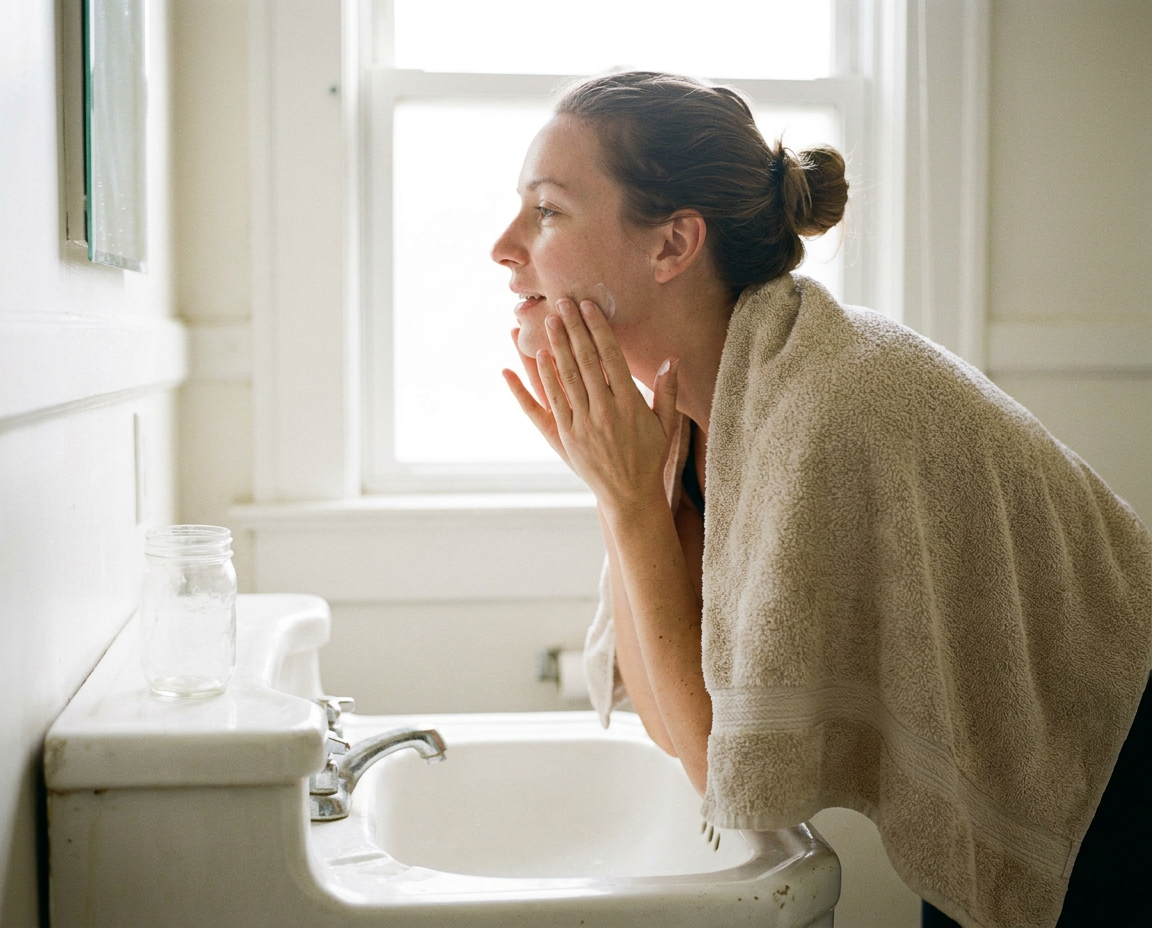
Three products. That is your entire routine until the skin settles – and for most people, that means two to four weeks of the bare minimum before adding anything back. A gentle, fragrance-free, non-foaming cleanser with a pH close to the skin’s own (around 4.5 to 5.5) is your first step. Avoid anything that strips or tingles. Micellar waters work well for this phase if your skin tolerates them; a cream or lotion cleanser is another good option. The goal is to remove the day without asking the barrier to do any extra work during the cleansing step. Pat dry gently with a soft cloth.
Second, a ceramide-rich moisturizer applied morning and night – non-negotiable. Look for a formula that lists ceramides, cholesterol, and fatty acids together on the ingredient deck, because these three components replicate the skin’s own lipid mortar and work best in combination. Apply while the skin is still slightly damp to lock in as much hydration as possible. Third, SPF during the day – always, but especially now, because a disrupted barrier is dramatically more vulnerable to UV damage, which will compound the inflammation and slow healing. Broad-spectrum mineral SPF 30 or higher is ideal, as zinc oxide and titanium dioxide tend to be better tolerated by reactive skin than chemical UV filters. That is the entire routine. No essence, no serum, no spot treatment, no eye cream. You are not regressing. You are providing exactly the conditions the skin needs to repair itself without interference.
Advertisement
Which Ingredients Are Actually Rebuilding Your Barrier?
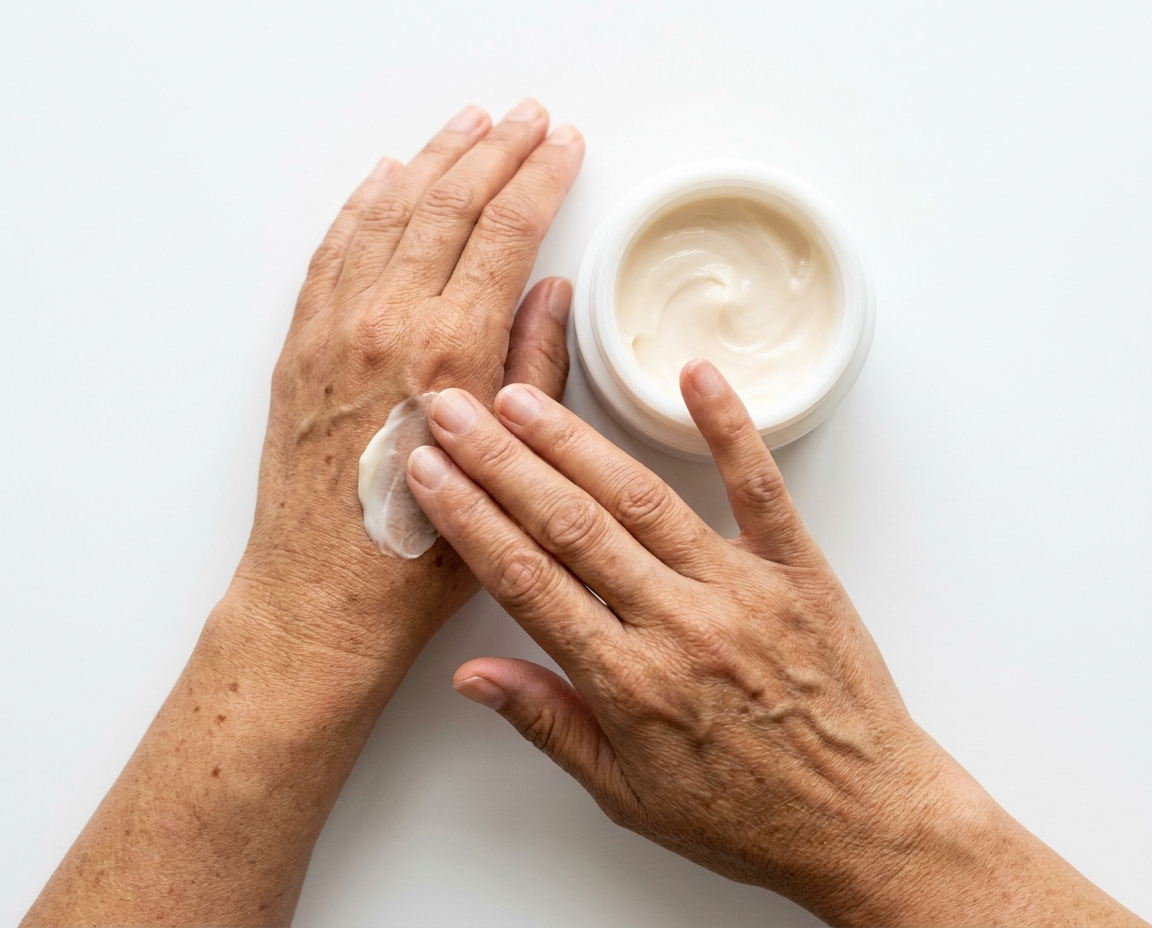
The research on barrier repair is clearer than in almost any other area of skincare. Ceramides are the star – specifically ceramides in combination with cholesterol and fatty acids. Dr. Elias and colleagues demonstrated that applying these three components together, in a physiological ratio, accelerates barrier recovery significantly faster than any single ingredient alone. The optimal ratio studied was approximately 3:1:1 of ceramides to cholesterol to free fatty acids, though cholesterol-dominant formulations showed particular benefit in older skin. This is why a moisturizer that lists only ceramides is not as effective as one that lists all three – the ratio and the combination both matter.
Beyond the ceramide trio, centella asiatica – also known as cica or gotu kola – has strong clinical support for barrier repair. A study published in PubMed Central and available at https://www.ncbi.nlm.nih.gov/pmc/articles/PMC12274965/ found that a cream combining centella asiatica leaf extract, ceramide NP, and panthenol reduced sensitive skin symptom scores by 66 to 76 percent over two to four weeks, with measurable reductions in TEWL at weeks one and two. Centella works through multiple pathways – attenuating the inflammatory response, supporting collagen synthesis, and promoting skin cell regeneration. Panthenol, also known as provitamin B5, draws water into the skin and supports healthy cell formation; a double-blind randomized controlled study available at https://www.ncbi.nlm.nih.gov/pmc/articles/PMC12232337/ specifically validated a panthenol-enriched mask for skin barrier recovery after laser treatment, showing significantly lower redness and faster recovery compared to control.
Allantoin is a lesser-known but well-established skin protectant that reduces irritation and promotes cell proliferation – look for it in post-procedure recovery products for good reason. Colloidal oatmeal holds an FDA skin protectant classification and works by forming a physical film over the skin surface that reduces water loss and calms inflammatory signals, making it particularly useful during the acute phase. Niacinamide at low concentrations – two to five percent – supports ceramide synthesis and reduces redness without the irritation risk it carries at higher doses. Above ten percent, niacinamide can cause flushing and should be avoided until the skin is fully stable. These ingredients are your rebuilding tools. They are not exciting. They are effective.
Which Ingredients Should You Avoid During Recovery and Why?
Retinol and all retinoids increase cell turnover – exactly what the skin does not need when it is trying to rebuild a stable barrier. They also increase TEWL and photosensitivity, compounding two of the core problems of barrier disruption. AHAs like glycolic and lactic acid dissolve the bonding between dead skin cells to accelerate exfoliation; during recovery, that bonding is precisely what the skin is working to restore. BHAs like salicylic acid are lipid-soluble and penetrate into pores – useful when the barrier is healthy, but disruptive when it is not. High-concentration vitamin C creates an acidic environment that can further irritate already-sensitized skin; formulations above roughly ten to fifteen percent, or those with a very low pH, are particularly problematic.
Fragrance deserves special mention. The European Scientific Committee on Consumer Safety has flagged numerous fragrance compounds as potential allergens, and on a disrupted barrier their penetration is greatly increased – meaning even a product you tolerated before can become an irritant when the barrier is compromised. Alcohol in the form of ethanol or SD alcohol is drying, disrupts the lipid matrix, and can temporarily suppress the skin’s natural moisturizing factors. None of these ingredients are inherently harmful – most serve important functions in a healthy routine. The problem is timing. The disrupted barrier is not a healthy skincare situation, and applying these ingredients during recovery extends the damage rather than addressing it. Patience is the active ingredient here.
What Should You Actually Expect Day by Day?
Recovery is not linear, and knowing what is normal makes the process far less frightening. In the first one to three days after you stop the offending routine, the skin may actually feel worse – drier, tighter, perhaps more reactive than before. This is normal. The inflammation that was already underway takes time to wind down, and the barrier will not begin rebuilding until the stimulus causing damage is removed. Do not interpret early discomfort as evidence that the new approach is failing. By days three to five, most people notice a calming of acute redness and a reduction in that raw, stinging sensation. The skin may still look dull and feel tight, but the worst edge comes off.
By the end of the first week, hydration levels typically begin to improve visibly with consistent ceramide moisturizer use, and the skin may start to look less angry overall. Week two is when people feel most tempted to reintroduce something – resist it. The barrier is still actively repairing at this stage, and premature reintroduction of actives is one of the most common causes of setbacks. For mild to moderate barrier disruption, most people see meaningful improvement by the three to four week mark, with the skin feeling stable, less reactive, and more like itself. Full structural barrier integrity – the complete restoration of the lipid matrix to its normal depth and composition – can take eight to twelve weeks. Severe disruption, post-procedure skin, or skin that was already chronically compromised before the triggering event will take longer. Being realistic about this is not pessimistic. It prevents the impatience that leads to setting back a recovery that was going well.
How Do You Reintroduce Actives Without Starting All Over?
The answer is slowly, one at a time, with a patch test for every product – even ones you have used before. When the skin feels consistently stable and comfortable for at least one to two weeks, you can consider reintroducing one active. Start with the mildest option in your routine: a low-dose niacinamide serum before a high-strength retinoid, for example. Apply it every three to four days for the first two weeks, watch for any sign of irritation, and only increase frequency if none appears. Introduce one new product every two weeks – not one per week, and certainly not several at once.
Keep the barrier-repair routine running in parallel throughout the reintroduction phase. Do not stop the ceramide moisturizer just because you have added something back – it should remain a fixture of your routine indefinitely. If any active triggers redness, stinging, or tightness, remove it and return to the base routine for another full week before trying again. This slow approach also provides useful information: it tells you whether a product your skin previously tolerated has now become a genuine problem, which is worth knowing for the long term. Some skin, particularly mature skin or skin that has experienced repeated disruptions, will never fully return to tolerating certain actives – and that is fine. There are always gentler alternatives that deliver comparable results.
Why Does Recovery Take Longer When You Are Over 50?
This section matters. If you are in your fifties, sixties, or beyond, the standard advice does not fully account for what has happened to your barrier, and applying timelines written for younger skin will only frustrate you. Research projects ceramide depletion of up to 60 percent in the average 50-year-old, driven largely by the decline in estrogen that accompanies menopause – detailed at https://www.healthspectra.com/its-not-just-aging-its-lipid-depletion-how-to-restore-young-moisture-to-50-skin/. This is not a minor adjustment. A 60 percent reduction in ceramides means the mortar between skin cells is substantially thinner, making the barrier far more vulnerable to disruption and far slower to rebuild after it is damaged. The ceramides that remain also have altered composition, with shorter molecular chains that cannot form the dense lamellar structures needed for effective barrier function.
Cell turnover – which powers barrier regeneration – also slows significantly with age, from roughly 28 days in young adult skin to 45 to 60 days or more in skin over 60. If a general skincare article says recovery takes two to four weeks, plan for four to eight as a mature skin baseline. This is not pessimism – it is accurate expectation-setting, and accurate expectations prevent the impatience that leads to adding products too early and restarting the disruption cycle. The good news is the approach is the same, just extended. For skin over 50, cholesterol-containing moisturizers may be particularly valuable: Elias’s research suggested that in aged skin, cholesterol becomes the rate-limiting factor in barrier repair – meaning the skin cannot rebuild the lipid matrix efficiently without it, regardless of ceramide levels. Look for a moisturizer that lists cholesterol as an ingredient, not ceramides alone. And give the process the time it genuinely needs.
What Else Can Support Your Skin From the Inside?

The skin is not separate from the rest of the body, and recovery works better when the whole system is supported. Sleep is one of the most powerful skin repair mechanisms available – growth hormone secretion and barrier regeneration follow a circadian rhythm, with peak repair activity happening at night. Disrupted sleep consistently correlates with slower wound healing and worse skin health outcomes in clinical research. Aim for seven to nine hours during the recovery period, and if sleep is a chronic problem, treat it as a skin concern, not a lifestyle footnote.
Hydration matters, though it works differently than topical moisturizer – adequate water intake supports blood flow to the skin and normal cellular metabolism, but cannot substitute for a good ceramide cream. Diet plays a measurable role as well. Omega-3 fatty acids from oily fish, walnuts, and flaxseed are incorporated into the skin’s lipid matrix and support barrier integrity from the inside out. Anti-inflammatory foods – leafy greens, berries, olive oil, turmeric – reduce the systemic inflammatory load that shows up on the skin. Refined sugar and alcohol drive glycation and systemic inflammation, and while they will not undo a good topical routine, eliminating them during recovery periods does make a difference that some people can see and feel. Stress management is not a soft recommendation either. Cortisol actively suppresses the enzymes needed to synthesize ceramides, meaning chronic stress physiologically prevents the barrier from rebuilding. Whatever calms your nervous system – exercise, time outside, therapy, genuine rest – is a legitimate part of the recovery protocol.
When Is It Time to See a Dermatologist?
Most mild to moderate skin disruptions resolve with the approach described here and do not require a doctor’s visit. But certain situations warrant professional assessment sooner rather than later. If your skin is not showing any improvement after two to three weeks of a stripped-back routine, see a dermatologist – what you are experiencing could be perioral dermatitis, seborrheic dermatitis, or contact dermatitis, conditions that require targeted prescription treatment rather than a general barrier repair approach. Any disruption accompanied by hives, significant swelling, difficulty breathing, or rapidly spreading redness warrants immediate medical attention; this could be a systemic allergic reaction that is beyond the scope of topical care.
Post-procedure skin that is not following the expected recovery trajectory from your provider also deserves a follow-up call. Complications like infections or prolonged barrier damage after lasers or peels are more effectively addressed early than after weeks of hoping for improvement. And if you are over 50 and your skin has become persistently reactive in a way that is new for you, a dermatologist can help rule out rosacea, eczema, or other conditions that may have developed or worsened with the hormonal changes of perimenopause and menopause. Prescription-strength barrier support or anti-inflammatory treatments can make a significant difference in cases where over-the-counter options are not moving the needle fast enough.
Frequently Asked Questions
Can I wear makeup while my skin barrier is healing?
You can, with some care. Mineral makeup – loose or pressed mineral foundation – tends to be the best tolerated option during barrier recovery, as it contains few ingredients and sits on the skin surface rather than penetrating it. Avoid liquid foundations with fragrance, alcohol, or heavy preservative loads. Always apply your ceramide moisturizer first and let it absorb fully before any makeup goes on. Remove everything gently at the end of the day with a fragrance-free micellar water or cream cleanser.
My skin felt worse the day after I simplified my routine. Did I do something wrong?
Almost certainly not. A temporary worsening in the first few days of a stripped-back routine is common and does not mean the protocol is failing. The skin’s inflammatory response takes time to wind down even after the triggering agent is removed, and texture can look and feel worse before it improves. Stay the course, resist adding anything new, and give it a full week before reassessing.
Is it possible to over-moisturize during recovery?
In theory, excessive occlusion over a long period could interfere with the skin’s own lipid synthesis signals, since the skin generates some of its repair response in reaction to mild TEWL. In practice, applying a ceramide-rich moisturizer two to three times daily during recovery is rarely too much. The far more common problem is under-moisturizing. If your skin feels tight or dry at any point, apply more.
What about face oils during recovery? Are they helpful?
Certain face oils can be useful – specifically those high in linoleic acid, like rosehip, evening primrose, or marula oil. Linoleic acid is a fatty acid component of the skin’s natural lipid barrier and is often depleted in compromised skin. A few drops mixed into or layered under your ceramide moisturizer can help. Avoid oils high in oleic acid, like coconut or olive oil, which can disrupt the barrier further in sensitized skin.
Does drinking more water actually help the skin barrier?
Being well hydrated supports every biological process including skin repair, so staying adequately hydrated is worthwhile. But drinking extra water does not directly translate to a more hydrated stratum corneum. Surface hydration is maintained by the barrier itself – the lipid matrix that holds water in. Fixing the barrier with topical ceramides and avoiding TEWL-increasing actives will do more for skin moisture levels than increased water intake alone.
Your skin will recover. That is not optimism – it is biology. The skin barrier is a living system with a strong drive toward homeostasis, and given the right conditions, it will repair itself. What those conditions look like is simpler than the skincare industry would have you believe: stop the things that are damaging it, give it the three lipid components it needs to rebuild its mortar, protect it from UV and further stress, and wait. The waiting is the hardest part for most of us. But understanding what is actually happening in the layers you cannot see – the ceramides replenishing, the microbiome rebalancing, the inflammatory signals quieting – can make the patience a little easier to find. You are not doing nothing. You are giving your skin exactly what it asked for.
Related Posts