
Jun
If you click on links we provide, we may receive compensation.
After your mid-twenties, your body produces roughly one percent less collagen every single year. By the time you reach fifty, that quiet, compounding loss has been working on your lips for decades – and because your lips have less structural support to begin with than almost anywhere else on your face, the changes there tend to be the most visible and the least expected. Thin skin, no oil glands, constant movement, a lifetime of sun exposure – your lips are working against longer odds than your cheeks or your forehead. Most people spend good money on eye cream and vitamin C serums but give their lips a swipe of drugstore balm and call it done. This article is about why that calculation needs to change, and what it looks like to take lip care as seriously as the rest of your skincare routine.
Why Do Lips Age Faster Than the Rest of Your Face?

The skin on your lips is genuinely different from the skin covering the rest of your face, and those differences make it far more vulnerable to aging. Lip skin is extremely thin – only three to five cell layers deep compared to the fifteen or more on your cheeks. It contains almost no sebaceous glands, which are the oil-producing structures that keep your facial skin naturally lubricated and protected. Without them, your lips have no built-in moisture barrier; they rely almost entirely on external products and, unfortunately, saliva to stay hydrated. Research published in the Journal of Cosmetic Dermatology in 2024 confirmed that the lip vermilion has fewer ceramides and significantly higher transepidermal water loss than the surrounding facial skin, meaning it dries out faster and more severely (source: https://onlinelibrary.wiley.com/doi/10.1111/jocd.16317). Add to that the constant mechanical movement – talking, eating, pursing, smiling, drinking through a straw – and you have skin tissue under perpetual stress with very little natural defense.
Sun exposure compounds all of this. The lower lip sits at a slight angle that catches UV rays more directly than the upper lip or the rest of the face. Unlike your forehead or nose, most people never apply SPF to their lips consistently, which means the lower lip accumulates decades of unprotected UV damage. Over time, this breaks down collagen and elastin, causes pigmentation changes, and can lead to a condition called actinic cheilitis – a chronic dryness and scaling of the lower lip that dermatologists classify as a precancerous lesion. It is far more common than most people realize, and it is almost entirely preventable with a consistent SPF habit that extends to the lips. The anatomy of aging also removes structural support from below: bone resorption in the jaw and maxilla means the foundation the lips rest on gradually flattens, changing how the lips sit on the face in ways that no topical product can reverse on its own.
What Is Actually Happening Inside Your Lips as You Age?
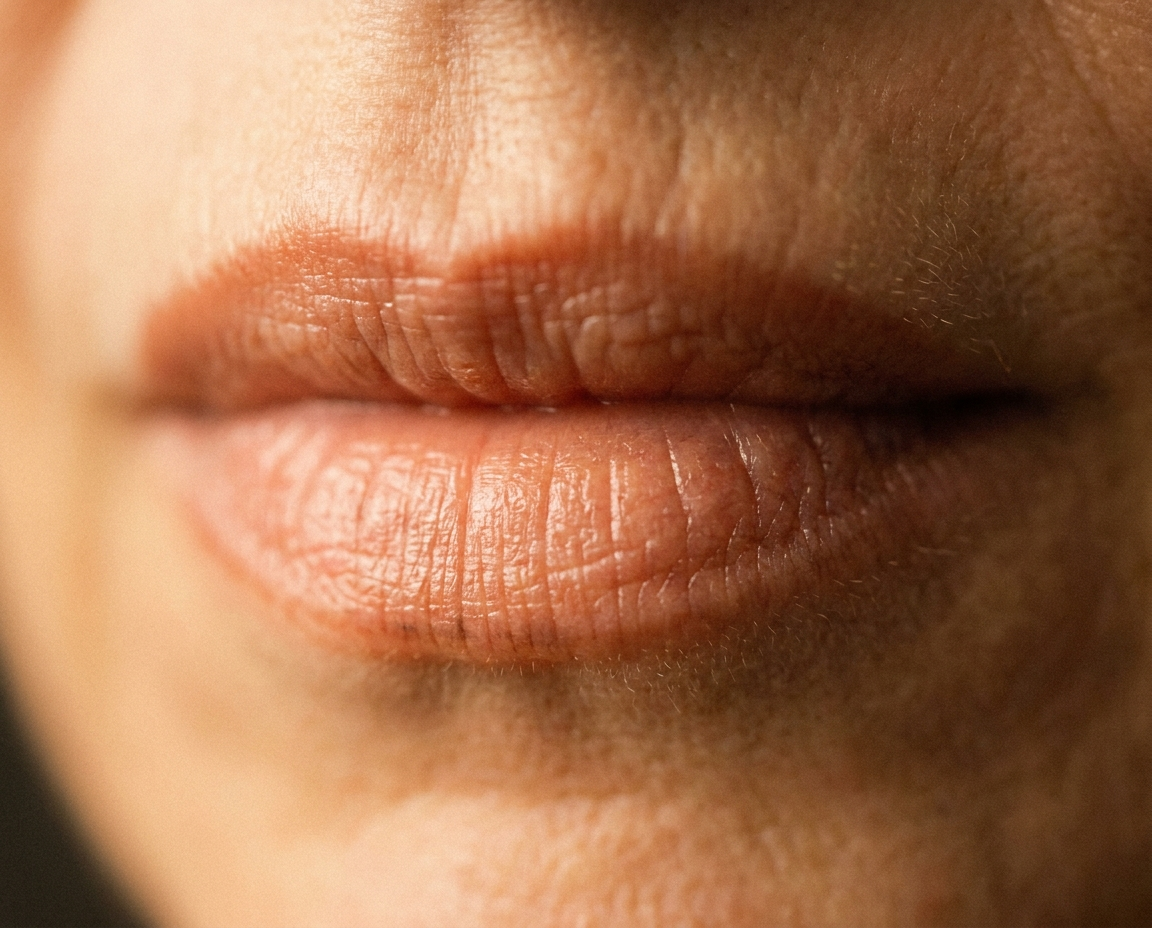
To understand what you see in the mirror, it helps to know what is happening beneath the surface. The lips are shaped by several structural layers working together – skin, fat pads, muscle, and underlying bone. When aging affects all of these layers simultaneously, the results are cumulative and mutually reinforcing. Collagen and elastin fibers provide the scaffolding that keeps lip tissue plump, smooth, and resilient. As these fibers break down – at roughly one percent per year from your mid-twenties onward – the lip skin becomes thinner, less defined, and less able to hold its shape. The vermillion border, that crisp outline separating lip tissue from the skin around it, depends heavily on collagen density to remain sharp. As that support erodes, the border softens and blurs, which is why lipstick begins to feather and bleed into fine lines around the mouth in a way it never used to.
The fat pads in and around the lips shrink with age, reducing natural fullness and projection. Blood vessel density in the lip dermis decreases as well, which is why lips often appear paler and less rosy in older adults – the natural flush fades as vascularization declines. Women tend to experience these changes earlier and more intensely than men. The closer muscle-to-skin proximity in female lip anatomy means more direct mechanical stress on the skin surface, and lower estrogen levels at menopause accelerate collagen loss and skin thinning across the entire face. A 2025 review in the Journal of Cosmetic Dermatology mapped these structural changes in detail, noting that the cumulative effect is a fundamentally altered lip shape, not simply a cosmetic inconvenience (source: https://pmc.ncbi.nlm.nih.gov/articles/PMC12308779/). Understanding that these are structural, biological changes – rather than flaws – makes it much easier to approach lip care with the right tools and realistic expectations.
What Are the Most Common Lip Issues After Fifty?
Vertical lip lines are probably the most talked-about concern – those fine channels that radiate outward from the lip edge, sometimes called lipstick bleed lines or smoker’s lines, even in people who have never smoked. They form partly from collagen loss and partly from decades of repetitive muscle contractions by the orbicularis oris, the circular muscle that encircles the mouth. Every time you speak, smile, or purse your lips, this muscle contracts against overlying skin. When the skin is thick and collagen-rich, it recovers. When collagen has thinned, those contractions gradually inscribe themselves as permanent lines. The lines themselves may appear small in isolation, but they change the way products sit on the skin and affect lip color in ways that feel disproportionately frustrating.
Chronic dryness and chapping is a near-universal issue after fifty, driven by that fundamental absence of sebaceous glands and worsened by the barrier weakening that comes with hormonal changes at menopause. Many people address this by licking their lips – which makes things worse, because saliva evaporates and takes residual moisture with it. Corner cracks, known medically as angular cheilitis, are a separate and distinct condition that affects the angles of the mouth. They occur when moisture accumulates in the folds at the corners – sometimes due to structural changes with age, ill-fitting dentures that alter how the mouth closes, or nutritional deficiencies including B vitamins and iron – and creates an environment where bacteria or candida yeast can proliferate. The Cleveland Clinic notes that angular cheilitis is particularly common in older adults and can become a recurring problem if the underlying structural or nutritional cause is not identified (source: https://my.clevelandclinic.org/health/diseases/21470-angular-cheilitis). A persistent case warrants a visit to your GP or dermatologist, not just more balm.
Hyperpigmentation and uneven tone are less often discussed but genuinely common, particularly in women with deeper skin tones. Sun exposure, hormonal changes, and years of friction can all cause dark patches or an uneven discoloration of the lip itself – sometimes a dusky or mottled tone, sometimes a distinct darker line along one section of the lip border. This is different from the pale loss of color that comes from reduced vascular density; it can coexist with paleness in other areas while appearing darker in others. These pigmentation changes are not harmful, but they affect the way the lips look and the way products read on them. Volume loss and definition loss are the other major concerns – the gradual flattening and inward turning of the lips as fat pads shrink and structural support erodes, which can make the entire lower face look less defined even when the skin itself is in good condition.
Which Ingredients Actually Work on Aging Lips?

Not every ingredient marketed for lip plumping or anti-aging lips does anything meaningful. But a few have genuine science behind them, and they are worth knowing by name. Peptides are among the strongest options available in topical lip care. These are short chains of amino acids that signal to skin cells to produce more collagen – essentially sending a message that repair is needed. A clinical study found that a topical treatment combining peptides with hyaluronic acid resulted in 94% of participants showing measurable improvement in lip aesthetics including shine, texture, and vermillion border definition, with 81% rated as much-improved (source: https://pmc.ncbi.nlm.nih.gov/articles/PMC12639410/). That is meaningful data for a topical product, and it positions peptides as a genuine workhorse ingredient for aging lips rather than a marketing trend. Look for them in dedicated lip serums and treatments rather than in standard lipstick formulas, where concentrations are typically too low to matter.
Hyaluronic acid in topical lip products works differently from injectable hyaluronic acid fillers – a distinction worth understanding clearly. Applied topically, it draws moisture from the environment into the skin surface and temporarily plumps and smooths the lip. It does not add structural volume, and it will not restore a blurred vermillion border. But it meaningfully improves hydration, reduces the look of fine surface lines, and improves the texture of dry, crepey lip skin. Injectable hyaluronic acid fillers physically restore volume beneath the lip surface; studies show 91% of subjects experience increased lip fullness at two months post-injection, though results diminish over the following months (source: https://www.ncbi.nlm.nih.gov/pmc/articles/PMC8377277/). That is a professional treatment decision with its own risk-benefit profile, and it belongs in a different category from your skincare routine – but knowing the distinction helps you set realistic expectations for topical products.
Ceramides deserve more attention in lip care than they currently get. Given that the lip vermilion is ceramide-deficient compared to facial skin, products that deliver ceramides directly help rebuild the lipid barrier and reduce transepidermal water loss – addressing a core structural vulnerability of aging lip skin. Niacinamide, or vitamin B3, strengthens the skin barrier, reduces inflammation, and has solid evidence for improving uneven pigmentation, making it useful for the hyperpigmentation concerns that develop on lips with age. Vitamin C in stable formulations supports collagen synthesis and works similarly on lip pigmentation. And SPF – as already noted – is perhaps the most impactful single ingredient of all for long-term lip health. Research consistently shows that UV protection prevents up to 90% of visible skin aging attributable to sun exposure. It works best when applied preventively, every single day, regardless of the season or whether you plan to spend time outside.
Should You Be Using Retinol on Your Lips?
Retinol is one of the most evidence-backed ingredients in all of skincare. It stimulates collagen production, accelerates cell turnover, reduces the appearance of wrinkles, and has decades of clinical research behind it. But applying it directly to the lips requires more care than applying it to your cheeks. Lip skin is thinner and more sensitive, and it lacks the same barrier function as facial skin – which means full-strength retinol applied directly can cause irritation, peeling, and dryness that is the opposite of your goal. The smarter approach is to allow some of your nightly facial retinol treatment to naturally migrate onto the lip border and the very edge of the vermillion, which captures some collagen-stimulating benefit without the full concentration landing on the most vulnerable tissue. This is something many dermatologists recommend as a starting point before adding a dedicated lip retinol step.
If you want to use a dedicated lip retinol product, start very low – 0.025% or 0.05% at most – and apply it only two or three nights a week initially, building up gradually as your skin adjusts. Always follow with a rich occlusive or ceramide-based balm to minimize dryness. A systematic review and meta-analysis of tretinoin for photodamaged facial skin confirmed that topical retinoids effectively reduce perioral wrinkling and stimulate collagen, with improvements measurable at twelve weeks and continuing to build over time (source: https://dpcj.org/index.php/dpc/article/view/5172). The results are real – the approach just needs to be measured and patient. Retinol is not a product you use on your lips aggressively and it is not a product you skip because you are worried; it is one you introduce thoughtfully and pair with barrier-supporting ingredients.
What Makes a Good Lip Product After Fifty and What to Avoid?

After fifty, the qualities you want in a lip product shift significantly from what worked in your thirties. Rich, occlusive formulas – those containing petrolatum, shea butter, beeswax, squalane, or plant-based oils like jojoba or meadowfoam – are your best allies. They create a physical barrier over the lip that holds moisture in and protects the surface throughout the day. Ceramide-containing lip treatments address the fundamental barrier deficiency of aging lip skin. Products combining peptides with hyaluronic acid, as discussed, have clinical backing for real improvement in texture and definition. SPF lip balms with at least SPF 30, applied every morning and reapplied throughout the day, are non-negotiable at any age but especially after fifty when accumulated UV damage becomes increasingly visible.
What to avoid is equally important. Matte lipstick formulas are among the most drying products you can apply to already-compromised lips – they pull moisture from the surface to achieve their finish and can significantly worsen chronic dryness over time. Fragranced lip products containing menthol, camphor, cinnamon derivatives, or peppermint oil cause chronic low-level inflammation and are a common driver of both dryness and hyperpigmentation on sensitive lip skin. Certain plumping glosses work by deliberately irritating the lip surface to create temporary swelling – not a strategy you want for lips you are also trying to protect long-term. And lip-licking, while reflexive, never substitutes for hydration. It strips the lip surface every time it dries. Gentle exfoliation two or three times a week – with a soft washcloth or a mild sugar-based scrub – removes the flaky dead skin that accumulates on dry lips and allows subsequent products to absorb properly. Do not over-exfoliate; lip skin is thin, and too much friction compounds irritation rather than relieving it.
What Do Non-Invasive Treatments and Professional Options Actually Do?
There is a growing range of professional and semi-professional options for lip rejuvenation, and it is worth knowing what each one actually targets – without either dismissing them or over-promising their effects. Injectable hyaluronic acid fillers restore physical volume beneath the lip surface, temporarily returning fullness and improving the projection of the vermillion border. Results are temporary, lasting six to twelve months depending on the product and individual metabolism, and they require maintenance to sustain. Radiofrequency treatments use controlled heat energy to stimulate collagen production in the perioral area, which can tighten the surrounding skin and soften vertical lines over time with no needles involved. Multiple sessions are typically needed, and results build gradually.
Laser resurfacing – fractional CO2 or erbium lasers – addresses surface texture, pigmentation, and fine lines on the lip skin and the perioral area with good evidence behind it. There is downtime involved, and sun protection afterward is critical. Topical retinoids prescribed at dermatologist strength, meaning tretinoin rather than over-the-counter retinol, deliver faster and more significant results than retail formulas for both perioral wrinkles and pigmentation. All of these are conversations to have with a dermatologist or cosmetic physician rather than decisions made without professional input. But knowing what each treatment targets – volume versus texture versus pigmentation versus laxity – makes you a more informed participant in that conversation. The most common mistake is expecting one solution to fix what are actually several distinct structural problems.
What Does a Morning and Evening Lip Care Routine Look Like?
A consistent routine does not have to be complicated to be effective. In the morning, start by gently removing any overnight balm residue with a damp cloth. Apply a lip treatment containing peptides and hyaluronic acid and allow it to absorb for one to two minutes. Then layer your SPF lip balm – at least SPF 30, ideally with mineral filters like zinc oxide or titanium dioxide for stability and minimal irritation. If you are wearing lip color, apply a waxy lip liner first to define the border and reduce feathering. Choose a satin or moisturizing lipstick formula rather than a matte, and know that a sheer tinted balm over your SPF balm is a completely valid and protective approach on days when you want color without commitment.
In the evening, remove any lip color thoroughly with a gentle cleansing balm or micellar water – do not tug or scrub. On exfoliation nights, use a soft washcloth or mild scrub now, before applying anything active. If you are using a retinol product on your lips, this is the time – starting at once or twice a week, watching closely for sensitivity, and always following immediately with an occlusive balm to seal the treatment in and prevent dryness. On non-retinol nights, apply your most generous occlusive balm or an overnight lip mask – petrolatum, shea butter, and ceramide formulas are excellent for this step. Sleeping with a rich occlusive layer on your lips allows the barrier to repair itself overnight without moisture loss. It is a simple step that compounds meaningfully over weeks and months.
FAQs
Can I really slow down how fast my lips age?
You cannot stop the biological process, but you can meaningfully slow visible changes with consistent daily use of SPF, barrier-supporting ingredients, and actives like peptides and ceramides. The research on topical treatments has become genuinely encouraging in recent years, and sun protection alone prevents a significant proportion of the UV-driven damage that accelerates lip aging beyond genetics.
Is lip filler the only way to restore lost volume?
Injectable hyaluronic acid filler is the most effective way to restore physical volume, but it is not the only option for the concerns that come with volume loss. Peptide treatments improve collagen density over time and can improve lip texture and definition meaningfully. Radiofrequency treatments address the surrounding skin laxity that makes volume loss more visible. The right choice depends on what bothers you most and how much change you are realistically looking for.
Why does my lipstick bleed even with lip liner?
Lipstick feathers into vertical lip lines because the channels provide a path for product to travel by capillary action, especially with liquid and matte formulas. Waxy liner formulas create a more effective physical barrier than pencil formulas. Applying a balm underneath lipstick also helps by filling the surface and reducing the channels’ depth. Choosing a satin rather than a liquid lipstick formula makes feathering less likely.
What should I look for in an SPF lip balm?
Look for a formula with at least SPF 30, ideally using mineral filters – zinc oxide or titanium dioxide – rather than purely chemical ones. Mineral filters tend to be more stable on lip skin and less irritating for sensitive mouths. Apply every morning and reapply throughout the day, especially when spending time outdoors. The specific product matters less than the consistency of the habit.
When should I see a doctor about my lips?
If corner cracks are persistent, painful, or recurrent, see your GP or dermatologist – angular cheilitis can involve bacterial or fungal infection that needs prescription treatment. Any chronic rough, scaly, or whitish patch on the lower lip that does not resolve should be evaluated for actinic cheilitis. And if you notice any unusual sore, growth, or color change on the lip that does not heal, see a doctor promptly.
Your lips are among the most expressive and visible features of your face, and they deserve the same level of thought and investment you bring to every other part of your skin. The science here is solid, the products available are better than they have ever been, and the gap between a well-considered lip care routine and a swipe of drugstore balm is genuinely significant – in comfort, in appearance, and in long-term protection. Starting now matters more than when you start. Because the best time to take your lips seriously was twenty years ago, and the next best time is today.