May
Skincare, Trends & Opinions, Wellness
Walking Barefoot on the Earth Is Changing How Scientists Think About Skin Aging
If you click on links we provide, we may receive compensation.
Chronic inflammation is responsible for an estimated 90 percent of visible skin aging – and for decades, the beauty industry‘s answer has been serums, acids, and injectable treatments. But a quiet line of research suggests that one of the most powerful anti-inflammatory tools available costs nothing, requires no prescription, and has been underfoot, literally, your whole life. It is called grounding, or earthing, and it is the practice of putting bare skin in direct contact with the earth’s surface. The science behind it is still emerging, and it has its skeptics. But the findings so far – particularly around inflammation, facial blood flow, and cellular oxidative stress – are worth knowing about, especially if skin aging is something you think about.
What Is Grounding, Exactly?
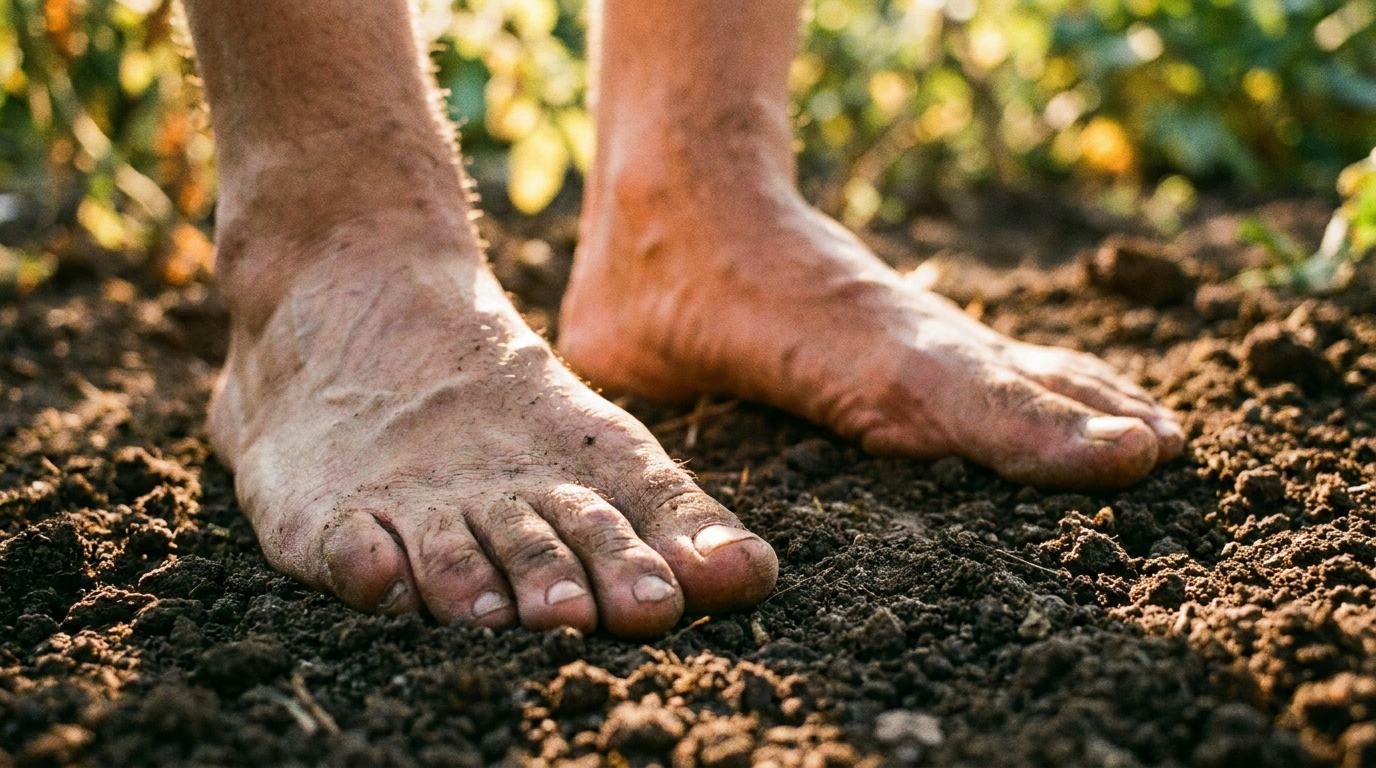
The earth’s surface carries a mild negative electrical charge. This charge is continuously maintained by a global atmospheric electrical circuit powered by lightning strikes and solar radiation – roughly 40 to 50 lightning bolts strike the earth every second, keeping the planet’s surface topped up with free electrons. The grounding hypothesis holds that when bare human skin contacts the earth – through soil, grass, sand, or even unpainted concrete – those electrons flow into the body and act as natural antioxidants, neutralizing positively charged free radicals that drive oxidative stress and inflammation. It sounds more exotic than it is. The earth is electrically conductive. So is the human body. The question is whether that contact is biologically meaningful.
Every human body is bioelectrical. Cells maintain voltage gradients across their membranes. The heart generates its own measurable electrical field. The nervous system runs on ion exchange. Proponents of grounding argue that modern life – rubber-soled shoes, elevated beds, synthetic flooring, asphalt – has insulated us from a charge we evolved in constant contact with for at least 300,000 years. From this view, the disconnection is a recent and overlooked variable, and the reconnection is not some exotic therapy but a restoration of a normal physiological state. That framing is contested among researchers. But it is not obviously wrong, and the underlying physics are not implausible.
Why Did We Stop Touching the Earth?
For most of human history, bare skin and earth were never far apart. Indigenous cultures worldwide maintained barefoot or near-barefoot traditions, not merely out of necessity but out of a lived relationship with the land. In Ayurvedic medicine, walking on dewy grass in the early morning is a longstanding prescribed practice. Traditional Chinese medicine holds that direct earth contact supports the body’s energetic balance. European folk traditions long associated sleeping on the ground with recovery from illness. None of this constitutes clinical evidence, but it suggests that the instinct to stay connected to the earth runs deep, is cross-cultural, and long predates any modern wellness trend.
What broke the connection was industrialization. Rubber-soled shoes became standard footwear in the mid-twentieth century – a practical innovation that offered waterproofing and foot protection. Before that, most footwear throughout history – leather moccasins, sandals, minimalist soles – was either conductive or absent altogether. The widespread adoption of synthetic soles severed a connection humans had maintained, through every previous era, without interruption. The modern grounding movement, which gained popular traction in the early 2000s largely through the writing of Clint Ober, a former cable television executive turned wellness researcher, put a name to what had changed and argued that the health implications had been overlooked. Whether or not you accept the full hypothesis, the historical timeline is accurate.
What Does the Science Actually Show?

The research literature on grounding is small but not empty. The most widely cited synthesis is a 2012 review by Gaetan Chevalier and colleagues, published in the Journal of Environmental and Public Health, which gathered evidence from multiple studies examining grounding’s effects on inflammation, blood viscosity, cortisol rhythms, sleep quality, and autonomic nervous system function. The full review is available at https://pubmed.ncbi.nlm.nih.gov/22291721/. Taken together, the studies presented a preliminary but consistent picture: grounding appears to shift the body toward a less inflamed, better-regulated state across several measurable markers.
One of the more robust individual findings involves cortisol. A pilot study found that grounding during sleep – using a conductive mat connected to a standard electrical grounding port – normalized the 24-hour cortisol profile in subjects with disrupted sleep, chronic pain, and elevated stress. The cortisol curve, which in healthy individuals peaks sharply in the morning and declines through the day, appeared to realign toward the normal pattern over several weeks of grounded sleep. Cortisol is directly relevant to skin aging in a way that often gets underplayed. Chronically elevated cortisol degrades collagen, impairs the skin‘s moisture barrier, promotes inflammation, and accelerates the structural thinning that makes older skin fragile and prone to damage. Anything that helps normalize cortisol is indirectly an anti-aging intervention.
A separate study measured red blood cell aggregation – a marker of blood viscosity and a risk factor for poor circulation – and found that grounding significantly reduced clumping. Chevalier et al. published this finding in the Journal of Alternative and Complementary Medicine in 2013. The proposed mechanism is straightforward: electrons absorbed from the earth increase the negative surface charge on red blood cells, causing them to repel each other rather than stick together. Better blood fluidity means better circulation, and better circulation means more oxygen and nutrients reaching the skin. A 2015 paper by Oschman, Chevalier, and Brown in the Journal of Inflammation Research added a structural argument, proposing that the body’s connective tissue and fascia function as a liquid crystalline matrix that conducts electrons efficiently, allowing a ground charge to distribute throughout the system within seconds of contact. That paper is at https://www.ncbi.nlm.nih.gov/pmc/articles/PMC4378297/.
How Does Any of This Connect to Your Skin?
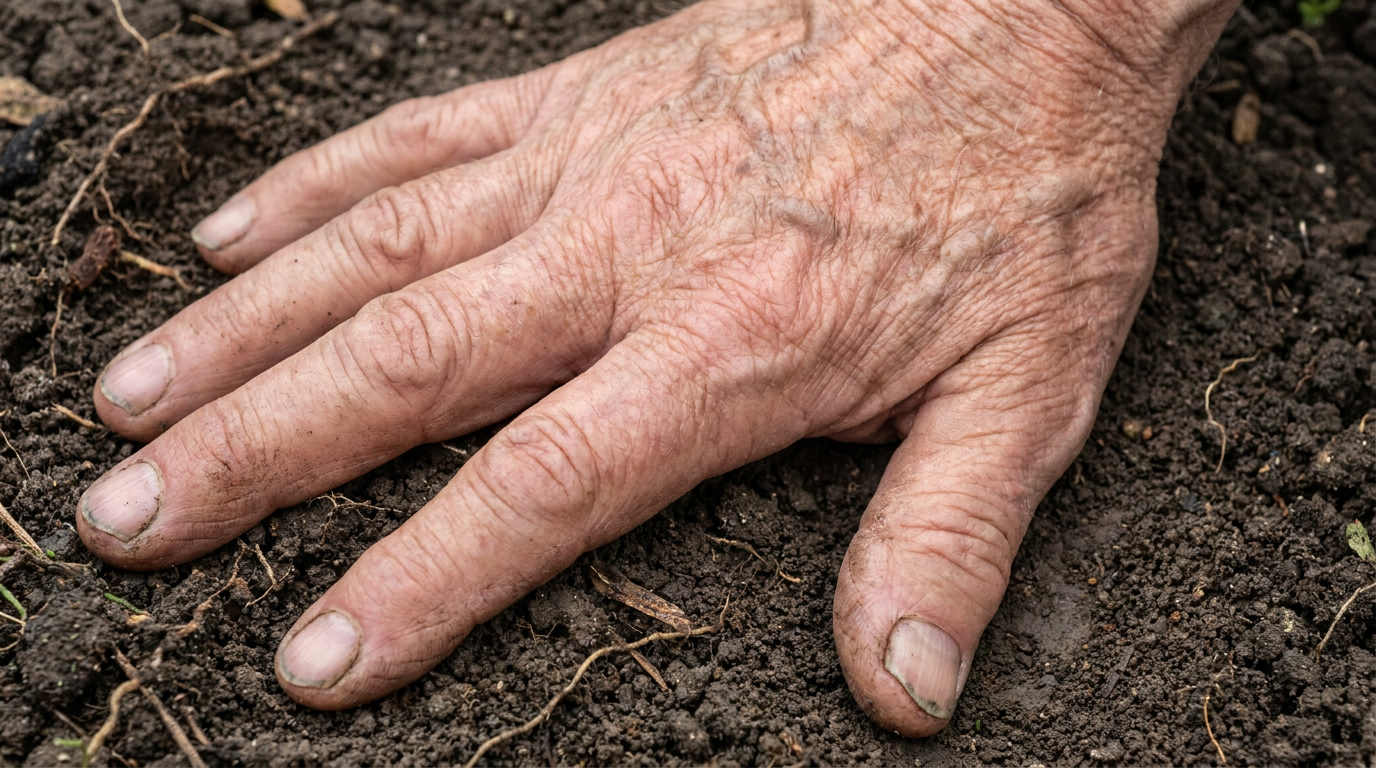
The link to skin health is more direct than it first appears. Inflammation is the central driver of what researchers now call inflammaging – the chronic, low-grade inflammatory state that accumulates with age and accelerates almost every visible sign of skin deterioration. Free radicals, which damage collagen fibers, impair cell turnover, and degrade the lipid-rich skin barrier, are produced in excess when the body’s antioxidant defenses cannot keep pace with oxidative load. If grounding does deliver bioavailable electrons that function as antioxidants, the skin – as the body’s largest organ and the tissue most directly exposed to oxidative assault from UV, pollution, and environmental stress – would be among the first to benefit.
Advertisement
The most directly skin-focused study to date is a randomized, placebo-controlled pilot study by Chevalier, published in the Journal of Cosmetics, Dermatological Sciences and Applications in 2014. Using Laser Speckle Contrast imaging and thermal imaging, the study measured facial blood flow in grounded versus sham-grounded subjects over a single one-hour grounding session. The grounded group showed measurable improvements in facial blood flow regulation – specifically, the rhythmic, autonomic-nervous-system-controlled fluctuation that normally governs skin tissue repair and vitality became more regular and robust. The researchers described this as evidence that even short-term grounding may restore a more natural regulatory rhythm to the face. A summary of the study can be found at https://www.dermascope.com/grounding-improves-facial-skin-blood-flow/. For skin that has lost density, elasticity, and repair speed with age, improved blood flow regulation is a meaningful finding.
In 2025, a study published in FEBS Open Bio added a cellular dimension. Researchers found that grounding favorably impacts mitochondrial function, increasing ATP production while reducing oxidative stress markers. ATP is the energy currency that cells use for repair and regeneration – including collagen synthesis, skin cell turnover, and barrier maintenance. Less oxidative stress combined with more cellular energy creates the conditions under which skin ages more slowly. The study positions grounding as a potential mechanism against cellular aging broadly, not just in skin, but skin health is a direct downstream beneficiary.
What Does This Mean for Skin at 60 and Beyond?
Mature skin faces a specific cluster of challenges that make the grounding hypothesis particularly relevant. After 60, collagen production has typically declined by more than half from its youthful peak. The skin barrier – the lipid-rich outer layer that keeps moisture locked in and irritants out – becomes less efficient at its job, making skin more reactive and more vulnerable to environmental damage. Microcirculation slows, which is why older skin often looks dull rather than luminous, and why small areas of irritation take longer to resolve. The body’s systemic antioxidant capacity also decreases with age, both because dietary intake may be lower and because endogenous antioxidant production declines. These are not small inconveniences. They are the primary drivers of how skin changes visually and functionally in the second half of life.
Each of these vulnerabilities maps directly onto the mechanisms grounding is proposed to address. Reduced free radical load supports collagen integrity by protecting the collagen fibers that give skin its structure and resistance to sagging. Improved microcirculation addresses the dullness and slow healing of older skin, delivering the oxygen and nutrients that surface cells need to do their jobs. Normalized cortisol supports barrier function, which is itself one of the most important anti-aging priorities for mature skin. And better sleep – one of the most consistently reported benefits in grounding trials – supports the skin repair processes that occur predominantly during slow-wave sleep, when growth hormone peaks and cellular maintenance runs at its highest rate.
None of this means grounding is a substitute for sun protection, well-formulated topical actives, or good nutrition. It is not competing with your SPF or your retinol. It is doing something different – addressing upstream, systemic conditions rather than targeting specific surface concerns. For those with mature skin that heals slowly – whether from everyday irritation, post-procedure recovery, or the general fragility that comes with age – the Oschman et al. review specifically highlights grounding’s potential to accelerate tissue repair, citing case observations of improved wound closure under grounded conditions. The evidence is preliminary. But the practice is free, and the risk profile is essentially zero for a healthy adult.
Is the Research Strong Enough to Trust?
Intellectual honesty requires naming the limits. Most grounding studies have small sample sizes – often 20 to 40 subjects – and the core design problem is severe. Unlike a topical serum or an oral supplement, you know when you are barefoot and you know when you are wearing shoes. True blinding in a grounding study is nearly impossible, which means placebo effects are difficult to rule out with confidence. Several studies report effect sizes large enough to raise eyebrows – extraordinary results in small trials frequently shrink or disappear when subjected to larger, more rigorous replication. And the field has not yet produced the kind of large, well-designed randomized controlled trial that would settle the core questions definitively.
There is also a financial dimension worth being clear-eyed about. The grounding products market – conductive sleeping mats, grounding sheets, earthing footwear – has grown substantially alongside research interest, and some of the researchers who appear most frequently in the literature have commercial affiliations with product companies. This does not invalidate their findings, but it warrants the same skeptical reading you would apply to any industry-adjacent science. The most defensible position is a modest one: direct skin contact with natural earth probably provides some genuine benefit, but some portion of that benefit may flow from the broader restorative effects of outdoor time, physical movement, reduced stress, and engagement with nature rather than from electron transfer specifically. Those two mechanisms are not easy to separate. They may not need to be.
How Can You Start Grounding Today?

The practical barrier to experimenting with grounding is low enough that most people can start without changing anything about their lives except removing their shoes. Walk barefoot on grass, soil, sand, or unpainted concrete for twenty to forty minutes daily. Sit on a bench and rest your bare feet on the ground. Lie on a blanket on the grass – skin contact through natural fabrics is somewhat conductive, though direct skin contact is better. Garden with bare hands. Swim in the sea, a river, or a natural lake. The key requirement is genuine connection to the earth’s surface – asphalt, sealed concrete, wood decking, carpet, and rubber mats all break the circuit and do not count.
For those who want to extend grounding during sleep or sedentary work hours, conductive indoor mats and grounding sheets are widely available and connect via a wire to the grounding port of a standard electrical outlet. The physics are legitimate – the ground port is genuinely earthed – though whether indoor grounding fully replicates the effects of direct outdoor contact has not been well studied. Morning is a natural time for outdoor grounding because dewy grass enhances conductivity and the early light carries its own well-documented benefits for cortisol and circadian rhythm. Thirty minutes is enough to be meaningful if the research holds. And the best part, from a skincare economics perspective, is that this particular intervention does not require opening your wallet.
FAQs
Will grounding reduce my wrinkles?
No study has directly measured wrinkle depth before and after a grounding intervention, so claiming it will is overstating the evidence. What studies have shown is that grounding can improve facial blood flow regulation, reduce systemic inflammation, and lower oxidative stress – all of which are underlying drivers of skin aging. Any effects would be gradual and cumulative rather than dramatic. Think of it less as a wrinkle treatment and more as a practice that supports the physiological conditions under which skin ages more slowly.
Is an indoor grounding mat as effective as going barefoot outside?
The physics of indoor mats are valid – a properly grounded mat does connect electrically to the earth – but the research base for indoor grounding is thinner than for direct outdoor contact. Outdoor grounding also brings additional benefits a mat cannot replicate: natural light, the stress-reducing effects of nature exposure, and the physical movement of walking. If outdoor grounding is feasible for you, it is probably the better option. An indoor mat is a reasonable alternative for those with limited outdoor access or mobility constraints.
How long before I notice a difference?
The cortisol normalization studies ran over several weeks, suggesting benefits accumulate rather than appear immediately. Some participants in sleep studies reported improved sleep within the first week of grounded sleep. For systemic inflammation markers, the timeline is less clear from the available data. A reasonable approach is to commit to thirty minutes of daily outdoor grounding for four to six weeks and observe how you feel – in terms of sleep quality, energy, mood, and how your skin looks and behaves in the morning.
Is grounding safe for older adults with fragile skin?
For most people, yes – grounding is a low-intensity practice with no documented adverse effects in the research literature. Choose soft grass or sand rather than rough or rocky ground, and check the surface for sharp objects before sitting or lying down. If you have peripheral neuropathy that reduces sensation in your feet, be especially careful about the surfaces you walk on to avoid unnoticed injury. As always, if you have a specific medical condition, it is worth mentioning new wellness practices to your doctor.
Does swimming in a pool count as grounding?
Natural bodies of water – the sea, lakes, rivers – are electrically conductive and count as grounding. Treated swimming pools and hot tubs, which typically use chemical additives and have non-conductive linings, are not considered effective for grounding purposes. The key is genuine conductive connection to the earth’s charge, which requires water or surfaces that are part of the natural ground circuit.
There is something quietly interesting about the idea that a practice requiring no product, no device, and no appointment could be contributing to how slowly your skin ages. The research on grounding is early and imperfect. The skeptical reading has merit. But the cost of testing it yourself is nothing more than thirty minutes, a patch of grass, and your bare feet. Most anti-aging routines ask considerably more – and deliver considerably less certainty than this one’s proponents have been willing to admit that they do, either.
Related Posts