May
Beauty, Skincare, Trends & Opinions
The Skincare Step Most People Skip That Makes Everything Else Work Better
If you click on links we provide, we may receive compensation.
The skin’s natural pH sits in a narrow window – roughly 4.5 to 5.5 on the acid scale. Cleansing, even with a gentle formula, consistently pushes that number higher. One double-blind study published in the journal Cosmetics found that traditional soap raised surface pH by nearly half a point, and that elevated level can persist for up to six hours before the skin recovers on its own. Six hours is a long time for your barrier to be working at a disadvantage. During that window, helpful skin enzymes are less active, moisture escapes more easily, and the microbiome – that delicate ecosystem of beneficial bacteria living on the surface – can shift in unfavorable directions. Toner is the step designed to close that window fast. It is one of the most practical additions to any skincare routine, and for mature skin especially, the payoff is hard to overstate.
What exactly does toner do once it hits your skin?
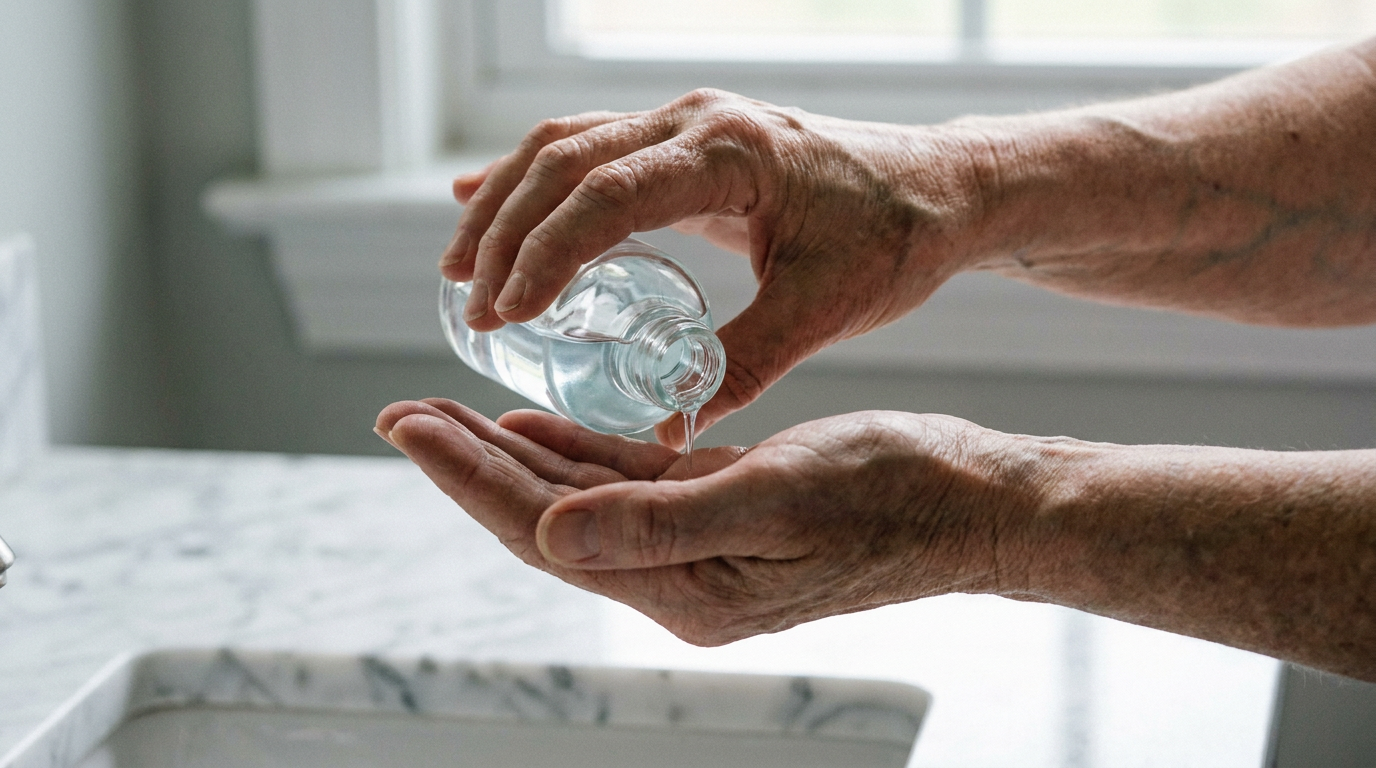
At its most basic, a toner is a water-based liquid applied right after cleansing and before serums or moisturizer. Early formulas from decades past were largely astringent – high in alcohol, designed to strip oil and tighten pores. Those versions deserved their bad reputation, and many people who wrote off toner years ago were thinking of those. Modern toners are a different category entirely. They are built to hydrate, rebalance, and prime the skin rather than strip it. The core function is pH restoration: by returning the skin’s surface to its natural acidic range quickly, toner lets every product that follows do its job at the right conditions. Think of it as resetting the environment after cleansing before the more targeted ingredients – retinol, vitamin C, peptides – arrive.
Beyond pH, toner works as a kind of preparation layer. When you apply a hydrating toner, you are increasing the water content in the outermost layers of skin. Damp skin is more permeable than dry skin, which means the serum or moisturizer you apply next is absorbed more efficiently. Studies on transepidermal water loss – the measure of how much moisture the skin loses to the air – show that a disrupted barrier loses significantly more water than a healthy one. Restoring pH and adding a thin layer of humectants through toner helps slow that loss before you seal it with moisturizer. This is not a minor effect. It means your moisturizer is working on skin that is already starting to hold hydration rather than struggling to catch up.
Why does pH restoration matter so much after you wash your face?
The acid mantle is a slightly acidic film that covers the entire surface of the skin. It is made up of sebum, sweat, and the byproducts of beneficial bacteria, and it acts as the first line of defense against pathogens, environmental pollutants, and moisture loss. The ideal pH for this film sits around 4.7 to 5.0 for most adults, though it can vary slightly by skin type and location on the face. When the acid mantle is intact and in range, it supports the enzymes that maintain the skin barrier, keeps harmful bacteria at bay, and holds the structure of the outer skin layers together. When it is disrupted – pushed higher in pH by cleansing – those systems slow down or stall.
Research published in the Journal of Integrative Dermatology describes the acid mantle as central to three overlapping functions: barrier integrity, microbiome balance, and enzymatic regulation. Cleansers with a high pH, even those labeled ‘gentle,’ can elevate the skin’s surface pH enough to affect all three. Some conventional bar soaps have a pH of 9 to 10 – dramatically higher than skin’s natural range. Even milder liquid cleansers often land around 6 to 7. That gap matters more than it sounds, because pH is a logarithmic scale: a rise from 5 to 7 represents a hundredfold difference in alkalinity. A toner with a pH of 4.5 to 5.5 can bring the skin back into range in seconds, compared to the hours it would take the skin to self-correct. That speed is the whole point.
There is also the microbiome angle. The collection of bacteria, fungi, and other microorganisms living on skin thrives in a specific pH range. Disrupting that range – even briefly and repeatedly – can encourage the growth of less beneficial strains while suppressing the helpful ones. Researchers are still mapping exactly how this dynamic plays out over years of daily cleansing, but the existing evidence is enough to support the case for restoring pH as promptly as possible. A well-formulated toner does that without drama. It is a small intervention with a disproportionate effect on skin resilience.
Does toner actually help your other products absorb better?
This is one of the more practical and testable benefits of toner, and it holds up under scrutiny. Skin hydration directly influences permeability – that is, how easily active ingredients can cross the stratum corneum and reach the living layers below. When the outermost skin is dry and the barrier is even mildly compromised from cleansing, absorption is less predictable. Ingredients can sit on the surface longer or be unevenly distributed. A toner that delivers hyaluronic acid, glycerin, or other humectants creates a more uniform, hydrated surface – a better substrate for what comes next.
Dermatologists who recommend toner often frame it exactly this way: not as a standalone treatment, but as an amplifier. If you are spending money on a well-formulated serum or a high-quality moisturizer, the return on that investment improves when your skin is prepped. Some toners also deliver active ingredients of their own – niacinamide for brightness and pore appearance, gentle exfoliants like lactic acid to smooth texture, or antioxidants like vitamin C and ferulic acid to address oxidative stress. Those ingredients are getting to work on already-clean, pH-balanced skin, which is a better starting point than freshly cleansed but slightly off-kilter skin.
There is also the simple mechanical benefit. After cleansing, a cotton pad or clean hands with toner will pick up any remaining traces of makeup, SPF, or cleanser that the wash missed. It is not a replacement for double cleansing when you are wearing heavy SPF or foundation, but it does catch what slips through on regular days. Cleaner skin, at the right pH, with added hydration – that is the state toner leaves you in before your serum goes on. The argument for skipping this step becomes difficult to make when you lay it out that simply.
What changes for aging skin that makes toner even more essential?

As skin ages, several things happen simultaneously that make every step of a routine more important – and toner in particular. Sebum production slows with age, which means the skin naturally produces less of the fatty material that contributes to the acid mantle. The result is a thinner, less robust protective film. At the same time, cell turnover decelerates. The rate at which fresh skin cells move to the surface and old ones shed slows considerably after the mid-thirties and continues declining through the sixties and beyond. Slower turnover means the outer layer of skin is older on average, and that older layer is drier and less flexible. It is also more easily disturbed by cleansing.
For people in their fifties, sixties, and beyond, the gap between the skin’s post-cleansing pH and its natural target can be harder to recover from without help. The mechanisms that would bounce the acid mantle back to normal in a younger person – higher sebum output, faster enzymatic activity – are working more slowly. That six-hour recovery window mentioned earlier can stretch longer in older skin. Toner shortens that window regardless of age, which is why dermatologists who work with mature patients often point to it as non-negotiable rather than optional.
Hydration is the other factor. Mature skin holds less moisture intrinsically because hyaluronic acid – the molecule that gives young skin its plumpness and bounce – is produced at lower levels over time. A hydrating toner with ingredients like hyaluronic acid, beta-glucan, or ceramide precursors directly addresses this. It is not a substitute for a good moisturizer, but it stacks hydration at an earlier point in the routine, giving the moisturizer more to work with. Some women in their sixties report that adding a toner was the single change that made their moisturizer actually feel effective after years of it seeming to sit on top of dry skin rather than sinking in. That experience makes complete biochemical sense.
Ingredients to look for in a toner for mature skin include hyaluronic acid and glycerin for hydration, niacinamide for barrier support and evening skin tone, ceramides to reinforce the protective layer, and gentle humectants that pull moisture from the air into the skin. Alcohol-free formulas are essential – alcohol may temporarily feel refreshing, but it disrupts the barrier and contributes to the dryness and tightness that aging skin already deals with. Antioxidants like vitamin C, vitamin E, and green tea extract help address the oxidative stress that accelerates visible aging. A well-chosen toner for mature skin is doing real work, not just bridging a gap.
Which toner ingredients should you actually look for?
Not all toners are created equally, and ingredient lists vary enormously. On the beneficial end, hyaluronic acid is a consistent performer – it holds up to a thousand times its weight in water and draws moisture into the skin’s surface layers. Glycerin is similarly reliable and less expensive to formulate with. Niacinamide – vitamin B3 – has strong evidence behind it for reducing redness, minimizing the appearance of pores, supporting barrier function, and evening out skin tone over time. It is one of the most broadly useful ingredients in skincare, and its mild pH makes it well-suited to a toner format. Panthenol, also known as pro-vitamin B5, soothes and helps the skin retain moisture and is particularly good for sensitive or reactive skin.
Exfoliating toners – those containing alpha hydroxy acids like lactic acid or glycolic acid, or beta hydroxy acids like salicylic acid – serve a different purpose. They are not primarily about hydration or pH restoration. Instead, they dissolve the bonds holding dead skin cells together, speeding up the turnover that slows with age. Used carefully – typically a few nights a week rather than daily – they can improve texture, brighten tone, and make other products penetrate more effectively. For mature skin, lactic acid is often the gentlest starting point. It has a larger molecular size than glycolic acid, which means it works more at the surface rather than deeper, and it has the added benefit of also being a humectant.
Antioxidant toners round out the category. These are designed to neutralize free radicals – unstable molecules generated by UV exposure, pollution, and metabolic processes – before they can damage skin cells and accelerate aging. Vitamin C in a toner form can be tricky because the most potent form (L-ascorbic acid) is unstable and requires a very low pH to remain effective. More stable derivatives like ascorbyl glucoside or sodium ascorbyl phosphate are easier to find in toners and still deliver benefit. Green tea extract, resveratrol, and ferulic acid are other antioxidants worth looking for. The ingredients you choose should reflect what your skin specifically needs – hydration, exfoliation, brightening, or barrier repair – and there is no rule that says you can only use one toner. Some routines layer a hydrating toner in the morning and an exfoliating one a few evenings a week.
How do you actually use toner to get the most out of it?
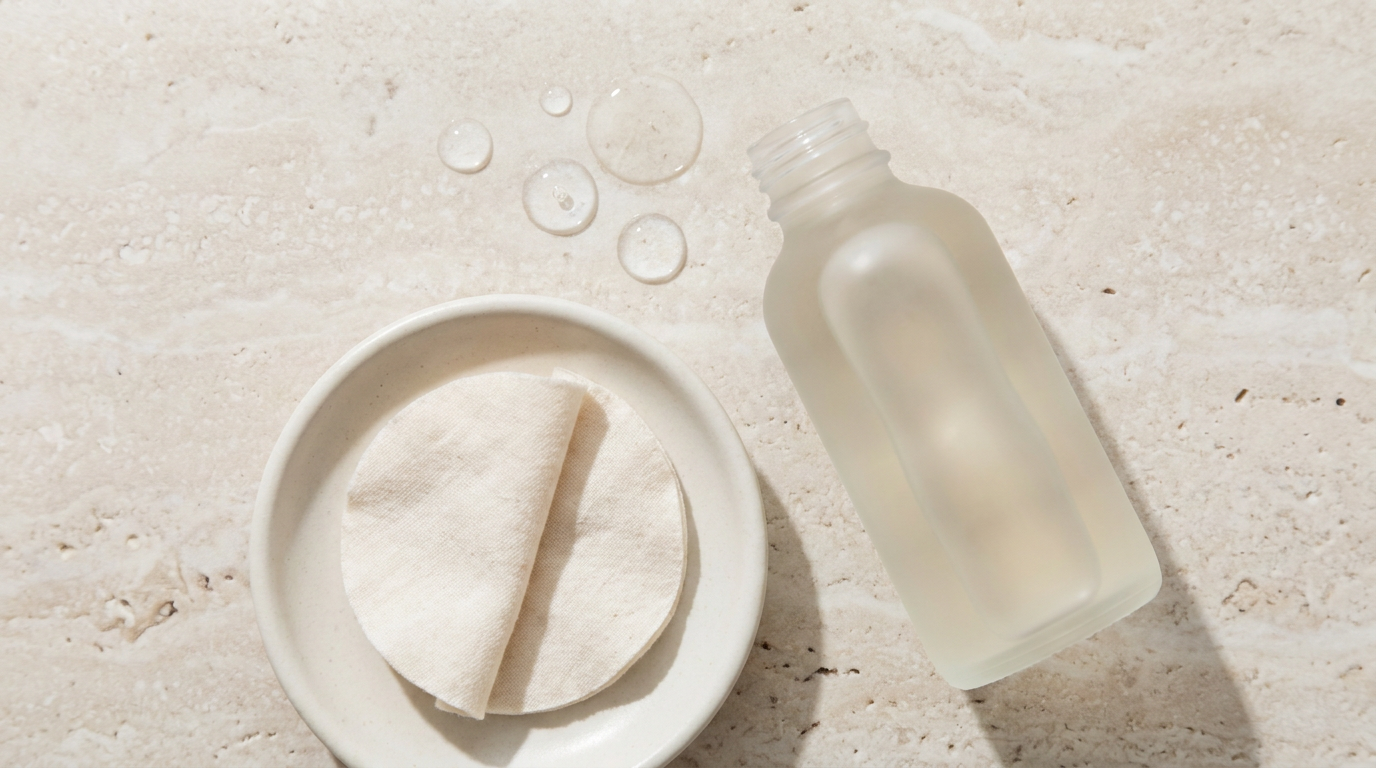
Timing is the most important variable. Toner goes on immediately after cleansing while the skin is still slightly damp. This matters because a damp surface is more receptive, and the toner ingredients – especially humectants – are more effective when there is already some water in the skin to work with. If you wait until the skin is completely dry before applying toner, you are starting at a disadvantage. The rule of thumb is to apply toner within about 30 seconds to a minute of patting your face dry, or even while the skin is still lightly misted.
Application method is a matter of preference and product type. Hydrating toners work well when pressed in with clean hands – this avoids the slight abrasion of cotton pads and wastes less product. Exfoliating toners are often better applied with a cotton pad because the gentle friction helps distribute the acids more evenly. Either way, gentle pressure is the approach – no rubbing or scrubbing. Let the toner absorb for about 20 to 30 seconds before moving on to serum. There is no need to rinse it off. Then apply your serum, followed by moisturizer, followed by SPF in the morning. The toner fits between the cleanser and the serum, every time.
Frequency depends on the type of toner. A hydrating, pH-balancing formula can be used morning and evening without concern. Exfoliating toners, because they work by loosening dead skin cells, need rest time between applications – three to four nights a week is typically a good starting point. Using them every day can lead to over-exfoliation, which paradoxically weakens the barrier it was meant to help. The signs of over-exfoliation include stinging, increased sensitivity, redness, and tightness – the opposite of what a good toner routine should produce. If you notice any of those, pull back on frequency and give the skin a few days of only hydrating products to recover.
Frequently Asked Questions
Is toner really necessary, or is it just an extra step?
It is not strictly mandatory, but dismissing it as unnecessary misses what it actually does. If your cleanser leaves your skin’s pH elevated – and most cleansers do, even gentle ones – toner brings it back faster than your skin can do it alone. Faster pH recovery means a more functional barrier, better product absorption, and less time when the skin is slightly vulnerable. Whether that justifies the step is a personal decision, but the mechanism is real and the benefit is not marginal.
Can I skip toner if I already use a gentle, pH-balanced cleanser?
A pH-balanced cleanser – ideally formulated at 4.5 to 5.5 – does reduce the disruption to the acid mantle after washing. Some people with naturally resilient, oily skin may find they do not notice a significant difference after adding toner. But even pH-balanced cleansers typically leave the skin slightly more alkaline than it started, and toner still offers the practical benefits of added hydration and a cleaner surface before serums. For mature or dry skin, those benefits alone make it worth including.
Will toner help with my large pores?
Pore size is largely determined by genetics and sebum production – you cannot permanently shrink a pore. What toner can do is temporarily reduce the appearance of pores by keeping the skin hydrated and supported. Some toners with niacinamide have evidence behind them for reducing visible pore size over time through improved skin tone and texture. Exfoliating toners help prevent the buildup of debris inside pores, which can make them appear larger. Managing expectations here is important – toner is not a dramatic pore-shrinking treatment, but it contributes to the overall skin quality that makes pores less noticeable.
What is the difference between a toner and an essence?
The line between toners and essences has blurred considerably as K-beauty influenced the Western skincare market. Generally, a toner is thinner and more water-like, focused on cleansing residue removal and pH restoration. An essence is slightly thicker and more concentrated in active ingredients, designed primarily for hydration and skin renewal. In practice, many modern hydrating toners are functionally close to essences. If a product is labeled either way and contains beneficial ingredients at an appropriate pH, the label matters less than what is actually in it.
Can toner help with acne-prone skin?
Yes, in different ways depending on the formula. Exfoliating toners with salicylic acid are oil-soluble, meaning they can penetrate into the pore lining and dissolve the debris that leads to breakouts. They also help the skin shed dead cells more efficiently, reducing the chance of clogged pores. Niacinamide toners reduce inflammation and help regulate sebum production. Alcohol-based astringent toners should be avoided even for oily or acne-prone skin – they strip oil aggressively, triggering a rebound overproduction of sebum that can make breakouts worse, not better.
How long before I see results from using toner?
For pH restoration and improved absorption, the effect is essentially immediate – you should notice that your moisturizer feels more effective from the first use. For visible changes in skin texture, tone, or hydration, allow four to six weeks of consistent use. That is roughly the speed of one skin cell turnover cycle. Exfoliating toners may show texture improvements in two to three weeks. Antioxidant toners work over a longer horizon, protecting against future damage rather than delivering fast cosmetic changes.
Toner earns its place in a routine not through drama but through consistency. Every time you wash your face, you disrupt the acid mantle your skin works to maintain. Every time you apply toner immediately after, you help it recover faster. Over days and weeks and months, that difference adds up to skin that holds moisture better, absorbs treatments more effectively, and stays more resilient against the daily irritants it encounters. For mature skin especially – skin that has less of its own buffer against disruption and needs every advantage it can get – toner is the quiet, reliable step that makes the rest of the routine work harder. It is not glamorous. It just works.
Related Posts