Oct
If you click on links we provide, we may receive compensation.
In 2013, researchers in Australia published the results of a trial that still shapes how dermatologists talk about aging. They followed 903 adults under 55 for four and a half years. Half were told to put on sunscreen every day. The other half used it whenever they felt like it. At the end, the daily group showed no detectable increase in skin aging, and they had 24 percent less aging overall than the casual group. The study ran in the Annals of Internal Medicine and you can read it here: https://www.acpjournals.org/doi/10.7326/0003-4819-158-11-201306040-00002
I start with that study because it says something the beauty aisle rarely does. The habit that protects your skin most at 35 costs about fifteen dollars and takes thirty seconds. And it is boring! But 35 is the age when a lot of people start to panic a little. A line shows up between the brows and stays put. Makeup sits differently than it did at 28. The internet answers that panic with ten-step routines and serums that cost more than a car payment. Here is my honest take on what matters now, what can wait, and what you can skip.
What is changing in your skin at 35?
Not as much as social media suggests, but enough to notice. Collagen, the protein that gives skin its firmness, starts to decline in your mid-20s. A commonly cited estimate puts that loss at about 1 percent a year. Ten years of that adds up, and 35 is often when you first see it. Cell turnover slows too. Skin that used to shed and renew in about a month now takes longer, so dead cells linger and the surface looks duller.
You may also notice that lines behave differently. In your 20s, a crease shows up when you frown or smile and disappears when your face relaxes. Those are dynamic lines. At 35, some of them start to linger after the expression is gone. Dermatologists call those static lines. The first ones usually appear on the forehead, between the brows, and at the outer corners of the eyes. None of this is a crisis. It is a signal to protect what you have.
Hydration shifts as well. Many people find their skin feels tighter after cleansing than it used to. Oil production is still decent at 35, so true dryness is less common than dehydration, which is a lack of water rather than oil. Dehydrated skin can look crepey, dull, and a bit rough, even if you still get the occasional breakout. And pigmentation starts to collect. Sun spots that never bothered you before begin to show up on the cheeks and the backs of the hands. That last change matters most, because it points straight at the biggest cause of visible aging.
Why does sunscreen matter more than any serum?

The Skin Cancer Foundation attributes 90 percent of visible changes to the skin to sun damage, which it calls photoaging. You can read its overview here: https://www.skincancer.org/blog/photoaging-what-you-need-to-know/. That figure covers wrinkles, sagging, rough texture, and brown spots. Chronological aging is real, but sun damage does most of the visible work. Put those two facts together and the math is simple. Any routine that skips daily sunscreen is spending money on the smaller problem.
The American Academy of Dermatology recommends a broad-spectrum sunscreen with SPF 30 or higher, applied every day, not only at the beach. Its guidance is here: https://www.aad.org/public/everyday-care/sun-protection. Broad spectrum matters because it covers UVA rays, which drive aging and pass through car and office windows. UVB rays cause burns. UVA rays break down collagen quietly, all year, even on cloudy days in January. You do not feel UVA damage while it happens, which is why people underestimate it.
Most people also use too little. A thin layer of SPF 30 might give you something closer to SPF 10. A good rule is two finger-lengths of lotion for the face and neck. Find a formula you like enough to wear every day, because the best sunscreen is the one you will put on. If you hate the white cast of mineral formulas, try a tinted one or a modern chemical filter. If your skin reacts to chemical filters, zinc oxide is gentle and works well. Reapply if you are outdoors for more than two hours.
Is it time to start a retinoid?
If you add one active ingredient at 35, make it a retinoid. Retinoids are vitamin A derivatives, and they have more research behind them for aging skin than almost anything else on the shelf. They speed up cell turnover, which smooths texture and fades spots. They also support collagen production over time. Prescription tretinoin is the most studied. Over-the-counter retinol is gentler and slower, and adapalene 0.1 percent gel has been sold without a prescription in the U.S. since 2016.
Start slow. Use a pea-sized amount two or three nights a week for the first month. Put it on dry skin, and follow with moisturizer. If you get flaky or red, add a layer of moisturizer underneath as a buffer. The irritation people call purging or retinization usually settles in four to six weeks. After that, most people can work up to nightly use. Results take three to six months, so this is a long game.
There is one big caveat for this age group. Retinoids are not recommended during pregnancy, and many doctors advise stopping them when you are trying to conceive. If that applies to you, talk to your OB or dermatologist before you start. Bakuchiol, a plant extract, is often suggested as a gentler alternative. A 2019 study in the British Journal of Dermatology found it improved wrinkles and pigmentation about as well as retinol over 12 weeks, with less stinging: https://academic.oup.com/bjd/article/180/2/e45/6601602. It is a reasonable option, though the research base is still small.
Do you need a vitamin C serum?

You don’t need one, but it can help. Vitamin C is an antioxidant. It neutralizes some of the free radicals created by UV light and pollution, which gives your sunscreen backup. It also brightens dull skin and can fade spots over time. The catch is stability. Pure L-ascorbic acid breaks down quickly when exposed to air and light, and it can sting sensitive skin.
If you try it, use it in the morning under sunscreen. Look for L-ascorbic acid between 10 and 20 percent in opaque, airtight packaging. If the serum turns orange or brown, it has oxidized and lost much of its punch. If pure vitamin C irritates you, derivatives like sodium ascorbyl phosphate or ascorbyl glucoside are gentler. They work more slowly, but you will use them longer if they don’t sting, and that is what counts.
Niacinamide is a good alternative or partner. It strengthens the skin barrier, calms redness, and helps even out tone. Most skin tolerates it well at 2 to 5 percent. It is also cheap. If you are on a budget, I would put money toward sunscreen and a retinoid first, then niacinamide, then vitamin C. That order reflects the strength of the evidence, not what is trending.
How much should you exfoliate at 35?
Less than you probably did at 25. Slower cell turnover makes a gentle exfoliant useful, but there is a fine line between brighter and irritated. Once or twice a week is plenty for most people. Lactic acid and mandelic acid are good starting points because they are gentler than glycolic acid. Polyhydroxy acids are even milder and suit sensitive skin.
If you use a retinoid, keep exfoliating acids on different nights. A retinoid already speeds up turnover, so stacking both can strip the barrier fast. Watch for warning signs. Stinging when you apply plain moisturizer, a tight shiny look, and sudden redness all mean you have overdone it. When that happens, stop all actives for a week and use only a gentle cleanser, moisturizer, and sunscreen.
Skip harsh physical scrubs. Large, jagged particles can cause tiny tears in the skin. If you love the feel of a scrub, choose one with fine, round particles and use a light hand. A soft washcloth works too. Your barrier is your skin’s first defense against water loss and irritation, and protecting it now pays off for decades.
What about dark spots and melasma?
Pigmentation is one of the most common concerns at this age. Sun spots come from years of UV exposure and tend to be small and well defined. Melasma is different. It shows up as larger, blotchy patches on the cheeks, forehead, and upper lip. It is most common in women of reproductive age and in people with medium to deeper skin tones. Hormones are a big trigger, which is why it often appears during pregnancy or with hormonal birth control.
Melasma also responds to heat and visible light, not only UV. That makes tinted mineral sunscreen worth a look. The iron oxides that give it color help block visible light, which standard clear sunscreens don’t do well. For treatment, azelaic acid, niacinamide, and tranexamic acid all have evidence behind them. They work gradually. Expect months, not weeks.
Be careful with anything that promises fast fading. Aggressive peels and lasers can make melasma worse in some skin types, especially deeper tones. If patches are spreading or not budging after three months of steady sun protection, see a board-certified dermatologist. Prescription options like hydroquinone or combination creams can help, but they need supervision. I’d rather you spend on one good appointment than on six products that don’t fit the problem.
Does your lifestyle start showing up on your face now?

Yes, and faster than it did in your 20s. Sleep is the obvious one. Skin repairs itself at night, and a run of short nights shows up as dullness, puffiness, and darker circles. Alcohol dehydrates skin and dilates blood vessels, which can leave lasting redness over time. Smoking is the worst offender. It breaks down collagen and elastin and narrows the blood vessels that feed the skin.
Stress matters too. Chronic stress raises cortisol, and cortisol can weaken the skin barrier and trigger breakouts. Plenty of people in their mid-30s are juggling careers, kids, aging parents, or all three. I won’t tell you to just relax. But a steady routine you can do half asleep is one small thing that doesn’t add to the load.
Diet plays a smaller role than wellness influencers claim, but it isn’t zero. High-sugar diets feed a process called glycation, which stiffens collagen fibers. Protein supplies the building blocks for collagen. Fatty fish, nuts, and seeds supply fatty acids that support the barrier. Drinking water won’t hydrate your face on its own, but chronic dehydration does show. Think of food and sleep as the base your topical products sit on.
What should you know now about the decades ahead?
This is the part most 35-year-olds don’t hear. Perimenopause, the transition before menopause, usually starts in the mid-40s. But Cleveland Clinic notes it can begin as early as the mid-30s and can last several years. Its overview is here: https://my.clevelandclinic.org/health/diseases/21608-perimenopause. Estrogen helps skin hold water, keeps it thick, and supports collagen. As estrogen starts to fluctuate and then fall, skin gets drier, thinner, and slower to heal.
The changes speed up after menopause. A 2025 clinician review in the European Medical Journal notes that women lose about 30 percent of their skin collagen in the first five years after menopause: https://emjreviews.com/dermatology/article/managing-menopausal-skin-a-clinicians-review. That is a steep drop compared with the slow loss of your 30s. Skin also becomes more reactive in this stage. Products that felt fine for years can suddenly start to sting. Mature skin does best with gentle cleansing, rich moisturizers, and patience, and it does better still when it arrives with less sun damage behind it.
So the habits you build now are an investment with a long payout. Collagen you protect at 35 is collagen you still have at 55. A barrier you keep healthy now will handle hormonal shifts better later. If you notice changes in your late 30s, like new dryness, new sensitivity, or adult acne along the jaw, mention them to your doctor. They may be early hormonal signals, and they are worth tracking.
What does a simple routine look like at 35?

In the morning, rinse or use a gentle cleanser. Apply vitamin C or niacinamide if you use one. Follow with a moisturizer suited to your skin, lighter if you are oily and richer if you are dry. Finish with broad-spectrum SPF 30 or higher, and don’t forget your neck and the backs of your hands. That is three or four steps, and it takes about three minutes.
At night, cleanse well to remove sunscreen and makeup. A double cleanse with an oil or balm first helps if you wear long-wear makeup. Apply your retinoid on retinoid nights, or a gentle exfoliant once or twice a week on other nights. Seal it in with moisturizer. An eye cream is optional, since most face moisturizers are fine around the eyes if they are fragrance-free. That is it. Consistency over ten years will do more than any single product you buy this month.
FAQs
Is 35 too late to start anti-aging skincare?
No. Skin responds to sunscreen, retinoids, and good habits at any age. The Australian sunscreen trial included adults up to 55 and still found a clear benefit. Starting at 35 gives you a long runway. Starting at 50 still helps.
Do I need an eye cream at 35?
Not necessarily. A gentle, fragrance-free face moisturizer works around the eyes for most people. Eye creams can help if your under-eye area is very dry or reacts to your regular cream. Sunscreen and sunglasses do more for crow’s feet than any eye cream.
Should I get Botox or fillers at 35?
That is a personal choice, and it is not required. Neurotoxins can soften dynamic lines and slow their progression to static lines. Topical care won’t freeze movement, but it handles texture, tone, and spots. If you are curious, see a board-certified dermatologist or plastic surgeon rather than a medspa chosen on price alone.
Can I still get acne at 35?
Yes. Adult acne is common, especially along the jawline and chin, and hormones often play a part. Retinoids help with both acne and aging, which makes them a good fit. Salicylic acid and benzoyl peroxide can help too. Persistent or painful breakouts deserve a dermatologist visit.
Is expensive skincare better?
Not reliably. Many of the best-studied ingredients, including sunscreen filters, retinoids, and niacinamide, are available at drugstore prices. Price often reflects packaging, fragrance, and marketing. Judge a product by its ingredients and how your skin responds over a few months.
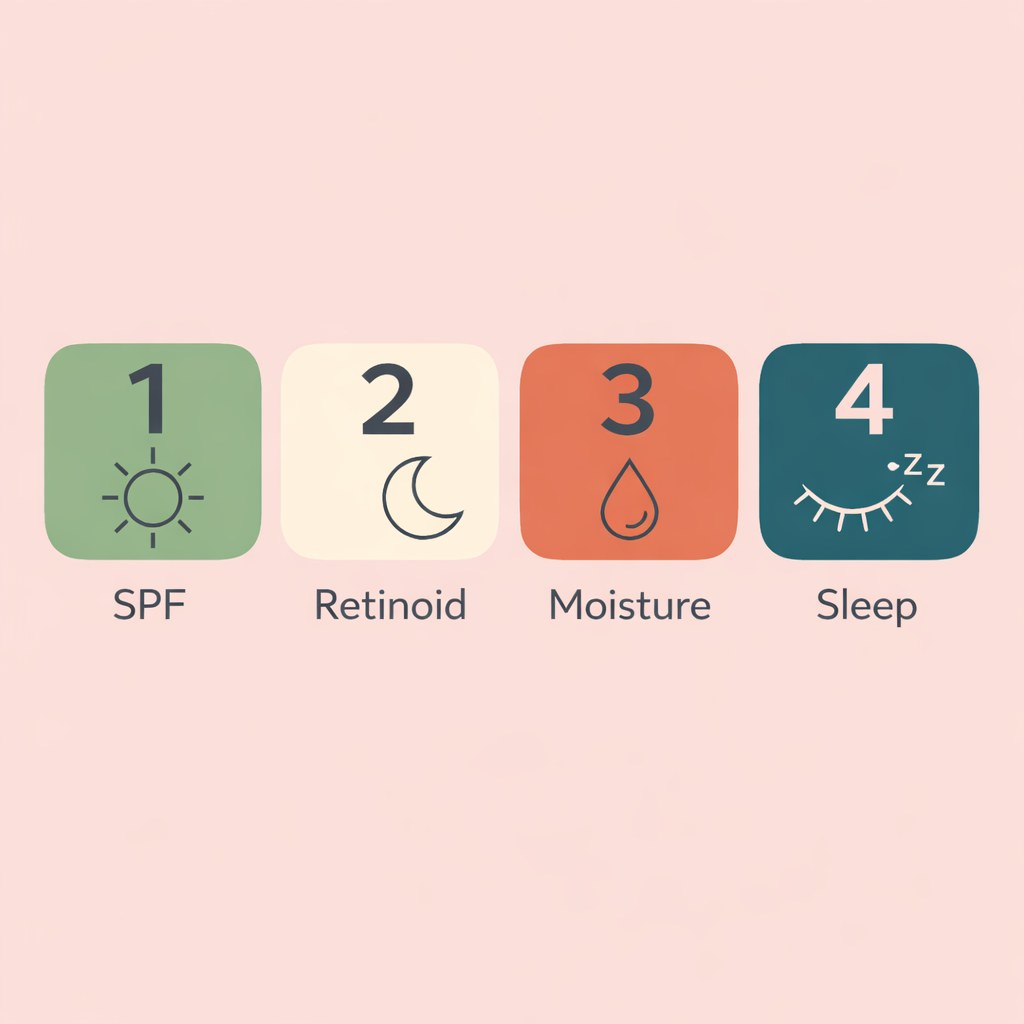
Your skin at 35 doesn’t need rescuing. It needs protecting. Daily sunscreen does the heavy lifting, a retinoid does the slow repair work, and a moisturizer keeps the barrier steady while both do their jobs. Everything else is optional. Some of it is pleasant, and some of it helps a little, but none of it replaces the basics. Build those habits now and your 45-year-old self will notice. So will your 65-year-old self.
Related Posts