
Jul
If you click on links we provide, we may receive compensation.
Before antibiotics existed, an infected pimple on the nose or upper lip could kill you. The mortality rate from cavernous sinus thrombosis – the brain infection that can result from a badly managed facial infection – hovered between 80% and 100%. Even today, with intravenous antibiotics and aggressive hospital care, the death rate still sits between 8% and 13%, and roughly half of survivors are left with permanent neurological damage. This is not a scare story. It is anatomy. There is a specific zone on your face where blood vessels connect – with no reliable barrier to stop them – directly to a venous cavity inside your skull. Dermatologists and emergency physicians know it by name: the danger triangle of the face.
What Exactly Is the Danger Triangle of the Face?
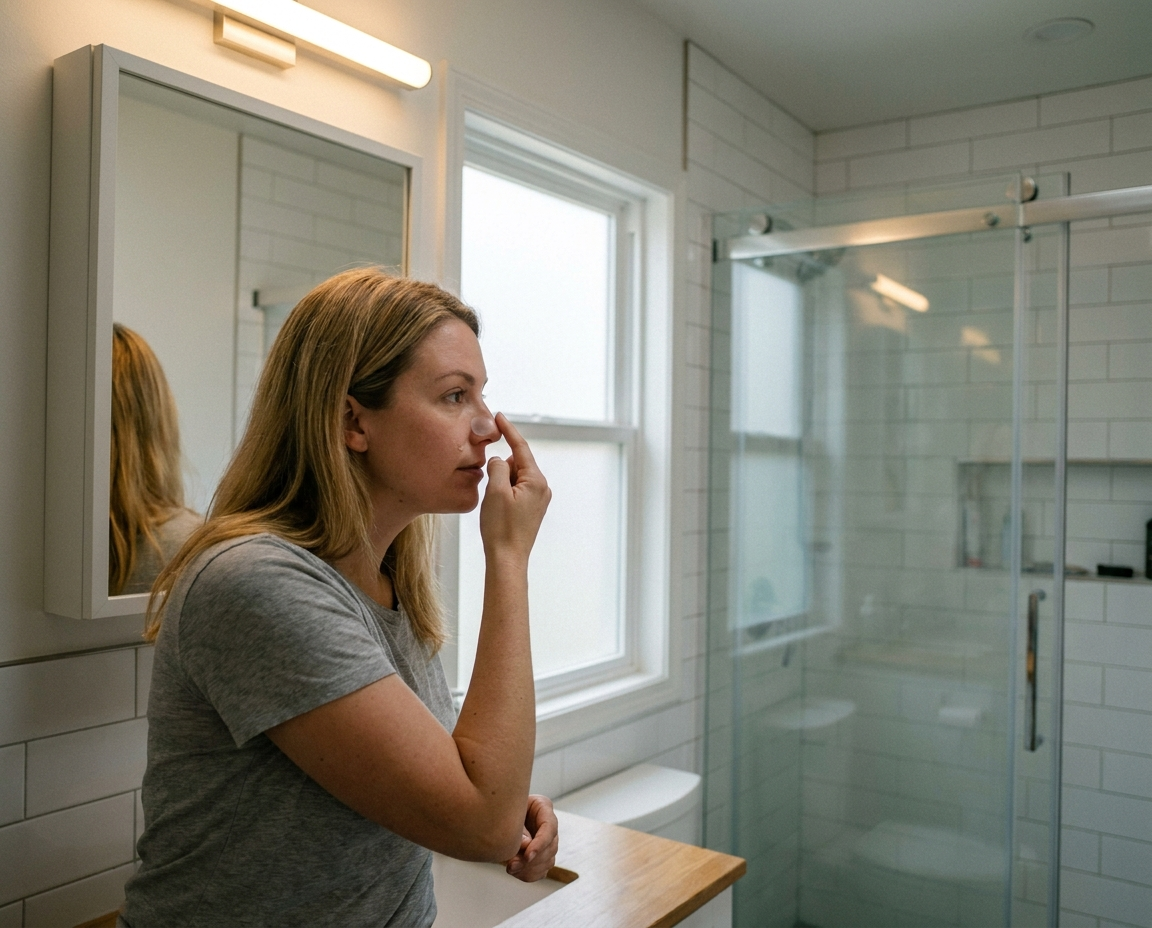
The danger triangle – also called the triangle of death – is the roughly triangular region that runs from the corners of your mouth up to the bridge of your nose. It covers your nose, the nasolabial folds (the creases that run from the sides of your nose to the corners of your mouth), the philtrum (the vertical groove between your nose and upper lip), and the area of the upper lip below the nose. If you draw a line from your left mouth corner to the bridge of your nose, then back down to your right mouth corner, you have just outlined the zone. It sounds modest. But the veins inside this region behave in a way that almost no other veins in your body do.
In most of your body, veins carry blood in one direction and valves prevent backward flow. In the danger triangle, the venous anatomy is different. The facial veins in this zone connect – via the angular vein and the ophthalmic veins – to the cavernous sinus, a venous structure inside the base of your skull. While some valves do exist in these veins, the critical issue is that blood flow can reverse direction and the anatomical communications between the danger triangle and the inside of the skull are real. When pressure changes suddenly – say, from squeezing a pimple – blood, and anything it carries, can travel toward the brain rather than away from it. That is the anatomical fact behind the name.
The connection between this facial zone and brain infection was documented as far back as 1852. By 1937, a study published in the Annals of Surgery – Maes U., Annals of Surgery, 106(1):1-10 – found that 61% of all cavernous sinus thrombosis cases at the time resulted from infections on the upper face. These were not rare surgical complications. Many were skin infections of the kind most people today would dismiss as minor annoyances. The difference between then and now is the availability of antibiotics. The anatomy has not changed at all.
What Is the Cavernous Sinus and Why Does It Matter?
The cavernous sinus is a paired venous structure that sits at the base of your skull, behind and below the eyes, flanking the pituitary gland. It is sometimes called the anatomic jewel box by neurosurgeons – and not without reason. Passing through or alongside the cavernous sinus are some of the most important structures in the head: the internal carotid artery, which supplies blood to the brain, and five cranial nerves – CN III (oculomotor, controlling most eye movements), CN IV (trochlear, controlling one eye muscle), CN V (the trigeminal nerve, responsible for sensation across the face), and CN VI (abducens, controlling outward eye movement). These structures govern your ability to see, move your eyes, and feel your face. They are all packed into the same narrow channel that can, under the right circumstances, receive bacteria traveling up from the danger triangle.
The cavernous sinus collects venous blood from the face and brain, primarily via the superior and inferior ophthalmic veins. It then drains into the petrosal sinuses and basilar plexus toward the jugular vein. What makes it dangerous is that the venous drainage system in this area is largely valveless – meaning blood flow can travel in multiple directions depending on pressure. Bacteria introduced into the bloodstream in the danger triangle can follow a direct anatomical route into the cavernous sinus. Once there, they can trigger clotting, inflammation, and a full-blown infection inside one of the most critical structures in your skull.
The medical term for that outcome is septic cavernous sinus thrombosis. The StatPearls chapter on this condition, published by the National Institutes of Health and last updated in 2025, describes it as a rare but life-threatening disorder requiring urgent recognition and intervention. Source: https://www.ncbi.nlm.nih.gov/books/NBK448177/ The proximity of the cavernous sinus to the cranial nerves it shares space with means that any infection there does not just threaten blood flow – it directly threatens your vision, your ability to move your eyes, and the sensory function of your entire face.
What Can Actually Happen If a Pimple Goes Wrong?
Here is the cascade, step by step. A pimple forms when Staphylococcus aureus – the bacterium responsible for approximately two-thirds of cavernous sinus thrombosis cases according to StatPearls – colonizes a blocked pore. S. aureus is extremely common; it lives on the skin of many healthy people without causing any problems. Most of the time, the pimple resolves on its own or the bacteria remain contained within the skin. Popping the pimple changes the equation. Squeezing can rupture the follicle inward rather than outward, pushing bacteria deeper into surrounding tissue and potentially into a blood vessel. In the danger triangle, that blood vessel may connect via the angular vein and the ophthalmic veins to the cavernous sinus.
If bacteria successfully travel that route, they arrive in the cavernous sinus and trigger an inflammatory response. The body attempts to wall off the infection by forming a clot around it. But the clot itself becomes dangerous: it can block venous drainage from the eye and orbit, compress the cranial nerves running through and alongside the sinus, and allow the infection to spread further. The infection does not stay contained. It can propagate through the valveless dural sinus system into other venous structures, extend to the meninges and cause meningitis, reach brain tissue and cause abscess, or travel via the jugular vein into the lungs as septic emboli. This is how a skin infection becomes a systemic, life-threatening crisis.
The symptoms arrive fast and are hard to mistake for something minor. Early warning signs include a sudden severe headache – often described by patients as the worst of their life – high fever, and pain around or behind the eyes. As the condition progresses, the eye on the affected side begins to swell and protrude outward (proptosis), the eyelid droops (ptosis), and eye movement becomes restricted or impossible. Double vision is common. According to StatPearls, ocular findings are present in approximately 90% of patients with cavernous sinus thrombosis. These symptoms demand immediate emergency evaluation. Observing at home is not appropriate.
Outcomes, even with optimal treatment, are sobering. Current mortality sits between 8% and 13%. But survival does not mean full recovery. Approximately 50% of patients who survive septic cavernous sinus thrombosis are left with persistent cranial nerve deficits. Blindness occurs in 8% to 15% of cases. Stroke, brain abscess, and panhypopituitarism – disruption to the pituitary gland at the base of the brain – are among the documented complications. These numbers come from real case series at hospital emergency departments. The condition is rare, but when it happens, it happens badly.
Is the Risk Really That Significant From One Pimple?
Honesty matters here. For a healthy adult with intact immune function and no MRSA colonization, the actual probability that a single pimple pop in the danger triangle leads to cavernous sinus thrombosis is very low. CST is rare overall – StatPearls estimates the annual incidence at roughly 0.2 to 1.6 per 100,000 people per year, and not all cases arise from facial skin infections. A dermatologist at a busy urban practice will have seen many patients who have been squeezing pimples for decades without ever developing a brain infection. That reality is worth stating plainly.
But rare is not the same as impossible, and the risk is not equally distributed. People with uncontrolled diabetes face significantly higher risk. The same is true for anyone on long-term corticosteroids, cancer patients receiving chemotherapy, and anyone else with a compromised immune response. MRSA – methicillin-resistant Staphylococcus aureus – colonization raises the stakes further still, since MRSA-related infections are harder to treat and more prone to spreading. Cases of cavernous sinus thrombosis and severe facial cellulitis resulting from pimple manipulation in the danger triangle are documented in medical literature and emergency medicine case reports, including a 2021 review published in Survey of Ophthalmology. Source: https://pubmed.ncbi.nlm.nih.gov/33831391/
The risk-benefit calculation is also remarkably simple, because there is no benefit on one side. Squeezing a pimple does not make it heal faster. It pushes bacteria deeper into the dermis, causes more severe inflammation than the original pimple, and nearly always results in worse post-inflammatory redness and a higher chance of scarring. Against that zero benefit, you are placing a nonzero risk of a complication that – if it materializes – carries an 8% to 13% mortality rate and a fifty-fifty chance of permanent nerve damage. The math does not require a medical degree. It just requires accepting that there is no upside to the behavior.
What Damage Does Pimple-Popping Do Even Without the Worst-Case Scenario?
Even entirely setting aside the cavernous sinus risk, squeezing pimples anywhere on the face is counterproductive. When you squeeze, you frequently rupture the follicle wall and push bacteria and sebum into the surrounding dermis. The immune response that follows is often more severe than the original pimple, and the inflammation damages collagen fibers in the skin. The results are the familiar forms of acne scarring: ice pick scars (narrow, deep craters), rolling scars (undulating depressions across the skin surface), and boxcar scars (wider depressions with defined edges). None of these reverse without professional treatment, and many require multiple rounds of intervention.
In the nasolabial zone and around the nose specifically, skin is thicker and heals differently than skin elsewhere on the face. Post-inflammatory hyperpigmentation – the dark or reddish marks that remain after an inflammatory event – tends to be more pronounced and longer-lasting in this area, particularly in women with medium to deep skin tones. These marks can take three to six months to fade without targeted treatment, and significantly longer without any treatment at all. Every pimple squeezed in the danger triangle is potentially trading a few days of a visible whitehead for months of a dark scar. That is not a trade most people would knowingly make.
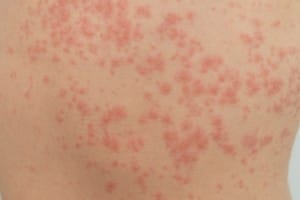
Pimple-popping also spreads bacteria across the skin surface. Pressing on a pimple distributes bacteria from the follicle onto the surrounding skin and into adjacent pores. A single inflamed pimple, left alone, is a contained problem. Squeeze it and you can trigger a chain of new breakouts in the area surrounding the original one. Dermatologists see the consequences of this regularly – patients who present with what appears to be severe widespread acne, but is actually the result of manual spreading from one or two original pimples that were repeatedly manipulated. Stopping the squeezing is often the single most impactful intervention.
Which Specific Pimples in This Zone Are the Most Tempting to Pop?

The pimples most commonly found inside the danger triangle are also, almost without exception, the ones that feel the most intolerable. Nose pimples – forming either inside the nostril or on the outer surface of the nose – are frequently extremely painful due to the thin, tight skin and the high density of nerve endings. Pimples in the philtrum (the vertical groove above the upper lip) are visible and catching, particularly to the person experiencing them. Upper lip pimples between the nose and the lip border are some of the most inflamed-feeling pimples on the face. Pimples in the nasolabial crease are deep-set, slow to surface, and sitting in a fold that moves constantly. All of these are in or directly adjacent to the danger zone.
Nose pimples deserve particular attention because they can be confused with other things. A bump inside the nostril may be a pimple, a folliculitis (infection around a hair follicle), or a nasal furuncle – a deeper abscess inside the nasal cavity. Nasal furuncles carry especially high risk of complications precisely because of the venous anatomy described above, and they should never be squeezed under any circumstances. If a bump inside the nose is producing significant pain, any surrounding warmth or swelling beyond the bump itself, or any redness spreading onto the skin of the nose, that is a call to a doctor – not a home extraction attempt.
Pimples in the nasolabial fold are a common source of temptation because the fold tends to collect oil and the skin there is prone to congestion. But handling one here carries the dual downside of cavernous sinus risk and particularly pronounced post-inflammatory scarring. The skin in this fold is subject to constant movement – smiling, talking, chewing, laughing – which means any wound or inflamed follicle in the crease reopens repeatedly and heals more slowly than it would elsewhere on the face. A pimple here treated with topical spot treatment will typically resolve in five to seven days. The mark from a squeezed pimple in the same location can stay visible for three months or more.
What Should You Actually Do With a Danger Triangle Pimple?
The most evidence-supported approach is to leave the pimple alone physically and apply a targeted topical treatment. Benzoyl peroxide at 2.5% or 5% is effective at killing surface bacteria and reducing the bacterial load in and around the pimple – it is one of the most well-studied ingredients in acne management. Salicylic acid at 0.5% to 2% helps exfoliate inside the pore and reduce congestion. Sulfur-based spot treatments reduce inflammation with a gentler drying action, and they tend to work well around the nose where benzoyl peroxide can cause dryness, peeling, or irritation on thin skin. Azelaic acid is worth knowing about for nose-area breakouts because it combines antibacterial, anti-inflammatory, and brightening properties – it can address both the active pimple and reduce the post-inflammatory pigmentation that follows.
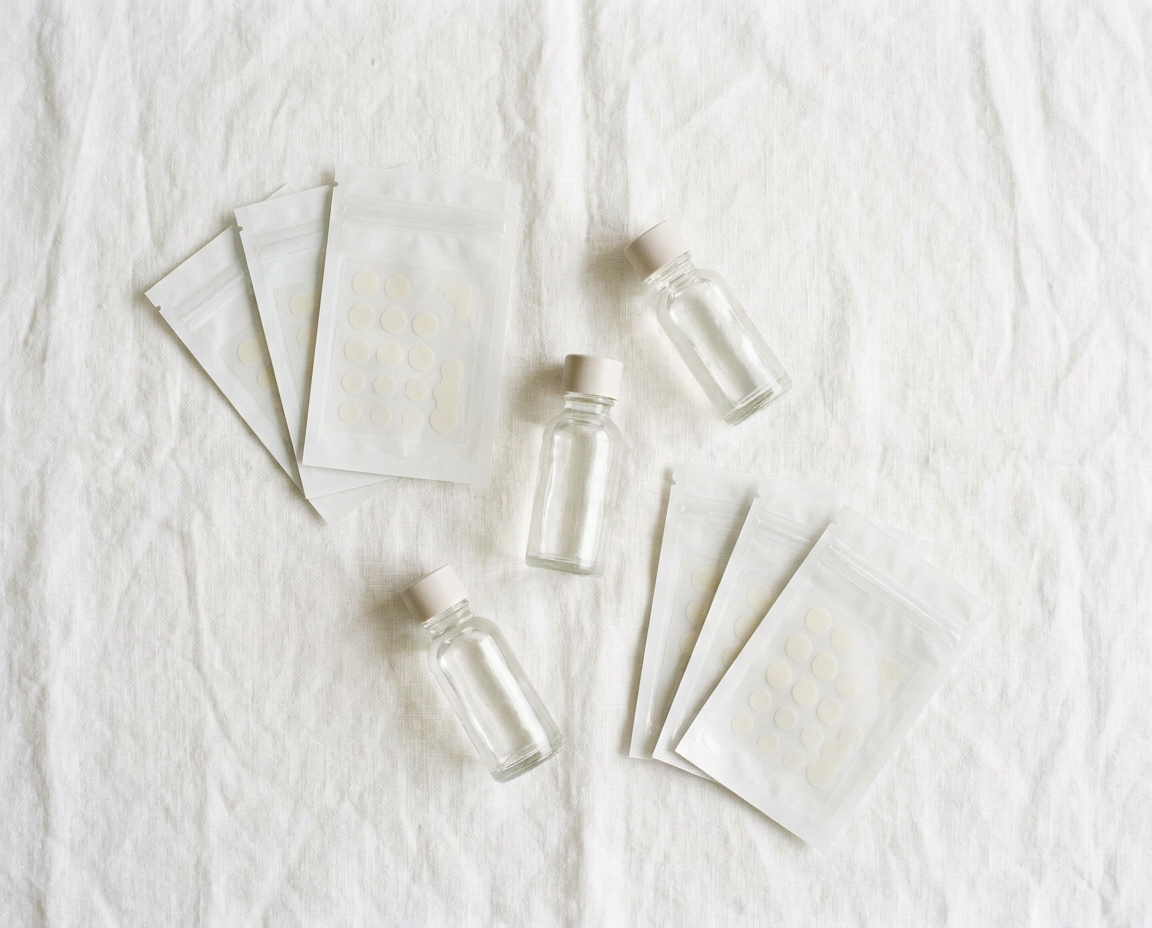
Hydrocolloid patches are one of the most practically useful tools for pimples in the danger triangle. They address the hardest behavioral challenge – keeping your hands away – by physically covering the pimple with an adhesive patch that doubles as treatment. A hydrocolloid patch placed over a whitehead creates a moist wound environment that draws out fluid and accelerates the pimple’s natural resolution, while preventing finger contact. Brands like COSRX Acne Pimple Master Patch and Hero Cosmetics Mighty Patch are widely available, inexpensive, and effective for surface-level whiteheads. They work particularly well for nasolabial and upper lip pimples. For deeper, cystic pimples without a visible head, a patch will not draw out much fluid, but it will still prevent picking and keep the area protected while the pimple runs its course.
A warm compress is a simple and underused tool for deeper pimples that have not yet surfaced. Applying a clean warm cloth to the area for a few minutes, two or three times a day, increases circulation and encourages the pimple to come to a head on its own schedule – without manual pressure. This allows the pimple to resolve through its natural process rather than through intervention that can push bacteria deeper. It does not speed healing dramatically, but it avoids making things worse, which is genuinely all that is being asked here. If a nose pimple is causing significant pain, if the surrounding tissue looks swollen or warm beyond the pimple itself, or if any redness is spreading, call a doctor. Early antibiotic treatment for a spreading facial infection can prevent an escalation entirely.
When Does a Facial Infection Cross Into Emergency Territory?
Most pimples are not emergencies. But certain signs indicate that what began as a skin-level problem has become a medical one, and recognizing those signs quickly can make an enormous difference in outcomes. A pimple that is growing rapidly, extending beyond its original site, and accompanied by fever is not a normal pimple. That combination – active facial infection plus systemic symptoms like elevated temperature, chills, or unusual fatigue – means the infection may have moved beyond the skin and into the body. That warrants a call to a doctor or an urgent care visit the same day, not watchful waiting.
Rapidly spreading redness or warmth around a pimple on the face, especially if the redness is covering an area significantly larger than the original bump, suggests facial cellulitis. This is a bacterial infection of the deeper layers of skin and soft tissue, and it progresses. Red streaks radiating outward from an infected area – lymphangitis, indicating bacteria moving along lymph vessels – are a signal to go to an ER or urgent care immediately. These are visible, external signs of a process that is moving faster than the immune system is managing it.
Any eye symptom accompanying a facial infection near the nose must be treated as an emergency. Swelling around the eye, eye pain, double vision, protrusion of the eye, or any difficulty moving the eye in any direction – these symptoms alongside a facial infection near the danger triangle mean go to the emergency room right now. Do not drive there alone if your vision is affected. These are potential signs of cavernous sinus involvement or orbital cellulitis. Both conditions require immediate neuroimaging and IV antibiotics. The window for intervention matters: hours can separate recovery from permanent damage, or survival from the alternative.
If you are immunocompromised, diabetic, on long-term steroid therapy, or receiving chemotherapy – a facial infection in the danger triangle warrants same-day medical evaluation even in the absence of dramatic symptoms. An immune system that is compromised may not mount a visible external response proportionate to what the infection is doing internally. The pimple may not look that serious while something more serious is developing underneath it. Do not use the absence of alarming appearance as a reason to wait.
What Mature Skin and Perimenopause Breakouts Mean for the Danger Triangle

Women over 50 often experience a breakout pattern that catches them off guard: hormonal acne appearing around the nose and mouth after years or decades of relatively clear skin. This is a documented perimenopause pattern. Falling estrogen levels shift the hormone balance toward androgens, which stimulate sebaceous glands and increase oil production – particularly in the lower face, the chin, and the nasolabial zone. The result is breakouts appearing directly in the danger triangle, at an age when the instinct to fix them quickly with manual extraction is often stronger than it was in youth, because the pimples look more out of place and feel more urgent to address.
But skin healing slows significantly after 50. A trauma that skin in the thirties would resolve in five to seven days may take two to three weeks in a woman in her fifties or sixties, and the collagen disruption from any wound takes longer to repair. This means post-inflammatory hyperpigmentation and scarring from pimple-popping are dramatically more pronounced in mature skin. A dark mark that might fade in four to six weeks on younger skin can persist for six months or more after 50, and women with medium to deeper skin tones within this age group can see even longer fading times. The consequences of a moment of impatience are measured in months.
There is also an immune dimension that increases risk specifically. The immune response to infection slows with age – this is well-established immunology. A bacterial infection in the danger triangle that a younger adult’s immune system might contain before it spreads carries more potential for escalation in an older adult. The threshold for seeking medical attention for any facial infection in this zone should be lower after 50, not higher. And one more thing worth saying clearly: if something appears near the nose or nasolabial area that behaves like a pimple but does not resolve in two weeks, has no visible white head, grows slowly, bleeds easily, or feels different from a normal breakout, see a dermatologist. In women over 50, a persistent lesion near the nose that does not behave like acne sometimes is not acne at all. It may be a basal cell carcinoma, a sebaceous cyst, or another lesion that requires professional evaluation. Do not assume; get it looked at.
FAQs
How big is the danger triangle on my face exactly?
Draw an imaginary line from your left mouth corner up to the bridge of your nose, then back down to your right mouth corner. Everything inside that triangle – your nose, the nasolabial folds, the philtrum, and the upper lip area – is the zone. It is larger than most people imagine when they first hear about it. Both nostrils, the full upper lip, and the creases flanking the nose are all inside the boundary, which means many of the most common pimple locations on the adult face fall directly within it.
Has anyone actually died from popping a pimple?
Cases are documented in medical literature, though they are rare. The anatomical chain leading from pimple manipulation to cavernous sinus thrombosis is well-established in emergency medicine and infectious disease literature, and case reports of serious outcomes following facial skin infections in the danger triangle exist. Pre-antibiotic era mortality from cavernous sinus thrombosis was 80% to 100%. Even with modern antibiotics, the mortality rate is 8% to 13%, and not all cases are caught and treated early enough to achieve the best outcomes.
What is the safest way to deal with a nose pimple?
Apply a topical treatment – benzoyl peroxide, salicylic acid, or sulfur – use a warm compress to encourage the pimple to come to a head naturally, and if it is a whitehead, cover it with a hydrocolloid patch. Do not squeeze it. If there is any pain extending significantly beyond the pimple itself, spreading redness in the surrounding skin, warmth in tissue that was not previously inflamed, or any swelling beyond the original bump, call a doctor rather than attempting extraction at home.
If I accidentally pop something in the danger triangle, what should I watch for?
Keep the area clean and do not touch it further. Watch for spreading redness beyond the original spot, increasing warmth in the surrounding skin, swelling that extends outward from the pimple, fever, and any eye symptoms including pain, swelling, double vision, or a sense that one eye is protruding. A severe headache appearing in the days after an accidental pop, especially combined with fever, should prompt an immediate ER visit. Most of the time, nothing serious will happen. But if two or more of these symptoms appear together, do not wait to see if they resolve on their own.
Are hydrocolloid patches safe to use on nose pimples?
Yes – they are among the safest and most practical options for surface whiteheads in the danger triangle, specifically because they work without any manual pressure. They draw out fluid, create a healing environment, and keep fingers away from the pimple. For pimples on the outside surface of the nose or in the philtrum and upper lip area, they adhere well and are effective. For pimples inside the nostril, they are not practical, and those should be left strictly alone – or evaluated by a doctor if they seem unusual or are causing significant pain.
The danger triangle of the face is real, named for a reason, and understood by physicians for over 150 years. Most of the time, in a healthy person, a squeezed pimple in this zone will do exactly what it always does – cause more inflammation, worse scarring, and a mark that lasts far longer than the original blemish would have. On rare occasions, the consequences are far worse. The gap between those two outcomes is not always visible in advance, and it is not always determined by how bad the infection looks from the outside. The simplest way to make sure you are never in a position to find out which outcome you are heading toward is to leave the danger triangle alone. Spot treat it, patch it, compress it, wait. The pimple will resolve. They always do.
Related Posts