Nov
If you click on links we provide, we may receive compensation.
You catch your hand on the edge of a cabinet door, or you scrape your shin getting out of the car. It barely registers. Years ago a scrape like that would have vanished by the weekend, and you’d never have thought about it again. Now it hangs around. Two weeks later it’s still pink and tender, the scab keeps catching on your sleeve, and you start to wonder what else has changed without asking your permission. That small worry is fair, and I think it deserves a straight answer rather than a shrug and a line about getting older.
Is it really slower or does it just feel that way?
It’s real, and it’s been noticed for a long time. Doctors first wrote about slower healing in older patients about a century ago, and modern studies keep confirming it. In one carefully controlled study, researchers made identical small wounds on the forearms of healthy adults under 40 and over 70. After seven days, the younger group’s wounds were about 86 percent closed, while the older group’s were about 72 percent closed. That left the older group with roughly twice as much open wound at the one-week mark (https://pmc.ncbi.nlm.nih.gov/articles/PMC5013029/). So if your scrapes seem to take longer, your eyes aren’t playing tricks on you.
But here’s the part that rarely gets mentioned. A major review in the World Journal of Surgery concluded that aging mostly delays healing, while the finished repair in older adults ends up much the same as in younger people (https://pubmed.ncbi.nlm.nih.gov/14961191/). Slower doesn’t mean worse. Some wound care specialists go further and argue that healthy older people heal close to normally, and that much of the delay comes from things that tend to travel with age, such as poor circulation, diabetes, certain medications and decades of sun exposure (https://wounds-uk.com/wp-content/uploads/2023/02/content_9114.pdf). That’s encouraging, because several of those factors are things you can work on. The calendar isn’t the whole story.
What happens to skin renewal after 50?
Your outer skin is always rebuilding itself from the bottom up. New cells form in the deepest layer of the epidermis, move toward the surface, flatten out and eventually shed. In a classic study, dermatologists Gary Grove and Albert Kligman tracked how long that trip takes at different ages. Through the 20s, 30s and 40s, the timing barely moved, holding at around 20 days. In people aged 50 to 59 it stretched to about 25 days, then to 31 days in the 60s and nearly 37 days in the 70s (https://pubmed.ncbi.nlm.nih.gov/6827031/). The authors noted that renewal stays fairly steady in the younger years and then drops off sharply after 50, which is right when many people start noticing their scrapes linger.
Why does that matter for a scraped knee? Closing a wound depends on the same cells. To cover a scrape, skin cells at the edges and in the hair follicles and sweat glands below have to multiply and crawl across the gap. When the factory that makes those cells runs slower, the crew that patches the hole arrives later and in smaller numbers. Older skin also takes longer to restore its moisture barrier after damage, so the area stays dry and irritated longer. Renewal, resurfacing and barrier repair all draw on the same slowing supply of cells.
Why does thinner skin tear more easily and heal more slowly?
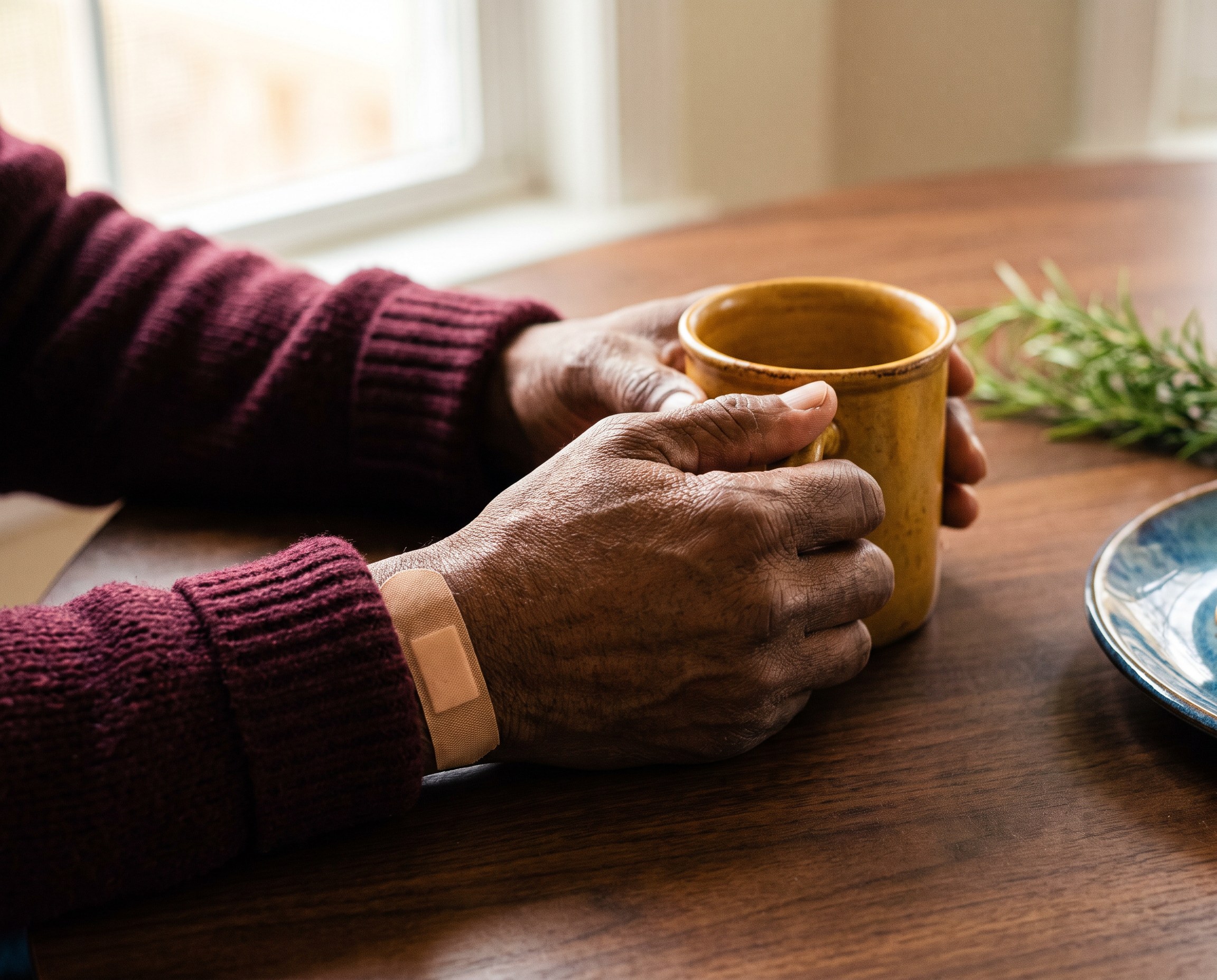
Collagen gives skin its strength, and you make less of it every year after your mid-20s. The collagen that remains also becomes more cross-linked, which makes it stiffer and less organized. A 2020 review in Advances in Wound Care explained that these changes affect how skin cells read their surroundings, which leads to longer inflammation, slower cell movement and weaker remodeling (https://pmc.ncbi.nlm.nih.gov/articles/PMC6985772/). In plain terms, the scaffolding is thinner and the workers get mixed signals. The layer where the epidermis anchors to the dermis also flattens with age, so a bump that once left a bruise can now peel back a flap of skin.
Sweat glands play a bigger role here than most people realize. In young skin, cells grow out of the sweat glands in a wound bed and help resurface it from many points at once, like small islands spreading toward each other. The forearm study mentioned earlier found that in people over 70, fewer than half of those sweat glands pitched in (https://pmc.ncbi.nlm.nih.gov/articles/PMC5013029/). Fewer islands means more ground to cover from the edges. That alone helps explain why a broad, shallow scrape on an older shin can take so long to fill in.
How do circulation and inflammation slow the process?
Healing runs on blood supply. New tissue needs oxygen and nutrients, and the body builds fresh small blood vessels into a wound to deliver them. Research reviewed in Advances in Wound Care found that aging dulls one of the main signals that triggers new vessel growth, which slows healing in older skin (https://pmc.ncbi.nlm.nih.gov/articles/PMC6985771/). Lymphatic drainage also declines with age, making it harder to clear debris and bacteria from the area. When less blood comes in and less waste goes out, every stage takes a bit longer.
Inflammation is the other piece. Right after an injury, immune cells rush in to clean up and send out the signals that start the rebuild. In older skin, those cells tend to show up later, and the inflammatory phase can drag on longer than it should. A wound that stays inflamed stays red, warm and tender, and it doesn’t move on to the building phase as quickly. That’s why an older scrape often looks angry for days. It isn’t necessarily infected, but it’s stuck a little longer in the cleanup stage.
Advertisement
What does menopause have to do with a scraped knee?
For women, the slowdown often lines up with menopause, and that’s not a coincidence. Estrogen helps skin hold on to collagen and water, and it calms excess inflammation in wounds. One review notes a roughly 30 percent drop in the skin’s structural proteins during the first five years after menopause, and it points out that skin aging after menopause tracks estrogen loss more closely than age itself (https://hull-repository.worktribe.com/OutputFile/499790). Researchers led by Gillian Ashcroft found that hormone replacement sped up wound healing in older women, and that estrogen applied directly to the skin sped healing in older men as well as women (https://pmc.ncbi.nlm.nih.gov/articles/PMC2931162/). The link between hormones and healing is one of the clearest findings in this field.
None of this means you should start hormones to heal a scrape faster. Hormone therapy has its own benefits and risks, and that decision belongs with your doctor based on your whole health picture. But it does explain why many women notice a sudden change around 50 rather than a slow, even decline. If you’re in perimenopause or just past it, it’s reasonable to give your skin more support than you used to. Men aren’t exempt either, since their skin also thins and slows, just more gradually.
What’s different about healing skin in your 60s and 70s?
By the 60s and 70s, the renewal clock has stretched by more than ten days compared with younger adults, and the skin itself is thinner and drier. That changes how small injuries happen in the first place. Many people at this stage get skin tears, where a bump or even a strip of tape lifts the top layer away. Blood thinners, daily aspirin and long-term steroid use can add easy bruising, and steroids can slow healing on their own. If you take any of these, expect a minor scrape to need more time and more care than it would for someone else.
Small changes in how you treat the area make a real difference. Choose gentle paper tape or silicone-based bandages instead of aggressive adhesives, and peel them off slowly and low to the skin. Keep the skin around the wound moisturized, because dry, cracked edges slow the cells trying to cross. Long sleeves and pants offer a simple layer of protection for forearms and shins, which take the most bumps. And be patient with yourself! A scrape that takes three weeks to fade at 72 may be doing exactly what it should.
Should you let a scrape air out?
This is the habit most worth changing. Many of us grew up being told to let a cut breathe so a scab would form. In 1962, researcher George Winter showed that shallow wounds kept moist healed about twice as fast as those left to dry under a scab (https://www.nursinginpractice.com/clinical/mythbuster-i-need-to-let-the-air-get-to-this-wound/). A hard scab is a barrier, and new cells have to tunnel underneath it instead of gliding across the surface. For skin that already makes fewer cells, removing that obstacle helps a lot.
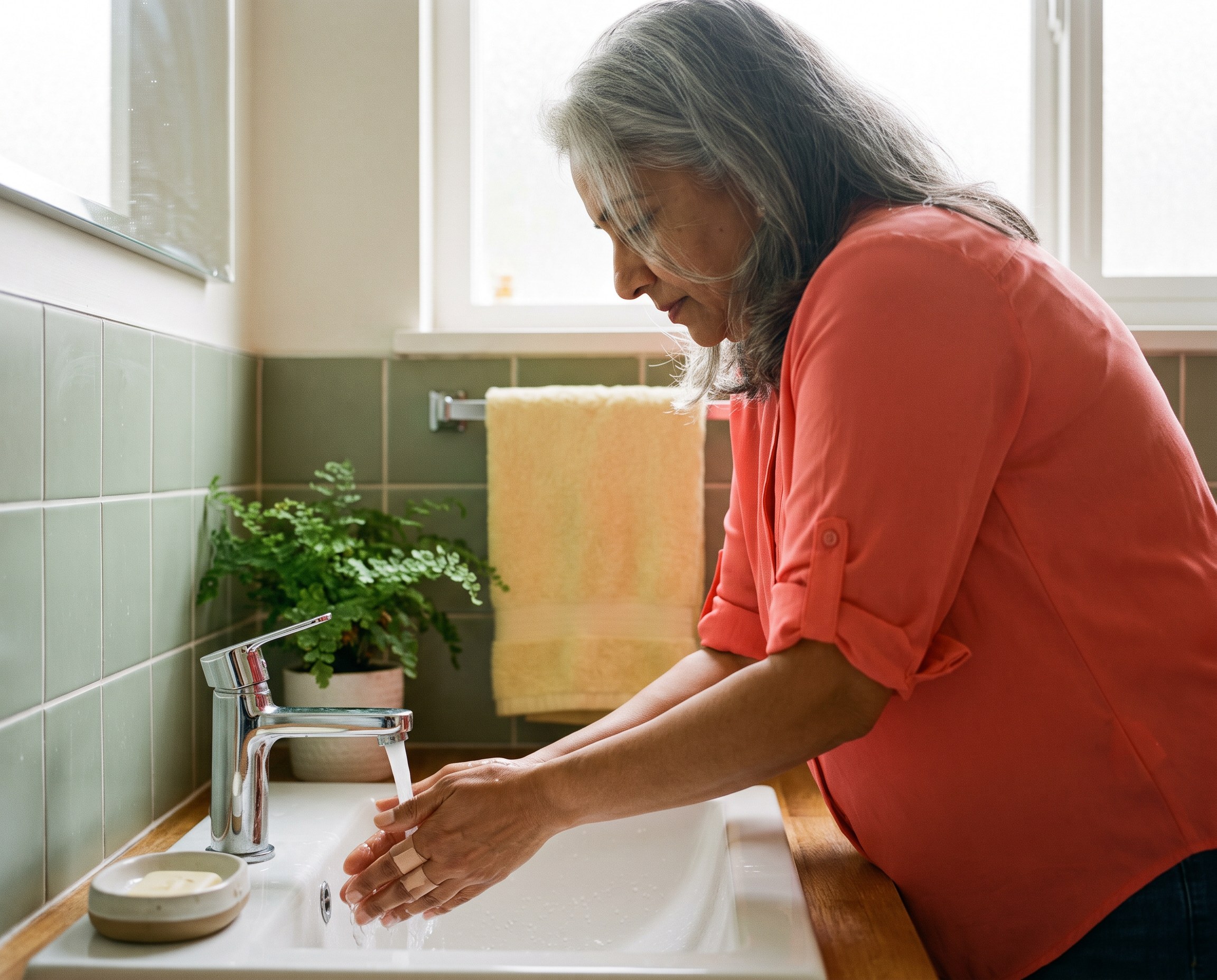
The American Academy of Dermatology’s advice is simple. Wash your hands, then rinse the cut with cool or lukewarm water and a mild soap. Stop any bleeding with gentle pressure, apply a thin layer of petroleum jelly, and cover it with a bandage that you change every day until the cut heals (https://www.aad.org/public/everyday-care/injured-skin/burns/treat-minor-cuts). The AAD suggests petroleum jelly from a tube instead of a jar to keep dirt out. It also cautions that antibiotic creams and ointments can irritate skin, so plain petroleum jelly is usually enough for a clean, minor wound.
Can food, sleep and daily habits help?

Your skin builds new tissue from what you eat. Protein supplies the raw material for collagen, vitamin C helps link collagen fibers together, and zinc supports cell growth. Many older adults eat less protein than they need, often without noticing, and a slow-healing scrape can be one of the first places it shows. You don’t need special supplements for a minor wound. A steady diet with eggs, fish, beans, yogurt, citrus and leafy greens covers most of what your skin needs.
Circulation and blood sugar matter too. Smoking narrows blood vessels and cuts oxygen delivery to the skin, which slows every wound. High blood sugar weakens immune cells and stiffens tissue, which is why people with diabetes are told to watch even small cuts on their legs and feet. Regular walking keeps blood moving in the lower legs, where scrapes tend to be slowest. Sleep counts as well, because poor sleep and ongoing stress raise cortisol, a hormone known to slow repair.
When should a slow scrape worry you?
Slow is normal. Stuck is not. According to the AAD, most minor cuts heal in a week or less, and the academy advises getting medical care right away for a cut longer than three-quarters of an inch, deeper than a quarter inch, or one that won’t stop bleeding (https://www.aad.org/public/everyday-care/injured-skin/burns/treat-minor-cuts). Older skin often needs more than that week, so judge progress rather than the calendar. Watch for signs of infection, such as spreading redness, warmth, swelling, pus, increasing pain or fever. If the injury came from something dirty or rusty, check that your tetanus shot is current.
A scrape that isn’t clearly smaller after two weeks is worth showing to your doctor, especially on the lower legs. Sores on the shins and feet that linger can point to circulation problems or diabetes that haven’t been diagnosed. A spot that bleeds easily, crusts over, seems to heal and then opens again should also get a look, because some skin cancers behave exactly that way. These checks aren’t cause for alarm. They just make sure a slow wound is only slow.
FAQs
Will slower healing leave a worse scar?
Not necessarily. Research suggests the finished repair in older adults is generally similar in quality to that in younger people, even though it takes longer to get there. Keeping the wound moist and covered is one of the best ways to limit scarring at any age. Once it closes, protecting the new skin from the sun keeps it from darkening. Pink new skin can take several months to settle into its final color.
Do I need antibiotic ointment on every scrape?
For a clean, minor scrape, usually not. The AAD recommends plain petroleum jelly, since antibiotic ointments can irritate skin and sometimes cause allergic reactions. Washing well matters more than what you put on afterward. If the wound looks infected, see a doctor rather than treating it yourself. They can decide whether you need an antibiotic and which kind.
Can collagen supplements help my skin heal faster?
The evidence linking collagen supplements to faster healing of everyday cuts is thin. Some studies suggest they may help skin hydration and elasticity, but that’s different from proving they speed up wound repair. Your body breaks collagen down into amino acids like any other protein. Getting enough total protein from food is the more reliable step. If you already enjoy a collagen powder, it’s unlikely to hurt, but don’t count on it to fix a slow-healing scrape.
Should I put sunscreen on a healing scrape?
Not on an open wound, but yes once the skin has closed. New skin is thin and burns easily, and sun exposure can leave a darker mark that lasts for months. Until it closes, a bandage or clothing is your best shield. After that, apply a broad-spectrum SPF 30 or higher whenever the area will see the sun. Keep it up for several months while the new skin matures.
Is it normal for scrapes on my legs to heal slower than on my arms?
Yes, that’s common at any age, and it becomes more noticeable after 50. Blood has to work against gravity to return from the lower legs, so circulation there is sluggish. Shins also have little padding, so the skin sits close to bone and takes more knocks. Raising your legs when you sit and walking regularly can help. If a leg wound lasts more than a couple of weeks, have it checked.
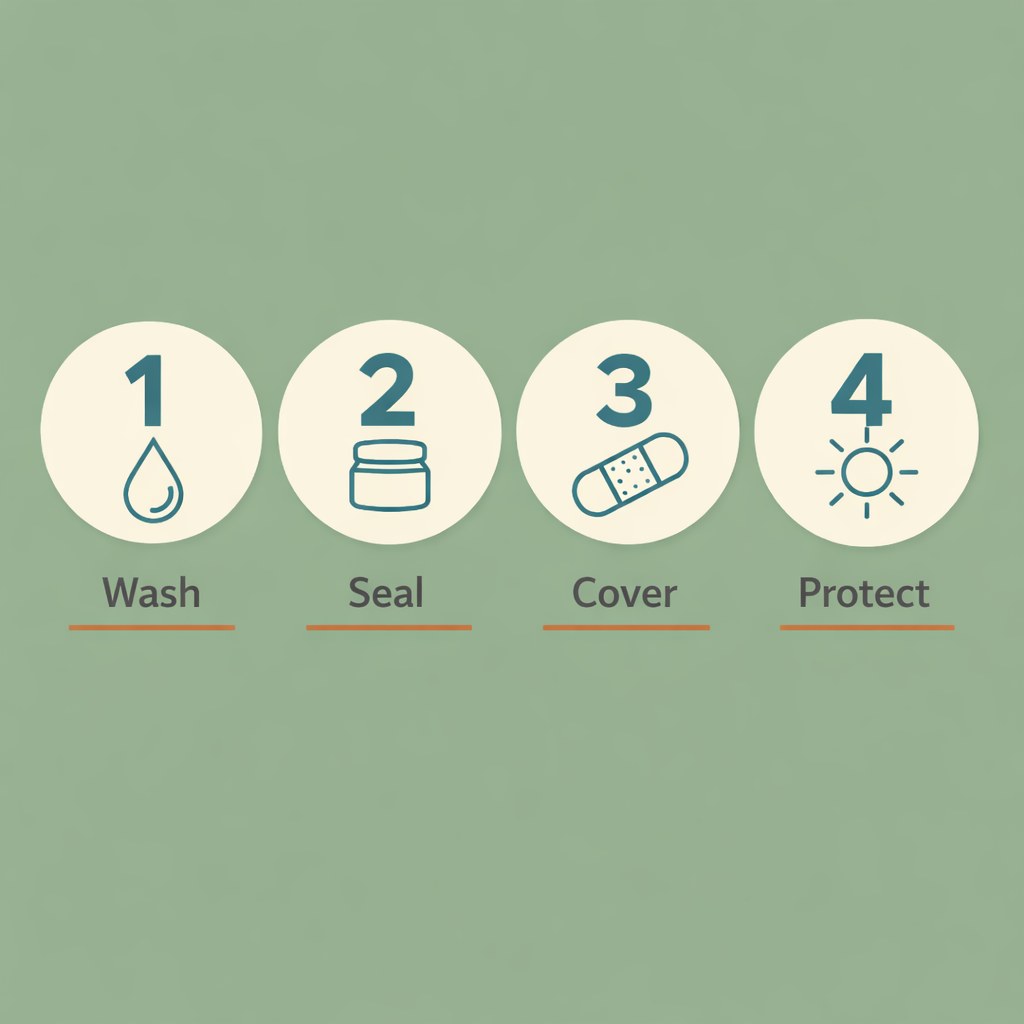
A scrape that takes its time isn’t a sign that your body has stopped working. It’s a sign that the repair crew has fewer workers and a longer commute, and they still get the job done. Keep the wound clean, moist and covered, feed your skin well, protect it from bumps and sun, and give it the extra days it asks for. Pay attention to the few warning signs that mean something more is going on. Most of the time, patience and a little petroleum jelly are all it needs.
Related Posts